博客

  • US teen Karmelo Anthony gets 35 years after conviction in stabbing death

    US teen Karmelo Anthony gets 35 years after conviction in stabbing death

    A Texas teenager has been handed a 35-year prison sentence just hours after a jury found him guilty of murdering a 17-year-old classmate during a high school track event. Nineteen-year-old Karmelo Anthony received the sentence Tuesday, nearly two years after the fatal April 2025 stabbing that claimed the life of Austin Metcalf.

    Though Anthony was only 17 at the time of the incident, state law permitted prosecutors to try him as an adult, leaving him open to a maximum penalty of 99 years behind bars. The case gained national traction after social media discussions framed the conflict through a racial lens: Anthony is Black, while Metcalf was white. This online amplification turned a local youth crime into a widely discussed public incident.

    Court proceedings laid out that the confrontation grew out of a trivial disagreement during an unseasonably rainy track meet. Prosecutors argued the stabbing was an unprovoked, unjustified attack centered on whether Anthony was allowed to take shelter under his team’s tent. Defense lawyers pushed back against this narrative, contending that Anthony acted out of a perceived need for self-defense after physical altercation broke out between the two teens.

    During the sentencing phase, the jury rejected the defense’s bid for a reduced sentence, which rested on the claim that the killing was driven by “sudden passion” — a legal argument that could have cut Anthony’s potential prison time significantly. When the 35-year sentence was read aloud, multiple people in the courtroom, including Anthony’s mother, broke down in audible tears, according to court observers.

  • Purkiss sounds alarm over falling cruise passenger arrivals

    Purkiss sounds alarm over falling cruise passenger arrivals

    KINGSTON, Jamaica — A simmering political row over Jamaica’s cruise shipping performance has erupted this week, as a first-term opposition parliamentarian has publicly called out the country’s top tourism official for failing to reverse a steep, years-long decline in cruise passenger volumes even as the global industry booms post-pandemic.

    Andrea Purkiss, the opposition’s spokesperson on tourism and linkages and Member of Parliament for Hanover Eastern, delivered the sharp critique during her maiden speech to the House of Representatives during the ongoing Sectoral Debate on Tuesday. Purkiss accuses Tourism Minister Edmund Bartlett of staying “completely silent” on the sector’s struggles, which have seen Jamaica’s cruise passenger numbers drop by more than 28% since 2019, ahead of the COVID-19 pandemic.

    Purkiss pushed back against Bartlett’s previous claims that the local cruise sector has “lived up to expectations,” arguing that the only expectation the minister has met is that no one would verify his inaccurate public statements. She laid out detailed statistics to back up her critique: in 2019, Jamaica hosted 1,544,233 cruise passengers. By the end of 2025, that number fell to just 1,106,361, marking a 28.4% seven-year decline that equals a loss of nearly 438,000 potential visitors annually.

    These missing visitors do not just translate to lower port activity, Purkiss explained. They represent lost income across Jamaica’s entire tourism ecosystem, from local taxi drivers and craft vendors to owners of tourist attractions across the island. The opposition spokesperson calculated that the Jamaican government’s failure to recapture lost cruise market share has cost the sector more than 3 million missed passenger visits, amounting to an estimated $30 million U.S. dollars (equal to 4.5 billion Jamaican dollars) in lost economic activity, based on a conservative estimate of $10 U.S. in spending per cruise passenger.

    Purkiss emphasized that her critique is not an unfair political attack, noting that the global cruise industry has already fully rebounded from the pandemic — and is in fact seeing record growth. Global cruise passenger volume has surged to an all-time high of 37.2 million, a 25.2% jump compared to 2019 pre-pandemic levels. The Caribbean region is leading this expansion, capturing 44% of all global cruise traffic, and many of Jamaica’s regional neighbors have capitalized on the boom to grow their own cruise sectors, Purkiss pointed out.

    She cited concrete examples of regional success to contrast with Jamaica’s performance: Antigua and Barbuda has grown its cruise sector by 9.9% after opening a new purpose-built terminal; Barbados is reporting all-time record cruise visitor numbers; Mexico’s Cozumel now welcomes 4.73 million cruise passengers annually; and the Bahamas has seen its cruise traffic double since 2019.

    The exchange highlights growing political friction over Jamaica’s tourism strategy, a core driver of the country’s national economy, as the opposition pushes the government to address why the nation has failed to capitalize on a global cruise boom that has benefited its closest competitors.

  • WATCH: ‘We not leaving Parottee’

    WATCH: ‘We not leaving Parottee’

    In the hurricane-battered coastal community of Parottee, St Elizabeth, Jamaica, a deep rift has emerged between the national government and long-time locals over a proposed mandatory relocation initiative launched in the wake of Hurricane Melissa. Prime Minister Dr. Andrew Holness first outlined the government’s plan last Thursday during an official event where the National Housing Trust (NHT) handed over 27 new service lots to residents in Malvern, St. Elizabeth.

    Holness framed the relocation as a targeted support measure for Parottee, one of the communities hardest hit by the storm. He argued that full reconstruction of the coastal settlement would ultimately cost far more than the value of the properties the government aims to assist, making the move to pre-fabricated container housing a fiscally and practically sound option. In his remarks, the prime minister emphasized that the government is committed to protecting residents’ livelihoods, asset values and personal dignity throughout the process, adding that relocation would be a collaborative, step-by-step process rather than a rushed, overnight transition.

    The initiative will be delivered through a multi-agency partnership between the NHT, the Urban Development Corporation and the St Elizabeth Municipal Corporation, with the National Reconstruction and Resilience Authority (NaRRA) taking on a central coordinating role to align efforts and speed up support for displaced residents.

    But the plan has been met with staunch pushback from core members of the Parottee community, whose lives and livelihoods are deeply tied to the coastal landscape. Three local fishermen and tourism operators — Ridge Harvey, owner of Captain Ridge Boat Tours, Anthony Sinclair, and Wesley Bent — have publicly rejected the proposal, saying they will not leave the only home many of them have known for generations.

    Harvey, a third-generation fisherman, pointed out that the vast majority of Parottee residents rely on fishing and coastal tourism, including boat tours to popular local attraction Pelican Bar, for their daily income. He criticized the proposed container homes as unsuitable and noted that many residents have already begun rebuilding their damaged properties on their own, with some even expanding their homes from damaged original foundations to larger, multi-bedroom structures. For Harvey, relocating residents after they have already endured the trauma of the hurricane is an unnecessary, harmful disruption. He also called out the government for failing to hold community consultations before announcing the plan, noting that the prime minister only visited the community in the storm’s immediate aftermath to survey fatalities and infrastructure damage, not to discuss long-term relocation with residents. Parottee, he added, is a large, spread-out community encompassing Parottee Beach, Hill Top and Spice Grove, and no segment of the community was included in pre-announcement planning.

    Bent, a fisherman with nearly 50 years of experience working Parottee’s waters, echoed Harvey’s concerns. Even after losing his home and boat to Hurricane Melissa, Bent said relocating would cut off his only source of income. The proposed relocation site, the nearby inland community of Fullerswood, is an arid area suited only for farming — a trade none of the coastal residents have experience in. “If we relocate from here, we won’t have any income. Here we will survive with our daily hustling,” Bent explained.

    Sinclair, another long-time fisherman who has built his life in Parottee after moving from Old Harbour, shared the same stance. His home was destroyed in the storm, but he is already rebuilding on his current plot and has no intention of leaving. “When I heard the report I decided that I have to come out and speak,” he said.

    The standoff highlights the tension between government risk mitigation and disaster recovery planning and the deep cultural and economic ties that bind coastal communities to their traditional lands.

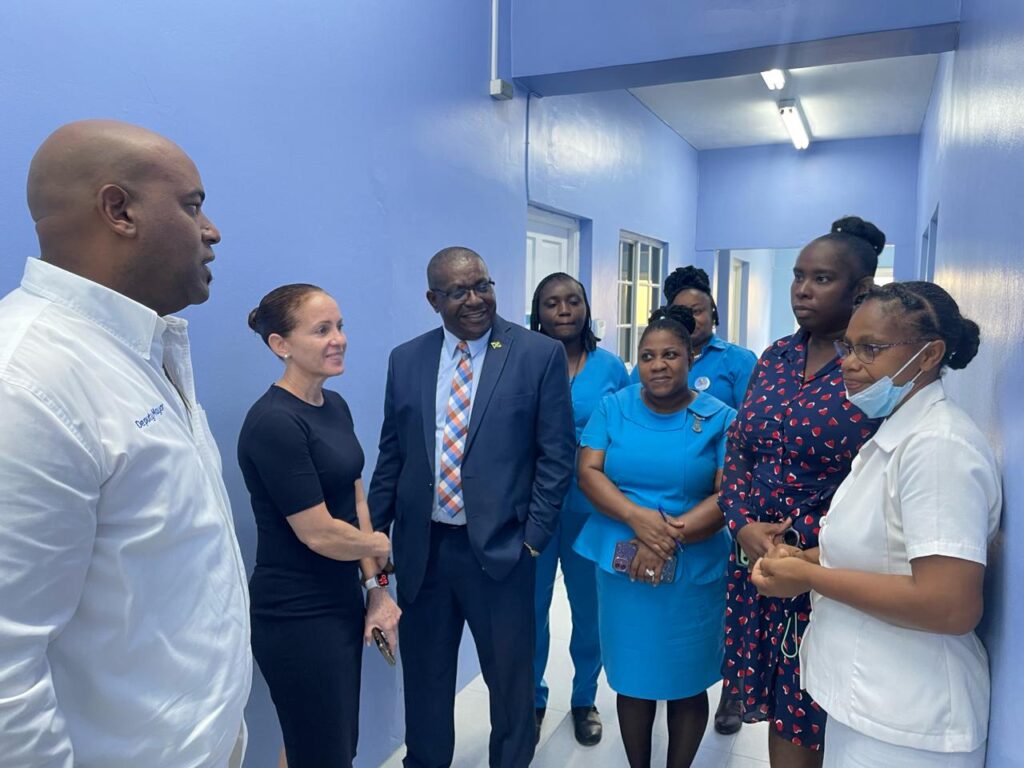
  • Catherine Hall Health Centre reopens following Hurricane Melissa closure

    Catherine Hall Health Centre reopens following Hurricane Melissa closure

    ST JAMES, Jamaica — Nearly one year after Hurricane Melissa tore through western Jamaica, leaving widespread destruction to critical public infrastructure, the Western Regional Health Authority (WRHA) has announced the long-awaited reopening of the Catherine Hall Health Centre, following the successful completion of full rehabilitation works.

    This milestone marks a major step forward for the WRHA’s region-wide recovery initiative, launched in the immediate aftermath of the storm to repair damaged healthcare facilities and restore access to care for local communities across St James, Hanover, Trelawny, and Westmoreland.

    When Hurricane Melissa made landfall, it disrupted operations at more than a dozen regional health facilities, forcing temporary closures and requiring rapid contingency planning to keep essential care accessible. Throughout the recovery process, the WRHA prioritized rolling out interim service arrangements while steadily advancing permanent repairs to bring damaged facilities back online.

    The Catherine Hall Health Centre is a cornerstone of primary care for the local community, serving thousands of residents every year across a wide range of critical services. Its offerings include general medical consultations, specialized wound care, maternal and child health programs, prescription pharmacy services, family planning support, and adolescent health initiatives. Before the storm, it was the first point of care for most residents of the Catherine Hall neighborhood and surrounding areas.

    Lennox Wallace, Parish Manager for St James Health Services, called the reopening a landmark moment for the region’s healthcare sector. “The reopening of this centre is a testament to the resilience of our healthcare system and the unwavering commitment of the WRHA to the communities we serve,” Wallace explained. “Hurricane Melissa presented unprecedented challenges, but through cross-team collaboration, relentless determination, and critical support from our local and regional stakeholders, we have not just repaired the facility – we have rebuilt stronger. We are thrilled to welcome patients back through these doors and reaffirm our promise to deliver high-quality care to every person who walks in.”

    Since the storm passed, the WRHA has rolled out an extensive portfolio of recovery projects across western Jamaica. Beyond structural repairs to damaged facilities, the authority has focused on upgrading core infrastructure, reinforcing buildings to withstand future extreme weather events, and maintaining continuous service access via temporary clinical setups while permanent rehabilitation was completed. These efforts ensured residents never lost access to essential care throughout the rebuilding process.

    Deveta McLaren, Acting Regional Director of the WRHA, emphasized that the project goes far beyond restoring a single healthcare facility. “This reopening is another critical milestone on our region-wide recovery journey,” McLaren said. “We remain focused on not just restoring our existing facilities, but enhancing them to meet the growing needs of our communities. Our recovery efforts have never been only about fixing damaged buildings – they have been about strengthening our overall capacity to respond to crises and serve residents when they need us most.”

    Local residents have been encouraged to resume using the Catherine Hall Health Centre’s full range of services, and public health officials are urging community members to continue prioritizing preventive care and routine wellness checks that many delayed during the facility’s closure.

  • US strikes Iran after Apache helicopter downing

    US strikes Iran after Apache helicopter downing

    In a sudden escalation of Middle East tensions, United States military forces launched targeted self-defense strikes against Iran on Tuesday, an act President Donald Trump framed as proportional retaliation for the downing of a US Army Apache helicopter by Iranian forces a day earlier. The announcement of the strikes came directly from Trump during a telephone interview with ABC News, where he emphasized that the US response would be forceful and decisive. “I believe the response should be very strong, very powerful, and that’s what this one is,” Trump told the outlet.

    US Central Command (CENTCOM) confirmed the operation in an official statement, noting that strikes commenced at 5 pm Eastern Time (2100 GMT) on the direct order of the US Commander in Chief, framing the action as a measured response to unprovoked Iranian aggression. Local Iranian media reported hearing multiple explosions along Iran’s southern coast, located in close proximity to the strategic Strait of Hormuz, a critical chokepoint for global energy trade.

    The escalation catches regional diplomacy at a fragile moment: just hours before announcing the strikes, Trump had publicly claimed that negotiations to end the ongoing Middle East war were in their final stages, a comment he has repeated repeatedly over the past several weeks. A fragile ceasefire between major warring parties has been in effect since April 8, but the truce was severely tested over the weekend when Iran and Israel resumed cross-border attacks before both sides announced separate halts to hostilities.

    Despite the bilateral pause between Iran and Israel, Israeli airstrikes have continued unabated in southern Lebanon, where tensions have simmered since March. On Tuesday alone, Lebanese officials confirmed 11 civilian and combatant deaths in Israeli airstrikes on the historic coastal city of Tyre. The Israeli military further issued a mandatory evacuation order for the entire city, triggering a mass exodus of residents. An AFP correspondent on the ground observed heavy traffic northward out of the city, with displaced residents, including those from Tyre’s historic Christian quarter, fleeing for safety. Further north in the coastal city of Sidon, another AFP correspondent saw new arrivals from Tyre carrying only the belongings they could strap hastily to the roofs of their vehicles.

    Tehran has long maintained that any permanent end to the broader regional conflict must include a formal truce in Lebanon, which was drawn into the war after Iran-backed Hezbollah militants began rocket exchanges with Israel on March 2. Israel responded with a sustained campaign of airstrikes and a limited ground incursion that has killed more than 3,600 people in southern Lebanon to date, and daily fire exchanges between Israeli forces and Hezbollah have continued despite the broader regional ceasefire.

    In the wake of the US strikes, Iranian Foreign Minister Abbas Araghchi issued a stark warning to foreign military forces operating in and around the Strait of Hormuz, urging them to withdraw from the area to avoid accidental harm. “Foreign forces in proximity to our territory are at constant risk on account of their own human errors, plain accidents, or potentially being caught in crossfire,” Araghchi said. He emphasized that the Strait of Hormuz is not international waters, but is jointly administered and shared between Iran and Oman. “To reduce risk, best solution is for them to leave. We prefer language of diplomacy but speak other languages too,” he added.

    The downed Apache helicopter marks the second crewed US aircraft confirmed shot down by Iran since the outbreak of the current war, following the loss of an F-15 fighter jet in April. CENTCOM confirmed that both crew members on board the helicopter were rescued within approximately two hours of the crash, which occurred near the Omani coast, and that both are currently in stable condition. A naval surface drone assisted in the rescue operation, a CENTCOM spokesperson confirmed in a post on the social platform X.

    The renewed open conflict between the US and Iran has already sent ripples through global energy markets, which are highly sensitive to disruptions of the Strait of Hormuz, the route through which roughly one-fifth of all global oil supplies pass daily. Washington’s ongoing blockade of Iranian ports has already limited regional shipping capacity. Shortly before Asian markets opened for trading on Wednesday, following news of the US strikes, West Texas Intermediate, the primary US oil price benchmark, jumped 1.4 percent to reach $89.40 per barrel. The price increase reverses a recent retreat that followed Trump’s repeated hints that a diplomatic deal with Iran could be reached within days.

  • Thirty-one Jamaicans qualify for individual events as NCAA champs start on Wednesday

    Thirty-one Jamaicans qualify for individual events as NCAA champs start on Wednesday

    As the 2024 NCAA Division 1 Outdoor Track and Field Championships prepare to kick off Wednesday at Eugene Oregon’s iconic Hayward Field, more than 30 Jamaican student-athletes have secured spots in individual event finals, bringing a mix of returning experience and historic firsts to this season-ending marquee collegiate competition.

    A full dozen of this year’s Jamaican finalists already earned final stage berths at the 2023 championships, bringing valuable high-stakes experience to their teams. The group is headlined by two standout returning competitors: University of Oklahoma’s Ralford Mullings, the defending men’s discus champion, and University of Georgia’s Dejanae Oakley, who claimed a silver medal in the 2023 women’s 400-meter. Both athletes are poised to chase new honors for their universities as the U.S. college track season wraps up.

    Two Jamaican athletes have qualified for two individual finals this year. Clemson University’s Shanate Foreman, the top-ranked competitor in women’s triple jump, also earned a spot in the women’s long jump. Meanwhile, University of Florida sprinter Gabrielle Matthews will contend for titles in both the women’s 100-meter and 200-meter events.

    One of the most notable milestones for the Jamaican contingent this year is a historic first: for the first time since the championships’ inception, Jamaican athletes have qualified for the men’s javelin throw final. Additionally, the group fields an unusually strong six athletes in the men’s discus throw, making it the most heavily represented event for Jamaican competitors this year.

    The competition schedule splits men’s and women’s events across the four-day meet: men’s action will take place on Wednesday and Friday, while women’s events are scheduled for Thursday and Saturday. All track events from 100 meters through 1500 meters will feature two rounds of competition, while all field events, 3000-meter steeplechase, and the 5000-meter and 10000-meter distance events will run as direct finals with no preliminary rounds.

    History will be made on opening day itself, when University of Louisiana’s Jermar Ferguson and Mount St. Mary’s University’s Brandon Falconer line up for the men’s javelin throw, marking the first-ever appearance of Jamaican athletes in that discipline at the championships. Also competing on Wednesday will be Louisiana State University’s Jordan Turner, who will contest the men’s long jump.

    Local favorite Kobe Lawrence of the host University of Oregon will aim to improve on his fourth-place finish in last year’s men’s shot put, where he will be joined by first-time national championship qualifier Shaiquan Dunn of the University of Texas.

    The University of Arkansas will send a strong duo to the men’s 800-meter: returning finalists Rivaldo Marshall and Tyrice Taylor, both of whom are considered legitimate contenders for the national title. Marshall, the 2024 NCAA Indoor Nationals champion, took third place in this event last year, while Taylor finished eighth.

    In the men’s 110-meter hurdles, Baylor University’s Demario Prince, who finished fifth in 2023, will aim to climb the podium and secure a spot in this year’s final, alongside fellow Jamaican Jerome Campbell of the University of Arkansas. Rounding out the men’s Jamaican competitors, Kimar Farquharson of Texas A&M University—formerly an 800-meter specialist—is the only Jamaican qualifier in the men’s 400-meter this year.

  • Purkiss accuses Bartlett of promoting ‘diversification myth’

    Purkiss accuses Bartlett of promoting ‘diversification myth’

    KINGSTON, Jamaica — In a sharp rebuke delivered during Tuesday’s Sectoral Debate in the House of Representatives, opposition tourism spokesperson Andrea Purkiss has called into question the Jamaican government’s flagship tourism diversification strategy, accusing incumbent Tourism Minister Edmund Bartlett of peddling a harmful “diversification myth” that has wasted hundreds of billions of Jamaican dollars with little to show for the investment. For years, Bartlett has framed the island nation’s overreliance on the U.S. travel market — which supplies more than 80% of all visitors to Jamaica — as an existential economic vulnerability. The minister first amplified this concern during the COVID-19 pandemic, when border closures and travel restrictions in North America brought Jamaica’s core tourism industry to a near-standstill. On multiple occasions, he has argued that over-dependence on U.S. and Canadian travelers leaves Jamaica exposed to external shocks ranging from foreign policy changes to flight cancellations and public health advisories, framing diversification as not just a policy choice, but a matter of long-term economic survival. As the centerpiece of his five-point plan to grow the tourism sector, Bartlett pledged to open new visitor corridors across emerging markets: the Middle East, Africa, South Asia, and other regions disconnected from North America’s economic cycles. But Purkiss says the results of years of investment tell a very different story. Since 2015, the tourism ministry has allocated a total of J$2.86 billion to so-called “seat support” programs — taxpayer-funded subsidies designed to incentivize airlines to add new routes to these non-traditional markets. Purkiss argues that this massive spending has produced negligible returns. To back up her critique, she laid out concrete arrival data for each of Bartlett’s priority emerging markets: For the Middle East corridor Bartlett promoted during high-profile trips to Riyadh and Dubai, the net increase in visitor arrivals by the end of 2025 was just 330 people. Following Bartlett’s 2021 publicity-heavy trip to Nigeria, billed as opening a “historic gateway” for African travelers, net growth in visitor numbers from the region hit only 320, bringing total African arrivals to just 1,440. Even a push to tap India, one of the world’s largest and fastest-growing outbound travel markets, yielded only an additional 360 visitors. All told, these years of investment in new markets have delivered less than half a percent of Jamaica’s total annual visitor arrivals, with most new routes still operating well below capacity. “That is not diversification. That is expensive theatre,” Purkiss told parliament, noting that many of the subsidized new routes continue to fly with massive numbers of empty seats, failing to deliver the consistent visitor growth Bartlett promised. Echoing a common Jamaican idiom, she argued that while Bartlett’s rhetoric around diversification has been prolific, the costly policy has delivered no meaningful economic benefit to the island. Purkiss called on the minister to publicly account for the billions in taxpayer spending that has yielded such underwhelming results, putting renewed pressure on the government to defend its tourism strategy ahead of upcoming budget reviews.

  • Dear Pres. Abinader, The Market Is Waiting for the Dominican Renaissance:  A Data-Driven Case for a Digital Nomad Visa

    Dear Pres. Abinader, The Market Is Waiting for the Dominican Renaissance: A Data-Driven Case for a Digital Nomad Visa

    The global shift to cross-border remote work is no longer a passing trend — it is a permanent structural reallocation of talent, income and economic activity that is reshaping national development opportunities. In an open letter addressed to Dominican President Luis Abinader, Jonathan Joel Mentor, CEO of business intelligence firm Successment and founder of the Digital Nomad Summit, argues that the Dominican Republic is uniquely positioned to capture a share of the $400 billion annual global remote work market, but is held back by outdated and fragmented policy.

    Today’s most mobile high-skilled workers — from startup founders and software engineers to knowledge workers and creative freelancers — base their location decisions on a mix of quality of life, digital connectivity, legal stability and living costs. Across Latin America and the Caribbean, forward-looking jurisdictions including Barbados, Costa Rica and Colombia have already recognized this shift and built tailored policy frameworks to attract this demographic, capturing billions in new annual economic activity.

    The Dominican Republic already boasts nearly all the core assets needed to compete for this global talent pool: world-class digital connectivity, extensive air access to major North American markets, year-round tropical climate, unrivaled quality of life and close geographic proximity to the United States and Canada. What the country lacks, Mentor argues, is a unified national policy framework that can convert existing international interest in the country into long-term formal economic participation.

    The current economic landscape of the Dominican Republic highlights a striking paradox. In recent years, the country has posted strong macroeconomic results, with robust GDP growth, stable controlled inflation, and record-breaking tourism arrivals that have cemented the sector as a core economic pillar. Yet beneath this headline success lies a pressing structural challenge: more than half of the national workforce remains employed in the informal economy, and a large share of national income relies on tourism and remittances rather than sustainable, high-value domestic economic creation. While the country already draws billions in foreign currency from these existing sectors, it has not yet fully capitalized on the fast-growing flow of globally mobile professionals who want to live, spend, invest and build their operations in new geographies.

    The economic upside of targeting this segment is substantial, even with a modest target. The average long-stay remote professional spends between $2,500 and $4,000 per month on local goods and services. If the country attracted just 5,000 long-term remote workers, that would generate between $150 million and $240 million in new annual economic activity across local housing, transportation, food services, education and small business sectors — and it would require minimal new public infrastructure investment. The demand for this opportunity already exists; the only barrier is the policy framework to unlock it.

    Mentor frames the proposed Digital Nomad Visa not as a narrow migration policy, but as a strategic economic development tool that can deliver four key complementary benefits for the Dominican Republic. First, it acts as a mechanism to capture high-income foreign talent, whose earnings originate outside the country but whose daily spending directly supports local economic growth. Second, it creates a clear framework for financial inclusion, giving verified remote workers transparent pathways to access the formal domestic banking system. Third, it generates valuable economic intelligence, giving policymakers clearer visibility into new trends in global mobility, consumption and foreign investment. Fourth, it acts as a stable engine of domestic demand, driving year-round economic activity across key sectors that have historically relied on seasonal tourism fluctuations.

    Rather than expanding bureaucratic institutions, the proposal focuses on improving cross-agency coordination, aligning the work of migration, finance, tourism and economic development bodies around a shared national growth goal. Mentor outlines a practical phased implementation plan that prioritizes disciplined, measurable execution over hasty rollout. The first 30 days would focus on granting structural authorization, establishing a unified policy framework and inter-agency mandate to lead the initiative. From 30 to 90 days, teams would design core program elements: eligibility criteria, onboarding procedures, compliance standards and data reporting mechanisms. A controlled pilot program would launch between 90 and 120 days to test participation patterns, spending dynamics and operational efficiency. Finally, between 120 and 180 days, the program would scale nationally and be integrated into broader national economic development strategies.

    Beyond the immediate economic gains from increased consumer spending, Mentor argues that this initiative advances a larger strategic goal laid out in Successment’s 2026 Dominican Innovation & Transnational Export Report (DITER 2026): the idea that data is a core component of national economic sovereignty in the 21st century. Modern economies compete not just on their ability to attract capital, but on their ability to turn fragmented economic activity into actionable insights that improve planning, attract investment and boost long-term competitiveness. The Dominican Republic already generates vast volumes of economic data through tourism, remittances, commerce and mobility, but it has not yet leveraged this data to drive strategic decision-making. Digital nomads, Mentor notes, are far more than just a new consumer segment: they offer a unique, real-time window into how global talent, capital and economic behavior move across borders, giving policymakers critical insight to shape future economic strategy. In this framework, data is not just a byproduct of economic activity — it is core infrastructure that determines how international investors evaluate and engage with the Dominican economy.

    President Abinader’s administration has already guided the country through periods of crisis, growth and structural reform, and Mentor argues that capturing the global mobility economy is the next strategic opportunity for the government. A well-designed Digital Nomad Visa would allow the Dominican Republic to attract global high-income talent, strengthen domestic formal economic activity, improve inter-institutional coordination, and position the country as the leading hub for the emerging mobility economy in the Caribbean.

    To advance this conversation, Mentor announces that the Digital Nomad Summit Santo Domingo will convene policymakers, global investors, entrepreneurs, academics and international stakeholders on August 6–7, 2026 at Hotel Catalonia, to discuss the future of cross-border talent, remote work and national competitiveness. He formally invites the Abinader administration to join the conversation, noting that the global mobility economy is already here — the only question is whether the Dominican Republic will shape its development.

    History, Mentor concludes, rewards countries that recognize structural economic change before it becomes unavoidable. A Dominican Digital Nomad Visa is not just another tourism initiative — it is a policy tool to structure cross-border economic activity on Dominican terms, under Dominican institutions. Global talent, capital and economic opportunity are already moving across borders. The question that remains for the country’s leadership is simple: when will policy move with them?


  • Gore seeks revenge against King as MRA EastRoc ‘Skate Revenge’ roars into Trelawny

    Gore seeks revenge against King as MRA EastRoc ‘Skate Revenge’ roars into Trelawny

    TRELAWNY, Jamaica — Jamaica’s motorsport community is gearing up for one of its most anticipated showdowns of the year, as the Skate Revenge sprint event prepares to kick off on June 14 at the iconic Trelawny Multi-purpose Stadium. At the heart of the day’s excitement lies a growing grudge match between two of the country’s top drivers: Doug Gore and Raynor King, whose last clash has left motorsport fans hungry for a rematch.

    The event, organized by the Montego Bay Racing Association (MRA), opens its gates to spectators at 6 a.m. with the first on-track action starting at 10 a.m. Beyond the headline rivalry, the event will bring together a stacked lineup of nearly 40 of Jamaica’s most talented drivers across rally, circuit, drift and drag racing disciplines, promising nonstop thrills for casual fans and diehard motorsport enthusiasts alike.

    The event’s iconic name “Skate Revenge” did not come by chance. It traces directly back to the season’s opening sprint event held this past March, where Raynor King claimed a narrow, last-minute victory over Gore in what quickly became the most talked-about race of the early season. With Gore now fully focused on evening the score, MRA officials say expectations for a dramatic, edge-of-your-seat rematch are at an all-time high. “Doug was his number one rival, so that’s why we got the name Skate Revenge because they said Doug is coming back for revenge,” explained Brandon King, a senior member of the organizing team.

    While the Gore-King rivalry serves as the event’s main marketing draw, the competition will feature far more than a single two-driver battle. The official entry list includes some of the biggest names in Jamaican motorsport, from rising young talents like Sebastian Rae and Zidan Madden to veteran competitors including Alan Chen, Chippy Addison, and Leslie Madden — with Chen only set to compete if final mechanical tweaks to his car are completed ahead of race weekend.

    One of the most inspiring storylines heading into the event is the comeback of Jason King, who is set to make his return to competitive motorsport just months after a freak accident in late 2025 cost him his leg. Fitted with a custom prosthetic, King has spent months training to get back up to racing speed, and says he has no intention of holding back when he hits the tarmac on Sunday.

    Organizers project that the overall entry field will surpass the 30-competitive turnout that made the March opening event such a success, with drivers traveling from across Jamaica to take part. “We’re hoping to have everybody out and have a very, very productive and exciting day when it comes down to racing,” Jason King noted.

    Unlike traditional wheel-to-wheel racing formats that often end in collisions and mechanical retirements, Skate Revenge uses a timed time-attack format that prioritizes individual driver skill, precision and consistent lap performance over aggressive overtakes. “It is a tarmac sprint event that will have drift cars, rally cars and circuit cars all going heads-up for the top spot and to determine who has the fastest time,” King explained.

    During the competition, each driver will tackle the purpose-built course one at a time, with vehicles departing the starting line roughly 60 seconds apart. Every competitor will get two timed flying laps, with their single fastest lap time determining final rankings and winners.

    In a break from standard Jamaican motorsport structure that divides competitors by their racing discipline, Skate Revenge groups entries by vehicle technical specifications, including engine size, forced induction systems like turbochargers, and aftermarket performance modifications. This unique format creates unprecedented cross-discipline matchups that fans rarely get to see on local tracks. “It is quite a very interesting match-up. You have different cars from different areas of racing actually racing in one class against each other,” King added.

    To meet the safety standards set by the Jamaica Motor Sports Commission (JMMC), the national governing body for motorsport, all competitors must complete rigorous safety checks before being allowed on course. Required safety equipment includes reinforced roll cages, fire-resistant racing suits, certified racing seats, impact-rated helmets, and six-point safety harnesses.

    For spectators, ticket pricing is set at J$2,000 for adult entry and J$1,000 for children, making the event accessible for families and large groups looking for a full day of entertainment.

    Skate Revenge is not just a standalone event: it marks the second stop on the MRA’s ambitious 2026 national motorsport calendar, a multi-event schedule designed to revive the country’s once-thriving rally scene and lay the groundwork for a return to top-tier international competition. After the June 14 event, the calendar continues with a two-day motorsport and camping festival in St Elizabeth on July 11-12, combining sprint racing, off-roading and outdoor leisure activities.

    Later in the year, organizers will host a retro-inspired navigation rally that harkens back to the golden age of Jamaican rallying, where competitors must follow pre-plotted routes and collect checkpoints across the countryside before reaching the finish venue. September 20 will see the MRA host its first full tarmac rally in more than a decade, with route assessments currently underway across Trelawny and St Elizabeth to find the best course. The season wraps up with the Great Spot Valley Gravel Sprint on November 8, before a three-season-closing rally from December 11-13 that organizers hope will be a defining step forward for the sport.

    Organizers have made no secret of their long-term goal: restoring Jamaica’s reputation as one of the premier motorsport destinations in the Caribbean, a status the country held during the heyday of the iconic Rally Jamaica event. “We want to take this thing back to the days of Rally Jamaica when we had proper international rallies and everything. That’s where we’re pushing to head back to,” King said.

  • Texas teen Karmelo Anthony found guilty of murder in death of Austin Metcalf

    Texas teen Karmelo Anthony found guilty of murder in death of Austin Metcalf

    A guilty murder verdict handed down Tuesday against an American teenager has reignited long-simmering national conversations about self-defense claims, racial inequity in the criminal justice system, and security on K-12 campuses in a high-stakes case that has divided public opinion across the U.S.

    Now 19-year-old Karmelo Anthony, a Black teenager, was found guilty of fatally stabbing 17-year-old white teen Austin Metcalf. The deadly confrontation unfolded on the grounds of a high school stadium located in a Dallas, Texas suburban neighborhood during a track and field competition held in April 2025. As reported by the Associated Press, the violent altercation grew out of a minor disagreement over whether Anthony was permitted to stay under a weather shelter tent belonging to Metcalf’s team amid heavy rainfall that day.

    Prosecutors pushed the narrative that the fatal stabbing was an unprovoked and unjustified attack, with no legal basis for a self-defense claim. Conversely, Anthony’s defense team maintained throughout the trial that their client reasonably perceived an immediate threat to his own safety after the two teens engaged in physical contact, arguing he acted only to protect himself from harm.

    From the earliest days after the killing, the case gained extraordinary national traction. Much of this attention stemmed from viral social media posts that framed the confrontation through a racial lens, accelerating its spread beyond local circles and into mainstream national discourse. In the immediate wake of the guilty verdict, widespread outrage has erupted among Black American communities across social media platforms, with many questioning the fairness of the conviction and highlighting what they see as persistent racial bias in how self-defense claims are treated in the U.S. judicial system.