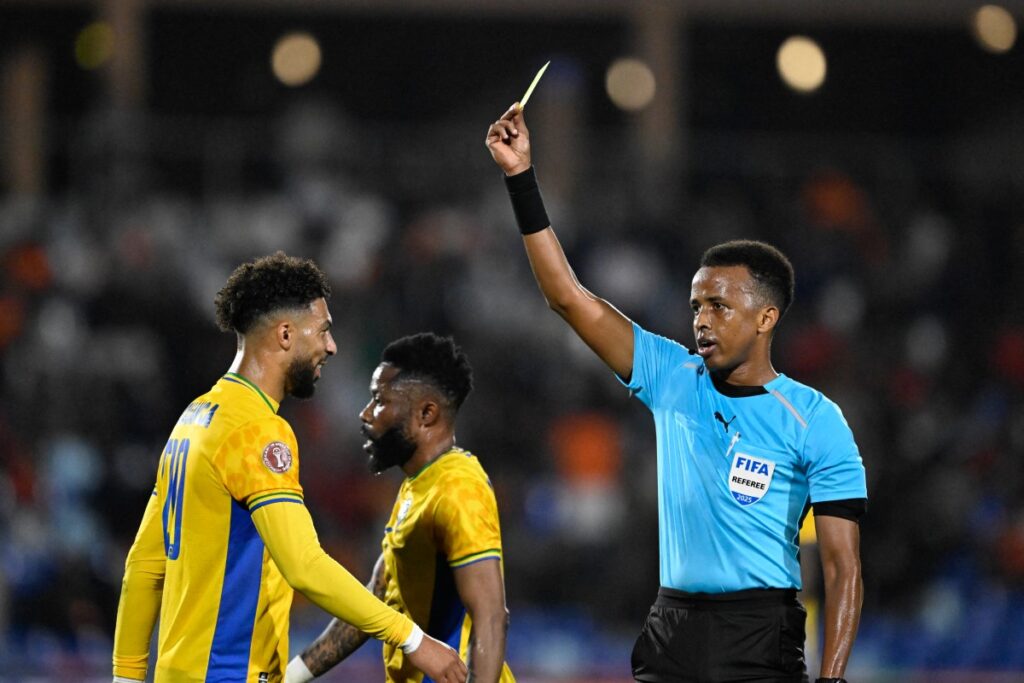
As the United States prepares to host the men’s World Cup, a senior White House official has publicly defended controversial visa rejections that have sidelined a top African referee and barred multiple Iranian team support staff from entering the country, framing the moves as necessary security safeguards ahead of the global tournament.
Andrew Giuliani, executive director of the White House World Cup Task Force and son of former New York City Mayor Rudy Giuliani, laid out the administration’s position during a policy event hosted by the Atlantic Council in Washington, D.C. on Tuesday. To date, he confirmed, all participating players and head coaches from the 35 participating nations that have already entered the U.S. have received entry approval. Only a small number of non-playing event and team officials have been turned away, he emphasized, and each rejection was justified.
The Trump administration’s long-standing travel restrictions have been the backdrop for these decisions, which have drawn increasing attention in the lead-up to the tournament. Somalia, where top referee Omar Artan hails from, is one of the Muslim-majority nations included in the travel ban first implemented by the Trump administration as part of a broader national immigration crackdown. Artan, who was named 2025 Men’s Referee of the Year by the Confederation of African Football, was set to make history as the first Somali referee ever selected to officiate at a World Cup. He was ultimately turned away upon arrival at Miami International Airport.
When pressed for details on Artan’s case, Giuliani declined to share specific information but reiterated that the rejection stemmed from solid security justifications. “While I can’t go into the details, what I can tell you, high level, is it was for a very good reason,” he said.
The visa restrictions also extend to members of Iran’s national team delegation, which will play all three of its group stage matches on U.S. soil amid long-standing diplomatic and military tensions between Washington and Tehran. Already, the Iranian squad was forced to relocate its pre-tournament training base to Mexico as a result of the ongoing standoff. On Tuesday, the Iranian Football Federation confirmed that the team’s allocated fan ticket allotment had been canceled, and multiple support staff members had been denied entry visas.
Giuliani clarified that all of Iran’s official coaching staff will be allowed to enter for the tournament, but a small number of other Iranian delegation officials have been blocked, again for what he called credible security reasons. He hinted that some individuals claiming official team positions may have misled authorities about their roles, noting “there are some people that claim that they are coaches that may not be coaches.”
More broadly, Giuliani confirmed that the administration’s core policy is to bar any individuals with direct ties to the Islamic Revolutionary Guard Corps (IRGC), a branch of Iran’s military that the U.S. designates as a terrorist organization, from entering the country during the World Cup. The goal, he explained, is to strike a careful balance: welcoming all legitimate participants to the global event while preventing any individuals the U.S. deems dangerous or inappropriate from gaining entry under the cover of the tournament.
“we’re striking that balance between making sure that any bad actors that…try to come into the country under the guise of the World Cup will not get access to the United States,” he said, adding that President Trump wants to guarantee a “level playing field” for all teams competing in the tournament.
On the topic of overall event safety, Giuliani offered reassuring updates. He confirmed that as of Tuesday, U.S. intelligence agencies have not identified any credible threats targeting the tournament. Despite that, he said, the intelligence community has ramped up monitoring efforts, which will remain in place around the clock from now through the final match of the tournament scheduled for July 19.