In the hurricane-battered coastal community of Parottee, St Elizabeth, Jamaica, a deep rift has emerged between the national government and long-time locals over a proposed mandatory relocation initiative launched in the wake of Hurricane Melissa. Prime Minister Dr. Andrew Holness first outlined the government’s plan last Thursday during an official event where the National Housing Trust (NHT) handed over 27 new service lots to residents in Malvern, St. Elizabeth.
Holness framed the relocation as a targeted support measure for Parottee, one of the communities hardest hit by the storm. He argued that full reconstruction of the coastal settlement would ultimately cost far more than the value of the properties the government aims to assist, making the move to pre-fabricated container housing a fiscally and practically sound option. In his remarks, the prime minister emphasized that the government is committed to protecting residents’ livelihoods, asset values and personal dignity throughout the process, adding that relocation would be a collaborative, step-by-step process rather than a rushed, overnight transition.
The initiative will be delivered through a multi-agency partnership between the NHT, the Urban Development Corporation and the St Elizabeth Municipal Corporation, with the National Reconstruction and Resilience Authority (NaRRA) taking on a central coordinating role to align efforts and speed up support for displaced residents.
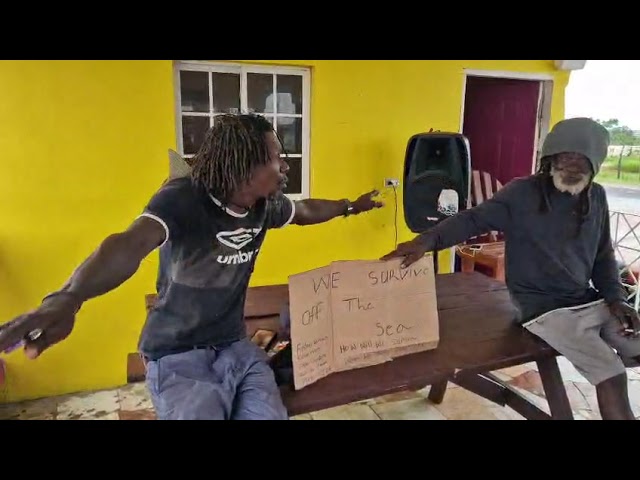
But the plan has been met with staunch pushback from core members of the Parottee community, whose lives and livelihoods are deeply tied to the coastal landscape. Three local fishermen and tourism operators — Ridge Harvey, owner of Captain Ridge Boat Tours, Anthony Sinclair, and Wesley Bent — have publicly rejected the proposal, saying they will not leave the only home many of them have known for generations.
Harvey, a third-generation fisherman, pointed out that the vast majority of Parottee residents rely on fishing and coastal tourism, including boat tours to popular local attraction Pelican Bar, for their daily income. He criticized the proposed container homes as unsuitable and noted that many residents have already begun rebuilding their damaged properties on their own, with some even expanding their homes from damaged original foundations to larger, multi-bedroom structures. For Harvey, relocating residents after they have already endured the trauma of the hurricane is an unnecessary, harmful disruption. He also called out the government for failing to hold community consultations before announcing the plan, noting that the prime minister only visited the community in the storm’s immediate aftermath to survey fatalities and infrastructure damage, not to discuss long-term relocation with residents. Parottee, he added, is a large, spread-out community encompassing Parottee Beach, Hill Top and Spice Grove, and no segment of the community was included in pre-announcement planning.
Bent, a fisherman with nearly 50 years of experience working Parottee’s waters, echoed Harvey’s concerns. Even after losing his home and boat to Hurricane Melissa, Bent said relocating would cut off his only source of income. The proposed relocation site, the nearby inland community of Fullerswood, is an arid area suited only for farming — a trade none of the coastal residents have experience in. “If we relocate from here, we won’t have any income. Here we will survive with our daily hustling,” Bent explained.
Sinclair, another long-time fisherman who has built his life in Parottee after moving from Old Harbour, shared the same stance. His home was destroyed in the storm, but he is already rebuilding on his current plot and has no intention of leaving. “When I heard the report I decided that I have to come out and speak,” he said.
The standoff highlights the tension between government risk mitigation and disaster recovery planning and the deep cultural and economic ties that bind coastal communities to their traditional lands.