博客

  • GTUC president calls for cost of living subsidies

    GTUC president calls for cost of living subsidies

    As Guyana kicked off its annual Labour Week celebrations on Sunday, April 26, 2026, the country’s leading trade union chief has amplified pressure on the ruling administration to roll out broad new consumer subsidies, blaming cascading global conflicts for driving up everyday costs for working Guyanese.

    Norris Witter, president of the Guyana Trades Union Congress (GTUC), made the appeal immediately after he joined fellow union representatives in laying a ceremonial wreath at the Hubert Nathaniel Critchlow monument, located on the grounds of Georgetown’s Parliament Building. The annual tribute opens the country’s Labour Week, which honors the legacy of Critchlow, widely recognized as the founding father of Guyana’s trade union movement.

    Speaking to reporters after the ceremony, Witter traced the current cost-of-living crisis in Guyana back to two overlapping global conflicts: the ongoing war between Russia and Ukraine, and the escalating tensions in the Persian Gulf. According to Witter, these dual crises have severely disrupted global supply chains, exacerbated fossil fuel shortages, and driven up prices for a wide range of essential goods nationwide.

    To counteract these inflationary pressures, Witter argued that targeted government subsidies — what he called the “invisible hand of the State” — are the most effective immediate tool to stabilize prices for basic commodities. The call comes as transportation providers across the country have already implemented fare hikes: public buses, private taxis, and domestic airlines have all raised ticket prices in response to sharp spikes in global fuel costs.

    Witter criticized the incumbent People’s Progressive Party Civic (PPPC) administration, arguing that the broad subsidy package the GTUC demands would require political will that the current government has so far failed to demonstrate. He accused the PPPC of overly aligning with Western geopolitical interests instead of prioritizing the economic needs of Guyanese workers, and called on the government to adopt a more inclusive approach that accommodates diverse perspectives from across Guyanese society.

    Currently, the government already implements limited energy-related subsidies: it covers extra fuel costs for the state-owned Guyana Power and Light utility and Guyana Water Incorporated to prevent them from passing higher fuel expenses on to residential and commercial customers. The administration has also eliminated all taxes on gasoline and diesel, and state-owned petroleum firm Guyana Oil Company (GUYOIL) sells fuel at below-market rates to act as a price anchor for private fuel importers and distributors.

    Witter acknowledged that many union members expect private and public sector employers to raise wages and salaries to help workers keep up with rising costs. However, he emphasized that the ultimate responsibility for taming inflation falls on national policymakers. “Even though the unions will have a right to engage the employers for meaningful increases, we must not lose sight of the fact that it is political managers who manage the national economy, who have that foremost responsibility to ensure that the kinds of policies and programmes are put in place to arrest the increase in the cost of living,” Witter said.

    Witter’s comments echo recent criticism from former Guyanese Finance Minister Winston Jordan, who has also called on the PPPC government to take stronger action to address the cost of living. Jordan recently recommended that the government distribute an interim salary increase to public workers using funds already allocated in the 2026 national budget, then revise the entire budget to cut non-essential spending on low-priority infrastructure projects. He has also faulted the administration for failing to roll out a public fuel conservation education campaign and implement formal policies to crack down on predatory price gouging by retailers and suppliers.


  • Situation report on the crisis in Haiti (January-March 2026)

    Situation report on the crisis in Haiti (January-March 2026)

    Three months into 2026, Haiti’s humanitarian catastrophe continues to deepen, as brutal gang violence leaves large swathes of the country uninhabitable and pushes millions of vulnerable people into displacement. Hard-hit regions including the Artibonite and Central departments, as well as the densely populated Port-au-Prince metropolitan area, have seen widespread destruction of residential property, alongside sharp spikes in kidnapping and sexual violence. Current data confirms that roughly 1.4 million Haitians have been forced to abandon their homes to seek safety, while thousands more have been killed since the crisis escalated. Amidst the collapsing security environment, the United Nations Population Fund (UNFPA) and its local implementing partners have remained on the ground to deliver life-saving sexual and reproductive health (SRH) services, while stepping up efforts to prevent and respond to gender-based violence (GBV) that disproportionately impacts women and adolescent girls. Between January and March 2026, the agency delivered critical SRH care to 7,470 vulnerable people, and ran GBV intervention and support programs that reached 5,580 survivors and at-risk community members. To meet the immediate hygiene and health needs of displaced women and girls, UNFPA also distributed 2,792 dignity kits, and supplied 100 inter-agency reproductive health kits to local health facilities and non-governmental organizations, enough to cover the care needs of 5,489 people across crisis-hit regions. To scale up these life-saving operations and meet the rapidly growing demand for services across the country in 2026, UNFPA has launched a $32.8 million emergency funding appeal. However, as of the end of March 2026, the agency has only received $1.8 million in donations since the start of the year – less than 5.5% of the total funding required. With humanitarian needs worsening by the day and violence continuing to displace more Haitian families, the UN body has warned that additional urgent funding is critical to ensure women and girls retain access to essential health care and protection services that are already on the brink of collapse.

  • Haiti : Access work underway at the Mont Fleury solar power plant site

    Haiti : Access work underway at the Mont Fleury solar power plant site

    Haiti’s landmark renewable energy transition is moving one step closer to reality, as access improvement works get underway at the Mont Fleury site earmarked for the new Jacmel photovoltaic solar power plant. This progress comes on the heels of the recent construction contract signing for the project, which stands as one of the Caribbean nation’s most ambitious renewable energy investments in recent years.

    Joseph Almathe Pierre Louis, Haiti’s Minister of Public Works, Transport and Communications (MTPTC), has formally directed engineering teams to accelerate upgrades to key road sections leading to the project site. The Southeast Departmental Directorate (DDSE-Jacmel) is providing technical oversight and support for the infrastructure works, which serve a dual purpose: clearing the way for smooth construction of the solar facility and delivering long-awaited connectivity improvements for local residents in Mont Fleury, the sixth communal section of Jacmel.

    As the official project owner, MTPTC is overseeing strict quality controls and regular progress monitoring for the entire initiative. The project is backed by more than $17 million in financing from the World Bank, disbursed through Haiti’s flagship *Renewable Energy for All* (SREP) program, an initiative designed to expand affordable, reliable access to electricity across the country.

    The construction contract was awarded to ESD Engineering Service S.R.L., a Dominican-based international engineering firm with extensive experience in large-scale energy infrastructure. The company is tasked with delivering a fully completed, turnkey facility equipped with cutting-edge clean energy technology. Key components of the finished plant will include a 4 megawatt solar generation capacity (with a guaranteed minimum output of 3.35 megawatts), a 6 megawatt-hour lithium-ion battery energy storage system (BESS) to store excess power for low-sun periods, and comprehensive grid expansion works. These upgrades include the installation of roughly 4 kilometers of new low-voltage power lines and 7 kilometers of 23 kV medium-voltage lines to connect the facility to the national grid.

    A standout feature of the project is its advanced grid-forming technology, a system engineered to maintain consistent voltage and frequency stability across Haiti’s electrical grid. This capability means the plant will continue to deliver reliable power even if the nation’s existing thermal power facilities shut down unexpectedly, or during extended periods of low sunlight. The technology addresses one of the biggest longstanding challenges facing Haiti’s fragile energy sector: persistent grid instability and widespread outages.

    Construction of the solar power plant is scheduled to take 13 months, with work kicking off in February 2026 and commercial operations on track to launch by March 2027. Beyond boosting generation capacity, the project is expected to set a precedent for future renewable energy investment in Haiti, helping the nation reduce its dependence on expensive imported fossil fuels and expand access to electricity for underserved communities across the southeast region.

  • Abinader inaugurates RD$281 million highway project in Las Gordas, Nagua

    Abinader inaugurates RD$281 million highway project in Las Gordas, Nagua

    After more than half a century of unmet community demands, Dominican Republic President Luis Abinader has officially opened the 13.8-kilometer Mata Bonita–Los Memisos highway in Nagua’s Las Gordas district, delivering a transformative infrastructure upgrade to María Trinidad Sánchez Province.

    The new highway, constructed by the Dominican Hydroelectric Generation Company (EGEHID) with a total investment of over 281 million Dominican pesos (approximately US$5 million), delivers connectedness gains to four key rural communities: Los Memisos, Mata Bonita, Los Guayabitos, and Las Catalinas. Beyond improving daily travel for local residents, the route also cuts travel time to the Rosa Julia de la Cruz, commonly known as Boba, hydroelectric power plant, streamlining access for facility operations and maintenance.

    Engineers and construction crews outfitted the highway with a full suite of safety and accessibility features, including full asphalt paving, reinforced drainage networks, culverts for water runoff management, concrete curbs, clear road signage, strategically placed speed bumps, and reinforced slope protection to prevent erosion and landslide risks. These upgrades are designed to reduce accident rates and support smoother, more reliable traffic flow year-round, even during extreme weather events common to the region.

    Speaking at the inauguration ceremony, EGEHID administrator Rafael Salazar emphasized that the project is fully aligned with the administration’s core priorities to uplift underserved vulnerable communities across the country. Salazar noted that improved road infrastructure will strengthen emergency response capabilities for medical and disaster events, cut commute times for students traveling to local schools, and reduce transportation costs for small-scale agricultural producers looking to get their crops to regional markets.

    Local community leaders and residents have praised the initiative, noting that the new highway ends decades of geographic isolation for the area’s rural populations. Stakeholders highlighted that enhanced connectivity will unlock new economic opportunities, attract small business investment, and lay the groundwork for long-term sustainable development across rural María Trinidad Sánchez Province. The completion of the project marks a key campaign promise fulfilled by the Abinader administration, demonstrating its commitment to delivering public infrastructure improvements to underserved regions outside the country’s major urban centers.

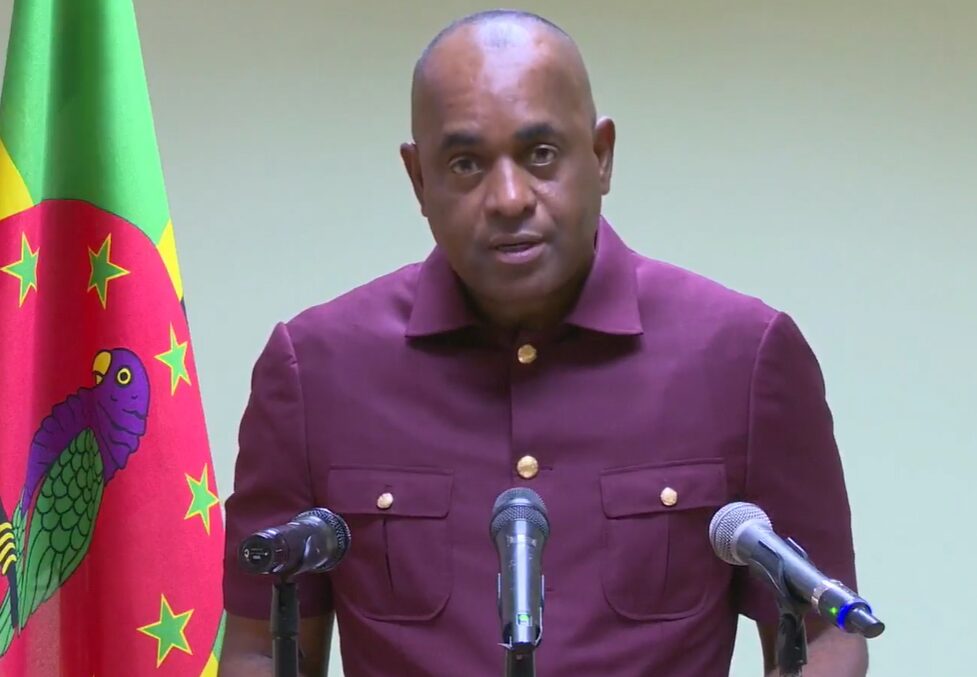
  • LIVE NOW: PM Skerrit update on effects of heavy rainfall

    LIVE NOW: PM Skerrit update on effects of heavy rainfall

    The content submitted for news processing only contains social media sharing prompts: “Share”, “Tweet”, “Share”, “Pin”. No complete, substantive news text related to a specific event, topic or development is included in the user’s input. Without the core body and key information of the original news, it is impossible to carry out a complete in-depth analysis, core point extraction and structured rewriting of a formal news report. This incomplete input fails to provide the necessary basic information required for the requested news processing work.

  • Voorstel wetswijziging moet uitvaartsector strenger reguleren

    Voorstel wetswijziging moet uitvaartsector strenger reguleren

    On Friday, a working committee of Suriname’s parliament led by Iona Rogers-Edwards held an in-depth discussion on a proposed update to the country’s Burial Act, a legislative change aimed at bringing much-needed reform to the nation’s fragmented funeral services industry.

    The core goals of the proposed amendments are threefold: to expand government oversight of funeral operations, improve public health standards for body handling and burial site management, and standardize professional practices across the entire sector. The bill also seeks to introduce stricter legal requirements for the administration of public and private cemeteries, as well as formalize protocols for the respectful treatment of deceased persons, addressing longstanding gaps in current regulation.

    During the session of the Committee of Rapporteurs, stakeholders including the newly formed Collective of Funeral Undertakers, the main industry umbrella group, requested additional time to submit formal written comments on the draft legislation, a request the committee granted. Members also turned their attention to outdated fee structures for legal corpse transportation, noting that the current fixed levy of 250 Surinamese dollars (SRD) no longer aligns with current operational costs. A proposal to double the levy to SRD 500 is currently under active consideration.

    Committee members also highlighted a series of pressing systemic challenges plaguing the sector, including widespread lack of adequate safety protocols for post-mortem care, and weak enforcement of rules governing private funeral service providers. These gaps have created risks for both funeral workers and public health, the committee confirmed.

    The committee reaffirmed that stronger, more consistent regulation is a critical public priority, and all input from industry stakeholders, community groups and other relevant parties will be integrated into the next stages of the legislative process. Attendees at the Friday session, in addition to chair Rogers-Edwards, included committee members Le-Roy Doorson, Dorothy Hoever and Dinotha Vorswijk. All submitted insights and proposals will be incorporated into the draft final report for the full legislative body before a final vote on the amendments.

  • Public Schools dominate at Classique Lighting Caribbean Communal Invitational

    Public Schools dominate at Classique Lighting Caribbean Communal Invitational

    Grenada’s young track and field stars took center stage on Saturday, April 25, 2026, for the second annual Classique Lighting Caribbean Communal Invitational, the only competitive athletics event on the national calendar that pits elite young runners from the country’s public and private primary school systems against one another directly.

    Co-hosted for the second consecutive year by Classique Lighting Caribbean and the Communal Cooperative Credit Union, the invitational brought together the top four qualifying athletes from two of the nation’s biggest primary school athletics championships: the Huggins Private Primary School Championships and the GUT National Primary Schools Championships. Designed to foster friendly cross-sector rivalry while elevating youth athletic development, the 2026 iteration delivered packed, high-energy competition across four age divisions and six sprint distances.

    Young competitors took to the track in the Under-7, Under-9, Under-11, and Under-13 age groups, contesting the 60m, 80m, 100m, 150m, 200m, and 400m sprints. Throughout the afternoon, athletes turned in consistent, high-quality performances that kept spectators engaged and highlighted the depth of young running talent across both public and private school networks.

    By the close of competition, public school athletes claimed a decisive lead in the overall medal standings, racking up 15 gold medals, 8 silver medals, and 11 bronze medals to secure the overall team advantage. Private school competitors finished with 1 gold, 8 silver, and 5 bronze medals total.

    Multiple standout performances and podium sweeps from public school athletes anchored their commanding lead. In the Under-7 division, Kalyssa Phillip claimed top honors in both the girls’ 60m and 80m, while Leonardo Alexander took gold in the boys’ 60m. Private schools earned their only gold of the day in the Under-7 boys’ 80m, where Xayden DeCoteau Pierre pulled off a resilient final push to cross the finish line first.

    The Under-9 division saw another sweep for public schools, with Kaylee Abraham taking gold in the girls’ 80m and 150m, and Dimari Paul claiming both boys’ sprint titles. In the Under-11 division, Taniyah Gibbs LaTouche dominated the girls’ 100m and 200m, while Kellie Howell matched the feat for public schools in the boys’ events. The senior Under-13 division delivered the most impressive individual performances of the day: Jammie Smith swept the girls’ 100m, 200m, and 400m to claim three gold medals, while Jediel Andrew took gold in the boys’ 100m and 200m, and Tyrone Alexis closed out the sprint slate with a gold in the boys’ 400m.

    Organizers emphasized that despite the lopsided final medal count, the event achieved its core mission beyond the podium. The invitational was created not just to crown winners, but to give promising young athletes access to high-level competitive experience that will help them grow in the sport, while also creating shared community engagement opportunities for local corporate teams and grassroots community groups.

    With two consecutive successful stagings under its belt and consistent backing from local corporate sponsors, the Classique Lighting Caribbean Communal Invitational has solidified its status as one of Grenada’s flagship youth athletics events. More than a competition, the meet has become a celebrated annual tradition that honors athletic excellence, strengthens community bonds, and reinforces the power of collaborative communal development in Grenada.

  • Huggins outshines competition at Classique Lighting Communal Invitational

    Huggins outshines competition at Classique Lighting Communal Invitational

    The second annual Classique Lighting Caribbean Communal Invitational wrapped up its two-day competition over the weekend of April 25-26, with corporate track and field squad Geo. F Huggins and Company Ltd. delivering an unforgettable dominant performance, headlined by star sprinter Tisha Checkley who claimed two individual gold medals. Held in Grenada, the 2026 iteration of the invitational drew 12 competing teams across all categories, with senior corporate sprint events emerging as the most anticipated attractions of the tournament.

    Checkley’s standout run came first in the women’s 100m dash, where she led a historic full podium sweep for the Huggins team. Crossing the finish line in a winning time of 14.10 seconds, Checkley finished well ahead of her competitors, with teammates Lanaya Woodroofe and Jaydee Samuel taking silver and bronze respectively with times of 14.83 seconds and 15.04 seconds. The 1-2-3 finish cemented the Huggins squad’s dominance, putting a substantial gap between the team and its closest corporate rival, Jonas Browne & Hubbard Ltd.

    Not content with one gold medal, Checkley returned to the track later the same day to compete in the women’s 60m dash final, which was split into two timed sectional heats. Earlisha Prescott of Digicel Grenada set an early fast pace in the first heat, clocking 9.28 seconds to hold the top position going into the second heat. But Checkley delivered a powerful, explosive performance out of the starting blocks, pulling away from the second heat field to stop the clock at 8.88 seconds — fast enough to secure the overall gold medal. Digicel rounded out the 60m podium, with Prescott taking silver and Corene Procope claiming bronze in 9.32 seconds.

    Martin Bedeau, Managing Director of event organizer Classique Lighting Caribbean (Grenada) and the creator of the invitational, highlighted the strong corporate participation as a key milestone for the growing competition. “I am incredibly proud of the performance from Team Huggins,” Bedeau said in comments following the event. “We look forward to seeing even more corporate partners participating in future editions of the invitational as we continue to grow this event.”

    Organizers confirmed that the corporate competitive category will remain a core centerpiece of the annual invitational moving forward, following the success of the 2026 staging and the high level of competition displayed by teams like Geo. F Huggins.

  • Sarah Ann Gill remembered as champion of faith, freedom and equality

    Sarah Ann Gill remembered as champion of faith, freedom and equality

    As the Methodist Church in Barbados celebrates 236 years of continuous operation on the island, community leaders have gathered to honor the enduring legacy of Sarah Ann Gill, the country’s beloved National Hero and a groundbreaking champion of religious freedom who rose to prominence during an era of violent persecution against dissenting faith communities.

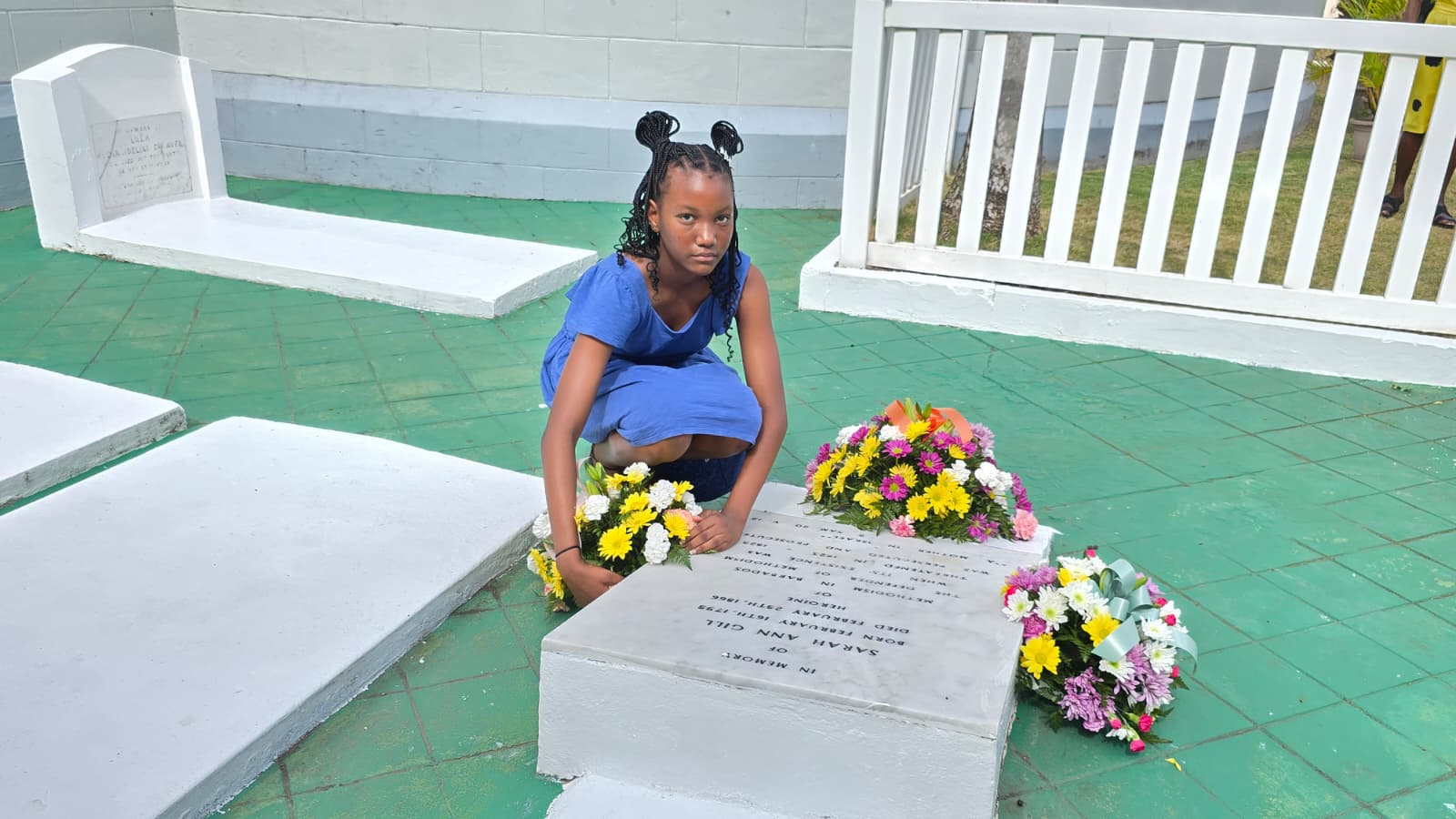
    The commemoration took the form of a quiet, respectful wreath-laying ceremony held Sunday at Bridgetown’s James Street Methodist Church, where senior Methodist preacher Natalie Phillips delivered a reflective address exploring Gill’s lifelong work and its ongoing relevance to the church’s core mission of advancing equal rights and unhindered freedom of worship.

    “Even when she faced brutal persecution and open death threats, Sarah Ann Gill never abandoned the Methodist cause,” Phillips told attendees. “She kept the spirit of our faith alive, provided critical education to enslaved people at great personal risk, and spent her life pushing for greater religious and racial tolerance across Barbadian society.”

    Phillips emphasized that Gill’s contributions stretched far beyond her own individual acts of courage, pointing to the broader, trailblazing role the early Methodist Church played in challenging systemic racial injustice during the height of chattel slavery in the Caribbean. “At a time when every legal and social institution on the island — including the government-established church — openly classified African people as property to be bought and sold, this denomination stepped straight into the heart of Bridgetown’s oppressive power structure to defend the full humanity of enslaved and free African people across the region,” she said.

    Against this backdrop of deadly systemic oppression, Gill remained unwavering in her deeply held convictions, Phillips noted. “Strengthened by her Christian faith and the church’s mission of justice, she never bowed to threats of violence or death, even when those threats were carried out against her. She refused to step back from the work that mattered most.”

    Gill did more than just provide spiritual support to marginalized communities; she actively challenged the legal and institutional systems that perpetuated chattel slavery, all while expanding access to education and religious instruction for enslaved Africans across the island. “She took on the most powerful, self-interested defenders of slavery that sat in the colonial parliament, and she won,” Phillips explained. “By expanding access to religion and education for the enslaved, she accelerated the movement toward full emancipation that would eventually end slavery in Barbados.”

    Phillips also reminded the audience of the severe legal risks Gill took to carry out this work. “We have to remember that in that period, colonial law explicitly criminalized educating enslaved people. Every lesson she gave was an act of open rebellion against an unjust system.”

    Beyond her immediate impact on the fight against slavery, Gill left a lasting physical and symbolic legacy across Barbados that endures to this day. Multiple houses of worship, including the Gill Memorial Church, bear her name, and she is buried in the James Street Methodist Churchyard — a plot of land that was Gill’s own private property, which she donated to build the church in the first place.

    Even though her final resting place is a modest, unassuming site, its meaning far outstrips its simple appearance, Phillips said. “Her grave is quiet and understated, a stark contrast to the monumental, transformative contribution she made to both religious life and the broader social fabric of Barbados.”

    In closing, Phillips noted that Gill’s legacy remains a critical guiding example for faith communities across the world grappling with modern social justice challenges. Her message of unyielding hope and resilience has stood the test of time, and her extraordinary courage and commitment to justice have secured her an immortal place in Barbadian history.

  • DLP marks 71 years with call for renewal

    DLP marks 71 years with call for renewal

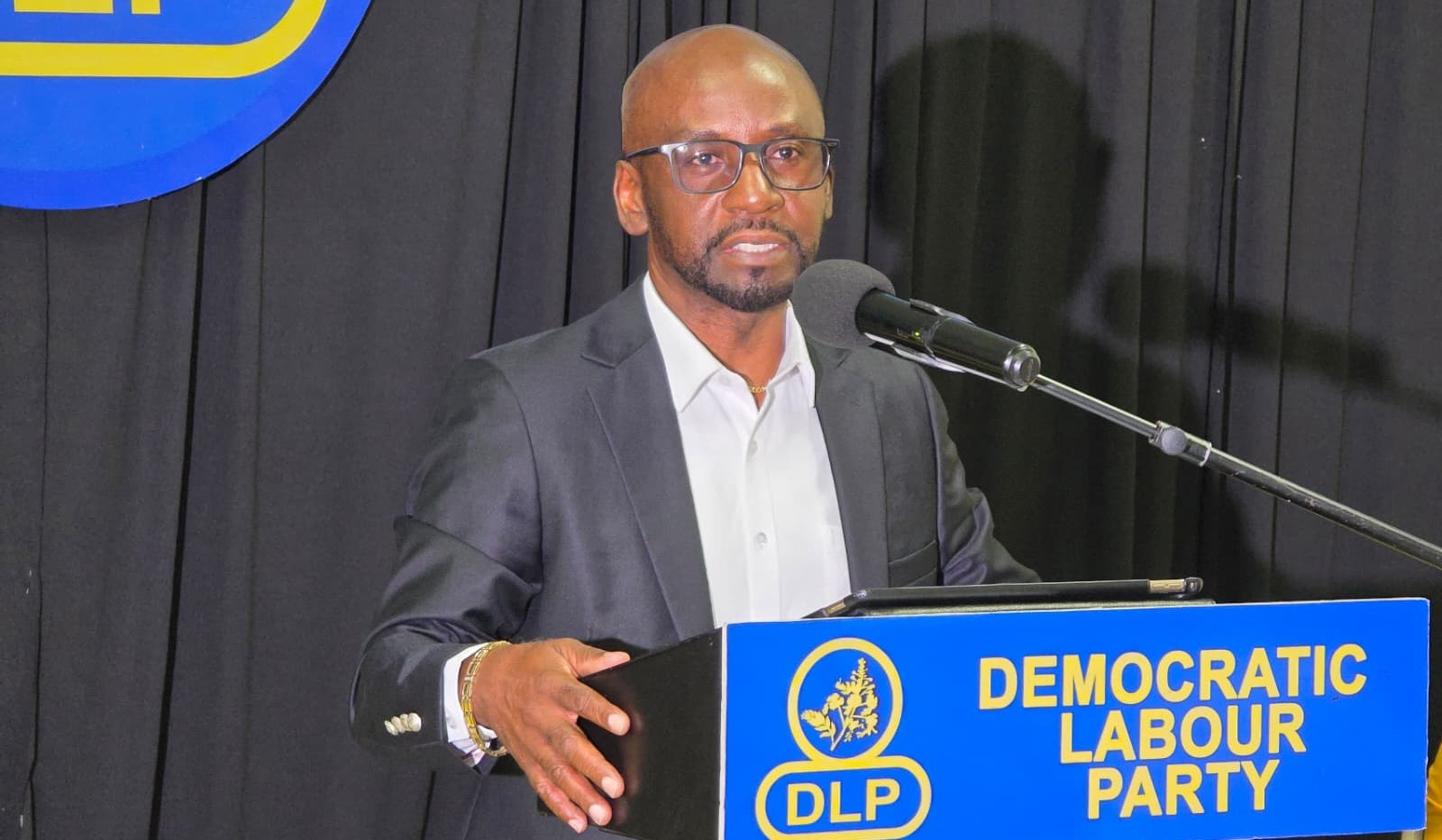
    On the 71st anniversary of its founding, Barbados’ historic Democratic Labour Party (DLP) has used its annual Founders Day observance to invite members to celebrate its seven-decade legacy of public service while issuing a rallying cry for organizational renewal and community reconnection. The commemoration, outlined in an official media statement published Sunday, opened with reflections from acting DLP President Stephen Lashley, who walked through the party’s origins rooted in the vision of a more equal, justice-centered Barbados when it was first established on April 27, 1955.

    From its earliest days, Lashley emphasized, the DLP has never been just a political organization — it emerged as a grassroots movement driven by courage and a deep commitment to building a fair, inclusive society anchored in the principles of social justice. Over its 71 years of existence, the party has played an unparalleled role in shaping the modern Barbadian nation, delivering a series of transformative, long-lasting achievements that continue to shape daily life for Barbadians today.

    Among the most foundational contributions Lashley highlighted is the 1972 establishment of the Central Bank of Barbados, an institution created to protect the country’s monetary stability and insulate the national economy from external shocks. Beyond financial governance, the DLP spearheaded far-reaching public investments in accessible education that have unlocked opportunity for multiple generations of Barbadians, built robust social protection systems that guarantee basic dignity for citizens facing hardship, and strengthened core public institutions to embed greater accountability and effective governance across the state.

    These milestones were not random policy wins, Lashley argued: they were deliberate, interconnected steps in a coordinated nation-building project designed to construct a modern Barbadian social democracy centered on equal opportunity, shared fairness, and collective national pride. Crucially, he added, the DLP’s most lasting contribution goes beyond individual policy achievements — the party led Barbados to full independence, then built the entire institutional framework required to sustain sovereign self-governance, laying the groundwork for decades of national stability, resilience, and long-term growth.

    Decades after those foundational structures were put in place, they have stood the test of time, Lashley noted. “It was this party that laid that foundation, establishing the structures that have enabled Barbados to endure, adapt, and thrive,” he said.

    Shifting focus from the party’s historic legacy to its current path, Lashley stressed that commemoration must go hand in hand with renewal and recommitment to the DLP’s core mission. “We are called not only to remember, but to renew. Our history is a source of strength, but it is also a responsibility. It reminds us that we are heirs to a proud legacy and the custodians of a future yet to be fully realised,” he said.

    To advance that future, Lashley urged DLP members to rebuild direct ties with local communities, repair public trust, and reposition the party as the leading political voice for ordinary Barbadians. “The call now is for unity, for recommitment, and for action, guided by the clear wishes of our people. Let us reconnect with each other. Let us re-engage with our communities. Let us bring forward the full measure of our talent, our ideas, and our energy in service of Barbados. The task before us is not simply to rebuild, but to reimagine, to rekindle trust and confidence in who we are as a people, to once again position this great party as the voice of the people and a voice for national progress,” he said.

    Acknowledging openly that the DLP has faced significant setbacks and challenges in recent years, Lashley insisted that the party’s founding spirit remains unbroken. “Though we have faced recent challenges, the spirit of the Democratic Labour Party remains unbroken. Our mission endures with you, the people of Barbados, as our anchor; our purpose is clear,” he said.

    Expressing firm confidence that the DLP can achieve a full revival through intentional hard work, humble service to citizens, and abiding faith in the Barbadian people, Lashley closed by noting that the celebration of past founders must also lift up the next generation of party leaders who will carry the movement forward. The party’s future, he emphasized, will be built collectively through shared service and unwavering commitment to the DLP’s core mission.