
For Haiti, one of the hemisphere’s most economically vulnerable nations, diaspora remittances are far more than a transfer of personal funds — they form the backbone of the entire national economy. These cross-border payments currently account for roughly 16 percent of Haiti’s total gross domestic product, underpinning everyday household spending for millions of people and serving as the country’s single largest source of much-needed foreign currency. Now, a new academic study is sounding a warning about the potential economic fallout that could follow changes to the U.S. Temporary Protected Status (TPS), a policy that allows thousands of Haitian migrants to live and work legally in the United States. The analysis was presented as part of the Inter-American Development Bank’s “Reflection Wednesdays” public lecture series, prepared by three researchers — Kensley Blaise, Jean Marie Cayemitte, and Jean Gardy Victor — from Haiti’s Department of Economic and Financial Research (DREF). The research team centered its work on modeling what could happen if Haiti experienced a large, unanticipated drop in remittance inflows, a scenario that could unfold if TPS is terminated. Currently, close to 80 percent of all remittances sent to Haiti originate from Haitian communities living and working in the United States. If the U.S. government ends TPS protections, thousands of Haitian migrants could lose their legal right to work, face deportation, or otherwise be forced into informal employment that would curtail their ability to send money back to family members in Haiti, the study notes. The research’s key findings point to clear, cascading risks across multiple sectors of Haiti’s economy. A sustained decline in remittance volumes would put gradual but consistent downward pressure on Haiti’s exchange rate, worsening existing currency instability that already drives up the cost of imported goods, which Haiti relies on for much of its food and energy supplies. The study adds that the most pronounced and long-lasting impact of a drop in remittances would fall on Haiti’s public finances, which are already chronically unstable amid the country’s ongoing political and social crisis. Crucially, the researchers emphasize that these outcomes are not inevitable: the study models potential impacts, it does not predict that a sharp decline in remittances will automatically occur following changes to TPS. The full 38-page report, published in French, is available for public download to allow policymakers, civil society groups, and researchers to review the findings in detail as discussions around the future of TPS for Haitian migrants continue.
博客
-

Zes verdachten met wapens aangehouden bij goudconcessie
In a targeted law enforcement operation carried out in Suriname, local police have taken six individuals into custody following a routine stop of a suspicious vehicle near a gold concession in the remote area of Maripaston. The operation, which unfolded on 29 September, uncovered a significant stockpile of illegal firearms and criminal equipment during a search of the vehicle, according to official police statements.
Law enforcement officers recovered a broad array of weaponry during the search, including a pistol, a homemade fully automatic machine gun, and a hunting rifle. Alongside the firearms, investigators also found large quantities of matching ammunition, balaclavas, camouflage tactical gloves, and multiple mobile phones, all of which have been seized as critical evidence for the ongoing criminal investigation.
The six detainees are now facing a series of serious criminal charges. Beyond violating the nation’s strict firearms legislation, they are accused of participating in a structured criminal organization and engaging in preparatory acts linked to planned armed robbery. Following consultations between investigating officers and the Public Prosecution Service, all six suspects have been placed in pre-trial detention as investigators continue to unpack the details of the alleged criminal plot. The operation marks a significant win for local law enforcement in disrupting potential violent criminal activity targeting gold mining operations in the region.
-
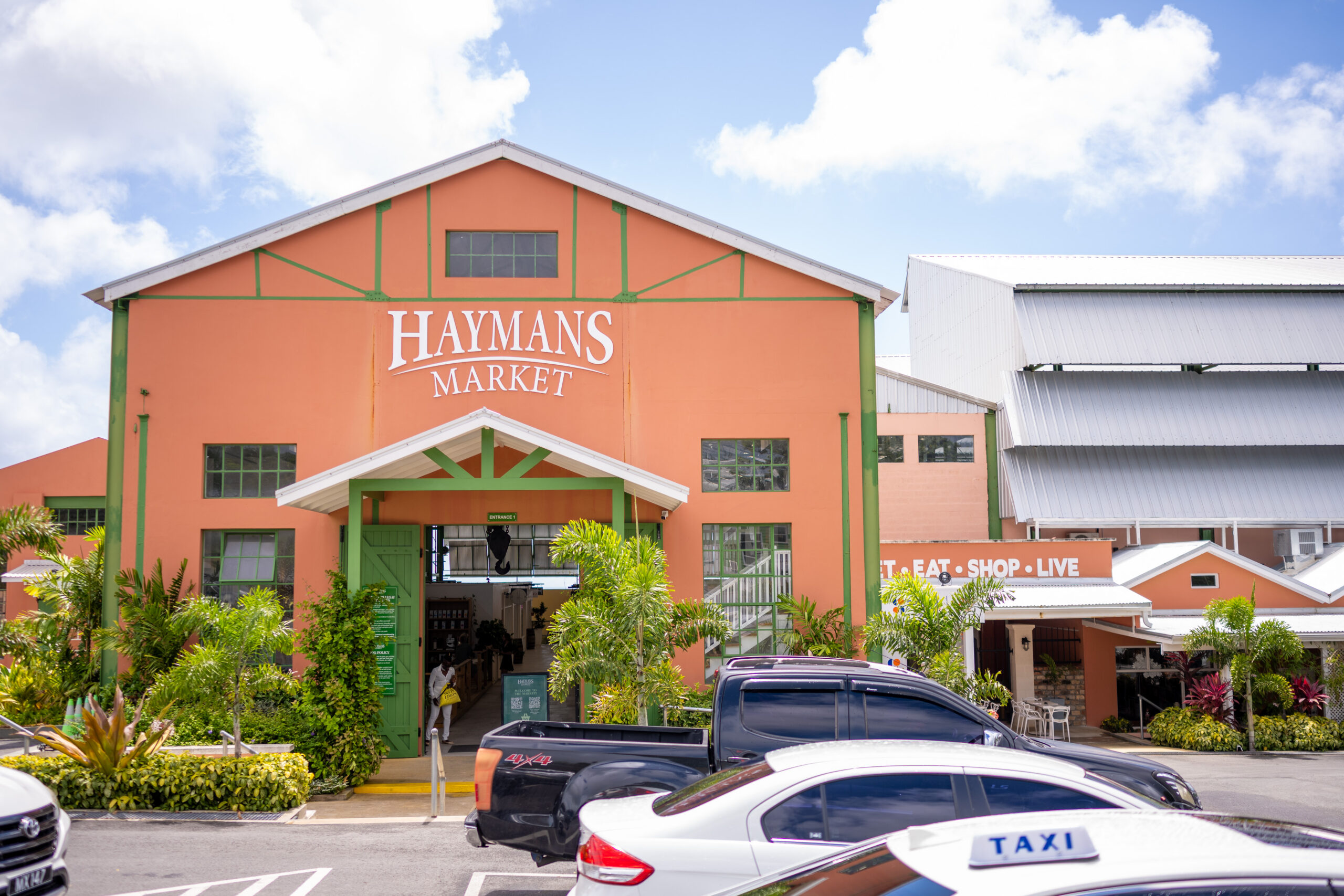
Haymans Market set to reopen October 1 with expanded experiences
One of Barbados’ most promising up-and-coming visitor and lifestyle destinations is gearing up to welcome guests back to its doors next month, with a slate of exciting new updates designed to cement its status as a must-visit location on the island. Haymans Market, located within a repurposed historic sugar factory in St Peter, will officially resume operations on October 1, following a four-week closure focused on facility improvements, new tenant onboarding, and expanding the range of experiences available to both local and international guests.
The upcoming reopening brings a host of tangible upgrades for visitors to enjoy, starting with a new permanent covering for the popular Cooling Deck, an open-air space on the market’s northwestern edge. Named for the historic cooling stations that once operated within the old sugar factory, the deck can now be comfortably used in any weather, from bright sunny afternoons to unexpected rain showers.
In a particularly exciting addition that ties the market’s industrial roots to Barbados’ world-famous beverage culture, the site will launch a brand-new Sugar and Rum Tour. Operations Manager Jacob Weatherhead explained that the guided attraction will walk guests through the history of sugar production at the former Haymans facility and across Barbados, ending with a curated rum tasting at the Cooling Deck Bar.
Beyond permanent new attractions, the market has released a full calendar of engaging events running through the end of 2024. The annual fan-favorite Haymans Halloween Haunt will return this year, running across two weekends: October 23–24 and October 30–31. This year’s event will feature four distinct haunted houses, traditional trick-or-treating for all ages, and a range of unexpected spooky surprises for attendees.
Looking further into the final quarter, a weekly Sunday Farmers’ Market will become a permanent fixture, joining the market’s already established quarterly Pop-Up and Vintage Markets, the Under The Sun Art Festival, and a full slate of seasonal holiday activities running through the Christmas period. Upcoming milestone events also include the market’s third anniversary celebration on December 1, 2025, and the international FRAME contemporary Art Fair scheduled to launch at the site in March 2027.
Since its initial opening on December 1, 2023, Haymans Market has seen rapid expansion that has far outpaced its original business plan. What launched as a local retail hub has grown into the largest indoor market in all of Barbados, now home to more than 85 separate businesses spanning local traders, artisan merchants, restaurants, and a wide range of service providers. Over the past 12 months of operation, the site has welcomed more than 250,000 total visits from locals and tourists alike.
Today, the market’s offerings extend far beyond traditional retail, with goods ranging from handcrafted Barbadian gifts, fine local art, one-of-a-kind souvenirs, and handmade fashion to custom homeware. Food offerings span from casual street food stalls to full-service fine dining restaurants, while the site also boasts a full suite of lifestyle amenities including a fully equipped gym, professional padel tennis courts, dedicated studios for yoga, Pilates, and Reiki, and an on-site contemporary art gallery.
One of the most notable markers of the market’s success, Weatherhead noted, is the growth of the local small businesses that launched with the venue. Multiple local entrepreneurs who got their start at Haymans in small 10-by-10-foot booths have already outgrown their initial spaces and moved into larger retail units within the market as they built loyal customer bases.
“We are particularly proud to see local entrepreneurs who began in small booths build loyal customer bases and move into larger spaces at Haymans. That growth is one of the clearest signs that the market is creating genuine opportunities for Barbadian businesses,” Weatherhead said. “These experiences reflect our wider ambition to make Haymans a place where Barbados’ history, culture and creativity can be experienced in engaging new ways.”
The Haymans Market site has a long history in Barbados’ sugar industry, and it has been fully restored for its new role as a community and visitor destination. The property, located just off Highway 2A in St Peter, was acquired by Sun Group Inc. in 2020, before being redeveloped into the multi-use market that operates there today.
-

Pringle Proposes Raising Antigua and Barbuda’s Age of Consent to 18
During Monday’s parliamentary debate on the 2026 Sexual Offences (Amendment) Bill, a piece of legislation crafted to introduce harsher punishments for individuals convicted of sexual violence and exploitation, Antigua and Barbuda’s opposition leader Jamal Pringle has put forward a consequential proposal to expand the scope of youth protection measures: raising the legal age of consent from 16 to 18 years old.
While Pringle confirmed his full backing for the core objectives of the amendment bill, which centers on strengthening penalties for offenders, he argued that policymakers must look beyond punitive measures to address systemic gaps in youth safeguarding. He questioned whether the current 16-year age threshold remains aligned with the social and developmental realities of young people in the country today.
Speaking before the House of Representatives, Pringle laid out his rationale for the proposed change. “I believe the time has come … for us to move this age of 16 … to 18,” he stated. He pointed out that 16-year-olds still rely heavily on parental and guardian guidance for major life decisions, noting that leaving the age of consent at 16 creates elevated risk of coercion and exploitation by older adults who leverage power imbalances to manipulate underage teenagers.
The proposal quickly sparked cross-bench discussion among sitting government lawmakers, drawing mixed but largely open responses from cabinet members. Social Transformation Minister Rawdon Turner acknowledged that the idea merited further review, but urged cautious consideration, noting that raising the age of consent would not resolve all forms of child sexual abuse. He specifically highlighted intra-familial abuse cases, where harm is perpetrated by parents, close relatives or trusted caregivers, incidents that a legal age adjustment would not fully prevent.
Education Minister Daryll Matthew threw his support behind opening a formal review of the proposal, offering a straightforward analogy to defend the change: “If you can’t drive until you’re 18, you can’t vote until you’re 18, why must you be able to have sex … at 16?” Matthew also used the debate to call for new targeted safeguards to protect students from adult predators who target young people on school grounds and in surrounding neighborhoods.
Attorney General Sir Steadroy Benjamin confirmed that the governing administration would take the opposition’s proposal under formal advisement, and commit to a full review of the legal and social ramifications of adjusting the age of consent. “Perhaps the time has in fact really come,” Benjamin said, stopping short of making a binding government commitment to advance the change in this legislative session.
By the close of Monday’s sitting, no formal amendment to adjust the age of consent was brought to a vote. The original Sexual Offences (Amendment) Bill passed through the House of Representatives without any changes, with the proposal to raise the age threshold from 16 to 18 deferred for further consultation and analysis in the coming months.
-

Judiciary Expected to Move ‘In Lockstep’ With Parliament on Gun Sentences, PM Browne Says
During a heated parliamentary debate on the proposed Firearms (Amendment) Bill 2026, Antiguan Prime Minister Gaston Browne has publicly urged the national judiciary to align closely with legislative changes designed to introduce harsher, more proportionate penalties for firearms-related offenses. Browne, defending the government’s push to overhaul the country’s existing sentencing framework, framed the reform as a critical response to longstanding concerns over what he terms “disproportionately low sentencing” that has failed to match the severity of gun crimes impacting the nation.
In remarks delivered to fellow lawmakers, Browne emphasized that the current national security landscape demands immediate adjustments to sentencing guidelines. While he stopped short of calling for complete elimination of judicial flexibility, he confirmed that the bill retains limited discretion for judges to deviate from mandatory minimum sentences in cases with clear extenuating circumstances, where a rigid minimum penalty would be deemed manifestly excessive, unreasonable, or unjust.
“To account for extraordinary situations that may not fit the standard framework, we must leave room for judicial discretion,” Browne explained. However, he issued a clear warning that Parliament would not hesitate to revoke that discretionary power if it finds the leeway is being misused to hand down overly lenient sentences. “If we grant this discretion and it is abused, we will remove it entirely, and the judiciary can challenge that decision in whatever forum they choose,” he added.
The prime minister stressed that the goal of the legislation is not to introduce unfair, overly harsh punishment, but rather to create a sentencing structure that accurately reflects the serious danger gun-related crime poses to public safety. Despite his firm tone on the issue, he noted that the reform is not a vindictive measure, but a necessary response to current national conditions. “Even if I sound firm on this point, this is not a petty dispute,” he said. “The situation our country faces right now simply requires stronger sentencing.”
Browne’s call for the judiciary to move “in lockstep” with Parliament has sparked pushback from opposition leader Jamale Pringle, who used the same parliamentary sitting to raise alarms over the prime minister’s public comments on judicial sentencing practices. Pringle argued that direct public criticism of judges and magistrates from the executive branch risks creating a widespread perception of improper political pressure on independent judicial officers, and that any concerns over sentencing should be addressed through established, institutional channels rather than public confrontation.
Browne pushed back against these concerns, asserting that the judiciary is not immune from legitimate criticism from the legislative branch, and that Parliament has a core responsibility to craft sentencing laws that meet the country’s public safety needs, particularly in the face of rising gun crime. The debate has reignited longstanding discussions over the delicate balance of power between Parliament’s authority to set criminal penalties and the judiciary’s independent role in applying those laws to individual cases.
-
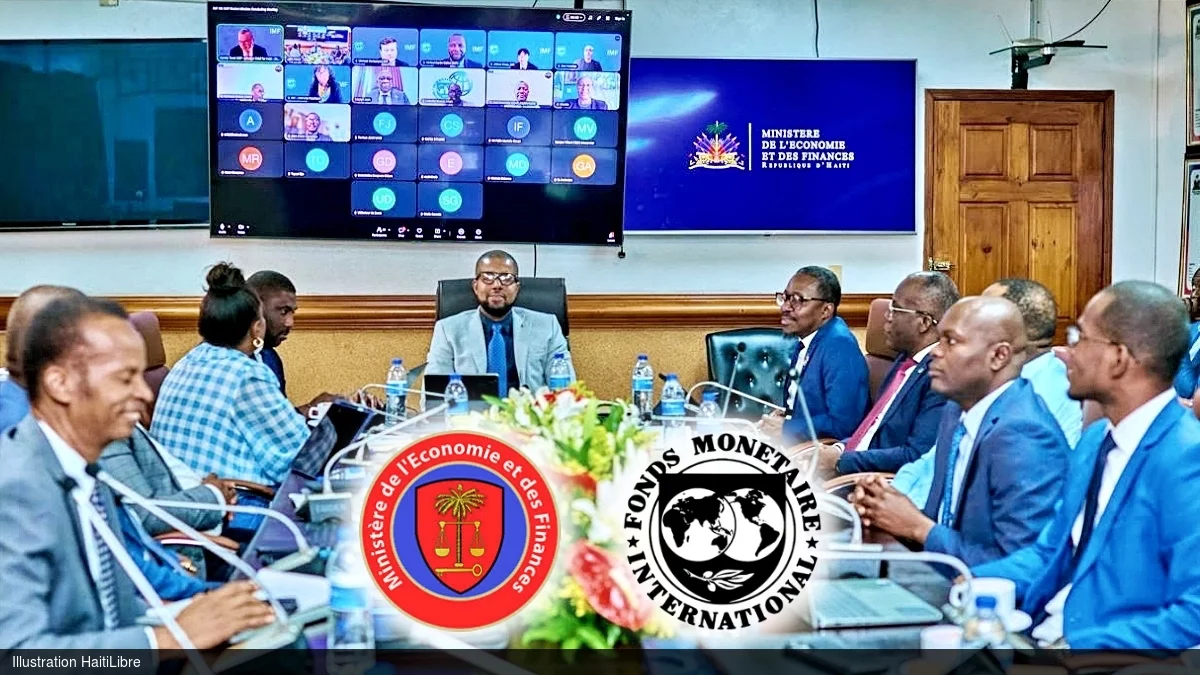
The IMF highlights Haiti’s «exceptionally difficult» situation
In a remote assessment mission concluded September 25, 2026, International Monetary Fund (IMF) staff reached a preliminary staff-level agreement with Haitian authorities on the fourth review of the country’s ongoing staff-monitored program (SMP), a deal that remains pending final approval from IMF senior management. The agreement comes as the Fund publicly underscores the unprecedented challenges facing the Caribbean nation, which is mired in an overlapping political, security, and humanitarian crisis that has stretched its economic system to breaking point.
Led by senior IMF economist Camilo E. Tovar, the review team conducted its assessment of Haiti’s policy progress between September 14 and 25, working remotely due to ongoing security instability across the country. In his closing statement following the mission, Tovar outlined the cascading crises that have shaped Haiti’s macroeconomic landscape: persistent gang-related violence, a catastrophic humanitarian situation, fragile political transition ahead of upcoming national elections, and a string of external shocks that have eroded living standards for millions of Haitians.
Among the most pressing headwinds, Tovar noted, are soaring global oil prices that have strained national budget balances, widened external deficits, and pushed up the cost of basic goods for households. A looming additional threat comes from the upcoming end of Temporary Protected Status (TPS) for roughly 350,000 Haitian nationals residing in the United States, a change that the IMF projects could reduce inflows of private remittances—one of the most critical pillars of Haiti’s economy— and worsen existing economic and humanitarian vulnerabilities. The U.S. Supreme Court has already authorized the federal government to end the TPS program, which has protected Haitian migrants from deportation since 2010 following a devastating earthquake.
Against this backdrop, the IMF projects that Haiti will record its eighth consecutive year of economic contraction in fiscal year 2026, with gross domestic product forecast to shrink between 1.5% and 1.9% according to estimates from Haiti’s Central Bank. Persistent insecurity, which has shuttered hundreds of businesses and displaced nearly 1.5 million Haitians internally according to June 2026 data from the International Organization for Migration, continues to cripple production and trade. Weak export demand for Haiti’s key textile and apparel sector has further dragged on activity. On a more modest positive note, relative exchange rate stability has helped pull inflation down from a peak of more than 32% year-on-year in October 2025, with the 2026 full-year projection coming in at roughly 16%.
Haiti’s external sector currently remains supported by strong remittance inflows and adequate international reserve buffers, with gross reserves standing at roughly seven months of projected imports as of mid-2026, and the current account expected to stay in surplus despite a chronically weak trade balance. Still, the IMF warns that sustained high fuel import costs represent a major ongoing vulnerability for the country’s external position. Net international reserves hit approximately $1.9 billion by the end of June 2026, which was well above the floor target set under the SMP. The central bank’s cap on financing for the non-financial public sector was also met, the review confirmed.
On fiscal policy, the country faces growing strain from chronically low government revenue, higher energy costs, and urgent unmet needs for security spending, humanitarian aid, and development investment. To create necessary fiscal space for these priorities while preserving hard-won macroeconomic stability, the IMF says Haiti must accelerate efforts to boost revenue collection, continue reforming tax and customs administrations, implement realistic and prioritized spending plans, and avoid high-risk non-concessional borrowing.
Program implementation overall has remained on track despite the extreme operating environment, the review found. As of the end of June 2026, all quantitative and indicative policy targets were met except for the requirement to avoid accumulating new external arrears. A temporary buildup of arrears occurred due to administrative and institutional capacity constraints, but the arrears were cleared quickly by Haitian authorities. Structural reforms have progressed, albeit with some delays tied to capacity gaps and the broader crisis.
Looking ahead, the SMP will continue to center on five core priorities. First, strengthening governance and financial integrity to rebuild public confidence in state institutions and the rule of law. Second, boosting revenue mobilization to fund priority spending, highlighted by the planned January 1, 2027 entry into force of a new consolidated, modernized national tax code—a major milestone for Haiti’s long-running tax reform agenda. Third, improving public financial management: strengthening cash management, public investment planning, and treasury operations, consolidating the Treasury Single Account, improving payroll integrity, and enhancing targeting of social assistance programs to ensure aid reaches vulnerable households. The Fund emphasized that transparent, accountable use of residual resources from the 2023 IMF Food Shock Response Window assistance will be critical to supporting struggling households. Fourth, preserving credibility for monetary and exchange rate policy: the Bank of the Republic of Haiti (BRH) has reaffirmed its commitment to maintaining price and exchange rate stability, and continues to implement reforms to strengthen financial sector supervision and improve the quality and timeliness of economic data. The BRH has already published its 2024 audited financial statements, and is working to address past audit findings to boost transparency. Fifth, coordinating support from international development partners, which the IMF says is critical to addressing urgent needs and supporting sustainable recovery. The Fund notes that timely grant and concessional financing, paired with capacity building and strict transparency requirements for donor funds, will help preserve debt sustainability, support reform implementation, and lay the groundwork for growth that improves living standards for Haitians.
The IMF mission held productive discussions with senior Haitian officials, including Minister of Economy and Finance Serge Gabriel Collin and BRH Governor Ronald Gabriel, and thanked the authorities for their close cooperation throughout the review. Haiti’s current SMP is scheduled to run through June 2027, an informal arrangement through which Haitian authorities commit to monitoring economic performance and implementing reforms under Fund supervision, as the country works to stabilize its economy amid crisis. Haiti is set to hold the first round of presidential and legislative elections in December 2026, with a runoff scheduled for February 2027 as part of the country’s ongoing political transition process.
The IMF outlined mixed risks for Haiti’s economic outlook going forward. Downside risks include further deterioration in security conditions, sustained high oil prices, delays in adjusting domestic fuel prices to match global costs, reduced remittance inflows following the end of U.S. TPS, and drought linked to the El Niño weather pattern. On the upside, a decline in oil prices, measurable progress in restoring security across the country, and a smooth, peaceful electoral process that reduces policy uncertainty could boost investor and consumer confidence and support a stronger-than-expected economic recovery.
-

PM Browne Calls for Police Action Against People Displaying Guns on Social Media
In the capital city of St. John’s, Antigua and Barbuda, Prime Minister Gaston Browne has brought urgent attention to growing brazenness among gun-wielding criminals during parliamentary debate over the proposed Firearms (Amendment) Bill 2026, urging lawmakers to adopt harsher regulatory measures to crack down on rising gun crime and repeat offenders.
Browne told parliament that criminal actors have grown so emboldened by weak current enforcement that they are openly flouting the law by posting photos and videos of their illegal firearms on public social media platforms, alongside making violent threats against potential victims. The prime minister confirmed that he had personally viewed multiple instances of this dangerous behavior, including one new posting that appeared just hours before the parliamentary sitting began.
“Up to this morning, another one was posted,” Browne said during the debate. “This individual is talking about wanting to kidnap people and torture them. That type of violent rhetoric simply cannot be allowed to slide without consequences.” The prime minister emphasized that any public statements or posts that threaten violence or display illegal firearms demand immediate intervention from national law enforcement agencies. “Police have a responsibility to take that person into custody and investigate,” he told assembled lawmakers.
Browne’s comments frame the wider push for legislative change: he argues that authorities must respond with far greater firmness to a documented upward trend of increasingly aggressive criminal behavior connected to illegal gun possession. The proposed amendments under discussion would introduce significantly stiffer legal penalties for individuals convicted of firearms-related offences, sending a stronger deterrent to would-be offenders. During the ongoing debate, Browne also floated the possibility of adding specific provisions targeting the public display of firearms online as part of the government’s comprehensive strategy to curb gun-related violence across the country.
-

Dignifying health
Dignity is a concept that is intuitively linked to respect, but its meaning in healthcare extends far beyond surface-level interactions. Centuries ago, philosopher Immanuel Kant offered a foundational framing: material objects carry a price tag, but inherent, irreplaceable dignity belongs to all human beings. For seriously ill patients, that dignity is not an inherent constant—it is shaped profoundly by how caregivers and healthcare systems choose to engage with them. As leading Canadian psychiatrist Dr Harvey Chochinov, who has dedicated decades to studying dignity in end-of-life and critical care, observes: a patient’s own sense of dignity rises or falls based on how they perceive they are viewed by the people caring for them. This makes dignity a collective responsibility: it is not merely something an individual carries, but something that other people and institutional systems either nurture actively or erode inadvertently.
To assess how well a healthcare system upholds human dignity, observers need not look only at isolated incidents of mistreatment. The broader, collective perception of how the system treats patients, and what patterns of behavior it allows to persist, acts as a far more reliable barometer of its core values. While institutional culture can be measured through dozens of quantitative metrics, dignity stands out as uniquely lasting: its impact stays with patients long after they recover from illness or complete a clinical appointment. When repeated violations of dignity become normalized within a system, patient trust—the foundation of effective care—quickly erodes as a consequence.
When systemic failures around dignity are identified, the first question is where to begin building a better model. Dr Chochinov developed a simple, actionable framework to guide this work, called the ABCD of dignity-conserving care. The first pillar, Attitude, centers on the core assumptions caregivers bring to every interaction: do they see the whole person first, or only the disease they are treating? Second is Behaviour, which refers to small but meaningful acts of respect—asking a patient for permission before beginning an examination, knocking before entering a hospital room, or maintaining appropriate personal space. Third is Compassion: a deliberate recognition of a patient’s fear, pain and suffering that shapes every clinical decision. The final pillar, Dialogue, emphasizes engaging with the life, experiences and priorities of the person behind the illness, rather than limiting conversation exclusively to symptoms and treatment plans.
Unlike large capital investments in new hospital wings or expensive novel therapies, this framework does not require massive direct spending. Because the benefits of dignity-centered care are less tangible than clinical outcomes, it is easy for policymakers and healthcare leaders to default to blaming poor individual performance—writing off undignified care as a problem of rude nurses or dismissive doctors. It is true that poor interpersonal conduct can stem from personal character, and systemic challenges do not excuse bad behavior or eliminate the need for accountability. But systemic pressures dramatically increase the likelihood of harmful, undignified interactions.
None of the four ABCD pillars can be implemented consistently without structural support. Attitude and open dialogue require unrushed time with patients—a luxury a primary care physician juggling 40 waiting patients simply cannot afford. Consistent respectful behavior and intentional dialogue require ongoing training, clear institutional incentives and formal accountability mechanisms, since natural interpersonal dispositions vary widely between people. Compassion can only flourish when care teams work in supportive environments that prioritize staff well-being; low morale and chronic burnout make sustained empathy nearly impossible. More often than not, staff exhaustion manifests not as intentional cruelty, but as the indifference that comes from being stretched too thin.
Sociologist Nora Jacobson, who has researched patterns of dignity violations in healthcare, confirms that undignified care is rarely random. It emerges predictably in the contexts that define most healthcare interactions: when patients are already physically and emotionally vulnerable, when an inherent power gap exists between care providers and care seekers, and when clinical staff operate under chronic systemic pressure. Objectively, these three conditions are present in nearly every healthcare setting. Illness by its nature strips patients of security and control, making them vulnerable. Patients seeking care always hold less power, information and institutional authority than the clinicians treating them. And healthcare is, by its very nature, an inherently high-stakes, high-pressure field.
These structural conditions mean that the risk of widespread undignified care is baked into modern healthcare systems by default. While dignity-centered care does not require large financial outlays for new technologies or facilities, it is not free. It requires sustained investment in three key areas: sufficient clinical time per patient, work environments that support staff well-being, and ongoing training for care teams. When healthcare systems fail to deliberately make these investments, they default to a pattern of undignified care as an inevitable outcome.
It has long been held that the moral character of a society can be judged by how it treats its most vulnerable members. By that same logic, the success of a healthcare system can be measured by how consistently it upholds the dignity of every patient. Every clinical interaction is an opportunity for the system to not only recognize a patient’s inherent dignity, but actively protect it from erosion. When access to dignified care depends on individual luck rather than intentional systemic design, that system has failed its core purpose—and failed all of us who rely on it when we are most in need.
This commentary comes from Dr Ishma Harford, a practicing medical doctor and Commonwealth Scholar with a master’s degree in Health Analysis, Policy and Management. It is published as part of *The Health Imperative*, a non-partisan educational column focused on health systems, health policy and their broader societal impacts. NOW Grenada does not take responsibility for opinions and statements shared by contributing authors.
-

More Than 200 Repeat Offenders Are on Antigua and Barbuda’s Streets
Antigua and Barbuda’s Prime Minister Gaston Browne has made a startling disclosure during parliamentary debate on a key gun policy bill, revealing that more than 200 repeat criminal offenders are currently at large across the country’s streets – a large share of whom are linked to armed robberies – and that their unchecked presence is stretching local law enforcement resources to breaking point.
The revelation came as Browne defended his administration’s controversial Firearms (Amendment) Bill 2026, legislation crafted to dramatically increase prison sentences for individuals convicted of firearms-related offenses. The bill was tabled amid a growing wave of public anxiety over rising gun violence and serious transnational and local crime in the twin-island nation.
Addressing skeptical Members of Parliament who have pushed back against the claim that harsher prison sentences reduce crime rates, Browne acknowledged the argument that stiff penalties do not always deter potential offenders from acting. However, he made the case that longer sentencing delivers an immediate, tangible public safety benefit by keeping high-risk repeat offenders out of communities for extended periods.
“If you have them in jail for a longer period, it means that the police has less individuals to contend with, less criminals to contend with,” Browne told the parliamentary chamber. “In fact, what is happening now, the sheer volume of them now, they are overwhelming the police.”
The prime minister has long been a vocal critic of what he describes as inadequately lenient sentencing for serious criminal offenses in Antigua and Barbuda, arguing that the country’s current public safety crisis demands immediate policy adjustments to curb repeat offending. At the core of his argument is a simple observation: many career criminals are released back into the community after relatively short sentences, only to resume illegal activity almost immediately.
By extending custodial sentences for repeat offenders and firearms-related crimes, Browne says, the government will remove hundreds of known high-risk criminals from streets, easing the operational burden on overstretched police forces already struggling to stem rising robbery rates and violent crime. The debate over the bill comes as Antigua and Barbuda grapples with a regional trend of rising gun-related crime that has put pressure on Caribbean governments to adjust their criminal justice policies to address public safety concerns.
-

Dominica receives security paper after certificate delays
After weeks of constrained operations caused by limited stock of specialized security paper, Dominica’s Civil Registry has announced it is returning to full, normal operations for processing and issuing birth, marriage and death certificates, following the delivery of a long-awaited new shipment of the required printing material.
At an official press briefing hosted by the Ministry of National Security and Legal Affairs, Acting Registrar General Nuraiyah Sebastian clarified the situation that had slowed services in recent weeks. She confirmed that while inventory had been tight, the agency never completely exhausted its supply of the specialized security paper. Throughout the period of constrained stock, the registry continued to issue certificates, but implemented a priority system that focused exclusively on emergency and time-sensitive requests, meaning routine and pre-submitted non-urgent applications could not be fulfilled within the agency’s standard processing timelines.
Now that new stock has arrived, all applicants who have been waiting for their completed certificates can visit the Civil Registry offices to collect their documents, and the agency is once again accepting new routine applications at its normal capacity, Sebastian said.
National Security Minister Rayburn Blackmoore provided additional details on the shipment and long-term planning to avoid future service disruptions. He confirmed that the latest delivery brought 9,000 additional sheets of security paper to the registry, and the government has already placed a follow-up order for 100,000 more sheets to build up a robust reserve. To prevent repeated delays, officials have arranged for scheduled, recurring deliveries of the material moving forward.
Blackmoore also explained the root cause of the recent supply shortage. The shortage emerged after the government implemented a temporary waiver of application fees for certificate requests during a national identity confirmation process. This fee waiver led many members of the public to request multiple copies of their vital documents, creating far higher demand than officials had initially projected.
Between the start of April and August 24 alone, the Civil Registry issued 8,282 birth certificates, Blackmoore reported. Full issuance data for September has not yet been compiled.
This specialized security paper is used for all three types of vital event certificates issued by the registry: birth, marriage and death certificates. Government officials note that the secure, anti-counterfeiting stock is a critical tool to lower the risk of document duplication and identity fraud, protecting residents from fraudulent use of their personal identifying information.