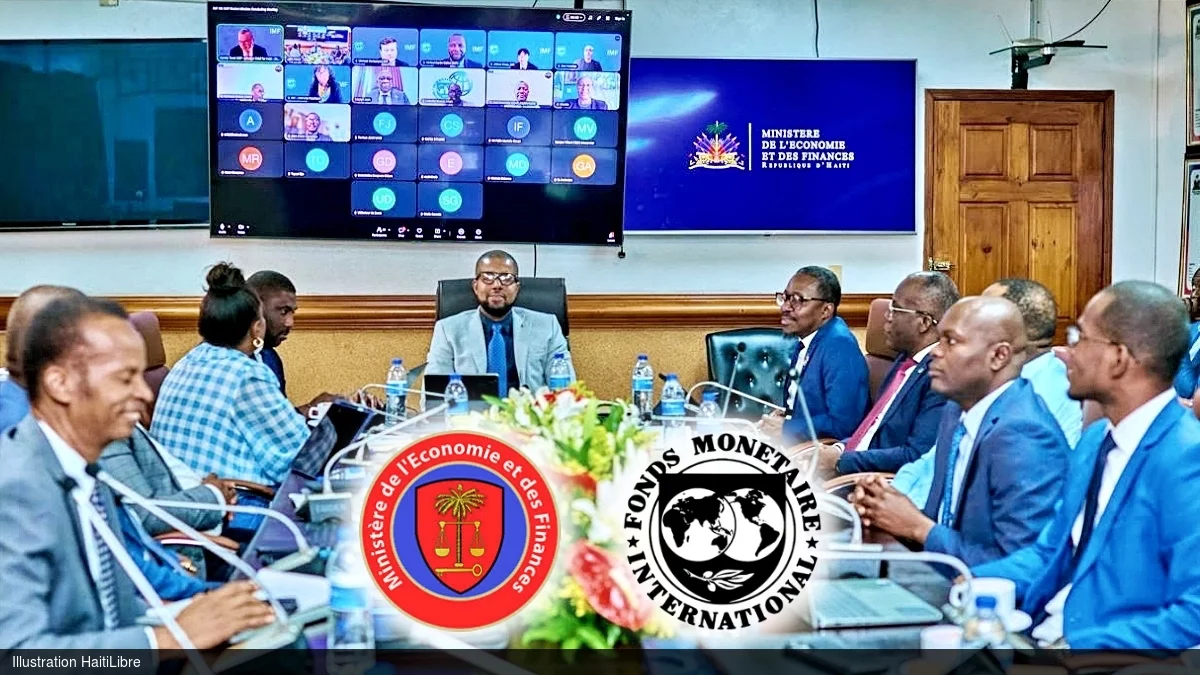
In a remote assessment mission concluded September 25, 2026, International Monetary Fund (IMF) staff reached a preliminary staff-level agreement with Haitian authorities on the fourth review of the country’s ongoing staff-monitored program (SMP), a deal that remains pending final approval from IMF senior management. The agreement comes as the Fund publicly underscores the unprecedented challenges facing the Caribbean nation, which is mired in an overlapping political, security, and humanitarian crisis that has stretched its economic system to breaking point.
Led by senior IMF economist Camilo E. Tovar, the review team conducted its assessment of Haiti’s policy progress between September 14 and 25, working remotely due to ongoing security instability across the country. In his closing statement following the mission, Tovar outlined the cascading crises that have shaped Haiti’s macroeconomic landscape: persistent gang-related violence, a catastrophic humanitarian situation, fragile political transition ahead of upcoming national elections, and a string of external shocks that have eroded living standards for millions of Haitians.
Among the most pressing headwinds, Tovar noted, are soaring global oil prices that have strained national budget balances, widened external deficits, and pushed up the cost of basic goods for households. A looming additional threat comes from the upcoming end of Temporary Protected Status (TPS) for roughly 350,000 Haitian nationals residing in the United States, a change that the IMF projects could reduce inflows of private remittances—one of the most critical pillars of Haiti’s economy— and worsen existing economic and humanitarian vulnerabilities. The U.S. Supreme Court has already authorized the federal government to end the TPS program, which has protected Haitian migrants from deportation since 2010 following a devastating earthquake.
Against this backdrop, the IMF projects that Haiti will record its eighth consecutive year of economic contraction in fiscal year 2026, with gross domestic product forecast to shrink between 1.5% and 1.9% according to estimates from Haiti’s Central Bank. Persistent insecurity, which has shuttered hundreds of businesses and displaced nearly 1.5 million Haitians internally according to June 2026 data from the International Organization for Migration, continues to cripple production and trade. Weak export demand for Haiti’s key textile and apparel sector has further dragged on activity. On a more modest positive note, relative exchange rate stability has helped pull inflation down from a peak of more than 32% year-on-year in October 2025, with the 2026 full-year projection coming in at roughly 16%.
Haiti’s external sector currently remains supported by strong remittance inflows and adequate international reserve buffers, with gross reserves standing at roughly seven months of projected imports as of mid-2026, and the current account expected to stay in surplus despite a chronically weak trade balance. Still, the IMF warns that sustained high fuel import costs represent a major ongoing vulnerability for the country’s external position. Net international reserves hit approximately $1.9 billion by the end of June 2026, which was well above the floor target set under the SMP. The central bank’s cap on financing for the non-financial public sector was also met, the review confirmed.
On fiscal policy, the country faces growing strain from chronically low government revenue, higher energy costs, and urgent unmet needs for security spending, humanitarian aid, and development investment. To create necessary fiscal space for these priorities while preserving hard-won macroeconomic stability, the IMF says Haiti must accelerate efforts to boost revenue collection, continue reforming tax and customs administrations, implement realistic and prioritized spending plans, and avoid high-risk non-concessional borrowing.
Program implementation overall has remained on track despite the extreme operating environment, the review found. As of the end of June 2026, all quantitative and indicative policy targets were met except for the requirement to avoid accumulating new external arrears. A temporary buildup of arrears occurred due to administrative and institutional capacity constraints, but the arrears were cleared quickly by Haitian authorities. Structural reforms have progressed, albeit with some delays tied to capacity gaps and the broader crisis.
Looking ahead, the SMP will continue to center on five core priorities. First, strengthening governance and financial integrity to rebuild public confidence in state institutions and the rule of law. Second, boosting revenue mobilization to fund priority spending, highlighted by the planned January 1, 2027 entry into force of a new consolidated, modernized national tax code—a major milestone for Haiti’s long-running tax reform agenda. Third, improving public financial management: strengthening cash management, public investment planning, and treasury operations, consolidating the Treasury Single Account, improving payroll integrity, and enhancing targeting of social assistance programs to ensure aid reaches vulnerable households. The Fund emphasized that transparent, accountable use of residual resources from the 2023 IMF Food Shock Response Window assistance will be critical to supporting struggling households. Fourth, preserving credibility for monetary and exchange rate policy: the Bank of the Republic of Haiti (BRH) has reaffirmed its commitment to maintaining price and exchange rate stability, and continues to implement reforms to strengthen financial sector supervision and improve the quality and timeliness of economic data. The BRH has already published its 2024 audited financial statements, and is working to address past audit findings to boost transparency. Fifth, coordinating support from international development partners, which the IMF says is critical to addressing urgent needs and supporting sustainable recovery. The Fund notes that timely grant and concessional financing, paired with capacity building and strict transparency requirements for donor funds, will help preserve debt sustainability, support reform implementation, and lay the groundwork for growth that improves living standards for Haitians.
The IMF mission held productive discussions with senior Haitian officials, including Minister of Economy and Finance Serge Gabriel Collin and BRH Governor Ronald Gabriel, and thanked the authorities for their close cooperation throughout the review. Haiti’s current SMP is scheduled to run through June 2027, an informal arrangement through which Haitian authorities commit to monitoring economic performance and implementing reforms under Fund supervision, as the country works to stabilize its economy amid crisis. Haiti is set to hold the first round of presidential and legislative elections in December 2026, with a runoff scheduled for February 2027 as part of the country’s ongoing political transition process.
The IMF outlined mixed risks for Haiti’s economic outlook going forward. Downside risks include further deterioration in security conditions, sustained high oil prices, delays in adjusting domestic fuel prices to match global costs, reduced remittance inflows following the end of U.S. TPS, and drought linked to the El Niño weather pattern. On the upside, a decline in oil prices, measurable progress in restoring security across the country, and a smooth, peaceful electoral process that reduces policy uncertainty could boost investor and consumer confidence and support a stronger-than-expected economic recovery.