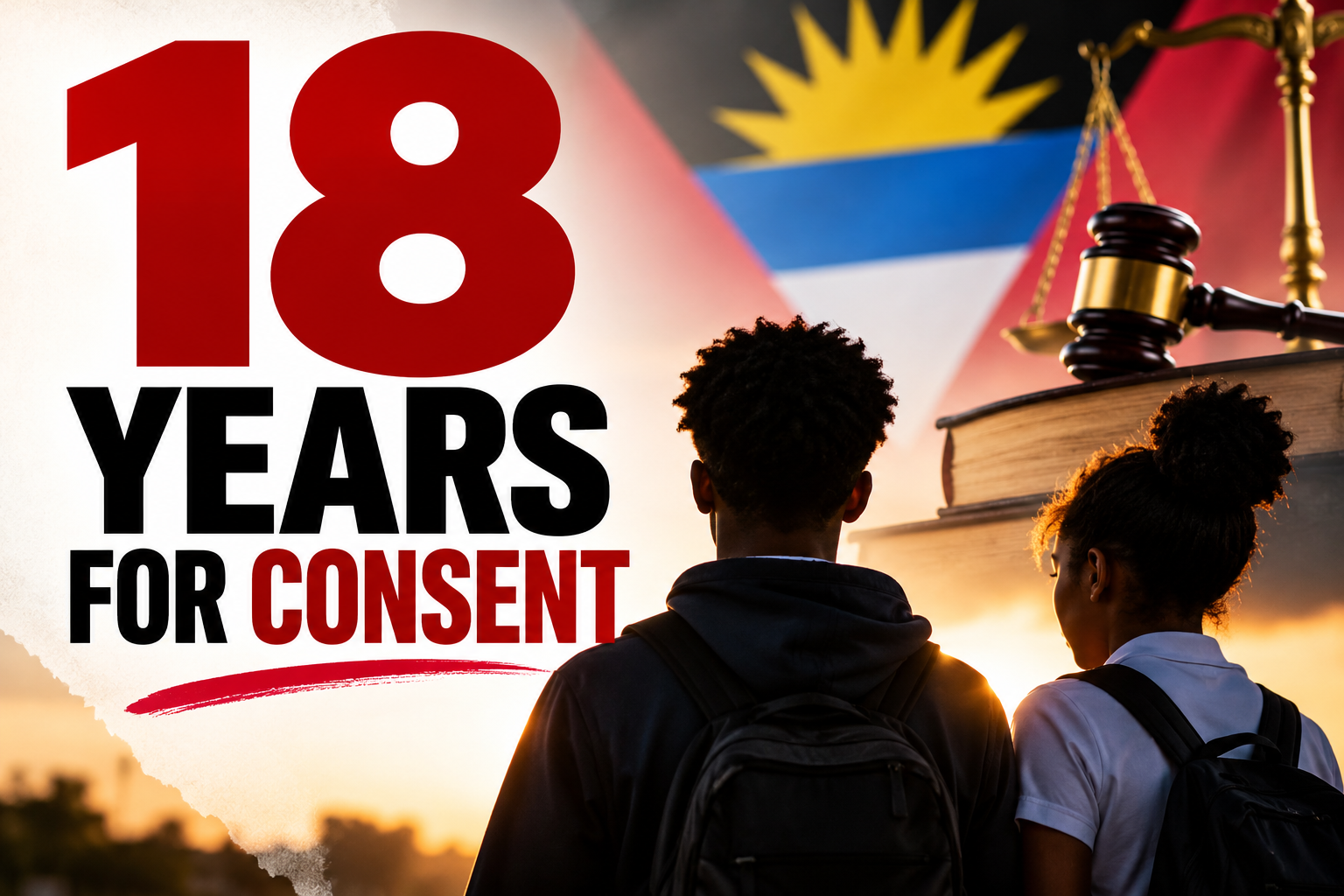
During Monday’s parliamentary debate on the 2026 Sexual Offences (Amendment) Bill, a piece of legislation crafted to introduce harsher punishments for individuals convicted of sexual violence and exploitation, Antigua and Barbuda’s opposition leader Jamal Pringle has put forward a consequential proposal to expand the scope of youth protection measures: raising the legal age of consent from 16 to 18 years old.
While Pringle confirmed his full backing for the core objectives of the amendment bill, which centers on strengthening penalties for offenders, he argued that policymakers must look beyond punitive measures to address systemic gaps in youth safeguarding. He questioned whether the current 16-year age threshold remains aligned with the social and developmental realities of young people in the country today.
Speaking before the House of Representatives, Pringle laid out his rationale for the proposed change. “I believe the time has come … for us to move this age of 16 … to 18,” he stated. He pointed out that 16-year-olds still rely heavily on parental and guardian guidance for major life decisions, noting that leaving the age of consent at 16 creates elevated risk of coercion and exploitation by older adults who leverage power imbalances to manipulate underage teenagers.
The proposal quickly sparked cross-bench discussion among sitting government lawmakers, drawing mixed but largely open responses from cabinet members. Social Transformation Minister Rawdon Turner acknowledged that the idea merited further review, but urged cautious consideration, noting that raising the age of consent would not resolve all forms of child sexual abuse. He specifically highlighted intra-familial abuse cases, where harm is perpetrated by parents, close relatives or trusted caregivers, incidents that a legal age adjustment would not fully prevent.
Education Minister Daryll Matthew threw his support behind opening a formal review of the proposal, offering a straightforward analogy to defend the change: “If you can’t drive until you’re 18, you can’t vote until you’re 18, why must you be able to have sex … at 16?” Matthew also used the debate to call for new targeted safeguards to protect students from adult predators who target young people on school grounds and in surrounding neighborhoods.
Attorney General Sir Steadroy Benjamin confirmed that the governing administration would take the opposition’s proposal under formal advisement, and commit to a full review of the legal and social ramifications of adjusting the age of consent. “Perhaps the time has in fact really come,” Benjamin said, stopping short of making a binding government commitment to advance the change in this legislative session.
By the close of Monday’s sitting, no formal amendment to adjust the age of consent was brought to a vote. The original Sexual Offences (Amendment) Bill passed through the House of Representatives without any changes, with the proposal to raise the age threshold from 16 to 18 deferred for further consultation and analysis in the coming months.