博客

  • FNM confirms voucher distribution but denies vote buying

    FNM confirms voucher distribution but denies vote buying

    As the Bahamas prepares for its upcoming general election, a growing controversy over political voucher distribution has put both of the country’s major political parties under scrutiny, with questions mounting over whether the practice crosses into illegal vote-buying territory.

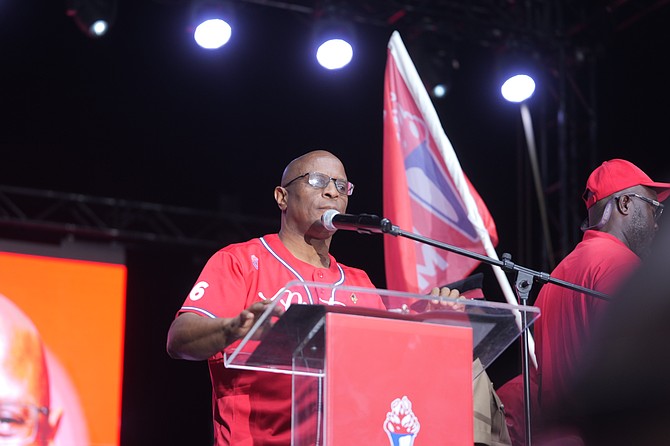
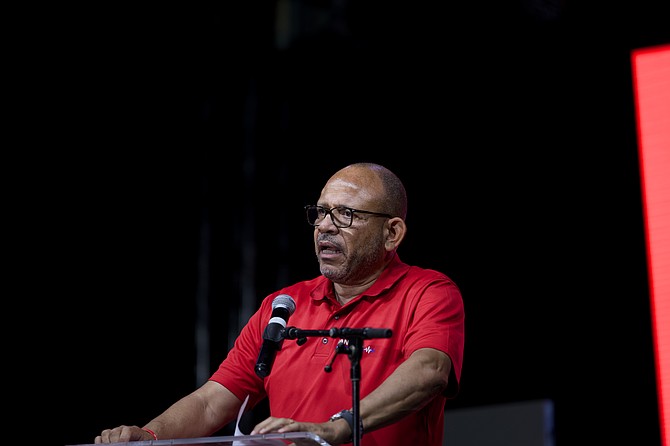
    Duane Sands, chairman of the Free National Movement (FNM), and Denalee Penn-Mackey, the party’s parliamentary candidate for the Southern Shores constituency, have publicly confirmed that their party has distributed grocery vouchers to constituents, a move that comes after prior allegations against the incumbent Progressive Liberal Party (PLP) over misuse of public funds for similar voter outreach.

    In an interview with reporters, Sands acknowledged that voucher purchases from local retail chain Super Value have risen across the political spectrum, with both the FNM and PLP accounting for the increased sales. “There’s nothing unique to any particular political organisation here,” he stated, drawing a nuanced but contested line between legal assistance and illegal electoral inducement. Under the country’s Parliamentary Elections Act, any gift or benefit offered to influence a voter’s choice is a criminal offense. Sands argued that the legality of the practice hinges entirely on intent: while providing food support to households facing food insecurity does not violate the law on its face, he admitted the practice is a “slippery slope” that carries significant potential for abuse.

    Sands stressed that even amid the controversy, he would continue assisting constituents facing crisis. “If you come to me today and say that you have no food in your house, I would do the best that I can in order to assist,” he said, noting that he does not have details on the total value or number of vouchers the FNM has acquired overall. He further drew a clear distinction between assistance funded by personal or private political donations and programs backed by public money, arguing that the latter case amounts to a clear violation of electoral law.

    The incumbent Davis administration, led by the PLP, has still not responded to explosive allegations made by Chris Lleida, chief executive officer of Premier Importers. Lleida claims that the Bahamian government, not the PLP as a party, covered the cost of more than $200,000 in gift vouchers distributed and signed by PLP election candidates and party officials. Sands called this a “clear-cut violation of the law” and argued that the entire controversy underscores the urgent need for sweeping national campaign finance reform.

    Penn-Mackey, for her part, confirmed that she began distributing vouchers in her constituency within the past week, but insisted that all costs are covered by her own personal funds, eliminating any comparison to the PLP’s public funds allegations. “That, along with my whole campaign, is run by my own personal money, so I don’t see how what the PLP has done as it relates to the money you’re spending from the public treasury ties into what I’m doing personally,” she said. The vouchers she distributes are valued at approximately $100 each.

    A long-time community philanthropist, Penn-Mackey pushed back against questions about her activities, noting she has provided community support and aid for years independent of her candidacy. “We give out food and vouchers every day. Is that vote buying? The people have a food problem where people come and they said, listen, we need some vouchers. I have no grocery in my house, so when we give them a voucher, is that vote buying?” she asked. Rejecting claims of a double standard between her actions and the allegations against the PLP, she added: “It’s not a double standard because if it’s coming from the public treasury and my vouchers are coming from my personal account, that’s not a double standard at all.”

    FNM leader Michael Pintard echoed the argument that assisting vulnerable constituents is a moral obligation regardless of election season, but warned that using public funds for aid that only intensifies or launches right before an election erodes public trust in the democratic process. “If somebody is in need, I don’t think you take an issue with the government, at least certainly me personally, if somebody is hungry they need food assistance, the government is not providing it, you ordinarily provide it, and this is what you’ve been doing, I think you have an obligation to help people who need help,” Pintard said. “That’s a general rule that certainly I’ve lived by all along in and out of political season. If somebody needs help, you help them.”

    Even so, Pintard acknowledged that introducing new or expanded assistance programs in the middle of an election cycle reasonably invites public suspicion. “It allows others, others who look on, to presume that it’s politically motivated,” he said. “There are a number of constituencies where persons know, beyond the shadow of doubt their people weren’t about doing, running any social assistance programme, have not provided a social safety net, and all of a sudden, they are offering them around election time. That’s what they’re saying about the government right now. All of a sudden, you just realise that my house was leaking, and you have not been involved in the last four and a half years. You came and did an assessment. Nothing happened until just now.”

    To date, the core rules governing electoral conduct in the Bahamas remain clear: offering, giving, or providing any money, gift, or material benefit to a voter with the goal of influencing their ballot selection is classified as a criminal offense under the Parliamentary Elections Act.


  • FNM warns of chaos over missing advance voters

    FNM warns of chaos over missing advance voters

    Just days ahead of the Bahamas’ scheduled advance polling on April 30, a growing electoral dispute has erupted after opposition Free National Movement (FNM) figures revealed dozens of approved voters have been wrongly omitted from the official advance poll register, with election officials dismissing complaints with shrugs that have further enraged the party.

    Travis Robinson, an FNM candidate running in the upcoming general election, told local media that nine eligible voters who met all requirements for early voting were left off the finalized certified list, despite having applied for and received formal authorization to cast advance ballots. Among those impacted are three voters who will be out of the country on the main election day, May 12, meaning they will be completely unable to vote if the error is not corrected before advance polling opens.

    Robinson explained he submitted all advance voting applications on April 23 on behalf of three groups of eligible early voters: senior citizens, registered poll workers who would be working on main election day, and voters traveling abroad. When he returned to collect documentation two days later, he only received required L-form certificates for the senior citizens and traveling voters. To date, he says he has not received any L-form certificates for his poll worker applicants, leaving all of them locked out of the advance poll.

    The full scope of the error only became clear once the official certified advance register was published. Robinson confirmed all nine applicants met every eligibility requirement set out by election authorities, but their names were still excluded from the final list. When he escalated the issue to senior election officials, including Parliamentary Commissioner Harrison Thompson, he was told there was no way to fix the error ahead of polling.

    “I subsequently spoke with a senior official at the registry who basically told me, ‘such is life, things happen, we move on,’” Robinson recalled. “I later contacted Mr Thompson, who gave me a similar response, that unfortunately there’s nothing he can do and that it is what it is.”

    Robinson called the dismissive response completely unacceptable, warning that the disenfranchisement of these nine voters could be enough to swing the final election result in his competitive constituency. He pointed to recent Bahamian political history to underscore the stakes, noting that a former prime minister once lost his parliamentary seat by a margin of just four votes. He has issued an urgent call for Thompson to immediately amend the advance register to add the missing voters before polling begins.

    The impacted voters, Robinson added, are “highly upset” by the error, particularly the three overseas travelers who have no path to vote if the issue remains unaddressed.

    The controversy is not isolated to Robinson’s constituency, according to FNM chairman Duane Sands. Sands confirmed that multiple other FNM candidates, including himself and fellow candidate Heather Hunt, have reported identical issues with the advance poll register. He said that beyond omitting eligible voters who completed all required steps, the register also includes the names of voters who never even submitted applications for early voting.

    Worse, Sands added, the register contains glaring, basic errors that raise serious questions about the integrity of the process: some entries list voters with birth dates that have not yet occurred, meaning people who have not even been born are listed as approved advance voters.

    “When you look at the state of the register — people on the register with birthdays that have not yet come, people who according to the data haven’t even been born yet — and then there are persons who are on the advance poll register who did not apply, in some instances willing to swear an affidavit that they did not apply, and yet they are on the advance poll register, you wonder what is going on,” Sands said.

    Sands is now calling for the immediate removal of Parliamentary Commissioner Harrison Thompson, arguing that the chaotic errors undermine the legitimacy of the upcoming election. He said the severity of the mistakes leaves two possible explanations, neither of which justify Thompson keeping his post.

    “When we see the mess, the chaos, we can ask whether this is just incompetence or whether this is a deliberate act by someone who ought to be relieved of his role as Parliamentary Commissioner forthwith,” he said.

    In an official response to the growing controversy, the Parliamentary Registration Department acknowledged the errors, attributing them to limited typographical mistakes and an unexpected technical system glitch. The department downplayed the severity of the issues, arguing that the mistakes will not impact the final outcome of the election.

    “These are not consequential to the outcome of the election, as the voter’s card and counterfoil contain the accurate information that will be relied upon on voting day,” the department said in a statement. It urged political leaders to stop framing the errors as evidence of widespread systemic failure, noting that minor processing issues are a normal part of election administration. “The Department remains committed to protecting the integrity of the electoral process,” the statement added.

    The ruling Progressive Liberal Party (PLP) has pushed back against FNM’s criticism, condemning the opposition’s claims as a “reckless attack on Bahamian democracy.”

    “The Bahamas has earned its reputation as one of the strongest democracies in the region through decades of peaceful elections and independent institutions,” the PLP said in its official statement. “To suggest otherwise, for political convenience, damages that reputation abroad and weakens the confidence of Bahamians at home.”

  • Trump warns Iran better ‘get smart soon’ and accept nuclear deal

    Trump warns Iran better ‘get smart soon’ and accept nuclear deal

    Escalating tensions between the United States and Iran have reached a critical new juncture this week, as President Donald Trump ramped up public pressure on Tehran to concede to strict new nuclear constraints while a sustained American naval blockade continues to cripple Iran’s already fragile economy. Writing on his own social media platform Wednesday, Trump issued a blunt warning to Iranian leadership, declaring, “Iran can’t get their act together… They better get smart soon.” The post was paired with a doctored image showing Trump holding a rifle against a backdrop of a exploding desert fortress, overlaid with the text “No more Mr Nice Guy.”

    The confrontation comes against a backdrop of open conflict that began two months ago, when a joint US-Israeli military campaign triggered a reciprocal Iranian blockade of the Strait of Hormuz—one of the world’s most critical chokepoints for global oil and natural gas shipments. The closure of the strategic waterway sent immediate shockwaves through international energy markets, and while Iran’s move has disrupted global commerce, it has also inflicted severe damage on Iran’s own domestic economy. By Wednesday, the Iranian rial had plummeted to an all-time low against the U.S. dollar, and interviews with Tehran residents paint a picture of widespread public despair over the prolonged crisis. Speaking to AFP on condition of anonymity, a 52-year-old Iranian architect based in Paris outlined the deep public skepticism toward diplomatic efforts that has built up over years of failed negotiations. “Every time in recent years that negotiations have taken place, the economic situation of the people has only gotten worse. Sanctions have either started or intensified,” he explained. “They go to negotiate and come back with even more sanctions, and the issue is always nuclear. There’s no talk about people, the economy, or freedom. People have the right to not even want to hear the word ‘negotiation.’”

    U.S. defense secretary Pete Hegseth was scheduled to appear before Congress for questioning on the administration’s Iran policy Wednesday, but multiple U.S. press reports indicate Trump has already made a final decision to reject Iran’s latest diplomatic proposal to reopen the Strait of Hormuz. Citing anonymous administration sources, The Wall Street Journal reports Trump intends to maintain the tight naval blockade of Iranian ports until Tehran agrees to fully dismantle its nuclear program, a non-negotiable demand from Washington.

    During a White House state dinner hosted for Britain’s King Charles III on Tuesday, Trump doubled down on his stance, claiming Iran had already been “militarily defeated” and asserting, “we’re never going to let that opponent have a nuclear weapon.” Trump even claimed Charles shared his position on the issue. Iranian military officials have pushed back aggressively against Trump’s claims, however, with army spokesman Amir Akraminia telling state television Tuesday that Tehran rejects any suggestion the war is over, and harbors deep distrust of American intentions. “We do not consider the war to be over. We have many cards that we have not yet used… new tools and methods of fighting based on the experiences of the past two months of conflict, which will definitely allow us to respond to the enemy more decisively” if hostilities resume, Akraminia warned. Iranian defense ministry spokesman Reza Talaei-Nik added that Washington has no right to impose its will on sovereign nations, saying, “The United States is no longer in a position to dictate its policy to independent nations” and demanding Washington abandon its “illegal and irrational demands.”

    Diplomatic efforts to de-escalate the crisis have ground to a halt in recent days. Tehran’s latest proposal, which was relayed to Washington via mediator Pakistan and reviewed by Trump administration officials during a Monday meeting, sets clear red lines on both nuclear policy and the future of the Strait of Hormuz, according to Iran’s semi-official Fars News Agency. Under the framework, Iran would ease its blockade of the strait in exchange for Washington lifting its retaliatory port blockade, with broader negotiations over the nuclear program to follow. But the offer has been flatly rejected by Trump, leaving the standoff locked in place. Qatari officials, whose country has been struck by Iranian strikes despite serving as a neutral mediator, warned Wednesday that the ongoing impasse risks devolving into a long-lasting “frozen conflict” with no clear path to resolution.

    Domestically, Trump faces growing political pressure to find a way out of the standoff, as spiking global energy prices drive up commodity costs for American voters just months ahead of November’s midterm elections. Polling consistently shows the war is deeply unpopular with the U.S. public, and as of Wednesday, international benchmark Brent crude traded above $113 per barrel—surpassing prices seen before a brief April ceasefire—while U.S. West Texas Intermediate crude crossed the $101 per barrel mark. Even key U.S. allies have openly criticized the administration’s lack of a clear strategy. German Chancellor Friedrich Merz, who previously offered cautious backing to Trump’s Iran policy, told reporters Monday that “the Americans obviously have no strategy” in the region and called the war “at the very least ill-considered.” Trump quickly fired back on social media, dismissing Merz’s comments and claiming the German leader “doesn’t know what he’s talking about.”

    Violence continues to flare along the conflict’s secondary Lebanese front, even after a recently extended ceasefire between Israel and Iran-backed Hezbollah. The militant group drew Lebanon into the wider conflict when it opened fire on Israel two months ago, triggering Israeli air strikes and a limited ground incursion into southern Lebanon. The Lebanese military confirmed this week that the ceasefire has been violated repeatedly: Tuesday brought the first reported Israeli strike on Lebanese army personnel since the truce took effect, wounding two soldiers, and a second strike Wednesday killed one additional Lebanese soldier.

  • Pintard calls for arrests over $200k gift certificates

    Pintard calls for arrests over $200k gift certificates

    A brewing political scandal in the Bahamas has put the ruling Progressive Liberal Party (PLP) administration under intense scrutiny, after opposition Free National Movement leader Michael Pintard launched a scathing accusation that the Davis government broke national law by diverting public funds to distribute Hurricane Dorian relief gift certificates branded with PLP election candidates’ names. Pintard has labeled the action “egregious” and is calling for formal criminal charges to be filed against those responsible.

    The controversy stems from an earlier Tribune report that confirmed the Ministry of Finance covered the cost of gift certificates distributed to residents of Abaco, designated as post-Hurricane Dorian disaster relief, which bore the signatures of sitting PLP candidates and party officials. Chris Lleida, chief executive officer of Premier Importers – the entity that issued the vouchers – confirmed the distribution was carried out at the explicit request of the Ministry of Finance. Records show the total value of the distributed vouchers exceeds $200,000, with individual certificates issued in denominations of $200, $300 and $500.

    As of press time, Office of the Prime Minister representatives have not issued an official public response to the allegations. When contacted for comment, Communications Director Latrae Rahming confirmed that Prime Minister Philip Davis will address the matter with reporters at a future, unspecified date.

    Pintard argued that the misuse of taxpayer funds for this purpose constitutes a clear criminal offence under Bahamian law. “It is a crime because you’re using government funds for a narrow political perspective,” he stated, adding that “somebody to pay the price” for the violation. He drew a direct parallel between the current controversy and the so-called “Bermuda scandal”, a previous incident where a PLP delegation trip was initially funded through the Public Treasury before the party reimbursed the cost.

    The opposition leader further claimed that the scale of the $200,000 expenditure far exceeds the spending authority granted to the financial secretary, meaning the final approval for the spending would have required sign-off from Prime Minister Davis himself. He added that the situation becomes “even more egregious” with the involvement of Bradley Fox Jr, the PLP’s candidate for Central and South Abaco, who participated in distributing the vouchers despite holding no official government position.

    Voucher copies obtained by The Tribune show the e-vouchers distributed to local residents were signed by both Fox and Preston Roberts, the PLP’s national campaign coordinator who also serves as a board member of the government’s Disaster Reconstruction Authority. “You’re talking about somebody who has no standing in government at all and so on multiple levels, this is wrong,” Pintard said. “Somebody should be held to account, and charges should be brought against them or the sanctions, whatever the sanctions are, as outlined in the law, those sanctions should be carried out.”

    Under the Bahamas’ Parliamentary Elections Act, offering or distributing money, gifts or other benefits to voters to influence their ballot choice, reward specific voting behavior, or secure a candidate’s election is classified as a criminal offence. The law also penalizes anyone who funds or knowingly facilitates these activities, including the provision of funds intended for electoral bribery.

    Critics point out that the incident highlights a longstanding gap in Bahamian election regulation: the country still lacks a comprehensive, enforceable campaign finance framework. There are no binding, clear rules requiring full public disclosure of political campaign spending, nor formal regulations governing the use of public resources during election cycles. Both of the Bahamas’ major political parties have repeatedly pledged to implement a robust campaign finance system over the years, but none have followed through on that promise to date.

  • Grand Cay BPL bills wiped ahead of vote

    Grand Cay BPL bills wiped ahead of vote

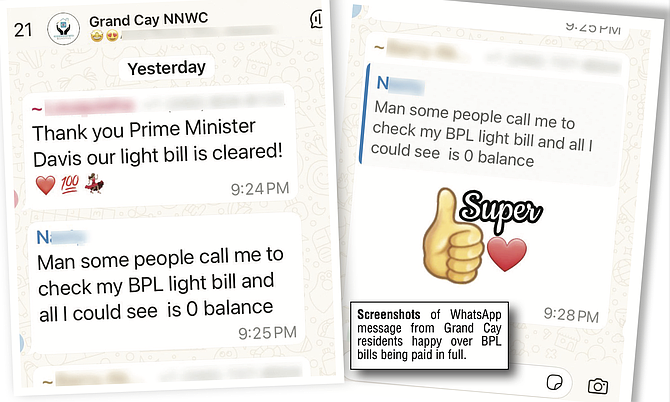
    Weeks before the Bahamas’ upcoming general election, hundreds of residents on Grand Cay in Abaco have woken up to a life-changing change: their long-accumulated electricity debt balances have been cleared entirely to zero. The sweeping debt relief comes days after Prime Minister Philip Davis made a campaign-focused visit to the hurricane-ravaged island, where he promised residents he would address their crippling billing crisis that has lingered for years.

    For long-time resident Jeremy Albury, the relief wiped out $13,500 in accumulated debt that had hung over his head since Hurricane Dorian hit the region in 2019. Fellow resident Barry Albury summed up the overwhelming joy of many in the community, saying “I felt like it was Christmas in April.” Screenshots of local community group chats shared across the island show widespread celebration, with dozens of residents joking that the holiday season had arrived months early alongside the unexpected debt cancellation.

    But the sudden, last-minute intervention has immediately drawn sharp questions from critics and residents alike, who question whether the policy is a pre-election tactic to sway voter turnout rather than a long-overdue fix for a systemic problem. Under the Bahamas’ Parliamentary Elections Act, providing gifts, cash or other benefits to voters with the goal of influencing their ballot choice is a criminal offense, a regulation that is expected to draw increased scrutiny in the wake of this announcement.

    In an official statement defending the move, the Davis administration framed the debt cancellation as a resolution to a decades-old billing crisis sparked by overlapping disasters. The government explained that normal billing and collection operations were completely upended after Hurricane Dorian tore through Abaco, and subsequent disruptions from the COVID-19 pandemic compounded the problem. During that period, residents faced widespread financial hardship, limited access to in-person banking services, and strict travel and business restrictions that made paying bills nearly impossible for many. The administration also noted that under the previous government, residents were explicitly told they would not be required to pay their accumulated balances during the emergency period, but system administrators continued to add the charges to resident accounts anyway.

    After reviewing the issue, the government determined that the ballooning balances were entirely the result of circumstances outside of consumers’ control. To resolve the crisis, the state will absorb all eligible outstanding balances through an offsetting agreement with national utility provider Bahamas Power and Light, placing no financial burden on affected residents. Officials described the move as part of a broader pledge to fix unfinished problems inherited from the previous administration, rather than an election-year stunt.

    This debt relief effort comes on the heels of a separate recent report from The Tribune that revealed the Bahamian government, not the ruling Progressive Liberal Party, funded more than $200,000 in gift certificates distributed to Abaco residents via local distributor Premier Importers, according to the company’s chief executive. To date, the Davis administration has not issued any formal response to those claims, with Communications Director Latrae Rahming only confirming that the prime minister would address reporters at a future, unannounced date.

    Local residents confirm that the massive electricity bills first began accumulating after Hurricane Dorian destroyed much of Abaco’s infrastructure, when routine billing stopped entirely and unpaid charges compounded over the years. Some residents reported seeing total balances exceed $60,000, a sum far out of reach for most low-income households on the island. During a town hall meeting with Grand Cay residents last week, Davis acknowledged the crippling burden the debt placed on the community, promised to clear the balances and committed to delivering additional housing renovation supplies to the area.

    Jeremy Albury, who has helped distribute the new housing supplies to residents, confirmed the prime minister kept his promise ahead of schedule. “So said, so done,” he said, adding that “The supplies are stuff to renovate a lot of people’s homes. More stuff coming on Wednesday.” Residents estimate the total cost of clearing all outstanding electricity bills across Grand Cay and nearby Moore’s Island exceeds $500,000.

    While hundreds of eligible residents have welcomed the relief, not everyone is convinced of the policy’s good intentions. Grand Cay resident Steven Russell called the move an obvious election tactic designed to shore up support for ruling party candidates in a competitive constituency. “Everybody knows it’s a tactic because they know Cornish did not represent his constituency well,” he explained, referring to incumbent Member of Parliament Kirk Cornish. “They know that and they know which areas they are in trouble. That’s why they up in Abaco, they sharing like $200 gift certificates.”

    Another local resident, Maxwell, said the last-minute relief does little to make up for years of neglect from the national government. “That can’t really do nothing after five or six years,” he said.

    Grand Cay, a small island community that is home to just over 500 permanent residents, has struggled for years with substandard core infrastructure, including unreliable electricity, clean water access and telecommunications service. The constituency is widely seen as a competitive race in the upcoming general election, making any last-minute voter outreach particularly high-stakes for both major political parties.

  • GROCERIES, GAS TO COST MORE

    GROCERIES, GAS TO COST MORE

    Starting May 1, Jamaican consumers will face a fresh wave of cost-of-living increases, as three of the nation’s largest food and beverage manufacturers have confirmed they will implement broad price adjustments, joining a rival firm that has already announced similar hikes. Wisynco Group Limited, Lasco Manufacturing Limited, and Seprod Limited confirmed the upcoming changes in interviews with Jamaica Observer, building on earlier announcements from GraceKennedy Limited and stoking widespread concerns that household budgets already stretched thin by rising expenses for rent, education and basic goods will face new strain.

    The price adjustments are being driven by a combination of factors, industry leaders say, including newly implemented government tax hikes, rising global energy costs, and imported inflation fueled by ongoing geopolitical tensions around the world. Compounding this pressure on households, the Jamaican government has also moved to eliminate the existing $4.50 cap on weekly fuel price adjustments, leaving motorists and consumers fully exposed to volatile swings in global crude oil markets. That means families will face a simultaneous double squeeze: higher costs for everyday groceries and more expensive transportation costs, which in turn often push up prices for goods and services across the economy.

    What makes this round of increases particularly impactful for Jamaican households is the massive market reach of the four manufacturers announcing changes. Combined, these firms produce or distribute hundreds of household staple brands found in nearly every kitchen, lunchbox, neighborhood convenience store and vending machine across the country. Their product portfolios cover everything from powdered drinks, bottled water, juices and carbonated soft drinks to pantry staples like oats, flour, canned fish and meat, biscuits, snacks, condiments and ready-to-drink beverages.

    William Mahfood, executive chairman of Wisynco, which owns or distributes popular brands including Coca-Cola, Boom energy drink, Wata, Tru-Juice and CranWata, confirmed that price hikes will span nearly all of the company’s product categories. He cited three core drivers: fuel-linked inflation, the revised sugar tax, and the increased environmental levy.

    “There’s a broad price increase coming,” Mahfood stated, noting that adjustments will vary widely by product. Some items will see only modest upticks, while high-sugar, low-priced beverages could face far steeper jumps. He confirmed that certain products could see increases as high as 20 to 25 percent, while essentials like bottled water will land on the lower end of the adjustment range. For context, a 20-ounce bottle of Coca-Cola currently priced at JMD $129.85 on the Loshusan Supermarket website would rise to roughly JMD $149.32 with a 15 percent increase, or hit JMD $162.30 with the maximum 25 percent adjustment. A 600ml Boom energy drink, currently retailing for JMD $139.67, would rise to approximately JMD $160.62 at 15 percent or JMD $174.59 at 25 percent.

    At Lasco Manufacturing, whose portfolio extends far beyond beverages to include canned mackerel (a staple quick meal for many Jamaican households), food drink, oats, cereals, soups, pharmaceuticals and other everyday household goods, Managing Director James Rawle confirmed that targeted price adjustments will also take effect May 1. Products most heavily impacted are those hit by the new special consumption tax on sweetened beverages, he said. Rawle explained that the firm has absorbed rising raw material and operational costs since the end of 2023, but has now reached a point where those higher expenses can no longer be absorbed internally and must be passed on to consumers.

    “There’s increase coming from the environmental levy, there’s increase coming from petroleum prices, then there is also on the sugary drink [tax], the deposit refund scheme and the special consumption tax. So it all adds up,” Rawle said. He placed the average increase across affected product lines at between 10 and 15 percent.

    Seprod, which produces pantry staples including flour, edible oils, biscuits and snacks through brands like Gold Seal and distributes a wide range of local and imported consumer goods, is also implementing adjustments. CEO Richard Pandohie explained that the company must pass on higher government taxation, including the sugar tax and environmental levy, as well as rising costs for imported inputs tied to global geopolitical tensions.

    “These include sugar tax and environmental levy. Compounding this is the impact of cost driven by geopolitical issues. Difficult days ahead as I have been warning the nation about,” Pandohie said. Seprod’s increases are expected to range between 3 and 8 percent, varying based on a product’s sugar content, packaging costs, and existing inventory already held by retailers.

    Unlike the sugar tax, which is tied directly to the amount of added sugar in a product, the environmental levy is a broader charge applied to certain imported goods and raw materials, designed to fund national waste management and environmental protection programs. Manufacturers note that the levy increases costs for packaging and imported production inputs, spreading higher prices across nearly all product categories, not just sugary beverages.

    None of the manufacturers have released a full product-by-product breakdown of upcoming increases, so the final impact will vary by item, retailer, and restocking timeline. The new tax changes that are driving much of the price adjustments are part of the Jamaican government’s broader revenue package to fund reconstruction and recovery efforts following Hurricane Melissa. Under the newly approved measures, the revised special consumption tax on sweetened beverages will take effect May 1, set at 22 cents per gram of added sugar to replace an earlier volume-based framework. The increased environmental protection levy will also go into effect on the same date.

  • Auditor General’s Dept stretched thin

    Auditor General’s Dept stretched thin

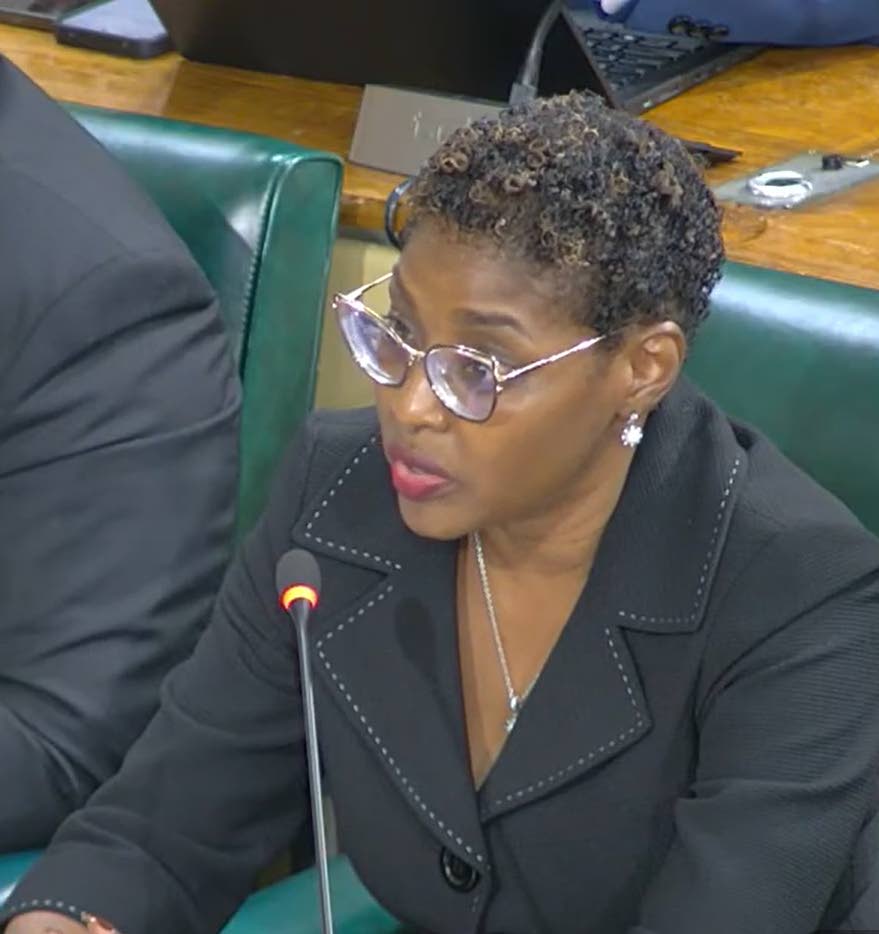
    Jamaica’s top auditor has sounded the alarm over crippling personnel shortages that are blocking an immediate re-examination of recently recovered procurement documents from the University Hospital of the West Indies (UHWI), as overlapping high-stakes public sector audits stretch her department’s already thin resources to breaking point. Auditor General Pamela Monroe Ellis shared these constraints during a recent sitting of Parliament’s Public Accounts Committee (PAC), where lawmakers pressed for details on how her office would move forward after UHWI administrators announced the rediscovery of dozens of procurement files previously listed as missing.

    The controversy traces back to an earlier audit of UHWI’s procurement protocols, which flagged 51 contracts for which no supporting documentation could be produced during the initial review. That gap sparked widespread alarm over gaps in record-keeping, potential lapses in transparency, and possible non-compliance with national public procurement rules. During Tuesday’s committee sitting, UHWI Acting Chief Executive Officer Eric Hosin updated legislators: eight of the missing files, covering contracts valued at approximately $65 million, have been located in previously searched storage spaces, while another four contracts worth an estimated $35 million have had their documentation reconstructed from existing records.

    Following this update, PAC Chair Julian Robinson asked the Auditor General’s Department to outline its next steps, noting that the committee requires independent verification from the auditor general to confirm that the newly surfaced files are both complete and credible. Robinson also pushed for clarity on how the department will handle files that remain unaccounted for, and contracts that UHWI has now stated were canceled before execution.

    In her response, Monroe Ellis pushed back against the assumption that the rediscovery of files automatically resolves earlier concerns about procurement irregularities. She emphasized that any meaningful follow-up review would demand a full reassessment of every document, including rigorous checks to confirm authenticity, completeness, and alignment with procedural requirements. “I am not satisfied with just looking at a file to see that it exists. I would rather to have a more thorough audit done where I can have confidence about bona fides as well as accuracy,” she told the committee.

    Despite this commitment to rigorous oversight, Monroe Ellis made clear that an immediate review is not feasible, given that her department is already stretched thin by multiple ongoing major investigations. “I understand your desire to have some level of comfort and better particulars around this matter. But I really have to emphasise that I just do not have the manpower right now. We have other audits that we’re seeking to complete and it’s actually this audit team that is involved, and it will have a ripple effect,” she explained.

    The Auditor General added that the UHWI probe is just one component of a wider systemic audit of Jamaica’s entire public health sector, and that other major public audits have already been pushed back due to competing urgent national priorities. She specifically called out a post-Hurricane Melissa recovery spending audit that is currently consuming the bulk of her department’s audit capacity, and has already delayed a separate review of the Cornwall Regional Health Authority. “It is necessary for us to wrap those audits up to move on, which is why I’m asking for time to allow the team to complete their review of the Hurricane Melissa initiative, which is quite time-consuming, as well as the Cornwall Regional Hospital,” she said.

    Monroe Ellis’ testimony underscores the growing systemic pressure facing Jamaica’s national audit office, which is being forced to juggle a growing backlog of high-profile public interest investigations against a static ceiling on staffing and operational resources.

  • 18 to consent

    18 to consent

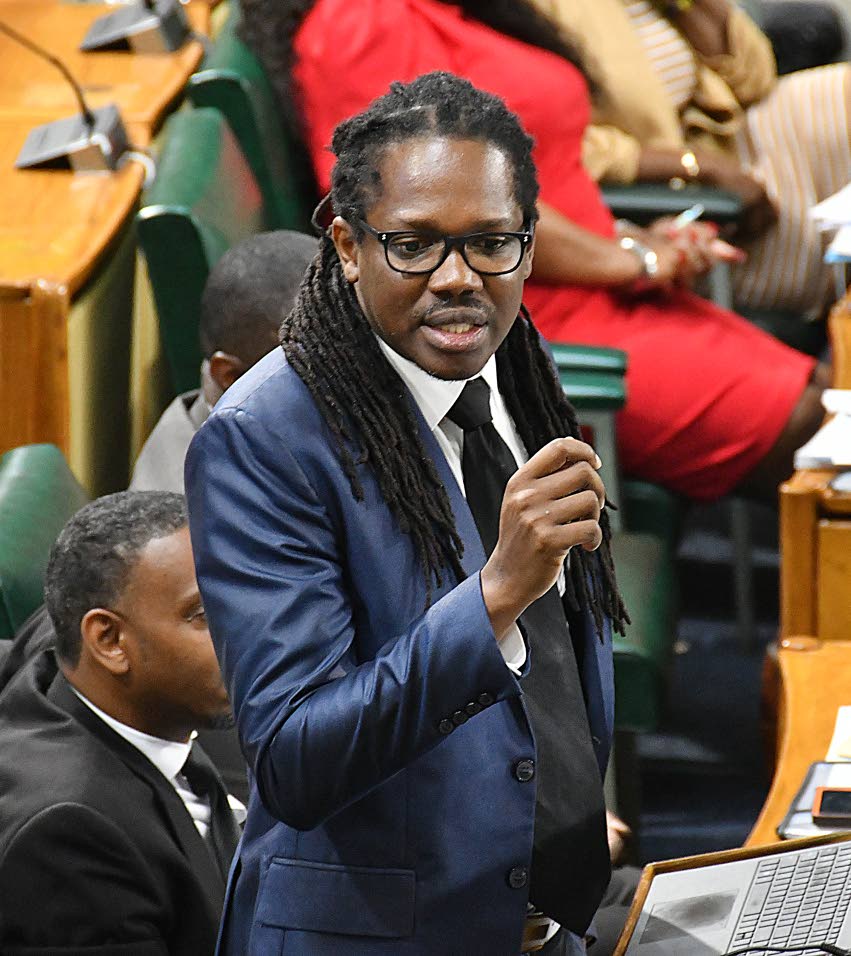
    During Tuesday’s 2026/27 Sectoral Debate in Jamaica’s House of Representatives, opposition education spokesperson Damion Crawford has issued a bold call to raise the country’s age of consent from 16 to 18, framing the policy shift as a critical response to an unaddressed teen pregnancy epidemic that is driving mass school dropout across the nation.

    Crawford’s proposal comes amid a scathing broader critique of Jamaica’s public education system, which he argues is systematically failing the country’s youth. His argument centers on staggering official data: local institutions record an average of 6,000 school-aged girls becoming pregnant every year, and pregnancy accounts for 49% of all female secondary school dropouts. Most teen mothers do not return to formal education after giving birth, ending their academic trajectories prematurely. Extrapolating from annual pregnancy rates over the full 12-year compulsory schooling cycle for students aged 6 to 17, Crawford estimates that as many as 78,000 current students are children born to teen mothers still enrolled in school.

    The push for an upward age adjustment comes at a pivotal legislative moment in Jamaica. The country last updated its age of consent in 1988, when lawmakers raised it from 14 to 16 via amendment to the Offences Against the Person Act, with the explicit goal of cutting teen pregnancy and protecting vulnerable girls in the 14 to 16 age bracket. Today, however, a parliamentary joint select committee reviewing the Child Diversion Act is currently considering a close-in-age exemption that would legalize consensual sexual relations between 15-year-old girls and 19-year-old men — a move Crawford implicitly pushes back against with his call for a higher baseline age of consent.

    Beyond the teen pregnancy crisis, Crawford laid bare a cascade of overlapping failures plaguing Jamaica’s education sector, starting with chronic absenteeism. Defining chronic absenteeism as missing at least 10% of the school year (19 instructional days), he reported that every administrative region in the country records chronic absenteeism rates above the warning threshold. Rates range from a low of 17% in Region One and 18% in Kingston’s Region Two to 35% in Region Six, with some deep rural regions posting absenteeism as high as 55%. Citing World Bank analysis, Crawford noted that absenteeism directly drives dropout: the lower secondary dropout rate sits at 25%, while upper secondary stands at 15%. For male students, 41% leave school due to flagging interest in academics — a number that has risen sharply from 19% of dropouts in 2010 to 32% in 2017, a trend Crawford attributes to declining public perception of education’s value.

    Crawford also pushed back against the Jamaican government’s recent claim that all schools have fully reopened following the passage of Hurricane Melissa in October last year. He argued the announcement ignores widespread “hidden absenteeism,” as many schools have adopted a staggered hybrid schedule that only brings students in-person for two days a week, leaving them learning remotely for three. This arrangement, he claimed, has resulted in catastrophic learning loss of between 40% and 60% for affected students.

    The opposition spokesperson went on to criticize multiple government policy choices that he says exacerbate the system’s struggles. He called out a failed student bus transportation system that leaves many students unable to reliably attend classes, and the recent elimination of a 20% duty concession on motor vehicles purchased by educators. Crawford noted that school leaders and guidance counsellors regularly travel to track down truant students and reconnect them to learning, making personal transportation a critical tool for retention. He also added that the government has not increased funding for the Programme of Advancement Through Health and Education, a key social safety net supporting low-income students.

    The most pressing systemic threat, Crawford argued, is an accelerating exodus of teaching staff that the government has failed to address. He reported that annual teacher resignations have jumped fivefold over the past decade, from 350 resignations a decade ago to 1,800 resignations in 2026 alone. In 2022, 145 math teachers — 10% of the country’s total active math teaching workforce — left the profession. Crawford slammed the government for lacking any meaningful teacher retention strategy, and noted that the administration’s recent proposal of a 2% salary increase for educators amounts to an insult to the profession that drives more teachers away.

  • Sweet relief!

    Sweet relief!

    For years, residents across two Jamaican communities have endured persistent foul odors, disrupted daily life, and public health risks caused by chronically malfunctioning sewage infrastructure. Now, they are finally set to get long-awaited relief after the government announced plans to permanently shutter both troubled facilities. Jamaica’s Minister of Water, Environment and Climate Change Matthew Samuda made the formal announcement Tuesday during his sectoral debate address to the House of Representatives, framing the decision as a fulfillment of a core promise to constituents who have advocated for change for years.

  • Two decades strong!

    Two decades strong!

    Few career trajectories in Jamaican reggae music carry as intimate and inspiring a narrative as that of beloved vocalist Romain Virgo. For generations of reggae fans across the globe, his rich, distinct voice is more than a familiar sound—it has become intertwined with personal memories, stretching all the way back to the early 2000s, when a nervous yet self-assured teenager stepped onto the Digicel Rising Stars competition stage for the first time.

    From his earliest appearances, it was clear that this young artist carried a rare, unmistakeable spark. It was not merely the crisp clarity of his vocal tone or the surprising emotional maturity of his delivery that set him apart—it was the raw, unfiltered sincerity he brought to every note. Week after week, as the competition unfolded, audiences watched the young aspirant pour his entire heart into every performance, unknowingly laying the groundwork for a decades-long career that would extend far beyond the bounds of a televised talent show.

    For fans who have tracked Virgo’s growth from his teenage debut, it often feels as though they have watched him mature in real time—a feeling the artist says he shares, especially as he gears up to mark 20 years in the professional music industry. “I am so grateful and so happy right now,” Virgo shared in an interview, his excitement palpable. “Next year marks my 20th anniversary in music, and we have huge, huge plans in the works. I can’t wait for it to get here. Nineteen years ago, I won Digicel Rising Stars, and that has been such a blessing in my life. I don’t know if I would have made it this far without that opportunity and the support of Digicel, so I have to shout them out every chance I get.”

    While Virgo has chosen not to reveal every detail of his anniversary celebrations to keep some surprises for fans, he made one thing clear: centering his loyal supporter base is non-negotiable. As he gets ready to honor not just the years he has already logged in the industry, but the fans who have stood by him through every step of his journey, Virgo says he is constantly overwhelmed by gratitude when he reflects on how far he has come.

    “Twenty years is such a huge milestone, and I didn’t want to let this moment pass without doing something special to mark it,” he explained, teasing what attendees can expect from the anniversary events. “When I stop and look at how far I’ve come, I’m just so grateful—that gratitude is what keeps me pushing forward. I want to enter this 20th year with nothing but gratitude and a plan to celebrate in a big way. We’re already deep in the planning phase… I can’t share everything right now, but I can promise it’s going to be magnificent. It’s going to be a really special year, and I’m so looking forward to it.”

    One of the centerpieces of his anniversary plans is a brand new collection of music, which will kick off a broader series of celebratory events across the year. Over the course of his nearly two-decade career, Virgo has grown into one of reggae’s most consistent and trusted voices, building a legacy of work that has stood the test of time. Track by track, performance by performance, he has proven that core values like consistency, artistic discipline, and unapologetic authenticity still hold tremendous value in the modern music industry.

    The shy teenager who once stood under the hot stage lights of a national competition has grown into a commanding, confident performer, equally at home playing small, intimate venues in his native Jamaica as he is headlining major festivals for crowds of thousands of international fans. Now a bonafide star, Virgo holds a well-earned place among the leading voices in modern reggae, a ranking that is a direct testament to his years of relentless hard work and dedication to his craft. As he counts down to his 20th career anniversary, Romain Virgo is stepping into this milestone moment equal parts excitement and intentional gratitude.