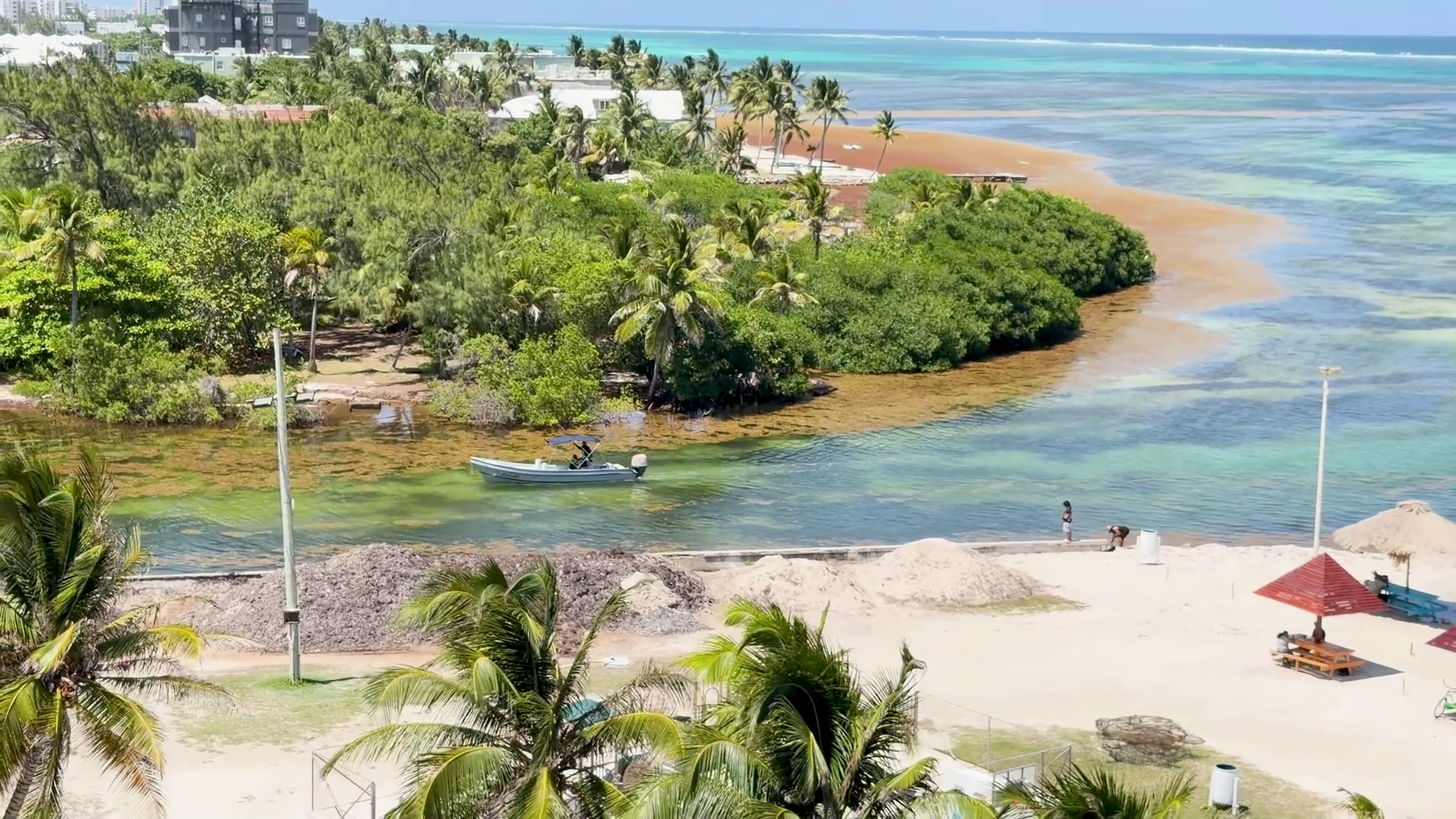
As calendar pages turn to June 2026, the small Central American nation of Belize is facing an escalating environmental emergency that threatens its most vital economic sector: a massive, unrelenting surge of sargassum seaweed is piling up along its Caribbean coastlines at a rate that far outpaces local cleanup capacity, pushing the country toward its highest Red Phase crisis alert.
Thick mats of the brown algae are rapidly smothering Belize’s postcard-perfect beaches, destroying critical marine habitats that support coral reefs and local fisheries, and delivering a sharp blow to the tourism industry that anchors the nation’s economy. In the popular tourist hub of San Pedro, municipal crews have already ramped up their response — expanding team sizes, deploying heavier equipment to clear shorelines, and establishing temporary composting sites to store collected seaweed. Even with these stepped-up efforts, however, the influx of sargassum continues to outstrip the municipality’s ability to keep up.
Local authorities are now working urgently alongside regional conservation partners to identify permanent, safe long-term dumping grounds and develop more sustainable, long-term solutions to the recurring problem. As conditions worsen by the week, public and political pressure is growing to implement a more coordinated, large-scale response to the crisis. Many on the front lines admit that some days, the battle against the endless seaweed surge feels unwinnable.
Anthony Mahler, Belize’s Minister of Tourism, emphasized that the sargassum crisis is a regional problem that demands a regional, science-backed collective response — a level of coordination that has not yet materialized. Scientists have traced the massive sargassum blooms to nutrient runoff from the Amazon basin, which fuels growth that accumulates in the Sargasso Sea before drifting south to Caribbean coasts. Mahler noted that neighboring Mexico, which currently is absorbing the brunt of a larger sargassum drift, has struggled to contain the blooms even with a far larger national budget and active support from the Mexican Coast Guard. “You can’t operate 24 hours a day in that harsh coastal environment,” Mahler explained. “By the time crews start work the next morning, another full boatload of sargassum has washed ashore.”
Valentine Rosado, science advisor for the San Pedro Town Council, explained that local teams are using atmospheric and oceanographic data — including wind patterns, weather forecasts, and tide levels — to predict where sargassum accumulations will be heaviest, allowing crews to reallocate resources strategically. Currently, the municipal government focuses its limited resources on a one-mile stretch of shoreline in central San Pedro, while private property owners, resorts, and local businesses are expected to handle cleanup on their own stretches of coast. Rosado pointed out that this fragmented approach is failing: only a small fraction of private property owners invest in regular cleanup, leaving massive accumulations that continue to spread to maintained areas. Many of the private operators that do participate are growing discouraged, reporting damaged equipment, costly cleanup bills, and negative health impacts for their staff from exposure to rotting seaweed.
To better communicate the severity of the situation and call for outside support, Belize has adopted a color-coded stoplight alert system, which signals when local cleanup crews have reached full capacity and require additional regional or international assistance. Officials stress that what was once a seasonal problem has now become a year-round challenge, requiring steadily growing financial and human resources that the small nation cannot supply on its own.