博客

  • Restorative justice is key to building safer communities says Attorney-General Wilkin

    Restorative justice is key to building safer communities says Attorney-General Wilkin

    On June 8, 2026, Saint Kitts and Nevis launched a landmark four-day professional training program focused on restorative justice and criminal mediation, with top legal officials framing the initiative as a cornerstone of the country’s push to build safer, more cohesive communities.

    Hosted at Basseterre’s Koi Resort, the opening ceremony brought together cross-sector justice professionals, including active-duty police officers, social development specialists, probation officers, child protection practitioners, social workers, community development leads, youth outreach workers, and human security experts. All participants will gain hands-on training in restorative practices over the course of the four-day session, which runs from June 8 to 11.

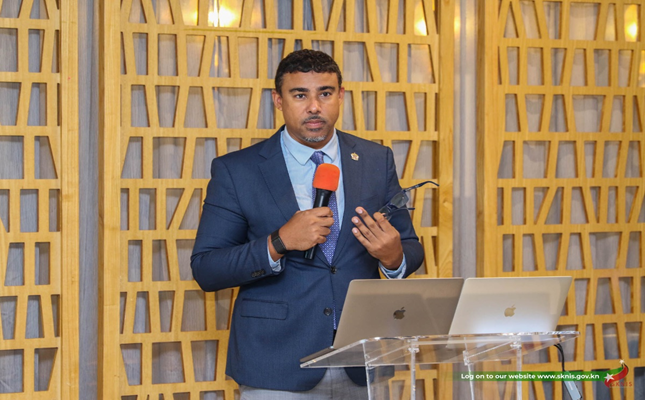
    In his keynote address at the opening, Honourable Garth Wilkin, the nation’s Attorney-General and Minister of Justice and Legal Affairs, argued that traditional punitive enforcement alone cannot resolve the deep social harm caused by conflict. While Wilkin emphasized that law enforcement, offender accountability, and public safety will remain non-negotiable priorities for the government, he noted that jurisdictions across the globe are increasingly turning to proactive, early intervention strategies to cut reoffending rates and stop conflicts from escalating into serious criminal harm.

    Wilkin positioned mediation as one of the most effective tools in this new approach, explaining that its core power lies in structured, intentional dialogue between affected parties. “Mediation’s foundation is deceptively simple: it is conversation. Not easy, comfortable conversations, but guided discussions that give every person space to be heard, help offenders understand the real impact of their actions, encourage appropriate accountability, and pave the way for constructive, healing solutions,” he explained.

    The training forms part of a broader national justice reform agenda supported by two international partners: the Justice Action Coalition and the United Nations Development Programme (UNDP). Ongoing initiatives under this agenda include the development of a national restorative justice policy framework, investment in community-led restorative justice programs, expanded youth engagement projects, and targeted community justice grants. All of these efforts are aligned with the government’s goal of building a people-centered justice system that prioritizes restoration, accountability, and community resilience.

    Wilkin also highlighted the unique advantage Saint Kitts and Nevis holds as a small island developing state. Close-knit community bonds that define life in the nation create natural opportunities for meaningful dialogue and collective problem-solving that larger countries often struggle to cultivate. “Our size is our strength in this work,” he noted. “We must not underestimate the existing strength within our communities, or the critical role they can play in building safer, more connected societies.”

    Reaffirming the government’s commitment to modern, effective justice reform, Wilkin stressed that restorative justice is not a replacement for traditional enforcement — it is a complementary strategy that addresses the root causes of harmful behavior, supports crime victims, and reduces rates of recidivism. “This is not about being soft on crime. It is about being smart on justice,” he said.

    Moving forward, the training program will equip local justice professionals to expand access to restorative practices across Saint Kitts and Nevis, advancing national goals to strengthen community resilience and embed positive conflict resolution into the nation’s justice system.


  • New less invasive treatments expand care options for women with endometriosis and fibroids

    New less invasive treatments expand care options for women with endometriosis and fibroids

    Two of the most widespread gynecological conditions impacting women worldwide, endometriosis and uterine fibroids, are seeing expanded, more patient-centered care options thanks to groundbreaking medical innovation that prioritizes fertility preservation and shorter recovery times, according to leading gynecological experts at Mayo Clinic Arizona.

    Megan Wasson, D.O., chair of gynecology at Mayo Clinic Arizona, notes that while the two conditions have distinct progression patterns and symptom profiles, they share key traits: both have genetic links, cannot be prevented with current medical knowledge, can interfere with fertility and quality of life, and are tied to menstrual cycle-related symptoms. As medical research advances, both have become central targets for improving patient outcomes.

    “They’re both relatively common. There can be some overlapping symptoms, but the majority of symptoms vary and the diseases progress differently. Fibroids and endometriosis can run in families. Neither condition is preventable,” Dr. Wasson explains.

    Uterine fibroids are noncancerous growths that develop in the uterine wall, ranging in size from tiny, undetectable nodules to large masses large enough to expand the pelvic and abdominal region, creating an appearance similar to pregnancy. While many patients remain asymptomatic and only receive a diagnosis during routine pelvic exams or imaging scans, others experience severe disruptive symptoms that upend daily life. These include abnormally heavy, prolonged or frequent menstrual periods, chronic pelvic, abdominal or lower back pain, increased urinary frequency, constipation, and discomfort during sexual intercourse.

    When fibroids grow large enough, they can be felt through the abdominal wall, and often cause enough abdominal bloating that patients struggle to fit into their regular clothing. “These are not just little inconveniences. These are very large, very significant masses and they can really impact quality of life,” Dr. Wasson says. “When fibroids become very enlarged, you can actually feel them through the abdominal wall. You can get to the point that your pants do not fit, you have significant abdominal bloating, and the fibroids are pushing on other organs such as the bladder, causing you to have to go to the bathroom all the time, among other symptoms. You can have constipation because the fibroids are pushing on the bowel and not allowing things to move.”

    Until recently, the standard default treatment for symptomatic fibroids was a hysterectomy — a full surgical removal of the uterus that permanently eliminates a patient’s ability to become pregnant. Today, that standard has shifted dramatically. Medical innovation has unlocked a range of new uterine-sparing alternatives that reduce surgical trauma and preserve fertility for patients who hope to have children in the future.

    Alongside pharmaceutical options that shrink fibroids to reduce symptoms, multiple nonsurgical and minimally invasive procedures have become widely accessible. Uterine fibroid embolization, performed by interventional radiologists, blocks the blood supply feeding fibroids, causing the growths to shrink without open surgery, and most patients are able to return home the same day of the procedure. Other minimally invasive options include radiofrequency ablation, which uses targeted energy to destroy fibroid tissue, as well as robotic-assisted or laparoscopic myomectomy — a surgical procedure that removes fibroids while leaving the healthy uterus intact.

    For endometriosis, a condition where tissue similar to the uterine lining grows outside the uterine cavity, advances in treatment and diagnostic research are also driving improved outcomes. Common symptoms of endometriosis include severe pelvic cramping and pain during menstruation, heavy bleeding or spotting between periods, and discomfort during sex, bowel movements or urination. Like fibroids, endometriosis can be asymptomatic for some patients, who only receive a diagnosis after struggling with infertility or undergoing unrelated surgery. Unlike fibroids, which typically develop later in reproductive life, endometriosis usually emerges much earlier after the onset of menstruation, and it increases a patient’s long-term risk of ovarian cancer.

    Current standard treatments for endometriosis include medication or conservative surgery, which removes abnormal endometrial tissue while preserving the uterus and ovaries to protect fertility. Much like fibroid surgery, endometriosis procedures are increasingly performed as minimally invasive laparoscopic surgeries, often with robotic assistance to improve precision, through only a small abdominal incision.

    Looking ahead, research into endometriosis is pushing even further: Dr. Wasson currently leads a Mayo Clinic research team developing a preventive vaccine for endometriosis, and the team is also working on new imaging techniques to simplify and speed up diagnosis. The research explores using a targeted contrast molecule that makes endometrial tissue visible on scans, eliminating the delays that often come with current diagnostic processes.

    To catch both conditions as early as possible, when treatment is most effective, Dr. Wasson encourages all girls and women to track their menstrual health from the first onset of periods. Any irregularity — from unusually heavy bleeding to abnormal cycle length, missed periods, or severe pain that disrupts daily life — warrants a conversation with a healthcare provider.

    “Your period should be no more than a minor inconvenience,” she says. “If you’re missing work, school and other activities, if you’re staying in bed because you’re having your period, that’s not normal. If there are any symptoms causing you to change anything in your life, that warrants a conversation with your healthcare professional. Don’t assume a change is normal or is just something you should deal with.”

    This report is based on a June 2026 press release from Mayo Clinic, originally published by SKNVibes.com.

  • Caribbean Music Awards set to return for its fourth year…

    Caribbean Music Awards set to return for its fourth year…

    The highly anticipated fourth annual Caribbean Music Awards officially kicked off its 2026 edition on June 10, launching the largest celebration of Caribbean sonic talent in the event’s history and opening public voting for fans across the globe. This year’s installment marks a major milestone for the awards platform, which has grown rapidly from a regional recognition event to a global cultural movement highlighting the expanding influence of Caribbean music worldwide.

    Organizers have unveiled a record-breaking nominee slate for 2026, featuring more than 250 nominated artists and works across over 40 award categories. In a move to deepen its commitment to genre inclusivity and cultural representation, the awards have introduced nine new and expanded categories this year, shining a dedicated spotlight on underrepresented Caribbean subgenres including Dennery, Zess, Konpa, Chutney Soca, and Jab, alongside a new category for French Caribbean music. These additions solidify the Caribbean Music Awards’ position as the most comprehensive global platform honoring the full diversity of Caribbean musical expression.

    Leading the pack of 2026 nominees is cross-genre standout Lady Lava, who secured an unprecedented nine nominations spanning Soca, Zess, Chutney Soca, and performance categories, cementing her status as one of the region’s most versatile rising stars. Close behind Lady Lava, a trio of industry heavyweights – Ayetian, Machel Montano, and V’ghn – each earned seven nominations, reflecting their wide-ranging impact across Dancehall, Soca, and collaborative projects. Hitmakers Shenseea and Skillibeng follow with six nominations apiece, while Masicka, Popcaan, Valiant, Vybz Kartel, and Yung Bredda each take five nominations, reinforcing the enduring global dominance of leading Dancehall and Soca voices. A second tier of top contenders including Full Blown, Jesse Royal, Joé Dwèt Filé, Kes, Lila Iké, Lola Doll, Mical Teja, Mikado, and Voice each earned four nominations, highlighting the depth and competitive balance of talent across Reggae, Soca, Konpa, and other core genres.

    On the track side, the collaborative hit *Shake It to the Max (Fly) Remix* featuring Moliy, Skillibeng, Shenseea, and Silent Addy emerged as the most nominated song of 2026, taking three nominations across multiple categories. Its cross-category success underscores the track’s broad cultural resonance across Dancehall, collaborative work, and music video, making it one of the year’s defining Caribbean records. Other top-nominated tracks include *Wah Yo Deh Pon*, *Passenger Princess*, *Jab Decisions*, and *4 Kampé II*, all of which reflect 2026’s trend of cross-regional collaboration and genre fusion.

    Public voting for the 2026 awards opened immediately alongside the nominee announcement on June 10, and will remain open for global fans to cast their support through August 10, 2026. Fans can view the full list of nominees and submit votes via the official awards website, caribmusicawards.com. Organizers note that an extended voting window was chosen to give fans across all time zones and regions ample opportunity to support their favorite artists and cultural icons. Additional details about the in-person awards ceremony and its official date will be announced in the coming months.

    The 2026 installment builds on the breakthrough momentum of 2025’s event, which marked the first time the Caribbean Music Awards premiered on BET, expanding the platform’s global reach to millions of new viewers and establishing it as a mainstream cultural force far beyond the Caribbean region. More than just an awards ceremony, the event has evolved into a global cultural movement that amplifies both established industry legends and emerging underrepresented voices, connecting Caribbean cultural identity to audiences worldwide through shared sonic storytelling.

    The Caribbean Music Awards is managed by Caribbean Elite Group (CEG), an organization dedicated to advancing Caribbean culture through media, cultural initiatives, and community programming. CEG also oversees Caribbean Elite Magazine, a leading print and digital publication that showcases Caribbean talent across entertainment, culinary arts, fashion, entrepreneurship, and travel, and the Caribbean Elite Foundation, which supports cultural preservation efforts across the region.

    Fans can stay updated on the latest awards announcements by following the official Caribbean Music Awards accounts on Instagram, Facebook, and TikTok, as well as Caribbean Elite Magazine’s social channels.

  • Nevis Water Department informs of Disconnection of Water Services

    Nevis Water Department informs of Disconnection of Water Services

    Residents and businesses across Nevis are being put on formal notice this week that the local Water Department is set to begin a cycle of service disconnections targeting customers with unpaid, overdue water balances. Scheduled to run between Tuesday, June 16 and Friday, June 26, 2026, the disconnection initiative is the department’s standard enforcement action to encourage resolution of outstanding account balances.

    In an official public notice posted Wednesday, June 10, 2026 at 2:45 PM, the department stressed that customers have until the close of business on Friday, June 12, 2026 to pay down any overdue amounts on their accounts to avoid having their water service cut off. For customers who fail to settle their outstanding balances before the June 15, 2026 deadline for avoiding disconnection procedures, the department has confirmed that a mandatory $150.00 reconnection fee will be added to their total owed amount before service can be restored.

    This routine annual action by the Nevis Water Department is designed to recover unpaid utility revenue that supports ongoing maintenance, infrastructure upgrades, and consistent water delivery services across the island. Account holders with questions about their balance or available payment plans are encouraged to contact the department directly before the June 12 deadline to arrange for settlement and prevent unexpected service interruptions.

  • Prime Minister Drew Salutes Defence Force as New Combat Uniform Debuts

    Prime Minister Drew Salutes Defence Force as New Combat Uniform Debuts

    On June 10, 2026, a ceremonial march through the capital streets of Basseterre marked a landmark moment for St. Kitts and Nevis, as the St. Kitts-Nevis Defence Force (SKNDF) officially unveiled its modern new combat uniform, with top national leadership praising the force’s decades-long commitment to protecting the federation.

    Speaking to assembled uniformed personnel, senior command staff, and local residents who turned out for the event, Prime Minister Terrance Drew — who also holds the cabinet portfolio for National Security — framed the new rollout as far more than a superficial aesthetic update. For Drew, the purpose-built uniform stands as a tangible symbol of the federal government’s ongoing investment in the SKNDF, and a reflection of the unbroken loyalty that force members extend to the people of the twin-island nation.

    “Today you look sharp, sharper, and stronger, your uniform is designed for real work, the real work that you do on our land, in our waters, through whatever weather this region, this nation faces,” Drew told attendees. He went on to explain that while casual observers may dismiss the rollout as nothing more than a new set of clothing, the uniform carries profound weight for the personnel who wear it and the nation that relies on their service.

    “It is a commitment our Federation makes to you, and a commitment you make to your federation,” Drew added.

    The prime minister extended broad praise to all active and serving members of the SKNDF, highlighting how the force consistently upholds core values of strict discipline, willing sacrifice, and deep patriotism. Unlike many professional roles, service in the national defence force routinely demands that members set personal interests aside to prioritize the safety and well-being of the nation, a standard Drew said the SKNDF meets consistently.

    Drew also took the opportunity to outline the wide-ranging, often underrecognized responsibilities the SKNDF fulfills daily to keep the federation running. These critical duties include securing national border infrastructure, leading rapid response efforts during natural disasters, coordinating support during unplanned national emergencies, and bolstering local public safety and national security frameworks that benefit all residents.

    In closing, the prime minister issued a call to all citizens of St. Kitts and Nevis to recognize, honor, and stand behind the men and women of the SKNDF. It is their consistent, dedicated service that preserves the federation’s hard-won peace, stable security environment, and long-held democratic traditions, he noted.

    This report is based on a press release issued by the Prime Minister’s Office to SKNVibes.com, which published the release in its unedited original form.

  • NIS chair rejects ‘actuary or nothing’ critics

    NIS chair rejects ‘actuary or nothing’ critics

    Amid swirling online criticism over the leadership transition at Saint Vincent and the Grenadines’ state-run National Insurance Services (NIS), chairman Stephen Joachim has publicly defended the board’s recommendation of Ronette Lewis, the current General Manager of the Centre for Enterprise Development, as the agency’s incoming executive director, pushing back against claims the top role must be held by a trained actuary.

    In an interview with Boom FM on Monday, Joachim confirmed that Lewis’ appointment will go into effect on July 1, 2026, following the departure of nine-year incumbent Stuart Haynes, an actuary who accepted a new role in St. Kitts. Appointed NIS chairman by the current New Democratic Party (NDP) administration, Joachim expressed full confidence in Lewis’ ability to lead, saying, “I think she will do a terrific job.”

    Much of the public pushback has circulated on social media, where commentators have questioned both the board’s selection of Lewis and its broader succession planning process. Joachim pushed back sharply against what he framed as uninformed, unqualified online attacks, echoing a previous description of loud social media critics as “internet crazies” from a political colleague. “You can’t run a country by social media, despite what these [people] think,” he said, challenging online critics to produce their own professional track records before judging the board’s decision. “What have you accomplished in your life? What makes you think that you’re in a better place to judge the actions and decisions taken by certain people when you have never been in those positions or have any idea what you’re talking about?”

    At the core of the criticism is the argument that NIS must be led by an actuary, given the agency’s social security mandate. Joachim rejected this assumption outright, arguing that the role requires a skilled business and people manager, not a specialist actuary. He explained that core actuarial work for the agency is already outsourced to external experts on a regular basis, and that the NIS already retains in-house specialists with actuarial, investment, accounting, and legal expertise on staff and its board. “Every three years, the NIS conducts an actuarial report and we hire external actuaries. They do the evaluations and the assumptions… The manager, the director, has to implement those decisions. There is no actuarial skills being used in running the NIS. None. Zero. Nada,” Joachim said.

    He added that even the previous incumbent Haynes would confirm that day-to-day leadership of the agency does not rely on actuarial training. “If anybody doubts me, speak to Stuart Haynes. He will tell you: ‘Steve, I do not use my actuarial skills to manage the NIS. This is about managing.’” “Why do you need an actuary? People just say it because Stuart was an actuary,” he argued, noting that the agency needs a leader who can navigate its people-focused operations, a need Lewis as an experienced business leader is well-equipped to meet.

    To counter claims that the board hand-picked Lewis outside of a formal process, Joachim laid out a full, transparent breakdown of the recruitment procedure, which launched after Haynes announced his departure even before Joachim’s formal appointment as chairman. The board asked Haynes to draft a formal job description, then contracted independent human resources consultant Janelle Allen, described by Joachim as the top HR specialist in the region, to manage the full search process. In total, the search attracted 54 qualified applicants, all of which were scored independently by Allen. A three-person board selection committee reviewed the top 10 candidates, plus scanned the remaining 44 to ensure no qualified applicants were overlooked, before shortlisting four final candidates: two Vincentians, one Trinidadian, and one Jamaican. After the Trinidadian candidate withdrew for family reasons, the remaining three candidates completed two rounds of assessment: a standard formal interview, and a second round requiring a public presentation on NIS policy and operational topics. “You can’t say we didn’t do a thorough process,” Joachim insisted.

    Joachim also dismissed circulating rumors that the NIS board had unilaterally imposed Lewis as its pick and even threatened to resign over the appointment, labeling those claims as outright false. He clarified that under NIS governing law, the board only issues a recommendation for the role, with the final appointment made by the national Cabinet. “The board does not hire anybody. The board makes a recommendation to Cabinet as to who we think is the best person to be in that position. Cabinet appoints a director and deputy director,” he explained. Prior to Cabinet’s vote, the NIS leadership held a full briefing with Prime Minister Godwin Friday, who holds ministerial responsibility for the agency, walking through the full recruitment process, selection outcome, and rationale for the pick. “We met with the Prime Minister. We told him the process we had gone through… and the ultimate selection and the rationale and the reason why,” Joachim said. “Cabinet then appoints. They agreed with the decision.”

    Joachim further noted that overriding the board’s recommendation without compelling reason would undermine fundamental corporate governance principles for the state agency. “For the Cabinet to overrule the board means that they would have to have very good reasons. Furthermore, why would you appoint a director when you didn’t consider the views of the board? What the heck’s the point of a board then?” he said. He added that such an override would represent a return to the governance practices of the Unity Labour Party, which was voted out of office in the November 2025 general election after nearly 25 years in power.

  • Leisure : Did you know ? #31

    Leisure : Did you know ? #31

    As of June 2026, Haiti’s leading local information platform HaitiLibre has announced the expansion of its popular free general knowledge quiz platform, QuizHaitiLibre, growing its total offering to 150 interactive multiple-choice quiz games after adding 31 new entries in its monthly June update. The 31st entry in the platform’s ongoing “Did You Know?” series shines a light on a little-discussed but foundational component of Haiti’s economy and food security: the bulk carriers that keep the country supplied with essential goods.

    Bulk carriers are a specialized class of cargo ship engineered specifically to move large volumes of unpackaged “bulk” goods across international waters. For Haiti, which relies on imports to meet the vast majority of its population’s basic food needs and construction demand, these vessels are far more than just commercial shipping assets—they are lifelines. Key staples that Haitian consumers depend on, including rice sourced from the U.S. and Asian markets, and core construction materials such as cement, all arrive in the country via bulk carriers.

    Unlike many major international ports, most Haitian docking facilities lack advanced, automated cargo-handling infrastructure. To address this gap, many bulk carriers calling on Haitian ports come pre-equipped with on-board cranes that allow them to unload cargo directly at docks that lack permanent heavy lifting equipment. Even with this adaptation, unloading bulk cargo remains a labor-intensive process that relies heavily on skilled stevedores, as well as carefully coordinated storage logistics to move goods to nearby silos and warehouses immediately after unloading.

    The efficient management of bulk carrier deliveries is not just a logistical concern—it is a critical determinant of national food security. Any extended delay in unloading a single bulk carrier can quickly ripple through local markets, triggering product shortages and sudden spikes in food and construction material prices that disproportionately impact low-income Haitian households.

    Beyond this deep dive into Haitian port logistics, QuizHaitiLibre offers audiences a wide range of engaging, accessible general knowledge content covering hundreds of topics related to Haitian life, culture, infrastructure and global affairs. Designed to accommodate all age groups and knowledge levels, every quiz on the platform is 100% free to access, requires no user registration, and offers three distinct difficulty tiers: easy, intermediate, and hard. All content is available in both French and English to serve Haiti’s diverse linguistic communities.

    The platform updates its content library with new quizzes every month, giving returning users fresh material to test their knowledge on a steady basis. Readers are invited to visit the QuizHaitiLibre platform at https://quiz.haitilibre.com/en to explore the full collection of quizzes, share the resource with family and friends, and submit feedback to the platform’s development team.

  • Filipijnen: Race tegen de klok om overlevenden te vinden na krachtige aardbeving

    Filipijnen: Race tegen de klok om overlevenden te vinden na krachtige aardbeving

    A powerful 7.8-magnitude earthquake has rocked the southern region of the Philippines, leaving at least 37 people dead and more than 400 others injured as rescue teams scramble to locate any trapped survivors buried under collapsed infrastructure. The devastating quake, which struck at approximately 7:40 a.m. local time on Monday around 20 kilometers off the coast of Sarangani province, was felt as far as Manado on the Indonesian island of Sulawesi, some 420 kilometers from the epicenter, according to initial geological assessments.

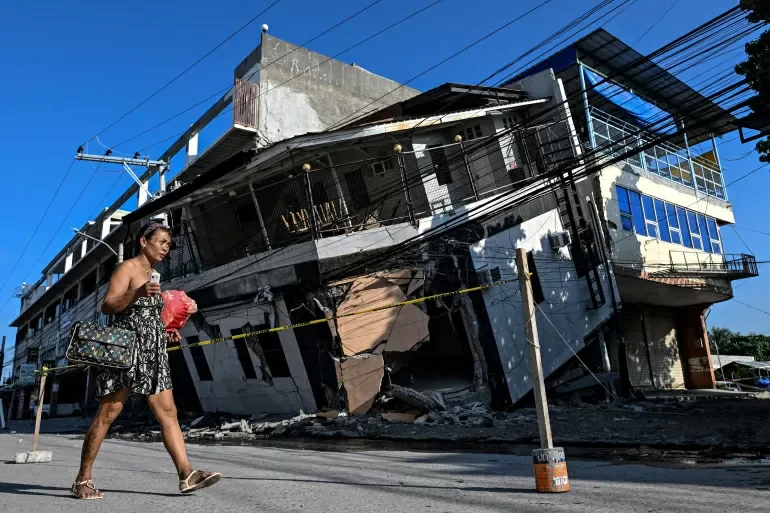
    The hardest-hit urban center is General Santos, a coastal city of 720,000 residents on the island of Mindanao. The city has been declared a state of disaster, with multiple commercial and residential buildings reduced to rubble, streets littered with fallen debris, and downed power lines cutting electricity to large swathes of the community. On Tuesday, search and rescue crews continued to comb through the wreckage of a collapsed commercial building that housed a local supermarket, where two people remain unaccounted for. Rescuers have already pulled two survivors from the site and recovered one body, with no signs of life detected at other search locations as of Wednesday.

    For families of the missing, the wait for news has been agonizing. Dioslinda Deluvio, whose son remains trapped under the collapsed supermarket, waited outside the disaster site Tuesday, clinging to a slim hope. “It is hard to accept that my son is still stuck there,” she said. “My only hope is that he is found today, so we can have peace.”

    The initial major earthquake was followed by a series of aftershocks, the strongest of which registered a magnitude of 6.5, per data from the United States Geological Survey. Immediately after the main quake, tsunami warnings were issued across multiple regional countries, though no major destructive tsunami events were recorded.

    Across affected regions, the death toll has mounted beyond General Santos. Eighteen fatalities were recorded in Sarangani province, most of which came after a mudslide buried homes in the mountain village of Glan. Additional deaths have been confirmed in the nearby provinces of South Cotabato, Davao Occidental, and on Balut Island.

    Access to remote, hard-hit areas has emerged as a major barrier to rescue and recovery efforts, with many mountainous regions of Sarangani only reachable by helicopter. Ongoing aftershocks have further slowed operations, forcing rescuers to work with extreme caution to avoid secondary collapses and additional casualties. “The aftershocks mean rescuers have to move very slowly and carefully,” explained Rodrigo Sosmena, head of regional civil defense. “That is one of our biggest challenges right now.”

    Witnesses across the affected zone described the terrifying force of the quake, which caught people going about their daily routines off guard. Jojo Calma was driving through General Santos when a nearby building crumbled around him. “It was the first time I ever felt such a strong quake, I couldn’t hold back my tears,” he said. “I immediately thought of my children and niece, and what could have happened to them.”

    In Malita, a town located east of General Santos, more than 100 students and a dozen teachers were gathered for a flag-raising ceremony to mark the first day of class after summer break when the quake hit. School principal Rosavel Cachuela reported that the students’ quick decision to stay calm and in their seats prevented serious injuries, but the traumatic event has left lasting psychological impacts on the young community.

    Preliminary damage assessments show the disaster has damaged roughly 2,000 residential homes and 117 government buildings across multiple provinces. Around 6,000 public school campuses still require full structural inspections before classes can resume, leaving thousands of students out of school indefinitely. General Santos’ international airport has remained closed since the quake, forcing the cancellation of 63 domestic flights and disrupting travel across the southern Philippines.

    Given the scale of the destruction, many observers note it is surprising that the death toll has not climbed higher. Manila-based correspondent Barnaby Lo called the relatively low fatality count a “miracle” and outlined the current priorities for response teams. “Right now, the main priority is search and rescue, with hope that more people can still be found alive under the rubble,” he said. “The biggest challenge is reaching mountainous areas, where roads and bridges have been heavily damaged. The department of public works is working around the clock to clear blocked routes, while structural engineers inspect buildings for safety. It is an enormous job.”

    Philippine President Ferdinand Marcos Jr. has already activated national emergency response agencies and reaffirmed the government’s commitment to supporting affected communities. “The national government is in action, and we will not leave Mindanao behind,” he said in a statement.

    This earthquake is the most powerful to hit the Philippines in eight months. The previous major seismic event, a 6.9-magnitude quake near Cebu last year, killed 79 people.

  • Sir Rodney Williams and Sir Vivian Richards Featured in CHOGM Mural Project

    Sir Rodney Williams and Sir Vivian Richards Featured in CHOGM Mural Project

    Antigua and Barbuda has taken a major step forward in its preparations for the 2026 Commonwealth Heads of Government Meeting (CHOGM) with the public unveiling of a striking, eco-friendly mural crafted entirely from recycled plastic bottle caps. This creative community project, which features portraits of the nation’s governor-general Sir Rodney Williams and beloved Antiguan cricket icon Sir Vivian Richards, weaves together environmental advocacy, national pride, and public engagement as the Caribbean nation gears up for the landmark international summit. More than just a public art installation, the initiative is designed to embed sustainable development goals into the lead-up to the conference, driving nationwide conversations about environmental stewardship and encouraging widespread community participation in summit preparation efforts. Government officials involved in the project emphasized that the mural’s sustainable construction is no coincidence—it is a tangible public demonstration of Antigua and Barbuda’s long-standing commitment to environmental responsibility, particularly as the country prepares to make history as the smallest sovereign nation ever to host the quadrennial Commonwealth gathering. For the small island nation, which is disproportionately vulnerable to the impacts of climate change and sea-level rise, the project also serves as a quiet, powerful reminder of its climate advocacy priorities on the global stage ahead of the high-profile summit.

  • Minister Turner Holds Talks on Improving Sewage Systems and Protecting Coastlines

    Minister Turner Holds Talks on Improving Sewage Systems and Protecting Coastlines

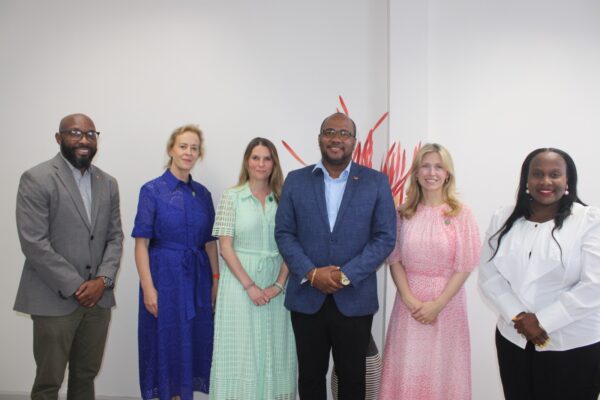
    As Antigua and Barbuda makes early preparations to host the 2026 Commonwealth Heads of Government Meeting (CHOGM), senior government official Minister Rawdon Turner has held high-level strategic discussions with the Sustainable Markets Initiative (SMI) to lay the groundwork for targeted progress on the country’s most pressing national development goals. The meeting, which brought together SMI chief executive Jennifer Jordan-Saifi and her communications team alongside Minister Turner, centered on aligning international support with Antigua and Barbuda’s long-term resilience and inclusive growth agendas.

    At the top of the government’s priority list is the urgent modernization of St. John’s aging sewage treatment infrastructure, a long-unresolved challenge that poses growing risks to the capital’s development trajectory, public health outcomes, and surrounding ecosystems. Outlining the administration’s vision for a future-proof, sustainable urban landscape, Turner emphasized that upgrading these outdated systems is non-negotiable for unlocking continued growth in the capital while safeguarding both community well-being and the natural environment.

    Inclusivity emerged as another core focus of the talks. Minister Turner highlighted the government’s goal to transform St. John’s into a universally accessible city for people living with disabilities, outlining plans to build connected, mobility-friendly urban corridors and upgrade existing public infrastructure. To turn this vision into actionable progress, he formally requested SMI’s technical guidance to help the government adapt and implement international best practices that will boost mobility, expand social inclusion, and raise quality of life for both local residents and the tourists that drive a key segment of the national economy.

    Climate resilience and environmental stewardship, long critical priorities for the low-lying island nation, also dominated the agenda. Minister Turner drew attention to the accelerating threat of coastal erosion and widespread beach degradation across Antigua and Barbuda, two interconnected challenges that put the country’s critical tourism industry and natural heritage at severe risk. To address this, he asked SMI to provide specialized consultancy support to develop evidence-based, practical strategies that can protect coastlines and preserve one of the country’s most economically and ecologically valuable natural assets.

    Following the productive discussions, SMI CEO Jordan-Saifi welcomed the opportunity to build a formal partnership with the government of Antigua and Barbuda. She confirmed the organization’s openness to exploring all viable avenues to deliver tangible, meaningful support aligned with the priorities laid out by Turner. Moving forward, SMI will conduct a detailed assessment of each priority area, then work to mobilize tailored support through one of several potential channels: grant funding, concessional financing, access to specialized technical expertise, or brokering targeted strategic partnerships with other global stakeholders.

    The high-level meeting underscores the Antigua and Barbuda government’s proactive commitment to leveraging international collaboration to solve long-standing national development challenges, as the country gears up to welcome heads of state and global leaders from across the Commonwealth for the 2026 CHOGM summit.