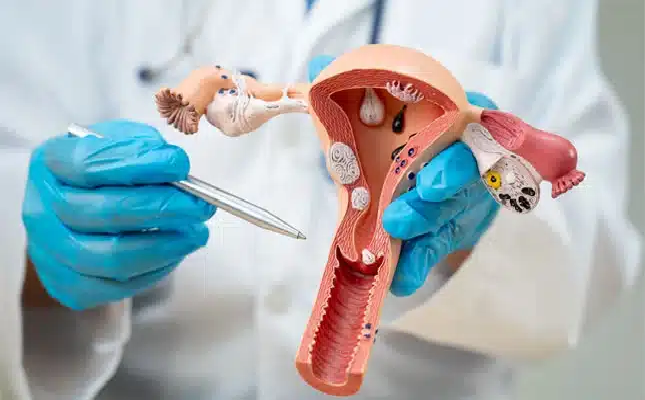
Two of the most widespread gynecological conditions impacting women worldwide, endometriosis and uterine fibroids, are seeing expanded, more patient-centered care options thanks to groundbreaking medical innovation that prioritizes fertility preservation and shorter recovery times, according to leading gynecological experts at Mayo Clinic Arizona.
Megan Wasson, D.O., chair of gynecology at Mayo Clinic Arizona, notes that while the two conditions have distinct progression patterns and symptom profiles, they share key traits: both have genetic links, cannot be prevented with current medical knowledge, can interfere with fertility and quality of life, and are tied to menstrual cycle-related symptoms. As medical research advances, both have become central targets for improving patient outcomes.
“They’re both relatively common. There can be some overlapping symptoms, but the majority of symptoms vary and the diseases progress differently. Fibroids and endometriosis can run in families. Neither condition is preventable,” Dr. Wasson explains.
Uterine fibroids are noncancerous growths that develop in the uterine wall, ranging in size from tiny, undetectable nodules to large masses large enough to expand the pelvic and abdominal region, creating an appearance similar to pregnancy. While many patients remain asymptomatic and only receive a diagnosis during routine pelvic exams or imaging scans, others experience severe disruptive symptoms that upend daily life. These include abnormally heavy, prolonged or frequent menstrual periods, chronic pelvic, abdominal or lower back pain, increased urinary frequency, constipation, and discomfort during sexual intercourse.
When fibroids grow large enough, they can be felt through the abdominal wall, and often cause enough abdominal bloating that patients struggle to fit into their regular clothing. “These are not just little inconveniences. These are very large, very significant masses and they can really impact quality of life,” Dr. Wasson says. “When fibroids become very enlarged, you can actually feel them through the abdominal wall. You can get to the point that your pants do not fit, you have significant abdominal bloating, and the fibroids are pushing on other organs such as the bladder, causing you to have to go to the bathroom all the time, among other symptoms. You can have constipation because the fibroids are pushing on the bowel and not allowing things to move.”
Until recently, the standard default treatment for symptomatic fibroids was a hysterectomy — a full surgical removal of the uterus that permanently eliminates a patient’s ability to become pregnant. Today, that standard has shifted dramatically. Medical innovation has unlocked a range of new uterine-sparing alternatives that reduce surgical trauma and preserve fertility for patients who hope to have children in the future.
Alongside pharmaceutical options that shrink fibroids to reduce symptoms, multiple nonsurgical and minimally invasive procedures have become widely accessible. Uterine fibroid embolization, performed by interventional radiologists, blocks the blood supply feeding fibroids, causing the growths to shrink without open surgery, and most patients are able to return home the same day of the procedure. Other minimally invasive options include radiofrequency ablation, which uses targeted energy to destroy fibroid tissue, as well as robotic-assisted or laparoscopic myomectomy — a surgical procedure that removes fibroids while leaving the healthy uterus intact.
For endometriosis, a condition where tissue similar to the uterine lining grows outside the uterine cavity, advances in treatment and diagnostic research are also driving improved outcomes. Common symptoms of endometriosis include severe pelvic cramping and pain during menstruation, heavy bleeding or spotting between periods, and discomfort during sex, bowel movements or urination. Like fibroids, endometriosis can be asymptomatic for some patients, who only receive a diagnosis after struggling with infertility or undergoing unrelated surgery. Unlike fibroids, which typically develop later in reproductive life, endometriosis usually emerges much earlier after the onset of menstruation, and it increases a patient’s long-term risk of ovarian cancer.
Current standard treatments for endometriosis include medication or conservative surgery, which removes abnormal endometrial tissue while preserving the uterus and ovaries to protect fertility. Much like fibroid surgery, endometriosis procedures are increasingly performed as minimally invasive laparoscopic surgeries, often with robotic assistance to improve precision, through only a small abdominal incision.
Looking ahead, research into endometriosis is pushing even further: Dr. Wasson currently leads a Mayo Clinic research team developing a preventive vaccine for endometriosis, and the team is also working on new imaging techniques to simplify and speed up diagnosis. The research explores using a targeted contrast molecule that makes endometrial tissue visible on scans, eliminating the delays that often come with current diagnostic processes.
To catch both conditions as early as possible, when treatment is most effective, Dr. Wasson encourages all girls and women to track their menstrual health from the first onset of periods. Any irregularity — from unusually heavy bleeding to abnormal cycle length, missed periods, or severe pain that disrupts daily life — warrants a conversation with a healthcare provider.
“Your period should be no more than a minor inconvenience,” she says. “If you’re missing work, school and other activities, if you’re staying in bed because you’re having your period, that’s not normal. If there are any symptoms causing you to change anything in your life, that warrants a conversation with your healthcare professional. Don’t assume a change is normal or is just something you should deal with.”
This report is based on a June 2026 press release from Mayo Clinic, originally published by SKNVibes.com.