博客

  • Derde helft WK 2026: de opvallendste cijfers van WK 2026

    Derde helft WK 2026: de opvallendste cijfers van WK 2026

    The 2026 FIFA World Cup, the most ambitious iteration of men’s football’s flagship global tournament, is set to kick off this Thursday after years of planning, qualifying campaigns and pre-tournament warm-up matches, as 48 of the world’s best national teams prepare to compete for the sport’s most coveted prize.

    Breaking multiple records before a single ball is even kicked, the 2026 edition marks a historic first for the competition: for the first time in World Cup history, matches will be hosted across three nations – Canada, Mexico and the United States. The expanded format, which grew from the 32-team bracket used for the past four tournaments, will see 104 matches played across 16 host cities, with a total prize pool that also hits an all-time high. While FIFA projects that the tournament will break the 1994 World Cup’s 3.5 million spectator record – an edition also hosted by the U.S. – slow ticket sales have raised questions about lower-than-expected public interest so far.

    As fans across the globe count down to kickoff, we’ve compiled the most notable historical and 2026-specific statistics to set the stage for the month-long spectacle.

    ### Historical Standings and Records
    When it comes to all-time World Cup titles, no nation has dominated the competition quite like Brazil. The South American powerhouse has claimed five world championships (1958, 1962, 1970, 1994, 2002) and remains the only country to have qualified for every iteration of the tournament since its launch in 1930. Across its history, Brazil has reached seven finals and 11 semi-finals. Germany and Italy trail Brazil with four titles apiece, though Italy will be absent from the 2026 tournament, marking the third consecutive World Cup the Azzurri have failed to qualify. Only Germany remains in contention to add another title to its trophy case this year.

    Individually, Brazilian legend Pelé holds the record for the most World Cup titles won by a player, claiming gold three times in 1958, 1962 and 1970. Two of his 1958 and 1962 teammates, Bellini and Castilho, share two titles, while former Brazil captain Cafu also won two titles in 1994 and 2002.

    For all-time tournament scoring, Germany’s Miroslav Klose sits atop the leaderboard with 16 goals across 24 matches over four World Cup appearances. He is followed by Brazil’s Ronaldo (15 goals), Germany’s Gerd Müller (14), France’s Just Fontaine (13), Argentina’s Lionel Messi (13), France’s Kylian Mbappé (12) and Pelé (12). The record for most goals scored in a single tournament belongs to Just Fontaine, who netted 13 goals across just six matches at the 1958 World Cup in Sweden.

    ### 2026 Tournament Specifics
    For the 2026 edition, the records for the youngest and oldest competing players are already notable. Mexico’s Gilberto Mora will be just 17 years and 240 days old when the tournament kicks off on June 11, making him the youngest player in this year’s field. Mora made his senior national team debut at just 16 years old, and is one of 22 players under the age of 20 competing in this year’s tournament. At the opposite end of the spectrum, Scotland’s goalkeeper Craig Gordon, who will make his World Cup debut at 43 years and 162 days old, is the oldest player in the 2026 field. The all-time record for oldest World Cup player remains with Egypt’s Essam El Hadary, who played at the 2018 World Cup at 45 years old.

    Seven players aged 40 or older are competing in 2026, including Portugal’s Cristiano Ronaldo (41), Mexico’s Guillermo Ochoa (40), Germany’s Manuel Neuer (40) and Croatia’s Luka Modrić (40). Ronaldo also holds another notable 2026 distinction: with an estimated net worth of $1.4 billion according to Forbes, he is the wealthiest player in the tournament, and the first professional footballer to reach the billion-dollar milestone, thanks to lucrative endorsement deals and his contract with Saudi club Al-Nassr.

    This year’s tournament also sees four nations make their World Cup debut: Cape Verde, Uzbekistan, Jordan and Curaçao. This marks the highest number of first-time qualifiers since the 2006 World Cup. In total, 891 players across all squads will be competing in their first World Cup. Among these debuting nations, Curaçao stands out as the smallest country to ever qualify for the World Cup, with a total population of just 158,000.

    When it comes to squad age demographics, Ivory Coast boasts the youngest average squad age at 25.48 years, while Colombia has the oldest at 29.98 years. Six nations – Cape Verde, DR Congo, Ivory Coast, Curaçao, Senegal and Uruguay – have selected squads made up entirely of players plying their trade at foreign clubs, while Qatar and Saudi Arabia sit on the opposite end of the spectrum: 25 of their 26 squad members play in domestic leagues.

    Argentina’s Lionel Messi holds the record for the most World Cup appearances by any player, with 26 matches across five tournaments between 2006 and 2022. He is closely followed by Germany’s Lothar Matthäus (25 appearances) and Miroslav Klose (24 appearances).

    In terms of club representation, England’s Manchester City has more players at the 2026 World Cup than any other club, with 19 representatives. They are followed by Bayern Munich (18), Paris Saint-Germain and Arsenal (16 each), FC Barcelona (15), and Manchester United, Crystal Palace, Atlético Madrid and Al Hilal (12 each). In total, players from 71 national associations across all continents are competing, with Europe contributing 35, Asia 14, South America 8, North and Central America 7, Africa 6 and Oceania 1.

    The 2026 World Cup’s total prize pool also hits a new record of $727 million, far surpassing the $440 million total offered at the 2022 World Cup in Qatar. The tournament champions will take home $50 million, compared to the $42 million received by 2022 champions Argentina. Even the lowest-ranked finishing teams will receive a minimum of $10.5 million each.

    As the world prepares for a month of world-class football, the 2026 World Cup is already shaping up to deliver unmatched drama, passion, and unforgettable moments that will define the next chapter of global football. The wait is almost over – the biggest World Cup in history is finally upon us.


  • Debt swap ‘could unlock $320m for health’

    Debt swap ‘could unlock $320m for health’

    Barbados is taking bold, unprecedented action to confront its rapidly growing childhood obesity crisis, reallocating hundreds of millions in debt savings to targeted public health initiatives, Finance Minister Ryan Straughn announced this Wednesday. Speaking at the official launch of the Heart and Stroke Foundation’s national mass media campaign — an effort designed to restrict access to unhealthy food and beverages on school campuses, held at Bridgetown Seventh-day Adventist School — Straughn framed the childhood obesity trend as one of the most pressing threats to the island nation’s long-term social and fiscal sustainability.

    Official data underscores the urgency of the crisis: childhood obesity rates across Barbados have jumped sharply from 33 percent to 42 percent in recent years, a surge that Straughn called alarming. “The Government of Barbados, working with the partners here, are committed to seeing this through because this is perhaps the most existential threat to the sustainability of Barbados,” he told attendees.

    At the core of the government’s new response is a groundbreaking debt-for-social swap initiative, for which the Ministry of Finance has already issued a formal request for proposals. Under the plan, the government will buy back $1.2 billion in outstanding national debt, generating approximately $320 million in cumulative interest savings. All of these freed-up funds will be redirected to expanded health expenditures, with a large portion earmarked for evidence-based behavioral change programs designed to reverse the obesity trajectory among young people.

    This innovative financing mechanism will complement ongoing public and non-profit efforts to improve school nutrition and cut youth obesity rates, Straughn explained. Beyond domestic initiatives, he added that Barbados will continue collaborating with neighboring Guyana and Suriname to strengthen regional food security systems and expand access to affordable, nutrient-dense food for all households.

    To consolidate progress, the government plans to augment the existing school nutrition policy and the new foundation-led public outreach campaign with additional programming from the Ministry of Health. Straughn emphasized that aggressive action over the next three to five years is critical to driving down obesity rates, noting that the island nation has already poured more than $6.1 billion into public healthcare over the past 15 years. While Barbados has long prioritized broad access to healthcare as a core social policy to prevent family financial ruin, Straughn argued that shifting focus to prevention and changing entrenched eating habits will deliver far greater long-term value.

    Demographic projections add extra urgency to the fight: by 2050, nearly half of Barbados’ population will be aged 65 or older. If the current childhood obesity crisis remains unaddressed, Straughn warned, the already heavy burden of non-communicable diseases will fall disproportionately on future generations, leaving millions of people facing chronic health conditions from middle age onward. He drew a parallel between the obesity crisis and the island’s ongoing fight against crime and violence, arguing that both issues demand immediate, whole-of-society attention. “This is a slow walking epidemic, pandemic, call it whatever you like, that is just as important to address in our daily lives in the same way that we have to address the deviance and the criminality that is pervasive in our society,” he said.

    Straughn outlined a multi-pronged approach to tackling the crisis, centered on empowering young people to lead cultural change. Young Barbadians, he said, must be equipped to act as advocates for healthier lifestyles, even within their own households — urging children to open conversations about nutrition with parents and guardians, and challenge unhealthy intergenerational habits. “If we the adults don’t fix our own eating habits, then we are passing a larger burden on the very young people who are already at risk based on these numbers to not just deal with your circumstance, but having to deal with yours as well as your parents,” he noted.

    Increased physical activity is another core pillar of the national strategy. Straughn called for expanded dedicated recreational spaces for children in communities across the country, noting that even 15 to 30 minutes of additional moderate-to-intense physical activity daily generates meaningful long-term health outcomes when sustained. The government is also integrating health promotion into other policy areas, including expanding school-based agricultural programs to teach young people about local food production, and partnering with the Barbados Community College’s hospitality program to train young chefs and students in preparing healthy, balanced meals.

    Closing his remarks at the campaign launch, Straughn urged students across the country to step into the role of ambassadors for healthier living. By supporting peers, encouraging their families to adopt more nutritious habits, and participating in local and national initiatives, he said, young people can help drive down childhood obesity rates and secure a healthier, more sustainable future for the entire island nation.

  • Construction Begins on New Preschool in Esperanza Village

    Construction Begins on New Preschool in Esperanza Village

    In a long-awaited milestone for the growing community of Esperanza Village in Belize’s Cayo District, construction work officially launched this week on a brand-new purpose-built early childhood education facility, with delivery targeted for the end of 2026. The development contract was awarded directly by Belize’s Ministry of Education, which has prioritized expanding access to high-quality early learning infrastructure across the country’s rural and growing suburban communities.

    Orlando Habet, the elected area representative for Cayo North East, shared the formal confirmation of the project’s launch via a public post on his official Facebook page, where he emphasized the transformative impact the new facility will have for local families. “At long last, the young children of this growing community will have a dedicated, purpose-built facility designed specifically to support their early learning and development,” Habet wrote in his announcement.

    The new preschool campus will be sited adjacent to the village’s existing primary school, a location Habet described as deliberately strategic. This shared campus layout will give preschool students immediate access to the primary school’s existing sporting amenities, as well as a planned natural tree park that is already in development for the school compound. The entire preschool site will also be fully enclosed by secure fencing to ensure the safety of young students during school hours and outdoor play.

    The launch of the Esperanza Village project comes less than seven days after Belize’s House of Representatives approved a $47 million development loan from the World Bank. That funding is earmarked specifically for the construction of new preschools and the rehabilitation of outdated early childhood facilities across Belize. As of Tuesday, government officials have not yet confirmed whether the Esperanza Village project will draw directly from this World Bank financing package.

    The development is sponsored by local firm RF&G Insurance, part of the company’s ongoing commitment to supporting community-focused education and infrastructure initiatives across Belize.

  • National Bus Company Installs Tracking Cameras on Buses

    National Bus Company Installs Tracking Cameras on Buses

    In a major policy shift aimed at addressing growing public dissatisfaction with service standards, National Bus Company (NBC) announced this week that it has begun outfitting its entire vehicle fleet with telematics tracking cameras, a move designed to closely monitor driver behavior and elevate overall passenger safety.

    Anna Loague, chair of NBC’s board of directors, clarified that the new surveillance initiative was launched directly in response to a sustained surge in customer complaints about unsafe operating practices across the company’s network. The integrated system will transmit real-time data and live footage to a centralized control room, where trained staff will continuously track driving patterns, check for speed or rule violations, and identify when buses are operating with standing passengers that exceed legal capacity limits. To complement the new technology, NBC has also maintained a dedicated public complaints hotline that allows daily commuters to report safety or service issues linked to specific routes, creating a dual-layered feedback and monitoring system.

    “At its core, this investment is all about delivering a more reliable, comfortable commuting experience for our riders, and above all, guaranteeing the safety of every person traveling on our roads,” Loague stated in an official briefing on the initiative.

    Alongside the camera rollout, NBC is also expanding its fleet with additional conventional diesel buses, the majority of which have already entered service on high-demand routes and are operating according to published schedules. Loague explained that these extra vehicles are a temporary solution to ease overcrowding, as the company waits for a large shipment of new electric buses scheduled to arrive by the end of 2026. The electric fleet will eventually replace most of NBC’s aging conventional vehicles as part of the company’s long-term decarbonization strategy.

    Despite NBC’s proactive steps, the issue of unauthorized standing passengers is not confined to the company, and remains a widespread systemic safety concern across the entire national public transportation sector. To crack down on the risky practice across all bus operators, Department of Transport CEO Chester Williams announced that the regulator is ramping up targeted enforcement operations to identify and penalize any carrier found operating with over-capacity standing passengers.

    “Current legislation is very clear on this rule: if a bus is found carrying unauthorized standees, the driver will receive an immediate traffic ticket,” Williams noted. “The fine imposed for this violation will be far higher than any extra revenue an operator can collect from the standee, creating a strong disincentive for cutting corners on safety.” He added that the transport ministry is relying on consistent enforcement and financial penalties to deter bus operators from continuing the dangerous practice, which puts both passengers and other road users at increased risk of collisions and accidents.

  • Canadian cargo airline begins serving Guyana this week

    Canadian cargo airline begins serving Guyana this week

    Georgetown, Guyana – In a move that underscores the South American nation’s rapidly expanding trade and economic footprint, Canadian air cargo carrier Cargojet Airways Limited is set to launch new weekly non-scheduled cargo services to Guyana this Friday, operating on behalf of DHL Express USA, Guyana’s Aviation Minister Deodat Indar confirmed in an announcement Wednesday evening.

    The new route will see Cargojet aircraft operate a circular itinerary connecting Miami International Airport (MIA) in the United States, Simón Bolívar International Airport (CCS) in Caracas, Venezuela, Cheddi Jagan International Airport (GEO) in Georgetown, Guyana, José María Córdova International Airport (MDE) in Medellin, Colombia, before returning to Miami, Indar detailed. This routing will open a consistent new air freight link between Guyana and key North, South, and Central American trade hubs.

    In his announcement, Indar extended official congratulations to Maurice John, Executive Director of DHL, and Xavier Cerruto, Director of Business Development and ACS Strategy for DHL Aviation Americas, on the launch of the upgraded service, which marks another milestone in Guyana’s growing air cargo ecosystem.

    The launch of Cargojet’s new service comes at a pivotal moment for Guyana’s air freight sector, which has seen nearly a decade of unprecedented expansion. Since 2020, the country has recorded steep growth in international air cargo volumes, a trend that closely tracks its fast-growing economy, surging cross-border trade activity, and steadily improving global connectivity, Indar explained. For carriers, this expansion has opened significant untapped market opportunities that Cargojet is now positioned to leverage.

    Official sector data bears out this remarkable growth: total annual air cargo volumes in Guyana jumped from 7.6 million kilograms in 2020 to 14.4 million kilograms in 2025, marking an 88.5% increase across the five-year period. This sustained surge has been fueled by two key drivers. First, the rapid expansion of Guyana’s emergent oil and gas sector has driven massive demand for imports of heavy industrial equipment and specialty supplies, most of which arrive via air freight. Second, the ongoing boom in regional e-commerce has pushed up consumer demand for fast, reliable air delivery of cross-border goods.

    This upward growth trajectory has continued into 2026, with year-to-date cargo volumes already recording a 21% increase compared to the same period last year. This consistent growth highlights the increasingly critical role that air freight plays in underpinning Guyana’s national development, supporting expanded trade, and enabling local and international business activity across sectors.

    The sector has received a significant boost from the entry and expansion of global cargo operators over the past six years. These new entrants have expanded total air cargo capacity in Guyana, while also strengthening the country’s access to key regional and global supply chains. Since 2020, major international carriers including LATAM Cargo and Avianca Cargo have established operations in Guyana, contributing to the ongoing development and diversification of the country’s air freight network.

    The new Cargojet service follows high-level diplomatic and business engagement between Guyana and the Canadian carrier earlier this year. President Dr. Irfaan Ali met with Cargojet Airways leadership during a visit to Canada earlier in 2026, after which Minister Indar held follow-up discussions with the airline’s representatives as the carrier finalized preparations to launch its Guyana operations.

  • New medical products authority coming under reform bill

    New medical products authority coming under reform bill

    The government of Barbados has introduced landmark legislation to the Senate that will overhaul the country’s decades-old drug regulatory system, laying the groundwork for a new independent authority designed to boost oversight, expand access to critical medical products, and build a domestic and regional pharmaceutical sector.

    Senator Jerome Walcott, Senior Minister coordinating Social and Environmental Policy and leading the Social Sector Reform initiative, presented the Barbados Medical Products Bill to the upper legislative chamber on Wednesday. He framed the proposal as the most transformative update to the island nation’s drug regulation framework since the Barbados Drug Service was founded in 1980. Under the plan, the newly created Barbados Medical Products Authority (BMPA) will operate as a modern, self-governing regulatory body with jurisdiction over all medicines, medical devices, and related health products distributed and used across Barbados.

    “This new body will serve as a modern, autonomous national regulator tasked with overseeing all medical products and guaranteeing that every product available to Barbadians meets strict international benchmarks for quality, safety, and therapeutic effectiveness,” Walcott explained. A former health minister, Walcott added that the BMPA will deliver three core public and economic benefits: it will expand access to proven safe and effective medications, strengthen national public health safeguards, and create a supportive regulatory environment for pharmaceutical manufacturing, research, and the broader life sciences industry. The bill is a central plank of the government’s broader push to modernize the national health regulatory ecosystem and establish Barbados as a leading center for regulatory science across the Caribbean region.

    Walcott traced the impetus for the reform to critical gaps exposed by the COVID-19 pandemic, when small developing nations around the globe faced crippling barriers accessing life-saving vaccines, drugs, and medical supplies. “The pandemic laid bare deep inequities in access to vaccines, pharmaceuticals, medical devices, even basic supplies like nasal swabs,” Walcott said. “We had the resources, we were ready to purchase critical supplies, but producing and exporting nations simply could not prioritize us for delivery.” This experience pushed the Barbados government to prioritize reducing the country’s vulnerability to future global supply chain disruptions, he noted.

    Plans for the reform were further refined following discussions with Rwandan President Paul Kagame during his official visit to Barbados in April 2022. During those talks, Kagame shared Rwanda’s strategy to build domestic vaccine and pharmaceutical manufacturing capacity, including its high-profile partnership with German biotechnology firm BioNTech to produce messenger RNA (mRNA) vaccines. “That conversation directly sparked our interest in pursuing a similar path here in Barbados,” Walcott said.

    Following that meeting, Barbados developed a formal, long-term strategy to grow its domestic pharmaceutical industry. With funding and support from the Susan Thomas Buffett Foundation, the government began work on a foundational policy white paper and the development of a robust, internationally aligned regulatory framework. Walcott explained that global standards require nations to reach World Health Organization (WHO) Regulatory Maturity Level 3 before they can qualify for large-scale, internationally recognized pharmaceutical manufacturing, a benchmark Barbados has not yet hit. “Right now, our regulatory system is still in the early stages; we are currently at Level 1,” he said.

    The final legislation that reached the Senate this week was shaped by months of extensive stakeholder consultations, targeted technical assistance, and specialized training programs. The European Union provided critical development support for the initiative, while Rwandan government officials and legal experts shared hands-on experience building their own national regulatory framework, helping Barbados avoid common pitfalls in the process. In addition to the new regulatory authority, the government has already established Barbados Pharmaceutical Inc., a state-owned entity that marks another key milestone in preparing the country for future manufacturing operations.

    One of the BMPA’s core new responsibilities will be handling marketing authorization for all medical products, a function currently managed by the existing Barbados Drug Service. Walcott acknowledged that the government’s goal of reaching WHO Maturity Level 3 by 2028 is an ambitious target, but emphasized that the administration is committed to advancing the reform as quickly and effectively as possible to unlock the economic and public health benefits of a robust domestic pharmaceutical sector.

  • NCCU delinquency reaches $86.4 million as treasurer calls for greater member accountability

    NCCU delinquency reaches $86.4 million as treasurer calls for greater member accountability

    During the 16th Annual General Meeting of Roseau Cooperative Credit Union Limited (NCCU) held on June 3, 2026 at the St Alphonsus Parish Hall in Goodwill, Treasurer Shannon Bedminister delivered a sobering assessment of one of the institution’s most pressing ongoing challenges: persistently high loan delinquency that threatens the cooperative’s ability to serve its membership.

    Presenting the official Treasurer’s Report for the 2025 fiscal year, which closed on December 31, 2025, Bedminister outlined concerning figures that go far beyond simple financial accounting. As of the end of 2025, the credit union’s gross delinquent loan portfolio totaled $86,414,304, pushing the overall delinquency rate to 14.07% — nearly three times the 5% PEARLS international benchmark for healthy credit union portfolio performance.

    Bedminister emphasized that this delinquency burden is not an abstract corporate issue, but a collective concern that touches every member of the cooperative. Every dollar of unpaid debt, he explained, is money that belongs to the NCCU’s membership base: it draws from individual savings accounts, reduces returns on neighbor-held shares, and erodes the retirement security of working members who have built the institution over decades. These locked-up funds cannot be reinvested to deliver better interest rates, expand member services, or launch new financial products that benefit the entire community, he added.

    In line with the cooperative’s community-focused structure, Bedminister called on all NCCU members to engage openly with family, friends and colleagues who hold outstanding loans with the credit union. He urged members to encourage borrowers to meet their repayment commitments, noting that honoring loan obligations benefits not just the credit union’s bottom line, but borrowers’ own long-term financial health and the collective stability of the cooperative community all members rely on.

    To address the growing delinquency challenge, NCCU leadership has rolled out a multi-pronged, comprehensive strategy designed to improve portfolio quality and reframe community conversations around loan repayment. The core components of the strategy include:
    1. Adoption of the Jack Henry Collections Software platform, which upgrades the credit union’s ability to track delinquent accounts, prioritize high-priority cases, and monitor accounts in real time to enable more proactive account management.
    2. A shift to early-stage intervention, where the credit union now dedicates additional resources to working with borrowers who have missed early payments, preventing minor delays from escalating into full non-performing loans.
    3. Structured, member-centered engagement, including direct outreach to borrowers, customized payment plans, loan restructuring, and updated refinancing options that give flexible pathways for members to bring their accounts back into good standing.
    4. Institution-wide cross-departmental delinquency reduction campaigns that mobilize staff across all branches and departments to conduct active outreach and open communication with delinquent borrowers.
    5. A targeted public awareness campaign that uses traditional advertising and social media engagement to remove the stigma around conversations about loan repayment, reinforcing the core cooperative principle that delinquency is a shared responsibility that impacts every member.

    Bedminister stressed that the new framework is not focused solely on aggressive debt collection. Rather, its long-term goal is to rebuild a culture of shared financial responsibility and cooperative accountability across all the communities NCCU serves.

    Looking ahead to the 2026 fiscal year, NCCU management expresses confidence that the new strategies will deliver measurable improvements to the credit union’s loan portfolio quality. To further strengthen these efforts, the NCCU Board of Directors has put forward a bold proposal for member consideration and approval: the public publication of names of delinquent members. Bedminister noted that this approach has already delivered positive results at other cooperative institutions, encouraging higher repayment rates and reinforcing a culture of collective accountability. The final decision on whether to implement this policy will rest entirely with NCCU’s voting membership, and leadership has stated it values the membership’s guidance as it works to protect the credit union’s long-term financial strength and advance the collective interests of all members.

  • Employers grapple with retention as workers prioritise flexibility, culture

    Employers grapple with retention as workers prioritise flexibility, culture

    The landscape of talent acquisition in Barbados has fundamentally shifted, leaving local employers grappling with persistent difficulties in attracting and keeping qualified staff, according to the Human Resource Management Association of Barbados (HRMAB). The industry group has issued a clear warning that outdated, traditional recruitment strategies can no longer meet the evolving needs of today’s workforce, as job seekers reorder their priorities beyond basic compensation.

    “Recruitment hurdles remain a top, ongoing topic of discussion among human resource professionals across the island,” HRMAB President Tisha Peters shared in an exclusive interview with Barbados TODAY. Peters outlined the multilayered challenges employers currently navigate: not only are companies struggling to source candidates that match required skill profiles, but they also face high rates of early employee turnover, last-minute candidate withdrawals from hiring processes, and departures just weeks after new hires accept job offers.

    Peters emphasized that the competition for skilled workers has intensified across multiple sectors, with some industries facing critical, widespread skills gaps. A core driver of these new challenges, she explained, is the changing expectation of the modern workforce. “Today’s employees don’t stop their assessment at a salary number,” Peters noted. “They are prioritizing company culture, flexible work arrangements, clear career development pathways, quality leadership, and a holistic positive employee experience when evaluating where they want to work.”

    This shift in worker priorities means organizations can no longer treat recruitment as a simple process of filling open headcount, Peters added. “For Barbadian employers, this new reality demands a complete strategic reset. Recruitment can no longer be transactional. If companies want to attract and retain top-tier talent, they have to invest long-term in building a strong employer brand, refining onboarding processes, expanding training opportunities, and prioritizing retention initiatives that align with what workers actually want.”

    Despite the widespread recruitment challenges, Peters highlighted that internships remain a powerful, underutilized tool for building a sustainable future talent pipeline for local organizations. HRMAB has welcomed the consistent commitment from Barbadian companies to offer internship placements across a diverse range of sectors, including hospitality, administration, marketing, human resources, finance, technology, and customer service.

    However, the HRMAB president also pointed out that demand for internship opportunities from young job seekers far outpaces the number of available positions. Peters is encouraging local employers to reframe how they view internship programs: rather than treating them as a short-term solution for extra operational support, they should be integrated into long-term talent development strategies. “Internships give organizations the chance to nurture young talent early on, and introduce new entrants to the actual demands and dynamics of professional work,” she explained.

    Peters also extended guidance to young people entering the workforce, urging them to approach internships as high-value learning experiences rather than focusing exclusively on immediate monetary compensation. “An internship’s greatest value often lies outside of a paycheck. It’s a chance to build hands-on experience, grow professional confidence, expand your industry network, and learn what workplaces expect from their teams. Those long-term gains often open far bigger doors down the line than immediate pay,” she said.

    The conversation also addressed a growing disconnect between the expectations of young new workers and the realities of the modern Barbadian workplace. Peters acknowledged that this expectations gap is a widespread issue that industry has been forced to confront. Employers are increasingly prioritizing soft skills that drive long-term success: accountability, resilience, teamwork, adaptability, professionalism, strong communication, and a willingness to learn continuously. At the same time, many young workers enter the field expecting immediate rapid career advancement, fully flexible arrangements, or roles that perfectly align with their specific academic focus from day one – expectations that do not always match open roles available on the market.

    To close this gap, Peters said that cross-sector collaboration will be critical: employers, educational institutions, and professional industry bodies must work together to align preparation with workplace needs. “The solution starts with expanding career readiness programming at both the secondary and tertiary education levels,” she said. Existing initiatives like Job Start Plus, alongside training for resume writing, interview preparation, and early workplace exposure, can give young people the foundational tools they need to build successful, long-term careers.

    Peters also added that employers hold responsibility for closing the gap, stressing that companies must clearly communicate role expectations upfront, and build structured, supportive onboarding experiences that help new workforce entrants adjust to professional life and grow within their roles.

  • US Launches Fresh Airstrikes on Iran as Trump Warns of Renewed Attacks

    US Launches Fresh Airstrikes on Iran as Trump Warns of Renewed Attacks

    On Wednesday, U.S. Central Command (CENTCOM) confirmed that American military forces have initiated a second straight day of airstrikes targeting multiple sites within Iran, framing the operation as a direct response to what it calls “Iran’s unwarranted and continued aggression.”

    In a public statement posted to the social platform X, CENTCOM outlined that at the direction of the U.S. Commander in Chief, its forces commenced the new round of self-defense strikes at 5:15 p.m. Eastern Time.

    The announcement followed earlier comments from President Donald Trump made in the Oval Office earlier that same day, where he signaled that additional military action would be imminent after talks to reach a negotiated agreement with Iran failed to produce a breakthrough. “We’re going to be attacking them, attacking them very hard,” Trump stated. “We hit them hard yesterday. We’re going to hit them again hard today, in case you miss it, in case you don’t turn on your television set, and we’ll see what happens with the deal.”

    The first wave of U.S. strikes on Tuesday came in retaliation for an incident in which an Iranian drone collided with a U.S. military helicopter operating over international waters off the coast of Oman. The damage from the collision forced the two crew members on board to make an emergency water landing, CENTCOM confirmed. Roughly two hours after the crash, an unmanned U.S. surface vessel successfully recovered both crew members unharmed, per the command’s initial reporting.

  • UPP pledges to support safe resettlement of Petite Savanne

    UPP pledges to support safe resettlement of Petite Savanne

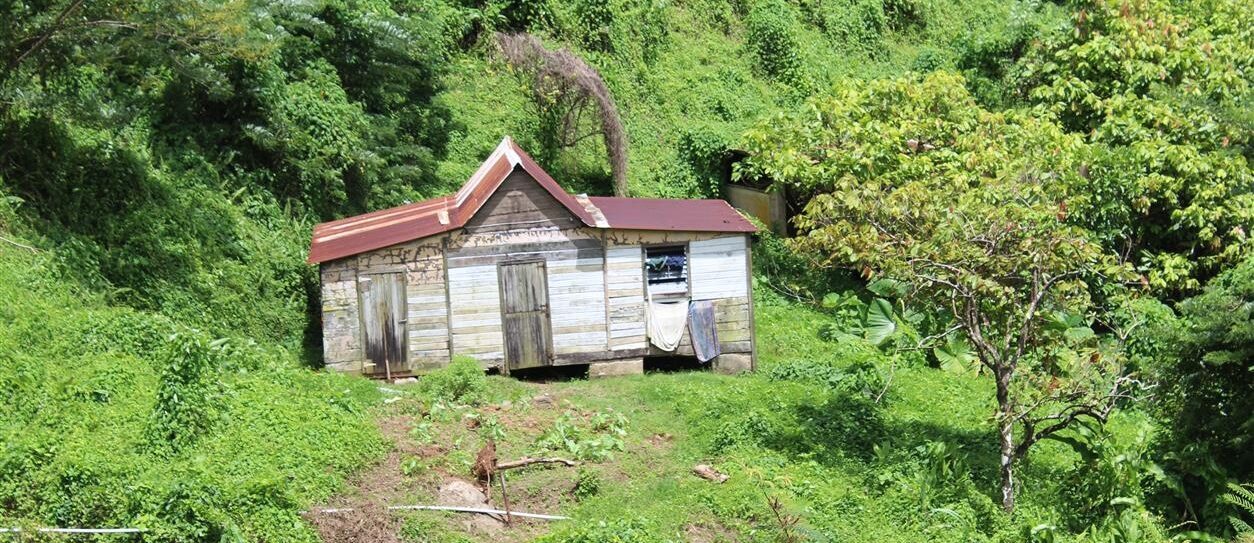
    Nearly 11 years after Tropical Storm Erika leveled the coastal village of Petite Savanne, Dominica’s main opposition United Progressive Party (UPP) is bringing a long-simmering community demand back to the forefront of national political conversation: giving displaced residents the choice to return home, if rigorous safety assessments confirm the area is habitable.

    When Erika tore through Dominica in 2015, the storm triggered catastrophic landslides and widespread destruction that forced the entire population of Petite Savanne to relocate permanently, most settling in the newly built community of Bellevue Chopin. For many of these displaced families, however, the connection to their ancestral land and lifelong community has never faded. The dream of rebuilding their lives in Petite Savanne has remained unshaken through more than a decade of policy conversations that have overwhelmingly centered on permanent resettlement elsewhere.

    In an official public statement released on June 9, 2026, UPP leader Joshua Francis made clear that a future UPP administration would prioritize making that dream a safe reality, with non-negotiable guardrails rooted in technical expertise. “Any discussion regarding the reopening and resettlement of Petite Savanne must first be guided by science, safety, and sound planning,” the statement read. Before any return initiative moves forward, the party has committed to commissioning full geotechnical surveys and land suitability assessments to map which portions of the village are stable enough for housing, farming, commercial activity, and critical infrastructure. The UPP stressed that citizen safety will remain the top priority in all decision-making.

    If assessments greenlight partial or full resettlement, the party has proposed establishing a dedicated Special Petite Savanne Resettlement Fund to support returning residents. The fund would cover a wide range of needs, from home construction and rehabilitation to the restoration of damaged farmland. It would also provide grants for small business development, support for reviving Petite Savanne’s historic bay oil distillation industry—once a cornerstone of the local economy—and investment in core community infrastructure and public services, alongside youth empowerment and economic development programs.

    Long a vital contributor to Dominica’s agricultural sector, Petite Savanne was once renowned across the country for its robust community bonds and profitable bay oil trade. The UPP argues that this rich cultural and economic heritage does not need to be permanently lost to storm damage, and that residents should have the autonomy to restore their community where conditions allow.

    Beyond resettlement, the party has also pledged to prioritize the rehabilitation and reopening of the Delices–Petite Savanne road, pending formal engineering and environmental approval. Reconnecting this key transportation route, the UPP notes, would open up access to underused agricultural land across the southeast, stimulate local economic activity, and strengthen regional connectivity.

    Critiquing the current national approach to Petite Savanne’s future, UPP leadership argues that policy discussions have for too long focused solely on forced permanent relocation, rather than expanding choices for displaced citizens. The party’s stance frames the potential resettlement of Petite Savanne as a core component of its broader national vision: one centered on inclusive rural development, agricultural renewal, climate-resilient sustainable communities, and greater economic self-reliance for all Dominicans.

    “No community should be forgotten. No citizen should be denied the opportunity to return to his or her roots where it is safe and feasible to do so,” the statement concluded. For hundreds of displaced Petite Savanne residents, the UPP’s pledge marks the most significant push for expanded choice over their future in more than a decade.