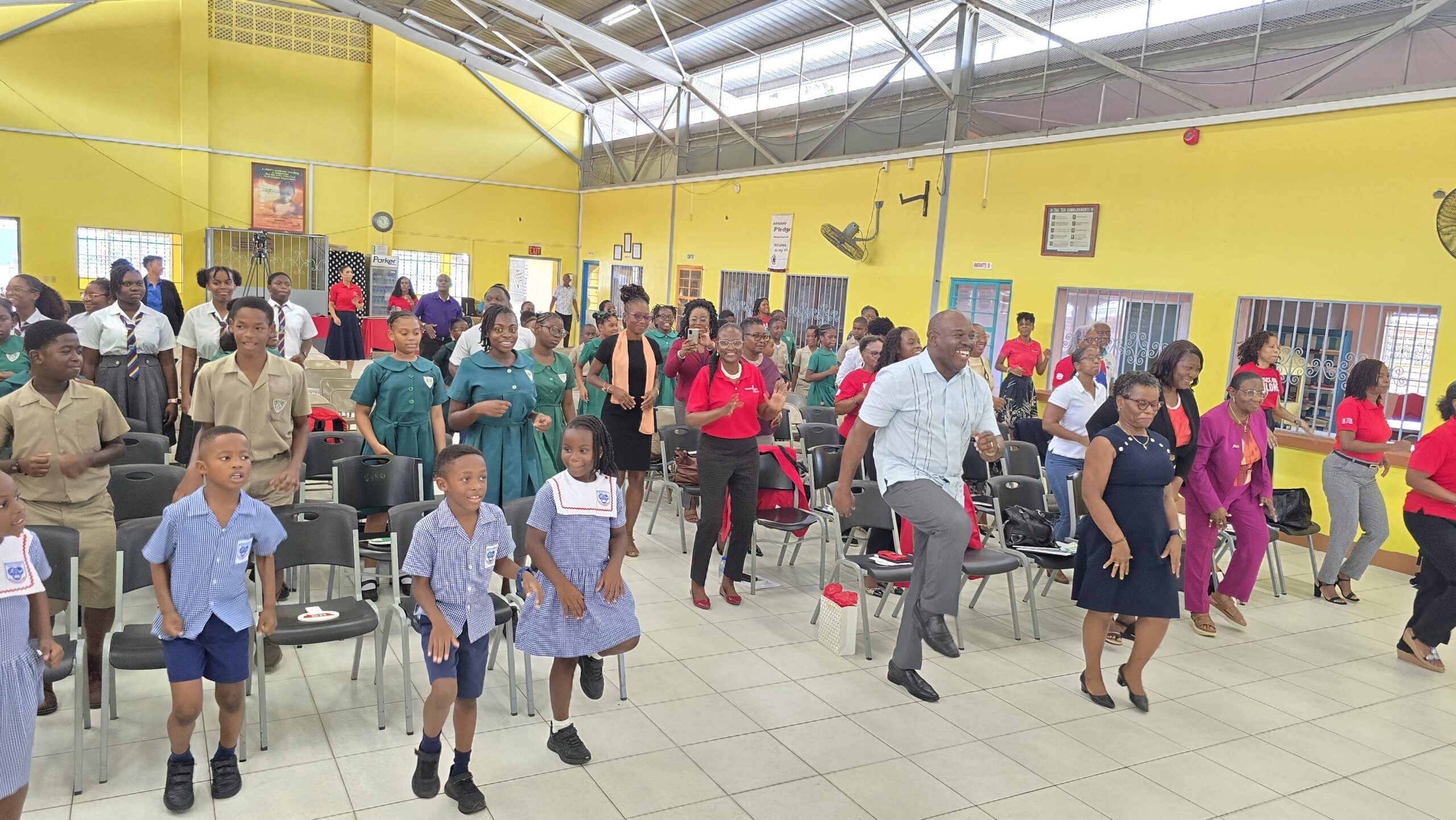
Barbados is taking bold, unprecedented action to confront its rapidly growing childhood obesity crisis, reallocating hundreds of millions in debt savings to targeted public health initiatives, Finance Minister Ryan Straughn announced this Wednesday. Speaking at the official launch of the Heart and Stroke Foundation’s national mass media campaign — an effort designed to restrict access to unhealthy food and beverages on school campuses, held at Bridgetown Seventh-day Adventist School — Straughn framed the childhood obesity trend as one of the most pressing threats to the island nation’s long-term social and fiscal sustainability.
Official data underscores the urgency of the crisis: childhood obesity rates across Barbados have jumped sharply from 33 percent to 42 percent in recent years, a surge that Straughn called alarming. “The Government of Barbados, working with the partners here, are committed to seeing this through because this is perhaps the most existential threat to the sustainability of Barbados,” he told attendees.
At the core of the government’s new response is a groundbreaking debt-for-social swap initiative, for which the Ministry of Finance has already issued a formal request for proposals. Under the plan, the government will buy back $1.2 billion in outstanding national debt, generating approximately $320 million in cumulative interest savings. All of these freed-up funds will be redirected to expanded health expenditures, with a large portion earmarked for evidence-based behavioral change programs designed to reverse the obesity trajectory among young people.
This innovative financing mechanism will complement ongoing public and non-profit efforts to improve school nutrition and cut youth obesity rates, Straughn explained. Beyond domestic initiatives, he added that Barbados will continue collaborating with neighboring Guyana and Suriname to strengthen regional food security systems and expand access to affordable, nutrient-dense food for all households.
To consolidate progress, the government plans to augment the existing school nutrition policy and the new foundation-led public outreach campaign with additional programming from the Ministry of Health. Straughn emphasized that aggressive action over the next three to five years is critical to driving down obesity rates, noting that the island nation has already poured more than $6.1 billion into public healthcare over the past 15 years. While Barbados has long prioritized broad access to healthcare as a core social policy to prevent family financial ruin, Straughn argued that shifting focus to prevention and changing entrenched eating habits will deliver far greater long-term value.
Demographic projections add extra urgency to the fight: by 2050, nearly half of Barbados’ population will be aged 65 or older. If the current childhood obesity crisis remains unaddressed, Straughn warned, the already heavy burden of non-communicable diseases will fall disproportionately on future generations, leaving millions of people facing chronic health conditions from middle age onward. He drew a parallel between the obesity crisis and the island’s ongoing fight against crime and violence, arguing that both issues demand immediate, whole-of-society attention. “This is a slow walking epidemic, pandemic, call it whatever you like, that is just as important to address in our daily lives in the same way that we have to address the deviance and the criminality that is pervasive in our society,” he said.
Straughn outlined a multi-pronged approach to tackling the crisis, centered on empowering young people to lead cultural change. Young Barbadians, he said, must be equipped to act as advocates for healthier lifestyles, even within their own households — urging children to open conversations about nutrition with parents and guardians, and challenge unhealthy intergenerational habits. “If we the adults don’t fix our own eating habits, then we are passing a larger burden on the very young people who are already at risk based on these numbers to not just deal with your circumstance, but having to deal with yours as well as your parents,” he noted.
Increased physical activity is another core pillar of the national strategy. Straughn called for expanded dedicated recreational spaces for children in communities across the country, noting that even 15 to 30 minutes of additional moderate-to-intense physical activity daily generates meaningful long-term health outcomes when sustained. The government is also integrating health promotion into other policy areas, including expanding school-based agricultural programs to teach young people about local food production, and partnering with the Barbados Community College’s hospitality program to train young chefs and students in preparing healthy, balanced meals.
Closing his remarks at the campaign launch, Straughn urged students across the country to step into the role of ambassadors for healthier living. By supporting peers, encouraging their families to adopt more nutritious habits, and participating in local and national initiatives, he said, young people can help drive down childhood obesity rates and secure a healthier, more sustainable future for the entire island nation.