博客

  • No longer a pipe dream

    No longer a pipe dream

    MONTEGO BAY, St James — After years of anticipation and public criticism over slow progress, a critical milestone for Jamaica’s plan to end chronic water shortages across western Jamaican communities was reached Wednesday, as large-diameter potable water pipes and construction fittings arrived at the Freeport port in St James.

    The imported materials mark the formal kickoff of Phase 1 of the Western Water Resilience Improvement Project (WWRIP-1), a $170 million first stage of a broader $450 million national initiative designed to address decades of water insecurity in the region. The project was first launched in response to a dual crisis that shook western Jamaica two years ago: a century-old water infrastructure network that had completely reached the end of its functional life, paired with the most severe drought recorded in the region in over 100 years. Jamaica’s government officially declared the water shortage a national emergency in April 2024, but supply chain and bureaucratic hurdles delayed delivery of the critical pipes for two full years.

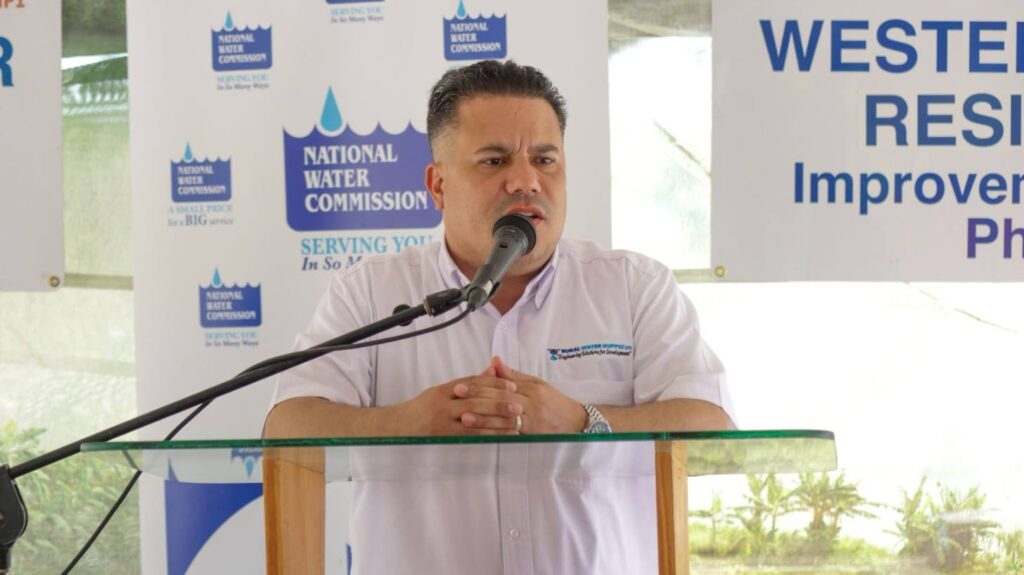
    A visibly optimistic Minister of Water Matthew Samuda welcomed the shipment Wednesday, pushing back against public and political criticism of the extended timeline. Samuda defended the progress, noting that the two-year timeline for a project of this scale actually constitutes “breakneck speed by Government standards globally”, when accounting for the complex legal requirements and multi-step procurement processes that govern large public infrastructure works.

    For Samuda, the arrival of the pipes — which range from 500 to 800 millimeters in diameter — is more than an infrastructure milestone: it is a fulfillment of a core political promise to Jamaican voters. “I hope that citizens are seeing now — and will see with the size of the pipes and the heavy construction — that the country is in a space where political commitments don’t need to be viewed in the way that they were once viewed, with the deep level of scepticism,” he told reporters at the port.

    Samuda also used the milestone to argue for sweeping bureaucratic reform, pointing to the two-year wait for pipe delivery as clear evidence that Jamaica’s existing multi-layered government accountability framework creates unnecessary bottlenecks that slow progress on critical emergency projects. “Doing things the same way and expecting different results is the definition of madness,” he stated.

    His comments came on the same day that Jamaica’s House of Representatives gave final approval to establish the National Reconstruction and Resilience Authority (NaRRA), a new centralized agency designed to cut through red tape and speed up delivery of major infrastructure projects in the wake of climate disasters. Last October, Hurricane Melissa devastated large swathes of the island, leaving billions in damage and exposing deep flaws in the country’s existing emergency reconstruction process. Samuda emphasized that NaRRA is specifically designed to eliminate the kind of long delays that have plagued WWRIP-1, giving the agency the executive authority to complete critical infrastructure projects in just 20 months, rather than the years-long timelines common under the old system.

    “[NaRRA] is indeed the best structure available to us…to build some of the infrastructure we now need to build in 20 months,” Samuda said, warning that without the streamlined authority granted to NaRRA under new legislation, “We will fail our citizens and not put them back on a path to growth, [not help them achieve] their dreams, and [we will not] put the nation back firmly on its path to prosperity.”

    When complete, WWRIP-1 will deliver 65 kilometers of new ductile-iron potable water pipelines that will replace the most vulnerable segments of western Jamaica’s aging water transmission network. The project is designed to resolve long-standing issues including chronic leaks that push non-revenue water losses to unsustainable levels, system-wide breakdowns caused by outdated infrastructure, and service disruptions triggered by increasingly severe climate volatility.

    Samuda framed the entire WWRIP initiative — which will reach a total investment of $450 million when fully completed — as a transformative generational investment, not just a basic infrastructure upgrade. “This is a nation-building project and a generational investment that unlocks economic activity and creates social stability for longer than a generation,” he said.

    The project is engineered to strengthen regional water security by improving interconnected hydraulic systems and expanding storage capacity, creating a resilient network that can support the rapid economic and tourism growth that western Jamaica has experienced in recent years. To minimize environmental disruption and reduce the cost and complexity of land acquisition, all new pipeline routes are planned to run alongside existing road corridors. WWRIP-1 will also deliver upgrades to two existing regional water treatment plants — the Martha Brae and Great River facilities — alongside construction of a completely new treatment plant in Roaring River, Westmoreland, creating a more robust and interconnected water network across the region.
  • $8m in 4 days

    $8m in 4 days

    MONTEGO BAY, St James — An aggressive enforcement campaign targeting unpaid advertising fees has yielded tangible results for the St James Municipal Corporation, with the local authority recovering just over $8 million in delinquent payments over a recent four-day period.

    Richard Vernon, chairman of the corporation and Mayor of Montego Bay, confirmed to Jamaica Observer on Thursday that collections between Friday evening and the following Monday totalled $8,150,861.00. This successful haul cuts the original total outstanding balance of $16,308,620.50 nearly in half, leaving just $8,157,759.50 still owed by non-compliant advertisers.

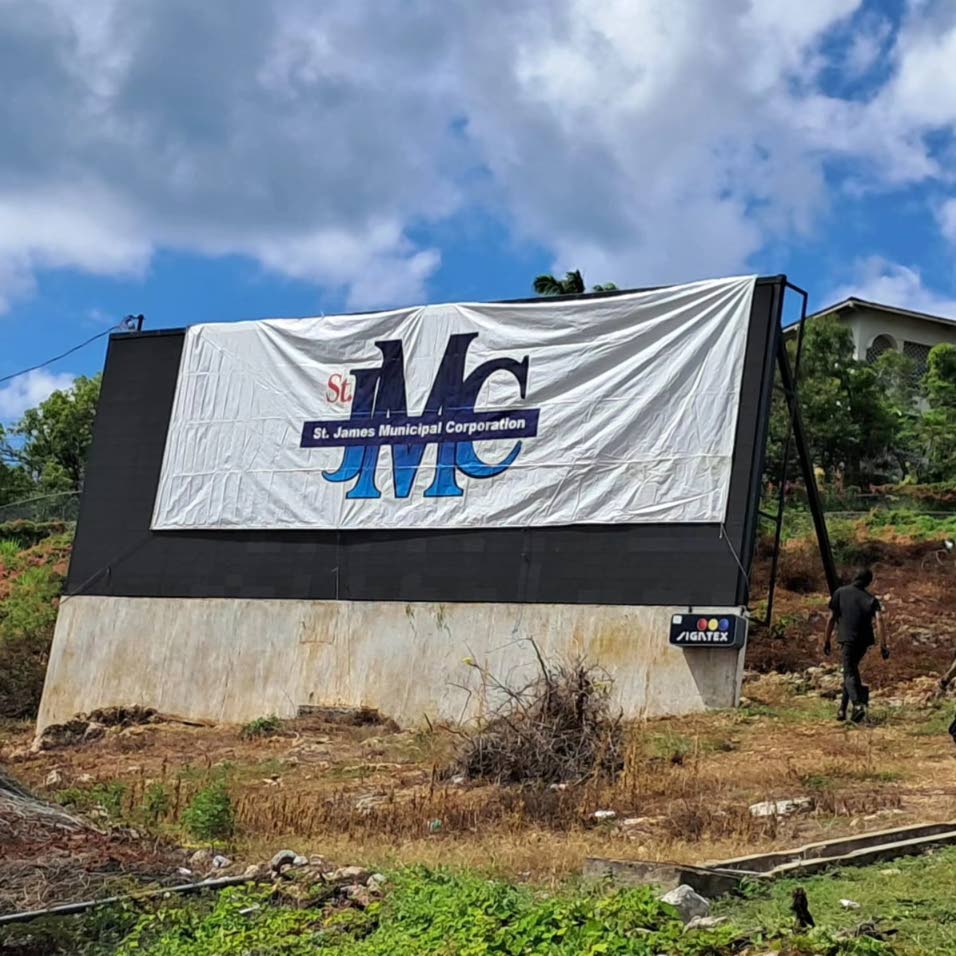
    The push for payment gained public attention last week, when the municipal corporation draped large branded banners over dozens of delinquent billboards across Montego Bay, drastically reducing the advertising exposure for companies and individuals that had fallen behind on their required fees.

    While Vernon welcomed the early progress from the campaign, he made clear that enforcement efforts will not slow until every outstanding balance is cleared. To date, the remaining non-paying advertisers have not reached out to the corporation to address their arrears, so officials are shifting to direct outreach via phone and email to secure payment.

    “Until full compliance is achieved, the enforcement measures currently in place will be maintained,” Vernon emphasized in his statement.

    This is not the first time the local authority has had to implement strict collection measures. Declining revenue has repeatedly put pressure on the corporation’s ability to fund core municipal operations, forcing decisive intervention when delinquent payments grow to unsustainable levels.

    “We have a city to run, and running a city requires adequate and reliable funding. Our resources are already stretched, and whenever there is a fallout in revenue we must intensify compliance activities to protect the city’s ability to function effectively,” the mayor explained. “Outstanding advertising payments are a revenue matter, and when arrears grow to a level that threatens service delivery we must intervene decisively.”

    Moving forward, the corporation plans to implement more proactive account monitoring and will adjust payment terms for advertisers where appropriate, with all affected entities set to receive formal notification of the updated, stricter policies. Vernon stressed that the enhanced collection efforts are rooted in core principles of fairness and accountability, ensuring that every business that benefits from using public advertising space meets its financial obligations to the residents of Montego Bay.

    The push to recover delinquent revenue and restore public order is not isolated to St James. Municipalities across Jamaica have rolled out similar compliance campaigns in recent months. Between January and March 2024, the Kingston and St Andrew Municipal Corporation first offered advertisers a window to resolve unpaid fee backlogs and remove illegally placed signage, before progressing to legal action and physical removal of non-compliant structures.

    Beyond advertising fee collections, local governments across the island have also ramped up enforcement around property tax collection and unpermitted construction. In St James and Trelawny, authorities have cracked down on property owners that have launched construction projects without securing required approval from or paying the mandatory fees to local municipal bodies.

    This coordinated nationwide push reflects growing pressure on local authorities to shore up revenue streams to maintain consistent public service delivery across Jamaica.

  • Partnership pays off

    Partnership pays off

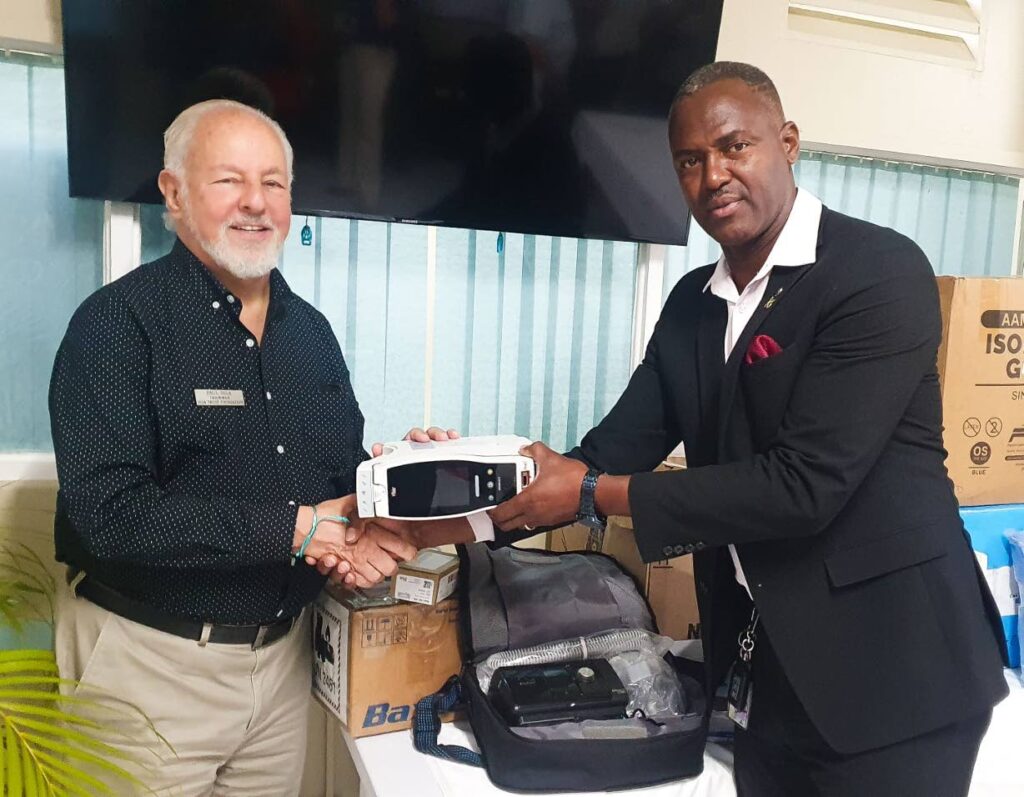
    SAVANNA-LA-MAR, Westmoreland — In the wake of catastrophic damage caused by Hurricane Melissa last October, the already strained healthcare system in Jamaica’s Westmoreland parish has received a transformative lifeline. The Issa Trust Foundation, the charitable wing of Caribbean hospitality brand Couples Resorts, has formally handed over $17 million in life-saving medical equipment and supplies to Savanna-la-Mar Public General Hospital, reinforcing a decades-long collaborative partnership between the institution and the non-profit.

    The official handover, held during a public ceremony at the hospital on Tuesday, comes as the facility continues to rebuild its care capacity after the category 5 storm devastated local infrastructure. Foundation chairman Paul Issa told attendees that while the organization’s recent focus has been centered on completing the $2.4 million Mary Issa Paediatric and Adolescent Health Centre in St Ann, the urgent, unmet needs of Westmoreland’s post-hurricane recovery could not be ignored. Setting aside his prepared remarks to speak off-the-cuff, Issa stressed that the large-scale donation was not a solo effort, but the result of coordinated action across a global network of mission-aligned partners.

    “Maybe each one of us individually couldn’t have done that by ourselves. As always, it’s a group effort and I’m grateful for the opportunity to be able to help,” Issa said.

    The donation includes a full suite of critical care and diagnostic tools that the hospital lacked after the storm: among the inventory are Continuous Positive Airway Pressure (CPAP) machines, life-support ventilators, patient monitoring systems, ECG units, pulse oximeters, vital sign monitors, defibrillators, and multiple suction devices. Multiple cross-sector and international partners contributed to making the donation possible: Partners in World Health provided core program support, Build Health International coordinated logistics for the cross-ocean shipment, Airlink covered all cost of air transport for the equipment, and Jamaica’s Ministry of Health partnered through the National Healthcare Enhancement Foundation (NHEF) Ltd. to facilitate local delivery.

    Savanna-la-Mar Public General Hospital, classified as a Type B care facility, is the primary healthcare provider for all of Westmoreland parish, including the high-volume tourist destination of Negril. The facility regularly treats a high volume of trauma cases, particularly those stemming from motorcycle accidents across the region. Dr. Suman Vemu, the hospital’s Senior Medical Officer, noted that the new equipment fills critical gaps in the facility’s ability to deliver timely, life-saving care. He recalled that a 2018 donation of a C-arm imaging machine from the foundation was a transformative upgrade for the hospital, allowing the care team to treat complex orthopaedic poly-trauma cases on-site rather than transferring patients to distant facilities.

    Deveta McLaren, Acting Regional Director for the Western Regional Health Authority (WRHA), added that the facility is currently mid-way through a full renovation of its Accident and Emergency (A&E) department, with completion scheduled for mid-June. Once the renovation wraps up, all the newly donated equipment will be installed and fully operational to serve patients.

    WRHA Board Chairman Eric Clarke highlighted the unique community impact of the foundation’s work, noting that most of the funding for the donation comes from vacationing guests who choose to give back to the Jamaican communities they visit. “It is a totally amazing programme where people pay for their vacation to Jamaica and actually give something back, other than at the restaurants,” Clarke explained. “To the guests that come to Jamaica not only enjoy your hotel, but you give back directly to the health care in the community… I think that’s absolutely amazing.”

    Roan Grant, Chief Executive Officer of Savanna-la-Mar Public General Hospital, expressed profound gratitude for the donation, noting that in the months following the hurricane, clinical staff have been forced to work with severely outdated and insufficient equipment. “We deeply and gratefully, with a generous heart, accept these donations of medical supplies and equipment, which come at a most critical time and timely moment for our institution. Your support significantly strengthens our capacity to deliver quality healthcare and enhance our ability to serve our patients with greater efficiency and compassion,” Grant said. “This contribution is not only a gift of resources but also a meaningful investment in the well-being of the community we serve.”

    With Couples Resorts operating two popular properties in Negril, Issa reaffirmed the foundation’s long-term commitment to supporting the hospital, which serves as the core healthcare provider for local residents and visitors to the region. “We want to continue in our little way to help — and we plan to,” he assured attendees.

  • Pringle confident after casting ballot in the 2026 general election

    Pringle confident after casting ballot in the 2026 general election

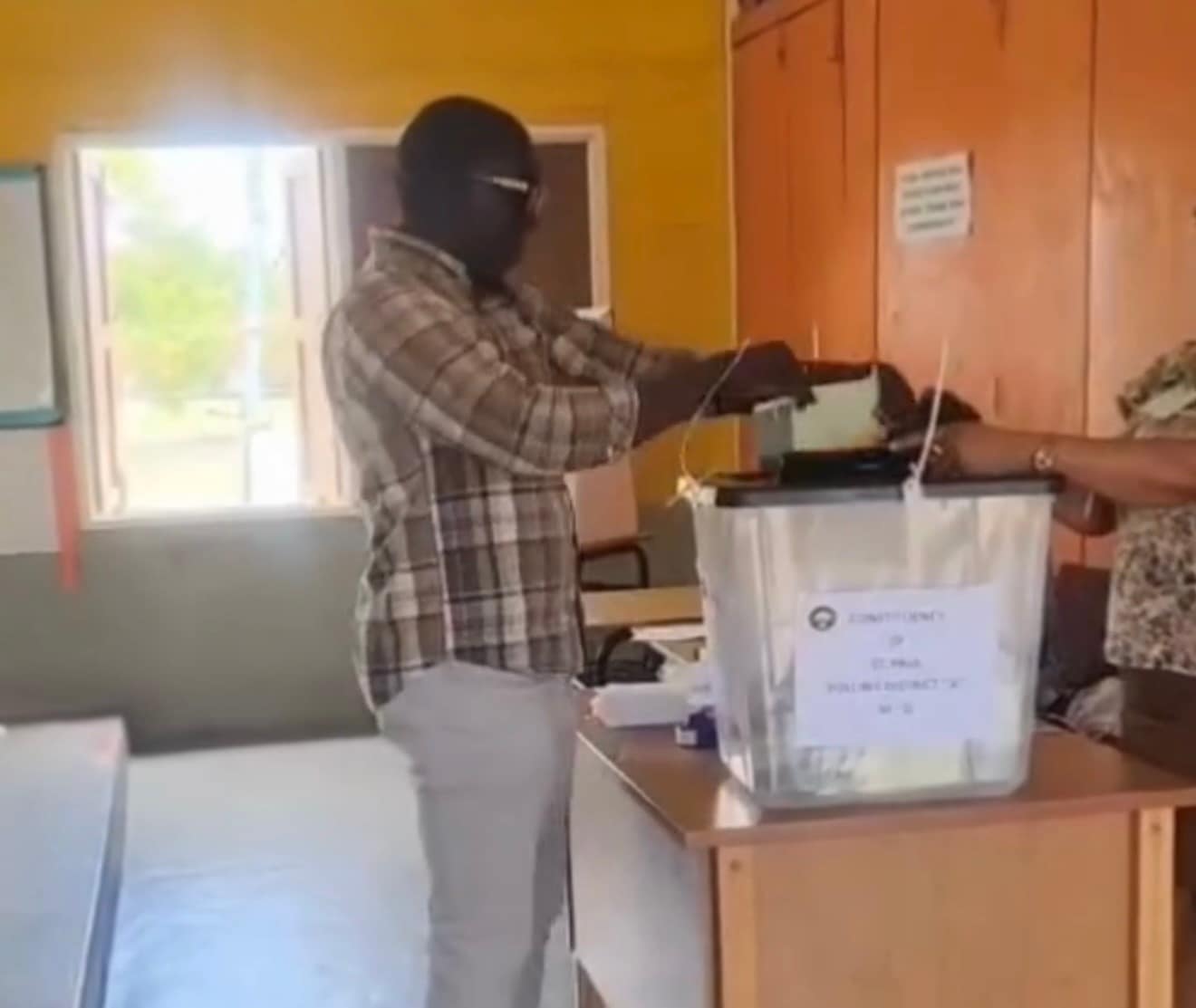
    On Thursday, as general election voting got underway across the twin-island nation of Antigua and Barbuda, United Progressive Party (UPP) leader Jamale Pringle cast his own ballot and quickly stepped forward to make a public appeal for widespread voter participation, while sounding an optimistic note about his opposition party’s path to victory.

    Speaking to reporters immediately after completing his voting process, Pringle emphasized that the ballot box remains the most impactful channel through which citizens can shape the trajectory of their nation. He stressed that this election will determine the long-term future of Antigua and Barbuda, making it critical that every eligible voter exercises their democratic right to have a say.

    “While political parties of all stripes put forward their policy positions and ideological arguments, the ultimate and most authentic voice of the nation is the vote itself,” Pringle said, urging all registered citizens to make their voices count by heading to polling stations before voting closes.

    The UPP leader shared that he had toured multiple polling locations across the country earlier in voting day, and observed that election administration was running smoothly, with a consistent stream of voters arriving to cast their ballots. Though concerns have circulated in the lead-up to the election about potential low turnout driven by voter apathy, Pringle said he remained optimistic that the final turnout figure will be encouraging.

    To voters who may feel hesitant to participate, Pringle issued a straightforward call to action: regardless of whether they support his leadership or oppose it, every eligible citizen should still turn out to vote in line with their beliefs.

    Outlining his party’s agenda if voted into office, Pringle highlighted that the UPP ran on a “people first” policy platform, with immediate, targeted action on pressing economic challenges as a top priority. He confirmed that if his party secures a majority, key issues including the current high cost of living, poor road infrastructure, and persistent water shortages will all be addressed within the new government’s first 100 days in power.

    “Antigua and Barbuda residents can expect a government that moves aggressively to turn around the nation’s current economic situation,” Pringle said.

    The opposition leader went on to affirm his strong confidence in a UPP victory, arguing that given the country’s current circumstances, his party represents the only viable choice for voters. He added that the UPP’s policy pledges and forward-looking plans have resonated deeply with voters across the country throughout the campaign period.

    Looking ahead to vote counting, Pringle said he will remain in his own constituency throughout the final stages of voting, before joining other UPP members to wait for the final election results. He concluded with a prediction: “After that, we will get together and celebrate the victory.”

    Polling is ongoing at stations across Antigua and Barbuda, as voters select from candidates vying to form the nation’s next governing administration.

  • Antigua and Barbuda ranked 154th in CARICOM AI readiness index, 2025 report shows

    Antigua and Barbuda ranked 154th in CARICOM AI readiness index, 2025 report shows

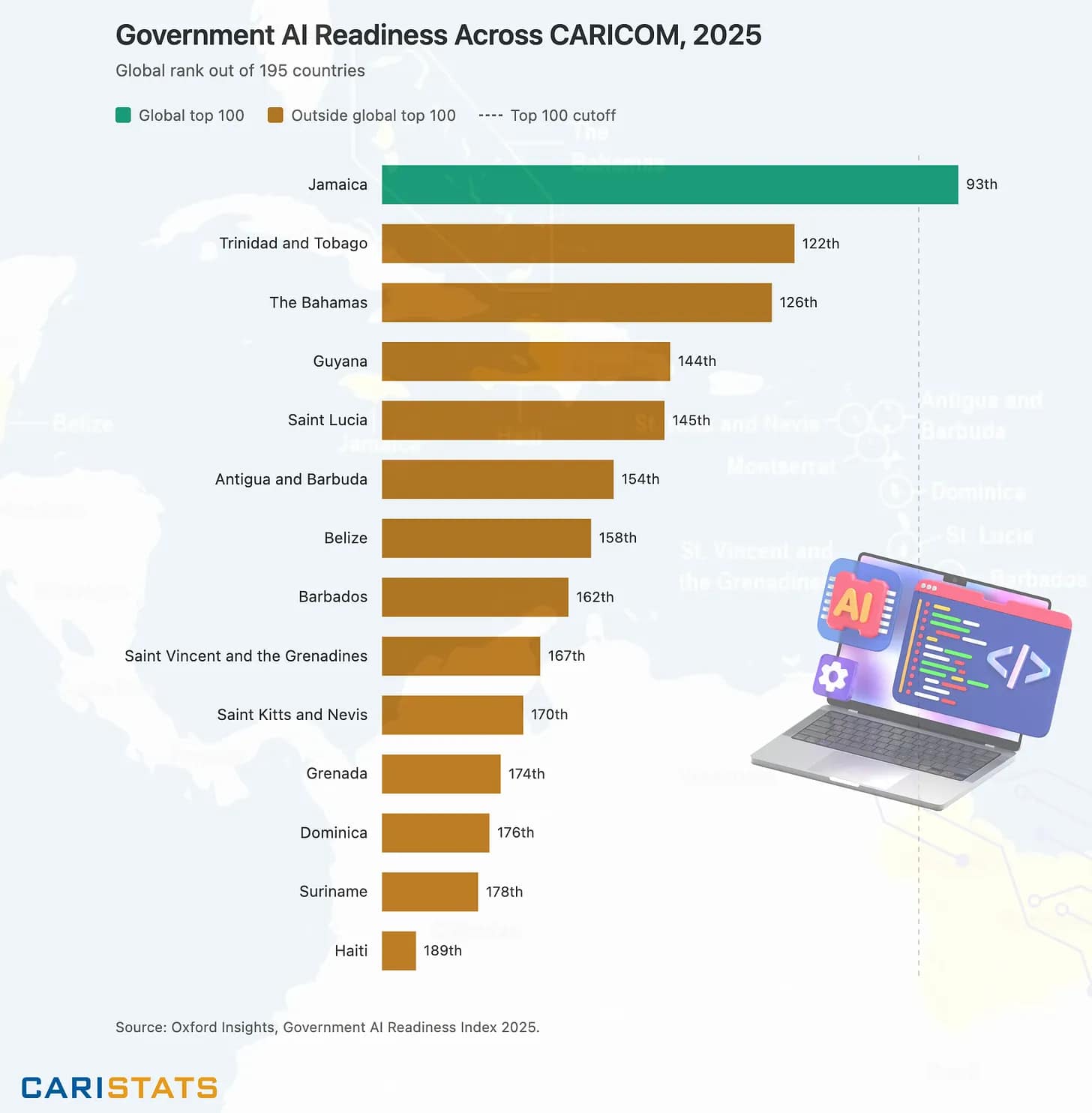
    A new 2025 global assessment of government preparedness to leverage artificial intelligence for public good has revealed significant gaps in capacity across Caribbean Community (CARICOM) member states, published by leading international research firm Oxford Insights. Covering 195 nations worldwide, this year’s Government AI Readiness Index introduces a newly updated analytical framework built around six core pillars: Policy Capacity, AI Infrastructure, Governance, Public Sector Adoption, Development and Diffusion, and Resilience, replacing the index’s previous structure to better reflect evolving AI ecosystem needs.

    When ranked against the rest of the world, CARICOM nations see a wide spread in positions, stretching from 93rd all the way down to 189th. Only one CARICOM member, Jamaica, claims a spot in the global top 100, a outcome researchers attribute directly to the island nation’s recent launch of a formal national AI strategy. A second tier of mid-ranking regional states includes Trinidad and Tobago at 122nd and The Bahamas at 126th, while the 11 remaining member states fall far behind, with rankings between 144th and 189th.

    In addition to global rankings, the index assigns individual scores from 0 to 100 for each of the six measurement pillars across every assessed country. Aggregated regional data shows CARICOM’s strongest performing area is AI Infrastructure, which posts an average regional score of 33. Governance and Resilience tie for second place with average scores of 29 each. The region’s weakest pillars, by contrast, are Policy Capacity, and Development and Diffusion, which both carry an average regional score of just 13.

    Taken as a whole, the 2025 index data paints a clear picture of the CARICOM region’s current AI landscape: while member states have built comparatively stronger foundational digital infrastructure than many peer economies, they still lag far behind in developing formal national AI strategies, scaling up AI development, and rolling out applied AI solutions across public and private sectors.

  • Surinaamse Gids Exclusief gelanceerd als nieuw platform voor bedrijven en diensten

    Surinaamse Gids Exclusief gelanceerd als nieuw platform voor bedrijven en diensten

    After a decade of iterative development and setbacks, a groundbreaking new integrated business platform named Surinaamse Gids Exclusief has officially launched at Suriname’s Prince Ballroom on Wednesday. Created by founder Brayen Wouden, the multi-format ecosystem—consisting of a print magazine, official website, and mobile application, all operating under the same brand—aims to connect, promote, and maintain long-term visibility for business products and services from Suriname-based and international enterprises, bridging local entrepreneurs and the global market.

    For Wouden, the launch marks the fulfillment of a decade-long personal and professional dream. In remarks at the launch event, the founder outlined the platform’s far-reaching mission that extends far beyond a standard business directory or promotional outlet. “This is more than a business magazine, more than an app or an integrated website. It is a full ecosystem, a central hub where visibility and innovation converge,” Wouden explained. “It is a space where local entrepreneurs and members of the Surinamese diaspora can showcase their work in full, build an international network, and access information that is open and accessible to all segments of the population. We designed this platform to stimulate entrepreneurship, and build a critical connecting bridge between the government, private enterprises, and civil society organizations.”

    The Surinamese government holds a prominent presence on the new platform, which currently sources most of its published news content directly from official government sources. Beyond business promotion, the platform offers a wide range of additional public utilities: it hosts listings for job seekers searching for employment opportunities, and features options for people looking to buy or rent residential property. Organizers also confirmed that future updates will add functionality to promote local cultural, business, and community events to both domestic and international audiences.

    To accommodate businesses of all sizes and budget ranges, the platform operates on a tiered pricing package system, with options ranging from a free basic listing to a premium annual plan costing $950 USD. This structure allows enterprises to select the level of visibility and promotional access that aligns with their needs and resources.

    The launch event drew strong official representation from the Surinamese government, with multiple cabinet ministers in attendance. Foreign Affairs Minister Melvin Bouva and Minister of Transport, Communication and Tourism Raymon Landveld both shared their optimistic expectations for the platform’s economic impact, noting that it will act as a public “storefront” for Surinamese companies and services, and projecting that it will make a tangible contribution to driving domestic economic growth in the coming years.

  • US–Venezuela Flights Resume After Nearly Seven Years

    US–Venezuela Flights Resume After Nearly Seven Years

    After nearly seven years of suspended air connectivity, commercial flights between the United States and Venezuela officially resumed on April 30, 2026, representing the most visible milestone to date in the gradual thawing of diplomatic and economic relations between the two nations.

    American Airlines, the first U.S. carrier to restart the route, operated the inaugural service that departed Miami International Airport and touched down in Caracas, Venezuela’s capital. The non-stop journey took just under three and a half hours, with the return leg to Miami scheduled for the same day. Going forward, the airline will operate daily flights on the route, opening up reliable passenger travel for the first time since the 2019 U.S. government-imposed ban halted all civilian air service between the two countries.

    At the Miami departure gate, the relaunch was greeted by palpable excitement among passengers, a group that included traveling members of the public, journalists, and government representatives. Initial data from the carrier showed that roughly two-thirds of the flight’s seats were sold for the first trip, reflecting unmet demand for direct travel between the U.S. and Venezuela.

    The resumption of air service came after the Biden administration moved to lift travel restrictions earlier this month. U.S. authorities concluded that updated security assessments no longer flagged Venezuela as an unacceptable risk for passenger and crew safety. The policy shift on flights comes alongside a broader easing of U.S. economic sanctions on Venezuela, a change designed to open new space for increased cross-border economic activity and reconnect the South American nation to global international markets.

    Even as both sides take incremental steps toward normalized relations, notable uncertainty still clouds Venezuela’s long-term political trajectory. The incumbent Venezuelan government has yet to publicly commit to a clear timeline for holding new national elections, while key opposition leaders—including prominent opposition figure María Corina Machado—have already stated that the opposition is prepared to participate in any competitive electoral contest that is called.

  • Joacobie honoured for athletics feats

    Joacobie honoured for athletics feats

    A group of track and field athletes from Saint Lucia have turned in a series of standout performances across recent collegiate competitions in the United States, highlighted by a historic award haul from high jumper Jenneil Jacobie at East Texas A&M University’s (ETAMU) annual end-of-season honors ceremony.

    ETAMU’s annual awards event, dubbed the Luckys, celebrates the university’s top Lion student-athletes across three core pillars: academic achievement, athletic excellence, and community and personal growth. Jacobie, a senior pre-med student hailing from Grande Riviere, Gros Islet, walked away from the ceremony with four major trophies. Her honors include recognition as Most Outstanding Women’s Field Athlete, Female Breakthrough Performance of the Year, the Lion Heart Award, and the prestigious Lib Huggins Award for Female Athlete of the Year.

    Jacobie’s award sweep comes after a career-defining 2026 season that followed tremendous personal and athletic adversity. After undergoing surgery that forced her to miss the entire 2025 competitive season, the senior jumped back to set a new ETAMU school record of 1.87 meters in the women’s high jump earlier this year. She also made history as the first athlete from ETAMU to qualify for and compete at the NCAA Division I Indoor Championships, capping a remarkable comeback story.

    Beyond Jacobie’s historic achievement, multiple other Saint Lucian student-athletes competing at U.S. colleges have earned top-three finishes and set new personal and seasonal bests across a slate of major national competitions.

    Natalie Albert, competing for the University of Memphis, secured third place in the women’s hammer throw at the LSU Alumni Gold meet, hosted at Bernie Moore Track Stadium. Albert notched a throw of 55.82 meters (183 feet 2 inches) — her second-best performance in any competition, coming on the heels of a personal best 56.57-meter throw recorded earlier in the 2026 season.

    At the annual Penn Relays, one of the most prestigious outdoor collegiate track events in the country, Khailan Vitalis — the Saint Lucian national record holder in the men’s 110m hurdles and a junior transfer at Clemson University — also earned a spot on the podium. Vitalis ran 13.85 seconds in the preliminary round to advance to the championship division final, where he clocked 14.08 seconds into a stiff -1.3 meter per second headwind to claim third place overall.

    At the Drake Relays, another major midwest collegiate competition, Mya Hippolyte of Western Illinois University notched a new season-best time of 11.93 seconds in the women’s 100-meter sprint, finishing 17th overall in a deep field of top competitors from across the country.

    Additional standout results from other Saint Lucian athletes include:
    – Jola Felix took third place in the women’s 100-meter sprint at the Pioneer Classic with a time of 12.57 seconds, and finished fifth in the same event at the Zac Kindler Invitational with a 12.80-second run
    – Synai Glover won the women’s shot put event at the Virginia Pride Spring Kick-Off with a throw of 11.64 meters
    – Malaika George placed sixth in the women’s 400-meter run at the Fredonia Blue Devil Invite, clocking 1:00.85
    – Jasmine Stiede finished eighth in the women’s 800-meter run at the OU O Ring Opener with a time of 2:17.58
    – Michael Joseph placed 13th in the men’s 200-meter sprint at the John McDonnell Invitational with a run of 21.16 seconds

  • Jordan warns ‘unethical’ employers could be barred from public contracts

    Jordan warns ‘unethical’ employers could be barred from public contracts

    Against a backdrop of rapidly shifting work arrangements across the Caribbean, Barbados’ Labour Minister Colin Jordan has announced a sweeping new push to enforce labor protections, threatening to bar exploitative firms that evade social security obligations from accessing public sector government contracts. The tough new stance comes as the island nation grapples with the exponential growth of informal, non-standard and gig economy work, which has left millions of workers without basic social safety nets.

    The policy announcement was made during a heated debate in the House of Assembly, where lawmakers unanimously backed a private member’s resolution tabled by Toni Moore — a government backbencher who also serves as General Secretary of the Barbados Workers Union. Moore’s resolution lays out a clear roadmap to extend critical social protections to workers in non-traditional employment roles, particularly the fast-expanding cohort of workers active in digital platform and gig economies.

    Jordan made clear that his primary target is the widespread culture of cutting corners that has seeped into two of Barbados’ biggest economic pillars: the construction and tourism industries. He argued that unethical firms gain an unfair competitive edge over law-abiding businesses by skipping out on mandatory National Insurance contributions and refusing to provide even the most basic labor rights to their staff, often pushing ethical employers out of the market entirely. To illustrate this harm, he shared a firsthand account of a responsible, worker-first construction firm that collapsed, while a competing firm that cut corners on labor protections continues to operate today. Labeling these exploitative practices as “dirty” and “unsavoury”, Jordan stressed that the national government holds a clear moral obligation to intervene to level the playing field for ethical businesses and protect vulnerable workers.

    “Those of us who sit here, particularly as ministers, have a responsibility to ensure that those organisations that treat their employees in a less than desirable manner… do not benefit from public funds. In other words, that they don’t get contracts,” Jordan told the chamber. He issued a direct appeal to leaders across infrastructure and productive sector ministries, demanding that both political and technical officials stop rewarding exploitative “bad actors” with taxpayer-funded contracts.

    Central to Jordan’s argument is a fundamental rebuke of the modern business worldview that frames workers as disposable units of production. He drew a sharp contrast between the meticulous maintenance and care that companies give to inanimate industrial machinery and the routine neglect faced by human workers, arguing that human workers deserve far greater protections than equipment, because of their inherent humanity. “We cover down machinery. We service machinery. We do all kinds of things for inanimate objects,” Jordan noted. “Workers who are human beings deserve not similar protection; they deserve greater protection because of their humanity. They are people.”

    This human-centered approach to economic development, Jordan argued, is the bedrock of Barbados’ social and economic progress over the past century. He credited decades of trade union advocacy and the working-class roots of the governing Barbados Labour Party for the major social gains the nation has secured since the 1930s, emphasizing that long-term economic productivity is impossible if the workers who drive growth — the “drivers of development” — are not guaranteed basic security and rights.

    The debate also shone a spotlight on the rise of what Jordan called the “precariat”, a term coined by economist Guy Standing to describe the growing global class of workers trapped in precarious, informal work with no consistent safety net. Jordan warned that the explosion of digital platforms for ride-hailing, freelance translation, remote data entry and other gig work has made it even harder to enforce social protections, because the platform acts as a distant intermediary with no direct human connection between employer and worker. “In the platform economy, you do not connect with a human being. The platform is the intermediary,” he explained.

    To build an evidence base for new policy reforms, Jordan revealed that the Decent Work Team of the International Labour Organization (ILO), based in Trinidad, has agreed to conduct a joint study of the platform economy across both Barbados and Grenada. The study will map the full size and scope of the platform workforce in both nations, filling a critical gap in current data that has delayed policy action.

    Jordan also pushed back against critics who argue that extending social security to informal and gig workers is too costly for the small island nation to sustain. He argued bluntly that any business that cannot afford to contribute to the social security system that allows retired senior citizens to afford basic necessities has no right to operate in Barbados. “if a business cannot contribute to a system that allows a 68-year-old citizen to buy basic groceries, that business “shouldn’t be existing in this country,” he said.

    Closing his address, Jordan rejected calls for political procrastination on labor reform, using a vivid everyday analogy to frame the government’s duty to act immediately. “We will not be waiting for any perfect time to protect people,” the minister declared. “We do not believe that the rain should be falling and you should wait for some appropriate time before you run and put an umbrella over the person’s head. Once you realize the rain is starting to fall, you run out.”

    By endorsing Moore’s resolution and committing to establish a tripartite technical committee in partnership with the Barbados Workers Union to advance reforms, the government has signaled a clear shift toward a “portable” social security model, where benefits follow the worker regardless of their job type, employment status or which platform they use to find work. The new framework marks one of the most significant overhauls of Barbados’ labor and social protection system in decades, responding to the changing nature of work in the 21st century.

  • Pressure mounts on executors in Jamaica after court blocks audit in Stewart estate dispute

    Pressure mounts on executors in Jamaica after court blocks audit in Stewart estate dispute

    A recent Supreme Court ruling in Jamaica has marked a major turning point in a years-long dispute over the estate of legendary tourism industry pioneer Gordon “Butch” Stewart, clearing a key legal barrier for the transfer of majority ATL Group shares to his son Adam Stewart. Attorneys representing Adam Stewart have publicly praised the court’s decision to dismiss a legal application brought by the estate’s acting executors, who had blocked the share transfer for years despite the terms of Butch Stewart’s uncontested will.

    Conrad George, a partner at the law firm Hart Muirhead Fatta, emphasized the significance of the ruling for his client. More than five years have passed since Butch Stewart’s passing, and in his publicly filed, unchallenged will, the business leader left a controlling majority stake in the ATL Group — the core holding of the Stewart family’s sprawling business empire — to Adam Stewart. Even after securing formal probate for the will, George explained, the existing executors have repeatedly refused to complete the share transfer. Their primary justification has been a claim that they must first commission a third-party red-flag audit of ATL Group conducted by an international accounting firm, tied to unsubstantiated allegations against Adam Stewart connected to Gorstew Limited, Appliance Traders Limited and their respective affiliate subsidiaries.

    To formalize their demand for the audit, executors Trevor Patterson, Cheryl Hamersmith-Stewart, Elizabeth “Betty-Joe” Desnoes and Hugh Martin Veira petitioned the Supreme Court for a court order authorizing the investigation. Justice Brown Beckford struck out the petitioners’ claim approximately two weeks ago, with the full written judgment officially released to parties last week. George called the ruling an important step toward forcing the executors to uphold their fiduciary duties and execute the transfer of shares exactly as outlined in Butch Stewart’s will.

    Legal and business observers across Jamaica have framed the judgment as a critical development in the protracted dispute over estate administration, which has centered on control of the ATL Group, a foundational asset for one of the country’s most high-profile and economically influential business families. In a separate, recent development tied to the estate, the court has appointed retired Court of Appeal Judge Hilary Phillips to serve as an additional executor. George noted that Phillips was not involved in the dismissed legal application, and expressed optimism that her addition to the executor team will bring greater balance and reasoned judgment to the group’s future decisions.

    However, the legal battle is far from over: within a day of the written judgment’s release, legal counsel for the executors — including Michael Hylton of the firm Hylton Powell — formally filed an appeal challenging Justice Beckford’s ruling. The appeal argues that the judge made a material error of law in two key findings: that the Jamaican Trusts Act does not apply to the case, and that the executors did not have legal standing to bring their original audit claim.

    Appellants contend that under Section 4(1) of the Trusts Act, any property held by one party for the benefit of another qualifies as a trust. When Butch Stewart’s shares were vested in the executors following his death, they automatically became trust property meeting all the criteria for a trust defined under the act, according to the appeal. The executors also push back against the judge’s reliance on the precedent set in *Heather Montague v GM and Associates*, arguing that the earlier ruling was handed down before the Trusts Act was enacted, meaning it did not address the law’s provisions or its applicability to cases like this one.

    The ongoing dispute has attracted close attention from Jamaica’s corporate and tourism sectors, as the final outcome is expected to set meaningful precedents for business governance and family business succession planning for large, influential corporate groups across the island.