MONTEGO BAY, St James — After years of anticipation and public criticism over slow progress, a critical milestone for Jamaica’s plan to end chronic water shortages across western Jamaican communities was reached Wednesday, as large-diameter potable water pipes and construction fittings arrived at the Freeport port in St James.
The imported materials mark the formal kickoff of Phase 1 of the Western Water Resilience Improvement Project (WWRIP-1), a $170 million first stage of a broader $450 million national initiative designed to address decades of water insecurity in the region. The project was first launched in response to a dual crisis that shook western Jamaica two years ago: a century-old water infrastructure network that had completely reached the end of its functional life, paired with the most severe drought recorded in the region in over 100 years. Jamaica’s government officially declared the water shortage a national emergency in April 2024, but supply chain and bureaucratic hurdles delayed delivery of the critical pipes for two full years.
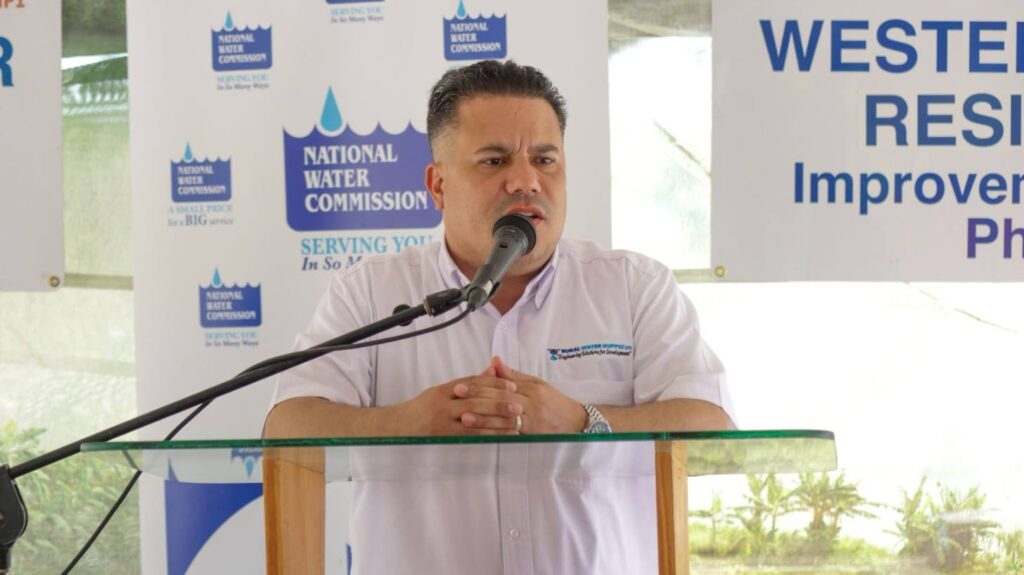
A visibly optimistic Minister of Water Matthew Samuda welcomed the shipment Wednesday, pushing back against public and political criticism of the extended timeline. Samuda defended the progress, noting that the two-year timeline for a project of this scale actually constitutes “breakneck speed by Government standards globally”, when accounting for the complex legal requirements and multi-step procurement processes that govern large public infrastructure works.
For Samuda, the arrival of the pipes — which range from 500 to 800 millimeters in diameter — is more than an infrastructure milestone: it is a fulfillment of a core political promise to Jamaican voters. “I hope that citizens are seeing now — and will see with the size of the pipes and the heavy construction — that the country is in a space where political commitments don’t need to be viewed in the way that they were once viewed, with the deep level of scepticism,” he told reporters at the port.
Samuda also used the milestone to argue for sweeping bureaucratic reform, pointing to the two-year wait for pipe delivery as clear evidence that Jamaica’s existing multi-layered government accountability framework creates unnecessary bottlenecks that slow progress on critical emergency projects. “Doing things the same way and expecting different results is the definition of madness,” he stated.
His comments came on the same day that Jamaica’s House of Representatives gave final approval to establish the National Reconstruction and Resilience Authority (NaRRA), a new centralized agency designed to cut through red tape and speed up delivery of major infrastructure projects in the wake of climate disasters. Last October, Hurricane Melissa devastated large swathes of the island, leaving billions in damage and exposing deep flaws in the country’s existing emergency reconstruction process. Samuda emphasized that NaRRA is specifically designed to eliminate the kind of long delays that have plagued WWRIP-1, giving the agency the executive authority to complete critical infrastructure projects in just 20 months, rather than the years-long timelines common under the old system.
“[NaRRA] is indeed the best structure available to us…to build some of the infrastructure we now need to build in 20 months,” Samuda said, warning that without the streamlined authority granted to NaRRA under new legislation, “We will fail our citizens and not put them back on a path to growth, [not help them achieve] their dreams, and [we will not] put the nation back firmly on its path to prosperity.”
When complete, WWRIP-1 will deliver 65 kilometers of new ductile-iron potable water pipelines that will replace the most vulnerable segments of western Jamaica’s aging water transmission network. The project is designed to resolve long-standing issues including chronic leaks that push non-revenue water losses to unsustainable levels, system-wide breakdowns caused by outdated infrastructure, and service disruptions triggered by increasingly severe climate volatility.
Samuda framed the entire WWRIP initiative — which will reach a total investment of $450 million when fully completed — as a transformative generational investment, not just a basic infrastructure upgrade. “This is a nation-building project and a generational investment that unlocks economic activity and creates social stability for longer than a generation,” he said.
The project is engineered to strengthen regional water security by improving interconnected hydraulic systems and expanding storage capacity, creating a resilient network that can support the rapid economic and tourism growth that western Jamaica has experienced in recent years. To minimize environmental disruption and reduce the cost and complexity of land acquisition, all new pipeline routes are planned to run alongside existing road corridors. WWRIP-1 will also deliver upgrades to two existing regional water treatment plants — the Martha Brae and Great River facilities — alongside construction of a completely new treatment plant in Roaring River, Westmoreland, creating a more robust and interconnected water network across the region.