博客

  • Ingraham calls fake documents ‘alarming’ but doubt stolen vote

    Ingraham calls fake documents ‘alarming’ but doubt stolen vote

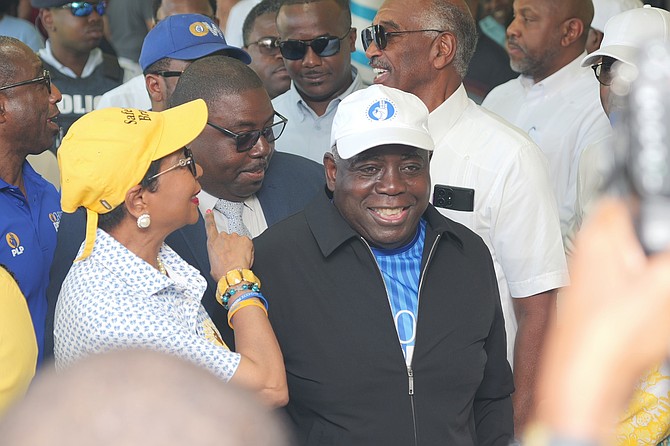
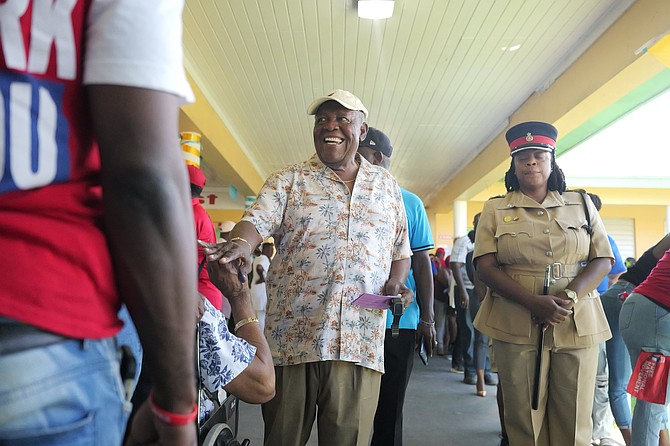
    As the Bahamas approaches its upcoming general election, a growing wave of high-profile fraudulent document cases has thrown electoral integrity into the national spotlight, drawing divergent and cautiously worded reactions from the country’s most senior political figures. Former Prime Minister Hubert Ingraham, a stalwart of the opposition Free National Movement (FNM), emerged as one of the most prominent voices sounding the alarm after casting his ballot in the early advance polling. Speaking to reporters immediately after voting, Ingraham described the rising frequency of cases where individuals have been caught with counterfeit passports and voter registration cards as deeply alarming.

    While Ingraham echoed widespread concerns within the FNM that the national voter registry contains serious irregularities—including duplicate entries and incomplete records lacking valid birth dates—he stopped short of endorsing the opposition party’s more extreme claims that the election could be stolen through systematic manipulation. The former prime minister stressed that he does not believe the country’s electoral framework is vulnerable enough to be altered to flip a final election result, and urged all eligible Bahamian voters to turn out to cast their ballots regardless of the ongoing controversy. Still, he emphasized that the scale of fraudulent document access remained a pressing worry. “But I am concerned about how large numbers of people it appears have got access to Bahamian passports and other such documents, and that is a very concerning matter,” Ingraham told reporters. He added that he hopes the irregularities are rooted in bureaucratic incompetence rather than coordinated, intentional wrongdoing meant to skew the election.

    Another former Bahamian prime minister, Perry Christie of the ruling Progressive Liberal Party (PLP), pushed back on the opposition’s framing of the issue yesterday, arguing that existing safeguards built into the country’s electoral system make widespread election fraud effectively unachievable. Christie noted that organized large-scale fraud of the type being discussed by FNM figures has never occurred in the Bahamas’ electoral history, and rejected suggestions that it could take place this cycle. “It’s very difficult, if not next to impossible, to have the kind of fraud that they’re talking about in our voting system here and it hasn’t happened before, it’s not going to happen now,” Christie said. He characterized the focus on fraud as political posturing, noting that parties often elevate issues they believe will resonate with voters to gain an edge ahead of polling day. Christie also pointed to the Bahamas’ longstanding electoral trend—where single parties rarely win consecutive terms in office—as evidence that election results consistently reflect the unmanipulated will of the electorate, rather than tampering.

    The debate over document fraud has intensified in recent months following a string of high-profile arrests linked to counterfeit and improperly obtained identification. The most recent high-profile case came on April 27, when a Dominican national was charged with fraudulently acquiring a Bahamian voter card and multiple Bahamian passports, marking the latest in a series of similar incidents. Less than two weeks prior, on April 15, an employee of the country’s Parliamentary Registration Department was arrested for allegedly assisting a Haitian woman in obtaining an illegal voter identification card, and was found in possession of five blank official voter cards.

    In comments made earlier in April, National Security Minister Wayne Munroe, a member of the ruling PLP, stated that any public official convicted of involvement in passport fraud would face a maximum sentence of up to ten years in prison if the PLP wins a second consecutive term in office. For his part, FNM Leader and opposition chief Michael Pintard has repeatedly raised alarms about the scope of document fraud occurring under the current PLP administration, though he has yet to release a detailed plan outlining what specific policy or regulatory changes his party would implement to address the problem if elected.
  • Fashion brand Superdry co-founder convicted of rape

    Fashion brand Superdry co-founder convicted of rape

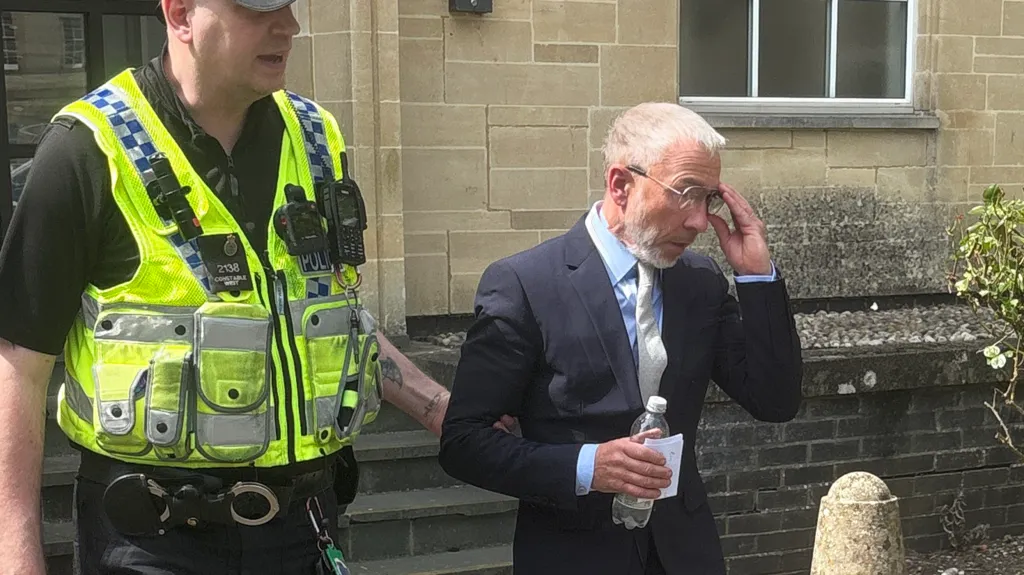
    In a high-profile verdict handed down Friday at a court in southwest England, James Holder, the 54-year-old co-founder of iconic British streetwear label Superdry, has been found guilty of rape. The guilty verdict came after a jury deliberated on the case, which centered on an attack Holder carried out against a woman in 2022, following their first meeting at a local bar in Cheltenham. Following the conviction, judges denied Holder bail, meaning he will remain in custody while awaiting his sentencing hearing scheduled for next week.

    Holder, along with business partner Julian Dunkerton, launched Superdry in 2003, building the brand from a small startup into a globally recognized streetwear label that won widespread popularity for its blend of casual design and British aesthetic. But the company has faced a series of major challenges in recent years, most notably a pronounced slump in sales that prompted a major corporate restructuring. As a result of that restructuring, Superdry was officially delisted from the London Stock Exchange earlier in 2024 and rebranded under the new name Superdry & Co.

  • Regional support powers JPS restoration efforts in final phase after Hurricane Melissa

    Regional support powers JPS restoration efforts in final phase after Hurricane Melissa

    KINGSTON, Jamaica — More than a week after Hurricane Melissa swept across Jamaica, leaving widespread destruction to the national power grid, the Jamaica Public Service (JPS) has confirmed it is moving into the final stretch of recovery efforts, with fewer than 3,000 customers still waiting to have their electricity restored. In an official public statement released Friday, the utility provider attributed the steady, significant progress of restoration work to critical operational support from partner energy teams across the Caribbean region.

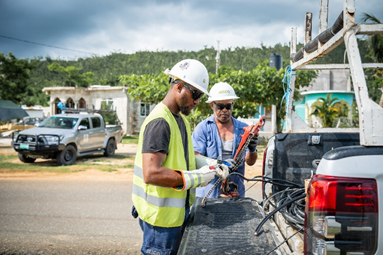
    To date, more than 80 external skilled personnel have joined local JPS crews on the ground to speed up recovery. Line workers from Bermuda’s Bermuda Electric Light Company (BELCO) have been deployed alongside certified technicians from two St. Lucia-based firms: King’s Electrical and Islandwide Electrical Limited. According to JPS, these cross-border teams have played an indispensable role in accelerating restoration, especially in coastal and rural communities that suffered the worst damage from the hurricane’s high winds and flooding.

    Right now, all remaining work is concentrated in the western Jamaican parishes of St. Elizabeth and Westmoreland. Crews in these areas are still contending with rugged, hard-to-access terrain damaged by the storm, and are carrying out full reconstruction and partial redesign of large sections of the local power grid that could not be simply repaired.

    Ricardo Case, Senior Vice President of Shared Services at JPS, emphasized that coordinated regional collaboration has been a game-changer for overcoming the unprecedented challenges posed by Hurricane Melissa. “We fully recognize how much frustration our customers in western Jamaica are feeling right now, going days without reliable power,” Case said in the statement. “But we have kept our promise: work has not stopped for a single day. Our local teams, reinforced by skilled support from utility partners across the Caribbean, have adapted creatively to restore power to some of the hardest-hit parts of the grid, even with limited access and large-scale rebuilding required. None of this progress would have been possible without these partnerships.”

    When Hurricane Melissa made landfall on Jamaica on October 28, 2025, it knocked out power to roughly 77 percent of the country’s utility customers, and caused catastrophic, widespread damage to the national transmission and distribution network. JPS has called the event one of the most damaging storm impacts in the company’s operating history.

    Case acknowledged that the final phase of restoration remains extremely demanding work. “But every single one of us shares the same top priority: get power back to every single customer, no exceptions,” he said. “The shared commitment and positive energy of all the crews working side by side will make sure we get this done as safely and as quickly as humanly possible.”

  • Seprod Foundation teams up with Mercy Corps, Home Depot for agricultural recovery effort

    Seprod Foundation teams up with Mercy Corps, Home Depot for agricultural recovery effort

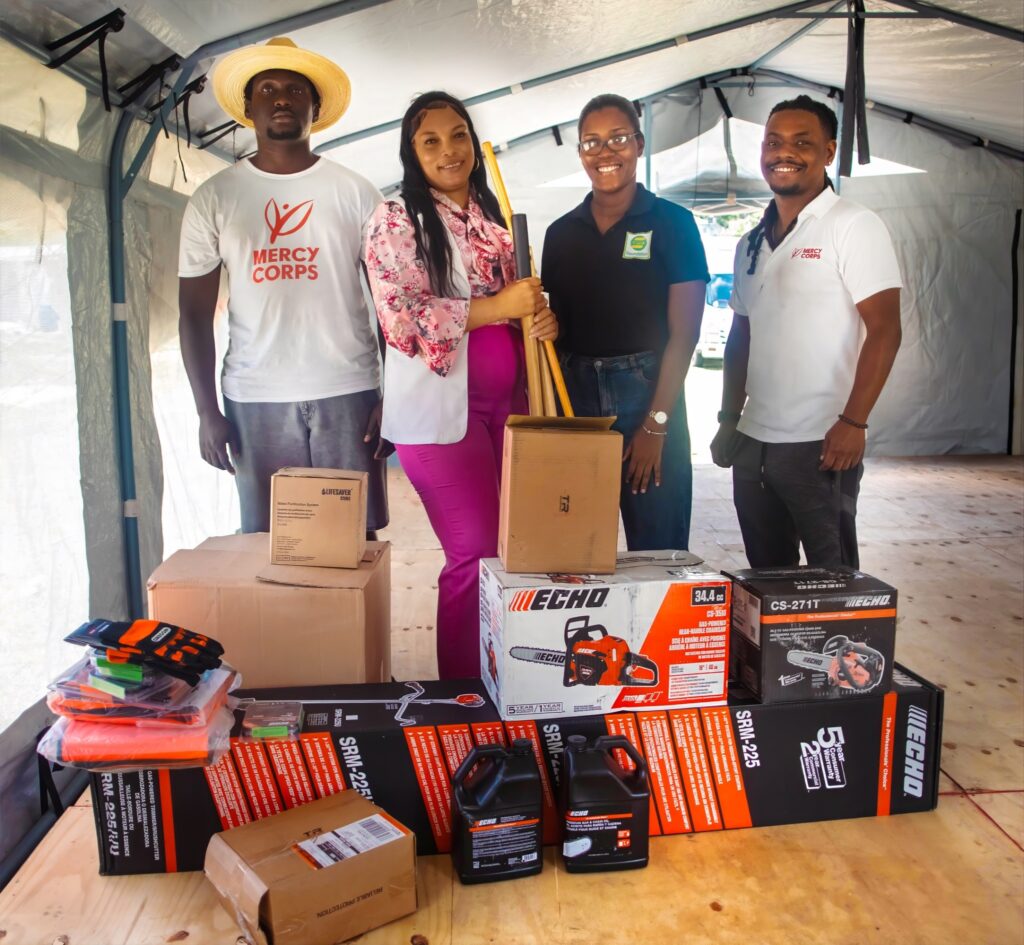
    KINGSTON, Jamaica — Six months after Hurricane Melissa devastated small-scale agricultural operations across western Jamaica in October 2025, three collaborative partners have delivered targeted, life-changing support to hundreds of farmers in two hard-hit parishes. Seprod Foundation, working alongside global humanitarian organization Mercy Corps and home improvement retail leader The Home Depot, has distributed 40 custom agricultural recovery kits to farming households in Crawford, St Elizabeth and Seaford Town, Westmoreland, aiming to reverse catastrophic damage to local livelihoods.

    The two-day distribution initiative unfolded on April 15 and 16, 2026, rolling out resources curated specifically to address the most pressing gaps farmers faced after the storm. Each kit is packed with a full suite of practical, high-need supplies: heavy-duty land clearing and cutting equipment to remove storm debris, foundational hand tools for daily cultivation, specialized crop management inputs, and personal protective gear for farm workers. With these resources in hand, local farmers can now clear vegetation and debris from storm-ravaged plots, restart active cultivation, and begin rebuilding the steady income streams their families depend on.

    For many beneficiaries, the support arrives at a moment of deep uncertainty. “After the hurricane, a lot of us didn’t know how we would get back on our feet. These tools give me a chance to clear out and start planting again. It means I can start providing for my family again,” Steve Kameka, one of the participating farmers, shared in an official press release issued Friday.

    Lisa D’Oyen, Executive Director of the Seprod Foundation, emphasized that The Home Depot’s contribution was foundational to getting the initiative off the ground. “The support from The Home Depot has been instrumental in helping farmers take the first steps toward recovery,” D’Oyen explained. “Through our partnership with Mercy Corps, we are able to ensure that these resources reach the communities that need them most, while continuing to build a foundation for long-term resilience.”

    As the international lead on the project, Mercy Corps oversaw end-to-end procurement and logistical coordination of the donated kits, working side-by-side with Seprod Foundation to plan on-the-ground distribution and host community outreach sessions to connect eligible farmers with support. Allison Dworschak, Mercy Corps’ Caribbean Resilience Director, noted that local partnership has been critical to ensuring the response aligns with community priorities. “Our partnership with Seprod Foundation has been key to keeping our work across Jamaica grounded and connected to the real needs expressed by hurricane-impacted communities,” Dworschak said. “We look forward to continued partnership as we ready ourselves for next season.”

    This kit distribution is just one component of a broader, long-running recovery program focused on boosting agricultural resilience and shoring up food security across Jamaica’s hurricane-affected regions. Both Crawford and Seaford Town have been flagged as priority zones for sustained investment, as ongoing rebuilding work continues and farmers gradually work to reestablish stable, productive livelihoods.

    Seprod Foundation officials stressed that unmet need remains substantial across impacted farming communities, and reiterated that ongoing collaboration between local, international and private sector partners will be critical to expanding assistance and deepening long-term impact for hurricane survivors.

  • Davis ducks questions on publicly funded PLP gifts

    Davis ducks questions on publicly funded PLP gifts

    As the Bahamas approaches its upcoming general election, a growing controversy over the misuse of hundreds of thousands in public funds for politically tied Hurricane Dorian relief has put Prime Minister Philip “Brave” Davis under intense scrutiny — and he has repeatedly refused to address questions about the incident.

    The scandal centers on more than $200,000 in taxpayer money that was used to issue gift certificates distributed to residents of Abaco, a island chain still recovering from 2019’s Hurricane Dorian. Critics have alleged the vouchers, which bear the names of candidates and officials from Davis’ ruling Progressive Liberal Party (PLP), amount to criminal vote-buying just two weeks before voters head to the polls.

    When reporters from The Tribune attempted to question the prime minister Wednesday after he cast his vote in advanced polling, Davis declined every request for comment. A prior statement from Davis’ Communications Director Latrae Rahming had indicated the prime minister would address the allegations when speaking to reporters, but that commitment went unfulfilled.

    The exchange unfolded in chaotic fashion outside the Garvin Tynes polling station: Davis was flanked by a crowd of supporters as he exited, and an employee from the Office of the Prime Minister physically blocked the Tribune reporter from continuing to ask questions, while other members of the prime minister’s entourage formed a barrier around him as he walked to his vehicle. Davis, who also holds the cabinet position of Minister of Finance, did not respond to direct questions about whether he personally authorized the public expenditure, and quickly left the area after casting his ballot.

    Before declining to address the voucher controversy, Davis told reporters that his own voting process had gone smoothly, urged all registered residents to cast their ballots, and described early voter turnout as encouraging.

    Details of the voucher program were first reported by The Tribune earlier this week. Chris Lleida, chief executive officer of Premier Importers — the company that issued the gift certificates — confirmed that the entire $200,000+ cost was covered by the Ministry of Finance. Lleida added that the vouchers were requested as part of post-Hurricane Dorian relief initiatives, and issued in denominations of $200, $300, and $500, totaling more than $200,000 in public spending.

    The fact that PLP political candidates and party officials were listed on and involved in distributing the publicly funded vouchers has sparked widespread outrage among political observers and opposition leaders. The timing of the distribution has drawn particular criticism: it comes more than six years after Hurricane Dorian devastated Abaco, and just a fortnight ahead of the national general election.

    Michael Pintard, leader of the opposition Free National Movement (FNM), has called the incident an egregious violation of the law and demanded criminal charges be filed against those responsible. Pintard emphasized that the misuse of public funds for this purpose qualifies as a criminal offense under Bahamian election law, and noted that the situation is made even more serious by the involvement of Bradley Fox Jr, the PLP candidate for Central and South Abaco, who participated in distributing the vouchers despite holding no formal government position.

    Under the Bahamas’ Parliamentary Elections Act, it is a criminal offense to offer, give, or provide any form of money, gift, or benefit to a voter for the purpose of influencing their vote, or rewarding voters for a specific voting outcome. The law also bans providing benefits to sway election results in a candidate’s favor, or to encourage third-party campaign activity on a candidate’s behalf. Additionally, the statute criminalizes funding or knowingly facilitating vote-buying activities, including the provision or reimbursement of funds used for voter bribery.

  • Young investor Kristofer Madu opens doors to finance and tech for underserved youth

    Young investor Kristofer Madu opens doors to finance and tech for underserved youth

    KINGSTON, JAMAICA – For many young people growing up in underserved communities, high-growth careers in private equity, finance, and technology often feel out of reach, blocked by limited networks and a lack of early exposure to these industries. For 25-year-old private equity investor Kristofer Madu, changing that reality has become a life mission, driven by his own non-traditional path to success and his firsthand experience of the diversity gaps that still plague the investing world.

    Raised in Nashville, Tennessee, Madu originally set out to build a career as a rapper, cutting his teeth in the music industry before pivoting to finance. That early experience in entertainment taught him a foundational lesson: that long-term success in any field hinges on recognizing high-potential opportunities and learning to navigate complex, often unforgiving industry landscapes – a skill many young people from low-income backgrounds never get the chance to develop.

    Today based in San Francisco, Madu has built an impressive career at global private equity firm TPG, where he focuses on investments across technology, media, and entertainment. His track record includes contributing to dealmaking valued at over $150 billion. Even with this professional success, Madu has not lost sight of the barriers that keep marginalized groups out of the industry: as a Black professional of Jamaican and Nigerian heritage, he is keenly aware that he remains among the small number of Black leaders in private equity, an industry that has struggled for decades to meaningfully improve racial and economic diversity.

    To close the gap in early career exposure, Madu founded When We Grow Up, a nonprofit initiative dedicated to expanding the career ambitions of young people from underresourced communities. Through in-person school visits, targeted outreach programs, and mentorship connections, the organization introduces high school and middle school students to careers in finance, technology, and other high-impact fields that they may have never considered accessible.

    In recognition of his work both in investing and public service, Madu was named to the 2025 Forbes 30 Under 30 list in the finance category. In a recent public post to his Instagram, Madu shared the core belief that drives his nonprofit work: every child, regardless of the neighborhood or economic situation they are born into, deserves a fair shot at professional success. He noted that the next generation of transformative doctors, engineers, and financiers could come from even the most marginalized communities, if they are given the early guidance and opportunity to nurture their ambitions.

    Looking ahead, Madu has laid out aggressive expansion plans for When We Grow Up, with a near-term goal of launching programs across major U.S. hubs including Boston, New York, and cities across Florida. His long-term vision extends far beyond the United States: he aims to build sustainable career pathways that open up global opportunity for young people in developing nations around the world.

  • Questions raised over Fox’s conduct in campaign clash

    Questions raised over Fox’s conduct in campaign clash

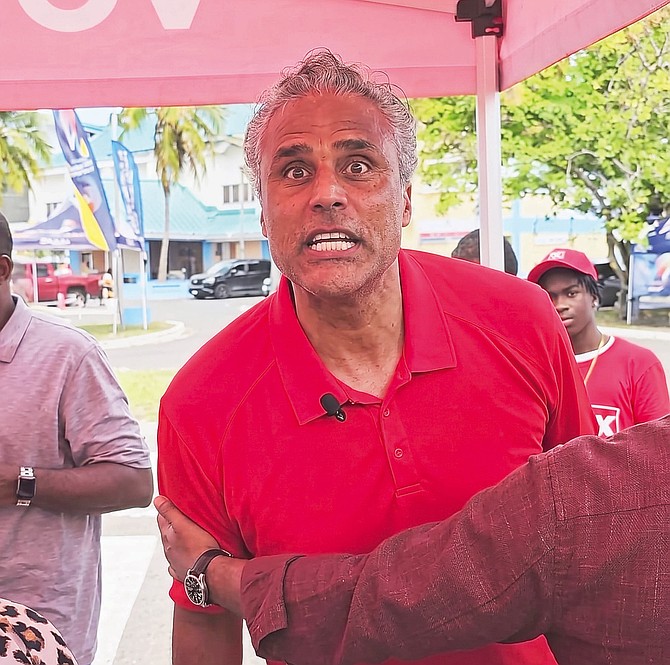
    A viral campaign-season clash has put former NBA player turned parliamentary candidate Rick Fox under intense public and political scrutiny, after circulating footage showed him lunging at a local man during a heated dispute over public space for campaign tents. The confrontation, which unfolded on Wednesday in Garden Hills where Fox is running for a seat as Member of Parliament, sparked widespread debate online after the footage was picked up by major U.S. entertainment outlet TMZ, drawing international attention to the altercation.

    The widely shared video, which circulated publicly one day after the incident, captures the moment tensions boiled over during a disagreement over a pre-reserved spot for a campaign tent. The man involved, wearing a blue-and-yellow long-sleeve shirt, told Fox’s campaign team that he had already claimed the location for his own use. When Fox questioned whether his claim followed local event guidelines, the man dismissed the rules outright with an expletive-laden rejection. In response, Fox moved aggressively toward the man, forcing his campaign manager Carlyle Bethel to physically step in and restrain him as the situation escalated.

    Even as Bethel struggled to hold him back, Fox broke free of his manager’s grip, shouting that the opposing group were nothing but bullies. He then turned toward the person recording the video, flexed his muscles, and issued a public challenge, saying he was “right here for y’all, all day long.” Throughout the rest of the footage, Fox repeatedly labels those involved in the disagreement as bullies, as shouting matches continue between members of both groups.

    In the aftermath of the video going viral, Fox addressed reporters to push back against criticism of his actions, arguing that the circulating footage omitted critical context that preceded the confrontation. He claimed the incident was triggered by the man making violent threats against him, his campaign team, and Bethel specifically, framing his outburst as an act of self-defense and protection for the people working with him. “If you’re going to swear and threaten people’s lives, then I’m going to react. I’m going to defend my team, I’m going to defend myself, I’m going to defend anybody who is in the area,” Fox told reporters, adding that some local actors are accustomed to acting as bullies during campaign season, and that his campaign would not tolerate intimidation tactics. He also claimed that law enforcement had responded to the scene and charged the man involved with criminal offences related to the threats.

    However, official police statements directly contradict Fox’s account of the incident. Chief Superintendent Sheria King, a police department spokesperson, confirmed that no arrests or charges were filed in connection with the confrontation, and no evidence has been brought forward to support Fox’s claim that death threats were made against him or his campaign manager.

    The incident has raised urgent questions about Fox’s temperament and ability to serve in public office, as voters and political observers assess his conduct ahead of the upcoming election. What began as a local dispute over campaign logistics has quickly become a high-profile controversy that could shape voter perceptions of the candidate in the tightly contested Garden Hills race.

  • Long wait times and scenes of confusion plague advanced poll

    Long wait times and scenes of confusion plague advanced poll

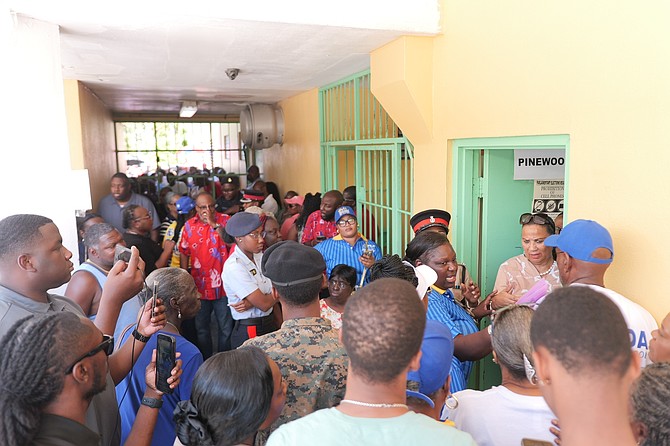
    Long queues, multi-hour wait times, and widespread confusion during the Bahamas’ recent advance poll have thrown the Parliamentary Registration Department (PRD)’s preparedness into sharp question, stoking growing fears that the far larger and more complex general Election Day could face similar catastrophic dysfunction.

    The final ballot of the day was not cast until 10 p.m. – a full four hours after the official scheduled closing time of 6 p.m., marking a dramatic breakdown of the electoral process that unfolded against a backdrop of weeks of criticism from the opposition Free National Movement (FNM). Prior to the advance poll, the ruling government had repeatedly dismissed opposition concerns, defending the PRD’s ability to manage the election. This week’s voting, however, laid bare severe operational strain across polling stations nationwide: some electors waited more than five hours to cast their ballots, while countless others abandoned the process in frustration, and multiple locations kept voting open far past the official close to clear massive backlogs. Even some candidates from the ruling Progressive Liberal Party (PLP) were forced to acknowledge major shortcomings in the advance poll’s organization.

    Prime Minister Philip “Brave” Davis was visibly agitated during a visit to the Sadie Curtis polling location and declined to answer questions from press corps. Former PLP Cabinet minister and MP Leslie Miller, who accompanied Davis, told reporters he waited two and a half hours to vote at the Doris Johnson site, and called for a doubling of available polling space ahead of the general election. “It took me two and a half hours to vote today, okay, tremendous,” Miller said. Several other high-ranking PLP figures including Sebas Bastian, McKell Bonaby, Myles Laroda and Mario Bowleg echoed Miller’s call, noting that more space was urgently needed to reduce crowding, particularly for elderly and disabled voters. Bastian added that the problematic advance poll experience would guide necessary adjustments before Election Day.

    Operational issues were apparent from the moment polls opened at many locations. At Kendal Isaacs Gym, a site serving three major constituencies, delays began immediately when the exit door remained locked at opening, creating a massive bottleneck that sent lines swelling out into surrounding areas. Voter Tavia McIntosh said the check-in process inside the station functioned smoothly, but described the outdoor crowding as totally disorganized. “You see the crowd? It is unorganised,” she said. “I hope it [the general election] doesn’t be like this.” Commissioner of Police Shanta Knowles ultimately traveled to the site to intervene and restore order.

    At Thelma Gibson Primary School, voters reported widespread confusion over directional guidance, with many being sent to multiple wrong locations before finding their correct polling station. Seventy-six-year-old voter Cynthia Sealy told reporters she was redirected twice before reaching the correct spot. Other common complaints across sites focused on a lack of basic amenities for waiting voters, with many electors forced to stand for hours in direct sun without adequate shelter. At the CV Bethel polling location, FNM chairman Dr Duane Sands highlighted extreme overcrowding, noting that one advance polling room had been assigned to nearly 1,200 registered voters. “Perhaps one of the worst situations of the day is Bamboo Town has 1,200 people on the advanced poll, and one room,” Sands said. “One. One. One. So people have been waiting four, five, six hours. Okay?”

    Tensions boiled over at the HO Nash polling site after multiple people were permitted to cut in line, sparking loud protests from waiting voters who decried the process as unfair. Multiple elderly voters suffered medical distress amid the heat and long waits, with at least one voter fainting. A 75-year-old elector abandoned the line after just 45 minutes, saying he could not physically tolerate the conditions, and noted he had never seen such dysfunction in decades of voting. “This ain’t the first election these people been through,” he said. “They been through many and I ain’t never seen it like this.” Another voter, Michelle Dames of Mount Moriah, also left without casting a ballot, calling for systemic changes to better accommodate vulnerable groups. “Somebody just fell out over there from standing so long,” she said. “Even though some persons are trying to provide chairs, that ain’t cutting it.”

    Beyond basic operational management, FNM legal advisor Khalil Parker raised more serious procedural concerns. He pointed to reports of pre-signed ballots and completed counterfoils found before voters arrived at stations, the lack of a properly segregated voter list for advance poll participants, and a last-minute decision to allow electors with approved applications to vote even if their names did not yet appear on the official register. “So now, we have to deal with the fact that there’s going to need to be a reconciliation between those who voted, but were not on the register, and those who voted and were on the register to make sure that when we begin on election day, there is a mitigation or a correction or an updating of the official records at PRD, so that duplicating voters isn’t a substantive concern in that event,” Parker explained. He added that the FNM would demand an urgent meeting with PRD leadership to resolve all outstanding issues before the general election.

    Despite widespread cross-party criticism, the PRD has maintained it remains fully prepared for the upcoming general election, noting that Election Day will feature more polling stations, additional staffing, and expanded logistical support compared to the advance poll. The department acknowledged the delays and confusion, attributing the issues to an “unprecedented” level of voter turnout that outstripped official projections. “This is the first time in Bahamian history that this number of persons has participated in the advance poll, with especially strong participation among elderly voters,” the PRD said in a statement. The department added that it has launched an internal review to identify bottlenecks and will implement targeted adjustments to improve voter flow and inter-agency coordination before Election Day.

    Critics have already pushed back against the PRD’s turnout explanation, however, pointing out that all advance poll participants were required to pre-register, giving election officials an exact, advance count of how many voters were expected to cast ballots on advance polling day.

  • Golding congratulates Gaston Browne on general election victory in Antigua

    Golding congratulates Gaston Browne on general election victory in Antigua

    In a landmark outcome that has reshaped the political landscape of the Eastern Caribbean, Gaston Browne and his ruling Antigua and Barbuda Labour Party (ABLP) have secured a historic fourth consecutive term in office, following a decisive landslide victory in the country’s general election. Preliminary vote counts confirm the scale of ABLP’s triumph, with the party claiming 15 of the 17 contested parliamentary seats — a dramatic expansion of its narrow 9-7 majority won in the 2023 January polls.

    This unprecedented win cements Browne’s place in Antigua and Barbuda’s political history: he is the first prime minister of the nation to secure four straight general election victories since the country gained independence. The main opposition United Progressive Party (UPP) was left with only a single seat, which will be retained by party leader Jamale Pringle. On the island of Barbuda, the Barbuda People’s Movement held onto its local seat, with incumbent Trevor Walker retaining his position.

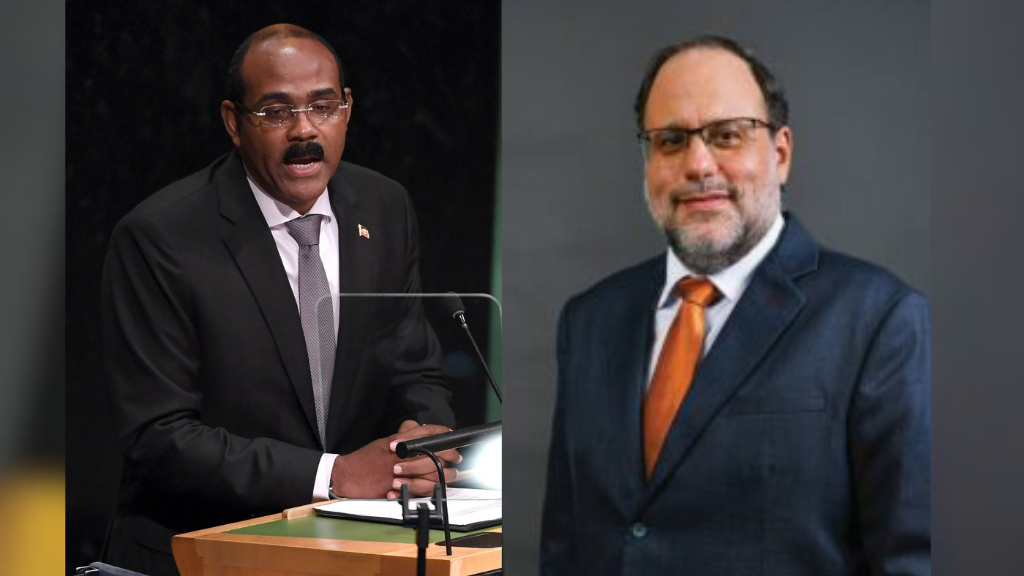
    Following the confirmation of the results, Mark Golding, Opposition Leader of neighboring Jamaica, issued a formal statement of congratulations shared via the social platform X. Golding extended warm wishes to both Browne and the entire ABLP for their successful campaign, noting that Browne’s return to office — a post he has held since first assuming leadership in 2014 — is a clear reflection of the ongoing trust and confidence the people of Antigua and Barbuda place in his leadership. Golding also shared his expectation of productive collaborative work with Browne’s new administration in the coming term, concluding his statement by wishing the incoming government success in delivering on its new mandate.

  • Seiveright welcomes passage of NaRRA

    Seiveright welcomes passage of NaRRA

    In the wake of catastrophic damage left by Hurricane Melissa, Jamaica has moved one step closer to a coordinated, accelerated recovery effort after the House of Representatives approved legislation establishing the National Reconstruction and Resilience Authority (NaRRA). Senior government official Delano Seiveright, Jamaica’s State Minister, has framed the bill’s passage as a transformative milestone for the island nation, which is grappling with one of the costliest natural disasters in its recent history.

    Early damage assessments put total losses from the storm at an estimated US$12.2 billion. More than 215,000 structures across the country suffered damage or complete destruction, and critical public services including schools, hospitals, and core transportation and utility infrastructure were knocked offline across wide swathes of the island. Coastal communities like Black River bore the brunt of the storm’s impact, facing near-total disruption to daily life and local economies.

    Seiveright emphasized that the unprecedented scale of destruction rules out a business-as-usual response. “This is not a normal situation. The scale of the destruction demands a structured, coordinated and urgent response,” he told lawmakers, warning that bureaucratic gridlock poses a far greater threat to effective recovery than procedural concerns. “After a disaster of this scale, the greater risk is paralysis,” he said.

    To address concerns about transparency and accountability, Seiveright outlined multiple layers of built-in safeguards designed to prevent misuse of funds and mismanagement. All NaRRA-led projects will require formal approval from the national Cabinet, and the Auditor General’s office will maintain continuous independent oversight. The authority is also mandated to submit public annual reports to Parliament, and a fully searchable public electronic register will list all approved projects to enable public scrutiny. Seiveright stressed that the new body is not intended to bypass standard governance processes, but rather cut through crippling bureaucratic red tape while retaining full accountability.

    The framework for NaRRA draws on hard lessons learned from major disaster recovery efforts around the world over the past 15 years. Seiveright specifically referenced slow, fragmented recovery efforts following the 2010 Haiti earthquake, Hurricane Katrina in the United States, and Hurricane Maria across the Caribbean, where uncoordinated systems left communities waiting years for core services to be restored.

    To date, the Jamaican government has already secured roughly US$6.7 billion in international and domestic financing for recovery efforts, and initial work to restore critical infrastructure has helped stabilize public and investor confidence. Seiveright added that NaRRA is not a permanent new government body: it is established as a time-limited entity, overseen by a multi-stakeholder national committee chaired by leading economist Professor Peter Blair Henry.

    “Jamaica cannot afford delay. We must act, and we must deliver,” Seiveright said. The NaRRA Bill now advances to the Jamaican Senate for its final vote before it can be signed into law.