博客

  • New Invest SVG head urges BVI diaspora to ‘build with us’

    New Invest SVG head urges BVI diaspora to ‘build with us’

    Fresh off her appointment and 36 years living outside St. Vincent and the Grenadines (SVG), Anna Young, the newly sworn-in Executive Director of Invest SVG, has delivered a landmark call to unity and collective action to the large Vincentian diaspora community in the British Virgin Islands (BVI), urging an end to outdated divisions between domestic and overseas nationals and positioning diaspora contribution as a core strategic pillar of the country’s economic transformation.

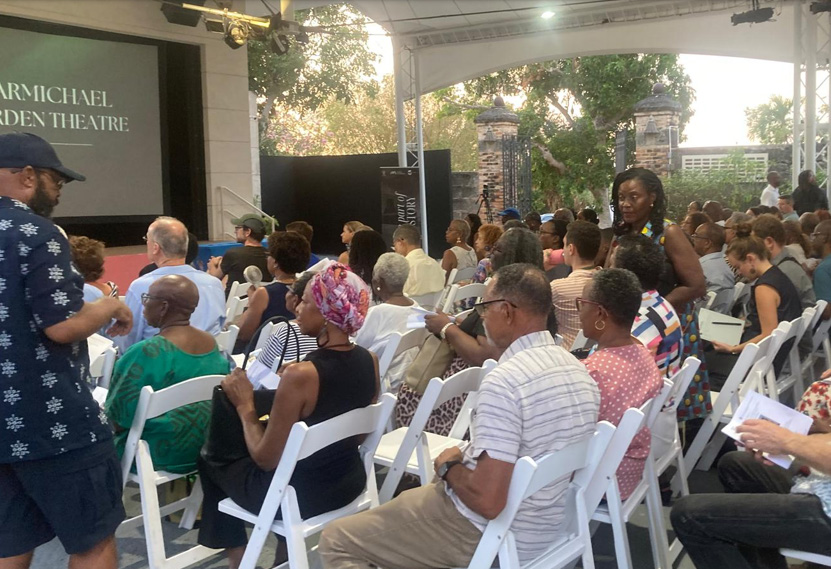
    Young, who officially began her role just one day after returning to SVG, used her first major public address as agency head to frame her own homecoming as living proof that diaspora members can successfully reintegrate and contribute meaningfully to national development — a need the country says is increasingly urgent amid shifting global economic conditions. The speech capped off the latest stop of a national investment outreach forum that has already stopped in London, bringing the conversation to the BVI, where an estimated 20% of the population traces its roots to SVG.

    At the core of Young’s message was a rejection of the long-held distinction between Vincentians who reside at home and those who have built lives overseas. “Whether you left our home by choice or by necessity to pursue a better future, you never stopped being Vincentian,” she emphasized, arguing that identity, not current geographic location, defines national belonging. “Vincy by birth, Vincy by descent, Vincy by identity, first generation, second generation, third generation, Vincy by choice. Home is where the heart is, and we are one people,” she told the gathered audience on May 2, 2026.

    Young stressed that this outreach is far more than a sentimental call to return home; it is a deliberate invitation for the global Vincentian community to become structural partners in building the country’s economy. “We are not just asking you to come back — we are asking you to build with us,” she said, noting that contribution extends far beyond high-net-worth investment. “Whatever your profession, from caregivers to nurses, tradespeople to C-suite professionals, your skills, experience and connections matter. Investment is not just about capital. It is human, it is intellectual, it is relational — and we need all of it to move SVG forward.”

    She highlighted early progress from the BVI leg of the forum, noting that local BVI merchants have already expressed interest in stocking products made by Vincentian producers. “That is not just trade. That is increased visibility, growing confidence, and new market opportunities for our entrepreneurs back home. It is a perfect example of what we can achieve when we connect our people across borders,” Young explained.

    Outlining the government’s clear economic roadmap, Young identified four interconnected priority pillars that will drive SVG’s transformation over the coming years: tourism, the green economy, the blue economy, and creative industries. She framed each sector as accessible, growing opportunity areas for diaspora engagement. Tourism, the long-standing cornerstone of the SVG economy, is expanding beyond traditional offerings into high-value niche segments including eco-tourism, boutique experiences, and heritage tourism. The green economy spans renewable energy development, climate-smart agriculture, sustainable construction, and environmental innovation, while the blue economy leverages SVG’s abundant marine assets, covering fisheries, coastal development, marine transport, and emerging ocean-based initiatives. Finally, the creative industries position SVG’s unique cultural identity as an exportable asset, encompassing music, film, digital content, fashion, and visual arts.

    To remove barriers for diaspora investors, Young detailed a comprehensive restructuring of Invest SVG itself, reorienting the agency around four core mandates: export and trade development, foreign direct investment attraction, financial services growth, and intentional diaspora investment mobilization. She positioned the reworked agency as an active, hands-on facilitator rather than a passive bureaucratic body, promising end-to-end support for every investor.

    “We are not asking you to navigate the system alone. We walk with you every step of the way,” Young said, outlining the full scope of support Invest SVG will provide, from initial business registration and project structuring to accessing government incentives, coordinating permits, liaising across ministries, and providing ongoing aftercare once a project launches. Acknowledging that past investment processes have not always been seamless, Young also announced ongoing legislative reforms to the nation’s Investment Act and Tourism Aid Act, designed to turn Invest SVG into a true one-stop shop for investors, with improved transparency, stronger investor protections, and more streamlined coordination across government agencies. The ultimate goal, she said, is to deliver “clarity, predictability and confidence” for all investors.

    SVG already offers a robust package of incentives for qualifying projects, including duty-free concessions on approved imports, corporate tax holidays, targeted sector-based tax deductions and exemptions, facilitated work permits and entry for key personnel, access to land for strategic projects, and ongoing post-launch support. These incentives are structured to make viable local projects more competitive and sustainable, Young noted, adding “You can succeed in St. Vincent.”

    To further support incoming investors, Invest SVG is also building a vetted national ecosystem of pre-qualified service providers, covering construction and project management, sustainable design, architecture, engineering, legal and investment advisory, real estate acquisition, and hospitality operations. “Investment doesn’t succeed in isolation — it succeeds in a strong ecosystem. When you come to SVG, you won’t have to build that ecosystem from scratch; we already have the expert partners you need to hit the ground running,” Young explained.

    Closing her address, Young emphasized that diaspora investment is not a secondary supplementary source of capital for SVG — it is a core strategic priority, particularly amid today’s shifting global economic landscape. “Capital is more selective than ever, competition for investment is fierce, and resilience is the defining requirement for small open economies like ours,” she said. “In this context, diaspora investment is strategic, because you bring more than capital — you bring confidence, credibility, and existing global connections that no outside investor can match.”

    Young rejected the idea that overseas Vincentians must choose between their current adopted homes and their connection to SVG, extending an open invitation for dual belonging: “St. Vincent and the Grenadines is not divided between home and abroad. It is one nation, one people, one identity, working together. Welcome home, come home, invest, build, and let us rise together.”

  • US/Iran Tensions Continue to Rise

    US/Iran Tensions Continue to Rise

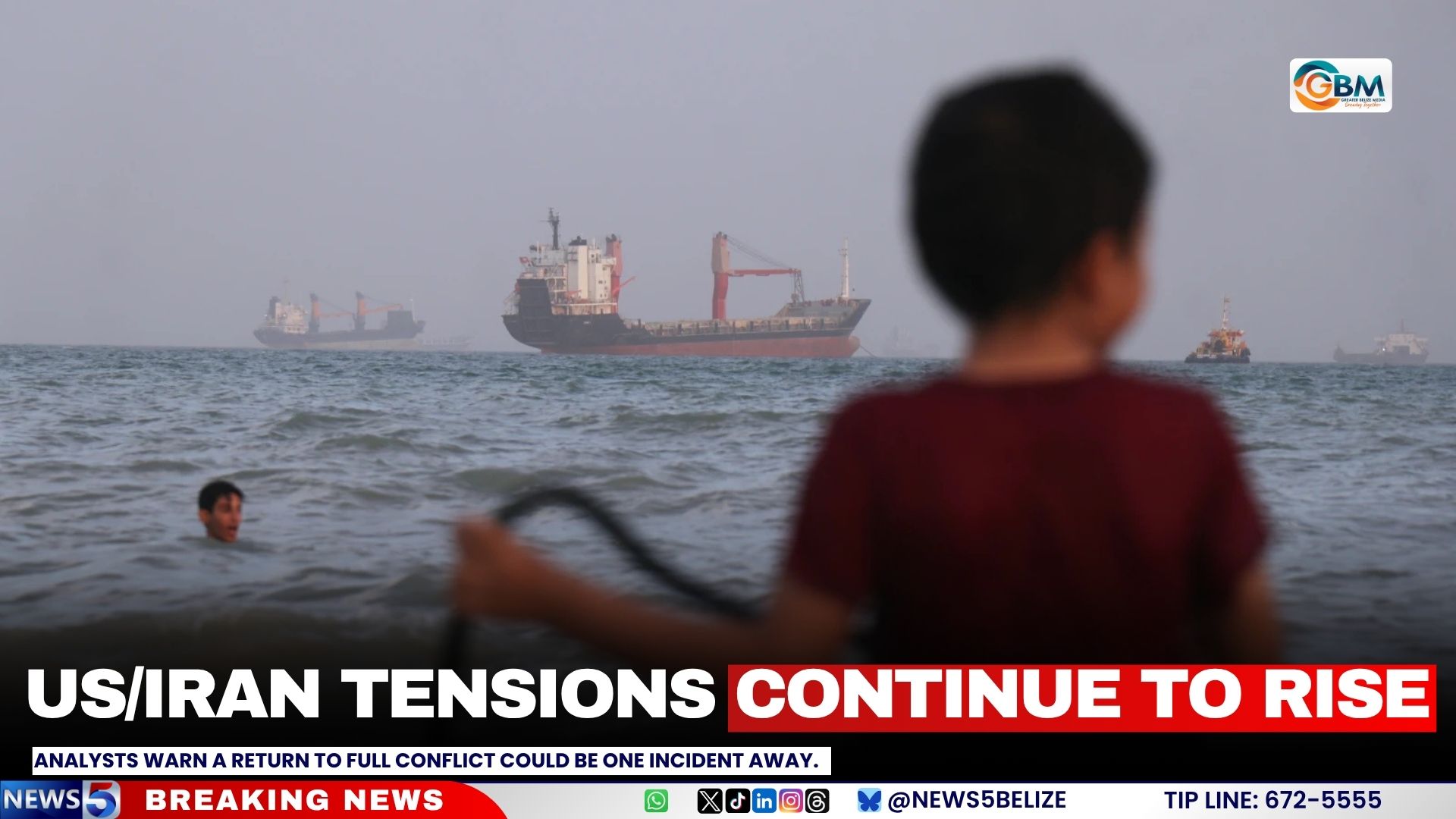
    As the standoff between the United States and Iran enters its fourth week, the fragile ceasefire that has prevented the Strait of Hormuz — the world’s most vital oil shipping chokepoint — from erupting into full-scale war is unraveling at an accelerating pace, sending shockwaves through global energy markets and raising urgent alarm across the Middle East.

    The latest escalation unfolded on Monday, after the United States launched its so-called “Project Freedom” operation, a mission designed to provide armed escort for commercial cargo vessels transiting the strategic waterway. Within hours of the operation’s debut, both US and Iranian forces exchanged direct fire in the strait, marking the most severe test of the truce agreement since it was implemented.

    Contradictory statements emerged from US leadership on Tuesday, as Defense Secretary Pete Hegseth publicly asserted that “the ceasefire is not over” despite confirmation from General Dan Caine, Chairman of the Joint Chiefs of Staff, that Iranian forces have launched more than ten separate attacks on US military assets since the truce went into effect. According to reporting from the Associated Press, Iran has also targeted commercial shipping vessels nine times over the course of the standoff and seized two foreign container ships. US officials have so far characterized these actions as remaining “below the threshold of restarting major combat operations,” a framing that has left observers uncertain about Washington’s next moves.

    Regional tensions spilled over to neighboring Gulf states on Monday, when the United Arab Emirates announced it had successfully intercepted 15 Iranian ballistic missiles and four unmanned aerial drones launched toward its territory. In response, Iran’s foreign ministry issued a stark warning to the UAE, urging the country not to allow itself to be “dragged back into a quagmire” of open conflict between Washington and Tehran. A senior anonymous regional source speaking to CNN summed up the gravity of the current situation bluntly: “It is very bad and messy at the moment.”

    The escalating crisis has already had a direct impact on global energy prices, with benchmark petrol prices rising 50% since the outbreak of hostilities in the region. Hundreds of commercial tankers are currently stranded outside the strait, as shipping companies reroute vessels to avoid the high-risk zone, creating massive supply chain backlogs that threaten to further raise energy costs for consumers worldwide. CNN reports that global oil demand is now declining at the fastest rate recorded since the height of the Covid-19 pandemic, a shift that has done little to offset price pressures driven by supply uncertainty.

    With neither Washington nor Tehran showing any willingness to make diplomatic concessions to de-escalate tensions, energy and security analysts warn that the entire region is just one accidental or intentional incident away from a full resumption of large-scale combat that would disrupt nearly a fifth of the world’s daily oil supply, with catastrophic consequences for the global economy.

  • Belize Moves Closer to Drone Laws, Public Consultation Set for Wednesday

    Belize Moves Closer to Drone Laws, Public Consultation Set for Wednesday

    As drone usage surges across multiple sectors of Belize’s economy and public life, the country’s Department of Civil Aviation is advancing toward formal rules for unmanned aerial systems, with a nationwide public consultation scheduled for Wednesday, May 6. The upcoming session, which will be hosted in-person at Belize City’s St. Catherine Academy Mercy Centre from 9 a.m. to 12 p.m. alongside a remote participation option, marks a key milestone in months of policy development aimed at balancing technological innovation with public aviation safety.

    The push for formal drone regulations comes after rising concerns over growing airspace congestion over the past year. Back in January 2026, aviation officials issued a formal warning that the rapid expansion of drone activity — spanning commercial uses from real estate mapping and agricultural monitoring to media production, plus recreational hobbyist flights — had significantly increased the risk of mid-air collisions with manned aircraft. Unlike larger nations where commercial and general aviation aircraft typically cruise at higher altitudes, Belize’s air traffic often operates as low as 500 feet above ground level during transit, creating extensive overlap with the operating altitude of most consumer and commercial drones. This overlapping airspace makes unregulated drone flights a critical public safety hazard, according to Department of Civil Aviation Director Nigel Carter.

    Following the January warning, the department released an Aeronautical Information Circular to collect initial public input on draft regulatory measures. The current proposal includes standardized operator licensing, geographically and altitude-based operational limits, and formal enforcement mechanisms with legal penalties for operators that fail to comply with the new rules. Ahead of Wednesday’s consultation, the department emphasized that the policy process is designed to be fully transparent and inclusive, inviting input from a broad range of stakeholders: commercial drone service providers, recreational hobbyists, environmental conservation organizations, legal scholars and industry experts. All groups with a vested interest in drone operations are encouraged to participate and share their perspectives to shape a final regulatory framework that meets the needs of all airspace users, the department said.

    The policy effort has already sparked mixed reactions from affected groups. While many stakeholders have framed the new regulations as a necessary step to avoid catastrophic safety incidents, some business owners that rely heavily on drone technology have raised concerns that overly restrictive rules could increase operational costs and limit innovation. Director Carter has pushed back on these concerns by acknowledging the economic value of drone technology, while reaffirming that safety must remain the top policy priority. This is particularly critical for Belize, he noted, because the country’s tourism industry and domestic connectivity depend heavily on consistent, safe aviation operations.

    Beyond commercial and recreational use, drones have already become an increasingly important tool for Belize’s national security and law enforcement agencies. Local police have integrated aerial surveillance into their regular crime reduction strategies, using drones to monitor high-crime hotspots, track criminal suspects, and coordinate ground patrols more effectively. Just last month in April, law enforcement used drone reconnaissance to locate and destroy dozens of illegal cannabis plants growing in remote, hard-to-access terrain in the Toledo District, demonstrating the public benefit of expanding legal, regulated drone use for government operations.

    Wednesday’s consultation is the final major public engagement step before the department finalizes the draft drone regulations and moves to formal adoption. Officials say the ongoing regulatory process reflects Belize’s proactive approach to managing the fast-growing adoption of unmanned aerial systems, aiming to create a clear, sustainable framework that supports innovation while protecting the safety of all airspace users.

  • Lashmar takes deep dive into Drax family in latest book

    Lashmar takes deep dive into Drax family in latest book

    It has been nearly four years since the global Black Lives Matter movement reignited long-overdue conversations about the enduring legacy of chattel slavery in modern societies, and a new investigative work is now pulling back the curtain on one of the most underreported stories linking a prominent British political family to centuries of slave-based profit in Barbados.

    Written by veteran investigative journalist and historian Dr. Paul Lashmar, *Drax Hall* explores the full, unvarnished history of the Drax family, tracing their fortune and influence back to the 17th century, when founder James Drax built one of the first commercially successful sugar plantations on the Caribbean island and pioneered the brutal system of chattel slavery that would become the backbone of the transatlantic slave economy.

    In an interview with Barbados TODAY, Lashmar explained that the book was a serendipitous six-year project, sparked by a moment of curiosity in the summer of 2020. Driving past the sprawling English country estate owned by Richard Drax, a wealthy former British Member of Parliament, Lashmar realized almost nothing had been published about the origins of the Drax family’s vast wealth, a gap he set out to fill. What began as a small inquiry into Richard Drax’s current assets quickly expanded when a source connected the family to the historic Drax Hall plantation in Barbados. Lashmar partnered with fellow former journalist Johnathan Smith to publish an initial investigative article revealing that Richard Drax remained the sole beneficiary of the 400-year-old plantation. The story drew international attention, particularly in countries like Barbados that have led global calls for reparations from nations and families that profited from slavery.

    Over centuries, the Drax family’s ties to the institutionalization of chattel slavery run far deeper than land ownership, Lashmar’s research confirms. Just decades after James Drax first established Drax Hall, his son Henry Drax penned a widely circulated, still-extant manual that detailed the brutal management of enslaved labor on sugar plantations. A century later, another family member, Edward Earl Drax, updated the manual for a new generation of plantation owners; that document is now held in the collection of the Barbados Museum.

    Lashmar emphasized that the sweeping history of the Drax family’s central role in building and normalizing chattel slavery had never been fully told by other historians, making the book a necessary work of public historical record. “As a journalist, I just thought this is an extraordinary story, very historically important, and I had to write it,” he said.

    The book was officially launched last week at the Barbados Museum and Historical Society, and it has already earned strong reception from audiences in both Barbados and the United Kingdom, particularly among activists and scholars leading the global movement for reparations for transatlantic slavery. During the launch, Lashmar presented a copy of the work to David Comissiong, Barbados’ Ambassador to CARICOM, a leading figure in the Caribbean reparations movement.

    While Lashmar declined to dictate specific policy or reparative actions to descendants of slave-owning families, he stressed that families with well-documented legacies of profiting from slavery have a responsibility to engage openly with their history and contribute to discussions about what appropriate reparations should look like for affected communities. The 400-year continuous ownership of Drax Hall by the Drax family, Lashmar argues, makes their story a critical lens through which to examine how the profits of slavery continue to shape wealth and power in the present day.

  • Dominica men’s basketball team set for historic FIBA debut at AmeriCup 2029 Caribbean Pre-Qualifiers

    Dominica men’s basketball team set for historic FIBA debut at AmeriCup 2029 Caribbean Pre-Qualifiers

    For the first time in its sporting history, the Caribbean island nation of Dominica will send its senior men’s national basketball team to compete in an official FIBA-sanctioned senior tournament, the Dominica Amateur Basketball Association (DABA) has confirmed in an official statement. The landmark debut will take place at the FIBA AmeriCup 2029 Caribbean Pre-Qualifiers, hosted this July in Georgetown, Guyana, marking the opening of a long-awaited new chapter for Dominican basketball on the global senior stage.

    Drawn into Group A for the preliminary round, Dominica will face four tough regional opponents: tournament hosts Guyana, Turks & Caicos Islands, Antigua & Barbuda, and Bermuda. All teams in the group will compete for coveted spots to advance further along the AmeriCup 2029 qualification pipeline, setting a high competitive bar for Dominica’s first outing.

    DABA leaders frame the historic invitation and participation as nothing less than a transformative turning point for basketball development across the island. Decades of grassroots growth, athlete training, and administrative work have built up to this milestone, reflecting the steady progress the sport has made on Dominica in recent years. “This is a proud and defining moment for Dominica basketball,” a DABA spokesperson said in the press release. “Our participation represents years of growth, commitment, and belief in our athletes. We are stepping onto the regional stage ready to compete and represent our country with pride.”

    Beyond the thrill of competition, the tournament is expected to deliver long-term benefits that will strengthen Dominican basketball for generations. Competing at the FIBA senior level will give local athletes unprecedented international exposure, allowing them to gain experience against top regional talent and open doors to future development opportunities and potential scouting recruitment. It also moves Dominica one step closer to a full AmeriCup berth and raises the global profile of the island’s emerging basketball program.

    In the coming months, DABA will launch its formal preparation campaign for the tournament. The process will include national squad selection, intensive training camps, and the development of new strategic partnerships and support systems to ensure the team is ready to compete at its best. For DABA and the Dominican basketball community, the July tournament is not just a one-off competition—it is the foundation of a new era for senior men’s basketball on the island.

    To build momentum ahead of the historic tournament, DABA has issued a public call for support, urging all Dominicans both at home and in diaspora communities around the world to rally behind the national team. “History is being made,” the association said. “Dominica is ready.”

  • CoP calls on lawyer to produce evidence

    CoP calls on lawyer to produce evidence

    A sharp public dispute has erupted between the top law enforcement official in St. Vincent and the Grenadines and a prominent local attorney over explosive allegations that sitting police officers are redirecting surrendered illegal firearms back into criminal circulation on public streets.

    Enville Williams, Commissioner of the Royal St. Vincent and the Grenadines Police Force (RSVGPF), has issued a direct public challenge to attorney Grant Connell: produce concrete proof to back the extraordinary claim, or withdraw the damaging accusations that he argues undermine public safety and erode trust in the national police service.

    Connell first made the controversial remarks during April 20 court proceedings at the Serious Offences Court, while handling the trial of 25-year-old Deondre France, a resident of Stubbs who had been taken into custody and charged with illegal possession of a .380 caliber pistol. France was ultimately found guilty of the weapons offense and sentenced to 27 months of imprisonment. During the course of the trial, Connell warned individuals considering turning over unlicensed firearms to police to exercise extreme caution over which officer they hand their weapon to, claiming some officers could potentially put the guns back into circulation on the streets.

    In an official video response published after the comments came to light, Commissioner Williams forcefully rejected Connell’s allegations, saying the RSVGPF viewed the lawyer’s claims with deep alarm. “I want to state emphatically that there is no truth, absolutely no truth in this crazy suggestion by counsel,” Williams stated in his address.

    The police chief pushed back on every element of the claim, noting that every unlicensed firearm held in police custody is tracked and fully accounted for, and that no weapons held by the force have ever been diverted back to criminals on the street. He reiterated that if Connell possesses any documentation, testimony or other evidence to verify his allegation, the attorney has a responsibility to bring it forward immediately. Once evidence is submitted, Williams added, full investigations will be launched immediately, and any officer found to have broken the law will face full accountability.

    Williams went on to condemn Connell’s remarks as “wanton and lawless,” arguing that the unsubstantiated claims are designed to stoke unnecessary fear among the general public and tarnish the reputation of all officers serving in the RSVGPF. He stressed that the police force operates with full transparency when it comes to allegations of misconduct: any credible claim of wrongdoing by an officer will be examined through a full, open and impartial investigation, with no effort to protect personnel who break rules.

    The commissioner further warned Connell that he must stop overstepping legal boundaries with his public remarks, noting that the attorney could ultimately be held legally responsible for the unsubstantiated damage his comments have caused.

    Williams also explained the far-reaching public safety risks created by Connell’s comments, pointing out that illegal firearms are not minor public hazards — they are tools of violence that are used to threaten, injure and kill innocent people. Every unlicensed weapon removed from illegal possession lowers the overall risk of violence for law-abiding citizens, and Connell’s claims are intentionally designed to dissuade people from surrendering illegal weapons through legal channels.

    “This is not responsible guidance; this is a dangerous message. It benefits only criminals and weakens public safety and increases the risk for further violence,” Williams added. In closing, the commissioner reaffirmed the police force’s commitment to reducing gun violence, and renewed a call for any person holding an illegal firearm or with information about hidden unlicensed weapons to contact local law enforcement without delay.

  • Policewoman injured as service vehicle overturned

    Policewoman injured as service vehicle overturned

    A sudden tire blowout on a Jamaica police service vehicle has left two law enforcement officers receiving medical care and triggered hours of traffic chaos on one of the island nation’s busy commuter corridors. The incident unfolded on Wednesday afternoon along the Long Hill main road in St. James, involving officers assigned to the nearby Hanover Police division, local law enforcement sources confirmed. According to initial investigative reports, the two officers – one woman and one man – were en route along the roadway when the front tire of their marked service vehicle suffered an unexpected blowout. The sudden loss of air pressure left the driver unable to maintain control of the vehicle. The out-of-control SUV veered off the paved surface, climbed a steep roadside embankment, and flipped completely over before coming to a stop. Emergency first responders were dispatched to the scene within minutes of the crash being reported via 911 calls from passing motorists. The female officer sustained a deep laceration to her forehead during the rollover, though her injuries are not believed to be life-threatening. She was quickly stabilized at the scene by paramedics before being transported to a nearby regional hospital for urgent treatment and observation. Her male colleague was also taken to the same medical facility for a full preventative medical examination, to rule out any hidden internal injuries from the impact. Following the clearing of the injured parties, a heavy-duty wrecker was called to remove the overturned police vehicle from the accident site. However, the process of extracting the wreck and clearing the roadway took more than an hour, resulting in a massive traffic pileup that stretched for several kilometers along the already heavily traveled commuter route. Commuters traveling between St. James and Hanover faced extensive delays, with many forced to find alternate rural routes to reach their destinations, leading to further travel disruptions across the region Wednesday evening. Local traffic authorities have reminded motorists to regularly check the condition of their vehicle tires, particularly during periods of fluctuating temperature that can increase the risk of sudden blowouts on high-traffic roadways.

  • ‘Bunny’ Shaw’s Man City win WSL title

    ‘Bunny’ Shaw’s Man City win WSL title

    In an unexpected turn of events that has reshaped the final standings of England’s top-flight women’s football, Manchester City has claimed the 2023-24 FA Women’s Super League championship without kicking a ball in their final match, following Arsenal’s dramatic 1-1 draw away to Brighton & Hove Albion on Wednesday. This title ends a 10-year drought for the Manchester side, while also bringing an end to Chelsea’s dominant six-year consecutive title streak.

    Arsenal, who finished the campaign in third place, entered Wednesday’s fixture with everything to play for. Fresh off a crushing exit from the UEFA Women’s Champions League at the hands of Lyon at the weekend, the Gunners held three games in hand on league-leading Manchester City, giving them a clear path to overtake at the top of the table. Manager Renee Slegers went into the Brighton match fully aware that nothing less than three points would keep their title hopes alive.

    The opening 45 minutes saw Arsenal take an early lead through Japanese midfielder Fuka Tsunoda, who netted her first half opener to put the Gunners on track for the win they needed. But Brighton refused to fold, and in the 62nd minute, forward Friday Maanum equalized for the home side. Despite late pushes from Arsenal’s attacking line, they could not find the decisive winning goal, leaving the score locked at 1-1 when the final whistle blew.

    The result immediately confirmed Manchester City as league champions, marking a fairy-tale first season in charge for manager Andree Jeglertz. This is City’s first WSL title since their 2016 victory, capping a consistent season that saw the side grind out results through every challenge. In an interview following the title confirmation, Jeglertz expressed his overwhelming pride in his squad, saying that steering the club to the championship would be a memory he carries forever. He praised his players for confronting every obstacle head-on throughout the campaign, noting that their unity through both high and low moments was the key to their success — a hallmark of all great championship sides.

  • How mentorship shaped Jamaican-Canadian scholar’s journey

    How mentorship shaped Jamaican-Canadian scholar’s journey

    Against the backdrop of a year defined by both professional triumph and personal grief, 31-year-old Kayonne Christy has emerged as one of the most promising rising sociologists in North America, recently inducted into Yale University’s elite Edward A. Bouchet Graduate Honor Society. Her path from a first-generation university student uncertain of her calling to an acclaimed doctoral researcher exploring diaspora, culture and identity has been shaped far more by collective support than individual achievement, she says.

    Christy, currently a sociology PhD candidate at the University of Michigan, did not start her academic career aiming for the social sciences. As the first member of her family to pursue higher education, she enrolled in McMaster University’s life sciences program with plans to attend medical school. For a time, she dismissed her lingering dissatisfaction as a normal part of university life, telling herself that post-secondary study was not meant to be an enjoyable experience. But a persistent pull toward questions of systemic inequality and social justice, nurtured through campus organizing and community engagement, eventually led her to rethink her trajectory.

    That turning point came when she gained a spot on a qualitative research project examining the social determinants of health. There, she discovered she could merge her foundational scientific training with her deep curiosity about how social structures shape individual lived experiences, sparking a lasting passion for sociology. Like every step of her journey, this professional shift was not navigated alone: Christy cites a network of supportive mentors as the backbone of every milestone she has reached.

    Among the most influential of these guides was Juliet Daniel, a Barbadian-born cancer biologist at McMaster University and the first Caribbean woman with a PhD Christy ever met. Daniel passed away on the same day Christy sat for an interview about her career, adding a layer of poignancy to her reflections on her path. “Seeing someone who looked like me, who shared a similar background, made me believe that [a PhD] was possible. That mattered more than I can explain,” Christy said of Daniel. She also credits additional mentors including Dr. Lawrence Grierson, Dr. Meredith Vanstone, and Dr. Gerry Veenstra for opening doors and encouraging her through moments of uncertainty. “If it weren’t for them, I don’t know if I would be doing a PhD right now,” she added.

    A suggestion from one mentor led Christy to a graduate program at the University of British Columbia, where she worked alongside Veenstra, one of Canada’s leading scholars on racial health disparities. There, she grew to appreciate sociology’s flexibility: the discipline allowed her to pursue overlapping interests in race, power, health and inequality while staying rooted in the social justice questions that first drew her away from medicine. That focus eventually led her to the University of Michigan, home to one of the world’s top-ranked sociology departments.

    For Christy, her research is not just an academic pursuit—it is deeply personal. Though born in Canada, her connection to her Jamaican roots deepened in her early 20s, when a family reunion trip made her realize the island felt like home. Today, she is based in Kingston for her fieldwork, studying how Jamaican diaspora members contribute to the city’s growing cultural and creative economy, and how that engagement shapes urban development.

    “Culture is such a central part of the Jamaican diasporic experience,” she explained. “As Kingston moves toward culture-led development, there are new opportunities for the diaspora to engage and contribute. But there are also challenges, and I want to understand both.”

    Christy adheres to the philosophy of “lifting as you climb,” a value shaped by her own experience of receiving support from a community of mentors, family and educators. “Anything I’ve done is a product of people who poured into me,” she said. “Mentors, family, and community made this possible.” With her PhD on track for completion in 2027, Christy remains focused not just on finishing her dissertation, but on carrying forward the legacy of support that made her success possible.

  • UWI recognises excellence in teaching with distinguished award ceremony

    UWI recognises excellence in teaching with distinguished award ceremony

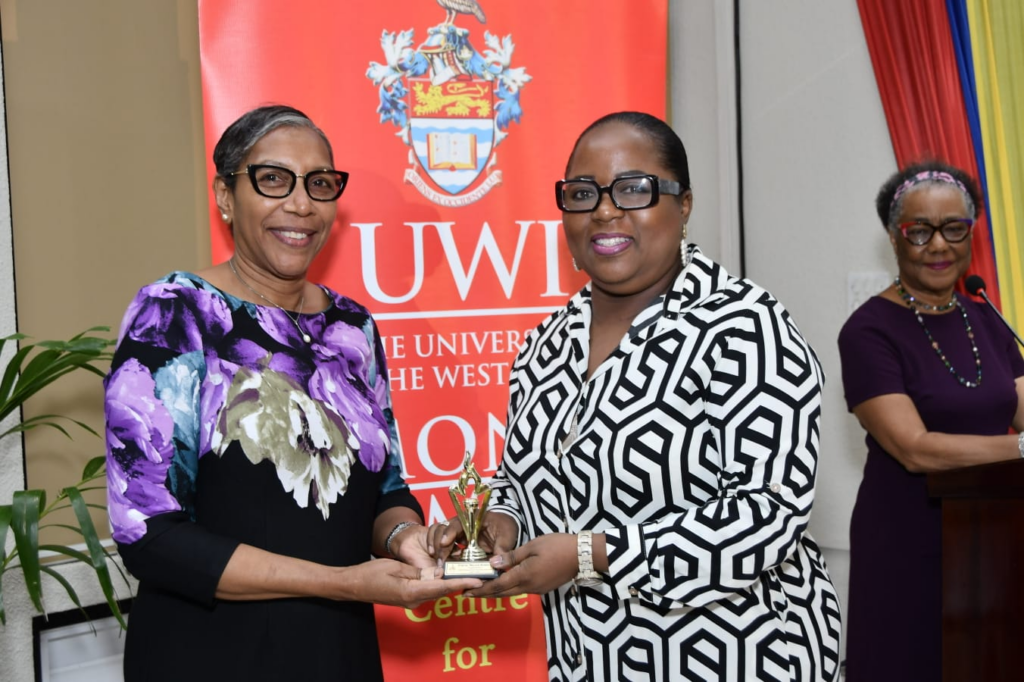
    KINGSTON, JAMAICA – In a ceremony celebrating the quiet backbone of higher learning across the Caribbean, the University of the West Indies (UWI) gathered last Thursday to fête 37 exceptional educators, an event organized by the institution’s Centre for Excellence in Teaching and Learning (CETL) in partnership with the Office of the Deputy Principal.

    At the apex of this year’s honorees was Ethnie Miller Simpson, who claimed the prestigious UWI Distinguished Teaching Award for the 2023–2025 cycle, a recognition reserved for academics who demonstrate extraordinary commitment and innovation in the classroom. Accepting the honor with characteristic humility, Miller Simpson drew heavily on insights shared by keynote speaker Dr Rohan Jowallah, Senior Instructional Designer at the University of Central Florida, to frame her own reflections on modern education.

    One core concept from Jowallah’s address struck a particular chord with the award recipient: “the productive struggle of learning.” Miller Simpson argued that this idea perfectly encapsulates the dual journey of students and educators alike. For learners, it describes the challenging but rewarding work of pushing through complex material to earn a degree, while for teachers, it demands constant adaptation of teaching strategies and course content to keep lessons relevant, engaging, and aligned with a rapidly shifting world.

    Going beyond classroom practice, Miller Simpson outlined a forward-looking agenda for Caribbean education. She emphasized that educators must continuously refine their approaches to ensure that learning translates directly to solving real-world challenges, while keeping pace with shifts across Jamaica, the broader Caribbean region, and the global economy. Most notably, she drew attention to the urgent conversation around “Assessment, Equity and AI: Governance in Caribbean Education,” identifying the meaningful integration of artificial intelligence into teaching as one of the defining challenges for the sector from 2026 onward.

    Miller Simpson stressed that education in the AI era must move far beyond the superficial “cut-and-paste” work that has become increasingly common with generative AI tools. For both students and instructors, she argued, the responsibility now is to foster creativity and practical, applied understanding that delivers value beyond exam scores, preparing learners to contribute meaningfully to workplaces and communities across the region. She also posed a provocative question for regional stakeholders: should the Caribbean prioritize building and retaining ownership of its own homegrown AI systems, rather than relying on foreign-developed tools, to shape the region’s educational and economic future?

    The recognition of these 37 educators comes as the University of the West Indies retains its long-held reputation for academic excellence, holding a spot among the top 3.6 percent of universities worldwide.