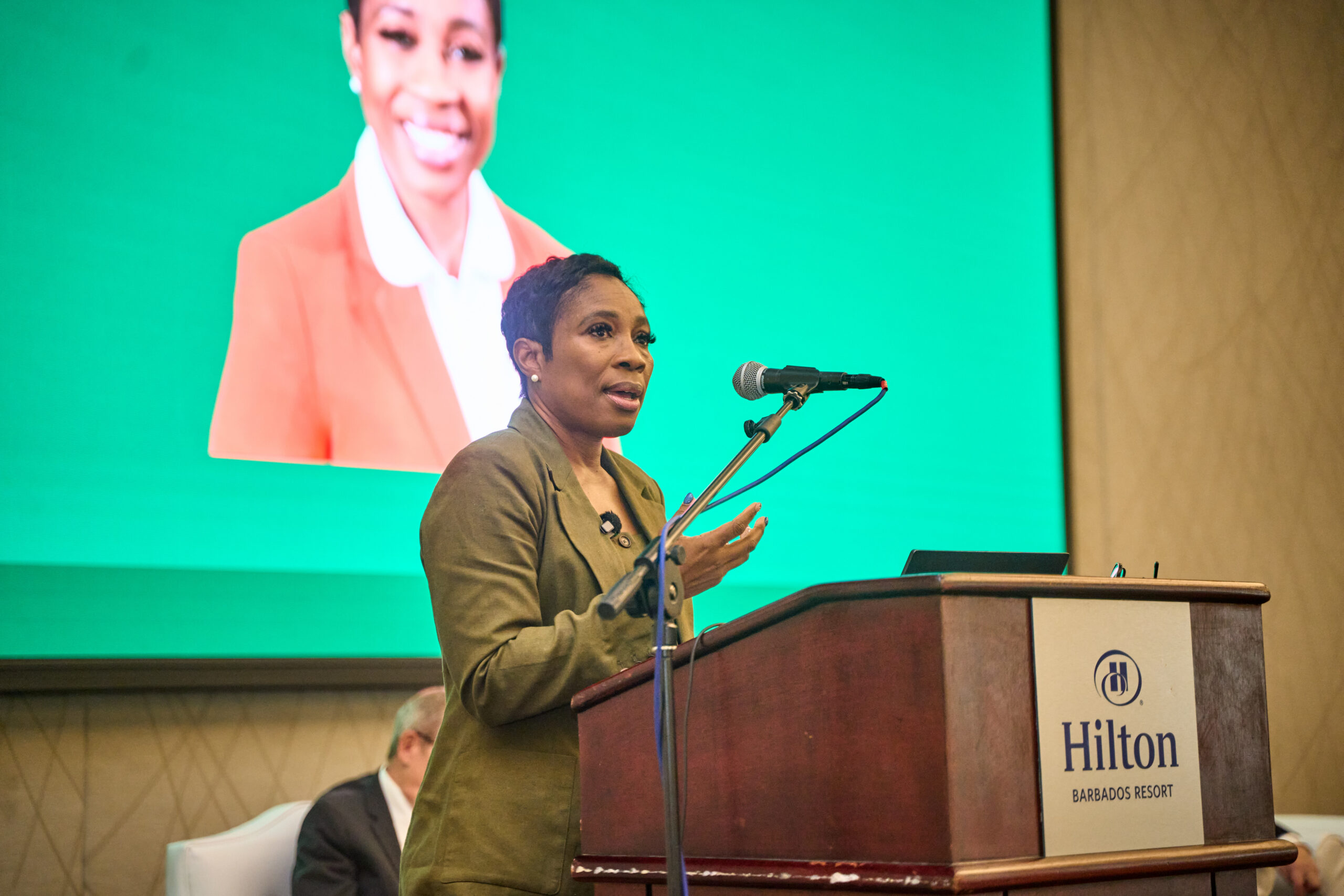
As the Caribbean grapples with a rapidly expanding food import bill that drains critical economic resources, regional leaders are calling for transformative, large-scale private investment to reverse deepening import dependence and kickstart long-term economic restructuring. In a keynote address at the opening of the Regional Food Systems Investment Forum held at Barbados’ Hilton Resort, Barbados’ Agriculture Minister Dr. Shantal Munro-Knight emphasized that incremental, small-bore changes will never deliver the systemic shift the region urgently needs.
Decades of growing reliance on foreign-sourced food has left the Caribbean with a staggering import burden, a trend Dr. Munro-Knight highlighted as a clear wake-up call for an ambitious, investment-centered overhaul of regional food systems. She tied this call to the Caribbean Community (CARICOM)’s landmark 25 by 25 target – an initiative designed to cut the region’s food import bill by 25% by 2025, later expanded with additional goals – noting that the framework was born from a shared recognition that food security demands bold, unified action.
Official data underscores the severity of the challenge: over a recent three-year period, total Caribbean food and agricultural imports hit $13.76 billion, a sum equal to roughly 5% of the region’s entire annual gross domestic product. “That’s not small, that’s not insignificant,” Dr. Munro-Knight told attendees, stressing that the current trajectory is economically unsustainable for small island developing states across the region.
A core part of the minister’s message was a call to reframe how the public and investors view Caribbean agriculture. For too long, she argued, the sector has been reduced to small-scale production and subsistence farming, but it must now be repositioned as a modern, high-potential economic sector packed with lucrative investment opportunities. “The dialogue around food systems has moved beyond just production,” she explained. “What we have come here to talk about today is a conversation that revolves around one of the most significant economic and development opportunities that the Caribbean has to offer.”
Unlike narrow traditional farming frameworks, modern regional food systems span an entire value chain: from logistics and agro-processing to cold storage infrastructure, digital innovation and agricultural technology. Dr. Munro-Knight pointed out that expanding investment across these interconnected segments not only creates strong returns for private investors but also directly strengthens the region’s long-term food security. “When we think about food systems, we have to break out of that traditional frame,” she said. “We can challenge ourselves, and we can look at the big investable opportunities that are there.”
Drawing a parallel to the landmark Bridgetown Initiative, which has reshaped global conversations around climate financing, Dr. Munro-Knight outlined the critical role governments must play in unlocking private capital for food system development. She emphasized that governments are meant to act as catalytic partners, working to “crowd in private capital” rather than bearing the entire burden of investment themselves.
But for private investment to flow at the needed scale, the minister stressed that investors require stable, transparent governance. “Capital needs surety. It needs governments that have clear policies, clear pathways, frameworks, that are transparent and data-driven,” she said.
Dr. Munro-Knight also highlighted technological innovation as a game-changing lever for cutting import dependence. She noted that targeted investment in tech-driven agriculture and modern farming solutions could improve the region’s food production balance by up to 15%, a major gain toward meeting the 25 by 25 target.
In Barbados, this commitment to transformation is already taking shape through the national Strategic Crop Escalation and Production Plan, which prioritizes expanding domestic output of 15 high-demand staple crops. The minister also spotlighted the proposed Barbados-Guyana Food Terminal as a flagship example of the large-scale investment opportunities available. The $25 million infrastructure project, she explained, will leverage Barbados’ strategic geographic location to build a regional logistics hub, strengthen cross-island food distribution networks, and support broader efforts to build a more resilient, self-sufficient Caribbean food system.