博客

  • PSG knock out Bayern to set up Champions League final with Arsenal

    PSG knock out Bayern to set up Champions League final with Arsenal

    In a tense, rain-soaked semi-final second leg at Munich’s Allianz Arena on Wednesday, defending champions Paris Saint-Germain held firm to secure a 1-1 draw against Bayern Munich, booking their spot in the 2025 UEFA Champions League final against English Premier League leaders Arsenal with a narrow 6-5 aggregate victory across the two legs.

    Luis Enrique’s squad carried a narrow 5-4 advantage into the second encounter from a thrilling first leg in Paris a week earlier, and they wasted no time extending their lead against the six-time European champions. Just three minutes after kickoff, Georgian winger Khvicha Kvaratskhelia cut a low pass back across the Bayern penalty area, finding Ousmane Dembele, who drilled a clinical strike into the top corner of the net to put PSG two goals up on aggregate.

    Bayern, who last lifted the Champions League trophy when they defeated PSG in the 2020 Lisbon showpiece, struggled to create clear-cut chances for most of the match, leaving their attacking line largely toothless despite the home crowd’s roaring support. The German side grew increasingly frustrated with first-half refereeing calls, a controversy that added tension to an already high-stakes fixture but failed to shift the momentum of the game in their favor.

    Bayern captain and goalkeeper Manuel Neuer kept his side in the tie with two outstanding saves in the second half, first denying Kvaratskhelia and then turning away a shot from substitute Desire Doue to prevent PSG from putting the result beyond doubt earlier. As the clock ticked into the fourth minute of stoppage time, England captain Harry Kane, who has enjoyed a breakout first season at Bayern, drilled home his 14th Champions League goal of the campaign to level the score on the night. But the late strike came too late to power a Bayern comeback, with the final whistle blowing just moments after kickoff resumed.

    The result means PSG will advance to their second consecutive Champions League final, where they will face Arsenal on May 30 in Budapest. The Allianz Arena already holds special significance for the French giants: it was the site of their maiden Champions League title win over Inter Milan last season. If PSG can defeat Arsenal in Budapest, they will become only the second club to win back-to-back Champions League titles since 1990, joining Spanish giants Real Madrid in achieving that rare feat, and are currently installed as pre-tournament favorites heading into the showpiece fixture following their resilient defensive display against Bayern.

  • Venezuela insists ICJ does not have jurisdiction to hear border dispute with Guyana

    Venezuela insists ICJ does not have jurisdiction to hear border dispute with Guyana

    THE HAGUE, Netherlands — In ongoing high-stakes oral arguments at the International Court of Justice (ICJ), Venezuela has reaffirmed its long-held stance that the United Nations’ highest court for state-to-state disputes lacks authority to rule on its centuries-old territorial conflict with neighboring Guyana. The dispute centers on the resource-rich Essequibo region, a 61,600-square-mile territory that makes up nearly two-thirds of modern Guyana, which Venezuela claims as its own sovereign land.

    Speaking as Venezuela’s second representative to the ICJ, Professor Makane Moise Mbengue pushed back against Guyana’s core argument that the 1899 Arbitral Award — which originally set the disputed border between the two nations — is legally valid and binding. While Mbengue acknowledged that the 1899 award provides historical context for the conflict, he emphasized that it should not block a genuine negotiated resolution between the two South American nations. Both Mbengue and lead Venezuelan representative Samuel Moncada displayed pins showing Essequibo as part of Venezuelan territory during their presentations.

    Moncada opened Venezuela’s arguments earlier this week by rejecting what he called Guyana’s “erroneous and misleading narrative” surrounding the dispute. He stressed that the 1966 Geneva Agreement, reached by both parties to settle the conflict after Venezuela declared the 1899 award null and void in 1962, remains the sole binding legal framework governing the issue. Unlike a court-imposed ruling — which inevitably leaves one side victorious at the other’s expense — Moncada noted the Geneva Agreement was crafted as a peace pact that prioritizes direct bilateral negotiation to reach a practical, mutually acceptable outcome. He added that the agreement is explicitly designed to help the two nations move past the harmful legacy of colonialism, which created the dispute in the first place.

    Guyana first brought the case to the ICJ in 2018, asking the court to formally affirm the legal validity of the 1899 border award. The territorial dispute lay dormant for more than 60 years after the award was issued, until Venezuela revived its claim to Essequibo in 1962. Following the 1966 Geneva Agreement, which established formal mechanisms for peaceful negotiation, years of bilateral talks failed to produce a resolution, leading the United Nations Secretary-General to refer the dispute to the ICJ. The ICJ previously ruled that it has jurisdiction to hear the case, clearing the way for the current merits hearings, where both sides are presenting their full legal arguments.

    During opening arguments that began Monday, Guyana maintained that the 1899 award permanently and definitively settled the border, and that it remains legally binding and entitled to international recognition. But Mbengue countered that the 1899 award is a discredited artifact of British imperialism, and that the ICJ’s earlier jurisdiction ruling did not validate Guyana’s underlying claim. He argued that the ICJ panel failed to account for Venezuela’s core legal position in its initial jurisdiction ruling, and that any lasting resolution must center on the terms of the 1966 Geneva Agreement, not the 1899 award.

    “The real issue is the pursuit of a mutually satisfactory agreement to the controversy generated by the 1899 award, a solution that consign this artifact of British imperialism to the past where it belongs and to chart a way forward — this is the only proper meaning of the Geneva agreement,” Mbengue told the court, noting that Guyana has failed to offer any alternative interpretation of the pact that aligns with the parties’ original goals. He urged the ICJ to examine every provision of the Geneva Agreement, rather than limiting its review to Guyana’s narrow claims. “The court should not be constrained by the allegations that Guyana made,” Mbengue argued. “In particular, it must carefully ascertain whether Guyana’s request remains within the bounds of what the parties to the Geneva agreement sought to resolve. Guyana’s claims cannot exist within the framework established by the Geneva agreement, nor can the court decide on those matters as framed by Guyana.”

    The first round of oral arguments is scheduled to run through three-hour sessions over multiple days, wrapping up next Monday.

  • Spain says hantavirus ship evacuees need new plane to leave Canaries

    Spain says hantavirus ship evacuees need new plane to leave Canaries

    An international public health emergency centered on a hantavirus outbreak aboard a Dutch cruise ship took an unexpected turn Wednesday, when a flight carrying evacuees from the vessel was forced to divert to Spain’s Canary Islands and later grounded by a critical technical fault, Spain’s national health ministry has confirmed.

    The crisis began late last week, when three passengers aboard the MV Hondius, a cruise ship sailing off the coast of West Africa, died from what public health officials suspect is hantavirus—a rare rodent-borne pathogen that spreads through contact with infected animals’ urine, droppings, or saliva. The World Health Organization was alerted to the outbreak over the weekend, triggering a multi-nation effort to evacuate remaining passengers and crew.

    Two flights carrying a total of three evacuees departed Cape Verde, where the ship had been anchored, en route to Amsterdam. One of the aircraft, which was originally scheduled to refuel in Morocco, was denied landing permission by Moroccan authorities, forcing it to divert to Gran Canaria Airport in the Canary Islands for refueling. During the unscheduled stop, the medical team onboard reported a failure in the electrical system that powers life support for a patient being evacuated.

    Spanish health ministry officials confirmed the patient remains onboard the grounded aircraft, connected to external power from the airport while awaiting replacement aircraft to continue the journey to the Netherlands. Officials emphasized that the isolated patient poses no public health risk to people on the ground and will remain contained until the situation is resolved, though no timeline for a new flight has been released.

    Regional authorities in the Canary Islands have taken a harder line, however, confirming that no passengers will be allowed to board or disembark the grounded plane. Regional officials say the patient’s isolation bubble, designed to prevent potential transmission of the virus, was compromised during the unscheduled stop.

    Flight tracking data from Flightradar24 shows the plane was originally scheduled to make a second stopover in Malaga, southern Spain, before reaching its final destination in Amsterdam. The remaining evacuees from the MV Hondius face further uncertainty as well: Spanish Health Minister Monica Garcia confirmed the ship itself will dock in Tenerife, one of the Canary Islands, by Saturday to allow for mandatory medical screenings and coordinated passenger repatriation.

    The decision to bring the ship to the archipelago has already sparked political tension, with Canary Islands regional authorities rejecting the plan and calling for all medical care and repatriation operations to be carried out from Cape Verde, where the ship was originally anchored.

  • Mexico threatens World Cup ban for no-show players

    Mexico threatens World Cup ban for no-show players

    With just five weeks remaining until Mexico kicks off its 2026 World Cup campaign on home soil, a high-stakes dispute between the Mexican Football Federation (FMF) and domestic club sides has thrown the nation’s final preparations into chaos. In a sharp, unprecedented ultimatum issued Wednesday, national team leadership announced that any domestic-based player who fails to report for the scheduled pre-tournament training camp in Mexico City will be immediately excluded from the final World Cup squad.

    The conflict stems from a scheduling conflict that violates FIFA’s official international match calendar framework: the FMF scheduled the three-day preparation camp outside of the governing body’s designated international window, leaving clubs facing critical continental and domestic fixtures with a direct conflict of interest. The most high-profile dispute centers on Liga MX side Toluca, which is set to host Los Angeles FC in the decisive second leg of the CONCACAF Champions Cup semi-finals Wednesday. The match is scheduled to kick off just 30 minutes before the formal opening of Aguirre’s training camp, leaving two of Toluca’s star Mexico internationals — Alexis Vega and Jesus Gallardo — caught between club and country obligations.

    Multiple local Mexican football reports confirm that Vega and Gallardo trained with their Toluca teammates on Tuesday, and Toluca head coach Antonio Mohamed has publicly signaled his intention to start both players in the critical continental semi-final clash. The pair’s decision to prioritize club commitments has already sparked a ripple effect across Liga MX, drawing fierce pushback from another top Mexican side, Chivas de Guadalajara. Chivas had initially agreed to release five of its called-up internationals to the national camp despite the club preparing for a decisive Liga MX playoff quarter-final fixture this coming weekend. After seeing Toluca refuse to release its stars, Chivas president Amaury Vergara reversed course and recalled all five of his club’s players from the national camp: Raul Rangel, Luis Romo, Brian Gutierrez, Roberto Alvarado and Armando Gonzalez.

    In a public post on social platform X, Vergara emphasized the importance of collective adherence to previously struck deals, writing, “Agreements are valid only when all parties respect them.” All 20 players called to this training camp are currently based in the Mexican domestic league, and the camp is being hosted at the FMF’s state-of-the-art High Performance Center in Mexico City. The current standoff contradicts a deal reached back in February between the FMF and Liga MX club owners, which stipulated that clubs would release their players after the conclusion of the domestic regular season and the first leg of the CONCACAF Champions Cup semi-finals.

    The pre-World Cup training camp is a precursor to three critical warm-up matches Mexico has scheduled ahead of the tournament: against Ghana on May 22, Australia on May 30, and Serbia on June 4. Mexico is set to open its World Cup Group A campaign at the iconic Estadio Azteca in Mexico City on June 11, with a opening group stage clash against South Africa.

  • Dominica PM expresses support for Barnett’s reappointment as Caricom secretary general

    Dominica PM expresses support for Barnett’s reappointment as Caricom secretary general

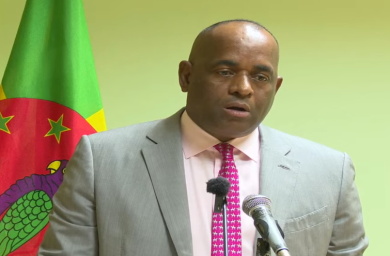
    Amidst a growing public rift across the Caribbean Community (Caricom) over the reappointment of Belizean economist Dr. Carla Barnett as the bloc’s secretary-general, Dominica’s Prime Minister Roosevelt Skerrit has publicly thrown his full weight behind the move, confirming his government’s endorsement of the outcome of the regional vote.

    Speaking at a press briefing held in Roseau on Wednesday, Skerrit made clear that from his administration’s perspective, Barnett’s reappointment is a settled matter. “As far as I’m concerned, Dr. Carla Barnett has been reappointed as secretary-general, and in Dominica’s style, we are team players, we support the decision and we move on,” Skerrit told reporters. He added that while he would not object to reopening discussions if the Caricom Bureau or Conference of Heads of Government chooses to do so, the existing process already followed proper procedure, delivered a clear majority in Barnett’s favor, and should be respected as the final outcome.

    The controversy surrounding Barnett’s second term dates back to February’s Caricom summit hosted in Basseterre, St. Kitts and Nevis. In March, Caricom chairman and St. Kitts and Nevis Prime Minister Dr. Terrance Drew released a short statement confirming that Barnett had secured the “required majority” of regional leader votes to earn reappointment. However, the process has been challenged by several high-profile regional leaders ever since.

    Prime Minister Kamla Persad-Bissessar of Trinidad and Tobago, who was absent from the closed-door retreat where the vote was held, has openly questioned the legitimacy of the procedure. She has rejected Drew’s claim that Trinidad and Tobago was not uninvited to the meeting, and is demanding access to official meeting minutes, documentation of Barnett’s performance appraisal, and records of the 2021 appointment process to verify that current procedures align with the rules established for that cycle. Though Trinidad and Tobago first called for a special regional leaders’ meeting to debate the dispute, it did not attend a virtual heads gathering held to address the issue in April.

    Last month, the debate escalated when Sir Ronald Sanders, Antigua and Barbuda’s ambassador to the United States and the Organization of American States, publicly called on Barnett to step down. Speaking on ABS Television, Sanders argued that the ongoing controversy created a barrier to regional integration progress. “If I were the secretary general of Caricom and I’m being quite serious here and this had occurred, I would have resigned and I would have resigned because I would have said I must not stand in the way of Caribbean integration and the movement forward,” Sanders said.

    Jamaica’s Prime Minister Andrew Holness has meanwhile pushed for a full special heads of government meeting to resolve the deadlock, noting that public discourse around the dispute has sown widespread unease across the bloc. Speaking to the *Trinidad Guardian* in New York in April, where he was honored by the American Foundation for the University of the West Indies, Holness said behind-the-scenes talks are already underway to organize direct engagement between all regional leaders. “I think it is distressing for a lot of persons within the region regarding what is being said in the public domain, but I know that all the heads are working behind the scenes to have this matter resolved,” he said, adding that further diplomatic consultations are imminent, including a planned conversation with Persad-Bissessar as part of the process.

  • Three-year PIOJ/Honey Bun study to focus on MSME growth

    Three-year PIOJ/Honey Bun study to focus on MSME growth

    KINGSTON, Jamaica — A new collaborative effort between Jamaica’s top planning agency and a local private foundation is set to unlock growth potential for small community-based businesses across the island, launching a three-year pilot study designed to strengthen Jamaica’s entire micro, small and medium enterprise (MSME) ecosystem.

    The Planning Institute of Jamaica (PIOJ) and the Honey Bun Foundation formalized their partnership with a signed memorandum of understanding (MOU) on April 30, marking the official start of the public-private partnership (PPP) focused on targeted support for under-resourced community enterprises. In an official statement released Wednesday, PIOJ outlined the core scope of the ambitious new project.

    Over the course of the pilot, the partnership will track the growth and development of 50 nano, micro, small and medium enterprises selected through the government’s Community Renewal Programme (CRP). All selected businesses have been identified as requiring customized support to scale their operations, connect to critical industry resources, and build a competitive edge within Jamaica’s fast-evolving MSME landscape.

    Beyond direct support to the 50 pilot enterprises, the initiative will also conduct a comprehensive mapping of Jamaica’s national entrepreneurial ecosystem. This landscape analysis is designed to give business owners clearer guidance at every stage of their company’s development, cutting through bureaucratic and logistical friction to accelerate sustainable growth.

    All monitoring, data analysis and ecosystem mapping will be carried out using The GAPP App, the Honey Bun Foundation’s proprietary business diagnostic platform. Currently, the application helps small and nano enterprises identify operational gaps in their workflows and connect owners to tailored support services. For this pilot project, the tool will be updated with new functionality to pinpoint where each participating business falls within the standard business life cycle.

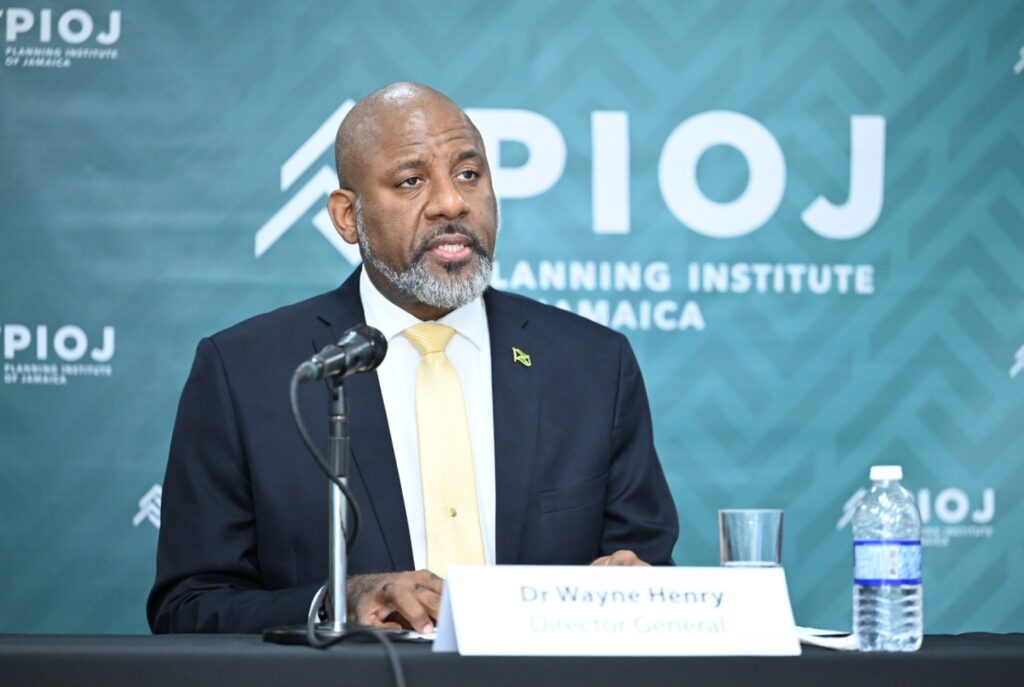
    Dr. Wayne Henry, Director General of the PIOJ, explained that understanding a business’s position in its life cycle is a foundational step for delivering targeted, effective support. “It is recognised that if we are to provide targeted support to these community businesses, understanding the stages in the business life cycle is necessary and significant, as it allows for proactive risk management, optimised funding strategies and effective strategic planning,” Henry said.

    He emphasized that the cross-sector collaboration aligns with core missions of both organizations: building an enabling, accessible business environment that empowers MSME owners to unlock their full potential. “This collaboration between the PIOJ and the Honey Bun Foundation is vital and is being executed within the context of both entities’ defined roles to create an enabling business environment that will empower the MSME sector and position it to continue contributing to the growth of the Jamaican economy,” Henry added.

    Michelle Chong, founder of the Honey Bun Foundation, echoed the sentiment, highlighting that strategic public-private collaboration is a key driver of inclusive national development. “Through strategic partnerships, innovation and a strong community focus, we can create sustainable pathways for entrepreneurs to thrive,” Chong said. “This initiative is about equipping businesses with the tools, guidance and opportunities they need to grow, compete and contribute meaningfully to Jamaica’s economic future.”

  • National Lab workers call for director to step down amid ‘bullyism’

    National Lab workers call for director to step down amid ‘bullyism’

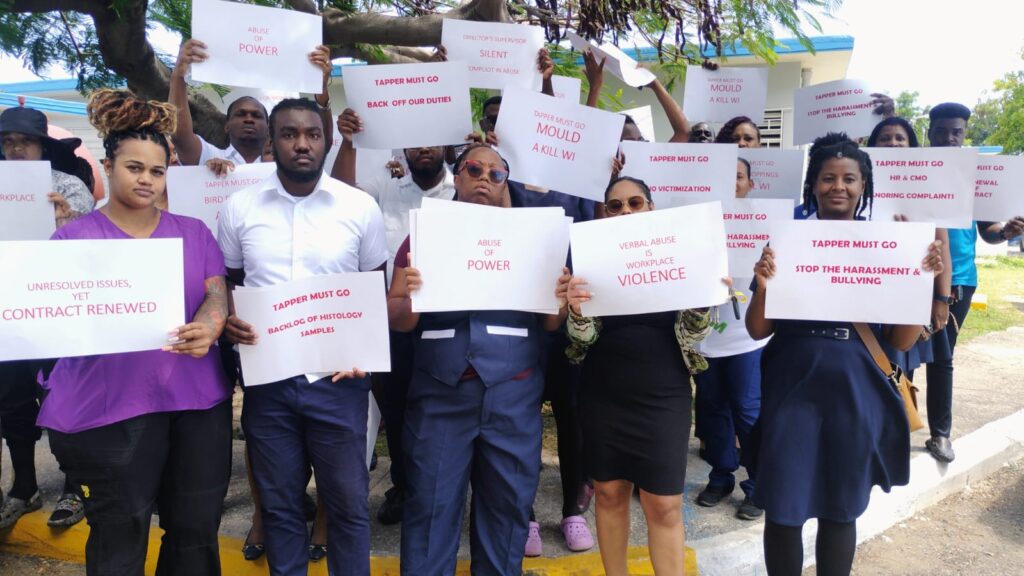
    A mass walkout by staff at Jamaica’s National Public Health Laboratory in Kingston brought critical public health services, including routine blood testing, to a halt on Tuesday, as dozens of employees demonstrated for hours against the leader of the national laboratory system, Dr. Marlene Tapper. Workers gathered in the facility’s parking lot from early morning to mid-afternoon, holding handwritten placards to air long-simmering grievances that accuse Dr. Tapper of fostering a pervasive hostile and toxic work culture.

    The industrial action was directly triggered by Dr. Tapper’s decision to appear on-site, despite an ongoing investigation into multiple formal complaints against her that requires her to work remotely until the probe concludes, according to union representatives and protesting staff. Tensions had already escalated in recent weeks after Dr. Tapper issued an internal memorandum announcing a mandatory rotation of roughly 30 employees to new positions, many of which the workers say require specialized training and experience they do not possess.

    Anonymous employees shared detailed accounts of escalating abuse and intimidation under Dr. Tapper’s leadership. One female worker claimed that a safety official aligned with Dr. Tapper physically shoved staff members when entering the building on the day of the protest, while multiple workers outlined patterns of verbal harassment. One male worker recalled an incident where Dr. Tapper locked a junior officer in her office and publicly insulted him as “damn dunce” (a derogatory term for unintelligent) over a minor miscommunication, marking just one example of repeated belittling in professional settings.

    Protesters also highlighted unresolved workplace hazards that have been ignored for months: bird waste accumulation at the building entrance, untreated mould growth inside lab spaces, and unsanitary working conditions that only prompted remedial action after staff threatened to stop work. Employees add that this is not the first outbreak of discontent: a major bullying incident two years ago was escalated to the Ministry of Labour, but workers say no meaningful action was ever taken to address Dr. Tapper’s behavior. Complaints have been formally logged with relevant government bodies as early as 2024, with multiple staff raising flags over misgovernance, overreach into professional role boundaries, and consistent intimidation tactics to force workers to take on tasks outside their job descriptions.

    St. Patrice Ennis, general secretary of the Union of Technical Administrative and Supervisory Personnel, the body representing lab workers, confirmed the widespread scope of the grievances. Ennis explained that authorities had already agreed to convene an independent investigative panel to review the complaints, and as part of that process, Dr. Tapper was instructed to stay off-site until the probe concludes. “She was supposed to remain off the premises and not do anything to provoke workers. She presented herself here, and that is what triggered this protest action,” Ennis told local media.

    When reporters reached out to Dr. Tapper for comment on Wednesday, she ended the call immediately after saying “good morning and goodbye,” offering no response to the multiple allegations against her. Protesters are demanding Dr. Tapper’s immediate removal from her post, arguing that her leadership has deeply demoralized staff and created a high-stress environment that puts critical public health work—including infectious disease testing—at risk. Many workers have even reported being too intimidated to report to their shifts regularly, amid ongoing claims of harassment and favoritism.

    The investigative panel is expected to review all formal complaints and issue binding recommendations next steps for the lab’s leadership, while union officials continue negotiations with the Ministry of Health to resolve the standoff and restore normal operations to the critical public health facility.

  • Neymar and Robinho Jr publicly reconcile after altercation

    Neymar and Robinho Jr publicly reconcile after altercation

    In Pedro Juan Caballero, Paraguay, a tense behind-the-scenes conflict between Brazilian football star Neymar and his 18-year-old Santos teammate Robinho Junior has been resolved, with the Paris Saint-Germain icon issuing a public apology for crossing a line by slapping the young prospect during a weekend training session. The incident, which first made headlines earlier this week, stemmed from a heated moment during a Sunday practice drill: Brazilian media reports confirm Neymar, Brazil men’s national team’s all-time leading goalscorer, took offense after being dribbled past by Robinho Jr., the son of former AC Milan, Real Madrid and Manchester City striker Robinho. Immediately following the altercation, Santos club officials launched an internal investigation into the behavior of both players, adding extra scrutiny to the already high-profile clash.

    Following Santos’ 1-1 Copa Sudamericana draw with Recoleta on Tuesday, Neymar opened up to reporters, addressing calls for a public apology directly. “If you want an apology in front of the press, here it is. I had already apologised to him and to his family. I crossed the line,” the 34-year-old striker stated, framing the incident as a common, if unacceptable, moment of tension in the sport. “He’s a boy I like very much, for whom I have a special affection. It happens in football; you argue with your friend, your brother.”

    Robinho Jr. has since confirmed Neymar’s account of the confrontation and confirmed the pair have buried the hatchet, noting the situation was particularly difficult for him given Neymar’s longstanding status as a personal hero. “Everything is resolved,” the teen prospect told reporters after Tuesday’s match. “It’s a situation that upset me because he’s been my idol since childhood… I talked about it with my parents and I accept his apology.” On the pitch during the game, the pair signaled their repaired relationship: Neymar netted Santos’ only goal of the match, and invited Robinho Jr. to join him in the celebration with a public hug.

    Beyond the club conflict, Neymar is currently in a critical period as he pursues a spot on Brazil’s 2026 World Cup roster. Sidelined from international play since October 2023 due to recurring injury issues, the veteran striker has made clear he still hopes national team manager Carlo Ancelotti will select him for the tournament, which kicks off on June 11 and runs through July 19. Ancelotti is set to announce his final 26-man squad on May 18, leaving Neymar just weeks to prove his fitness and form ahead of the global competition.

    Notably, the incident has drawn additional attention due to Robinho Jr.’s father: 42-year-old Robinho, a former Santos teammate of Neymar and one of Brazil’s most recognizable strikers of the 2000s, is currently serving a prison sentence in Brazil following a conviction for gang rape handed down by Italian courts.

  • World Bank, IICA launch AgriConnect initiative in Jamaica

    World Bank, IICA launch AgriConnect initiative in Jamaica

    KINGSTON, JAMAICA – Two leading global development institutions, the World Bank Group (WBG) and the Inter-American Institute for Cooperation on Agriculture (IICA), have officially launched the landmark AgriConnect initiative in Jamaica, kicking off a global effort to expand rural digital access, boost digital inclusion, and integrate small-scale family farmers into formal local and global value chains.

    At its core, the transformative program sets an ambitious target: by 2030, it will deliver targeted support to as many as 300 million smallholder producers worldwide, guiding the shift from low-yield subsistence farming models to scalable, commercially viable agricultural enterprises. Jamaica’s role as an early implementation site marks a key milestone in the WBG’s broader global strategy to drive inclusive, sustainable transformation of the international agrifood sector.

    Speaking at the official launch event, Jamaica’s Minister of Agriculture Floyd Green framed AgriConnect as a transformative opportunity for the island nation. Green emphasized that the initiative’s core philosophy, which combines institutional partnership with on-the-ground farmer support, aligns perfectly with Jamaica’s ongoing efforts to build a more resilient, technologically advanced, and inclusive agricultural sector that works for all producers.

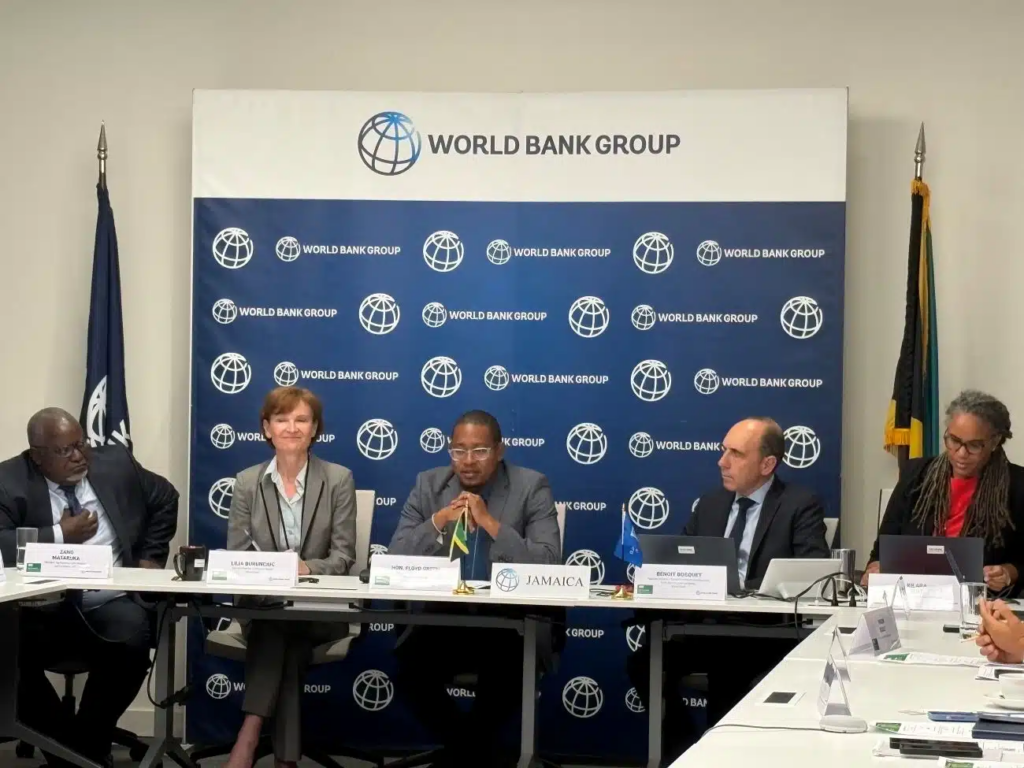
    The launch drew senior leadership from both partnering institutions, including Lilia Burunciuc, the World Bank’s Country Director for the Caribbean, and Kent Coipel, IICA’s Jamaica-based representative. Both leaders reaffirmed the longstanding collaborative alliance between the inter-American hemispheric body and the World Bank, underlining their shared commitment to strengthening agricultural productivity and resilience across the Caribbean region. Additional senior attendees included Benoît Bosquet, the World Bank’s Director of Sustainable Development for Latin America and the Caribbean, and Diego Arias, Practice Manager for Agriculture and Food for the same region.

    Coipel, speaking on behalf of IICA, highlighted the institute’s decades-long track record of supporting small and medium-sized agricultural producers across the Caribbean, with a longstanding focus on building producer capacity, delivering export readiness training, and forging sustainable connections between farmers and formal markets. “Strengthening the organizational capacity of rural communities is a fundamental pillar of IICA’s technical cooperation work,” Coipel stated at the event.

    The launch was followed by a series of working sessions that brought together key stakeholders across the agricultural ecosystem. Derrick Deslandes, President of Jamaica’s College of Agriculture, Science and Education (CASE), and Jacqueline Sharp, director of a family-owned coffee enterprise focused on local marketing and international export, led discussions on actionable pathways to expand smallholder market access and streamline integration across national food value chains.

    A separate breakout exchange centered on strategies to expand small producers’ access to cutting-edge agricultural technologies, and explored new frontiers of scientific and digital innovation for Jamaica’s agricultural sector, generating actionable takeaways for local implementation. Participants in that session included World Bank agricultural specialist Winston Daes; Aura Cifuentes, Latin America and Caribbean Director at development non-profit Co-Develop; and Arturo Ramírez, Technical Director of Isratech Jamaica Limited, a firm that delivers sustainable agricultural solutions focused on water management and renewable energy alternatives to fossil fuels.

    Across the Americas, IICA is one of many core institutional partners backing the WBG’s AgriConnect vision. The initiative also brings together multilateral financial institutions, private sector actors, philanthropic foundations, and global knowledge partners to align resources around shared goals for smallholder empowerment.

    On a global scale, AgriConnect benefits from an estimated annual financing envelope of US$9 billion, with the additional potential to mobilize up to US$5 billion in supplementary private and public investments. These resources will be used to strengthen innovation systems, expand accessible agricultural financing, and build supportive service ecosystems tailored to the needs of small-scale producers.

    Per project organizers, AgriConnect was developed in response to findings from a World Bank-convened expert panel, which identified the agriculture and agribusiness sector as one of the five global industries with the greatest potential to absorb the large number of young people entering the global workforce in the coming decade.

  • Nominations now open for WATA Hydrate to Educate initiative

    Nominations now open for WATA Hydrate to Educate initiative

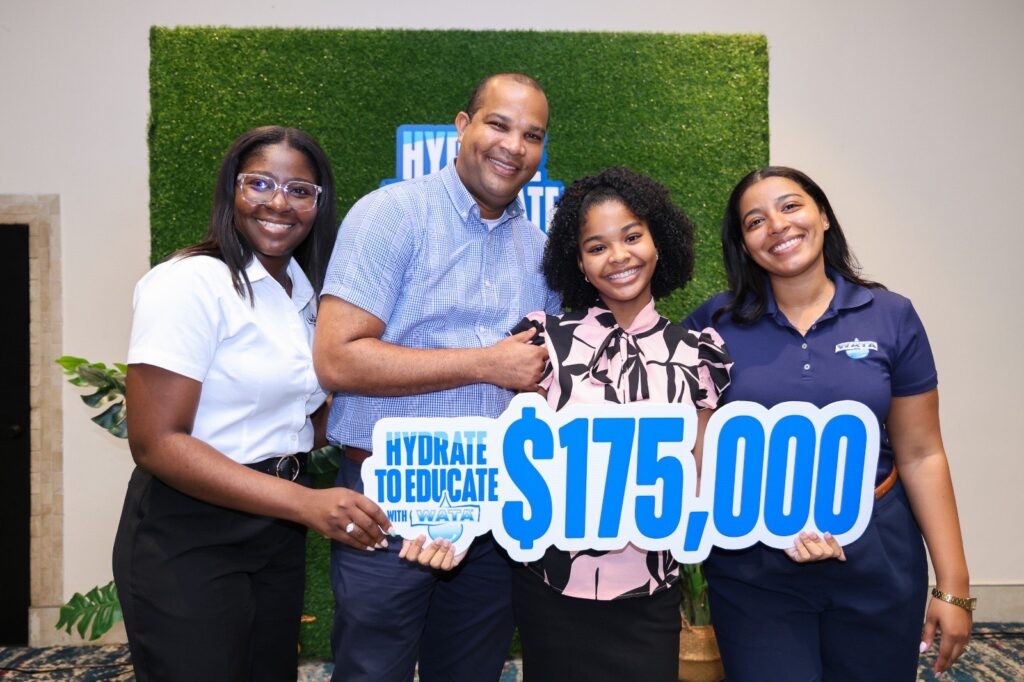
    KINGSTON, Jamaica — A major new investment in Jamaican secondary education is now open for applications, as bottled water brand WATA launches its 2026 Hydrate to Educate initiative with a total commitment of more than JA$12 million to support students and school infrastructure across the island.

    Now in another annual cycle, the community-focused program splits its funding across two core impact areas: direct individual support for students and institutional development grants for schools. Thirty qualifying secondary students will each receive JA$200,000 in unrestricted educational assistance, which can be put toward tuition costs, required course materials, daily transportation fares, and other unmet academic needs that often create barriers to consistent schooling for low-income youth.

    On the institutional side, 14 Jamaican secondary schools will receive targeted grants to advance campus improvement projects. Five secondary schools located in western parishes, an area still recovering from the devastation of Hurricane Melissa, will each receive JA$1 million to support recovery and development work. An additional nine schools spread across all other regions of the island will receive JA$200,000 each for their own campus upgrade projects.

    Brittany Thwaites, brand manager for the WATA portfolio at Wisynco Group, the parent company behind the initiative, explained that Hydrate to Educate is built on a core philosophy that sustainable educational progress requires investment at both the individual and institutional level. “This program has always been rooted in the belief that every young Jamaican deserves equal access to the resources they need to pursue their education, no matter their financial background,” Thwaites shared in a statement announcing the 2026 nomination cycle. “Year after year, we see firsthand how transformative this support is for students, their families, and entire school communities. We’re proud to keep expanding the program to reach more vulnerable communities across Jamaica.”

    Thwaites emphasized that the 2026 program has been structured to address the ongoing recovery needs of western Jamaica, where Hurricane Melissa caused widespread damage to public infrastructure, including school facilities. “This year, we made a deliberate choice to prioritize additional support for schools in western parishes that are still working to bounce back from Hurricane Melissa,” she said. “Education is one of the most critical foundations for long-term community recovery and progress. Through this initiative, WATA is working to help rebuild safe, supportive learning spaces where students can continue to learn, grow, and build brighter futures, even after disaster.”

    Nominations for individual student grants are open to eligible secondary students from every parish across Jamaica. Any third party who can speak to a student’s financial need — including parents, guardians, teachers, coaches, and community leaders — may submit a nomination. Submissions must include details about the student’s personal background, current financial circumstances, and a description of how the grant would remove barriers to their ongoing education.

    For institutional grant applicants, funding is reserved for projects that directly improve the overall campus learning environment, including critical infrastructure repairs, expansion of learning resource centers, accessibility upgrades, and other campus-wide needs that align with the program’s mission.

    As previously noted, a dedicated portion of the 2026 funding is earmarked specifically for hurricane-impacted western schools, to accelerate their recovery work and help them rebuild stronger, more resilient campuses for their student bodies.

    Nominations for both student and institutional grants will close at the end of the day on June 30, 2026. Interested parties can submit nominations or access full program details by visiting the official program website at educate.wisynco.com.