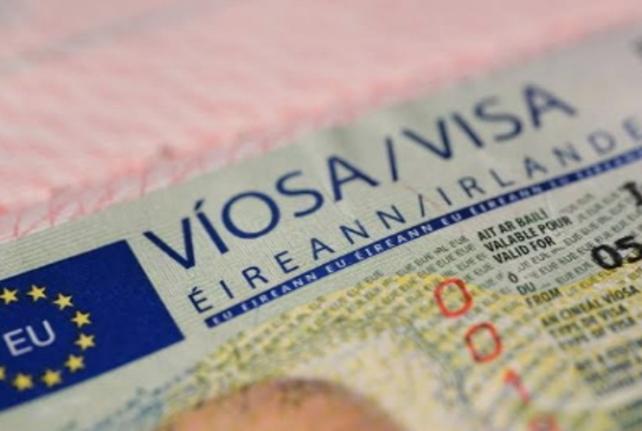
In a sudden policy shift that has caught Caribbean leadership off guard, Ireland has implemented new mandatory visa requirements for all citizens of St Lucia seeking to enter or transit through the European nation, a move that St Lucia’s prime minister confirms came with no advance formal notification from Irish authorities.
Addressing reporters on Monday — the same day the new regulation entered into force — St Lucia Prime Minister Phillip Pierre acknowledged that Dublin holds full authority to set its own domestic immigration policy, and he cannot publicly speculate on the specific motivations behind the decision. He clarified that St Lucia is not the only small nation targeted: Ireland has imposed identical visa rules on other Caribbean states including St Kitts and Nevis and Trinidad and Tobago, as well as the Central American country Nicaragua.
While Pierre emphasized he has no power to reverse Dublin’s policy change, he made clear St Lucia does not accept the move as an inevitable outcome. “It is not something we’re happy about,” he said, adding that he holds out hope that Irish authorities will reconsider the restriction in the future. He also noted that St Lucia retains diplomatic and multilateral tools to advance its position, including its voting power at the United Nations, which the country will deploy strategically to advocate for its interests.
Pierre confirmed he first received official notification of the policy change from Ireland’s embassy in Canada on June 12, just four days before the restrictions took effect. The new requirements apply to all passport holders, including those holding diplomatic and service passports, and even extend to travelers passing through Irish airports on connecting itineraries, who now must obtain a transit visa before travel.
To avoid disrupting pre-planned trips, Ireland has put in place a transitional grace period: St Lucia citizens who booked their travel to Ireland before June 15, 2026, and complete their entry and exit from the country before July 14, 2026, will be exempt from the new rule, as long as they hold all required standard travel documentation including a valid passport and confirmed travel tickets. Ireland advises all travelers with existing bookings to check the official Immigration Service Delivery website for updated guidance.
In the official notification sent to St Lucia’s government, Ireland framed the new rule as part of a broader effort to align its immigration rules with the United Kingdom as part of the Common Travel Area agreement that governs free movement between the two jurisdictions. Pierre added that Irish authorities have advised all prospective applicants that visa processing across all categories is currently estimated to take between eight and 10 weeks.
The policy change, Pierre argued, highlights a growing global trend toward anti-immigration sentiment and growing nationalist insularity that demands closer collective action from small Caribbean states. He stressed that the development reinforces why regional integration through the Caribbean Community (CARICOM) is more critical than ever for small island nations.
“That’s why CARICOM is so significant, because we have to face these challenges alone,” Pierre said. “No one will assist us. No one will care about us. We have to work together.” He added that the shift by Ireland, a developed Western nation, fits into a broader pattern of wealthy countries adopting restrictive anti-immigration policies to score domestic political gains, a trend over which small developing states have little direct influence.
Pierre noted that global policy shifts targeting migration are not limited to Ireland, pointing to parallel changes in the United Kingdom driven by domestic political calculations, and emphasized that regional coordination is the only viable path for Caribbean nations to protect the mobility interests of their citizens going forward.