博客

  • Anti-money laundering mechanism to scrutinise non-financial businesses

    Anti-money laundering mechanism to scrutinise non-financial businesses

    GEORGETOWN, Guyana – July 16, 2026 – Guyana is moving forward with a sweeping new anti-financial crime initiative, launching the Guyana Compliance Commission (GCC) to bring high-risk non-financial industries including law firms, accounting practices, automobile dealerships, and pawnbroking businesses under enhanced regulatory scrutiny for potential money laundering activity, Attorney General Anil Nandlall announced this week.

    Speaking at the opening of the 9th Annual General Meeting for the Assets Recovery Inter-Agency Network of the Caribbean (ARIN-CARIB) on Wednesday, Nandlall explained that the targeted sectors were selected for heightened oversight because they regularly facilitate large-scale transactions that carry elevated risk of being exploited for illicit financial activity. “They do a lot of transactions that have money laundering implications,” Nandlall told local outlet Demerara Waves Online News in an interview following the announcement.

    Under the new regulatory structure, the GCC will operate as a specialized supervisory body reporting directly to Guyana’s existing Financial Intelligence Unit (FIU). The government has targeted full operational activation of the commission by November 2026, ahead of the upcoming conference of the Caribbean Financial Action Task Force (CFATF), where Guyana is scheduled to present a progress update on its implementation of reforms outlined in the body’s fourth round of cross-national mutual evaluation.

    The path for Caribbean nations to roll out this type of expanded oversight cleared recently following a landmark ruling by the United Kingdom’s Privy Council in a Jamaican legal case. The ruling clarified that while attorney-client privilege remains protected, legal professionals’ overarching duty to uphold national anti-money laundering law takes precedence when suspicious transactions are involved. Nandlall emphasized that this ruling aligns with the new regulatory framework Guyana is implementing: “They don’t have to say what their clients tell them but once they conduct a transaction of a particular type and volume, they have to report it. That is the way the world is running.”

    Established under dedicated new legislation, the GCC has already completed its initial setup phase: a governing board led by former New Building Society director Anil Beharry has been appointed, and eight full-time staff positions have recently been approved to fill out the commission’s operational team.

    Nandlall framed the creation of the GCC as a critical milestone in reinforcing the integrity of Guyana’s financial system. “This represents a significant step forward in strengthening Guyana’s supervisory framework for designated non-financial businesses and professions. As the Commission continues to expand its operational capacity, it will play an increasingly important role in protecting the integrity of Guyana’s financial system through effective supervision, enhanced compliance monitoring and stronger engagement with reporting entities,” he said.

    Beyond the new compliance commission, Nandlall confirmed that the Guyanese government is also developing a dedicated regulatory and supervisory framework for virtual assets and virtual asset service providers, as part of ongoing legislative reforms designed to align the country’s financial rules with global anti-money laundering and counter-terrorist financing standards.

  • Morales Ojeda observes resuscitation efforts in celebration of July 26th

    Morales Ojeda observes resuscitation efforts in celebration of July 26th

    On the lead-up to the 73rd anniversary of the historic attacks on the Moncada and Carlos Manuel de Céspedes barracks, Cuba’s top party official Roberto Morales Ojeda has wrapped up an inspection tour of Pinar del Río, the province selected to host the country’s main National Rebellion Day commemorations, where he stressed that all anniversary-linked infrastructure projects must deliver long-term, improved public services.

    Morales Ojeda, who serves as a member of the Political Bureau and Secretary of Organization of the Central Committee of the Communist Party of Cuba, used the tour to highlight that every project tied to the July 26 commemoration must prioritize quality and sustainable outcomes. All ongoing upgrades, he noted, are intended to elevate public access to critical services across key sectors including healthcare, education, culture, and sports.

    “We must defend the rational use of resources,” Morales Ojeda stated during the tour, adding that all completed work must be built to last for years to come.

    One of the key stops on the itinerary was the operating wing of Pepe Portilla Pediatric Hospital, where major renovation works are now entering their final phase. Speaking to construction teams and medical staff at the site, Morales Ojeda emphasized that investments in healthcare infrastructure are always a critical priority, even amid constrained resources. He praised the unwavering dedication of the province’s healthcare workforce, who continue to save lives daily despite facing significant systemic and material challenges.

    He specifically credited the health sector’s consistent strong performance in Pinar del Río as a core factor that led to the province being selected to host this year’s national main anniversary events. Currently, a wide range of rehabilitation projects are underway across the province’s healthcare facilities, including the Abel Santamaría Cuadrado General Teaching Hospital, multiple local polyclinics, community doctor’s offices, and maternity care homes. More than 50 public and private enterprises have contributed to these works, which have already earned widespread positive feedback from local residents, Morales Ojeda confirmed.

    Beyond healthcare infrastructure, the party official also visited the monument honoring the Saíz Montes de Oca brothers, a iconic provincial landmark created by sculptor Enrique Ávila that first opened to the public in 1992. The site is currently undergoing its third full restoration, and after meeting with the restoration team, Morales Ojeda called the upgraded project a meaningful gift to the province, honoring its unique historical identity.

    The tour also included two key cultural and ceremonial venues for the upcoming anniversary: the José Jacinto Milanés Theater, which is under renovation to host the official anniversary artistic gala, and the central public square that will hold the main national commemoration event. Morales Ojeda inquired into the progress of ongoing works at both sites, and pressed organizers to prioritize outstanding preparation tasks in the remaining lead-up to July 26.

    He urged all involved teams to maximize the time left before the commemoration, noting that the preparation process should leave Pinar del Río a more attractive, functional province for local residents long after the anniversary celebrations conclude.

    In closing remarks during the tour, Morales Ojeda commended the people of Pinar del Río for their resilience, proactive problem-solving approach, and coordinated organizational system that has allowed the province to advance preparations even amid the country’s current complex economic and social context.

  • Cuban President continues exchanges with Havana’s municipal Defense Councils

    Cuban President continues exchanges with Havana’s municipal Defense Councils

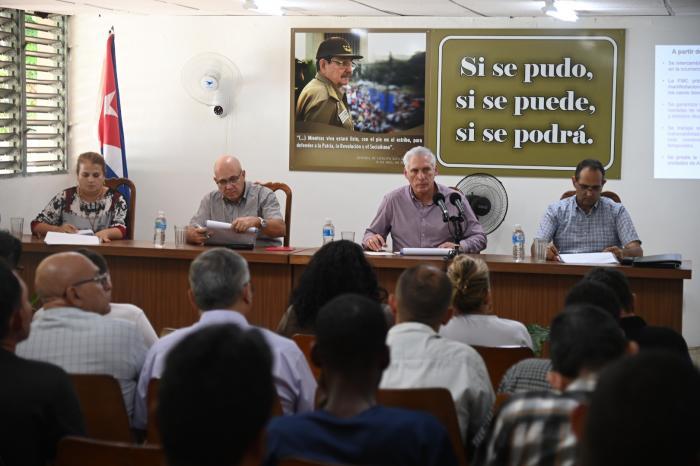
    On a Thursday working visit amid long-standing economic pressures from the United States, Cuban President and First Secretary of the Communist Party of Cuba Central Committee Miguel Díaz-Canel Bermúdez continued his direct engagement with Havana’s activated Municipal Defense Councils, touring three districts of the capital: Old Havana, Arroyo Naranjo, and La Lisa.

    The local defense councils were first activated in early May, a response to the rapidly worsening crisis triggered by the United States’ intensified 60-plus-year economic, commercial and financial blockade, which has been compounded by a more than six-month oil embargo that has strained the island’s critical infrastructure and basic services. Accompanying Díaz-Canel on the tour was Roberto Morales Ojeda, Political Bureau member and Organizational Secretary of the Communist Party Central Committee. During the visits, the presidential delegation reviewed the status of key basic services that have faced severe disruptions in recent months, including potable water access, domestic energy generation, and municipal solid waste collection.

    This series of municipal engagements launched on June 30, and as of this latest round of visits, Díaz-Canel has now held direct exchanges with leaders and residents in nine of Havana’s 15 total municipalities. A core priority of the head of state’s outreach has been centering support for the island’s most vulnerable community members. He placed particular emphasis on upholding timely pension delivery, stressing that all administrative processes would be accelerated to ensure that Cuban retirees, who dedicated their lives to building the nation, receive their rightful benefits on schedule and without unnecessary barriers.

    Throughout his stops in the three municipalities, Díaz-Canel highlighted successful collaborative initiatives spanning both the state and non-state economic sectors that have delivered tangible improvements for local residents. He called for these proven solutions to be rapidly scaled up across other districts of the capital, with priority areas including waste management, targeted support for at-risk populations, and streamlined pension distribution.

    The president also expressed strong interest in the work of the Community Youth Network, a groundbreaking local program that empowers young Cubans to lead problem-solving efforts in their own neighborhoods. He received detailed briefings on the network’s diverse activities, which range from organizing recreational sports, community cultural events, and public health outreach to conducting regular check-ins with isolated elderly residents, supporting low-income vulnerable families, and engaging disconnected young people who are currently not enrolled in school or employed. The network also supports monitoring for Cuba’s Family Assistance System (SAF), the national program that delivers targeted food assistance to the country’s most food-insecure households.

    In addition to reviewing programmatic work, Díaz-Canel asked detailed questions about how local authorities are responding to resident requests and concerns. He emphasized that all community demands must be addressed with empathy and care, and underscored the ongoing importance of maintaining public order and safety across all Havana neighborhoods.

    Closing his visit, the Cuban head of state praised the high level of organization shown by municipal leaders and community members in navigating the ongoing crisis. He called on the Cuban people to maintain a hopeful, determined outlook as they confront the challenges imposed by external pressure, expressing confidence that the nation will ultimately overcome these hardships.

  • Cuba, Roberto Morales Ojeda, Pinar del Río, projects, revitalization, July 26th

    Cuba, Roberto Morales Ojeda, Pinar del Río, projects, revitalization, July 26th

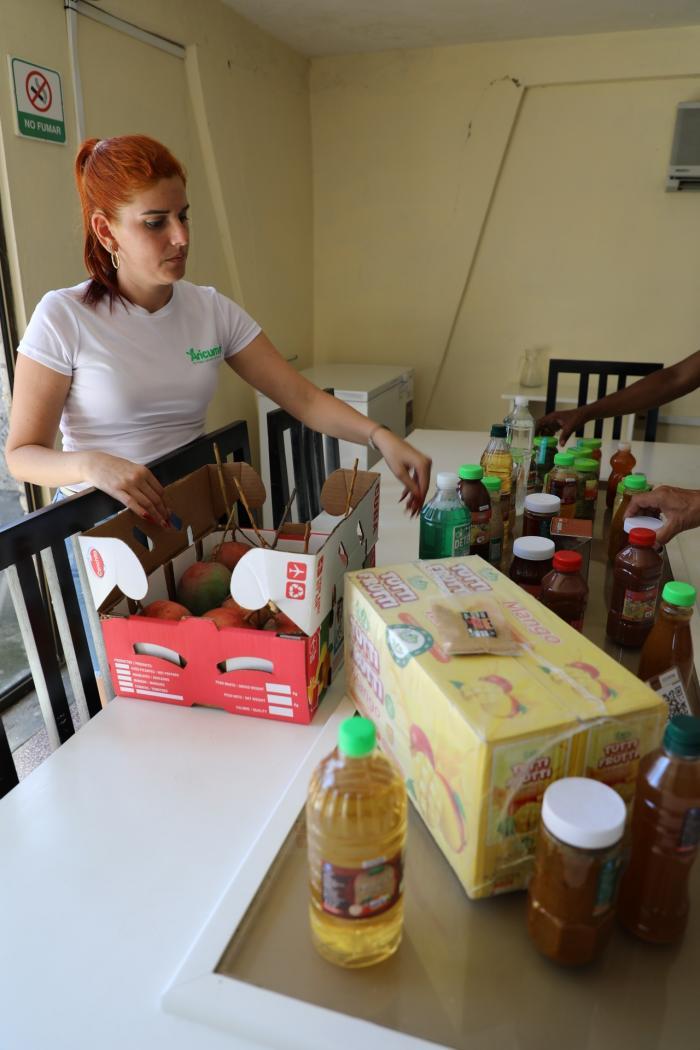
    In the sun-baked agricultural municipality of Cumanayagua, Cuba’s Cienfuegos province, a 100% Cuban-owned micro, small and medium-sized enterprise (MSME) is rewriting the playbook for balanced commercial success: growing global export reach while lifting up local producers and communities.

    Aricumay State Commercial Company operates as a single-partner entity under the Arimao Citrus Company, with both operations based within close proximity in Cumanayagua. Unlike many trading firms that focus exclusively on either domestic or international markets, Aricumay has built its model on dual purpose: prioritizing cross-border sales while addressing pressing domestic needs for affordable goods and community investment.

    The company’s core business connects small-scale and independent producers across four Cuban provinces to global market opportunities. Its team actively scouts local producers based on their untapped potential, working with growers of hot peppers—its top export commodity—alongside avocados, mamey, mango, loquat, ginger, garlic, beans, root vegetables, other fresh produce, and charcoal. Today, Aricumay holds mutually beneficial partnership agreements with 45 local producers and industrial operators across the region.

    What sets Aricumay apart from other commercial operations is its integrated support system for affiliated producers. Using foreign currency earned from international sales, the company sources and distributes critical inputs that are often hard to access for local growers: modern farming technology, chemical fertilizers, organic compost, work clothing and protective footwear. Another key competitive advantage that has earned Aricumay long-term trust from producers is its consistent, fast payment structure, disbursing funds to partners in both foreign and local Cuban currency without delays.

    Currently, Aricumay’s export portfolio reaches five European markets—England, France, the Netherlands, Spain, and Portugal—alongside Canada, marking a significant milestone for a young Cuban MSME. Beyond exports, the company extends its impact deep into the local community. A portion of all foreign currency revenue is reinvested into local social programs benefiting Cumanayagua residents. Through partnerships with domestic factories, Aricumay also distributes a wide range of affordable basic goods, including toiletries, fruit pulps, jams, pasta, hams, pork and smoked products, sold at prices far below the average market rate at local points of sale and regional fairs. The company also supplies value-added fruit products like nectars, pulps and jams to public hospitals across Cienfuegos province.

    As a still-developing operation less than two years old, Aricumay has already established a reputation for operational expertise at the municipal level, and leadership has outlined aggressive plans for further expansion of its community and commercial reach. To support extended workdays that often run into the night and avoid disruptions from energy shortages, the company has already invested in solar panel systems to achieve full energy independence, demonstrating its commitment to sustainable, uninterrupted growth.

    Economic specialist Yolexis Abreus Abreus notes that Aricumay’s success is rooted in its collaborative approach, working closely with all local economic actors—both state-owned and private, from large landholders to small independent producers—across every existing production model in the region. For its leaders and workers, Aricumay is more than an export business: it is a proof of concept that local Cuban producers have the potential to compete globally, while reinvesting in the communities that make their success possible.

  • Veiligheid en resultaten centraal bij terugblik op één jaar regering-Simons

    Veiligheid en resultaten centraal bij terugblik op één jaar regering-Simons

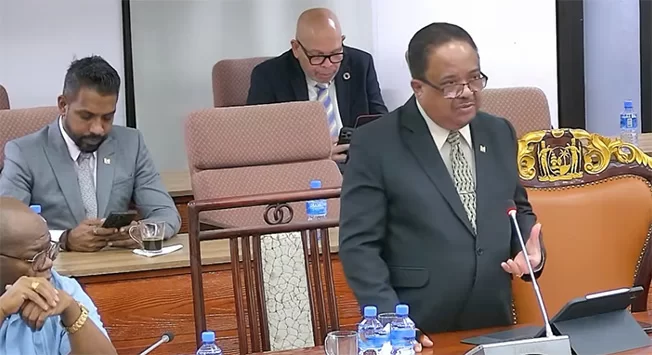
    One year after Suriname’s current administration took office, parliamentary factions gathered this Thursday to assess the government’s first 12 months in power, delivering a spectrum of assessments ranging from cautious optimism to sharp criticism of unfulfilled campaign pledges. The debate, opened with an address to the National Assembly by Vice President Gregory Rusland, laid bare competing narratives about the government’s progress on core national priorities.

    Leading the ruling coalition’s assessment, NDP (National Democratic Party) faction leader Rabin Parmessar argued the current government inherited a nation grappling with cascading challenges across nearly every policy sector. In its first year, Parmessar said, the administration has prioritized stabilizing public finances and restructuring national debt, achievements he credited with restoring calm and social cohesion after years of tension. He noted that ethnic polarization, a long-running divisive force in Suriname’s politics, has diminished over the past year, and called for cross-party collaboration to advance the nation’s development. “There is no room for rigid divides between opposition and coalition here, because this work is about unlocking the vast natural wealth that belongs to all of Suriname,” Parmessar told the assembly.

    The largest opposition party, VHP (Vereenigde Hindoestaanse Partij), pushed back against the coalition’s positive framing. VHP representative Dew Sharman argued that while the current government inherited a more financially stable foundation thanks to the previous administration’s debt restructuring efforts, ordinary Surinamese citizens have yet to see tangible improvements in their daily lives. Sharman claimed that rates of violent crime and poverty have risen over the past year, leaving most households stuck in ongoing economic uncertainty. He added that the government’s signature campaign promise of “Kenki a Systeem” (Change the System) and its pledge to build a new culture of governance have so far failed to materialize in any visible way.

    NPS (Nationale Partij Suriname) faction leader Jerrel Pawiroredjo echoed the opposition’s concerns, framing the first year of government as a moment for reflection rather than celebration. Pawiroredjo voiced deep alarm over the rapid growth of violent organized crime, particularly in Suriname’s interior regions, saying a growing share of the public now believes the state is losing its authority in large swathes of the country. He pointed to illegal gold mining, drug trafficking, heavily armed criminal gangs, and what he called a broken immigration policy as key failures, and called on the administration to deliver a clear, actionable plan to reverse these dangerous trends.

    Other coalition-aligned parties offered more measured assessments. ABOP (Algemene Bevrijdings- en Ontwikkelingspartij) representative Edgar Sampie gave the government a “slight passing grade,” noting that while the administration has not yet delivered on all its goals, it has laid the critical groundwork for future progress. He urged coalition partners to continue protecting internal unity and collaborative decision-making. A20 faction leader Steven Reyme similarly called the first year “a good start,” pointing to restored financial stability, the launch of a national housing construction program, and accelerated processing of land title documents as early wins. Even so, Reyme shared concerns about insecurity in the interior, persistent underfunding of education and healthcare, a continuing brain drain of skilled Surinamese professionals, and the stalled implementation of long-planned decentralization reforms.

    BEP (Broederschap en Eenheid in de Politiek) faction leader Ronny Asabina argued the administration has not yet earned congratulations, noting that the cost of living remains unsustainably high for most Surinamese families, and economic conditions remain far too tight for working households. Even so, Asabina expressed hope that the government would deliver on its campaign promises in the coming years, so that the public can eventually benefit from the administration’s policy changes.

    Addressing the assembly in closing, Vice President Gregory Rusland acknowledged that one year is a short period to deliver sweeping change, but emphasized it has set a critical direction for Suriname’s long-term development. Rusland acknowledged the government inherited years of accumulated backlogs, unsustainable financial obligations, and long-standing administrative bottlenecks when it took office, rather than starting from a blank slate. Instead of avoiding these long-running problems, he said, the administration chose to take responsibility and address them head-on.

    Rusland framed the coalition’s greatest achievement not as any single infrastructure project or policy change, but as the successful establishment of a collaborative, collective governing culture. He noted that while the Council of Ministers holds vigorous, open debates on policy disagreements, all final decisions are made collectively by the coalition, avoiding the gridlock and partisan infighting that plagued previous administrations. Beyond governance reform, Rusland highlighted progress across a wide range of sectors: expanded social safety nets, investments in education and healthcare, renewed economic growth, improved diplomatic relations, new climate policy frameworks, and preliminary preparations for the development of Suriname’s emerging oil and gas sector. He also pointed to the launch of the national housing program as a key milestone that will deliver tangible benefits to working families in coming years.

    At the same time, Rusland openly acknowledged areas where improvement is needed: administrative procedures remain too slow, major projects need accelerated timelines, and collaboration between the executive branch and the National Assembly must be strengthened. For these reasons, he said, the first year of government is not an endpoint, but a solid foundation that the administration will build on over its remaining term. “We have not come as far as we would have liked in just 12 months, but we have proven that collaboration, national stability and responsible governance are possible for Suriname,” the vice president stressed.

  • Preparatory steps for the implementation of the new Haiti’s penal code and criminal procedure

    Preparatory steps for the implementation of the new Haiti’s penal code and criminal procedure

    On July 17, 2026, Haiti’s Ministry of Justice and Public Security kicked off a series of preparatory initiatives to roll out the country’s long-awaited new Penal Code and Code of Criminal Procedure, which are set to take legal effect on January 1, 2027. The official launch event, held under the unifying theme “Criminal Reform: A Collective Commitment to a New, Humane Justice System and a More Just Society”, drew a diverse cross-section of attendees, including senior government officials, core judicial system stakeholders, international technical and financial partners, law students, academic representatives from the State University of Haiti, and leaders of local civil society organizations.

    In his opening address, Justice and Public Security Minister Patrick Pélissier delivered a comprehensive progress update on the multiyear criminal legislation overhaul effort. He formally announced the rollout of a targeted train-the-trainer program designed to upskill all levels of judicial personnel across the country, framing the initiative as a non-negotiable foundation for the reform’s successful implementation. Minister Pélissier stressed that modernizing Haiti’s outdated legal framework is a critical prerequisite to boosting the justice system’s overall effectiveness, allowing it to meaningfully address the long-unmet expectations of the Haitian public.

    Prime Minister Alix Didier Fils-Aimé, who was represented at the conference by his Chief of Staff, underscored the transformative national significance of the new legal codes. He framed the adoption of the reforms as an assertion of Haitian sovereignty, designed to equip the nation with a judicial system that is aligned with 21st-century standards of efficiency and modernity. “This reform will contribute to consolidating the rule of law, strengthening institutions, and modernizing the judicial system,” the Prime Minister’s statement noted.

    Sabine Boucher, who chairs the Technical Coordination Committee tasked with developing the implementation training program, brought clarity to the cross-sector challenges the reform faces. She emphasized that the overhaul cannot be led exclusively by legal experts, calling for active mobilization of every stakeholder in the justice ecosystem and civil society — including judges, practicing attorneys, law enforcement officers, legal educators, and the next generation of legal professionals. Boucher argued that the quality of a nation’s legal codes cannot be established permanently through a single piece of legislation; instead, they evolve through critical application and informed adjustments, as law is a living structure continuously shaped by real-world practice and reasoned analysis. She closed by reiterating the urgent need to replace Haiti’s current criminal legislation, which dates back nearly 200 years, and adapt the national legal framework to meet the modern legal, social, and institutional needs of the country.

    Patrick Pierre-Louis, president of the Port-au-Prince Bar Association, highlighted the dual priorities of comprehensive judicial personnel training and maintaining transparency and credibility throughout the implementation process at the conference. He shared his optimistic expectation that the initiative would deliver tangible, transformative benefits for all of Haitian society.

    Speaking on behalf of the Embassy of Canada in Haiti, Jacob Gateau, Head of Mission and Political Advisor, reaffirmed Canada’s longstanding commitment to supporting Haitian authorities as they advance this rule of law-strengthening reform. Philippe Lamarche, representative of the United Nations Development Programme (UNDP) in Haiti, also welcomed the launch of preparatory activities, reiterating UNDP’s commitment to supporting the national reform commission and all local stakeholders involved in implementation. The initiative, he noted, is fully aligned with United Nations Sustainable Development Goal 16, which sets a global target for building inclusive, peaceful societies and strong rule of law institutions.

    As the launch makes clear, the January 1, 2027 entry into force of the new penal and criminal procedure codes marks a historic milestone for Haiti’s judicial system. The reform represents the Haitian government’s formal commitment to building a modern legal framework that delivers justice that is more effective, more humane, and centered on the needs of ordinary citizens.

  • ECOSOC : Minister Paulemon calls for adapting the SDGs to the realities of vulnerable countries

    ECOSOC : Minister Paulemon calls for adapting the SDGs to the realities of vulnerable countries

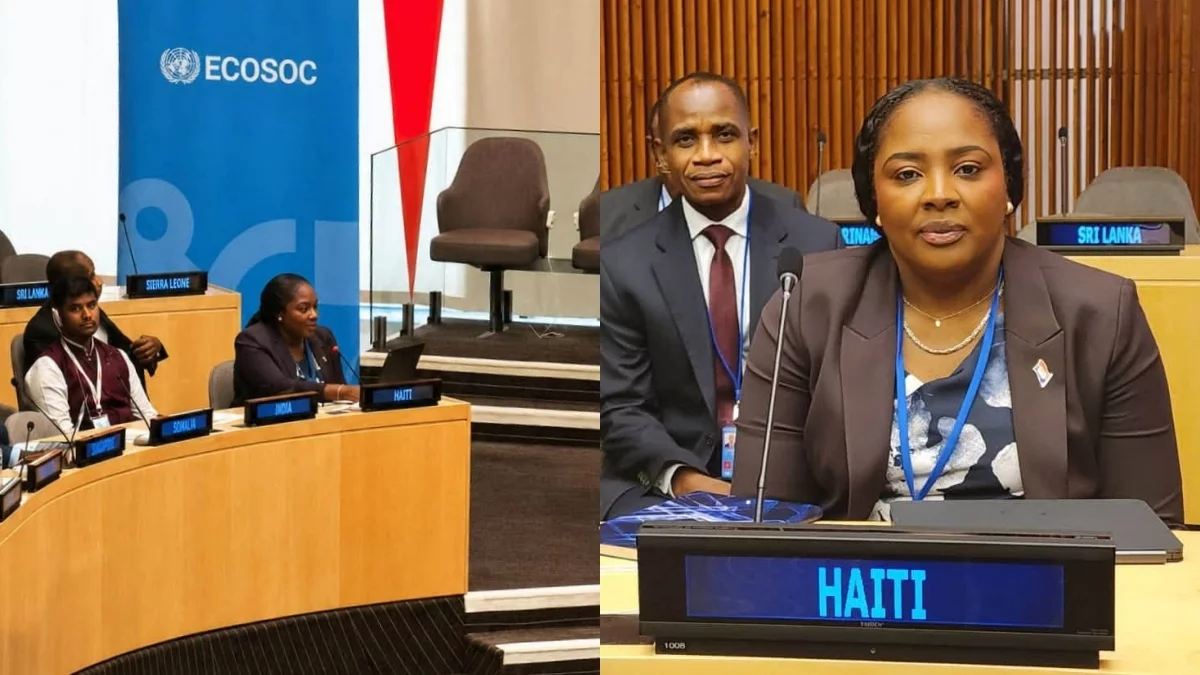
    In a high-stakes address at the United Nations Economic and Social Council (ECOSOC) Ministerial Panel on July 16, 2026, Haiti’s Minister of Planning and External Cooperation Sandra Paulemon has issued a clarion call for sweeping reform to the global framework for Sustainable Development Goals (SDGs), arguing the current structure fails to account for the unique challenges facing fragile and developing nations.

    The panel, convened to speed up delivery on the 2030 Agenda for Sustainable Development, provided Paulemon a platform to lay out a blunt assessment of global progress to date. She warned that advancement toward the 17 shared goals remains woefully inadequate, geographically uneven, and increasingly undermined by the cascading overlapping crises that disproportionately impact low-income and vulnerable states.

    Aligning her remarks with the core governance priorities of Haitian Prime Minister Alix Didier Fils-Aimé’s administration, Paulemon pushed for a fundamental reimagining of international development financing. “There can be no credible acceleration of the SDGs without economic justice,” she stated. “There can be no sustainable progress without accessible financing, debt relief, equitable access to technology, national capacity building, and reform of the international financial architecture so that developing countries have a stronger voice in global economic governance.”

    At the heart of her proposal is a call for a context-aware redesign of SDG implementation, not a weakening of the global goals themselves. Paulemon argued that revisiting the framework is critical to making it more operational, tailored to individual national circumstances, and responsive to the layered vulnerabilities many developing nations navigate. The SDGs must remain a universal shared ambition, she emphasized, but implementation strategies must directly address the interconnected security, climate, humanitarian, economic, and institutional shocks that constantly destabilize fragile states.

    Paulemon drew specific attention to the Caribbean region, and Haiti in particular, stressing that the multidimensional vulnerability of small island and Caribbean developing states is often overlooked in global financing access mechanisms. For Haiti, she noted, overlapping crises across security, humanitarian, social, economic, and climate domains demand a holistic, integrated response that unifies efforts to restore security, drive recovery, stabilize institutions, advance territorial planning, and unlock productive investments.

    She acknowledged that pervasive insecurity in Haiti has disrupted every sector of daily life, from population mobility and access to public education and health services to market activity, agricultural output, and social cohesion. But Paulemon stressed that Haiti is not approaching the international community only to highlight crisis: the nation comes with a clear, actionable development vision centered on reframing public action around strategic planning, policy coherence, localized implementation, and measurable results.

    True SDG progress, Paulemon argued, must be rooted in local action, embedded at every level from municipal governments and neighborhood communities to production hubs, schools, health centers, local infrastructure projects, and frontline essential services. She outlined Haiti’s immediate national priorities: restoring baseline security conditions, strengthening strategic territorial planning, investing in social and economic infrastructure, expanding job opportunities especially for young people and women, supporting smallholder agriculture and small and medium-sized enterprises, bolstering local supply chains, and aligning all external cooperation with Haitian-led national priorities.

    A core demand from Paulemon is greater accountability and effectiveness for international cooperation. She emphasized that external assistance must prioritize strengthening Haitian national institutions rather than sidelining them, and deliver tangible, sustained benefits for the Haitian population. “Haiti needs partners, but above all, structured partnerships that respect its priorities and are capable of supporting national institutions over the long term,” she said.

    Closing her address, Paulemon announced that Haiti plans to launch a national voluntary self-assessment of SDG progress in 2027. The process will evaluate gains made to date, map remaining systemic challenges, and strengthen the integration of the 2030 Agenda into all levels of national development planning.

  • Attorney General Responds to Ombudsman Vacancy Legal Challenge

    Attorney General Responds to Ombudsman Vacancy Legal Challenge

    In July 2026, three interconnected legal challenges are unfolding across Belize, putting the country’s democratic accountability institutions and constitutional governance frameworks under unprecedented public scrutiny.

    The first and highest-profile dispute centers on former Ombudsman Gilbert Swaso, a retired military major, who has brought the Government of Belize before the courts over the non-renewal of his contract in December 2025. Swaso alleges that the government declined to extend his tenure in retaliation for a Freedom of Information ruling he issued that went against state interests. He further claims that the government’s decision violated the constitutional protections that guarantee the independence of his former office, a critical check on executive overreach. Following a recent case management conference, the Supreme Court has established binding filing deadlines for both parties, with a full trial scheduled to begin on November 20, 2026. The government is required to submit its formal response affidavit by the end of this week.

    Attorney General Anthony Sylvestre pushed back against public criticism of the government’s position in the case, emphasizing that the rule of law applies equally to all constitutional office holders. “Every single office holder, whether it be the Prime Minister, whether it be the Ombudsman, whether it be a judge, must comply with the dictates of the law in exercising their functions,” Sylvestre stated, framing the court process as a core component of Belize’s democratic system rather than an attack on independent oversight. Swaso, for his part, has framed the lawsuit as a fundamental defense of the Ombudsman office’s integrity and ability to uphold government transparency.

    A second separate legal challenge has been filed by prominent social activist Jeremy Enriquez, who is taking the government to task over the months-long vacancy in the Ombudsman’s office left after Swaso’s departure. Enriquez argues that the government’s failure to appoint a permanent successor has blocked Belizeans’ access to critical accountability pathways, leaving multiple Freedom of Information appeals – including two of his own – tied up in limbo with no official to adjudicate them. He contends that the prolonged vacancy has effectively weakened one of the nation’s most important anti-corruption and transparency institutions.

    Sylvestre confirmed that the government is already moving forward with the appointment process, which falls under the purview of the bipartisan Ombudsman Reports Committee of the National Assembly, with a public vacancy notice already posted. The posting, developed in partnership with a three-year European Union-funded project to establish Belize’s new National Institute of Human Rights, prioritizes candidates with specialized experience in human rights and oversight work. Sylvestre noted that the government remains committed to appointing a candidate who can advance the institutional development of the ombudsman’s office and the new human rights body.

    In a third separate legal matter also involving Enriquez, the Caribbean Court of Justice (CCJ) has recently cleared procedural hurdles to allow his constitutional challenge against Belize’s outdated electoral redistricting to move forward. Filed in February 2025, Enriquez’s suit argues that current electoral boundary divisions are outdated and violate Belizeans’ constitutional right to equal representation. Sylvestre explained that Enriquez won two out of three interlocutory appeals he brought before the CCJ, clearing the way for the case to return to the Belize Court of Appeal for further proceedings. As of July 2026, more than a year after the initial filing, the court has not yet addressed the core substantive question of whether the existing boundaries violate Belize’s constitution.

  • Twintigste kinderhartchirurgieweken AZP en LUMC: elf succesvolle hartoperaties

    Twintigste kinderhartchirurgieweken AZP en LUMC: elf succesvolle hartoperaties

    After a two-week series of life-saving procedures, the 20th edition of the CAHAL Pediatric Cardiac Surgery Weeks has concluded successfully at the Academic Hospital Paramaribo (AZP) in Suriname. This landmark anniversary mission, held between June 29 and July 10, is a core component of a long-standing structural partnership between AZP and the Leiden University Medical Center (LUMC) in the Netherlands.

    During this mission, surgical teams successfully completed open-heart procedures on 11 patients: nine children (including one patient traveling from neighboring Guyana) and two adults. For two decades, this collaborative program has advanced a clear shared goal: expanding access to high-specialty pediatric cardiac care within Suriname, while steadily building the clinical skills and experience of local healthcare providers.

    The on-the-ground Surinamese care team was led by pediatric cardiologist Amadu Juliana and pediatrician Kevin van ‘t Kruys, who worked side-by-side throughout the mission with a specialized LUMC team headed by lead pediatric cardiac surgeon Dave Koolbergen. In remarks following the conclusion of the mission, Koolbergen emphasized that the 20th anniversary milestone is a powerful reflection of what long-term cross-institutional collaboration can achieve. Treating children in their home country allows patients to stay surrounded by their families and familiar support networks, he noted, while also giving Suriname’s local clinicians and nursing staff the chance to gain hands-on specialized experience each year. This steady progress, he added, is foundational to the long-term development of pediatric cardiac care capacity across Suriname.

    Pediatric cardiologist Lukas Rammeloo, who has participated in the mission for 19 consecutive editions, echoed that sentiment, calling the 20th anniversary program a particularly meaningful milestone. He explained that what began as a temporary outreach initiative has grown into a fully sustainable program that saves lives annually while transferring critical specialized knowledge to local Surinamese medical colleagues. The ultimate end goal of the work, Rammeloo noted, remains unchanged: to ensure that an increasing number of children born with cardiac conditions can access the specialized care they need without leaving their home country.

    For the families of the young patients who received care, the successful outcomes of the mission mark the end of a period of anxious waiting. Fontuella Tjokrosentono, the mother of a 17-month-old boy who underwent surgery, shared that she maintained hope throughout the uncertain weeks despite her worry. Her son’s procedure went smoothly, and he is now cleared to return home healthy in the coming days.

  • PM Briceño Moves to Overhaul Military Ration Purchases

    PM Briceño Moves to Overhaul Military Ration Purchases

    In a sweeping policy shift aimed at addressing longstanding public and internal scrutiny over the nutritional quality of food provided to Belize’s national security personnel, Prime Minister John Briceño has announced a complete overhaul of the country’s military ration procurement process. The change comes on the heels of troubling health outcomes linked to low-quality, sodium-heavy canned and packaged rations sourced through local suppliers, which have been tied to multiple serious health incidents among service members.

    During discussions held Monday with senior leadership from the Belize Defense Force (BDF) and the Belize Coast Guard, Briceño outlined that the government will bypass existing local supply chains to purchase nutritionally standardized Meals Ready-to-Eat (MREs) directly from a United States-based manufacturer. The prime minister noted that current rations relied heavily on processed canned goods with extremely high sodium content, which has contributed to widespread hypertension among coast guard personnel. Most alarmingly, the poor diet has already led to one service member death and two to three strokes in recent months.

    “We cannot ask our soldiers to deploy on dangerous jungle missions and expect them to sustain themselves on low-quality processed potted meat,” Briceño stated, emphasizing that the health of frontline security personnel is a non-negotiable government priority. The new direct-to-manufacturer MREs are scientifically formulated to provide 1,500 nutritionally balanced calories per package, specifically designed to meet the intense physical demands of deployed service members. Administrative leadership has already completed initial contact with the U.S. manufacturer, and the first shipment of custom BDF-branded MREs is currently en route to Belize. The custom branding is intended both to secure the supply chain and ensure all rations are distributed exclusively to BDF and Coast Guard personnel.

    The announcement comes amid swirling public debate about the state of military meal provisions, fueled by recent viral claims that BDF soldiers now enjoy a luxury menu including lobster, shrimp, and baby back ribs following initial upgrades to the feeding program. BDF Commander Brigadier General Anthony Velasquez moved quickly to clarify these circulating rumors, acknowledging that significant improvements have been made in both ration spending and food quality over the past six years, but confirming that luxury items remain far outside the regular military menu.

    Velasquez noted that while outdated public perceptions of inadequate military feeding have persisted, the force has made remarkable progress in upgrading service members’ diets over the past half-decade. “It is true that spending on rations has increased significantly, and the quality of what we serve has improved drastically from where we were six years ago,” he explained. “That said, claims that our soldiers eat steak and lobster every day are completely unfounded.” After 32 years of service in the BDF, Velasquez added that shrimp is only served on rare occasions, lobster is almost unheard of in regular rations, and he has never even been served baby back ribs during his tenure. While he confirmed that the force continues to identify gaps and work toward further improvement, he called the luxury menu claims overhyped speculation fueled by misread procurement documents.

    The overhaul marks the most significant change to Belize’s military procurement process in recent years, and comes as public scrutiny of government military contracting continues to grow. The Briceño administration has framed the shift as a tangible commitment to protecting the well-being of the country’s security personnel, who play a critical role in maintaining border security and public safety across Belize.