博客

  • 20-y-o med student is MUJ KSA

    20-y-o med student is MUJ KSA

    In a glittering ceremony held last Saturday night at Wolmer’s Boys’ High School’s Douglas Orane Auditorium, history was made as Hannah Collings-Myers, representing Digita Properties Limited, claimed the title of the first-ever Miss Universe Jamaica Kingston & St Andrew. The 20-year-old medical sciences student from The University of the West Indies was just as shocked as the gathered audience when her name was announced as the inaugural winner, marking the culmination of months of rigorous preparation and personal growth.

    Collings-Myers’ pageant journey began two years earlier, when Jermane Blair, franchise manager for the Miss Universe Jamaica Kingston & St Andrew competition, first spotted her at a local fashion show and encouraged her to enter. Speaking to Jamaica Observer shortly after the midnight coronation, the new queen shared her surprise and gratitude for the experience. “Surprise, yes, I am. This journey has been terrifying; I have been so scared to do everything, but I’ve put my best foot forward, and I don’t know why I’m so surprised to see that it came with good results. But I guess that it just wasn’t what I expected, but I’m extremely happy with the results,” she said.

    Looking back on the intensive training and preparation that led her to the crown, Collings-Myers emphasized that the competition offered far more than a title—it was a life-changing opportunity for self-discovery. “The training was definitely hard, lots of long days, but it was worth it. I have taken away a new sense of self. I was so unsure about coming into this competition, and the fact that I came here, put my best out and could win, it shows me that I am much more than I think I am,” she explained. She added that while Blair sparked her initial interest, she chose to see the competition through because it offered a chance to step out of her comfort zone and grow as a person—an outcome she says she has fully achieved.

    Blair, who first recognized Collings-Myers’ unique potential two years prior, shared his pride in the new queen’s achievement. “I met Hannah at a fashion show two years ago and I thought that she was so beautiful. Her way of communicating was just so mature, and her responses were so intellectual. I reached out to her and encouraged her to enter, but she decided to enter this year, and she did the work, and look at her now — she is the new queen tonight,” he said enthusiastically.

    Originally from Manchester, Jamaica, Collings-Myers previously resided in Montego Bay before relocating to Kingston to complete sixth form at Immaculate Conception High School in St Andrew, putting her in the region eligible for the new competition.

    The historic event kicked off just after 8 p.m. with a high-energy opening number that captivated the sold-out audience. Twenty-one competing contestants first introduced themselves to the judges and crowd, before the field was narrowed down to a top 14 semi-finalists: Leighann Dacres-Jones (Miss Mt Sinai Dental and Implant Centre), Shanika Scott (Miss Island Gully Falls Ltd), Rachel Newman (Miss Carefree), Collings-Myers, Shaniece Douglas (Miss Janga’s Soundbar and Grill), Daenya Anderson (Miss Covenant Insurance Brokers Ltd), Shanya Francis (Miss Caribbean Glass Company), Claire Schwapp (Miss STL Solar), Ottavia Bradshaw (Miss Jarrett Auto Parts), Tiyana Mowatt (Miss Saxby), Ruesheen Ricketts (Miss Advance Integrated Systems), Akanke Scott (Miss VM Group), Calethia Campbell (Miss Orion Loss Adjusters), and Tenneil Sewell (Miss Legend Beer).

    Next came the fan-favorite swimwear segment, where competitors showcased designs from Jamaican brand Kaydian Nicely Exclusive, dazzling the crowd before judges cut the field once more to a top 11. Advancing contestants included Dacres-Jones, Akanke Scott, Shanika Scott, Sewell, Schwapp, Ricketts, Mowatt, Douglas, Francis, Newman, and Collings-Myers.

    Between competitive segments, the audience enjoyed standout performances from the Laud Dance Ministry and recording artist Alicia Taylor, before the semi-finalists took the stage in elegant evening wear from designer Atelier Dermoth Williams. Another elimination followed the evening wear round, narrowing the competition down to just three finalists who advanced to the grueling final interview round: Collings-Myers, Mowatt, and Douglas.

    Before the final winner was announced, the competition awarded a series of sectional prizes to recognize standout contestants: Abigail Barnes (Miss Bailey’s Food and Beverage) took home the Most Congenial title; Calethia Campbell won the Altruism Award; Leighann Dacres-Jones claimed both the People’s Choice Award and Best in Swimwear; Shanika Scott won Best in Evening Gown; Shaniece Douglas was named Most Photogenic; and Tiyana Mowatt received the Essence of Style Award.

    When the final results were announced, Collings-Myers claimed the inaugural crown, with Tiyana Mowatt, a practicing medical doctor, securing second place as first runner-up, and Shaniece Douglas finishing in third place. In a major announcement at the close of the event, organizers confirmed that Collings-Myers and both of her runners-up will receive an automatic spot in the national finals of the Miss Universe Jamaica competition, where they will go on to compete for the chance to represent Jamaica at the global Miss Universe pageant.


  • A Summer Guide to Keeping Cool At Weddings

    A Summer Guide to Keeping Cool At Weddings

    As weather forecasters have already issued warnings about the approaching El Niño climate pattern, Jamaica is bracing for an unusually sweltering summer season. For couples planning to tie the knot in the island nation this June, the season’s reputation for sun-drenched ceremonies, tropical romantic backdrops and dreamy outdoor celebrations comes with a critical caveat: without strategic preparation, extreme heat can quickly turn a once-in-a-lifetime magical day into an uncomfortable ordeal for everyone in attendance. Fortunately, experienced wedding industry experts say that a handful of thoughtful, intentional planning choices can make all the difference, turning cooling comfort from a nice-to-have luxury into a core component of successful summer wedding design on the island.

    Shikima Hinds, Managing Director of Jamaica-based Shikima Hinds Events Concierge, outlines the key priorities for beating El Niño-driven heat at outdoor and tented weddings, starting with prioritizing intentional airflow and ventilation. Even the most elaborate, visually stunning decor will fail to impress if guests are left silently suffering through overheating during the ceremony, Hinds notes. For open-air events, cooling fans stand out as a game-changing investment. Unlike standard standing fans that only move warm air around, these specialized units circulate chilled air throughout the space, creating consistent comfort, particularly during pre-reception cocktail hours or in enclosed tent settings. Today, many couples are integrating these fans seamlessly into their decor layouts, keeping the visual aesthetic intact while delivering consistent cooling relief.

    When it comes to tented weddings, the material and color of the structure makes a far bigger difference to internal temperatures than most couples realize, Hinds explains. While sleek clear tents have grown in popularity on social media platforms like Pinterest, particularly for couples wanting to host star-lit evening events, they act like greenhouses during daytime Caribbean summer events, trapping heat and driving internal temperatures to uncomfortable levels. By contrast, traditional white tents naturally reflect incoming sunlight, keeping the space under the structure significantly cooler than clear alternatives. For daytime ceremonies, a white tent is not just a smarter choice—it can prevent guests from becoming overheated and uncomfortable before the reception even kicks off. For couples set on the modern visual appeal of clear tents, Hinds recommends reserving them for evening receptions, once overnight cooling has brought temperatures down to more manageable levels.

    Another critical factor that many couples overlook when scouting venues is natural shade. Most engaged pairs prioritize panoramic views and picture-perfect aesthetics when selecting a ceremony site, but existing natural shade from mature greenery can completely transform the guest experience. Holding an exchange of vows beneath large, leafy trees not only cuts down on guests’ direct exposure to harsh midday sun, it also creates a timeless, romantic backdrop with soft, filtered sunlight that adds intimacy to the moment. The result is a visually stunning setting that also delivers much-needed heat relief that guests will notice and appreciate.

    Intentional hydration must also be woven into the core design of a summer wedding, Hinds emphasizes—and sparkling champagne alone does not meet the need. Couples should plan to place accessible hydration stations throughout the event space, serving infused waters, fresh pressed local juices and other chilled, hydrating beverages. For a distinctly Caribbean touch that is both functional and photo-worthy, Hinds recommends having ice-cold fresh coconuts waiting for guests when they arrive for the ceremony. Not only do the naturally electrolyte-rich coconuts deliver refreshing, long-lasting cooling relief, they also create a memorable, on-brand luxury experience that is perfect for social media sharing.

    Attire choices are another key area for adjustment in extreme summer heat. Heavy layered tuxedos and rigid structured gowns may photograph well, but they quickly become uncomfortable in sweltering temperatures. Hinds encourages couples and their wedding parties to opt for breathable elegance: lightweight flowing fabrics, relaxed silhouettes, linen suits for groom and groomsmen, and softer, lighter makeup looks that hold up better against humidity and heat.

    Finally, timing is a make-or-break consideration for outdoor summer weddings in Jamaica. Early afternoon ceremonies held under direct midday sun can be brutally hot for guests and wedding parties alike. Hinds recommends shifting ceremony times later, closer to sunset, when temperatures naturally drop and the famous golden hour light creates softer, more flattering photography conditions. What has become a popular aesthetic trend for weddings also doubles as a practical heat mitigation strategy for El Niño summers.

    Additional thoughtful small touches that make a big difference to guest comfort include pre-ceremony welcome drinks, chilled face towels, personal handheld fans for guests, clearly marked infused water stations, and dedicated shaded seating areas for older guests or anyone needing a break from the sun. These small, low-cost gestures are consistently ranked among the most memorable details by guests, Hinds notes.

    Beyond keeping guests comfortable, prioritizing cooling planning also helps reduce stress for the couple during the planning process and on wedding day itself. Hinds points out that guests rarely remember minor details like perfectly matched flower arrangements or precisely folded napkins. What they do remember is how the event felt: whether they were comfortable, welcomed, relaxed, and able to fully enjoy celebrating the couple’s big day. As El Niño prepares to drive up temperatures across Jamaica this summer, couples planning weddings can rest assured that simple, thoughtful details focused on cooling will deliver the best possible outcome. The most memorable summer Jamaican weddings are not just visually beautiful—they are intentionally designed to keep everyone cool, calm, and able to savor every moment of the celebration.

  • HEART of the problem

    HEART of the problem

    As Jamaica grapples with a persistent, debilitating shortage of skilled tradespeople to fuel its growing construction and infrastructure pipeline, a prominent high school principal has launched a scathing rebuke of the government’s mismanagement of the country’s flagship vocational training agency, the HEART/NSTA Trust, describing the well-funded institution as a “fat calf” that delivers little tangible value for the nation.

    Linvern Wright, principal of William Knibb Memorial High School and immediate former president of the Jamaica Association of Principals of Secondary Schools, made the criticisms during an address at the Jamaica Teachers’ Association’s *Go Public! Fund Education* national forum on Monday. His remarks came just days after Government Senator Kavan Gayle sounded the alarm in the upper chamber of parliament about the acute skilled labor crisis gripping Jamaica’s construction sector.

    Gayle told senators during debate on the 2026 National Housing Trust (Amendment) (Special Provisions) Act that the industry is currently facing devastating shortfalls of qualified workers across every key trade, including carpenters, masons, steel workers, electricians, plumbers, and construction finishers. He outlined multiple overlapping drivers of the crisis: large-scale emigration of skilled tradespeople seeking higher wages overseas, a rapidly ageing domestic workforce, chronically low graduation rates from the country’s vocational training programs, and intensifying competition for limited labor from the wave of major infrastructure projects now underway across the island. The shortage, Gayle confirmed, is already triggering costly project delays, persistent staffing gaps, and widespread productivity dips across the construction sector, which is central to meeting Jamaica’s growing demand for new housing, public infrastructure, and post-disaster school reconstruction.

    Against this urgent backdrop, Wright says the labor gap forces uncomfortable questions about the decades of public investment poured into HEART/NSTA Trust, the country’s primary provider of technical and vocational education and training. He argues that the institution has failed to deliver a return on that investment, noting that no other segment of Jamaica’s education system—from early childhood learning to tertiary education—has received the same level of cumulative funding that HEART has secured over the years.

    “No other sector of education — tertiary, primary, early childhood — none of them has got the amount of funding that HEART has got, and what we have is a really fat calf that is not producing much for the country, so we have got to look at how we deal with these kinds of things in terms of how we fund things,” Wright told the forum.

    Wright recalled that Jamaica’s technical and vocational education ecosystem once thrived thanks to robust, sustained partnerships between secondary schools and private industry, a model that produced strong outcomes through the 1970s and 1980s. Major private companies such as Alcan invested directly in vocational programs at prominent secondary schools including STETHS and Holmwood Technical High School, but Wright says that level of private sector engagement and strategic investment has long since disappeared, leaving once-strong programs rusted and outdated.

    Beyond the specific failures of HEART/NSTA Trust, Wright framed the skilled labor crisis as a symptom of a deeper, long-standing structural failure: successive Jamaican governments have consistently refused to treat education as a top national priority, denying it the level of focused attention and sustained financial commitment granted to other high-priority policy initiatives.

    To illustrate this disparity, he pointed to the extensive, high-profile parliamentary deliberations that preceded the passage of legislation establishing the National Reconstruction and Resilience Authority (NaRRA). “I want all of you to think of how long our Government spent to discuss the NaRRA Bill. They never slept because that was important to them. It was priority. I have never in my life as an educator seen them spend past maybe two hours talking about education. NaRRA was priority, with all its ills and all its issues. It was priority,” Wright said.

    Wright argued that until legislative leaders commit to extended, focused debate and put in place binding commitments to education funding, the sector will continue to lack the resources it needs to meet national needs. To insulate long-term education investment from shifting political priorities and fluctuating economic conditions, he called for the introduction of legislation that enshrines a legally protected minimum level of public investment in education, guaranteeing sustained funding regardless of changes in government direction.

  • Megan, the fighter

    Megan, the fighter

    After a shaky period of career uncertainty and injury setbacks, Jamaican sprint hurdles veteran Megan Simmonds has emerged as a dominant force early in the 2026 track and field season, crediting a pivotal training camp switch and a personal rebrand for rediscovering the competitor and person she once was.

    The 32-year-old, a bronze medalist at the 2021 Tokyo Olympics, has kicked off her 2026 campaign with three consecutive wins across two continents. Her standout performance came last Thursday at the Golden Gala Pietro Mennea, the Rome stop of the Diamond League tour, where she clocked a new season-best 12.50 seconds to claim gold in the women’s 100m hurdles. That mark catapulted her to sixth place on the global rankings for fastest women in the event this year. Just three days later, she followed up that win with another first-place finish at Poland’s Halina Konopacka Classic, crossing the finish line in 12.79 seconds to extend her undefeated streak.

    This resurgence comes on the heels of a devastating 2025 season, where a hamstring injury forced Simmonds to withdraw from the World Athletics Championships in Japan, ending her year prematurely. At the close of last season, she made the difficult decision to leave the Reynaldo Walcott-led Elite Performance Track Club, her long-time training base, and join the training group helmed by Rolando “Lonnie” Greene, a Bahamian coach who leads the University of Kentucky’s track and field program. Greene’s stable already includes two of the sport’s biggest stars: 2024 Paris Olympic 100m hurdles gold medalist Masai Russell, and three-time consecutive World Indoor 60m hurdles champion Devynne Charlton.

    For Simmonds, the career shake-up has been far more than just a change of coaching – it has healed a years-long mental slump that left her feeling disconnected from her own identity. “This whole experience has been serendipitous. I feel like I lost myself when I became a pro. I felt like I had to become somebody who I wasn’t, and moving to this team, I feel like it’s just brought me back to who I am,” she told outlet The Inside Lane. “It’s brought me back to just Megan, the fighter, the champion, the creator.”

    Training alongside two of the sport’s elite athletes has only amplified that positive shift. Russell, an American, currently holds the title of the second-fastest 100m hurdler in history, clocking 12.14 seconds last month – just 0.02 seconds off Tobi Amusan’s 2022 world record. Charlton, the Bahamian sprint star, most recently claimed her third straight World Indoor 60m hurdles title in March in Poland, where she matched her own existing world record in the event. Simmonds says daily training alongside these driven, unapologetic competitors has reignited her love for both the sport and herself.

    “Being around these ladies brought me back to who I was — they live unapologetically, they train unapologetically, they give their all and it’s a dream come true every single day to train with these ladies,” she said. “I tell them every single time that I am so happy to be here, I’m so grateful to be here, I’m so happy that you guys welcomed me with open arms.”

    The reset has also extended to a personal change: after competing under the name Megan Tapper for nearly a decade, Simmonds has reverted to her maiden name, a shift she says represents a break from her past and a step into a new chapter. “It was just a moment where I realised I needed the change. It was time to step out of who I was. It was time to shake off the past and step into what God has prepared for me,” she explained.

    Drawing from her own journey of overcoming injury, self-doubt, and mid-career upheaval, Simmonds now shares an encouraging message for underdogs everywhere. “This season is a new season and it’s for everyone who they told you that you couldn’t do it. For everyone who you have nobody to believe in you — you’re doing it for yourself, you’re believing in yourself. It is absolutely possible [because] you’re seeing me doing it. I’m 32 and barely five feet and I’m doing it, so you can absolutely do it too.”

    Simmonds acknowledges the 2025 season’s heartbreak was exactly the push she needed to embrace the uncomfortable changes that have led to her current success. “I was not ready for this big change, but you guys knew what happened in Japan last year. God was like, yes, you’re comfortable but you need to be uncomfortable to get where I want you to be, to get where you need to be,” she said. “So I had no other option but to listen and to change and to get uncomfortable and in doing that, I became the most comfortable I’ve ever been in my life.”

    Looking ahead, Simmonds will next compete to defend her national title at the Jamaican Senior Championships later this month, as she keeps her eyes set on the upcoming Commonwealth Games scheduled for July. Her hot early-season form has positioned her as one to watch on the global track circuit this year, as she continues to build on her career renaissance.

  • Long jumper Robinson happy with 3rd-place finish on Diamond League debut

    Long jumper Robinson happy with 3rd-place finish on Diamond League debut

    Emerging Jamaican long jump talent Nia Robinson has opened a new, promising chapter in her professional career, claiming a third-place finish in the women’s long jump at the Bauhaus-Galan Wanda Diamond League meet, held Sunday at Stockholm’s iconic Olympiastadion. What makes the result even more remarkable is that Robinson only received the last-minute call-up to compete at the prestigious track and field event just four days before the competition kicked off.

    In a tightly contested final marked by strong tailwinds, Robinson notched a wind-assisted personal best leap of 6.80m, with the wind reading at 2.4m/s above the allowable limit. The event title went to France’s Hilary Kpatcha, who took gold with a 6.85m wind-aided jump, while Italy’s Larissa Iapichino claimed silver by just one centimeter with a 6.84m effort, also boosted by favorable wind conditions. Beyond her wind-aided result, Robinson delivered a standout wind-legal jump of 6.78m, which marks her new personal best for outdoor wind-legal competitions — a key milestone that signals her steady upward trajectory.

    This podium finish comes just one week after Robinson also claimed third place at the prestigious Paavo Nurmi Games in Finland, marking back-to-back top-three results on the elite international circuit that have cemented her status as one of track and field’s rising stars. Despite this being her first ever appearance at a Diamond League event, Robinson said she felt no extra pressure going into the competition.

    Speaking exclusively to the Jamaica Observer after her final jump, the 20-something athlete shared her calm approach to the high-profile debut: “Honestly, I wasn’t nervous even though it was my first time competing in DL. I told myself I was going to treat it like any other meet, because that’s what it is — a regular meet with a bigger title attached to it. That mindset helped me stay relaxed and focused on what I needed to do.”

    What makes Robinson’s performance even more inspiring is the personal grief she navigated to reach the Stockholm podium. She revealed that she is still mourning the sudden passing of a former high school teammate and close friend just one week before the meet, calling the past few days an emotionally rough period. Even so, she framed the Stockholm result as an important step in her long-term growth as an athlete.

    “I’m satisfied with the performance. I know this is a process, and each week I continue to improve. I’m very grateful… because it’s been a rough few days losing my high school teammate/friend. And I haven’t set a personal best since 2023, so seeing myself progress through the rounds and improve from meet to meet is encouraging. I know there’s still more in me so we’re going to keep building, brick by brick, meet by meet,” she said.

    Looking ahead, Robinson has laid out clear, ambitious goals for the 2024 season. Her immediate priority is earning a spot on Jamaica’s Commonwealth Games team, which requires a top-two finish at the Jamaican National Trials, scheduled to run June 18-21 at Kingston’s National Stadium. “Placing in the top two at the Jamaica championships is my immediate goal,” she confirmed. After the national trials, she will turn her focus to the Commonwealth Games set to take place between July and August, before targeting qualification for the Diamond League Ultimate Championships in September.

    Her long-term career target is equally clear: Robinson aims to become only the third Jamaican woman ever to record a wind-legal 7.00m long jump, a milestone that would confirm her place among the world’s elite jumpers. “As always, the ultimate goal is to jump 7.00m, because until I do that I won’t be satisfied — and even when I reach that mark, I’ll still be chasing more, so I am super thankful. Just a ghetto girl from Clarke Street, Mount Salem in St James, going on God’s timing!” she said.

    Robinson was the only Jamaican athlete to secure a podium position at the Stockholm meet. In other Jamaican results, rising discus throw star Roje Stona just missed out on a top-three finish, taking fourth place with a best throw of 66.42m. The men’s discus title went to home crowd favorite Daniel Stahl, the reigning Olympic and World champion, who threw a season’s best 69.60m to claim gold. Australia’s world leader Matthew Denny took silver with 69.02m, while Slovenia’s Kristjan Ceh rounded out the podium with 67.67m.

    In the women’s shot put, Jamaican star Danniel Thomas-Dodd placed sixth after a busy schedule that saw her compete in three different countries across eight days. She managed just one valid throw of 18.56m, as Dutch world leader Jessica Schilder took gold with a new meet record of 20.89m. American Chase Jackson took silver with 19.91m, and Canada’s Sarah Mitton claimed bronze with 19.89m.

    In the men’s 400m hurdles, a non-Diamond League event at the Bauhaus-Galan, Jamaican runner Assinie Wilson also competed through a packed fixture list, having run four races in just over a week. He crossed the line in seventh place with a time of 49.13 seconds. The race was won by Brazil’s world leader Alison dos Santos in 47.11 seconds, with compatriot Mattheus Lima taking silver in a personal best 47.37, and Germany’s Emil Agyekum claiming bronze with a lifetime best 47.72.

  • Dancehall artiste Munga Honorable’s murder trial gets underway

    Dancehall artiste Munga Honorable’s murder trial gets underway

    After years of repeated postponements and procedural disruptions caused by witness relocation, the long-awaited murder trial involving prominent Jamaican dancehall performer Munga Honorable and his co-defendant Sheridan Gordon finally commenced at Kingston’s Home Circuit Court on Monday.

    The 48-year-old artist, legally named Damian Rhoden, and Gordon stand accused of the 2017 fatal shooting of Cleveland Smith, a 39-year-old resident of the Ackee Walk neighborhood in St Andrew. Court documents confirm Smith is the cousin of fellow dancehall entertainer Mr Vegas, a detail that has drawn widespread public attention to the case since it was first filed.

    On the opening day of proceedings, the prosecution’s first eyewitness took the stand to give her account of the 2017 incident. Under oath, she told the court that she clearly observed both Rhoden and Gordon open fire on Smith as he rode his bicycle through the neighborhood. She testified that after the barrage of bullets stopped, Smith remained motionless on the ground beside his vehicle, leaving no doubt of the severity of his injuries.

    Ahead of the midday adjournment for lunch, the judge revoked bail that had been granted to both defendants shortly after their initial arrest in 2017. Court observers from the Jamaica Observer witnessed the two men being led out of the courtroom in shared handcuffs, escorted by two armed officers of the Jamaica Constabulary Force. The artist was documented moving at a slow pace as he exited the building, with both men remaining in cuffs when they returned to the court for afternoon proceedings.

    When the session drew to a close for the day, lead defense attorney Christopher Townsend formally petitioned the judge to reverse the bail revocation, noting that the pair had complied with all bail conditions for nearly seven years without incident. The judge granted the defense’s request, extending bail for both defendants until the trial resumes this Thursday.

    The official police account of the 2017 incident states that Smith was confronted by a group of armed men while he attended a local community entertainment event. Authorities allege that a confrontation broke out between Smith and the group, during which he was struck by multiple gunshots. He was immediately transported to Kingston Public Hospital by emergency responders, but was pronounced dead shortly after arriving at the facility. The case has remained a high-profile topic in Jamaica’s entertainment community for nearly a decade, with the trial’s opening marking a major milestone in the legal process.

  • Fraudsters posing as financial investigators, says FIUTT

    Fraudsters posing as financial investigators, says FIUTT

    Trinidad and Tobago’s top financial oversight body has sounded an urgent alarm over a growing scam involving counterfeit identification cards that fraudulently claim affiliation with three of the nation’s leading financial and law enforcement agencies. The Financial Intelligence Unit of Trinidad and Tobago (FIUTT) confirmed that scammers are now circulating fake ID cards that bear the official logos of the FIUTT itself, the Central Bank of Trinidad and Tobago (CBTT), and the Financial Investigations Branch (FIB) of the Trinidad and Tobago Police Service.

    According to the official public notice released by the FIUTT, these forged credentials falsely label their bearers as “Financial Analyst Supervisors” and legitimate representatives of the three mentioned agencies. The FIUTT has emphasized in clear terms that these identification documents are entirely fraudulent, created without any official authorization, and hold no legal validity whatsoever.

    In an official statement, the agency clarified: “Neither the FIUTT, the CBTT nor the FIB issues identification cards of this nature. This so-called identification card is 100% fake, unapproved and invalid for any official purpose.” The unit further stressed that any person presenting these counterfeit credentials has no legal authority to carry out official business, launch formal enquiries, or act on behalf of any of the three agencies named on the cards.

    As an additional critical reminder to the public, the FIUTT noted that the agency itself never charges service fees or requests any form of payment from individual members of the public or private businesses as part of its regular regulatory and investigative operations. Any demand for payment coming from an individual claiming to represent the unit is an immediate red flag for fraudulent activity.

    To protect residents from falling victim to this scam, the FIUTT is urging all members of the public to exercise extreme caution and avoid sharing any money, sensitive personal information, or confidential financial details with anyone who presents these counterfeit identification cards.

    For anyone who encounters individuals using these fake IDs or spots the counterfeit cards themselves, the FIUTT has advised that an immediate report should be filed to any of the three relevant official bodies: the Trinidad and Tobago Police Service, the FIUTT headquarters, or the Central Bank of Trinidad and Tobago. The agency has also encouraged all citizens to proactively verify the legitimacy of any person or program that claims connection to the FIUTT, CBTT, or FIB by reaching out directly through verified official communication channels, rather than trusting credentials presented by unknown individuals.

  • Grankreek eist duidelijkheid over onderzoek naar zandafgravingen

    Grankreek eist duidelijkheid over onderzoek naar zandafgravingen

    Residents of the small indigenous village of Grankreek, located in Suriname’s Saramacca district, have issued a formal ultimatum to the country’s Ministry of Land and Forest Management (GBB), demanding written clarification on the results of a promised investigation into unauthorized sand excavation activities within and around the community’s traditional territorial lands within 14 days. Village head Angelique Palmtak confirmed that if no substantive official response is received by the deadline, the Grankreek community is prepared to escalate the matter through national legal channels and even pursue international advocacy to defend its territorial and environmental rights.

    The ultimatum, delivered in an official letter dated June 8 and addressed to GBB Minister Stanley Soeropawiro and Bronto Somohardjo, chair of the GBB parliamentary commission, comes after months of growing uncertainty and unmet promises from national authorities. The conflict stretches back to a March 5, 2026, official visit by Soeropawiro and Somohardjo to Grankreek, where village leaders and residents first raised a cascade of urgent concerns about ongoing unregulated sand mining operations near the community. Among the grievances presented were the siting of a large sand extraction pit dangerously close to residential areas, repeated violations of existing permit conditions, unaddressed public health and ecosystem risks, the complete lack of prior consultation with the indigenous community, and the absence of a mandatory environmental impact assessment before operations began.

    During that March visit, village representatives state that GBB officials publicly committed to completing a full investigation into the allegations within two weeks, with a full written report to be shared directly with the Grankreek community. Three months later, the village has yet to receive any formal written documentation or official policy decision related to the probe. An informal oral update was provided via Saramacca District Commissioner Aniel Ramautar and National Assembly member Jayant Lalbiharie of the NDP party on May 2, during which community representatives were told the GBB investigation had concluded and the full case file had been forwarded to Suriname President Jennifer Simons for review. No written confirmation of this update, or any formal official position on the investigation’s findings, has ever been shared with Grankreek’s governing body.

    Palmtak emphasized that the Grankreek community cannot continue to navigate this crisis based on unconfirmed rumors and informal secondhand updates. “Our community deserves clear answers, full transparency, and basic respect for our rights as indigenous residents of this land,” Palmtak stated in an interview following the letter’s delivery. “Our residents live with the daily impacts of these sand excavations on their living environment and personal safety right now.” Without formal communication from the ministry, village leaders cannot properly protect the community’s legal rights or keep residents fully informed of developments, she added.

    In addition to the letter sent to GBB, the Grankreek village council has sent a separate formal communication to Minister David Abiamofo of the Ministry of Natural Resources (NH), expressing deep concern over the ministry’s complete silence on prior correspondence about the same sand extraction issue. Village leaders argue that the ministry’s ongoing lack of response is administratively unacceptable, given the severity of the reported environmental damage, the tangible safety threats to the community, and the fact that the excavation permits in question were issued directly by the NH, with direct, life-altering impacts on the indigenous community.

    “The constant silence from authorities sends a clear message that our community’s concerns are being ignored,” Palmtak said. “This not only erodes public trust in the national government, but it also amplifies uncertainty and increases the risk of further escalation of this conflict.” The Grankreek village council reaffirmed that transparency, timely communication, and full respect for the territorial and human rights of indigenous communities are non-negotiable foundations of responsible governance and sustainable, equitable decision-making in Suriname.

  • Antigua and Barbuda’s leadership in Eye Health showcased at Global Summit in Kenya

    Antigua and Barbuda’s leadership in Eye Health showcased at Global Summit in Kenya

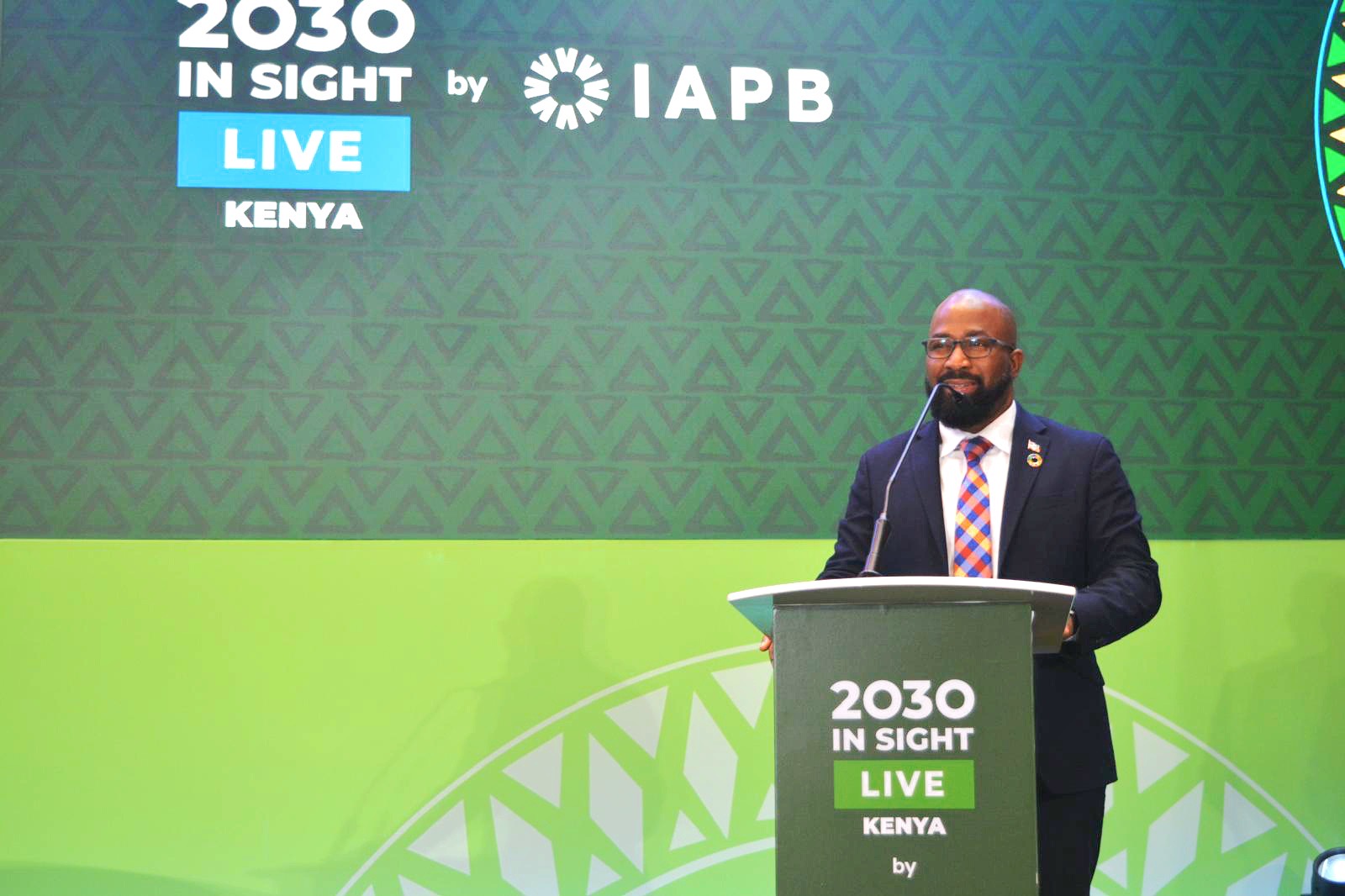
    NAIROBI, KENYA – June 8, 2026 – Antigua and Barbuda’s years-long push to center equitable eye health and accessible vision care on the global public health agenda is earning growing international acclaim, as the small island nation showcased its ambitious domestic and advocacy work at the 2030 In Sight Live Conference hosted in Nairobi this week.

    Senior diplomat Claxton Duberry represented Antigua and Barbuda at the three-day gathering organized by the International Agency for the Prevention of Blindness (IAPB), held from June 4 to 6, where he laid out the country’s progress to an audience of senior government officials, global health leaders, international development partners, private sector stakeholders and civil society advocates. At the core of his remarks was Antigua and Barbuda’s unwavering commitment to expanding access to high-quality eye care services for every citizen and resident, regardless of income or location.

    Duberry spoke during the plenary session “Positioning Eye Health as a National Priority: From Strategy to Systems,” a forum focused on supporting countries to turn broad global public health commitments into actionable, long-lasting national policies and infrastructure. His address was met with broad positive reception from conference delegates, who highlighted the nation’s consistent, on-the-ground work to reframe eye health from a niche global advocacy issue to a core national development priority.

    Speaking on behalf of the Government of Antigua and Barbuda, Duberry credited the vision and leadership of Prime Minister Gaston Browne and Permanent Representative to the United Nations Ambassador Sir Walton Webson for elevating the nation’s profile as a leading global voice for universal eye health. The centerpiece of the country’s domestic work, Duberry explained, is the Prime Minister’s groundbreaking “Vision Project,” a transformative national initiative structured around three interconnected core pillars.

    The first pillar focuses on expanding access to corrective eyewear, with a major national initiative already underway to distribute thousands of reading glasses to eligible citizens and residents across the country. The second pillar invests in building long-term sustainable eye health capacity, through expanded training programs for local care providers, investment in workforce development, and targeted upgrades to national eye care infrastructure and systems. The third and most ambitious pillar is the Blindness Free Zone Initiative, a comprehensive community-centered model designed to eliminate preventable blindness and vision impairment through systemic early detection programs, expanded access to affordable treatment and surgery, and fully integrated local eye care services.

    “The Blindness Free Zone is far more than a standalone public health program,” Duberry told attendees. “It is a replicable development model that proves how intentional political commitment, strategic cross-sector partnerships, and deep community engagement can work together to improve individual quality of life while strengthening core national health and development systems.”

    Duberry also used the Nairobi conference to spotlight the upcoming Global Eye Health Summit, which Antigua and Barbuda will host on the margins of the forthcoming Commonwealth Heads of Government Meeting (CHOGM). The upcoming summit will bring together heads of government, leaders from international development agencies, private sector executives, philanthropic organizations and civil society groups to mobilize new commitments, strengthen global accountability for eye health targets, and speed up progress toward the 2030 global vision care goals.

    On the sidelines of the Nairobi conference, Duberry held a series of closed-door strategic meetings with senior leaders from across the global eye health ecosystem. Talks centered on expanding international financial and technical support for Antigua and Barbuda’s Blindness Free Zone Initiative, strengthening cross-national partnerships for workforce capacity building and service delivery, and advancing logistical and policy preparations for the upcoming Global Eye Health Summit.

    These bilateral and multilateral engagements have further cemented Antigua and Barbuda’s growing reputation as a leading global advocate for universal vision care, underscoring the nation’s ongoing commitment to keeping eye health firmly embedded in global development, public health, and social inclusion agendas for years to come.

  • Health ministry releases latest Health-Climatic Bulletin for June to August 2026

    Health ministry releases latest Health-Climatic Bulletin for June to August 2026

    Ahead of the 2026 June to August wet and warm season, two government agencies in Dominica — the Ministry of Health, Wellness and Social Services, and the Dominica Meteorological Service — have jointly launched the second edition of the nation’s specialized Health-Climatic Bulletin. This innovative cross-agency publication integrates meteorological data with public health analysis, delivering a comprehensive breakdown of recent climate trends, three-month seasonal forecasts, and actionable guidance to help communities mitigate weather-related health threats.

    The core goal of the bulletin is to demystify the connections between shifting climate conditions and public wellness, boost public awareness of avoidable climate-linked health hazards, and empower residents and local organizations to take proactive preparedness steps before risks emerge. One of the bulletin’s key projections is that Dominica will see above-average temperatures through the June to August window, with a marked rise in the number of consecutive extreme hot days across the island.

    Even though the National Meteorological Service forecasts that the 2026 Atlantic hurricane season will be less active than the historical average, the bulletin still flags flash flooding as one of the most pressing weather-related hazards for the coming months. Health authorities warn that excess rainfall and subsequent flooding create ideal conditions for the spread of two broad categories of illnesses: waterborne diseases spread through contaminated water, and vector-borne diseases carried by insects that breed in standing water. Common conditions expected to see increased transmission include gastroenteritis, leptospirosis, and mosquito-borne viral infections such as dengue fever.

    The bulletin also addresses two underdiscussed climate-related health threats: Saharan dust intrusions and fluctuating weather patterns. These atmospheric conditions can act as triggers for acute respiratory episodes, and worsen pre-existing chronic breathing conditions such as asthma, leading to higher rates of hospital visits and health complications for vulnerable populations.

    Beyond physical health risks, the publication breaks new ground by highlighting the often-overlooked impact of extreme weather on population mental health. Prolonged heat exposure, disruptive flooding, and unanticipated severe weather events place significant cumulative stress on both individuals and entire communities, which can worsen existing mental health conditions and reduce overall quality of life for residents.

    In closing, the Ministry of Health has issued a formal call for all Dominicans to stay updated on real-time weather forecasts through official channels, and to implement evidence-based precautionary measures throughout the June to August period to protect both their physical and mental well-being. The full bulletin is available for public download as a 1.38MB PDF document via the official news portal.