博客

  • Abinader meets with private sector to discuss global price volatility

    Abinader meets with private sector to discuss global price volatility

    SANTO DOMINGO – On Monday, Dominican Republic President Luis Abinader gathered top leaders from the country’s key productive sectors for a high-stakes meeting at the National Palace, where officials and private representatives aligned on strategies to buffer the national economy and everyday consumers from the ripple effects of unpredictable global market shifts.

    The closed-door working session centered on three core priorities: updating the national standardized price table, evaluating the latest trends unfolding across international commodity markets, and coordinating targeted interventions that can curb the spillover damage of global economic volatility. A particular focus of the discussion was addressing ongoing swings in global oil and natural gas prices, a key driver of inflation and cost of living pressures that have impacted economies around the world in recent years.

    Speaking after the meeting, Abinader highlighted that sustained, open dialogue between the national government and the country’s commercial, industrial, agricultural, and broader business communities has already proven instrumental in forging broad consensus. These cross-sector discussions have also produced actionable recommendations that reinforce existing government policies aimed at insulating the Dominican economy from external economic shocks, he noted.

    The president emphasized that ongoing collaboration between public officials and leading organizations representing business, manufacturing, trade, and agriculture remains non-negotiable for protecting the nation’s hard-won economic stability, and shielding household budgets from the weight of international economic pressures. Attendees at the gathering included multiple senior government officials, alongside leadership representatives from the Dominican Republic’s most prominent industry groups: the National Business Council (CONEP), the Association of Industries of the Dominican Republic (AIRD), the National Business Owners Organization (ONEC), the National Union of Agricultural Producers (ÚNASE), and the Dominican Agribusiness Board.


  • Leonel Fernández urges Latin America to embrace a knowledge-based economy

    Leonel Fernández urges Latin America to embrace a knowledge-based economy

    MADRID — Against a backdrop of shifting global power dynamics and rapid technological advancement, former Dominican President Leonel Fernández has sounded a clarion call for Latin America to step out of its passive role and shape its own destiny amid a sweeping reordering of the post-Cold War international system. Delivering his address at the Funglode Ibero-American Forum held in the Spanish capital, Fernández argued that the global framework constructed at the close of the 20th century is now in the throes of deep, irreversible transformation, giving rise to a far more fragmented and unpredictable global landscape than the region has ever faced.

    In his keynote remarks, the former leader outlined the most pressing challenge confronting Latin America: breaking away from its long-standing reliance on a raw material export-led economic model to build a new growth paradigm rooted in knowledge, innovation, advanced technology, digital transformation and artificial intelligence. Fernández framed the persistent digital gap across the region as a modern iteration of illiteracy, warning that nations that delay widespread adoption of emerging cutting-edge technologies will face marginalization in the competitive 21st century global economy, unable to keep pace with more digitally advanced economies.

    Fernández further emphasized that meaningful progress requires coordinated effort across key sectors, calling for strengthened strategic collaboration between higher education institutions, private industry, and national governments. This tripartite partnership, he argued, is critical to advancing groundbreaking research, scaling innovative solutions, and crafting effective public policies that drive inclusive growth. The three-day forum brought together policymakers, academics, and business leaders from across the Ibero-American community to deliberate on a broad slate of pressing shared issues, from shifting geopolitical alignments and cross-border migration to the defense of democratic institutions, sustainable economic expansion, cross-regional academic collaboration, and the opportunities and risks of new technological innovation.

    Closing his remarks, Fernández reiterated that targeted investment in artificial intelligence and the intentional development of regional innovation ecosystems are non-negotiable steps for Latin America to boost its global competitiveness, unlock new economic opportunities, and secure a prosperous foothold in an increasingly digitized global economy.

  • Immigration advocates hail court rejection of Trump’s ‘unlawful’ immigration restrictions

    Immigration advocates hail court rejection of Trump’s ‘unlawful’ immigration restrictions

    Two separate federal court rulings have invalidated controversial, unlawful immigration policies implemented during the Donald Trump administration, drawing widespread applause from immigration advocates, legal organizations and state officials who have pushed back against the administration’s restrictive, anti-immigrant agenda.

  • EU rejects Apple blame for delayed Siri AI rollout

    EU rejects Apple blame for delayed Siri AI rollout

    BRUSSELS, Belgium – A public dispute between the European Union and Apple has erupted this week after the U.S. tech giant blamed EU regulatory rules for its decision to hold back the launch of its new artificial intelligence-powered Siri upgrade across the bloc. The standoff marks the latest clash between the influential tech firm and Brussels over landmark digital regulation.

  • Gonzalo Castillo meets U.S. Ambassador after visa reinstatement

    Gonzalo Castillo meets U.S. Ambassador after visa reinstatement

    In a significant development reshaping the political trajectory of Dominican Republic presidential candidate Gonzalo Castillo, the former public works minister and nominee of the Dominican Liberation Party (PLD) has concluded a high-stakes meeting with United States Ambassador Leah Francis Campos that both sides frame as a breakthrough for cross-border collaboration.

    The closed-door gathering in Santo Domingo comes on the heels of two pivotal wins for Castillo: a recent court acquittal in the high-profile Calamar corruption case, and the U.S. government’s decision to reverse a prior revocation and reinstate his 10-year non-immigrant visa. Castillo opened up about the talks following the meeting, emphasizing that the discussion centered on aligning shared visions for the Dominican Republic’s future and unlocking new avenues of bilateral cooperation that would deliver concrete economic and social gains for both the Dominican and American peoples.

    Castillo first went public with news of his visa restoration on May 26, using the announcement to extend formal gratitude to the U.S. government, then-President Donald Trump, and Ambassador Campos personally for facilitating the decision. The sequence of recent positive outcomes—ranging from the clearing of his name in the corruption investigation to the visa reinstatement and now the high-level diplomatic meeting—marks a clear turning point in Castillo’s bid for the presidency, reigniting momentum for his political campaign after months of legal and diplomatic setbacks. Analysts note that the restored U.S. travel access and formal diplomatic meeting signal a shift in international standing for the candidate, strengthening his position ahead of upcoming electoral contests.

  • Costa Rican Security Minister studies Dominican Republic’s security model

    Costa Rican Security Minister studies Dominican Republic’s security model

    In a step aimed at boosting public safety cooperation across Central America and the Caribbean, Costa Rica’s Minister of Public Security Gerald Campos has completed an official working visit to the Dominican Republic, focused on studying the Caribbean nation’s award-winning approach to combating transnational and domestic crime. The core focus of Campos’ trip was examining the Dominican Republic’s landmark Joint Task Force coordination model, a integrated governance framework widely recognized for driving measurable reductions in the country’s overall crime and homicide rates over recent years.

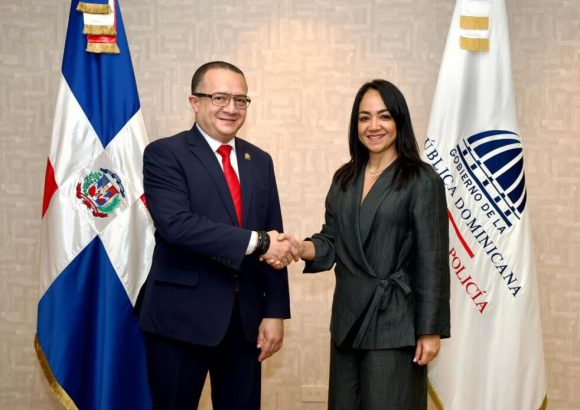
    During the visit, Campos held in-depth working meetings with Dominican Republic’s Minister of Interior and Police Faride Raful, alongside a cohort of senior national security officials. The talks created a collaborative space for both nations to share on-the-ground experiences across critical public safety domains, including community-focused crime prevention, protection of civilian citizens, and the expansion of frontline operational response capabilities. Beyond formal discussions, the Costa Rican delegation was invited to attend an operational monitoring session of the Joint Task Force hosted at Dominican National Police headquarters, giving delegates a first-hand opportunity to observe how civilian government agencies, national police units, and military branches synchronize their efforts to disrupt organized criminal activity.

    In remarks following the site visit, Campos offered high praise for the tangible outcomes delivered by the Dominican Republic’s integrated public security system. He specifically noted that Costa Rica is in the process of developing its own dedicated national anti-crime task force, and his government is eager to adapt key successful components of the Dominican model to fit Costa Rica’s domestic security context. Campos’ packed official agenda also included separate talks with Dominican Defense Minister Carlos Antonio Fernández Onofre, as well as a guided tour of the Armed Forces’ advanced C5i command center. During the tour, the Costa Rican team explored cutting-edge technological and intelligence tools that Dominican security forces rely on to plan and execute targeted security operations.

    Security analysts note that this bilateral visit does more than just share policy knowledge: it strengthens long-standing cooperative ties between the Dominican Republic and Costa Rica, as both nations work together to tackle shared regional security challenges. Rising transnational organized crime, drug trafficking, and public safety threats have created a growing need for cross-border knowledge sharing in the region, making this exchange a timely step toward more effective regional public safety governance.

  • Jamaica to accord official funeral to former minister Hugh Hart

    Jamaica to accord official funeral to former minister Hugh Hart

    KINGSTON, Jamaica — In a formal tribute to a life of extraordinary public service and national contribution, the Jamaican government has announced it will host an official state funeral for Hugh Hart, the late former Cabinet minister and preeminent legal figure who passed away earlier this year. The ceremony, scheduled for 10:30 a.m. on Wednesday, June 10, will take place at the University Chapel on the Mona campus of The University of the West Indies.

    Hart, who died at the age of 96 in April while residing in the Cayman Islands, built a decades-long legacy of distinguished service to Jamaica across three critical spheres: law, public governance, and private sector development. As one of the founding partners of the prominent regional law firm Hart Muirhead Fatta, he quickly rose to prominence as one of the sharpest and most respected legal intellects in Jamaica, building a reputation that shaped the country’s legal landscape for generations.

    Beyond his private legal practice, Hart committed substantial portions of his career to public office. He completed two separate terms in Jamaica’s Senate, with the first tenure running from 1972 to 1976 and the second spanning 1983 to 1989. During his time in government, he was appointed to the national Cabinet to lead the Ministry of Mining and Energy, and also held concurrent responsibilities as Minister of Tourism.

    Across his time in public office, Hart played an instrumental role in shaping and growing key sectors that have long anchored Jamaica’s national economy. His strategic leadership in mining, energy, and tourism strengthened the foundations of these industries, which remain core drivers of the country’s ongoing development and economic prosperity today. He also provided critical, forward-looking guidance to a number of key national institutions, most notably those operating in the bauxite, alumina and national energy spaces.

    In 2011, the Jamaican state formally recognized Hart’s decades of impact by awarding him the Order of Jamaica (OJ), the country’s fourth-highest national honor, for his transformative contributions to the bauxite and alumina industry as well as the national legal profession.

    Jamaican Prime Minister Andrew Holness has formally issued public condolences to Hart’s family, close friends, former professional colleagues, and all members of the public whose lives were shaped by Hart’s 70-plus years of service to the Jamaican nation.

  • Guyana looking to Dom Rep to boost agricultural production

    Guyana looking to Dom Rep to boost agricultural production

    GEORGETOWN, Guyana – In a move set to transform Guyana’s agricultural sector, the South American nation is deepening agricultural cooperation with the Caribbean country the Dominican Republic to develop commercial-scale mango and avocado cultivation, according to Guyana’s Agriculture Minister Zulfikar Mustapha.

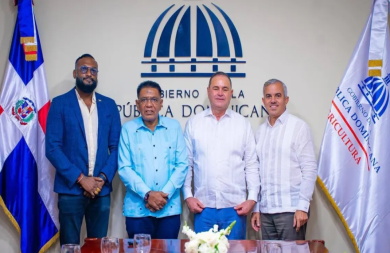
    Mustapha recently held official bilateral talks with Dominican Republic Agriculture Minister Francisco Oliverio Espaillat Bencosme, where the two sides centered discussions on unlocking collaborative opportunities that will lift Guyana’s overall agricultural output, upgrade the country’s technical agricultural capabilities, and expand its range of commercial crops. The partnership, Mustapha emphasized, aligns directly with the Guyanese government’s goal of growing the national agriculture sector while opening new income streams for local producers.

    “Guyanese farmers stand to gain enormous benefits from this collaboration,” Mustapha noted. “Our core focus right now is giving producers the support they need to enter these new large-scale cultivation projects. We will provide certified planting material, targeted skills training, and all the foundational support to get them active in these growing industries.”

    One of the most significant outcomes of the recent bilateral discussions is a formal agreement to advance large-scale mango and avocado production across Guyana. Plans for a national large-scale mango industry have already moved forward through separate talks with former Dominican Republic President Hipólito Mejía, who has agreed to support the initiative. Mustapha revealed that on-the-ground implementation of the mango cultivation project could launch as early as the end of September 2024.

    Pointing to the Dominican Republic’s established success in mango production, where the industry supports roughly 20,000 direct jobs, Mustapha said Guyana aims to replicate that economic impact with its own large-scale operations. Currently, Guyana produces small volumes of mangoes and avocados for local and regional markets, with no major commercial production footprint to tap into global export demand. The new partnership aims to close that gap.

    To help local producers scale up operations, the Guyanese government will offer full support to interested farmers, including access to improved planting stock, expert technical guidance, and specialized professional training. As a key part of the bilateral collaboration, the Dominican Republic has committed to deploying a team of experienced agricultural specialists to Guyana. These experts will work side-by-side with local technical staff and smallholder farmers to build local capacity, design evidence-based crop development strategies, and put in place the supply and distribution systems required to support sustained commercial-scale production.

  • Man probed by Jamaican police among 5 charged in US firearms smuggling investigation

    Man probed by Jamaican police among 5 charged in US firearms smuggling investigation

    A major cross-border law enforcement operation has resulted in federal indictments against five men, including a Jamaican-American dual citizen, for their alleged roles in a sophisticated firearms trafficking network that moved stolen weapons from the United States to Caribbean destinations, U.S. Department of Justice officials have confirmed. The unsealed indictment, issued in the Northern District of Georgia, outlines how the criminal ring sourced its illegal inventory by stealing firearms from vehicles across the Atlanta metro region, then prepared the stolen weapons for shipment to overseas buyers via commercial logistics channels. U.S. investigators estimate the network put more than 350 firearms up for illegal sale before authorities intervened, and multiple shipments were seized before they could reach their intended recipients, according to court documents.

    The Jamaican-American suspect has been a person of significant interest to Jamaican law enforcement for years, the Jamaica Constabulary Force (JCF) confirmed in an official statement released late Monday. Records show the dual citizen has been a core target of investigations run by the JCF’s Firearms and Narcotics Investigation Division (FNID) since the unit opened its probe into a large 239-firearm and nearly 30,000-round ammunition smuggling case tied to the island. This investigation forms part of the JCF’s wider, ongoing campaign to dismantle transnational trafficking rings that supply illegal weapons to violent criminal groups operating across Jamaica.

    The multi-year probe was a collaborative effort involving eight law enforcement agencies on both sides of the border: U.S. Homeland Security Investigations, the Bureau of Alcohol, Tobacco, Firearms and Explosives, the U.S. Postal Inspection Service, the Department of Commerce’s Bureau of Industry and Security, the Atlanta Police Department, and Jamaica’s FNID. Senior law enforcement officials on both sides call the indictment a landmark breakthrough in the long-running push to break apart the network and ensure all involved face legal consequences across every jurisdiction where they operated.

    The JCF has emphasized that long-standing, close coordination with international law enforcement partners has been critical to tracking illegal weapons flows, mapping out smuggling routes, and identifying every individual involved in the procurement, shipment, and distribution of these illegal firearms. Jamaican authorities have also laid out next steps for the dual citizen suspect: if he is convicted in U.S. courts and completes any sentence handed down by the U.S. justice system, Jamaican investigators will proceed with prosecuting him on charges tied to their ongoing local probe, which remains active.

  • Reggae Girlz held 0-0 by Panama

    Reggae Girlz held 0-0 by Panama

    In the second of two scheduled international friendly matches hosted at Panama City’s Estadio Rommel Fernandez on Tuesday, Jamaica’s national women’s football team, the Reggae Girlz, played out a tense 0-0 stalemate against Panama. The result came just four days after Jamaica claimed a narrow 1-0 victory over the same opponent at the identical venue on Friday, extending their impressive unbeaten run against Panama to four consecutive matches.

    The most high-profile missed opportunity of the first half came in the 26th minute, when winger Natasha Thomas—one of five new names introduced to Jamaica’s starting eleven from Friday’s winning side—was fouled inside the Panama 18-yard box as she cut across the penalty area. Veteran winger Deneisha Blackwood stepped up to take the resulting penalty, but her effort sailed high and crashed off the crossbar, leaving the game scoreless.

    Twelve minutes before the halftime break, Thomas came agonizingly close to opening the scoring for Jamaica. The winger connected with a cross to send a header toward goal, but Panama’s starting goalkeeper Yenith Bailey got a fingertip to the ball to deflect it away, preserving the deadlock.

    As the match drifted into stoppage time, Jamaica had a golden chance to snatch a late victory. Center-back Konya Plummer found herself unmarked inside the six-yard box with a clear sight of goal, but Bailey reacted quickly to make a sharp point-blank save, pushing the effort away and forcing a corner. The Reggae Girlz could not convert from the resulting set piece, and the final whistle left both teams sharing the points after 90 minutes of competitive play.