博客

  • Businessman Larry Gonsalves Dies; WIOC Pays Tribute

    Businessman Larry Gonsalves Dies; WIOC Pays Tribute

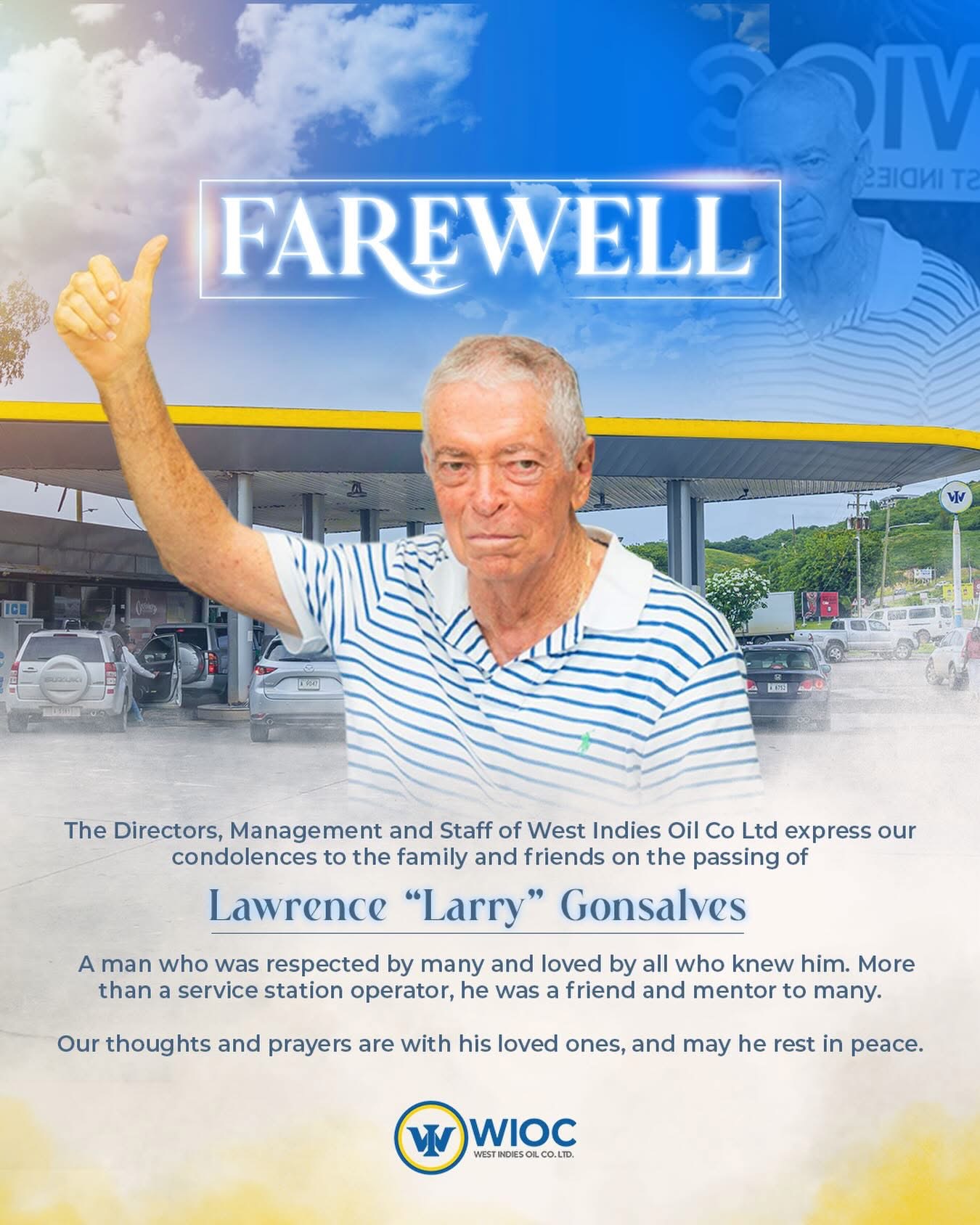
    The Caribbean business community is mourning the loss of one of its most respected long-standing members, prominent fuel retail sector figure Lawrence “Larry” Gonsalves, with regional energy firm West Indies Oil Company Ltd. (WIOC) the latest to issue a heartfelt tribute to his life and legacy.

    In an official public statement released following Gonsalves’ death, WIOC’s full board of directors, senior management, and all company staff joined together to extend deep condolences to the bereaved family, friends, and loved ones he left behind.

    The company highlighted that Gonsalves built a reputation that stretched far beyond his work operating service stations across the region. While his professional contributions to the local fuel retail industry were substantial, his most enduring impact came from his personal connections, and his willingness to lift up emerging entrepreneurs as a trusted mentor, WIOC emphasized.

    Described as a figure admired by everyone who crossed paths with him, Gonsalves earned widespread respect across the business community over decades of active engagement in local public and commercial life. “A man who was respected by many and loved by all who knew him. More than a service station operator, he was a friend and mentor to many,” the WIOC statement read.

    The organization closed by reaffirming that Gonsalves’ contributions, guidance, and warm spirit will long be remembered by every person whose life he influenced over his decades-long career, adding that the entire WIOC community holds his family in their thoughts and prayers at this difficult time.

  • Civil Liberties Group Says Barbudans Must Approve Major Changes to Land Ownership

    Civil Liberties Group Says Barbudans Must Approve Major Changes to Land Ownership

    A prominent civil society group in Antigua and Barbuda is drawing a clear line in the sand over proposed changes to Barbuda’s longstanding land framework, insisting that no major alteration to the island’s land ownership rules, governing structure or long-term development strategies can move forward without the free, informed and uncoerced consent of Barbudan residents. The Antigua and Barbuda Civil Liberties Movement has raised sharp alarms about ongoing pushes to expand freehold private land ownership and usher in large-scale high-end real estate development across the Caribbean island, arguing that the proposed shifts touch on fundamental constitutional rights, the future of local self-governance and the core principles of democratic participation for the island’s population. In an official public statement, the organization anchored its position in the country’s founding legal document, pointing specifically to Section 123(1) of Antigua and Barbuda’s Constitution. This provision formally designates the Barbuda Council as the primary institution of local self-governance for the island, and the group maintains that both the council and the community it represents deserve full, meaningful consultation before any decisions that reshape Barbuda’s lands, natural resources and long-term trajectory are finalized. The movement emphasized the deep historical value of Barbuda’s communal land tenure system, noting that for generations this structure has shielded local residents from predatory land speculation, prevented the dangerous concentration of land ownership in the hands of a small elite, and guaranteed that future generations of Barbudans will retain access to land on their native island. The group has issued a formal call to the national government, urging officials to honor the constitutionally enshrined role of the Barbuda Council and ensure that all proposals related to land ownership, land management and infrastructure or residential development are carried out with complete transparency and full, inclusive public participation from the Barbudan community. Crucially, the organization clarified that it does not oppose all new development or foreign investment on the island. Instead, it maintains that responsible economic growth and incoming investment can coexist with full respect for Barbuda’s traditional communal land tenure system and its locally rooted democratic institutions.

  • Key measures outlined to harmonise EV charging standards across CARICOM

    Key measures outlined to harmonise EV charging standards across CARICOM

    As adoption of electric vehicles accelerates across Caribbean nations, the Caribbean Community (CARICOM) has stepped forward to address a growing barrier to seamless EV travel and infrastructure expansion: fragmented national charging standards. In a recent virtual webinar convened by the CARICOM Secretariat, regional stakeholders, industry experts, and technical specialists gathered to map a path toward harmonized, interoperable EV charging networks across all 15 member states.

    The discussion centered on identifying core priority areas that require collective alignment to build a functional cross-regional EV ecosystem. Attendees pinpointed three critical focus areas: unified safety protocols for charging infrastructure, consistent requirements for new charger installations, and standardized inspection procedures to ensure reliability and public safety across all member states. The ultimate goal of these harmonization efforts is to enable interoperability, meaning EV drivers can use any public charging station across the CARICOM region regardless of their home country’s technical specifications.

    The session’s keynote address, delivered by Dr. Soren E. Maloney, Director of Ziklag Consulting Group Company Limited, drew on firsthand experience from Guyana’s emerging EV sector to highlight regional disparities and common challenges. Dr. Maloney noted that while EV uptake is growing at a rapid pace across every CARICOM member state, individual nations are progressing at vastly different stages when it comes to developing domestic technical and regulatory standards for charging infrastructure.

    He outlined structural barriers that have slowed coordinated progress across the bloc: many small island and developing nations in the region lack large specialized technical workforces, operate with constrained public budgets dedicated to sustainable transport infrastructure, and have limited institutional capacity to build out robust regulatory frameworks and native industry standards from scratch. These gaps have directly translated to interoperability challenges, where incompatible technical standards between neighboring countries prevent cross-border travel and raise infrastructure costs for private operators.

    Drawing on lessons from Guyana’s ongoing development of its EV charging network, Dr. Maloney emphasized four key principles for successful regional standard-setting. First, he stressed the need for clear institutional roles and transparent process flows to avoid confusion between public and private stakeholders. Second, he highlighted the value of early and ongoing feedback from industry actors and EV users to ensure standards meet on-the-ground needs. Third, he called for standard-setting processes to include explicit provisions for workforce capacity building, to address the regional gap in technical expertise. Finally, he emphasized that standards must be tailored to local conditions, the current maturity of individual national EV markets, and the scale of infrastructure deployment across the region.

    In a key warning to policymakers, Dr. Maloney advised against the common pitfall of directly adopting cutting-and-pasting standards from larger, more developed regions in Europe, North America, or Asia. He noted that one-size-fits-all standards imported from outside the Caribbean often fail to account for the unique market and geographic conditions across CARICOM, and warned that rigid standards should not lock member states into a single proprietary technology, limiting future innovation as the EV sector evolves.

    The full recording of the CARICOM webinar is available for public viewing on YouTube via the link shared in the original press release, allowing regional stakeholders and interested parties to access the full discussion and technical details presented during the session. The initiative marks a key step forward for CARICOM as it works to support the transition to sustainable electric transport across the Caribbean, addressing infrastructure barriers that could slow the adoption of low-emission vehicles across the region.

  • Labour Department to Host Free Health and Wellness Fair on Thames Street

    Labour Department to Host Free Health and Wellness Fair on Thames Street

    Residents of Antigua and Barbuda will soon have access to a full suite of free health screenings, social service resources, and professional guidance at an upcoming community Health and Wellness Fair, organized by the national Labour Department. Scheduled for Friday, June 12, the day-long public event will bring together a coalition of eight government bodies and non-profit service providers, all opening up their services to people of every age group at no cost.

    The fair will operate from 9 a.m. to 2 p.m. along the high-traffic corridor of Thames Street, a central location designed to maximize accessibility for local residents. Clinical services will lead the offerings: the Ministry of Health and Medical Benefits will administer a full range of complimentary general health screenings, while the national AIDS Secretariat will bring confidential HIV testing and personalized counseling for attendees seeking information or support.

    Beyond core medical services, the event will address a wide range of pressing social and public health issues. SPARC, the national Substance Prevention, Advocacy, Resources and Counseling organization, will share evidence-based information and guidance for both substance abuse prevention and accessing evidence-based treatment programs. The national Human Trafficking Task Force will also set up a booth to conduct community outreach, raising public awareness of human trafficking risks and sharing information on how to report and prevent exploitation.

    Economic and regulatory resources will also be on hand for attendees. The Antigua and Barbuda Social Security Board will deploy representatives to walk residents through their existing benefit entitlements and connect eligible community members with underutilized public resources. Officers from the host Labour Department and national Immigration Department will also be on site to answer questions, provide guidance, and resolve concerns related to labour regulations, workplace rights, and a wide range of immigration-related matters.

    Event organizers note that the cross-agency fair is built around three core goals: encouraging the broader public to adopt sustainable, healthier daily habits, closing information gaps around the full scope of public and non-profit social services already available to residents, and forging direct, personal connections between community members and the agencies that exist to support them. Admission to the entire event is completely free, and organizers are actively encouraging all community members to take advantage of the range of screenings, one-on-one consultations, and educational resources available throughout the day.

  • Soeropawiro: Burgers mogen niet de dupe worden van herziening grondconversie

    Soeropawiro: Burgers mogen niet de dupe worden van herziening grondconversie

    A decades-long effort to expand land ownership for everyday citizens hit a major legal snag recently, and now the Minister of Land and Forest Management (GBB), Stanley Soeropawiro, is moving to reassure the public that ordinary participants will not pay the price for government missteps. In an official statement responding to growing public debate over the country’s land conversion policy, which allows tenants to convert long-term land leaseholds into full private ownership, Soeropawiro made clear that protecting citizens who acted in good faith is the government’s top priority.

    The minister confirmed that the national administration has formally acknowledged serious unresolved legal questions surrounding key components of the previous iteration of the conversion program. Independent reviews of the policy found that multiple approved conversion processes failed to align with existing national land laws and regulatory frameworks. In response to these findings, the government has ordered a full policy overhaul and a case-by-case re-evaluation of all previously issued conversion approvals.

    Speaking exclusively to local outlet Starnieuws, Soeropawiro emphasized that residents who took advantage of the conversion scheme did so with the full expectation that the government program was legal and would deliver them long-term security for their land parcels. “That is exactly why this administration holds one core principle above all else: ordinary citizens must not be made victims of ambiguities or legal flaws in government land policy,” he said.

    For residents who have already completed required payments but have not finalized their conversion process, Soeropawiro announced that each case will undergo a thorough individual assessment. If a review finds that the conversion cannot legally proceed, or that an existing approval has lost its legal validity, the government will issue a full refund of all payments submitted by the applicant.

    The GBB underlined that the re-evaluation process is not designed to disadvantage residents who participated in the program. Instead, the overhaul aims to build a new land conversion framework that is legally sound, fully transparent, and equitable for all. Soeropawiro added that the end goal of the reform is to restore public confidence, ensuring that all citizens can count on the legal validity and long-term security of their property rights for years to come.

  • Column: Voetbalplezier

    Column: Voetbalplezier

    The 23rd edition of the FIFA World Cup, the world’s biggest quadrennial football spectacle, officially gets underway today, marking an unprecedented milestone in the tournament’s 96-year history. For the first time ever, 48 nations will compete for football’s most coveted trophy – a 50% expansion from the previous 32-team format that has been in place since 1998.

    This expanded format brings far-reaching ripple effects across the globe. With more national teams qualifying for the final tournament, millions more fans are traveling to the host venues to cheer on their sides, while billions more across every continent are tuning in via television, radio, traditional media outlets and digital streaming platforms to follow their nations’ progress. More people than ever before have a personal connection to the tournament, whether a friend or family member competing on the pitch, or a local community tie to one of the participating federations. Also making history, this iteration is the first to be co-hosted by three countries – the United States, Mexico and Canada – meaning three separate national economies will directly reap the economic benefits of this massive global event, from increased tourism to infrastructure investment.

    For football fans around the world, daily routines are being upended to make time for matches: many rearrange work and personal schedules to catch their favorite stars in action, while casual viewers gather with friends and family to enjoy the communal excitement of the tournament. Even for those who do not follow football regularly, the World Cup’s cultural omnipresence makes it impossible to avoid. Global brands and retailers have seized on the tournament’s unparalleled popularity to drive sales, rolling out co-branded products, themed marketing campaigns and special promotions in nearly every country, even those whose teams failed to qualify for the final round. This widespread commercialization has led many observers to note that the World Cup is gradually shifting from a purely sporting competition to a massive global commercial enterprise.

    This year’s tournament also breaks new ground in fan engagement: it is the first World Cup that allows supporters across the planet to follow every moment of action in real time across a wide range of digital and social media platforms, with instant live updates, behind-the-scenes content and interactive fan discussions bringing the tournament closer to global audiences than ever before. Social media data from pre-tournament buildup shows that billions of fans around the world have been eagerly anticipating the kickoff, with World Cup fever reaching even nations that did not qualify. In Suriname, for example, hype for the tournament remains high despite the men’s national team missing out on the final round, and most local fans find the match kickoff times perfectly aligned with their daily schedules. The excitement does present one challenge for local communities though: the tournament’s opening coincides with the start of final secondary school exams, requiring young student fans to practice strong discipline to keep their studies as a top priority.

    While the 2026 World Cup is poised to deliver weeks of joy and sporting drama for global audiences, this expanded, multi-nation iteration is not without its growing challenges that could dampen the celebratory atmosphere if left unaddressed. In recent weeks, reports of planned public demonstrations have emerged in co-host Mexico, while the United States has boosted security deployments across its host venues to prevent potential civil unrest. To date, third co-host Canada has remained the least controversial of the three host nations, with no major security or political disruptions reported in the lead-up to kickoff.

  • Leisure : Did you know ? #32

    Leisure : Did you know ? #32

    In the latest installment of HaitiLibre’s popular twice-weekly general knowledge quiz series “Did You Know?”, readers are invited to discover a little-known geographic fact that highlights one of Asia’s most dynamic and misunderstood capital cities. The answer to this week’s trivia question confirms what climate data has long recorded: Ulaanbaatar, the capital of Mongolia, officially holds the title of the coldest national capital on Earth.

    Nestled in the Tuul River valley at an elevation of 1,350 meters above sea level, Ulaanbaatar is home to nearly half of Mongolia’s total population, and faces some of the harshest winter conditions on the planet. During the coldest winter months, temperatures regularly plummet below -40°C, a climatic extreme that cements its status as the coldest capital worldwide.

    Beyond its frigid reputation, the city carries a rich layered history that shapes its unique modern identity. Founded originally as a nomadic Buddhist monastic settlement, Ulaanbaatar today blends a striking mix of urban landscapes: imposing Soviet-era architecture stands alongside gleaming contemporary skyscrapers, while traditional ger (yurt) neighborhoods still dot the city’s outer edges, preserving the nomadic roots of the Mongolian people.

    As the gateway to Mongolia’s vast, sweeping steppes, Ulaanbaatar also serves as a thriving cultural hub for the country. It hosts world-renowned natural history museums, famous for their extensive collections of dinosaur fossils unearthed from the Gobi Desert, and remains a center of Buddhist life with active historic monasteries such as the iconic Gandan Monastery. Caught between millenia-old nomadic traditions and rapid 21st-century urbanization, the Mongolian capital is a rapidly changing metropolis that has adapted to thrive despite the unforgiving Northern Hemisphere climate it calls home.

    This fun fact is pulled from the trivia question bank of Quiz.HaitiLibre, the free general knowledge platform operated by HaitiLibre that serves audiences looking to expand their knowledge across global and Haiti-focused topics. In a recent monthly update rolled out on June 1, 2026, the platform added 31 new quiz games, pushing its total library of accessible content to 150 unique games. The platform adds new content on a monthly rolling basis to keep challenges fresh for returning users.

    All of Quiz.HaitiLibre’s exclusive content is free to access, requires no user registration, and is built to suit audiences of all ages and knowledge levels. Each quiz offers three difficulty tiers: easy, intermediate, and hard, and is available in both French and English to serve a broad multilingual audience. Visitors can explore topics ranging from Haitian current affairs and culture to global geography, history, science, and more, with expert-level challenges available for users seeking a more rigorous test of their knowledge.

  • Refining domestic crude oil: A path of great effort that continues to yield results

    Refining domestic crude oil: A path of great effort that continues to yield results

    Against a backdrop of decades-long economic pressure and a tightening U.S. energy blockade that cut off access to imported crude oil, Cuba’s iconic Hermanos Díaz Refinery in Santiago de Cuba has delivered a landmark demonstration of national resilience: the successful processing of 20,000 tons of domestically produced crude oil, a feat that defies long-held industry assumptions and underscores the island nation’s drive for energy self-sufficiency.

    The refinery, one of only four operating in Cuba and originally expanded and modernized in the 1980s to process imported light crude, has a long history of adapting to crisis. Between 2016 and 2021, the facility faced mounting challenges: steep production declines, consistent financial losses, and a damaging brain drain of skilled engineers, technicians, and operational staff. It was not until 2024 that a team of in-house specialists achieved a pivotal technological breakthrough, developing a proprietary solvent that upgraded imported heavy crude from 16 degrees API to a medium-grade crude suitable for full distillation into usable petroleum derivatives.

    This innovation transformed the refinery’s trajectory. Led by more than 700 on-site workers, widespread incremental technological upgrades, and a culture of collective innovation, the facility returned to profitability, stopped the outflow of skilled personnel, and resumed production of critical products including naphtha, gasoline, drilling fuel, fuel oil for national thermoelectric plants and distributed power generation, asphalt, and raw materials for Cuba’s key nickel industry. “If we had resigned ourselves to the technological limitations that made refining heavy crude seem impossible at the end of the last decade, the future of this critical industry would have been very uncertain,” noted Irene Barbado Lucio, general director of the refinery, which operates under the state-owned Cuban Petroleum Union (Cupet). “United, we overcame what seemed unbeatable.”

    That spirit of collective problem-solving was put to an even greater test in 2026, when the long-running U.S. blockade, tightened under the Trump administration and maintained through subsequent policy, succeeded in cutting off all consistent access to imported crude. Coercive U.S. pressure forced international suppliers to halt oil exports to Cuba, leaving the nation at risk of running out of naphtha — a core input required to continue operating domestic oil extraction wells. Facing an existential energy crisis, the refinery’s leadership turned to the only available option: leverage their existing crude upgrading technology to adapt to domestic crude, following the self-sufficiency principles long embedded in Cuba’s revolutionary approach.

    After intensive research and process adjustments, the refinery ran its first test batch of domestic crude in March 2026, successfully producing naphtha, diesel, and fuel oil — and keeping the nation’s domestic oil fields operational. While initial results were promising, the unique properties of Cuban crude — high viscosity, high sulfur content, and high acidity that causes accelerated corrosion — required targeted facility modifications. To address these challenges, engineers prioritized processing crude from western Cuba, which has more favorable flow characteristics and lower viscosity than other domestic deposits, while rolling out incremental upgrades across the refinery.

    By the middle of 2026, the team had scaled operations to process 20,000 tons of domestic crude, exceeding the performance of the initial pilot run. The facility successfully produced solvent naphtha for domestic oil wells and fuel oil that is already powering the Antonio Maceo Thermoelectric Power Plant, with evaluations underway for its use in the nickel industry. While the diesel produced does not yet meet full commercial standards, it can be blended with higher-quality residual stocks to create usable fuel. To optimize the refining process for Cuban crude’s unique properties, specialists have implemented multiple targeted upgrades: rehabilitated crude washing systems, introduced a new corrosion-neutralizing product called Vapen 220 pe to counteract corrosive acids formed during distillation, built a dedicated collection line for pollutant gases from the vacuum distillation tower (which are then burned in refinery furnaces to cut emissions and protect worker health), and reconfigured pipeline infrastructure to improve the flow of high-viscosity crude.

    Today, the facility continues ongoing infrastructure upgrades to improve production traceability, reduce fuel loss, strengthen fire suppression and lightning protection systems, and expand spill containment measures to protect nearby Santiago Bay. The milestone aligns with broader national innovation efforts led by the Petroleum Research Center, centered on thermoconversion technology that Cuban President Miguel Díaz-Canel Bermúdez has highlighted as a core part of the nation’s push for energy independence. Díaz-Canel noted that the achievement breaks a long-standing taboo in Cuba that domestic crude was only suitable for direct burning in thermoelectric plants, opening new pathways to make full use of the nation’s own energy resources.

    While the 20,000-ton milestone does not yet meet all of Cuba’s national petroleum product demand, it represents a critical technological advance that unlocks more efficient use of Cuba’s own energy resources. The unsung team of refinery workers and specialists, many working long overtime hours with little public recognition, continues to iterate on processes to expand capacity and improve output, ensuring that critical economic sectors can keep operating even when imported oil is denied to the island through U.S. coercion.

    For industry leaders, the achievement is far more than an energy milestone: it is a testament to the Cuban people’s ability to innovate and endure even the most severe external pressure. As Barbado Lucio put it, every small adjustment made each day brings the nation one step closer to mitigating the harms of the blockade and building a sustainable, self-sufficient energy future.
  • IMF: Goudsector blijft achter ondanks economische groei

    IMF: Goudsector blijft achter ondanks economische groei

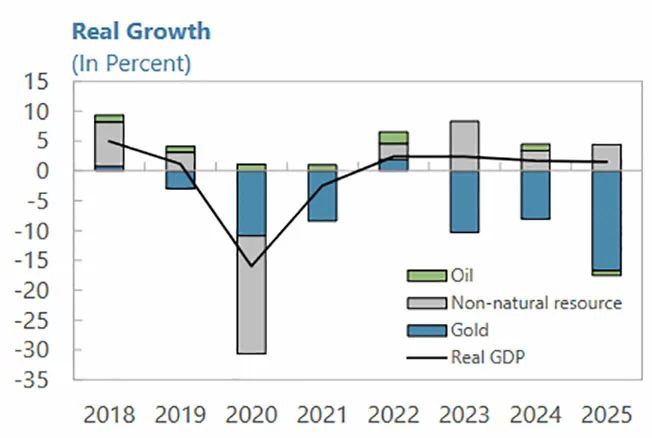
    In a newly released country assessment published Wednesday, the International Monetary Fund (IMF) has drawn attention to a key imbalance in Suriname’s evolving economy: while the nation as a whole posted solid expansion in 2025, its historically critical gold sector has failed to meet performance projections, held back by systemic challenges including rampant illegal smuggling and weaker-than-expected output.

    The IMF’s analysis confirms that Suriname’s 2025 economic growth was driven almost entirely by segments outside the extractive mining industry. Non-commodity sectors, in particular, delivered robust expansion, clocking in at an estimated 4.4% year-over-year growth. This positive momentum from non-resource industries stands in sharp contrast to the gold sector, where production shortfalls and unrecorded outflow of gold revenues into the informal, unregulated economy have dragged down its overall contribution to national gross domestic product.

    For decades, the gold sector has occupied a central role in Suriname’s economic framework, serving as the country’s top source of export earnings and a key supplier of much-needed foreign exchange. When gold output and formal exports underperform, the ripple effects are immediately felt in public finances and the country’s balance of payments, creating unnecessary volatility that undermines broader economic stability, the IMF noted.

    To address these persistent gaps, the IMF emphasizes that targeted, urgent action is required from Suriname’s government. The international financial body calls for increased transparency across all levels of the gold supply chain, more aggressive enforcement to crack down on illegal activity, enhanced monitoring systems to track gold from extraction to export, and targeted investment to strengthen the institutional capacity of state agencies tasked with regulating the sector.

    Notwithstanding the gold sector’s disappointing performance, the IMF maintains an overall optimistic outlook for Suriname’s long-term economic trajectory. Upcoming development of the country’s offshore oil industry, paired with continued expansion of the non-resource sectors that drove 2025 growth, is expected to support solid economic expansion in the coming years.

    Even so, the IMF issued a critical warning: Suriname must not rely exclusively on future oil revenues to secure its economic future. To deliver sustainable long-term growth and consistent, stable public revenue streams, existing core sectors including gold must be better regulated and managed, the fund stressed.

    In its concluding remarks, the IMF reiterated that the performance of the gold sector will remain a decisive factor for Suriname’s economic stability over the next several years, particularly as the country prepares for the launch of full-scale offshore oil production slated to begin in 2028.

  • $9M Showdown Between Cane Farmers and Tate & Lyle Sugars Moves Forward

    $9M Showdown Between Cane Farmers and Tate & Lyle Sugars Moves Forward

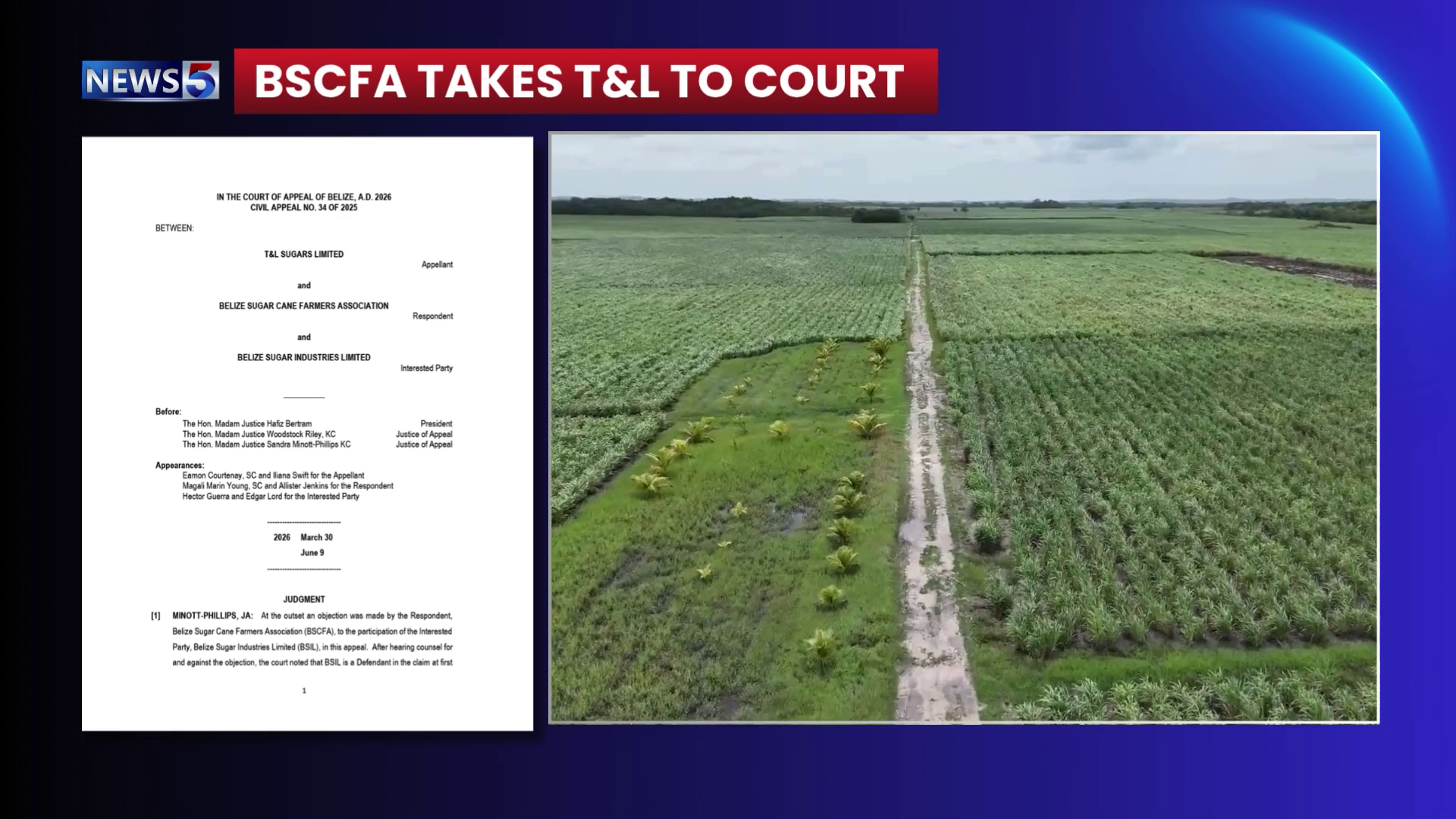
    On June 10, 2026, a key jurisdictional ruling cleared the path for a high-stakes $9 million legal dispute between Belize’s sugar cane producers and global sugar giant Tate & Lyle Sugars to be heard domestically, ending months of procedural wrangling over where the case would be tried.

    The litigation, brought by the Belize Sugar Cane Farmers Association (BSCFA), centers on claims that Tate & Lyle Sugars (TLS) has withheld more than $9 million in Fairtrade premium payments owed to over 2,000 independent cane farmers covering the 2021 to 2023 production period, plus accumulated interest. In a major win for the BSCFA, the Court of Appeal rejected TLS’s bid to move the proceedings to London, confirming that Belizean courts hold sole jurisdiction over the dispute.

    At the core of the disagreement is a technical contractual dispute following the expiration of the BSCFA’s 2020–2021 industry agreement. Tate & Lyle Sugars argues that the farmers’ association is ineligible for premiums because it never signed a new Letter of Enhancement after the prior agreement lapsed. The company has 42 days from the ruling to formalize its legal defense ahead of the upcoming trial.

    But the BSCFA and its legal team push back strongly against this position. Magali Marin-Young, lead attorney for the association, explained that Fairtrade rules do not require a separate written letter of enhancement for eligible producers. “Even without this additional signed document, premiums are due to every sugarcane producer association that sells Fairtrade-certified cane to the mill, and that includes the BSCFA,” Marin-Young stated. The legal team further alleges that TLS deliberately withheld the Letter of Enhancement from the BSCFA after 2021, when contract renegotiation talks between the BSCFA and mill operator BSI (a sister company to TLS under shared parent company ASR) broke down and sparked industry unrest. Marin-Young noted that TLS extended new enhancement agreements to other Belizean producer groups during the same period, leaving the BSCFA unfairly excluded.

    BSCFA Vice Chairman Alfredo Ortega emphasized that the association has maintained continuous Fairtrade certification throughout the disputed period, even without receiving the premium payments. “We have worked extremely hard to keep our certification up to date, even as Tate & Lyle used the contractual technicality as a tool to pressure us and withhold funds owed to our farmers,” Ortega said. He acknowledged that the legal fight comes at an extraordinarily challenging time for Belize’s cane industry, but stressed that farmers have no choice but to pursue what is rightfully theirs.

    The stakes are already high for the sector, which is grappling with a cascading series of crises that have squeezed farmer incomes for years. Former Belizean Agriculture Minister Jose Abelardo Mai warned that the costly litigation arrives at the worst possible moment for the already struggling industry. “Today, farmers face sky-high fuel costs, increasingly erratic weather from climate change, decades of degraded soil from 50 years of twice-annual field burning, and widespread outbreaks of new pests and diseases that have cut average yields to just 11 tons per acre,” Mai explained. He added that the industry’s central mill also faces critical infrastructure gaps, including an urgent need for a $10 million replacement boiler that has not been funded. Ortega echoed these challenges, noting that farmers also face persistent labor shortages for cane harvesting and frequent unplanned mill outages that disrupt harvest schedules.

    Despite the myriad headwinds, Ortega said the BSCFA remains committed to seeing the trial through. “Sugar cane is in our blood here in northern Belize; this industry has sustained our communities for generations,” he said. “Even with all the challenges we face, we will continue fighting to secure the compensation our farmers have earned.” With jurisdiction now settled, the case will proceed to a full trial in Belizean courts in the coming months.