博客

  • Calls for Answers After Leaks Reveal Extensive Payments to Mira Siblings

    Calls for Answers After Leaks Reveal Extensive Payments to Mira Siblings

    A deepening public controversy has placed a senior Belizean government official under growing pressure for answers, after internal leaks from the national payment system uncovered hundreds of unexplained public procurement transactions awarding state supply contracts to the minister’s immediate family members.

    Oscar Mira, the elected area representative for Belmopan, is at the center of the unfolding scandal, after documents pulled from the government’s Smart Stream financial platform revealed that multiple state agencies overseen by Mira have directed hundreds of monthly payments to his siblings for the provision of food and goods. The leaks have sparked fresh, widespread debate over the lack of effective transparency and accountability mechanisms for public spending across Belize’s government institutions. News Five investigative reporter Shane Williams first uncovered the records and sat down with Ministry of Defense CEO Francis Usher to discuss the scope of the payments and the status of the controversial contracts.

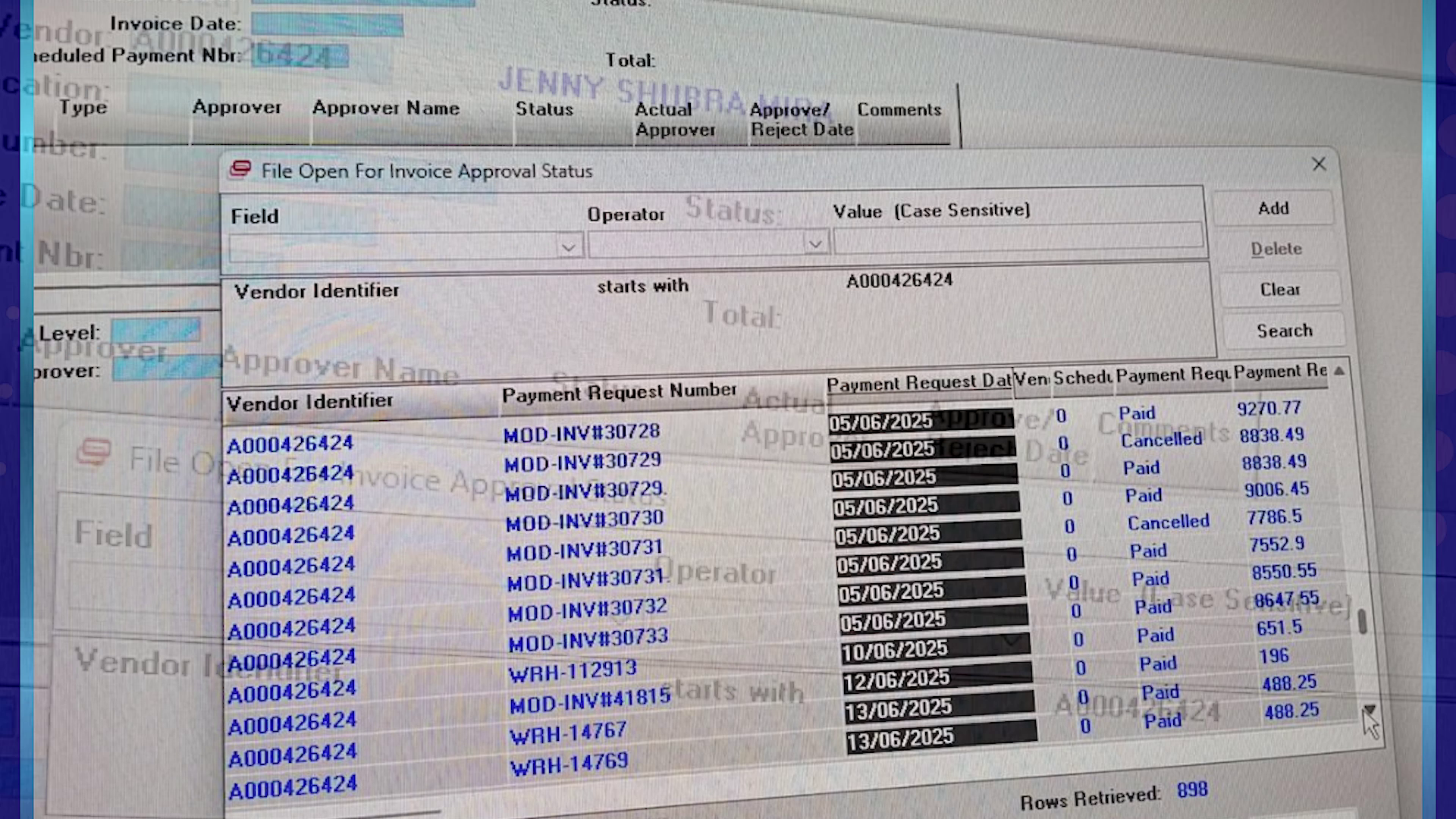
    The leaked records, which date all the way back to 2020, show that the vast majority of payments were made to Jenny Armstrong Mira, Oscar Mira’s sister, for the delivery of vegetables and other food staples to a range of high-budget state entities, including the Belize Defense Force, the Belize Coast Guard, and the Western Regional Hospital. The documents show tens of thousands of dollars in monthly public funds transferred to Jenny Mira’s supply business, with one single transaction date—February 17, 2024—recording seven separate payments for Ministry of Defense supplies totaling more than $43,500.

    While the total value of the vegetable orders has raised eyebrows among watchdogs, senior defense officials argue that the large expenditure is a reflection of operational scale, not malfeasance. “We buy a full range of produce from cabbage and lettuce to tomatoes, apples, and grapes, depending on seasonal availability,” Usher explained in the interview. “We purchase a very high volume of vegetables to feed hundreds of active service members daily, so it is natural that we see a high volume of payments. The Mira family is not our only vegetable supplier; we work with multiple vendors across all procurement categories, and sometimes non-produce items like eggs are incorrectly categorized with vegetable orders in the system. It is not an unusual level of activity for our department.”

    The leaks have also prompted lingering questions about whether the food supplies that public funds have paid for are actually reaching the service members they are intended for. For years, scattered complaints about inadequate rations for troops deployed in remote field locations have circulated among serving personnel, but Usher—who recently retired from active military service before taking up the CEO role—has firmly rejected allegations of missing or insufficient supplies.

    “Who feels it knows it. I came directly from active service, and I know firsthand the challenges that soldiers and coast guards face,” Usher said. “I would never turn my back on the men and women serving this country. I am committed to ensuring they get full value for every public dollar spent, and that taxpayer resources are protected with full accountability at every level of procurement.”

    Usher also noted that the Mira family has been a contracted supplier to the defense ministry for decades, dating back to previous administrations led by the United Democratic Party, but that the family’s contract volume has been dramatically reduced in the current 2026 financial year. “They did not secure a full vegetable supply contract this year. All awards are determined through open evaluation of tender bids against published criteria, and the contracts have not even been finalized yet. For the vegetable lot, another bidder delivered better value for taxpayers, so that is the vendor we selected,” Usher explained.

    When asked if the cut to the Mira family’s contracts was tied to Oscar Mira no longer holding the position of Minister of Defense—and thus losing direct influence over procurement decisions—Usher rejected any connection outright. “I can say categorically that when Oscar Mira was Minister of Defense and I served as his CEO, he never once pressured me to award all vegetable contracts or any other contracts to his family’s business,” Usher confirmed.

    Usher later clarified that, while Jenny Mira’s vegetable contract was not renewed this year, Oscar Mira’s brother Stanley Mira did successfully win one of the 28 open tender lots, securing a contract to supply rice and beans to the defense ministry. News Five has repeatedly reached out to the entire Mira family for comment on the allegations and the leaked records, but has not received any response as of publication. This report was compiled by investigative reporter Shane Williams for News Five.

  • Strategic visit of the haitian PM to the base of the Gang Supression Force

    Strategic visit of the haitian PM to the base of the Gang Supression Force

    In a high-stakes move to advance the Haitian government’s nationwide campaign to reestablish public order and state sovereignty over violence-plagued areas, Prime Minister Alix Didier Fils-Aimé carried out a strategic working visit to the Gang Suppression Force (GSF) headquarters in Tabarre on Wednesday, June 10, 2026.

    The prime minister was not alone in the visit: he was joined by Vladimir Paraison, the acting director general of the Haitian National Police (PNH), for talks with a cross-institutional senior delegation that included GSF Special Representative Jack Christofides, Daniela Kroslak — Deputy Secretary-General and head of the United Nations Support Office in Haiti (BANUH) — and Major General Erdenebat Batsuuri, commander-in-chief of the FRG.

    Central to all closed-door and open discussions was a shared agreement to ramp up coordinated joint security operations across Haiti. The core priorities laid out during the talks included reestablishing long-term stable security, recapturing swathes of national territory currently controlled by armed gang factions, and consolidating the tactical and strategic gains that security forces have already secured on the ground.

    During the visit, Fils-Aimé reiterated the Haitian government’s unshakable commitment to rooting out remaining pockets of gang-related violence and insecurity. He emphasized that a top policy goal is guaranteeing unimpeded, safe movement for all Haitian citizens across every region of the country, a basic right that has been disrupted by years of gang activity.

    Beyond diplomatic and strategic discussions, the prime minister conducted an on-site inspection of multiple operations coordination rooms and ongoing infrastructure development projects at the base. A key site on his inspection itinerary was a set of new dormitories currently under construction, which are designed to accommodate incoming additional contingents that will boost the GSF’s on-the-ground intervention capacity.

    Fils-Aimé also carved out time to meet with the base’s on-site medical personnel, where he conducted a first-hand review of the healthcare and support systems in place to serve security force members deployed to frontline anti-gang operations. He used the meeting to publicly commend the professionalism, courage and relentless dedication of all security and support personnel deployed to advance Haiti’s national security goals.

    Closing out his visit, Fils-Aimé reaffirmed his personal commitment to shaping government policy and action around the on-the-ground realities facing security forces. He stressed that the administration will continue to provide full support to the GSF and allied security bodies as they carry out their critical mission, with the end goal of speeding up the full restoration of legitimate state authority across every corner of Haiti.

  • Are Government Invoices Being Split to Dodge Scrutiny?

    Are Government Invoices Being Split to Dodge Scrutiny?

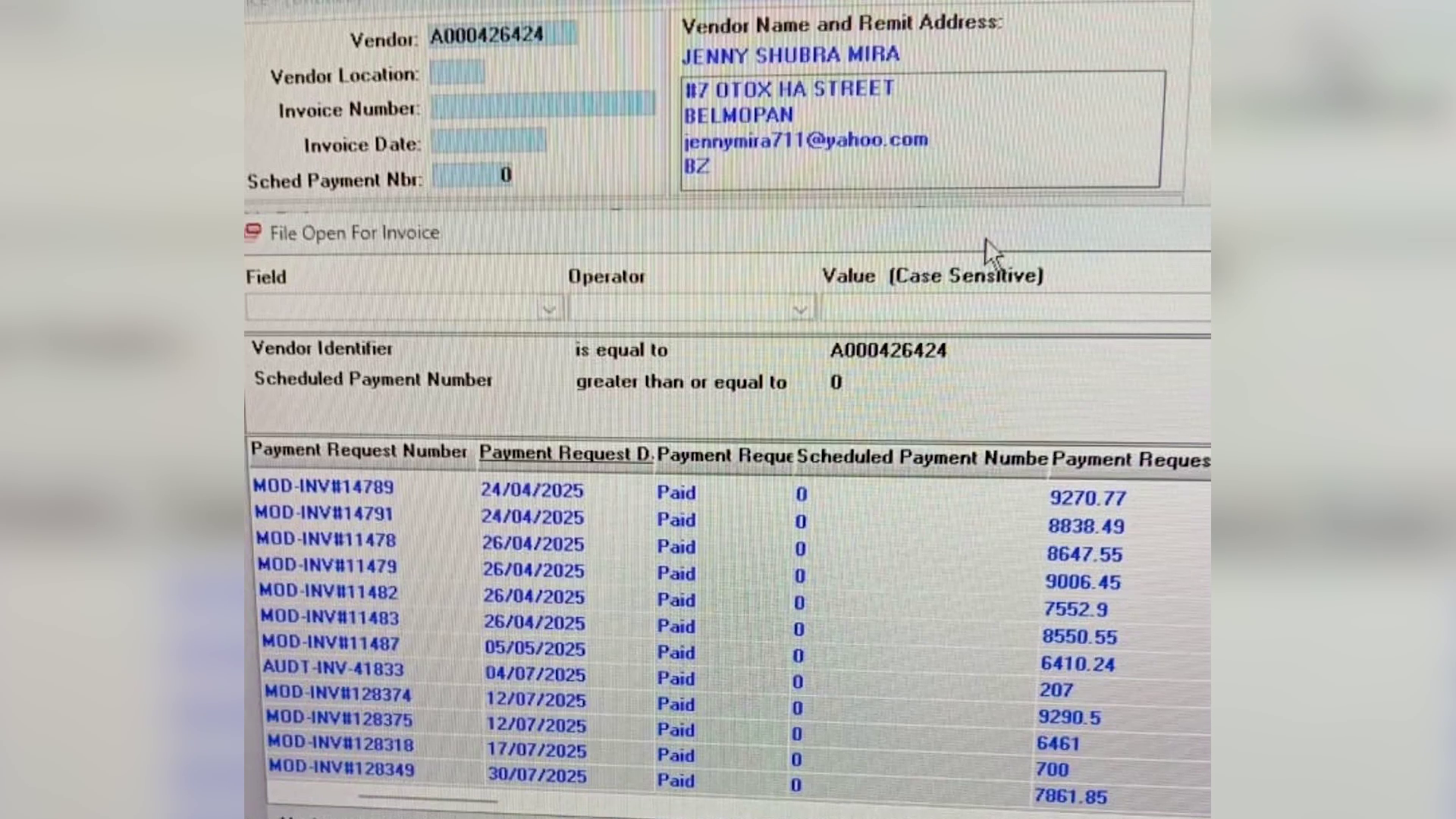
    In a developing public accountability story dated June 10, 2026, documents show a suspicious pattern in government payments to private supplier Jenny Mira: dozens of processed invoices land consistently just under the $10,000 threshold that triggers enhanced external oversight. This pattern has sparked intense questions about whether public officials are deliberately splitting large contracts into smaller, under-threshold invoices to bypass mandatory checks from national financial watchdogs.

    Under the country’s existing public finance rules, any transaction above $10,000 for local contracts requires additional review from the Ministry of Finance and Treasury, while contracts exceeding $50,000 must receive formal approval from the office of the contractor general. Invoices under $10,000, by contrast, are classified as discretionary spending that can be approved internally by individual ministries without further external scrutiny. This regulatory structure makes the clustered pattern of under-threshold invoices highly notable to public finance experts, who say it matches a common tactic for avoiding accountability.

    Our news outlet reached out directly to two top government leaders to question them about the allegations: Francis Usher, Chief Executive Officer of the Ministry of National Defense and Border Security, and Dr. Louis Zabaneh, Minister of Transportation. Both officials forcefully denied any knowledge or participation in deliberate invoice splitting.

    Usher, who took up his post in March 2025, noted that the single suspicious transaction cited in the allegations – an $18,000 invoice that was ultimately canceled and split into two separate $9,000 invoices – occurred before he assumed his current role. “I have never instructed any supplier to split a larger contract into multiple under-threshold invoices to get around oversight rules,” Usher said in his response. He added that he can only confirm that no such practice has occurred during his tenure, and could not explain the pre-existing transaction beyond speculation. He also pushed back on the implication that ministries are the party driving the practice, suggesting it is more likely vendors that have adapted their invoicing to speed up payment processing.

    For his part, Dr. Zabaneh emphasized that his ministry strictly adheres to all existing financial regulations. He stressed that integrity is a non-negotiable requirement for all staff working in government entities under his oversight, and that he has maintained strict personal ethical standards throughout his time in public service. “We entered government because the public trusted us to act with integrity, and that is how we operate every single day,” Dr. Zabaneh stated, adding that he expects all of his colleagues to uphold the same standard.

    This report is a transcript of a televised evening news broadcast, with all non-English remarks transcribed accurately per standard spelling conventions. The full broadcast is available to view via the original publishing outlet.

  • Jerry Enriquez Pressures Elections Commission on Redistricting Delays

    Jerry Enriquez Pressures Elections Commission on Redistricting Delays

    As mid-2026 arrives, transparency and political accountability have emerged as the most pressing issues on Belize’s domestic political agenda, with prominent social activist Jerry Enriquez leading two high-profile challenges to government and electoral body actions.

    First, Enriquez has escalated pressure on Belize’s Elections and Boundaries Commission (EBC) over months of stalled progress on mandatory electoral redistricting, submitting a formal Freedom of Information (FOI) request to force public disclosure of the causes behind repeated delays. The process of redrawing constituency boundaries is designed to address a severe imbalance across Belize’s electoral map, where some districts now hold vastly larger voter populations than others — a discrepancy that undermines the core principle of equal representation at the ballot box. What was initially promised to be completed by the end of 2025 has already slipped into 2026, with no public updates on the process so far.

    Speaking on the stalled initiative, Enriquez drew parallels to broken promises from the previous government term, when redistricting was pledged at the start of the 2020 legislative cycle but never delivered. “We are midpoint 2026 and we have not seen any movement with public consultation, public awareness,” Enriquez stated. “We cannot go down that road again. We are asking the Elections and Boundaries Commission to update us about the process for this redistricting, the timeline, detailed statements outlining these steps, who are the consultants being used, what professional advice are they getting, what reports and analysis are underway. We need full disclosure. The EBC needs to be transparent with the public. No more allowing this secrecy with which this government tends to operate.”

    Beyond the redistricting fight, Enriquez has publicly thrown his full support behind a high-profile legal challenge against the Belizean government, brought by retired Major and former Ombudsman Gilbert Swaso. Swaso filed suit against the administration after his contract as the nation’s public watchdog was not renewed in late 2025, alleging the non-renewal was deliberate political retaliation for his intervention in a prior FOI dispute over government legal fees. The case, which is scheduled to be heard in Belize’s High Court in mid-July, has become a flashpoint for broader concerns about institutional accountability and rule of law in the country.

    Enriquez argues the case extends far beyond Swaso’s personal grievance, framing it as a critical test of the government’s commitment to upholding constitutional protections for government oversight. While he stops short of attributing Swaso’s ouster entirely to his own prior FOI requests, Enriquez acknowledges he believes his activism contributed to the government’s decision to leave the ombudsman post vacant. “If he does that and is penalized for following the law and constitution then that speaks volume for the kind of leaders we are having,” Enriquez noted.

    The activist also emphasized that leaving the ombudsman position unfilled to date is itself a violation of Belize’s constitution, a separate issue he and his allies intend to challenge in court. Pointing to past comments from a government minister who publicly boasted that the office had been left vacant for two years previously, Enriquez called the ongoing vacancy unacceptable. He added that he will continue to push for public access to government records through legal and institutional channels, and expects all current and future ombudsmen to uphold their constitutional mandate to support transparency — regardless of political pressure to do otherwise.

    This report is adapted from a transcript of an original evening television broadcast from Belize.

  • Petillo Puts Dangriga Town Council on Notice, Demands $180K After Firing

    Petillo Puts Dangriga Town Council on Notice, Demands $180K After Firing

    A looming legal battle is set to play out against the Dangriga Town Council in Belize after its former top administrative official launched a pre-litigation challenge over what he calls a wrongful, contract-breaking firing. Austin Petillo, the council’s ex-Town Administrator, has formally notified the local governing body of his intent to pursue legal action through his legal representative, senior attorney Orson Elrington, who delivered a formal pre-suit notice letter on June 10, 2026.

    According to the details laid out in the correspondence, Petillo entered into a fixed-term employment contract with the Dangriga Town Council when he returned to Belize to take up the role in April 2024. That agreement was legally set to run through until April 2027, giving Petillo a clear contractual right to hold the position for the full three-year term. Despite this binding agreement, Petillo alleges the council cut short his tenure without any legitimate justification.

    Beyond the outright termination of his contract, Petillo’s claim details a pattern of systemic interference that made his role untenable long before his formal exit. He claims he repeatedly faced political pushback from council members that blocked him from carrying out core duties of his position, creating a toxic and unworkable environment that left him with no viable option but to exit. Elrington frames this sequence of events as a clear case of constructive dismissal, where an employer creates working conditions so intolerable that an employee is effectively forced to resign, a outcome that still carries full legal liability for the employer.

    Elrington argues in the letter that the council’s actions do not merely amount to a routine personnel change, but a fundamental repudiation of its binding contractual obligations to Petillo. To resolve the dispute without going to court, Petillo is demanding a total compensation package of $180,000, in addition to all unpaid benefits that he is owed under the terms of his original employment contract.

    The council has been given a strict 14-day window from the receipt of the letter to respond to the claim and initiate good-faith settlement negotiations. If the deadline passes without a satisfactory response or meaningful progress toward a negotiated resolution, the letter warns that Petillo will move forward with filing a formal civil lawsuit against the local governing body, opening what is expected to be a high-profile public legal dispute.

  • Regering werkt aan onderwijsplan richting 2035

    Regering werkt aan onderwijsplan richting 2035

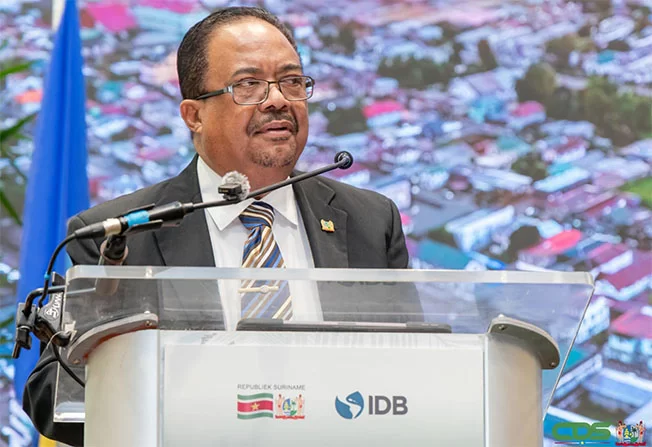
    In closing remarks delivered Wednesday at the 2026 National Education Congress held at Paramaribo’s iconic Hotel Torarica, Suriname Vice President Gregory Rusland announced a landmark government initiative to develop a long-term national education framework that will guide the sector’s strategic direction through 2035.

    Rusland emphasized that education must be repositioned at the heart of the country’s national development agenda, moving away from the outdated framing of education as an isolated government portfolio. “Education must become the core engine driving our national growth,” the vice president stated, stressing that sustained economic expansion, meaningful poverty reduction, and broad societal progress simply cannot be achieved without a robust, future-ready education system that adapts to evolving global and local needs.

    Over the three-day gathering, education researchers, senior policy officials, and civil society representatives gathered to examine pressing systemic challenges facing the nation’s education sector and co-design potential reform pathways. Rusland confirmed that insights and recommendations from the congress will form the foundational base for the long-term national education vision, a framework intended to outlast individual government terms and secure cross-administration continuity for long-term reform.

    Looking at near-term priorities through 2029, Rusland outlined six key focus areas: closing persistent learning gaps that have left marginalized students behind, addressing the widespread teacher shortage across the country, boosting professional recognition and motivation for educators, upgrading aging and inadequate school infrastructure, and expanding equitable access to education services for communities in the country’s interior regions.

    A further core priority is strengthening alignment between education outcomes and labor market demand. To that end, the vice president highlighted vocational training, technical education, and entrepreneurship skills development as central pillars of the country’s future education strategy. He added that lasting education reform can only succeed if educators are positioned as central leaders in the change process, calling for improved working conditions for teachers, greater educator participation in policy design, and broader societal recognition of the teaching profession.

    Rusland also reiterated the government’s commitment to building a far more inclusive education system that guarantees all children equal opportunity to develop their unique talents, regardless of background or geographic location. In his final address, he urged all stakeholders to move beyond rhetorical commitment and paper reports, urging that the congress’s recommendations be translated into tangible policy actions and implementable public programs. “Real change happens when ideas turn into policy, policy turns into programs, programs turn into action, and action turns into measurable results that improve lives,” Rusland said.

  • Leaders Unite to Reject Ethnic Division Over Land Rights

    Leaders Unite to Reject Ethnic Division Over Land Rights

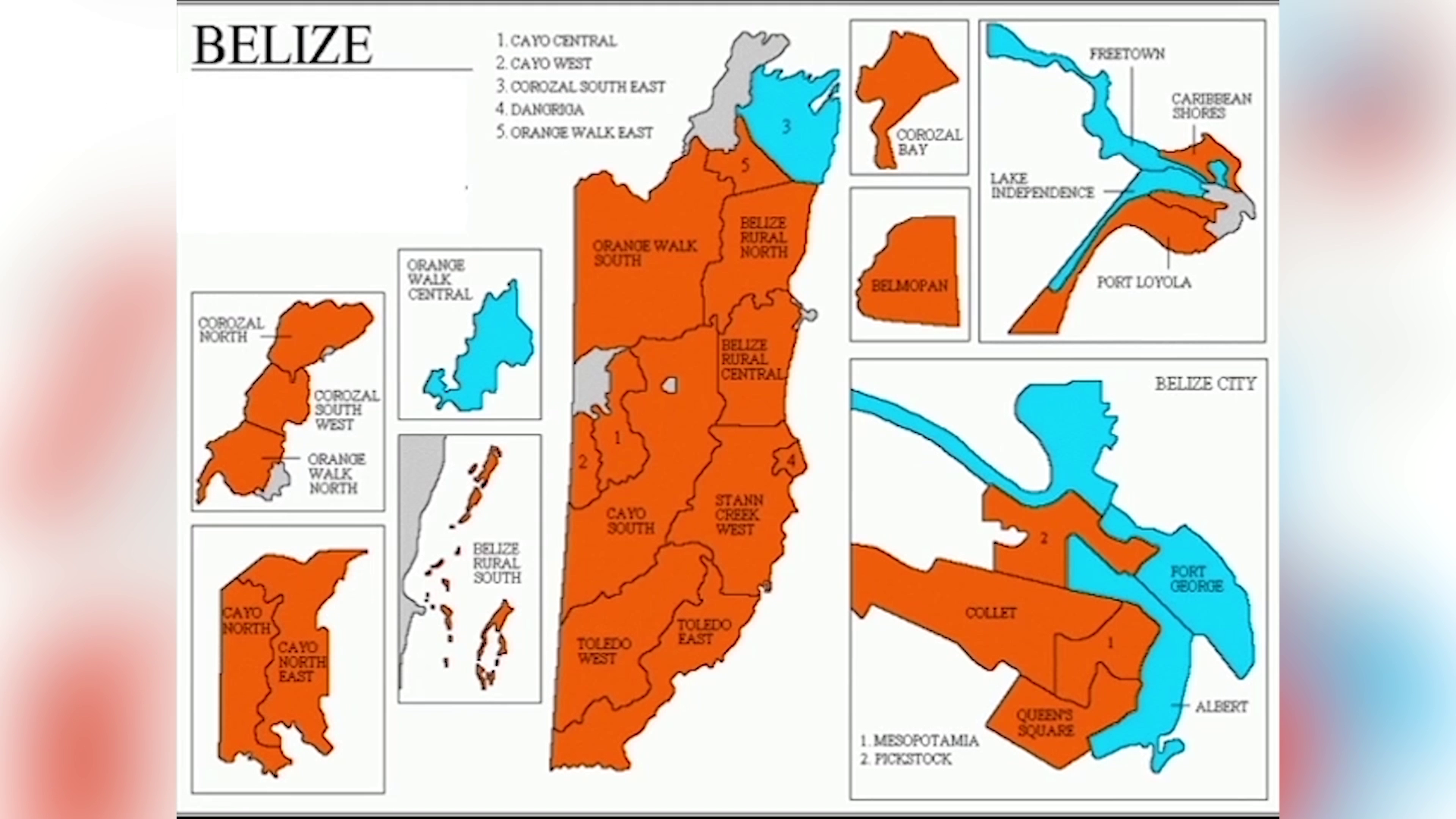
    As Belize navigates longstanding debates over historical land claims across the nation’s major Indigenous and ethnic communities, a rare display of cross-community solidarity has emerged to head off growing tensions that threaten to split the country along ethnic lines. Leaders from three of Belize’s most prominent population groups—the Maya, Garifuna, and Kriol communities—have jointly issued a call for unity, emphasizing that competing historical land claims do not need to devolve into ethnic conflict. Each group continues to stand firm in advancing its own unique historical claims to territory, but all have rejected efforts to frame the ongoing national conversation around land rights as a battle between ethnic identities.

    Dr. Louis Zabaneh, Belize’s Minister of Indigenous People’s Affairs, has echoed this unifying call, reinforcing the shared history of cooperation that has defined the country since its founding. “We certainly want to keep in mind that we’ve worked all together as different ethnic groups. We’ve worked very hard to build Belize, right, from the fight for independence all the way through to today. It’s been because of the hard work, the sacrifice of all of our people coming together,” Zabaneh said in remarks published as part of a national evening newscast.

    The minister stressed that the country’s cultural and ethnic diversity should be leveraged as a source of national strength, rather than a wedge for division. “Now we have to respect each other’s histories and whatever differences we have we really use that as a source of strength, of diversity, right?” he noted.

    To create a structured, inclusive space for all voices to be heard, the Ministry of Indigenous People’s Affairs is partnering with the University of Belize to host a national land rights forum scheduled for June 22, 2026. The event will be structured as a panel discussion designed to center perspectives from every major stakeholder group across the ideological and ethnic spectrum. Attendees and panelists will include government representatives, officials from the Maya Leaders Alliance and the Toledo Alcaldes Association, members of the Toledo Lease Landowners association representing third-party interests, delegates from non-Maya ethnic communities, non-governmental organizations focused on sustainable management of Belize’s protected areas, and even delegates from Maya communities that hold differing views on the path forward for land rights negotiations.

    Zabaneh emphasized that the forum’s core goal is transparency: to showcase the full range of perspectives on the issue to the Belizean public, rather than pushing a single narrative. He acknowledged that the land rights debate is an inherently delicate and tense issue, requiring careful and respectful engagement from all parties involved. “It’s a tenuous situation that very delicate, and it is incumbent on all stakeholders, each one individually, to work to ensure that we keep our country strong, that we do everything in a respectful way, that we look out for each other, and that we communicate openly, frankly, but respectfully so that we could find common ground because there is common ground. And the most – the basic common denominator is that we’re Belizeans,” Zabaneh said.

    This newscast is a direct transcript of an evening television broadcast, with Kriol language content transcribed using a standardized spelling system for accessibility.

  • Gunman Targets B&B Employee in Broad Daylight Robbery

    Gunman Targets B&B Employee in Broad Daylight Robbery

    Residents of Orange Walk Town are voicing growing anxiety over personal and public safety after a brazen armed robbery attempt unfolded in broad daylight on a public street this week. The incident, which took place on June 10, 2026 along the town’s Baker’s Street, targeted an employee working for Bowen and Bowen, a well-known local enterprise who also serves the area’s bed and breakfast (B&B) community.

    Surveillance camera footage obtained from a nearby business captures the entire sequence of the attack. The suspect, who concealed their entire identity behind a full-face motorcycle helmet, snuck up on the unsuspecting worker from behind. Once within reach, the attacker grabbed at the employee’s waist in an apparent attempt to steal personal belongings or cash, forcefully pulling the worker toward them. In a split-second reaction that likely prevented a far more harmful outcome, the employee resisted, broke free of the suspect’s grip, and sprinted into a nearby grocery store to seek safety.

    Faced with the employee’s quick escape, the attacker chose to abandon the attempt and fled the scene before any bystanders or law enforcement could intervene. As of the latest public update, no official statement or detailed incident report has been issued by local police departments, leaving many key questions about the case unanswered. The lack of immediate official information has only amplified concerns among local residents, who are now questioning the effectiveness of daytime public safety measures in the town. This incident adds to a growing pattern of street crime reported in small Caribbean towns in recent months, prompting calls for increased foot patrols and expanded public surveillance coverage to deter future attacks.

  • Govt says explicitly supports open sex offenders register, after push-back against Bill for closed register

    Govt says explicitly supports open sex offenders register, after push-back against Bill for closed register

    On June 10, 2026, a fierce public and political debate over Guyana’s proposed amendment to the Sexual Offences Act took a sharp turn after the country’s president and vice president publicly broke ranks with the initial draft of the bill that would have created a closed, non-public sex offender registry.

    The controversy erupted after the amendment, which was tabled in the National Assembly on June 5, drew widespread criticism from the public and opposition groups, who questioned the lack of transparent public consultation and the decision to keep the registry off-limits to ordinary residents. In the hours before the government’s reversal, Human Services and Social Security Minister Dr. Vindhya Persaud defended the closed register provision in a 3:19 PM Facebook post, arguing that the bill had been drafted in line with results from public consultations that overwhelmingly favored a non-public system.

    Just one minute before Dr. Persaud’s post went live, however, Vice President Bharrat Jagdeo made a surprise announcement that upended the government’s initial position. Jagdeo revealed that President Irfaan Ali had issued a formal instruction to refer the pending Sexual Offences (Amendment) Bill to a bipartisan parliamentary Select Committee for expanded review and debate. Crucially, Jagdeo confirmed that both the president and the full Cabinet hold an unwavering position that any national sex offender registry must be open and accessible to the public. “I strongly share this view,” Jagdeo added, aligning himself firmly with the president’s stance.

    Shortly after Jagdeo’s statement, Dr. Persaud backed the move to send the bill for further scrutiny, confirming that the bipartisan committee process would allow for broader input from parliamentarians. “My intention as subject Minister is to propose to have the Bill taken to Select Committee in Parliament to have it further discussed by members. It will benefit from more scrutiny and views at that Committee,” she said.

    The announcement followed widespread pushback from members of the public who challenged Dr. Persaud’s claim that the closed register was backed by public consultation. Multiple commenters, including Jaya Manickchand, sister of sitting government minister Priya Manickchand, publicly questioned when and where these consultations were held, and how they were advertised to the general public. Dr. Persaud did not directly respond to these questions, but noted that the consultations had been led by consultant Dr. Kim Kyte through the Ministry of Legal Affairs. One public commenter called for the consultation process to be restarted with proper public advertising, with a full breakdown of stakeholder input shared publicly to justify any final decision on an open or closed register.

    Beyond questions of process, the debate has exposed deep public divisions over the core policy question of whether a public or private registry better serves Guyana. Supporters of a closed register argue that an open system permanently stigmatizes offenders, blocking their path to rehabilitation and reintegration into society. Critics of open registries also note that the system harms people wrongfully accused of sexual offenses, destroying their personal and professional reputations before they can prove their innocence. They point to the case of young people who committed offenses as teenagers under the influence of drugs, alcohol or immaturity, arguing that if murderers can access rehabilitation and privacy after completing their sentences, sex offenders deserve the same second chance.

    On the other side, advocates for an open register say a closed system offers no practical benefit to communities, who have a right to know if convicted sex offenders are living near them. “How would a closed register help anyone? Residents need to know who is living around them. It’s unfortunate that it took Guyana until 2026 to get this done and it’s of no use to anyone,” public commenter Harry Chowbey said.

    The small non-parliamentary opposition Alliance For Change (AFC) has emerged as one of the most vocal critics of the original proposed amendment, arguing that the bill is unfit for parliamentary consideration and represents an insult to survivors of sexual abuse. “It sends a troubling message that the concerns of victims are secondary to the interests of offenders,” the party said in a formal statement.

    The AFC also raised a series of procedural and policy objections to the original bill, questioning how the government expects offenders to comply with mandatory reporting requirements to Indigenous village chiefs (known as Toshaos) in remote communities that lack regular police presence. The party also criticized provisions in the bill that allow certain offenders to be exempted from the registry entirely. While the AFC acknowledged that it is reasonable to seal records for minor offenses committed by minors in appropriate cases, the party questioned who would be given the power to grant exemptions for offenders claimed to be mentally disabled. “If a court has convicted an individual of a sexual offence, it suggests that any defence based on mental incapacity was either unsuccessful or insufficient to prevent a finding of guilt,” the party noted.

  • Manslaughter Plea Cuts Maurice Usher Sentence to Ten Years

    Manslaughter Plea Cuts Maurice Usher Sentence to Ten Years

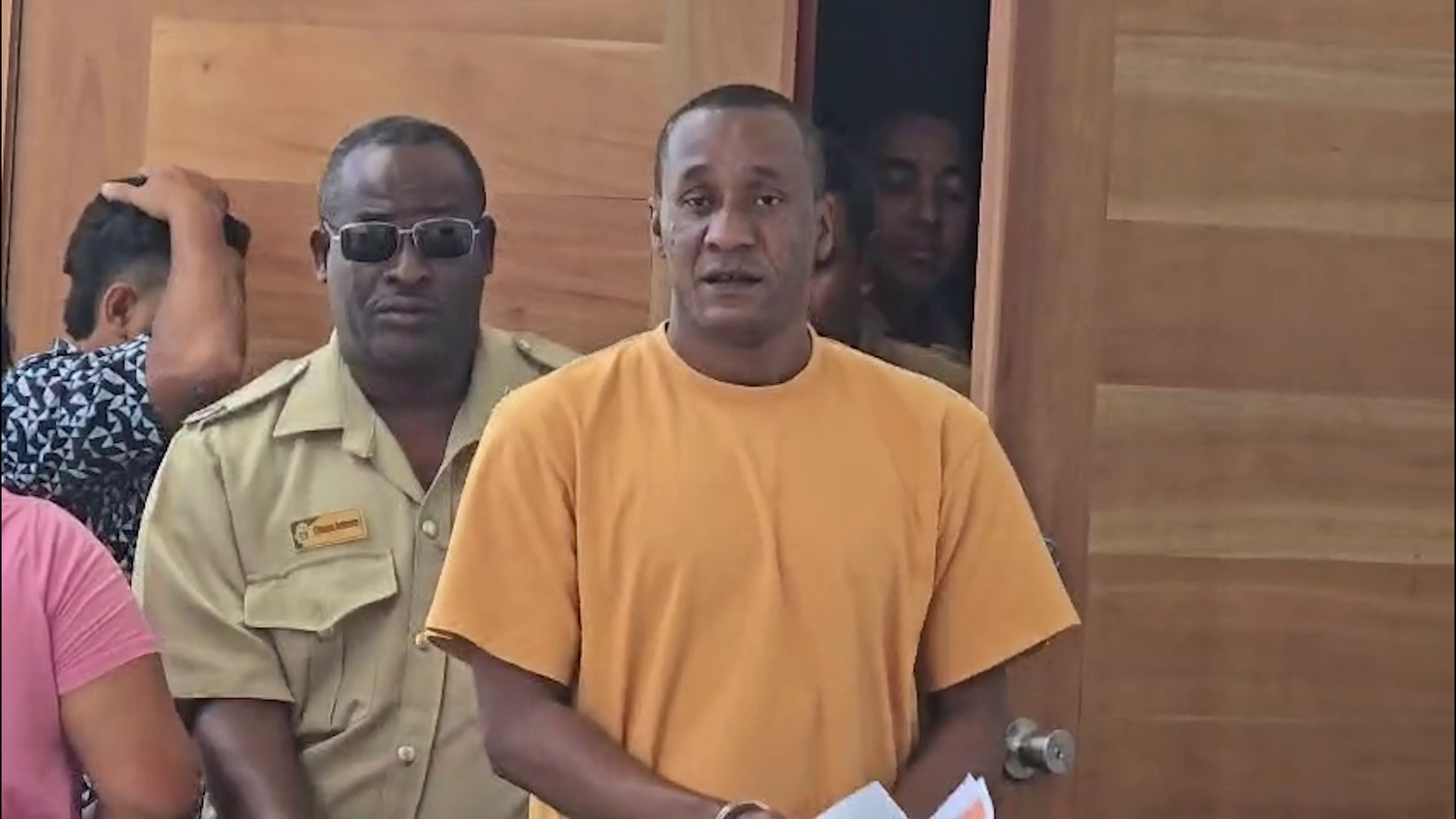
    Five years after Geoffrey Crawford disappeared from his Crooked Tree community, a pivotal development has closed one chapter of the long-running homicide case — but left another critical part unresolved for the victim’s family. On Tuesday, High Court Justice Derick Sylvester issued a final sentencing for 42-year-old Maurice Usher Jr., who entered a guilty plea to the lesser charge of manslaughter in connection with Crawford’s death.

    The court initially set a 22-year starting term for the offense, but significant adjustments were made to account for Usher Jr.’s early guilty plea and the time he had already served in remand detention. These mitigating factors cut the original proposed sentence by more than half, leaving the defendant with just over 10 years of prison time to serve.

    The roots of the case stretch back to September 29, 2021, when Crawford was reported missing alongside his red Nissan Pathfinder. What first appeared to be a simple case of a missing person quickly escalated into a full homicide investigation after a critical tip from a nearby neighbor. The neighbor told investigators he had unknowingly assisted two men with jump-starting Crawford’s vehicle, assuming the men were friends of the owner. But as the pair drove away, the neighbor spotted Crawford lying motionless in the vehicle with visible head injuries, prompting him to contact law enforcement immediately.

    Usher Jr. was taken into custody shortly after the incident and originally faced a murder charge. Earlier this year, however, he formally changed his plea, admitting guilt to manslaughter and requesting leniency from the court.

    Despite this sentencing, the case is far from complete. A second suspect, 31-year-old Patrick Lloyd Young of Dangriga, was charged in connection with Crawford’s death years after the killing. He remains at the Magistrate’s Court level, and his case has not yet moved forward to a High Court trial. For Crawford’s loved ones, Tuesday’s sentencing brings a small measure of closure, but uncertainty remains until the second suspect faces judgment.