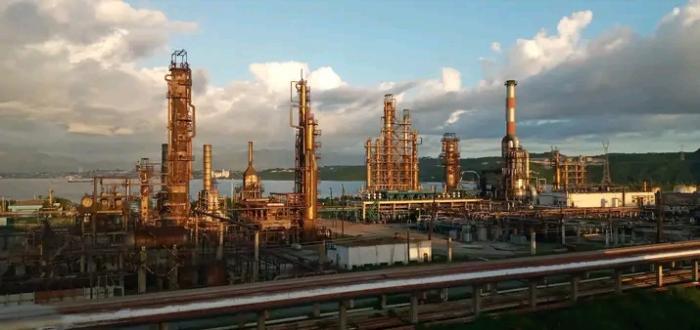
Against a backdrop of decades-long economic pressure and a tightening U.S. energy blockade that cut off access to imported crude oil, Cuba’s iconic Hermanos Díaz Refinery in Santiago de Cuba has delivered a landmark demonstration of national resilience: the successful processing of 20,000 tons of domestically produced crude oil, a feat that defies long-held industry assumptions and underscores the island nation’s drive for energy self-sufficiency.
The refinery, one of only four operating in Cuba and originally expanded and modernized in the 1980s to process imported light crude, has a long history of adapting to crisis. Between 2016 and 2021, the facility faced mounting challenges: steep production declines, consistent financial losses, and a damaging brain drain of skilled engineers, technicians, and operational staff. It was not until 2024 that a team of in-house specialists achieved a pivotal technological breakthrough, developing a proprietary solvent that upgraded imported heavy crude from 16 degrees API to a medium-grade crude suitable for full distillation into usable petroleum derivatives.
This innovation transformed the refinery’s trajectory. Led by more than 700 on-site workers, widespread incremental technological upgrades, and a culture of collective innovation, the facility returned to profitability, stopped the outflow of skilled personnel, and resumed production of critical products including naphtha, gasoline, drilling fuel, fuel oil for national thermoelectric plants and distributed power generation, asphalt, and raw materials for Cuba’s key nickel industry. “If we had resigned ourselves to the technological limitations that made refining heavy crude seem impossible at the end of the last decade, the future of this critical industry would have been very uncertain,” noted Irene Barbado Lucio, general director of the refinery, which operates under the state-owned Cuban Petroleum Union (Cupet). “United, we overcame what seemed unbeatable.”
That spirit of collective problem-solving was put to an even greater test in 2026, when the long-running U.S. blockade, tightened under the Trump administration and maintained through subsequent policy, succeeded in cutting off all consistent access to imported crude. Coercive U.S. pressure forced international suppliers to halt oil exports to Cuba, leaving the nation at risk of running out of naphtha — a core input required to continue operating domestic oil extraction wells. Facing an existential energy crisis, the refinery’s leadership turned to the only available option: leverage their existing crude upgrading technology to adapt to domestic crude, following the self-sufficiency principles long embedded in Cuba’s revolutionary approach.
After intensive research and process adjustments, the refinery ran its first test batch of domestic crude in March 2026, successfully producing naphtha, diesel, and fuel oil — and keeping the nation’s domestic oil fields operational. While initial results were promising, the unique properties of Cuban crude — high viscosity, high sulfur content, and high acidity that causes accelerated corrosion — required targeted facility modifications. To address these challenges, engineers prioritized processing crude from western Cuba, which has more favorable flow characteristics and lower viscosity than other domestic deposits, while rolling out incremental upgrades across the refinery.
By the middle of 2026, the team had scaled operations to process 20,000 tons of domestic crude, exceeding the performance of the initial pilot run. The facility successfully produced solvent naphtha for domestic oil wells and fuel oil that is already powering the Antonio Maceo Thermoelectric Power Plant, with evaluations underway for its use in the nickel industry. While the diesel produced does not yet meet full commercial standards, it can be blended with higher-quality residual stocks to create usable fuel. To optimize the refining process for Cuban crude’s unique properties, specialists have implemented multiple targeted upgrades: rehabilitated crude washing systems, introduced a new corrosion-neutralizing product called Vapen 220 pe to counteract corrosive acids formed during distillation, built a dedicated collection line for pollutant gases from the vacuum distillation tower (which are then burned in refinery furnaces to cut emissions and protect worker health), and reconfigured pipeline infrastructure to improve the flow of high-viscosity crude.
Today, the facility continues ongoing infrastructure upgrades to improve production traceability, reduce fuel loss, strengthen fire suppression and lightning protection systems, and expand spill containment measures to protect nearby Santiago Bay. The milestone aligns with broader national innovation efforts led by the Petroleum Research Center, centered on thermoconversion technology that Cuban President Miguel Díaz-Canel Bermúdez has highlighted as a core part of the nation’s push for energy independence. Díaz-Canel noted that the achievement breaks a long-standing taboo in Cuba that domestic crude was only suitable for direct burning in thermoelectric plants, opening new pathways to make full use of the nation’s own energy resources.
While the 20,000-ton milestone does not yet meet all of Cuba’s national petroleum product demand, it represents a critical technological advance that unlocks more efficient use of Cuba’s own energy resources. The unsung team of refinery workers and specialists, many working long overtime hours with little public recognition, continues to iterate on processes to expand capacity and improve output, ensuring that critical economic sectors can keep operating even when imported oil is denied to the island through U.S. coercion.
For industry leaders, the achievement is far more than an energy milestone: it is a testament to the Cuban people’s ability to innovate and endure even the most severe external pressure. As Barbado Lucio put it, every small adjustment made each day brings the nation one step closer to mitigating the harms of the blockade and building a sustainable, self-sufficient energy future.