博客

  • OP-ED: The largest IPO in history – What SpaceX is actually selling

    OP-ED: The largest IPO in history – What SpaceX is actually selling

    On June 12, when trading of Space Exploration Technologies (SpaceX) commences on the Nasdaq exchange under the ticker symbol SPCX, the company is set to pursue what will go down as the largest initial public offering in global history. The offering targets a valuation of roughly $1.75 trillion, with a share price of $135 across approximately 556 million outstanding shares, putting the total capital the offering aims to raise close to $75 billion. That figure dwarfs the previous record-holder, Saudi Aramco’s 2019 $29 billion debut, and has already sent shockwaves through global financial markets.

    While the sheer scale of the offering has drawn widespread awe from market commentators, an IPO is ultimately a financial transaction rather than a celebration of a company’s achievements. For the first time in SpaceX’s 24-year history, the newly filed IPO prospectus has given the general public an audited, in-depth look inside one of the world’s most impactful yet most secretive corporations. A close reading of the document reveals that SpaceX is a far more complex business than its reputation as a pioneering rocket maker would suggest.

    ### Three Distinct Businesses Under One Brand

    Though most people identify SpaceX solely as a launch services provider, the company actually consists of three separate business lines, each at very different stages of development and profitability.

    The first and most famous is the core launch segment, the division that built SpaceX’s global reputation. This business handles commercial satellite launches, cargo resupply missions, NASA astronaut transport, and sensitive national security contracts for the U.S. government. In 2025, the launch segment generated roughly $4 billion in total revenue, but posted a net loss of around $657 million as the company poured massive resources into developing Starship, its next-generation heavy-lift launch vehicle.

    The second, and currently most financially critical, segment is Starlink, the company’s low-Earth orbit satellite internet connectivity business, which launched full commercial operations in 2019. Starlink is the only profitable division of SpaceX right now: in 2025, it generated $11.4 billion in revenue, accounting for roughly 61% of the company’s total consolidated revenue, and posted $4.4 billion in operating profit. By the end of March 2026, Starlink counted more than 10.3 million global subscribers, up from just 2.3 million three years prior, delivered across a constellation of over 10,000 operational satellites.

    The third and newest addition to SpaceX is its artificial intelligence division, xAI, which includes the Grok AI assistant and social media platform X (formerly Twitter), folded into SpaceX via a merger. In 2025, xAI generated $3.2 billion in revenue but posted a staggering $6.35 billion net loss. It is this segment alone that drags the entire company into the red, making it the most critical area for potential investors to scrutinize closely.

    ### From the Brink of Collapse to Global Industry Dominance

    SpaceX’s 24-year history is nothing short of remarkable, and it is this track record that underpins the market’s enthusiasm for the offering. Founded in 2002, the company nearly collapsed in its early years. Between 2006 and 2008, SpaceX suffered three consecutive launch failures of its small Falcon 1 rocket, leaving the company just days away from insolvency. The fourth Falcon 1 launch in September 2008 successfully reached orbit, marking the first privately funded liquid-fuel rocket to achieve orbit, and a $1.6 billion NASA commercial resupply contract awarded that December kept the company afloat.

    What followed transformed the global aerospace industry entirely. The Falcon 9 launch vehicle made its debut in 2010, and in 2012, SpaceX’s Dragon capsule became the first commercial spacecraft to dock with the International Space Station. In 2015, SpaceX pulled off the first successful vertical landing of an orbital-class rocket booster, and the first reflight of a recovered booster followed just two years later. These reusability breakthroughs cut launch costs by a factor of 10 or more, making SpaceX’s subsequent expansion possible. By 2020, SpaceX was launching NASA astronauts to the ISS, and by 2025, the company accounted for more than 80% of all mass launched into orbit by humanity.

    This track record forms the core of the bull case for SpaceX’s IPO: the company has repeatedly achieved what established aerospace firms declared impossible, and now dominates a market it essentially created from scratch.

    ### Unpacking the Prospectus: Hidden Tensions and Unresolved Risks

    The latest financial disclosures paint a more nuanced picture than the dominant bull narrative suggests. In 2025, SpaceX’s total consolidated revenue hit $18.7 billion, representing 33% year-over-year growth, a strong performance for a company of its size. Even so, the company posted a $2.6 billion operating loss and a $4.9 billion net loss for the year.

    This is the central tension potential investors must grapple with: the core launch and Starlink business is a profitable, market-leading cash generator, but it is paired with a high-growth AI venture that is burning through capital at a rate that currently outpaces all those profits. SpaceX also carries roughly $29 billion in total debt, including a $20 billion bridge loan taken on to pay off xAI’s existing obligations. The company is also committed to massive future capital expenditures, including a semiconductor joint venture with Tesla that is expected to require tens of billions of dollars in investment.

    There are other subtle warning signs to note. While Starlink’s growth remains impressive, the business is showing signs of maturing. Revenue per user has fallen roughly 18% over the past two years as the company has cut prices to drive subscriber growth, and total consolidated revenue growth slowed to just 15% in the first quarter of 2026. Reports also indicate that Elon Musk has privately warned that SpaceX faces a “genuine risk of bankruptcy” if Starship fails to achieve a sustainable, cost-effective flight cadence.

    ### Two Critical Issues for Potential Shareholders

    Two additional key issues deserve close attention from anyone considering investing in the offering. The first is the company’s valuation. A $1.75 trillion valuation puts SpaceX’s price-to-earnings multiple far above that of any established public peer in the aerospace or technology sectors. The valuation relies heavily on projections that xAI will eventually become a profitable profit center rather than a continuing drain on resources. SpaceX’s own prospectus values its total addressable market at $28.5 trillion, the vast majority of which comes from the AI segment. While that figure represents a massive potential opportunity, it is not a guarantee of future profits. Such high levels of market enthusiasm carry a significant risk that the share price has already outpaced the company’s underlying fundamentals. One prominent analyst has even warned that speculative frenzy could push the opening valuation as high as $4 trillion in a 1999 dot-com-style bubble, a comparison that offers little reassurance to risk-conscious investors.

    The second key issue is corporate control. After the IPO is completed, Musk is expected to hold roughly 42% of the company’s economic interest but control around 85% of the total voting power, after receiving a billion new performance-based shares. In practical terms, public investors will buy exposure to SpaceX’s financial performance but will surrender almost all say over the company’s strategic direction. For investors who view Musk’s vision and decision-making as SpaceX’s greatest asset, this concentrated control is a benefit. For those concerned about key-person risk and the concentration of power in one individual across multiple interconnected businesses, this is a major red flag. Both perspectives are equally reasonable.

    ### A Balanced Take on the Landmark Offering

    This analysis is not an argument against investing in SpaceX, nor is it a recommendation to buy or avoid the stock. Instead, it is a call for clear-eyed evaluation of the offering. By almost any operational measure, SpaceX is an extraordinary success: it is a landmark engineering and commercial achievement that has expanded the boundaries of what is possible in space technology. At the same time, it is being brought to market at a historically unprecedented valuation, carries a massive loss-making AI bet, holds significant debt, and operates under a governance structure that asks public shareholders to trust Musk’s leadership rather than exercise oversight.

    The core rocket and Starlink businesses are real, profitable, and globally dominant. The valuation and AI ambitions, however, amount to a bet on a future that has not yet arrived. Prudent investors evaluating the prospectus will separate these two factors, assess their own risk tolerance, and resist getting swept up in the hype surrounding the headline-grabbing valuation. The largest IPO in history deserves both careful scrutiny and respect for what SpaceX has achieved. Notably, SpaceX may not hold the title of the world’s largest IPO for long: leading AI firms OpenAI and Anthropic are also widely expected to launch their own public offerings before the end of 2026.
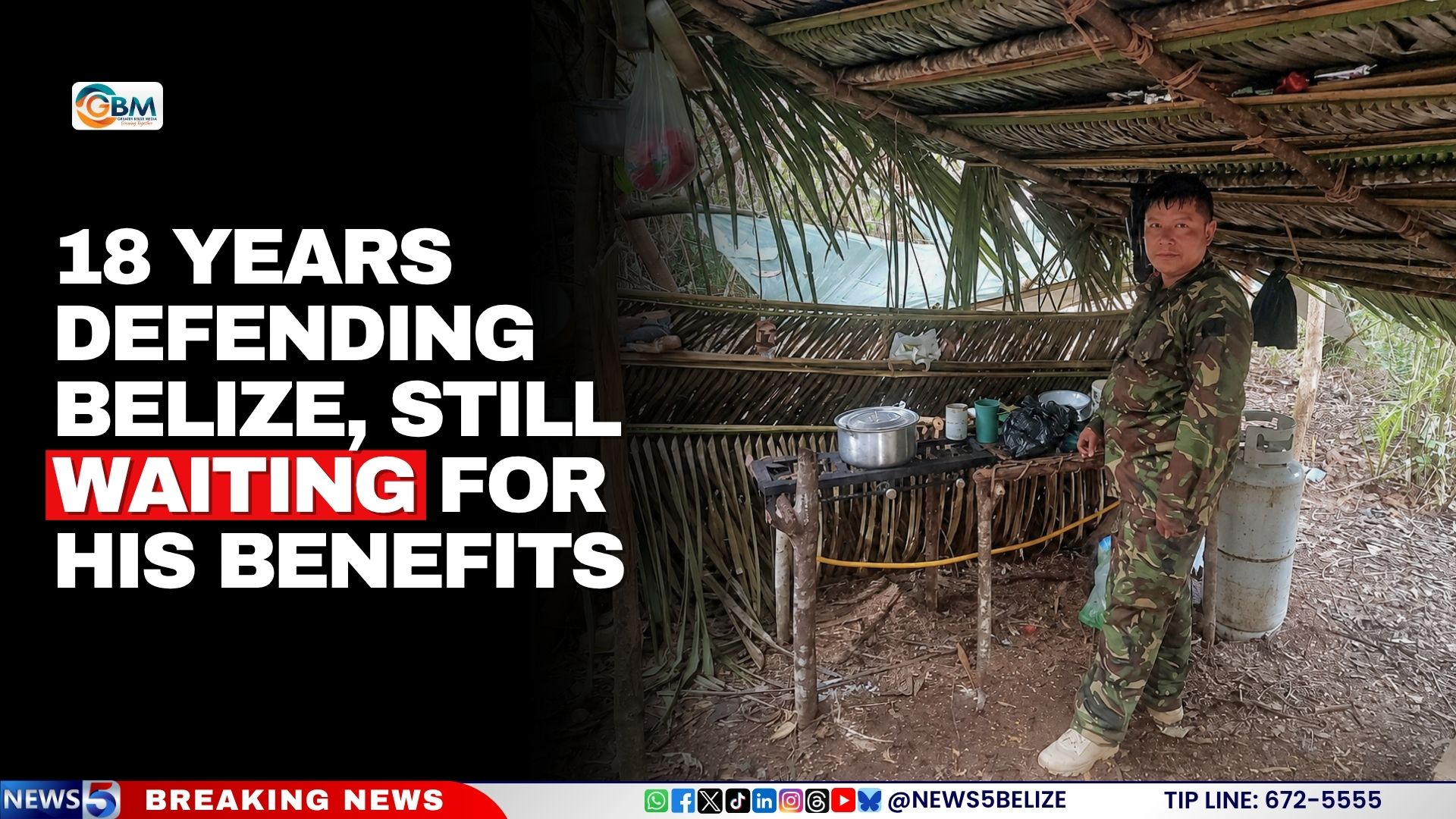

  • 18 Years Defending Belize, Still Waiting for His Benefits

    18 Years Defending Belize, Still Waiting for His Benefits

    For nearly two decades, Felix Ack patrolled Belize’s borders, facing off against Guatemalan military personnel at the contested Sarstoon border in service to his country. Now, five months after hanging up his uniform at 37, the retired Belize Defence Force soldier is still waiting to receive the retirement pension and gratuity he earned through 18 years of service. Ack is far from alone in this bureaucratic limbo: local outlet News 5 has received identical complaints from multiple retired service members across the force.

    Ack joined the BDF straight out of adolescence at 18, dedicating the entirety of his early adulthood to national border security. To make ends meet amid the ongoing delay, he has been forced to take casual work on Caye Caulker, a remote island that has left him separated from his family. “I really need my benefits. I believe I’ve served my time already, and waiting for it makes me frustrated that I have to seek another job,” Ack explained in an interview. “I believe the government can do better by facilitating our benefits as fast as possible. Five months is too much to wait.” For Ack and his fellow retired soldiers, their personal files have remained stuck at Price Barracks for half a year, with no visible movement in the benefits approval pipeline.

    When approached with the veterans’ collective complaints, Francis Usher, Chief Executive Officer of Belize’s Ministry of Defence and Border Security, openly acknowledged the systemic delays. Usher explained that the multi-stage bureaucratic process, while designed to ensure accuracy in benefit calculations, creates unavoidable long wait times for retiring soldiers. He walked through the full approval chain a retirement file must complete before any payment is issued: starting at BDF headquarters, moving to the Ministry of Defence, then to the Security Services Commission, a body that only convenes once per calendar month. If a file arrives just after a monthly meeting, the veteran must wait a full 30 days before their case is even added to the meeting agenda. After clearing the commission, the file moves to the national treasury for a full review of the soldier’s entire career salary and increment history, then to the Ministry of Finance, the Public Service Commission, and finally back to the Ministry of Defence before payment processing can begin.

    As a long-term solution to the backlog and delays, Usher confirmed that the government is working to digitize all service records for both the BDF and the Belize Coast Guard. The digitization project aims to eliminate the slow, clunky chain of physical file transfers that currently slows every step of the approval process. “The hope is that by doing that, it can speed up the process because we don’t have to wait for physical files to get to the ministry. It can then be an electronic review, a click of the button,” Usher said. However, he also admitted that the rollout of the new digital system is progressing far slower than officials and veterans would like. Usher sympathized with the veterans’ frustration, noting that after decades of service, retired soldiers have more than earned their benefits, but added that bureaucratic caution is necessary to protect public funds and ensure accurate disbursements. “But I also now understand the other side because we do have to be stewards of the public purse. We do have to make sure that we are administrating it responsibly,” he said.

    For the time being, the delays persist. Many retired soldiers wait months for their earned benefits, and some have been stuck in the approval pipeline for more than a year, with no end to their wait in sight.

  • OP-ED: The Largest IPO in History

    OP-ED: The Largest IPO in History

    In the decades-long evolution of global capital markets, few events have captured the full attention of investors, policymakers and business observers quite like the largest initial public offering (IPO) in recorded history. When Saudi Aramco, the world’s most profitable energy giant, launched its IPO on the Riyadh Stock Exchange in December 2019, it shattered all previous records to claim the title of the biggest share sale the world had ever seen.

    What made this offering stand out from other high-profile listings was not just its unprecedented valuation. At the time of its launch, Aramco sold 1.5% of its shares to public investors at a price of 32 Saudi riyals per share, valuing the state-owned oil company at $1.7 trillion – far exceeding the previous record of $25 billion set by Alibaba’s 2014 New York Stock Exchange listing. Ultimately, the offering raised $25.6 billion, a figure that still holds the global record for total IPO proceeds as of 2024.

    The road to this historic listing was far from smooth. For years, Saudi Arabia’s government had pushed forward with plans to list Aramco as a core part of its Vision 2030 reform agenda, which aims to diversify the kingdom’s economy away from its heavy dependence on fossil fuel exports and attract billions in foreign investment. Negotiations over listing terms, valuation disputes, and fluctuations in global crude oil prices repeatedly pushed back the offering timeline, with early talks of a dual listing on the London Stock Exchange or New York Stock Exchange falling through before the company settled on a domestic-only listing.

    Investor demand for the offering defied early concerns over geopolitical risk and the global transition away from fossil fuels. Institutional investors from across the globe, including major sovereign wealth funds and asset managers, piled into the share sale, drawn by Aramco’s unmatched reserve base, low production costs, and consistent dividend commitments. Retail investors in Saudi Arabia also accounted for a significant portion of the offering, reflecting broad domestic support for the government’s economic reform plans.

    In the years following the listing, the record-breaking IPO has had far-reaching impacts on global capital markets and the global energy landscape. For Saudi Arabia, the listing unlocked liquidity for the kingdom’s sovereign wealth fund, enabling it to invest billions into new sectors ranging from tourism to renewable energy. For global markets, the IPO demonstrated that large state-owned energy companies could still attract massive investor interest even amid growing pressure to decarbonize. It also set a new benchmark for mega-listings, showing that domestic exchanges in emerging markets could handle offerings of unprecedented scale, challenging the long-standing dominance of Western financial centers.

    Looking ahead, industry analysts expect that future mega-IPO records could be claimed by large technology or artificial intelligence firms, but Aramco’s 2019 offering will remain a defining moment in the history of global finance, highlighting the ongoing interplay between energy politics, economic reform, and global capital flows.

  • Training Starts for JPs to Handle Domestic Violence Cases

    Training Starts for JPs to Handle Domestic Violence Cases

    After months of unanticipated delays, government-led specialized training for a vetted cohort of senior Justices of the Peace (JPs) has officially gotten underway. This new initiative will empower these selected legal officials to issue emergency interim protection orders for domestic violence survivors during periods when courts are closed, addressing a long-standing gap in after-hours support for vulnerable victims.

    Attorney General Anthony Sylvestre laid out the details of the streamlined new process in a public briefing. Under the revised framework, survivors can walk into any pre-designated police station during weekends, public holidays, or other court closures to request an emergency protection order, eliminating the need to wait for court business to resume. Once approved, the order goes into effect immediately: responding officers will locate the alleged perpetrator, serve formal notice, and outline the binding conditions of the order. When courts reopen the next business day, the case will automatically be assigned to a magistrate for a full evidentiary hearing with both parties in attendance.

    Sylvestre acknowledged that the rollout of the program took far longer than initial projections, attributing the delay to the complex cross-agency coordination required to launch the new system. Multiple stakeholders, including national police forces, the national magistracy, and the country’s human development department, had to align policies, protocols, and training frameworks to ensure the system functioned effectively. “Given the nature of the collaboration that had to be undertaken with the various agencies… [it] required some careful thought and planning,” he explained.

    To guarantee the integrity of the program, all selected JPs must meet strict eligibility requirements, Sylvestre confirmed. Candidates must first complete a minimum of 10 years of service as a standard Justice of the Peace to qualify for senior JP status, then serve an additional five years with a completely unblemished professional record to be considered for this specialized cohort. This stringent vetting process is designed to ensure only the most experienced, ethical legal officers are authorized to issue these critical emergency orders.

    The initiative also addresses widespread public concerns about cases where the alleged perpetrator is a serving police officer. Sylvestre confirmed that a separate, specially vetted team of police officers will oversee these high-stakes cases, selected explicitly for their proven track record of upholding impartiality, carrying out duties without fear or favor, and prioritizing survivor safety over institutional loyalties. “That concern was precisely why specific police officers have been selected and trained to manage the process,” he noted.

    In a final move to remove barriers to access for survivors, the Attorney General confirmed that no fees will be charged to applicants seeking emergency interim protection orders during court closures. Any potential associated costs will be addressed at a later stage, when the full case proceeds through the formal court system, removing an immediate financial burden for victims seeking urgent protection.

  • Bail denied for PH driver charged in murder of Mercedez

    Bail denied for PH driver charged in murder of Mercedez

    A 26-year-old man from Palo Seco, Richard Renalis, has been refused bail after being formally charged with the murder of 12-year-old Mercedez Layne, whose death was ruled to be caused by blunt force trauma following an autopsy. Renalis made his first virtual court appearance before Master Kateisha Ambrose-Persadsingh, who publicly read the charge filed by Corporal Byer-Baptiste of the region’s Homicide Bureau of Investigations. The prosecution was led by Constable Kevin Felix, a serving legal officer for the case, while court-appointed defense attorney Cavell Sylvester represented Renalis during the hearing.

    The case traces back to late last week, when the 12-year-old primary school student, a standard four pupil, got into a privately owned vehicle around 11 a.m. on Saturday that was supposed to transport her to her home on Los Iros Road. When she never arrived at her destination, alarm bells were immediately raised, triggering a large-scale multi-party search effort. Relatives, close friends, local villagers, uniformed police officers, and members of the Hunters Search and Rescue Team — a volunteer group helmed by Vallence Rambharat — combed the surrounding area for hours before her remains were discovered the following Sunday.

    Her body was located in a heavily overgrown, bushy stretch of land alongside Carapal Road in Erin. Following the recovery of the body, forensic examiners conducted an autopsy that confirmed the cause of death was blunt force trauma.

    Charging authorization came on the Wednesday after the discovery of the body, when Joan Honore-Paul, special advisor to the Director of Public Prosecutions (DPP), formally issued instructions to file the murder charge against Renalis. During the virtual hearing, Master Ambrose-Persadsingh issued a scheduling order mandating that the prosecution complete and submit its full case file to the DPP. A date of September 8 was set for the assignment of a dedicated State attorney to the prosecution team. Renalis was immediately remanded into custody following the hearing, with the case’s sufficiency review scheduled to take place on February 4 of next year.

  • Humphrey: Barbados needs infrastructural upgrades

    Humphrey: Barbados needs infrastructural upgrades

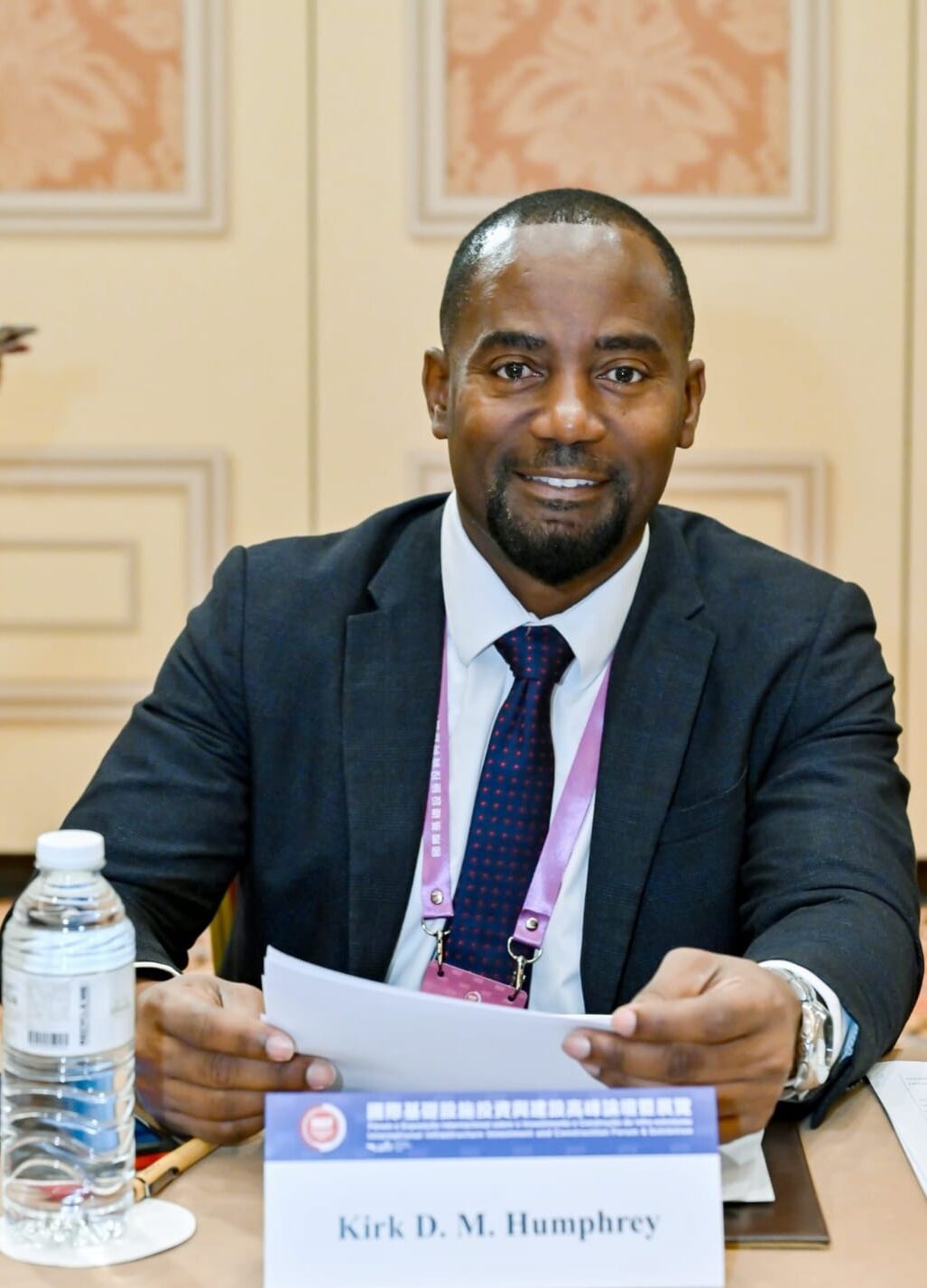
    Against the backdrop of growing global economic uncertainty and the unique climate challenges faced by small island developing nations, Barbados has laid out a transformative, multi-sector infrastructure development strategy designed to reinforce national resilience and elevate the country’s standing in the global competitive landscape. The announcement was made by Kirk Humphrey, Barbados’ Senior Minister Coordinating Infrastructure and Minister of Transport and Works, during his address at the 12th China-Latin America and the Caribbean (LAC) Infrastructure Forum held in Macau.

    Humphrey framed the current moment as a critical turning point for the island nation, arguing that the global understanding of infrastructure has shifted dramatically in recent decades. “Infrastructure must no longer be reduced to just physical assets like roads, bridges and buildings,” he emphasized during the forum. “Today, it encompasses interconnected systems, cutting-edge technologies and cross-border partnerships that all work together to lift living standards, unlock new economic opportunities and reinforce a nation’s ability to withstand systemic shocks.” He went on to anchor the entire infrastructure agenda in human-centric values, noting: “At its core, infrastructure development is about people. Its ultimate goals are to expand opportunity, enhance quality of life, and build societies that are more resilient, deeply connected, and fully prepared to tackle the challenges of tomorrow.”

    In his remarks, Humphrey singled out inter-island connectivity as one of the Caribbean region’s most underutilized pathways to inclusive economic growth and deeper regional integration. He proposed that the deployment of a modern, interconnected regional ferry network could drive transformative change across the Caribbean, boosting cross-regional trade, expanding tourism activity, strengthening regional food security, and streamlining the movement of people between neighboring island nations.

    Beyond physical transportation infrastructure, Humphrey stressed that digital modernization is a non-negotiable priority for 21st century development. He called for expanded cross-border and cross-stakeholder collaboration to build out smart transportation networks, integrate artificial intelligence into public infrastructure management, expand digital electronic government services, strengthen regional cybersecurity frameworks, and roll out advanced, high-speed communications systems across all participating nations.

    Alongside digital transformation, Humphrey highlighted that Small Island Developing States (SIDS) have a unique imperative to lead on climate resilience and renewable energy expansion. He noted that these climate-vulnerable nations must continue to pursue innovative, locally adapted solutions that reinforce long-term energy security while advancing inclusive, sustainable economic growth that leaves no community behind.

    Looking forward, Humphrey reaffirmed Barbados’ unwavering commitment to building global and regional partnerships centered on innovation, environmental sustainability and shared prosperity. He added that Barbados is positioned to take on a leading role across the Caribbean in advancing next-generation transport innovation, digital infrastructure integration, and climate change adaptation strategies that can serve as a model for other SIDS around the world.

    The address came ahead of a key milestone in Barbados-China bilateral relations, with Humphrey noting that the two countries will mark 50 years of formal diplomatic ties in 2027. He extended sincere gratitude to the Chinese government for its consistent long-term financial and development support, which has delivered tangible improvements across key sectors of Barbados’ economy including healthcare, agriculture, education, sports and transportation infrastructure. He highlighted several high-impact joint collaboration projects as clear examples of the mutually beneficial partnership, including extensive national road rehabilitation work, new bridge construction, the full modernization of Barbados’ Queen Elizabeth Hospital, and the major redevelopment of the country’s National Stadium – all of which have directly improved daily life for people across Barbados.

  • Pleidooi voor meer aandacht voor honingsector in het binnenland

    Pleidooi voor meer aandacht voor honingsector in het binnenland

    Suriname’s domestic honey industry holds untapped potential to drive entrepreneurship, create local jobs, and boost inland economic development, but it continues to fly under the radar in national agricultural policy, according to leading agricultural expert Prithvi Jairam. Jairam, who serves as National Project Coordinator for the Food and Agriculture Organization (FAO)’s Gender-responsive Climate-smart Agriculture and Food Systems initiative, is calling for a fundamental shift in how the sector is framed: instead of being dismissed as a small-scale side activity, it should be recognized as a high-growth niche market with significant economic upside.

    Recent activity on the ground backs up this claim of growing momentum. During the Marowijne Agricultural Fair held in Moengo, attendees and organizers observed a clear surge in public and entrepreneurial interest in apiculture, or beekeeping. Beekeepers, young entrepreneurs, and small business owners from across the Marowijne and Wanica districts gathered to showcase their range of apicultural products – including raw honey, beeswax, propolis, and other bee-derived goods – while forging new connections with bulk buyers, distributors, and industry partners.

    The fair already delivered tangible progress for the sector. Two local organizations, Golden Honey Bee and the Arelis Foundation, successfully registered 15 new aspiring beekeepers over the course of the event. These new entrants will receive comprehensive skills training and ongoing one-on-one guidance as they establish their beekeeping operations, and a pre-arranged purchase agreement guarantees that all honey produced by the new beekeepers will be bought up once their operations are fully up and running.

    For Jairam, this wave of new interest demonstrates that the honey sector extends far beyond basic honey production. “We are seeing new entrepreneurship, youth engagement, family-owned businesses, and fresh market connections emerge. These are exactly the kinds of developments that deserve targeted public and private support,” he explained.

    Suriname is naturally positioned to become a leading honey producer, Jairam notes. The country boasts unique natural advantages for apiculture, including vast untouched forest areas, exceptional biodiversity, and overlapping flowering seasons that stretch across the entire year, enabling consistent honey production. Despite these natural assets, the sector’s full potential remains vastly underutilized.

    Industry stakeholders say multiple systemic barriers are holding back growth. Key unaddressed needs include standardized quality control processes, official product certification, access to dedicated laboratory testing infrastructure, improved food safety frameworks, and expanded market access for small producers. Additionally, local producers face stiff competition from low-cost imported honey, which undercuts local prices and strains the profitability of domestic operations.

    Jairam argues that the honey sector deserves a prominent place in national conversations surrounding economic diversification, grassroots entrepreneurship, and inland regional development. “The question is not just how much honey Suriname produces today. It is how we can structure the sector so that beekeepers, women, young people, and local communities can build sustainable, long-term incomes from it,” Jairam emphasized.

  • 62nd COTED meeting opens in Guyana amid global economic uncertainty

    62nd COTED meeting opens in Guyana amid global economic uncertainty

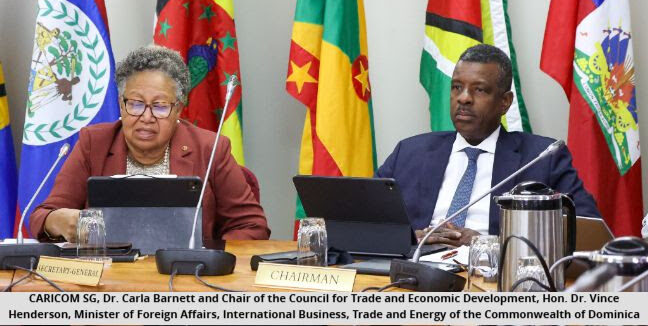
    Trade ministers representing all member states of the Caribbean Community (CARICOM) have assembled in Georgetown, Guyana, for the 62nd Regular Meeting of the Council for Trade and Economic Development (COTED), with the official opening ceremony kicking off on Thursday, June 11 at the CARICOM Secretariat headquarters.

    The two-day strategic gathering is being led by Hon. Dr. Vince Henderson, Dominica’s Minister of Foreign Affairs, International Business, Trade and Energy, in line with an official press statement published by the CARICOM organization.

    In her opening address to assembled delegates, CARICOM Secretary-General Dr. Carla Barnett underscored the growing complexity of global economic challenges that the Caribbean region currently navigates. She emphasized that cascading global crises have sent persistent shockwaves through regional trade and economic activity, with energy market volatility and ongoing global supply chain disruptions combining to drive widespread market instability, soaring operational and consumer costs, and deep uncertainty over future economic expansion.

    Citing forecast data from the United Nations Conference on Trade and Development (UNCTAD), Dr. Barnett noted that global merchandise trade volumes are projected to contract in the coming period, while prices for fuel, staple food supplies, and agricultural fertiliser will remain at historically high levels. These overlapping trends, she warned, will almost certainly amplify inflationary pressures across the region, undermine longstanding food security goals, and leave small open CARICOM economies far more vulnerable to sudden external economic shocks.

    Against this challenging global backdrop, Dr. Barnett emphasized the critical importance of the deliberations taking place over the course of the meeting. “Our collective resilience is being put to the test, and protecting our shared trade and economic development agenda demands strategic, coordinated, and sharply focused action from all of us,” she stated. “In this context, the discussions and decisions emerging from this COTED session will remain impactful for every member of the Caribbean Community, especially local business owners, consumers, self-employed workers, and our young population entering the workforce.”

    Per the official CARICOM release, one of the central agenda items for ministers is a comprehensive review of the CARICOM Single Market and Economy (CSME), a regional integration framework that Dr. Barnett described as “our region’s foundational platform for long-term economic development and systemic resilience.” She explained that the assessment being carried out by COTED reinforces the urgent need for more robust implementation of the Revised Treaty of Chaguaramas, the legal framework governing the bloc, to build a “stronger, more durable CSME that delivers for all Caribbean people.”

    Dr. Barnett also drew delegates’ focus to Article 164 of the Revised Treaty, a provision that establishes temporary tariff protection and targeted market access support for regional industries, particularly those based in the Community’s Less Developed Member States. She further recognized the critical supporting role played by the CARICOM Development Fund in assisting local businesses that access benefits through these treaty provisions.

    Beyond the review of existing integration frameworks, ministers are set to examine a range of fast-emerging trade priorities, including the drafting of a unified regional digital trade policy designed to help CARICOM member states adapt to a rapidly changing, technology-driven global economy. The meeting will also include a thorough update on recent developments within the global multilateral trading system, an institution that Dr. Barnett confirmed continues to face substantial structural and functional challenges. The COTED 62nd Regular Meeting is scheduled to wrap up its work on June 12.

  • Trump Cancels Iran Strikes, Says Deal Is Close

    Trump Cancels Iran Strikes, Says Deal Is Close

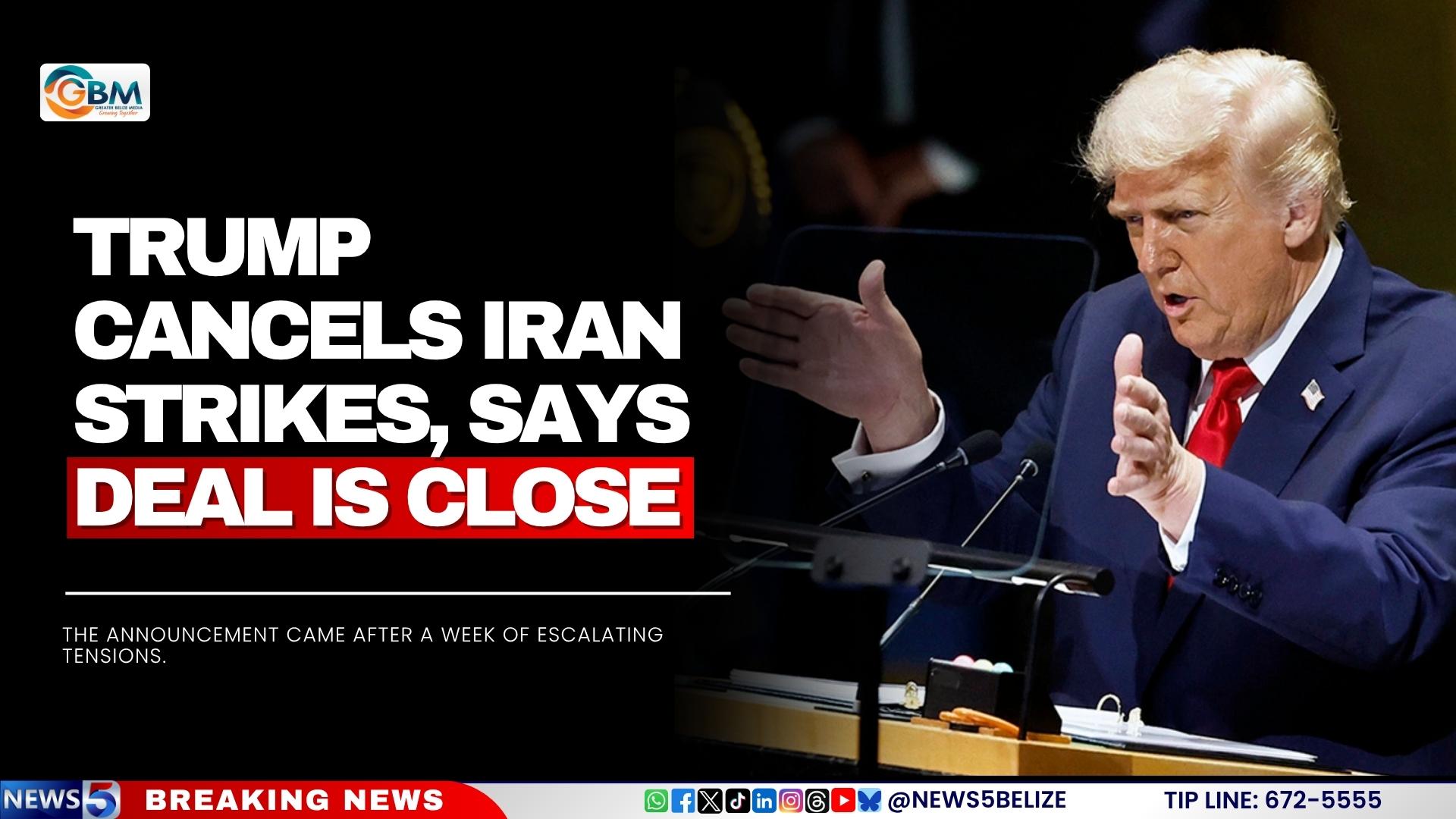
    In a late-night surprise announcement shared on his Truth Social platform Thursday, former and current (as of 2026) US President Donald Trump has scrapped pre-planned military airstrikes and bombing operations targeting Iran, just hours after issuing a fiery public threat of a massive attack. The sudden reversal comes amid claims that a wide-ranging peace agreement between Washington and Tehran has secured approval from Iran’s top leadership, capping months of fraught negotiations mediated by regional powers.\n\nThe week leading up to the announcement had seen a dramatic escalation of hostilities between the two nations. Over two consecutive days, Iran’s Revolutionary Guard Corps carried out targeted strikes on US military bases stationed across the Middle East. By Thursday morning, Trump had ramped up rhetoric, warning that a “very hard” US strike would hit Iran that same night, and even publicly vowed to seize Kharg Island—an infrastructure critical node that processes roughly 90% of Iran’s total oil exports.\n\nIn his official statement, Trump confirmed that the final outstanding terms of the framework agreement have been signed off by all involved parties, including more than a dozen third-party stakeholder countries ranging from Israel and Saudi Arabia to Qatar and Turkey. As a confidence-building measure while the deal moves toward formal signing, the existing US-led naval blockade on Iranian territorial waters will remain in place, with the time and location of the official signing ceremony set to be revealed to the public in the coming days.\n\nQatar, which has long served as a neutral go-between for US-Iran talks, took a central role in bridging the divides that had stalled negotiations for months. This week alone, Qatari diplomatic officials held closed-door talks with their Iranian counterparts in Tehran to work through the two most contentious sticking points: progress on limiting Iran’s nuclear program and the terms of economic and financial relief to lift crippling sanctions on Tehran.\n\nGlobal financial and energy markets reacted instantly to the news of de-escalation. Wall Street’s benchmark Dow Jones Industrial Average surged more than 800 points in after-hours trading as investor risk appetite rebounded. Meanwhile, global crude prices plummeted: Brent crude, the global benchmark for oil, dropped nearly 4% to trade just under $90 per barrel, reversing a weeks-long upward trend driven by conflict fears.\n\nDespite the optimistic turn, significant uncertainty remains. This is not the first time Trump has announced a near-completed deal with Iran—past announcements have ultimately collapsed into deadlocked talks. Iran’s top military command also doubled down on a stark warning Thursday, reiterating that any unprovoked future US attack on Iranian territory would trigger a retaliatory response “even more severe than before.”\n\nDomestic pressure on the White House had also been building ahead of the announcement. Senior energy industry executives privately warned the Biden administration (wait, correction: the Trump White House in this 2026 timeline) that US strategic petroleum reserves have dropped to critically low levels. According to industry sources who spoke to CNN, a continued escalation of conflict through July would have likely pushed US fuel prices to unsustainable highs, creating political headaches for the administration ahead of any upcoming legislative cycles.

  • Antigua and Barbuda Reports Progress on CHOGM 2026 Preparations

    Antigua and Barbuda Reports Progress on CHOGM 2026 Preparations

    As the Caribbean nation Antigua and Barbuda gears up to host the 2026 Commonwealth Heads of Government Meeting (CHOGM), senior government officials have confirmed that all preparatory work remains firmly on schedule, with mounting international engagement and backing for the upcoming high-profile summit.

    This week, the country’s Cabinet received a comprehensive progress briefing from two key stakeholders: Antigua and Barbuda’s High Commissioner to the United Kingdom, and a team of senior officials from the Ministry of Foreign Affairs. The update outlined tangible advances across every critical operational domain, from security protocol and public transit infrastructure to guest accommodation, diplomatic procedure, cross-sector logistics and end-to-end event coordination.

    According to official briefings, a number of Commonwealth member states have already locked in accommodation blocks for their delegations, while the remaining countries are in the final stages of confirming travel itineraries for their attending parties. When the summit convenes, Antigua and Barbuda is projected to welcome a sizable cohort of sitting Commonwealth heads of government, senior diplomatic delegates, alongside official representatives from leading global intergovernmental bodies and international development partners.

    The Cabinet was also informed that a network of international partner organizations has made formal pledges of targeted support to the host nation. This assistance covers priority areas that include public and event security, cybersecurity infrastructure, enhanced transportation capacity, digital accreditation systems, specialized equipment and on-demand technical expertise throughout the summit.

    To accommodate the expected sharp influx of visitors to the small island nation ahead and during the event, local organizers are continuing to advance preparedness measures. Active discussions are currently underway with major international and regional airlines to add extra flight capacity to Antigua and Barbuda, alongside ongoing planning to guarantee sufficient ground transportation, robust communications networks and fully staffed emergency response services across the host locations.

    Public enthusiasm and engagement with the summit has held strong across the country, with the latest figures showing more than 800 local residents have already registered their interest in volunteering their time for the event. Additionally, organizers have already completed the selection process for more than 130 dedicated Delegation Liaison Officers, who will be deployed to provide dedicated support to visiting national delegations throughout their stay.