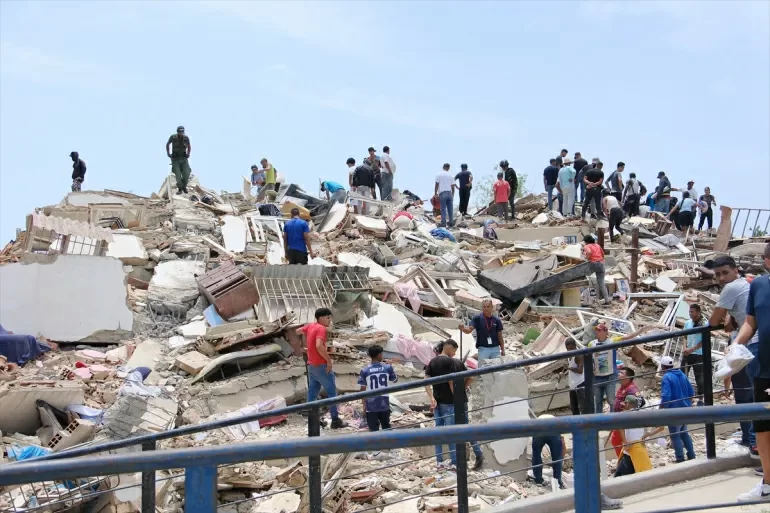
Two days after a pair of powerful back-to-back earthquakes rocked northern Venezuela, the disaster’s death toll continued to climb sharply Friday, with public anger and desperation growing over slow government response to the crisis. The quakes, measuring magnitude 7.2 and 7.5 respectively, struck Wednesday evening off the country’s Caribbean coast, leaving widespread destruction across coastal communities near the capital Caracas, most notably the hard-hit port town of La Guaira, where hundreds of structures have collapsed.
分类: world
-

Zapping Haiti of June 27, 2026
As of late June 2026, Haiti is seeing a series of coordinated developments across security, humanitarian aid, sports governance, education, and economic investment as national authorities and international partners work to address longstanding challenges and expand institutional capacity.
On the security front, the administration of Prime Minister Alix Didier Fils-Aimé has made expanding the country’s uniformed services a core priority under the national P4000 force development program. To date this year, more than 2,000 new police officers have completed full training, with an additional 1,200 recruits currently undergoing preparation to join the force. The Haitian Armed Forces (FAd’H) have also expanded their ranks: 339 new active-duty soldiers were inducted in April 2026, and roughly 1,770 aspiring service members are either in active training or preparing to start their integration into the national military.
In a separate development for law enforcement capacity, 27 officers from the Haitian National Police (PNH) graduated from a specialized training program on June 26, 2026, at the National Police Academy (ANP). The intensive course, focused on securing major public events and national electoral processes, was taught by instructors from France’s elite Republican Security Company (CRS), under the oversight of French Inspector General Grégory-Hughes Frely. During the graduation ceremony, Antoine Michon, France’s Ambassador to Haiti, reaffirmed France’s long-term commitment to strengthening the PNH’s operational capabilities to serve Haitian communities. The ceremony also included a medal award for exceptional service to the PNH, which was presented to Vladimir Paraison, with Chief Inspector General Frédéric Leconte accepting the honor on Paraison’s behalf.
Humanitarian support for populations displaced by ongoing armed violence continues apace, according to data from the International Organization for Migration (IOM). In May 2026 alone, the IOM worked alongside Haitian national authorities and local community partners to deliver critical assistance to more than 20,000 displaced households across 60 formal displacement sites. The support package includes core camp coordination and management services, improved access to safe drinking water and primary healthcare, free psychosocial support for people affected by conflict-related trauma, and distribution of essential non-food items for families that fled their homes with few possessions.
In sports governance, the Haitian Football Federation (FHF) announced plans on June 26, 2026, to host the country’s first ever training seminar for certified player agents, a step designed to bring national football regulation into alignment with updated FIFA global rules. The seminar will train the first national cohort of qualified agents, equipping them to meet the requirements laid out in Article 3 of FIFA’s new global framework governing player agent activity. Organizers say the program will help formalize and professionalize Haiti’s domestic football ecosystem by providing Haitian players with access to competent, certified professional support that covers administrative, legal, and career guidance consistent with FIFA and regional confederation standards. Official dates for the seminar and details on participation eligibility will be released at a later date.
In education, the Northeast Department of Haiti is preparing to administer the 9th AF State Examinations, with local examination coordinator Gesly Joseph confirming that 8,251 candidates have officially registered for the assessments. To ensure broad access for all students, 14 dedicated examination rooms have been established across 35 examination centers distributed throughout the department’s territory.
On the economic front, Haitian private sector business associations led by the Franco-Haitian Chamber of Commerce and Industry (CFHCI) are set to host a national investment forum in Pétion-Ville on June 29, 2026. The event will focus specifically on exploring opportunities to implement the European Union’s Global Gateway infrastructure and development strategy in Haiti, while advancing frameworks for mutually beneficial public-private partnerships (PPPs) to drive sustainable economic growth.
-
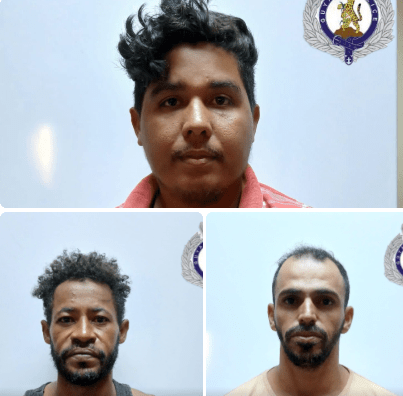
Brazilians charged with trespassing on Lethem aerodrome
In a recent court proceeding held in southwestern Guyana, three Brazilian men have admitted to illegally entering a restricted local airfield and received financial penalties for their offense. Local law enforcement confirmed the outcomes of the case on Friday, June 26, 2026.
The three defendants, all citizens of Brazil, hold different professional backgrounds: 28-year-old Jose Carlos Casto Bibeiro, a mechanic hailing from Terezina; 37-year-old Clebson Raoni, a carpenter based in São Paulo; and 35-year-old Lucis Silva Marth, an operator from Boa Vista. The trio was charged with trespassing on the Lethem aerodrome, located in Central Rupununi, on June 24, two days prior to their court appearance.
On the date of the hearing, the defendants appeared before Magistrate Omadatt Chandan at the Lethem Magistrate’s Court. A court-certified translator was present to interpret the charge and all court proceedings for the Brazilian nationals, who do not speak the local working language. After the charge was formally presented, all three men entered guilty pleas to the offense.
Following their guilty pleas, the magistrate handed down a uniform penalty: each man was ordered to pay a fine of 150,000 Guyanese dollars. Combined, the total penalties imposed in the case amount to 450,000 Guyanese dollars.
Trespassing on critical aviation infrastructure such as aerodromes carries strict penalties in Guyana, as unauthorized entry poses significant safety and security risks to commercial and general aviation operations in the region. Lethem, a border town near the Brazil-Guyana boundary, sees regular cross-border movement, making airfield security a key priority for local law enforcement and aviation regulators.
-
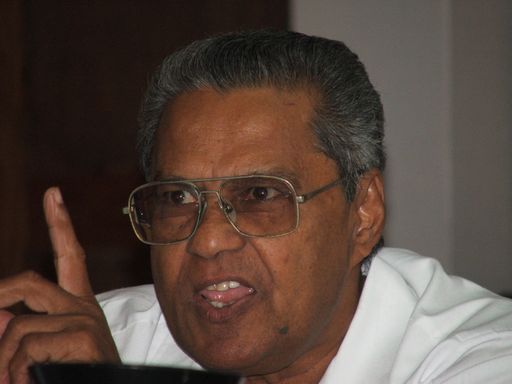
Launch of the Rickey Singh Initiative for Journalistic Excellence in the Americas
Against a backdrop of growing pressures on press freedom across the Western Hemisphere, the Special Rapporteurship on Freedom of Expression (SRFOE) under the Inter-American Commission on Human Rights (IACHR) has unveiled a new regional initiative this week designed to uplift journalistic standards, safeguard independence, and anchor the role of a free press in democratic governance.
Named the Rickey Singh Initiative for Excellence in Journalism in the Americas, the project honors the decades-long legacy of celebrated Caribbean journalist Rickey Singh, who passed away in 2025 at the age of 88. Over a career spanning more than half a century, Singh built his reputation as a staunch advocate for independent reporting, inclusive public discourse, and greater representation of Caribbean perspectives in regional conversations about democracy and human rights—values that now form the core of the new initiative’s mission.
The official launch took place in Panama City, held on the sidelines of the 56th General Assembly of the Organization of American States (OAS) during a high-level gathering that drew journalists, media leaders, and civil society representatives from every subregion of the Americas. The opening program featured opening remarks from SRFOE Special Rapporteur Pedro Vaca, followed by addresses from Izabela Matusz, European Union Ambassador to Panama, and Pontus Rosenberg, Swedish Ambassador to Panama. Former IACHR President and Commissioner Roberta Clarke led a reflective session on Singh’s life and enduring impact on regional journalism, before a roundtable discussion that brought together nearly 30 participants from 13 countries across the Americas, including the Dominican Republic, Ecuador, Costa Rica, Chile, Colombia, Guyana, Trinidad and Tobago, and Venezuela.
During the day’s discussions, stakeholders centered their talks on the most pressing threats facing modern journalism across the region. Participants addressed interconnected challenges ranging from the disruptive impacts of digital transformation and the growing crisis of media economic sustainability to rising political polarization, plummeting public trust in news, and pervasive violence and harassment targeting reporters. The gathering also created space to deliberate on core professional values: upholding rigorous editorial standards, expanding diverse representation in newsrooms, protecting editorial independence, strengthening public accountability, and building effective self-regulatory frameworks that align with fundamental freedom of expression principles.
A key concern framed the creation of the new initiative: the SRFOE has repeatedly noted that growing public debates over journalistic quality across the region have led to proposed regulatory measures that could erode press freedom rather than strengthen it. In place of top-down restrictive rules, the Rickey Singh Initiative advances a profession-led alternative model, centered on collaborative industry reflection, editorial transparency, widespread adoption of best practices, shared accountability, and cross-sector dialogue between journalists, media outlets, academic institutions, civil society, and human rights advocates.
The launch of the initiative was made possible through support from Particip and its EU-funded project *Support for Independent Journalism and the Fight Against Disinformation*, for which the SRFOE extended formal recognition and thanks.In its official statement following the launch, the SRFOE reaffirmed a core principle: quality, independent journalism is an irreplaceable pillar of democratic societies. It enables informed public debate, holds power-holders to account, amplifies underrepresented voices, and empowers communities to make informed choices on issues of public interest. Against this, the body emphasized that contemporary challenges facing the news industry cannot be resolved through state overreach or restrictive regulatory frameworks. Instead, meaningful progress requires profession-led processes rooted in the founding values of editorial independence, media pluralism, transparency, and social responsibility.
The Rickey Singh Initiative forms part of a broader ongoing portfolio of work by the SRFOE focused on advancing equality and combating discrimination in journalistic and media ecosystems across the Americas. It builds on cross-regional exchanges first launched in Quetzaltenango, Guatemala in May 2024 centered on preventing discriminatory discourse in media coverage.
Looking ahead, the initiative will expand on these foundational efforts through sustained ongoing dialogues, the development of a regional cross-border exchange network for participating stakeholders, and the formalization of a set of voluntary guiding principles that can serve as a shared reference for journalists, media outlets, and related organizations across the hemisphere.
To close, the SRFOE reaffirmed its longstanding commitment to fostering a free, pluralistic, safe, and enabling environment for journalism practice across the Americas. It remains dedicated to strengthening professional standards that build public trust, deepen democratic deliberation, and advance the protection and enforcement of human rights for all people in the region.
Established by the IACHR, the Special Rapporteurship on Freedom of Expression is a specialized body mandated to advance the defense of freedom of thought and expression across the Western Hemisphere, recognizing the right’s foundational role in building and sustaining healthy democratic systems.
-
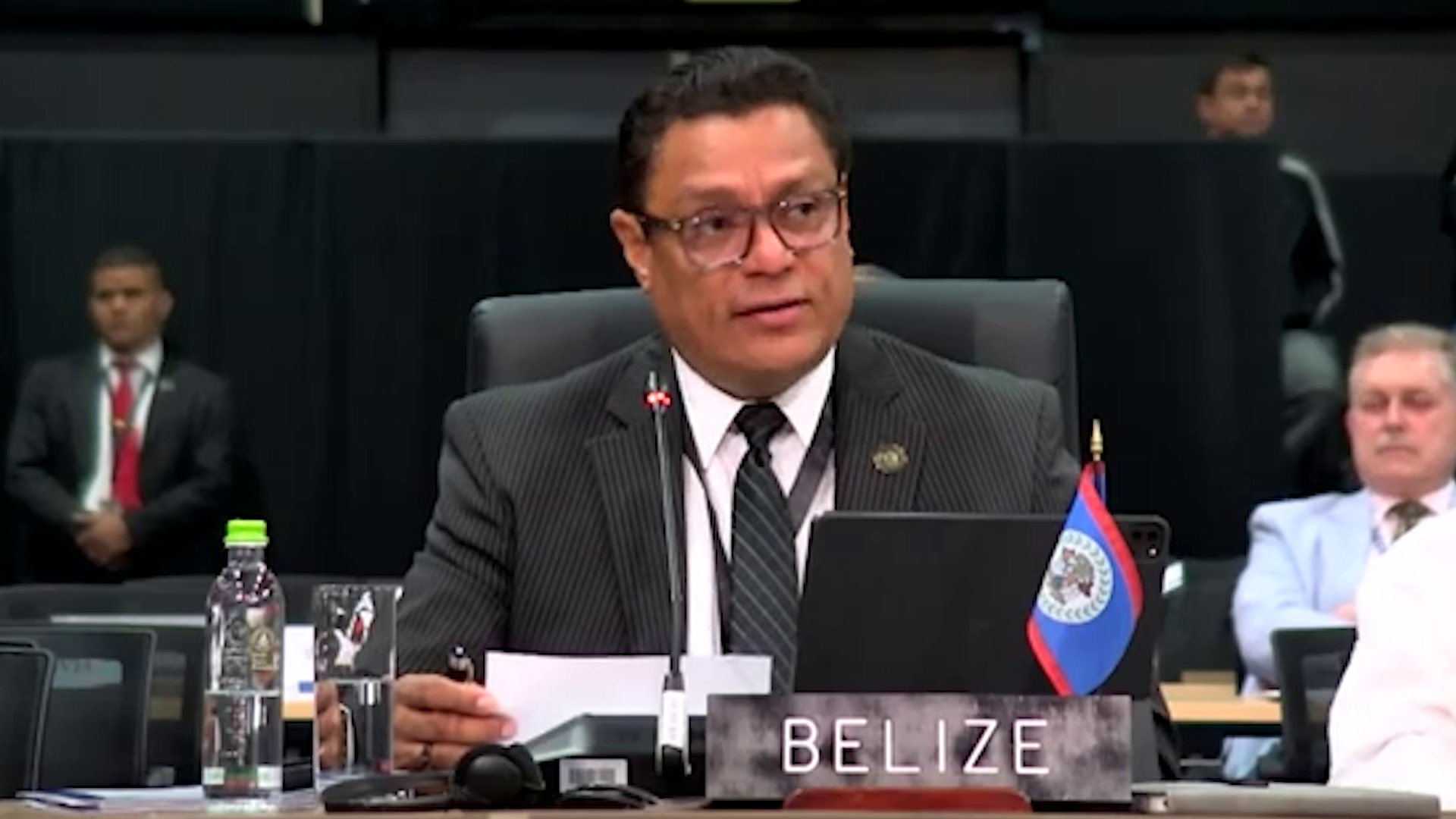
Belize Stands with Americas on Democracy and Stability
As the Organization of American States (OAS) gathers for its 2026 General Assembly in Panama City, the small Central American nation of Belize has stepped onto the regional stage to reinforce its commitment to shared democracy, collective security, and rules-based multilateral cooperation across the Americas. The summit, which brings together leaders from across the hemisphere, centers on coordinated action to address three of the region’s most pressing challenges: combating transnational organized crime, safeguarding democratic institutions, and preserving political and economic stability. Representing Belize at the assembly is Oscar Arnold, Chief Executive Officer of the nation’s Ministry of Foreign Affairs, who has laid out the country’s longstanding commitment to strong regional partnerships amid a growingly complex global and geopolitical landscape.
In his address to the assembly, Arnold emphasized that for small sovereign states like Belize, a strong, transparent, and rules-bound multilateral system is not just a diplomatic priority—it is a foundational requirement for national security, stability, and even the long-term survival of smaller nations. In a global order defined by stark gaps in size, economic power, and geopolitical influence, multilateral bodies deliver an irreplaceable benefit to all states, particularly those with smaller populations and economies: they guarantee every nation a voice, a seat at decision-making tables, and a framework that governs international relations by shared agreed rules rather than the unchecked power of larger states.
Arnold noted that these institutions uphold core principles of sovereignty, enable the peaceful settlement of disputes, and allow all nations—regardless of their scale—to advance their interests through collaborative cooperation rather than costly confrontation. For nearly 80 years, this critical regional role has been held by the OAS. While Arnold acknowledged that no multilateral institution is free from flaws, he stressed that the OAS has repeatedly proven its value when member states allow it to operate in line with its founding charter, official mandates, and shared hemispheric principles.
Today, the OAS stands as a trusted platform for political dialogue, collective problem-solving, and peaceful dispute resolution, while also acting as the guardian of the shared norms that bind the nations of the Americas together. As the cornerstone of regional multilateralism, Arnold argued that the OAS must prioritize the needs of its member states, rooted in its charter and international law, even as global ideological tides shift. Current geopolitical divisions across the hemisphere demand steady, principled navigation from the organization to serve all its members effectively. Beyond policy debates, the 2026 General Assembly also moved to adopt new security-focused resolutions and hold elections for open positions on key OAS bodies, including the Inter-American Juridical Committee and the Administrative Tribunal.
A top priority for Belize’s delegation at this year’s assembly is the long-running territorial dispute with neighboring Guatemala, which is approaching a final ruling from the International Court of Justice (ICJ) expected in 2027. Arnold highlighted that the OAS has been a critical, trusted partner in guiding both nations toward a peaceful, binding resolution through the ICJ process. Beyond diplomatic backing, the organization maintains a tangible on-the-ground presence in the border adjacency zone, and provides ongoing support to strengthen security along the shared border.
Arnold expressed Belize’s gratitude for the OAS’s sustained role in the dispute resolution process, noting that the ICJ-mediated process itself stands as a defining example of rules-based multilateralism in action. The OAS also operates a permanent observer mission in the adjacency zone, providing institutional support and critical resources to facilitate dialogue and stability between the two nations.
Beyond the territorial dispute, Arnold outlined that Belize faces growing threats from transnational criminal organizations, including drug cartels operating along its border regions. To address these challenges, Belize has turned to the OAS for specialized capacity-building support, with the organization delivering targeted training to Belizean law enforcement in key areas including anti-money laundering efforts and the tracking and marking of small arms and munitions.
While the value of strong multilateralism is widely recognized, Arnold argued that acknowledgement alone is no longer enough to meet current regional challenges. To build more effective multilateral institutions for the future, he called for a renewed focus on three core priorities: prevention of conflict, increased regional resilience, and expanded economic opportunity for all citizens across the hemisphere. This requires a renewed focus on the OAS’s development pillar, one that is often overlooked relative to security and democracy work. Arnold stressed that long-term democracy, security, and stability cannot survive without inclusive economic opportunity and sustainable growth. For democratic institutions to retain public trust and legitimacy, ordinary citizens must see tangible improvements in their daily quality of life.
To deliver these improvements, Arnold called for a refreshed OAS development agenda that prioritizes initiatives to create supportive regulatory environments for micro, small, and medium-sized enterprises (MSMEs). These businesses, he noted, are the primary generators of dignified, formal employment across the region. The agenda should also prioritize fostering innovation, addressing the growing harmful impacts of climate change, encouraging fair market competition, and expanding inclusive hemispheric trade. Critically, Arnold emphasized that these efforts must move beyond abstract policy commitments to deliver practical, measurable interventions that generate concrete benefits for ordinary people across the Americas. Closing his address, Arnold also highlighted the need for coordinated multilateral action to integrate advanced digital technologies across regional economies, noting that modern economic growth is increasingly dependent on widespread access to and adoption of new technological tools.
-

111 New Citizens Get to Call Belize “Home”
On Thursday, a landmark nationality ceremony in Belize welcomed 111 new citizens hailing from 22 countries across four continents, marking a major milestone for the Central American nation that frames its national identity around inclusive diversity. The event, hosted by the Ministry of Immigration, saw new Belizeans raise their hands and swear formal allegiance to their adopted home. Geographic breakdown of the new citizens reflects Belize’s unique regional and global connections: the largest contingent comes from Honduras, with 32 new citizens, followed by El Salvador with 28, alongside other groups from across the Americas, Asia, Africa and Europe.
In his address to the newly minted Belizeans, Minister of Immigration Kareem Musa emphasized that citizenship in the country is both a privilege and a commitment that comes with profound responsibility. “Many people fail to grasp the depth of the honor and responsibility tied to being a Belizean,” Musa told attendees. “The path to citizenship here is far from simple, but opening our doors to new citizens has brought critical skills, new career pathways and professional expertise that filled gaps in our labor market—including in roles that native Belizeans have been reluctant to take, and entirely new professions that did not exist here before.” He added that continuous immigration has helped Belize retain its youthful, dynamic and entrepreneurial spirit that drives national growth.
Musa also highlighted the deep roots many new citizens have already put down in Belizean communities, noting that most have resided in the country for years. “Many of you have worked tirelessly, often taking on demanding, low-wage roles while supporting your families at home and abroad,” he said. “Your aspirations, dreams and commitment to this nation align completely with those of native-born Belizeans.”
Beyond the citizenship ceremony, the Belizean government has announced sweeping improvements to its immigration processing system that have cut through long-standing administrative bottlenecks. Officials confirmed that all backlogged citizenship applications have now been cleared, and average processing times have been drastically reduced from multiple years to just a few months. The shift to digital archiving has also replaced the country’s outdated, fragile paper record system, while new overseas service hubs have resolved thousands of unresolved nationality applications that were stuck in limbo for years.
In a parallel development, the government is currently conducting a long-overdue review of the country’s 1991 Refugees Act, which has seen only minor changes over the past 35 years. Mariya Voloshkevich, Officer-in-Charge for the United Nations High Commissioner for Refugees (UNHCR) in Belize, praised the government’s ongoing reform efforts. Closing legislative gaps in the existing framework, Voloshkevich said, will expand equitable access to asylum protections and strengthen the overall integrity and effectiveness of Belize’s asylum system.
-

331 Million Drug Users Worldwide, And the Market Is Evolving
In its newly released 2026 World Drug Report, the United Nations Office on Drugs and Crime (UNODC) has sounded a urgent alarm over a staggering global surge in illegal drug use, alongside a rapidly evolving, tech-enabled illicit drug trade that is outpacing regulatory and law enforcement responses worldwide.
Based on 2024 data compiled for the report, an estimated 331 million people around the globe used an illegal substance – that marks a 34% increase over the past ten years, meaning one in every 16 people on Earth now engages in illegal drug use. Cannabis retains its position as the most consumed illicit drug, with a 40% decade-long jump bringing its global user count to 256 million. Cocaine use has also expanded by more than 33%, with roughly 25 million people using the drug worldwide today.
UNODC Executive Director Monica Juma emphasized the growing severity of the crisis, noting that the market is now flooded with an unprecedented wave of new, often more potent and dangerous drug variants. “Millions of premature deaths and healthy years of life are needlessly lost to drug use. Beyond the public health toll, drug trafficking networks are actively distorting national and regional economies,” Juma stated. “The need to prioritize shutting down transnational organized crime groups involved in the drug trade has never been more urgent.”
The report details how the global illicit drug trade has fundamentally reinvented its operations to evade authorities. Seizure data from 2024 shows five times more unique drug types are being intercepted than in the pre-2000 era, with 755 new psychoactive substances currently circulating in global markets – 118 of which were identified for the first time in the latest reporting cycle. Traffickers continuously engineer new synthetic formulations to exploit regulatory loopholes and avoid traditional detection methods.
The most transformative shift documented in the report is the integration of mainstream digital technology into drug trafficking operations. In 2024 surveys, 19% of European respondents reported purchasing illicit drugs via mainstream social media platforms – a figure that surpasses dark web purchases by 4 percentage points, with the trend particularly pronounced among younger consumers.
Against this concerning overall trend, the report identifies an emerging countertrend in several high-income nations: adolescent use of cannabis, alcohol, and tobacco is declining, while more young people now perceive cannabis as a harmful substance. This marks a significant reversal of decades-long trends, which the report attributes to multiple factors: the proliferation of new consumer products, the rising popularity of vaping, and shifts in social behavior brought on by increased screen time for social media and gaming, as well as reduced in-person peer interaction after hours. These changes appear to be quietly displacing traditional drug-using behaviors among younger generations in these countries.
The report also highlights a stark gender gap in patterns of drug use across the globe. Overall, men are roughly three times more likely to use illegal drugs than women, with men more likely to start use at an earlier age, driven largely by peer pressure and sensation-seeking tendencies. For women, however, the patterns are far more concerning: women progress to drug dependence much faster than men, a phenomenon researchers term the “telescoping effect,” and many women turn to drug use as a form of self-medication for unaddressed mental health conditions or chronic pain. Among women who use drugs, ecstasy is the most common substance of choice, followed by amphetamines.
For small Central American nation Belize, the report places it within the Americas region, which is home to an estimated 105 million illegal drug users total. As trafficking networks restructure their routes and seek out new unpenetrated markets, small nations like Belize face growing pressure and cannot remain insulated from the negative impacts of the expanding global drug trade, the report notes.
To address the rapidly shifting dynamics of the global drug crisis, the UNODC report calls for urgent coordinated action: stronger law enforcement deterrence, expanded cross-border intelligence sharing, joint transnational operations against criminal networks, and increased sustained investment in prevention programs and evidence-based addiction treatment. As the illicit drug trade continues to innovate and expand, the open question remains: can global law enforcement, public health systems, and policymakers adapt quickly enough to counter the threat?
-
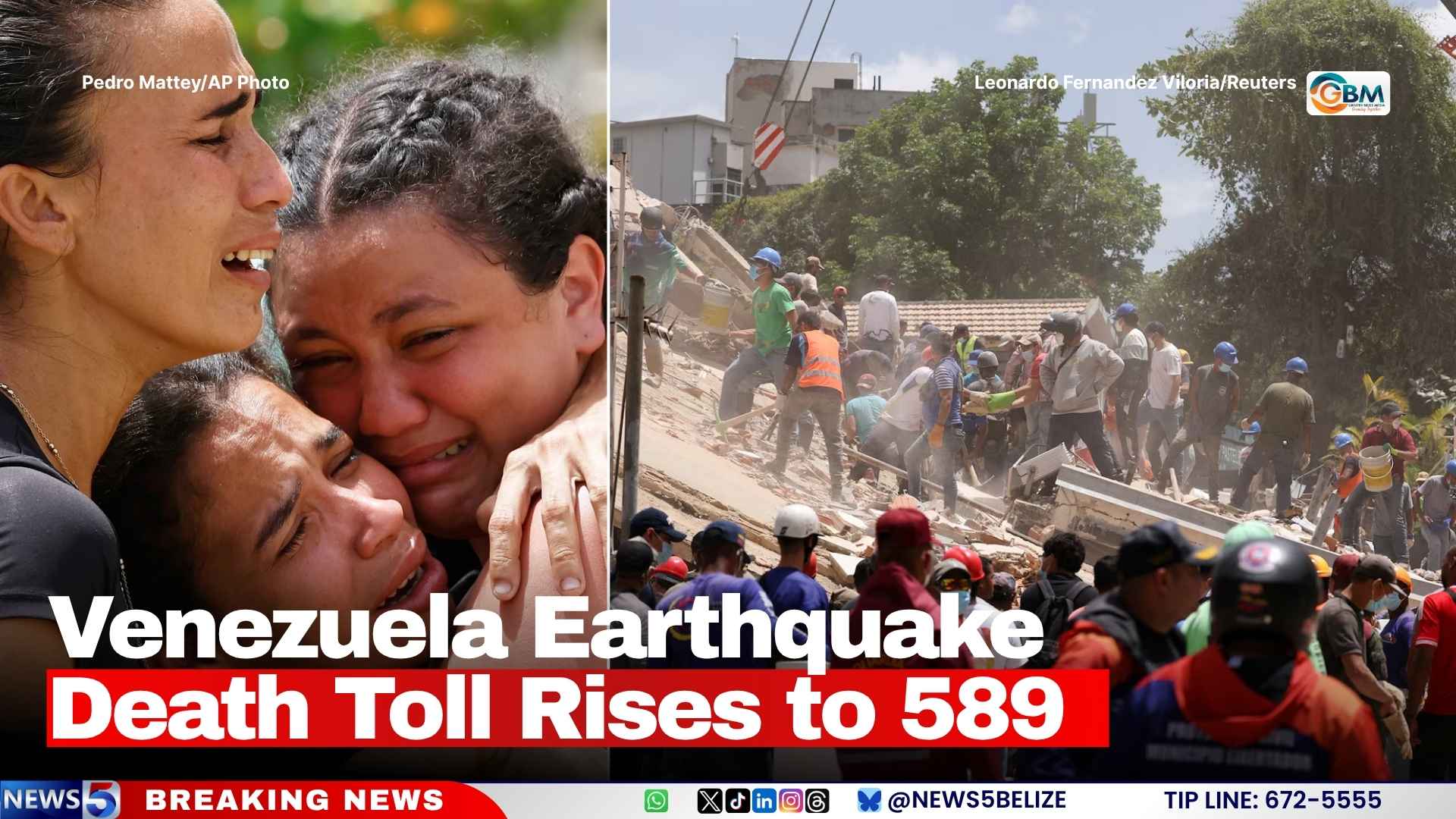
Venezuela Earthquake Death Toll Rises to 589
On the evening of Wednesday, June 24, 2026, Venezuela’s northern coastal region was shattered by two back-to-back massive earthquakes that have become the country’s deadliest seismic event in nearly 60 years. As of June 26, the confirmed death toll has climbed to 589, with thousands more injured and widespread destruction across urban and rural communities near the capital.
The disaster unfolded with devastating speed: a 7.2-magnitude tremor struck first, collapsing residential and commercial structures across Caracas and forcing panicked residents to flee into open streets. Within minutes, a stronger 7.5-magnitude quake hit the same region, compounding damage and trapping thousands under rubble.
There remains a discrepancy in reported injury figures: Venezuela’s Health Ministry tallied more than 4,300 people harmed by the quakes on Thursday, while acting President Delcy Rodríguez released a lower count of 2,980 injured one day later. At least 18 foreign nationals from five countries—Portugal, Spain, Brazil, China, and Chile—are among those confirmed dead. Rodríguez confirmed that intensive search-and-rescue operations are ongoing 24 hours a day, but warned the death toll will almost certainly continue to rise as emergency teams gain access to remote and isolated communities still cut off by damaged infrastructure.
In response to the disaster, a wave of international aid has begun to arrive. Neighboring Latin American nations including Mexico, Chile, and El Salvador have deployed specialized search-and-rescue teams along with critical medical supplies. The United States has repositioned two Navy ships off Venezuela’s coast and sent transport aircraft and helicopters to support rescue operations, damage assessments, and emergency supply delivery. Regional bodies and global leaders have also extended solidarity: Belize Prime Minister John Briceño offered deep condolences via social media, noting that crises of this scale reaffirm that “our shared humanity is stronger than any challenge nature may bring.” The Caribbean Community (CARICOM) issued an official statement mourning the loss of life, expressing full solidarity with the Venezuelan people during their “period of immense grief,” and praising first responders and local volunteers working in harsh conditions to save lives.
The disaster comes as Venezuela already faces widespread food insecurity, a reality the World Food Programme (WFP) has warned will worsen following the quakes. “The loss of livelihoods and assets is likely to compound the situation,” the WFP said, adding that food is one of the most urgent unmet needs in impacted areas. The agency’s United States branch confirmed WFP teams are already on the ground coordinating response efforts, but warned the organization requires immediate additional funding and support to scale up life-saving humanitarian assistance across affected regions.
The 1967 Caracas earthquake, a 6.7-magnitude event that killed more than 200 people, was the last major seismic disaster to strike Venezuela prior to this week’s events, making the 2026 quakes the deadliest in modern Venezuelan history.
-
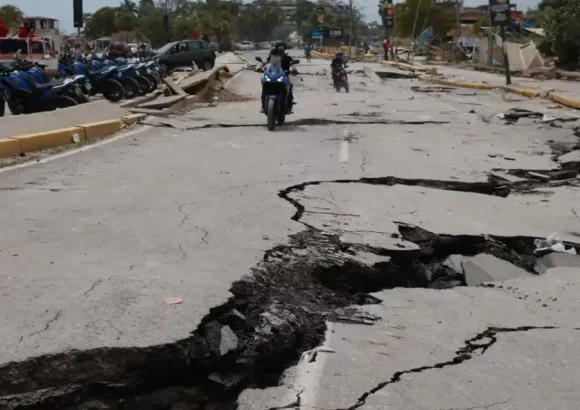
Can the tectonic plate near Venezuela cause earthquakes in the Dominican Republic?
On the evening of March 24, Venezuela was hit by two powerful earthquakes within a short window, registering magnitudes 7.5 and 7.2 respectively on the Richter scale. As of the latest updates, the catastrophic seismic event has claimed more than 900 lives, left over 3,000 people injured, and left more than 50,000 residents unaccounted for across the affected regions.
The tremors, which struck just after 6:00 p.m. local time, were not limited to Venezuelan territory—shaking was clearly felt as far away as the Dominican Republic, prompting urgent questions about why the seismic activity extended across such a wide distance in the Caribbean. The epicenters of the two quakes were located near Morón, a city in Venezuela’s Carabobo state, roughly 160 to 200 kilometers from the capital Caracas. Minutes after the ground stopped shaking, local Venezuelan newspaper Hoy reached out to prominent geologist Osiris de León to break down the science behind the cross-border tremors.
De León explained that the Caribbean tectonic plate, a mostly oceanic tectonic boundary, sits between Venezuela and the Dominican Republic and extends across multiple neighboring nations in the Caribbean region. This shared geological framework means it is entirely expected for seismic activity originating in Venezuela to be felt on Dominican soil. “In terms of seismic dynamics, the 900-kilometer gap between the two countries is not nearly large enough to block seismic waves,” de León noted. Compression waves, one of the primary forms of seismic energy generated by earthquakes, can travel at speeds up to 6,000 meters per second, allowing them to propagate across most of the Caribbean basin and trigger noticeable shaking far from the earthquake’s epicenter. While de León stressed that cross-border shaking of this magnitude is “not normal, not frequent, it’s not common,” he confirmed that it remains a geologically possible outcome of large seismic events in the region.
The root cause of Venezuela’s latest major earthquakes lies in the long-standing tectonic activity along the boundary where the Caribbean Plate and the South American Plate meet. Off the northern coast of Venezuela, these two massive tectonic structures constantly grind and slide past one another, building up and releasing stress that generates sustained seismic activity along a strip stretching from Venezuela’s border with Colombia all the way to its central Caribbean coastline.
As rescue and response efforts get underway, the International Organization for Migration (IOM), a United Nations agency, has released an early impact assessment. The IOM estimates that as many as 6.76 million people across Venezuela could be affected by the destruction caused by the two quakes, with roughly two million of those people residing in the capital city of Caracas.
-
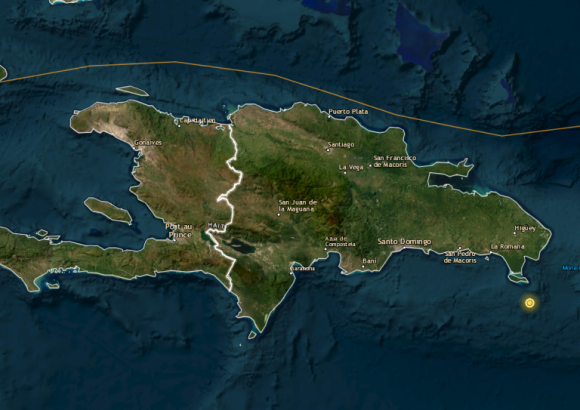
An earthquake was recorded in the Dominican Republic.
On the afternoon of Friday, June 26, a moderate-strength earthquake hit off the southern coast of the Dominican Republic, triggering widespread public panic and mandatory evacuations across multiple regions of the Caribbean nation.
Data published by multiple global earthquake monitoring platforms confirms the tremor registered a magnitude of 5 on the Richter scale. Its epicenter was located 52 kilometers south of Boca de Yuma, a municipal district situated in the eastern province of La Altagracia.
Shaking from the quake was strong enough to be detected and felt by residents in several provinces across the country, sending people rushing for safety in public and private spaces alike. In the country’s National District, dozens of witnesses confirmed to local leading newspaper Listín Diario that a range of organizations had cleared their buildings as a preemptive safety measure.
Precautionary evacuations were not limited to office facilities: public squares, government institutions and private residential buildings also emptied out as people followed emergency safety protocols. Notable sites that evacuated included the Dominican Ministry of Public Administration, the Council of Economic Advisors to the country’s executive branch, and the Acropolis commercial center, among other high-occupancy locations.