分类: world

  • Regional sargassum experts gather in Dominica for SARSEA meetings

    Regional sargassum experts gather in Dominica for SARSEA meetings

    Over 60 environmental specialists and cross-regional stakeholders have convened in Dominica this week for three days of targeted meetings, workshops and collaborative events centered on advancing sargassum management strategies, boosting regional environmental sustainability and strengthening collective Caribbean cooperation on marine challenges.

    Hosted from May 26 to 28 under the umbrella of the regional SARSEA programme, the full slate of activities receives financial backing from Agence Française de Développement, and its outcomes are set to guide upcoming field missions launching June 1 in Martinique and Guadeloupe. These upcoming on-site initiatives will bring together regional environmental bodies and technical partners to address shared marine and ecological issues impacting Caribbean island territories.

    Per an official press statement from the SARSEA programme, the event kicked off on Tuesday with a core regional workshop focused on drafting national strategic frameworks for sargassum response. The opening session gathered roughly 60 delegates from environment and fisheries ministries, private sector entities focused on marine innovation, and civil society organizations across the Caribbean. Attendees are working to align on coordinated, cohesive approaches to confront the rapidly growing sargassum influx crisis that threatens coastlines, tourism and marine ecosystems across the region.

    Tuesday evening saw the Organisation of Eastern Caribbean States open a special exhibition tied to the Council of Ministers of Environmental Sustainability (COM-ES). Co-funded through the SARSEA programme, the exhibition showcases cutting-edge, creative solutions to recurring sargassum blooms and widespread marine pollution, while creating space for key regional stakeholders to connect and exchange insights.

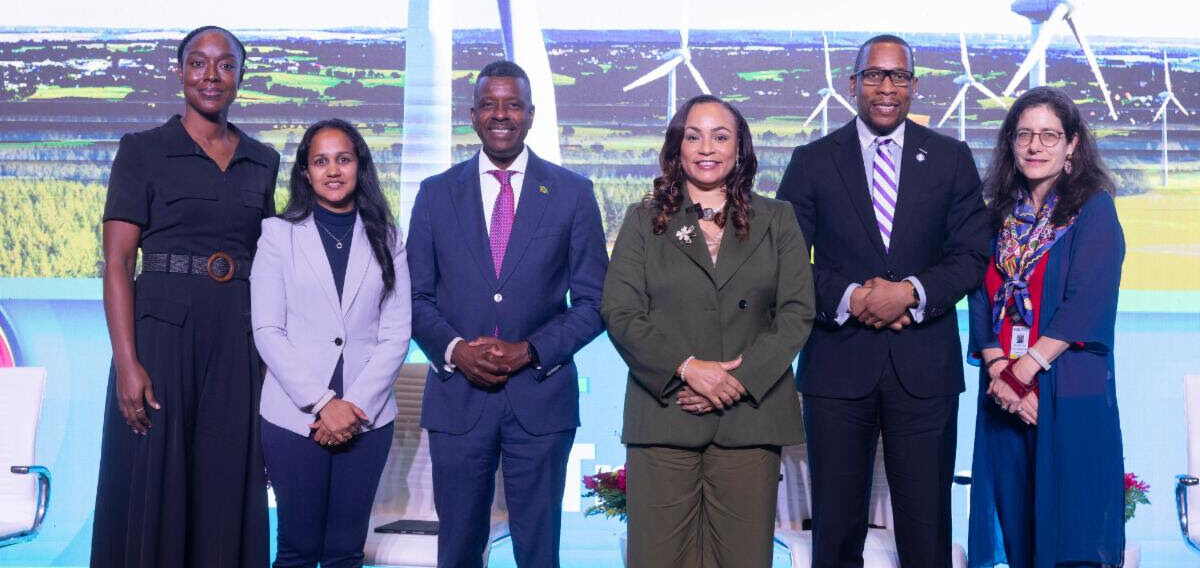
    On Wednesday, regional environment ministers and senior environmental officials gathered for the official COM-ES conference, which carries the overarching theme “Innovative Solutions to Protect a High-Risk Caribbean Environment.” During the plenary sessions, SARSEA representatives are scheduled to unveil the programme’s flagship initiative, alongside a set of strategic recommendations designed to improve sargassum response capacity and boost climate and ecological resilience for Caribbean island nations.

    An operational committee meeting is also set for Wednesday afternoon, where attendees will finalize details for high-priority projects and actionable interventions set to roll out across the region over the coming months. The full series of regional events will wrap up on Thursday with a side event focused explicitly on biodiversity conservation, held in conjunction with the broader COM-ES summit. At this closing session, Expertise France will highlight ongoing Caribbean environmental projects, with a specific focus on scientific collaboration and cross-border knowledge sharing activities already underway in Martinique and Guadeloupe.

  • PM Says Antigua’s UN Secretary-General Nominee Emerging as ‘Top Candidate’

    PM Says Antigua’s UN Secretary-General Nominee Emerging as ‘Top Candidate’

    The race to succeed António Guterres as United Nations Secretary-General has a new standout contender, according to the Prime Minister of Antigua and Barbuda, Gaston Browne, who says his nation’s nominee María Fernanda Espinosa has quickly established herself as one of the strongest candidates in the running, thanks to her deep diplomatic roots, multilingual proficiency, and decades of experience within the UN system.

    In an interview with local outlet Pointe FM this past Saturday, Browne noted that leading international media outlets and independent diplomatic analysts have already flagged Espinosa as a serious competitor for the world’s top diplomatic post, just two weeks after she officially entered the race. Nominated by Antigua and Barbuda earlier this month, the former Ecuadorian foreign minister and ex-president of the United Nations General Assembly brings a rare combination of experience that sets her apart from other hopefuls, Browne argued.

    Calling Espinosa a formidable competitor, the Prime Minister highlighted her proficiency in three major global working languages — English, Spanish and French — as a key advantage for leading an intergovernmental organization as diverse as the UN. Browne emphasized that multilingualism has become an increasingly critical qualification for top leadership roles in global institutions, noting that almost all leading contenders for senior positions at major international bodies hold at least conversational fluency in a second language.

    Browne also outlined Espinosa’s personal and professional background: born in Spain, she has built nearly her entire life and career in Ecuador, where she rose to hold both the foreign minister and defense minister portfolios before transitioning into senior leadership within the United Nations system. Her years of work within the UN have given her an intimate, on-the-ground understanding of how the organization operates, a key trait for anyone stepping into the secretary-general role, Browne added.

    Beyond her technical qualifications, Browne stressed that Espinosa’s track record of consensus-building and collaborative diplomacy makes her uniquely appealing to UN member states across all regional and ideological blocs. “The good thing about Maria, Maria will be more of a consensus leader,” Browne said. “I think she can bring people together.”

    The Prime Minister also positioned Espinosa as the de facto candidate for the entire Caribbean region, after Antigua and Barbuda waited to nominate a candidate to see if any other Caribbean national would enter the race. Following internal consultations across the Caribbean Community (CARICOM), Antigua and Barbuda moved forward with Espinosa’s nomination, and in the absence of another CARICOM-endorsed candidate, she now stands as the Caribbean community’s de facto pick, Browne explained.

    Beyond her regional and UN experience, Espinosa holds membership in the Nizami Ganjavi International Center (NGIC), a global policy and dialogue network. She is one of three current candidates for the UN secretary-general post who hold NGIC membership, introducing a notable Azerbaijani-linked dimension to the 2026 UN leadership race.

  • Sealy fired Glock at cops

    Sealy fired Glock at cops

    A high-stakes police-involved fatal shooting in Trinidad and Tobago has ignited widespread public debate, after top prosecutors approved an arrest warrant for manslaughter and other charges against Kaia Sealy, a woman who maintains she has never touched a gun and is innocent of all allegations against her.

    The incident, which unfolded on January 20, 2026, left Sealy’s common-law husband Joshua Samaroo dead and has raised pressing unanswered questions about the chain of events that led to officers opening fire. The case now stands at a crossroads, with conflicting accounts from law enforcement and the accused, who is currently outside the country receiving medical care for injuries she sustained during the shooting.

    Per the official narrative outlined by Trinidad and Tobago Police Service (TTPS) investigators, the encounter began when Samaroo and Sealy traveled to the Maloney area in a white Toyota Aqua, registered under plate PDS 1703, to complete an illegal sale of a firearm and narcotics to a confidential police informant. The informant told investigators that after the pair arrived, the weapon — which Sealy had allegedly hidden in her bra — was pulled out by Samaroo to show to the source.

    Once plainclothes officers from the Maloney Police Station moved in to intercept the vehicle, Samaroo allegedly sped away, triggering a high-velocity pursuit that spanned multiple jurisdictions. Police immediately notified the National Operations and Dispatch Centre (NODC) of the potential weapons and narcotics involvement, and the North Central Task Force Area West was called in to assist with the manhunt as the chase moved west along the Churchill Roosevelt Highway.

    The pursuit finally ended when Samaroo lost control of the vehicle and crashed into a roadside drain on Bassie Street Extension in St Augustine. Cell phone video circulated widely on social media captured the immediate aftermath: the crumpled Aqua at a standstill, with Samaroo’s hands raised clearly through the open driver’s side window. Seconds later, officers opened fire, striking both Samaroo and Sealy.

    Multiple responding officers have given consistent statements to investigators justifying the use of force. One officer, who approached the crashed vehicle from the rear, told investigators he saw Samaroo holding his hands up, but spotted Sealy — the front-seat passenger — aiming a gun directly at him through the windshield. He told investigators he heard what sounded like gunfire, saw the rear windshield shatter, believed he was under active attack, and returned fire. Seconds before additional shots were fired, multiple officers can be heard on scene shouting repeated commands of “drop the gun!”, according to the officer’s account.

    A second officer at the scene corroborated this timeline, confirming he fired one round from his service weapon before seeing Sealy lower her right arm — which he described as holding a black object matching the description of a handgun. A third officer added that he also observed Samaroo moving his left hand toward the front passenger seat, prompting him to shout a warning for Samaroo to stop moving. After the shooting ended, officers recovered a loaded Glock 9mm pistol from the vehicle, which was packaged and sent to the Scene Evidence Recovery Unit (SERU) for forensic testing. Investigators also recovered three spent 9mm shell casings from inside the vehicle during processing at the St Joseph Police Station, and the confidential informant’s cell phone was sent to the TTPS Cyber Crime Unit for forensic analysis. Both the informant and a second named witness have provided formal statements to investigators.

    Following the shooting, both injured victims were rushed to the Eric Williams Medical Sciences Complex (EWMSC) in Mt Hope for emergency care; Samaroo ultimately died of his injuries, while Sealy was later allowed to travel abroad for ongoing treatment of wounds she sustained in the shooting.

    Sealy’s account of the incident, however, directly contradicts every key element of the police narrative. In her formal statement included in the case file submitted to prosecutors, Sealy claims she was simply running routine errands with Samaroo when he got an unexpected phone call asking him to meet someone in Maloney. After a short, tense conversation that ended with Samaroo saying “don’t bother” and reversing the car, a marked police unit pulled up with an officer holding a drawn gun — and Sealy says she witnessed the man Samaroo had just met get into the police vehicle.

    Sealy told investigators she repeatedly begged Samaroo to stop the car as the chase unfolded, but he refused to pull over. After the crash, she said she saw Samaroo immediately raise both hands out the window before officers opened fire. She maintains that neither she nor Samaroo was in possession of a firearm at any point during the encounter.

    In a formal statement released through her legal team last Saturday, Sealy doubled down on her claim of innocence. “I am not a gangster, and I have never held a gun in my life,” she reiterated, while openly questioning key gaps and inconsistencies in the TTPS investigation.

    After reviewing all evidence collected by investigators, Director of Public Prosecutions Roger Gaspard, SC, approved the issuance of arrest warrants for Sealy on four total charges: three counts of shooting with intent to cause grievous bodily harm, and one count of manslaughter. The TTPS publicly confirmed the warrants in an official release issued last Thursday.

    The public confirmation of the charges has sent shockwaves through Trinidad and Tobago, with members of the public raising a series of unanswered questions about the case: Why did Samaroo and Sealy flee instead of stopping for officers? Why did officers open fire when Samaroo’s hands were visibly raised and surrendered? The conflicting accounts from police and Sealy have left many demanding full transparency as the case moves through the legal system.

  • Saint Kitts and Nevis under drought warning amid below-normal rainfall forecast

    Saint Kitts and Nevis under drought warning amid below-normal rainfall forecast

    BASSETERRE, Saint Kitts – On May 26, 2026, meteorological authorities issued an official drought warning for the Federation of Saint Kitts and Nevis, after long-term monitoring and climate projections confirmed a high likelihood of sustained below-average rainfall through the upcoming critical wet season.

    Senior Meteorological Officer Elmo Burke announced the warning in an official press release from the St. Kitts and Nevis Information Service (SKNIS), calling for immediate action from residents, commercial operations, and all water-reliant industries across the two-island nation to implement proactive water conservation measures.

    Burke explained that cumulative rainfall across the federation has already trailed long-term climatological averages over the past several months. Current climate modeling adds to concerns, as forecasts show the upcoming wet season – which aligns with the annual Atlantic Hurricane Season and delivers the majority of the country’s annual freshwater supply – will also bring far less precipitation than historical averages.

    The shift toward drier conditions is directly tied to the ongoing El Niño climate phenomenon, which is reshaping regional weather patterns across the Caribbean, Burke noted. El Niño is projected to push above-average temperatures across the region through the summer months, while suppressing convective rainfall activity that would normally generate steady wet-season precipitation, leading to prolonged dry spells.

    “The wet season is when Saint Kitts and Nevis captures most of its annual rainfall to replenish our rain-fed water reserves,” Burke said. “A substantial drop in precipitation during this key window would put significant strain on available freshwater supplies across the federation.”

    While Burke acknowledged that isolated heavy rainfall events from passing tropical systems remain possible over the course of the season, the overall long-term trend points to confirmed below-average cumulative rainfall for the period as a whole. To mitigate the risk of severe water shortages, Burke stressed that early preparation and consistent conservation are far more effective than reactive measures once drought conditions set in.

    “Every sector, from households to local businesses to agricultural and tourism operations that depend on steady water access, needs to adopt water-saving practices now to cut down on unnecessary waste,” he added. “Early action is the single most critical step we can take to help the country get through this extended dry period.”

    The Meteorological Services Department will maintain continuous monitoring of regional climate conditions, and will issue public updates to adjust forecasts or guidance as new data becomes available.

  • Cuban medical cooperation is the noblest face of the Revolution

    Cuban medical cooperation is the noblest face of the Revolution

    On May 26, 2026, Cuba held an official commemoration honoring six decades of landmark international medical collaboration, a program rooted in the nation’s core values of selfless service that has transformed public health across the globe. Senior public health leaders and Communist Party officials gathered for the ceremony, where officials recounted the extraordinary six-decade track record of the initiative that has turned Cuban medical expertise into a lifeline for vulnerable communities worldwide.

    Dr. Tania Margarita Cruz Hernández, First Deputy Minister of Public Health, opened the commemoration by outlining the scope of Cuba’s 63-year mission of solidarity. Over 600,000 Cuban healthcare workers have been deployed to 164 nations across every continent, collectively saving an estimated 14 million lives, she reported. Beyond life-saving emergency care, the program has delivered 18 million surgical interventions, assisted with more than five million births—many of which have resulted in children being named in honor of the Cuban professionals who helped bring them into the world—and restored or improved vision for more than 3.38 million patients.

    Cruz Hernández also highlighted the program’s long-term investment in global health equity: through the creation of the Latin American Medical School (ELAM) and the Medical Faculty Abroad initiative, Cuba has trained more than 87,000 new healthcare professionals from 150 countries, building permanent local health capacity in low-resource regions that have long been overlooked by wealthy nations.

    A centerpiece of the commemoration was recognition of the Henry Reeve Contingent, the elite disaster and emergency response unit founded by former Cuban leader Fidel Castro Ruz in 2005. Since its creation, 90 specialized contingents of the unit have completed high-risk response missions in 55 countries, stepping in to provide care when other international aid organizations have failed to respond. As of the 2026 commemoration, more than 16,000 Cuban medical collaborators remain deployed in 50 nations, continuing to deliver care to communities in need.

    However, leaders used the anniversary to also call out ongoing foreign interference targeting the program. Cruz Hernández emphasized that imperialist powers have waged a sustained campaign to disrupt Cuban medical cooperation, pressuring host governments to terminate bilateral agreements with Havana. “Who suffers from these attacks? It is not Cuban doctors—it is the most vulnerable people around the world, who are being stripped of their universal human right to health and life,” she said.

    Dr. Gretza Sánchez Padrón, director of Cuba’s Central Unit for Medical Cooperation (UCCM), echoed these remarks in an emotional address, framing the global program as the clearest expression of Cuban revolutionary values. “Our nation may be small geographically, but our commitment to solidarity is unlimited,” she said. “Cuban doctors, nurses, technicians and specialists do not only bring medical science and technical knowledge to the communities we serve—we bring empathy, compassion, and human connection. We hold hands with patients in their pain, we help families welcome new children, and we stand with them when they say goodbye to loved ones.”

    Sánchez Padrón specifically denounced sustained pressure from the United States aimed at discrediting and shutting down the program, noting that a number of nations have already yielded to that pressure, terminating or limiting programs that brought free or low-cost care to millions of vulnerable people. On behalf of all deployed Cuban medical workers, she reaffirmed unwavering loyalty to Cuba’s revolutionary principles, the legacy of Fidel Castro Ruz, and the leadership of Army General Raúl Castro Ruz and President Miguel Díaz-Canel Bermúdez.

    “For those who seek to malign our work with hatred and falsehoods, the proof of our impact is written in the grateful memories of millions of people around the world who will never forget the solidarity Cuba has given them,” she said.

    The commemoration closed with a formal honor: the UCCM was awarded the 85th Anniversary Commemorative Seal of the Confederation of Cuban Workers (CTC), in recognition of the program’s six-decade legacy of bringing health, hope, and life to every corner of the globe. Six decades after its launch, Cuba’s international medical collaboration continues to stand as one of the most ambitious examples of transnational solidarity in modern history, even amid growing external pressure to end its work.

  • New website launched to strengthen Barbados-Liberia ties

    New website launched to strengthen Barbados-Liberia ties

    On Africa Day 2026, The Africa-Barbados Heritage Initiative (TABHI) unveiled a groundbreaking digital platform designed to safeguard the little-known shared historical legacy between Barbados and Liberia, while fostering deeper collaboration across cultural, educational and diplomatic spheres. The project traces its origins to decades of personal and academic research from TABHI founder Ambassador Lorenzo Llewellyn Witherspoon, who first began investigating the little-documented 1865 voyage of the brig *Cora*, which carried 347 Barbadian migrants to seek new lives in Liberia.

    What started as a deeply personal journey for Witherspoon — uncovering his own family ancestry as a descendant of Barbadian emigrant John Prince Porte — gradually expanded into a broad, community-focused initiative dedicated to reconnecting separated descendant communities across the Atlantic and building durable bilateral cooperation between the two nations. The project gained critical institutional momentum in 2021, when Witherspoon held high-level discussions with Barbadian Prime Minister Mia Mottley focused on ancestral preservation, archive access and cross-national engagement. Those early talks laid the groundwork for the landmark 2024 Sankofa Back2Barbados Pilgrimage, a landmark event that drew more than 500 descendants of 19th-century Barbadian emigrants from across the globe to Barbados for ancestral tracing workshops and immersive cultural exchange.

    In parallel to this community work, official diplomatic relations between Barbados and Liberia have advanced rapidly in recent years. Key milestones include the 2024 signing of a joint communiqué formally establishing full diplomatic ties, the presentation of credentials by Barbados’ first resident ambassador to Liberia in 2025, and the early 2026 signing of both a mutual visa waiver agreement and a formal framework for regular political consultations between the two governments.

    Speaking at the website launch, Ambassador Witherspoon framed the new digital platform as far more than an online archive: “This website is a platform for remembrance, reconnection, and renewal. It reflects a shared history and points to a shared future built on exchange, partnership, and opportunity.”

    Professor Dr Caree Banton, a distinguished scholar of African diaspora history, TABHI board member, and author of *More Auspicious Shores: Barbadian Migration to Liberia, Blackness, and the Making of an African Republic*, noted that the initiative builds on a transatlantic bond forged more than 160 years ago. “In 1865, a courageous voyage linked Barbados to Liberia. Today, their descendants are bridging that same ocean through cooperation, commerce, and community,” Banton explained.

    Barbados’ Ambassador to CARICOM David Comissiong connected the TABHI project to a broader, ongoing shift in Barbados’ relations with the African continent, pointing to two recent high-profile developments: the launch of direct passenger flights between Nigeria and Barbados by Nigerian carrier Air Peace, and the opening of the African Export-Import Bank’s Caribbean regional headquarters in Bridgetown, Barbados’ capital. “Without a doubt, it is fair to assert that a profound deepening and extension of the relationship between the Republic of Barbados and its ‘mother continent’ of Africa is well and truly underway,” Comissiong said.

    Moving forward, TABHI plans to use the new website to make rare historical resources freely accessible to the public, share regular updates on its community and diplomatic initiatives, and create clear pathways for descendants, academic researchers and cultural institutions to partner on its ongoing work of preservation and connection.

  • Caribbean Court of Justice veroordeelt Suriname in zaak Ramsamooj

    Caribbean Court of Justice veroordeelt Suriname in zaak Ramsamooj

    In a landmark regional ruling issued on May 25, the Caribbean Court of Justice (CCJ) has found that the government of Suriname violated the free movement rights of Trinidadian political analyst Derek Anand Ramsamooj, stemming from his extended 2020 detention without guaranteed access to legal counsel. The regional court has ordered Suriname to pay Ramsamooj $30,000 in damages for the severe breach of his rights as a citizen of the CARICOM community.

    The case, brought forward by Ramsamooj against the State of Suriname, centers on events that unfolded in October 2020. Ramsamooj, a national of Trinidad and Tobago who had regularly worked in Suriname as a political consultant for the former Bouterse administration, was first approached by Surinamese police at Paramaribo’s Hotel Krasnapolsky on October 6, 2020. Officers seized his passport and ordered him to report for questioning the following day, after which he was taken into custody as part of a criminal investigation into alleged corruption and fraud linked to the previous Surinamese government.

    CCJ’s findings confirm that Ramsamooj was held in two separate 8-day detention periods under Article 40 of Suriname’s Code of Criminal Procedure, during which he was denied effective access to legal representation. All interrogations were conducted in Dutch with the assistance of a translator, and a Dutch-language statement obtained during this period was later used as evidence against him. His pre-trial detention was ultimately extended until December 22, 2020, when he was granted release due to a sharp decline in his health. Formal criminal charges—including participation in a criminal organization, fraud, and money laundering—were filed against him in March 2021, and his passport remained seized until September 2022, when he was finally permitted to leave Suriname to seek urgent medical treatment abroad.

    At the core of the legal challenge was the question of whether restrictions on access to legal counsel violated the rights guaranteed to CARICOM citizens under the Revised Treaty of Chaguaramas, a framework that enshrines the right to free movement across the regional bloc. In its ruling, the CCJ emphasized that fundamental human rights are a prerequisite for the effective exercise of CARICOM citizen rights, holding that access to legal representation from the first point of interrogation is a minimum standard of legal protection that all member states must uphold within the community.

    The court further found that Article 40 of Suriname’s criminal procedure code fails to provide adequate safeguards for suspects who are denied effective access to a lawyer during the investigation phase, referencing binding international human rights standards and prior rulings from the European Court of Human Rights to support its conclusion. The application of Suriname’s domestic legislation in this case, the CCJ ruled, created an impermissible restriction on Ramsamooj’s right to free movement within CARICOM. The court made clear that member states cannot invoke domestic legal procedures that conflict with the community’s minimum human rights standards to justify rights violations.

    Notably, the CCJ stressed that its ruling does not bar Suriname from moving forward with its underlying criminal prosecution of Ramsamooj. It did, however, note that any statements or evidence obtained during the period in which Ramsamooj’s rights were violated cannot be used in future proceedings if such use would once again conflict with CARICOM community law.

    The court dismissed a portion of Ramsamooj’s additional claims: it declined to issue a separate ruling on his right to provide professional services within CARICOM, finding insufficient evidence that he was actively providing services at the time of his detention in line with the treaty’s definitions. It also ruled that a full causal link between his claimed medical expenses and the rights violation had not been established. Even so, the court accepted medical expert reports confirming that Ramsamooj developed severe health complications during his detention, including cardiovascular issues and a stroke, and that the conditions of his detention contributed directly to these health outcomes.

    Legal observers across the Caribbean have framed the ruling as a pivotal legal milestone for the CARICOM bloc. The CCJ’s explicit confirmation that fundamental human rights form an integral part of regional community law sets a new precedent, reinforcing that core rights such as regional free movement cannot function meaningfully without minimum protections for fundamental legal principles.

  • Air Peace dismisses Ebola fears following Barbados landing

    Air Peace dismisses Ebola fears following Barbados landing

    Nigeria’s leading private carrier Air Peace has marked a major milestone in transatlantic air connectivity, completing its first-ever direct flight from West Africa to Barbados on Sunday — but the historic launch has been accompanied by unexpected public anxiety over potential Ebola exposure, driven by recent outbreaks in two East African nations.

    The airline’s senior leadership has moved quickly to ease public worries, emphasizing that strict biosecurity protocols are in place at every step of the travel journey, and that the carrier never operates services to the affected regions.

    In an official address to reporters during the route’s launch event at Barbados’ Hotel Indigo on Monday, Air Peace Chief Commercial Officer Nowel Ngala underscored that the new service poses zero Ebola-related risk to passengers and local communities. “We are 100 per cent safe,” Ngala stated, explaining that Nigerian federal authorities and the country’s national aviation regulator have implemented stringent entry screening measures for all travelers arriving from Ebola-impacted areas at every Nigerian international airport.

    Ngala reiterated that none of Air Peace’s routes serve the Democratic Republic of the Congo or Uganda, the two countries currently reporting confirmed Ebola cases. The vast majority of travelers on the new Caribbean route originate from Lagos, Nigeria’s economic hub, and Ghana, he added. “We continue to scrutinize every passenger, and we have not had any passenger linked to Ebola on our services. We remain committed to working hand-in-hand with the Barbados government and all Caribbean market stakeholders to grow two-way traffic between the region and Nigeria,” he said.

    Beyond addressing public health concerns, Ngala also clarified a last-minute adjustment to the carrier’s original route plan. The airline initially intended to operate a Lagos-Barbados-Antigua itinerary, but ultimately chose to terminate all services in Barbados after reviewing projected passenger loads. Ngala framed the decision as a strictly commercial, cost-driven adjustment amid ongoing global fuel price volatility.

    “When we reviewed passenger numbers ahead of the launch, we found just 24 travelers booked for the Antigua leg, and only one passenger reserved for the departure out of Antigua,” he explained. “There is still significant work ahead to build inbound traffic from the Caribbean to Nigeria and Central Africa. Landing a Boeing 777 just to pick up a single passenger would make no economic sense, especially with fuel prices at current extreme levels.”

    Barbados’ High Commissioner to Nigeria, Ghana and Liberia Juliette Bynoe-Sutherland backed up Air Peace’s safety assurances, noting that the Ebola outbreaks are thousands of kilometers from the West African origin of the new route. Bynoe-Sutherland emphasized that no confirmed Ebola cases have been recorded in either Nigeria or Ghana, the two primary source markets for the new service.

    “All African nations are on high alert, given how easily contagious diseases of this type can spread, but the entire world gained valuable experience navigating the COVID-19 pandemic that we can draw on to manage current risks,” she added, praising the rigorous public health screening protocols implemented by Barbados’ Ministry of Health for the incoming flight.

    The launch of Air Peace’s direct Nigeria-Barbados service marks a new chapter in air connectivity between West Africa and the Caribbean, opening new opportunities for trade, tourism, and people-to-people links between the two regions. Officials from both Air Peace and Barbados expect traffic on the route to grow gradually as awareness of the direct service increases among travelers.

  • St Vincent and the Grenadines to lead OECS social protection committee

    St Vincent and the Grenadines to lead OECS social protection committee

    Against a backdrop of rising socioeconomic and climate-related pressures across the Eastern Caribbean, Saint Vincent and the Grenadines is stepping into prominent regional leadership roles to advance coordinated social welfare development and strengthen protection frameworks for vulnerable communities.

    At the opening ceremony of the 10th Meeting of the Technical Advisory Committee on Human and Social Development held in the country on May 20, 2026, Social Welfare Minister Shevern John confirmed that Saint Vincent and the Grenadines will take over as the new chair of the Organisation of Eastern Caribbean States (OECS) Social Protection Technical Advisory Committee. Later this year, the nation will also assume leadership of the OECS Council of Ministers on Human and Social Development, and is preparing to host ministers and delegates from all OECS member states for upcoming high-level meetings.

    This year’s two-day committee gathering convened under the theme “Advancing Social Protection in the OECS: Policy, Practice and Learning”, drawing government officials and regional policy makers from across the sub-region. Attendees gathered to review collective strategies for reinforcing social welfare systems that serve at-risk populations across the Eastern Caribbean.

    Minister John explained that the core mandate of the Technical Advisory Committee is to evaluate pressing social protection challenges facing each OECS member state and develop evidence-based recommendations to lift overall citizen well-being across the bloc. He framed the committee as a foundational pillar of ongoing regional reform efforts, noting that the meeting’s central discussions would focus on identifying successful, locally tested initiatives within member states that could be scaled up and replicated across other OECS nations.

    “In an era of collective growth, we as Caribbean people have built a wealth of context-specific knowledge and hands-on experience that we can share across the region to elevate quality of life for all,” John stated in his opening address. The minister further described the body as a “catalyst for social protection reform”, emphasizing that its guidance will shape the trajectory of future regional social policy.

    The push for stronger, more accessible social protection has climbed the priority list for Caribbean national governments in recent years, as the region grapples with persistent economic instability, more frequent and severe climate-linked natural disasters, and growing strain on existing public assistance programs. In response, regional governing bodies have been advancing targeted reforms to modernize outdated welfare systems, boost inter-agency collaboration, and expand support to households hard-hit by economic downturns and environmental emergencies.

    Closing his opening remarks, John extended formal gratitude to Saint Kitts and Nevis, which completed its two-year term as the outgoing chair of the Technical Advisory Committee, and extended a warm welcome to all delegates participating in the 2026 meeting hosted by Saint Vincent and the Grenadines.

  • Pope Leo XIV Apologises for Church’s Historic Role in Slavery

    Pope Leo XIV Apologises for Church’s Historic Role in Slavery

    In a groundbreaking step that marks the clearest acknowledgment of institutional wrongdoing to date, Pope Leo XIV, the global leader of the Roman Catholic Church, has delivered the strongest papal apology in history for the Church’s centuries-long entanglement with the transatlantic slave trade and systems of human enslavement.

    The unprecedented apology was included as a core passage in the pope’s first-ever encyclical, *Magnifica Humanitas* (translated as “Magnificent Humanity”), a major teaching document released publicly on May 25, 2026. In the text, Leo XIV openly admits the Vatican and global Church leadership failed morally on the issue of slavery, acknowledging that for hundreds of years, Church authorities did not just remain silent but often actively legitimized systems of subjugation that targeted and enslaved non-Christian populations across the globe.

    “For this moral failure, and for the centuries of unspeakable suffering that this practice inflicted on millions of people, I sincerely ask for pardon in the name of the entire Church,” the pope wrote, adding that the legacy of enslavement remains “an open wound in Christian memory that we can no longer ignore or minimize.”

    The encyclical also lays out a detailed historical accounting of the Church’s complicated relationship with slavery, confirming that medieval ecclesiastical institutions themselves owned enslaved people, and noting that the Church only issued a “formal, absolute, and universal condemnation” of the practice in the 19th century under Pope Leo XIII.

    While previous popes including John Paul II and Francis had publicly condemned slavery and offered apologies for historical complicity in injustice, analysts and religious scholars note that Pope Leo XIV’s statement is unprecedented in its explicit acceptance of institutional responsibility by the Vatican as a governing body. Many observers view the apology as a landmark step toward reckoning with one of the darkest chapters in Christian history.

    Beyond its address of historical injustice, *Magnifica Humanitas* also turns to contemporary ethical challenges, including the unregulated growth of artificial intelligence and emerging forms of economic exploitation embedded in today’s global supply chains. The pope issued a warning that these modern systems risk repeating the dehumanizing harms of historical slavery if global leaders and institutions do not put human dignity at the center of policy and innovation.