分类: world

  • US drone strikes pose ‘zero threat’ to Vincy fishers — COP

    US drone strikes pose ‘zero threat’ to Vincy fishers — COP

    A cloud of uncertainty has hung over Caribbean fishing communities in recent weeks after a series of lethal US military drone strikes on vessels operating in regional waters, including one strike carried out in the exclusive economic zone of St. Vincent and the Grenadines (SVG) back in February. The United States has justified the operations by stating the targeted boats were involved in illicit narcotics trafficking, but the incident has sparked significant backlash after claims emerged that three deceased individuals from St. Lucia were actually legitimate small-scale fishermen, not drug traffickers, according to their family members.

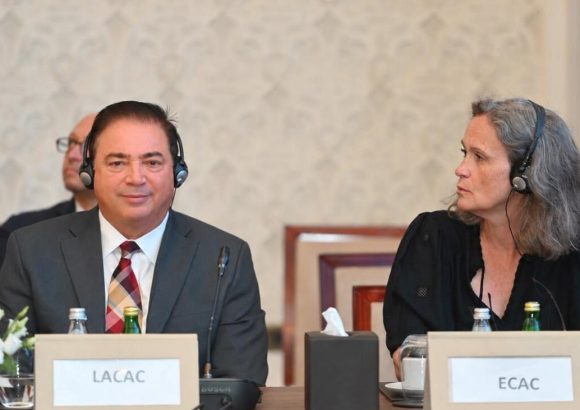
    In the wake of growing public anxiety among SVG’s fishing community, top security officials have moved to address widespread fears, delivering public reassurance that local fishermen can return to their work on the open ocean without fear of accidental targeting. The joint announcement came during a press conference held in Kingstown on Wednesday, April 1, shortly after National Security Minister St. Clair Leacock and Police Commissioner Enville Williams returned from the Regional Security System (RSS) Council of Ministers’ Meeting held in St. Lucia between March 23 and 27.

    During the summit, Leacock formally took over the rotating one-year chairmanship of the eight-member regional security bloc from St. Lucia Prime Minister Phillip Pierre. Addressing reporters’ questions about the February strikes directly, Commissioner Williams delivered a clear, unqualified assurance to local fishing workers. “I want to take the opportunity to say to our fisherfolk that there is no threat to you going to sea to ply your trade; like zero threat to you. None,” Williams stated, emphasizing that US counter-narcotics operations are exclusively focused on criminal actors violating local and international drug trafficking laws. “So, ordinary fishermen and women who are going to sea to ply their trade have nothing to fear, absolutely nothing to fear. And that’s the solemn and honest truth,” he added.

    Williams went on to outline the core mandate and operational structure of the RSS, explaining that the alliance brings together member states to pool shared security resources, align common operating protocols for issues ranging from immigration management to national emergency response, and coordinate action across all areas that impact citizen safety across the Caribbean. “So everything within the member states as it relates to defence and security and response to hazards in case of NEMO (National Emergency Management Organisation) and all of that that touches and concerns citizen security is treated by this alliance as one,” he explained, noting that the bloc operates under a unified security framework to address shared threats.

    Despite the reassurance for fishermen, reporters pressed Williams on critical unanswered questions surrounding the US strikes: why the United States launched operations that destroyed at least three vessels in regional waters, including one in SVG’s EEZ, whether regional authorities granted formal authorization for the US military to operate in these waters, what progress has been made in ongoing investigations into the incident, and what information has been shared with the families of the deceased Caribbean fishermen.

    In response, Williams clarified that inquiries about authorization for the US operations fall outside the scope of law enforcement, framing the issue as a political matter that must be addressed by the country’s political leadership rather than police command. He did confirm, however, that the RSS has opened formal discussions with US counterparts about the incident, and that these talks remain ongoing. Williams added that the head of US Joint Interagency Task Force South (JIATF South), the US military command responsible for counter-narcotics operations in the Caribbean, attended the first two days of the RSS summit in St. Lucia and responded to the same questions raised by local reporters, but that these discussions were held behind closed doors and he could not disclose details of the closed-session exchanges.

    Reporters continued to press officials, presenting a photograph of one of the destroyed boats to challenge the US narrative that the vessels were carrying large drug shipments. Pointing to the small size of the boat, the reporter noted that the minister had previously referenced a 500-million-dollar cocaine seizure connected to the strike, and observed that many legitimate fishing boats across the Caribbean operate with multiple outboard motors, a characteristic the US has cited as evidence of drug trafficking activity.

    At this juncture, Minister Leacock intervened, noting that political questions about the incident should not be directed to the police commissioner, and provided updated context on the discussions held at the RSS summit. Leacock confirmed that during the meeting, RSS delegates were informed that the US has adjusted its previous position of refusing to provide explanations for prior strikes, and has now softened its stance, agreeing to show greater respect for the national sovereignty of Caribbean nations – a shift that emerged as a central topic of negotiation at the summit.

    “ I believe, through the skilful negotiations of the RSS and heads of government and others who will be involved in this exercise, we can anticipate that over time, there will be an increased level of responsiveness and sensitivity to Caribbean jurisdictions and to that key expression that was used: the Caribbean being a zone of peace,” Leacock said, adding that ongoing negotiations are progressing and that the region expects to achieve the transparent, accountable outcomes that Caribbean governments and communities are entitled to.

  • Migration authorities detain over 2,000 undocumented migrants in nationwide operations

    Migration authorities detain over 2,000 undocumented migrants in nationwide operations

    In a major push to strengthen migration management across the Dominican Republic, the nation’s General Directorate of Migration (DGM) has released official figures documenting large-scale enforcement operations carried out over two days in late March and early April 2026.

    Across coordinated operations conducted on March 31 and April 1, DGM officials confirmed that a total of 2,199 undocumented migrants were taken into custody. Of that group, 1,890 have already been processed and deported through official border crossings, according to the agency’s official statement.

    Deportations were distributed across four key border entry points, with the DGM reported: 493 deportees exited through the Dajabón crossing, 983 through Elías Piña, 321 through Jimaní, and 163 through the Pedernales border point. Agency spokespersons emphasized that all detention and deportation procedures strictly followed established due process requirements and official human rights protection protocols throughout every stage of the operations.

    The enforcement actions were a joint effort between multiple Dominican security bodies. Of all detainees, 1,345 were apprehended directly by DGM field agents, while the remaining 854 were arrested by joint security forces that included the Dominican Army, National Police, the Dominican Border Security Corps (CESFRONT), and the National Environmental Protection Service (SENPA).

    Operations were not limited to border regions: enforcement actions stretched across multiple high-population and high-traffic areas of the country, including the Greater Santo Domingo metropolitan area, Santiago, La Altagracia, Samaná, Espaillat, and all key border provinces. The operation targeted undocumented migrants across both urban centers and rural communities, with additional checks concentrated along major travel routes, public transport hubs, and agricultural work sites where unauthorized migration is commonly reported.

  • IMF: War Shock Drives Global Price Surge

    IMF: War Shock Drives Global Price Surge

    The escalating conflict spreading across the Middle East is sending shockwaves through the global economy, driving sharp upward pressure on energy and food commodity prices while tightening access to credit worldwide, according to new analysis from the International Monetary Fund (IMF). The multilateral institution warns that this unexpected economic shock could decelerate global expansion and amplify the cost-of-living crisis that has strained households across every continent over the past three years. The conflict has already created one of the most severe disruptions to global energy markets in modern history, the IMF reports. Key shipping and transit routes for fossil fuels have been hit hard by growing instability, putting significant upward pressure on global prices. Of particular concern is the Strait of Hormuz, a strategically vital waterway that separates Iran and the Arabian Peninsula. Roughly 25% of the world’s total daily oil output and 20% of global liquefied natural gas (LNG) shipments move through this chokepoint, making any disruption to transit there a core driver of the current energy price surge. The IMF’s analysis makes clear that the economic fallout from the conflict is not evenly distributed across the global economy. Nations that rely heavily on energy imports are facing ballooning fuel import costs that are draining foreign exchange reserves and stretching already stretched government budgets to breaking point. On the opposite side of the ledger, energy exporting nations that are able to maintain consistent production through the period of instability stand to gain from elevated global commodity prices. Higher energy costs are directly feeding into broad-based inflation across the global economy, the IMF emphasizes. Elevated fuel prices push up the cost of transportation and industrial production, and these higher expenses are ultimately passed through to consumers in the form of higher prices for nearly all goods and services. This dynamic creates a meaningful risk that persistent high inflation could return in major economies that had only just managed to bring price growth under control after the post-pandemic inflation surge. Beyond energy markets, global supply chains are facing new disruptions that are adding to cost pressures. The IMF notes that shipping companies are being forced to reroute vessels away from high-risk regions, which drives up freight and insurance premiums while causing costly delays to deliveries. One of the most pressing concerns is the interruption to global fertilizer shipments: roughly one-third of all global fertilizer exports move through the affected Middle East region, and the disruption to these supplies has sparked widespread fears about lower agricultural output in the coming growing season and even higher food prices down the line. Low-income households and developing economies are the most vulnerable to these shocks, the IMF further stresses. For lower-income populations, food makes up a far larger share of total household spending than it does for wealthier groups, meaning price hikes hit these households harder. Rising food and agricultural input costs increase the risk of widespread food insecurity, while also adding unplanned budget pressure to governments in low-income countries that already have very limited fiscal space to respond to crises. Global financial markets have also already reacted to the growing uncertainty, with the IMF documenting falling global equity prices, rising government bond yields, and much tighter borrowing conditions for both public and private borrowers. These tighter conditions push up the cost of servicing existing debt for governments and companies alike, creating additional strains on balance sheets at a time when many are already recovering from recent economic shocks. In its concluding assessment, the IMF says the ultimate severity of the economic damage will depend on how long the conflict lasts and how far it spreads across the region. Prolonged disruptions to energy and food transit, the institution warns, are likely to lock in permanently higher energy costs, keep inflation elevated for much longer, and leave the global economy with much weaker growth than previously projected.

  • Group of Cuban healthcare workers returns from Guatemala

    Group of Cuban healthcare workers returns from Guatemala

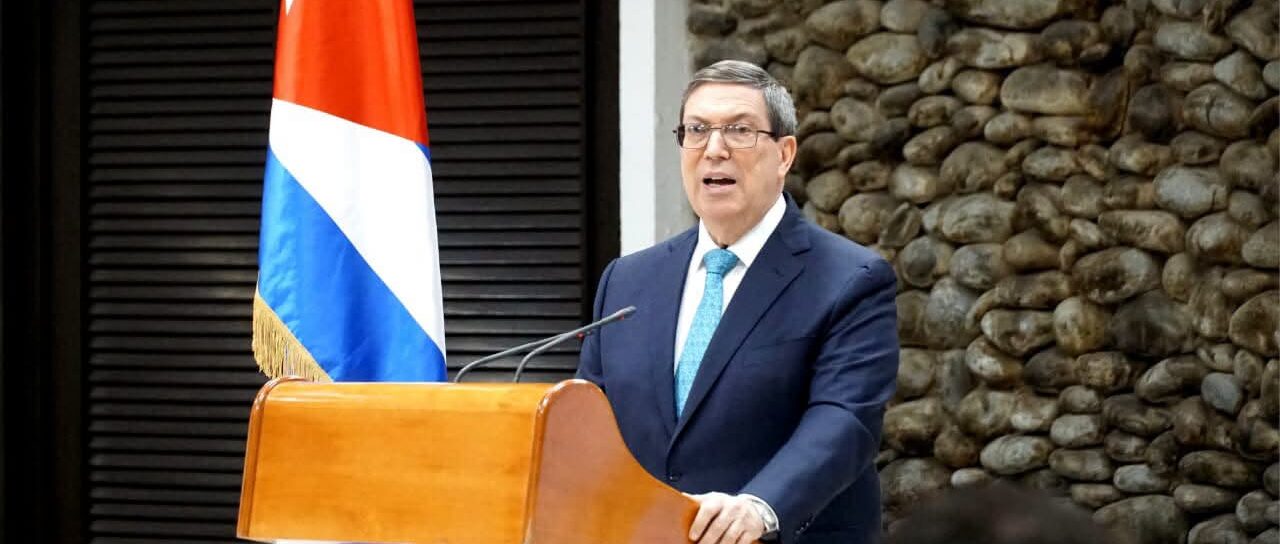
    Nearly three decades of life-saving international medical collaboration between Cuba and Guatemala is drawing to a close, as the first cohort of Cuban healthcare workers prepares to touch down on Cuban soil Tuesday, following the Guatemalan government’s official announcement of a phased wind-down of the bilateral medical aid agreement. The outbound contingent was honored at a heartfelt farewell ceremony held one day prior in Guatemala, where leaders from both nations celebrated the extraordinary public health legacy the Cuban brigade leaves behind.

    Nazario Fernández, the top Cuban diplomatic representative in Guatemala, opened the tributes by highlighting the transformative reach of the brigade’s work, which extended deep into Guatemala’s most isolated and underserved communities. Fernández commended the medical team’s decades of unwavering service, pushing back against bad-faith efforts to discredit their contributions. He emphasized that for 28 years, the brigade has embodied a radical, people-centered humanism that has been etched permanently into the hearts of the Guatemalan people, a legacy no criticism can erase. The ceremony also doubled as a tribute to Fidel Castro, the founding leader of the Cuban Revolution, coinciding with the centennial of his birth, before Fernández closed by wishing the departing workers a safe journey home.

    Sheila Pamela Leyla, program coordinator for collaboration at Guatemala’s Ministry of Health and Social Assistance Directorate of Integrated Networks, took the stage next to extend a formal public thank you on behalf of the Guatemalan people. She reflected that the Cuban medical team did not just treat patients – they made Guatemala’s rugged mountain highlands, impenetrable jungle regions, and poorest urban neighborhoods their own home. Unlike foreign interventions that come with political strings or military power, Leyla noted, the Cuban brigade arrived with nothing more than stethoscopes and an unshakable commitment to serve. For millions of Guatemalans who had never accessed quality, affordable medical care before the brigade’s arrival, these Cuban workers became the very face of hope.

    Leyla described the scale of the brigade’s work as a monument to cross-border fraternity that far transcends routine medical service. “They leave with their heads held high, with the heroic satisfaction of a duty fulfilled and with the certainty that their time in our country has left a mark of health and dignity that time can never erase,” she said, echoing Fidel Castro’s core precept that internationalism means repaying one’s shared debt to humanity. Leyla also highlighted the brigade’s broader ideological contribution: their work proved that healthcare is a moral calling, not a commercial commodity to be bought and sold.

    Back in Cuba, a parallel tribute unfolded at Havana’s José Martí Plaza on Las Américas Avenue, where returning brigade members joined representatives of Cuba’s other international medical missions to lay a floral arrangement at the bust of Cuba’s national hero. Standing before the monument, the group declared in unison that their mission had been successfully completed. Records of the collaboration show that the Cuban medical presence in Guatemala dates back to November 5, 1998. Over the following 28 years, thousands of Cuban healthcare workers served in 16 of Guatemala’s 22 departments, navigating challenging terrain, limited resources, and complex public health crises with extraordinary dedication, ethical conduct, and respect for local communities. As the phased withdrawal proceeds, the legacy of their work shaping access to care for millions of Guatemalans will remain.

  • Bahamian captain given deadline to strike plea in $4m drug case

    Bahamian captain given deadline to strike plea in $4m drug case

    A Bahamian vessel captain facing allegations of smuggling nearly $4 million in cocaine into the United States has been granted an extension to decide whether to accept a plea deal or proceed to a public trial, court documents confirm. Malcolm Goodman, who has professional ties to former Bahamas National Security Minister Marvin Dames, was arrested by U.S. law enforcement in Florida on February 11, and entered an initial not guilty plea last month to two federal charges: possession of a controlled substance with intent to distribute and illegal importation of narcotics.

    Goodman’s legal representation, lead defense attorney Jay White, recently filed a formal motion with the court requesting additional time to hold plea negotiation talks with federal prosecutors. On Wednesday, U.S. District Judge Melissa Damian approved the motion, setting May 4 as the new deadline for Goodman to formally change his plea. The judge also rescheduled the original two-week jury trial, initially set to begin April 15, to May 18, pending the outcome of the plea discussions.

    In her ruling, Judge Damian concluded that the public interest in pursuing a fair justice process through the continuance outweighed the general priority of a speedy trial. According to court affidavits filed by U.S. authorities, acting agents discovered approximately 200 kilograms of cocaine stashed on Goodman’s 45-foot vessel, the M/V Reel Xperience, during the stop that led to his arrest. Law enforcement officials stated the illicit narcotics were left “in plain view” on the boat, and that Goodman allegedly acknowledged he was aware of the drugs’ presence on the vessel.

    Goodman, an experienced boat captain based out of Eleuthera, Bahamas, confirmed his business partnership with the former cabinet minister. Following the arrest, Dames released a public statement acknowledging that he and his wife entered into a formal business arrangement with Goodman in early 2024. The former minister strongly denied any connection to the alleged smuggling operation, asserting that neither he nor his spouse had any prior knowledge of, involvement in, or financial benefit from any illegal activity tied to the case. Dames also emphasized that he never authorized, participated in, or approved any criminal conduct connected to the vessel or business partnership.

  • Strait of Hormuz traffic nearly grinds to a halt, raising global economic fears

    Strait of Hormuz traffic nearly grinds to a halt, raising global economic fears

    Almost the entire flow of maritime traffic through the Strait of Hormuz, one of the world’s most critical energy and trade chokepoints, has ground to a halt this week, triggering urgent warnings from the United Nations Conference on Trade and Development (UNCTAD) about looming global economic fallout. The development, unfolding against a backdrop of rapidly escalating tensions between the United States, Israel, and Iran, has already sent shockwaves through international commodity and energy markets.

  • Conflict tussen VS en Iran bereikt beslissend moment

    Conflict tussen VS en Iran bereikt beslissend moment

    Tensions between the United States and Iran have entered a defining, high-stakes phase that threatens broader regional instability and ripple effects across the global economy, top U.S. defense officials have warned.

    On Tuesday, U.S. Defense Secretary Pete Hegseth emphasized that the coming days will shape the entire trajectory of the escalating standoff. The latest escalation came on March 31, when an Iranian attack targeted the fully loaded Kuwaiti-flagged crude oil tanker Al-Salmi anchored off the coast of Dubai, sparking a fire on board the vessel. The strike, confirmed by photos released by Kuwait Petroleum Corporation, followed weeks of intensifying military and rhetorical exchanges between the two sides.

    In direct response to U.S. military pressure, Iran’s Islamic Revolutionary Guard Corps issued a stark new threat: Tehran published a list of 18 U.S. companies that will be considered legitimate targets starting Wednesday. The roster includes major American technology and defense giants spanning Microsoft, Google, Apple, Intel, IBM, Tesla and Boeing. The White House quickly issued a counterstatement, confirming that U.S. armed forces are fully positioned to mitigate any potential attacks and respond decisively to Iranian aggression.

    Diplomatic efforts to de-escalate the conflict continue to hang in the balance amid a fragile standoff between threats and quiet outreach. Iranian Foreign Minister Abbas Araqchi rejected U.S. communications delivered through special envoy Steve Witkoff, dismissing the messages as nothing more than third-party threats rather than genuine negotiating proposals. Despite a month of heavy fighting that has killed thousands of people and put global energy supplies under unprecedented strain, diplomatic sources confirm that backchannel discussions between the two sides remain ongoing.

    U.S. President Donald Trump has issued an ultimatum to Tehran: if Iran refuses to sign a peace agreement and reopen the Strait of Hormuz, the critical chokepoint through which a fifth of global oil exports pass, he will order the complete destruction of Iranian energy infrastructure. Trump has also publicly criticized U.S. allies, most notably the United Kingdom, for failing to provide sufficient support to American military operations in the region.

    The ongoing conflict has exposed deep divisions within the NATO alliance. France and Italy have adopted cautious stances, refusing to back several recent U.S. and Israeli military actions against Iran. Pope Leo has also publicly called on Trump to prioritize a diplomatic offramp to reduce the ongoing cycle of violence.

    The Iranian attack on the Al-Salmi tanker has already sent shockwaves through global energy markets, driving a sharp temporary spike in crude oil prices. Brent crude futures notched a historic 64% surge across the month of March, peaking above $118 per barrel. For Trump, soaring fuel prices carry significant domestic political risk ahead of upcoming U.S. midterm elections, with higher energy costs already putting pressure on American household budgets.

    On the military front, U.S. Joint Chiefs of Staff Chairman General Dan Caine reported that targeted strikes on Iranian weapons research and production facilities have steadily eroded Tehran’s military capabilities. U.S. officials claim more than 150 Iranian naval vessels have been destroyed in the campaign, and Defense Secretary Hegseth added that widespread desertions are now being reported within Iranian military ranks.

    Despite these setbacks for Tehran, the conflict continues to expand across the Middle East. Israel launched a new round of airstrikes targeting 20 Iranian weapons sites and a military research facility. In Yemen, Iran-aligned Houthi rebels have stepped up attacks against Israeli targets. Most recently, Turkey announced it intercepted and shot down an Iranian ballistic missile that entered its airspace, marking a new escalation that draws an additional regional power into the crisis.

    International calls for de-escalation are growing from global actors. Pakistan and China have jointly called for an immediate ceasefire and urgent peace negotiations. The foreign ministers of both nations met in Beijing on Tuesday to discuss the urgent need to lower tensions and avoid a full-scale regional war.

    Yet Iran has shown no sign of backing down amid mounting international pressure. Its continued hardline stance has pushed the conflict toward further escalation, putting both Middle Eastern stability and the health of the entire global economy at severe ongoing risk.

  • Sri Sri Ravi Shankar: ‘Santokhi heeft Suriname met oprecht hart gediend’

    Sri Sri Ravi Shankar: ‘Santokhi heeft Suriname met oprecht hart gediend’

    Global spiritual leader and peace ambassador Sri Sri Ravi Shankar, founder of the Art of Living (AOL) Foundation, has shared a heartfelt tribute following the passing of former Suriname President Chan Santokhi, praising the late leader’s decades of dedicated service to the South American nation.

    In his statement, Sri Sri highlighted Santokhi’s legacy of leadership, noting that the former president served Suriname with courage, dignity, and unwavering sincerity throughout his time in office. Even amid periods of significant national crisis and political challenge, Sri Sri said Santokhi remained steadfast in his principles, clear in his policy vision, and deeply compassionate toward the Surinamese people, working tirelessly to advance national stability and improve living standards for all citizens.

    The bond between Santokhi and the Art of Living Foundation dates back years, with Sri Sri making his fourth visit to Suriname in 2022 at the personal invitation of the then-president. During that trip, the renowned peace advocate brought his global peace campaign to Suriname, an initiative rooted in the vision that global peace can be achieved by building violence-free, low-stress communities around the world. Santokhi made history as the first head of state to publicly commit to the campaign’s flagship online pledge, “I Stand for Peace,” adding his official signature to the movement.

    Sri Sri emphasized that Santokhi’s legacy of selfless service will endure long in the memories and hearts of everyone whose life he touched during his years of public service.

    The Art of Living has operated in Suriname since 1998, offering a range of programs including breathwork and guided meditation courses designed to help practitioners cultivate lasting inner peace. Beyond his public role, Santokhi maintained a strong personal interest in spiritual practice, and completed a full AOL training course in 2023 to deepen his practice. Even with the heavy demands of his presidential schedule, Santokhi made consistent effort to integrate the breathing and mindfulness techniques he learned into his daily routine.

  • Saint Lucia supports UN resolution on slave trade as ‘gravest crime’

    Saint Lucia supports UN resolution on slave trade as ‘gravest crime’

    In a landmark decision at the United Nations General Assembly, 123 nations endorsed a historic resolution formally recognizing the transatlantic slave trade as the “gravest crime against humanity.” The measure, championed by Ghana, further urged member states to consider issuing formal apologies and contributing to a reparations fund addressing the enduring legacy of historical enslavement.

    Prime Minister Philip J. Pierre of Saint Lucia, a vocal supporter, hailed the resolution as a necessary and timely acknowledgment of a painful historical chapter. He emphasized the importance of confronting this history, stating, “Some of us would prefer to forget. But… that’s part of our history… We should never forget that it happened.”

    The vote revealed significant international divisions. The United States, Israel, and Argentina cast opposing votes, while 52 nations, including the United Kingdom and several European Union members, abstained. U.S. representative Ambassador Dan Negrea articulated a stance shared by several abstaining nations, asserting that the U.S. “does not recognise a legal right to reparations for historical wrongs that were not illegal under international law at the time they occurred.” This argument posits that contemporary governments and institutions cannot be held legally accountable for actions that occurred centuries prior.

    Although General Assembly resolutions are not legally binding like Security Council mandates, they possess considerable symbolic and political influence, serving as a barometer of global consensus on critical moral and historical issues. The passage of this resolution amplifies the ongoing global discourse on historical justice, accountability, and the complex question of financial reparations for the descendants of enslaved peoples.

  • Herinneringen aan Santokhi: Toewijding aan democratie en regionale samenwerking

    Herinneringen aan Santokhi: Toewijding aan democratie en regionale samenwerking

    The international community is united in grief following the sudden passing of former Surinamese President Chandrikapersad ‘Chan’ Santokhi at age 67. Leaders across the Americas and beyond are commemorating his legacy as a dedicated statesman, bridge-builder, and champion of democratic values and regional cooperation.

    Regional tributes highlight Santokhi’s profound impact on Caribbean unity. Representatives from Bonaire’s Human Rights Organization praised his “tireless advocacy for democratic governance and the dignity of his people,” noting his active engagement in CARICOM meetings demonstrated deep commitment to regional solidarity. Caribbean Community (CARICOM) officials emphasized his distinguished service as Conference Chair of CARICOM Heads of Government in 2022, where he decisively addressed critical issues including skills certification expansion, the Haiti situation, and industrial policy development.

    Barbados Prime Minister Mia Mottley recalled Santokhi’s profound understanding of regional partnerships, noting he worked “with warmth and purpose” to strengthen Caribbean community ties. She revealed his last communication was a heartfelt congratulatory message following her recent electoral victory, calling this gesture emblematic of his “courteous, attentive nature and dedication to friendship in public life.”

    Netherlands Prime Minister Rob Jetten underscored Santokhi’s role in strengthening bilateral relations, acknowledging his “unceasing efforts to enhance ties between the Netherlands and Suriname.” The Dutch Royal House recognized his contributions to democratic order and security, noting his work strengthening Netherlands-Suriname relations remains a “warm memory.”

    Indian Prime Minister Narendra Modi highlighted Santokhi’s cultural connections, noting his “affection for Indian culture” and role in strengthening India-Suriname relations. Modi observed Santokhi “won countless hearts” by taking his presidential oath in Sanskrit, calling his passing “an irreplaceable loss for the global Indian diaspora.”

    French Ambassador Nicolas de Lacoste expressed that “France has lost a friend and reliable partner” who significantly deepened bilateral relations. The U.S. Embassy in Suriname honored Santokhi as an alumnus of their International Visitor Leadership Program, recognizing his contributions to the Surinamese people and broader Caribbean region.