分类: world

  • World Environment Day highlights growing environmental threats and impact on women

    World Environment Day highlights growing environmental threats and impact on women

    On June 5, 2026, as nations and advocacy groups across the globe mark World Environment Day, senior United Nations officials are amplifying urgent calls for collective climate action, while drawing a sharp focus on the unequal burdens of environmental breakdown that fall on the world’s most vulnerable populations – particularly women and girls.

    In his official address for the annual observance, UN Secretary-General António Guterres opened with a stark warning about the accelerating pace of the global climate crisis, pointing to an 11-year streak of record-breaking high temperatures that confirms the planet is warming far faster than incremental mitigation efforts have addressed. Guterres emphasized that the damage of inaction extends well beyond elevated mercury readings: widespread air pollution, widespread soil degradation, collapsing ocean and terrestrial ecosystems, and accelerating biodiversity loss are already upending daily life for communities across the globe.

    “Environmental harm damages public health, destroys homes, and deepens food insecurity,” Guterres said. “Current trajectories put the world on course to temporarily exceed the 1.5 degrees Celsius warming threshold set by the Paris Agreement. Every incremental tenth of a degree of warming amplifies harm – and the worst impacts fall disproportionately on the world’s most vulnerable nations, including Small Island Developing States.”

    Guterres stressed that the global community still has the power to limit how far, how long, and how damaging this temperature overshoot will be, but only through immediate, decisive systemic action. Key priorities he outlined include deep, rapid cuts to global greenhouse gas emissions, an accelerated just transition from fossil fuels to scalable renewable energy, aggressive reductions in methane pollution, and expanded protection for intact forests, critical land habitats, and marine ecosystems. He also called for expanded investment in adaptive measures to help vulnerable communities cope with existing climate impacts, and reiterated a longstanding demand that wealthy developed nations honor their outstanding climate finance commitments to low-income and developing countries that have contributed the least to the crisis but face the worst consequences.

    “This is the moment to act—for our environment and for our future,” Guterres added.

    Parallel to the Secretary-General’s call, UN Women used the World Environment Day observance to center gender disparities in climate impact, outlining how ongoing environmental breakdown, biodiversity loss, and land degradation hit women and girls disproportionately hard across every region. The organization noted that for women and girls living in low-income and vulnerable communities, environmental threats compound existing risks to food security, livelihoods, physical health, and personal safety. When climate disasters such as droughts, severe floods, crop failures, and freshwater shortages strike, women and girls bear the majority of the resulting social and economic burden, UN Women reported.

    The organization’s analysis links climate shocks to measurable increases in harmful gendered outcomes: rising rates of child marriage in communities facing climate-driven poverty, and higher risks of premature birth and stillbirth linked to sustained high temperatures. Indigenous women and rural women, especially those residing in Small Island Developing States and arid regions impacted by desertification, face the most acute risk – even as these same groups are at the forefront of community-led conservation, climate resilience building, and food security work around the world.

    With a series of high-stakes global summits on climate change, biodiversity protection, and land restoration scheduled for 2026, UN Women is calling on national governments and all global stakeholders to ensure that international climate and environmental commitments translate to tangible, targeted benefits for women and girls. The organization stressed that meaningful climate action cannot be separated from the fight for gender equality: climate crises consistently exacerbate gender-based violence and widen pre-existing economic and social inequalities. To build effective, long-lasting solutions, women’s leadership, rights, and full participation must be centered in all environmental and climate decision-making, backed by targeted financing and transparent accountability mechanisms, UN Women concluded.

  • Duo wanted for AK-47 assault rifle probe surrender to police

    Duo wanted for AK-47 assault rifle probe surrender to police

    GEORGETOWN, Guyana – Updated 11:41 p.m. local time Thursday, June 4, 2026, by Denis Chabrol

    In a major development in an illegal firearms investigation that has gripped Guyana, two of three suspects wanted by the Guyana Police Force in connection with the seizure of 10 fully automatic AK-47 assault rifles have turned themselves in to law enforcement authorities. The third suspect remains at large more than a week after the weapons cache was discovered.

    The two suspects who surrendered are 33-year-old Antonio Alonzo “Lanzo” Lawrie, a businessman based at Lot 959 Farm in the New Housing Scheme on Demerara’s East Bank, and 21-year-old Gregory Anthony Persaud, a wash-bay attendant with addresses in Area ‘G’ Ogle and Farm, both on Demerara’s East Coast. Both men were taken into custody immediately after presenting themselves at the Criminal Investigation Department Headquarters on Vlissengen Road in Georgetown, accompanied by their legal representation, police confirmed.

    Authorities are still actively searching for the third wanted suspect, Ryan “Satan” Singh, who resides at Parika Outfall Seadam. No additional details on the ongoing manhunt for Singh were immediately released as of Thursday evening.

    The investigation traces back to a routine stop-and-search operation conducted overnight between 1 a.m. and 4:30 a.m. on May 28 along the access road leading to the Berbice River Bridge. During the checkpoint, officers attempted to pull over a black Toyota Corolla Fielder with registration number HC 9018. Instead of complying with the order to stop, the vehicle’s driver accelerated away from police, fleeing eastbound along the roadway, according to official police accounts.

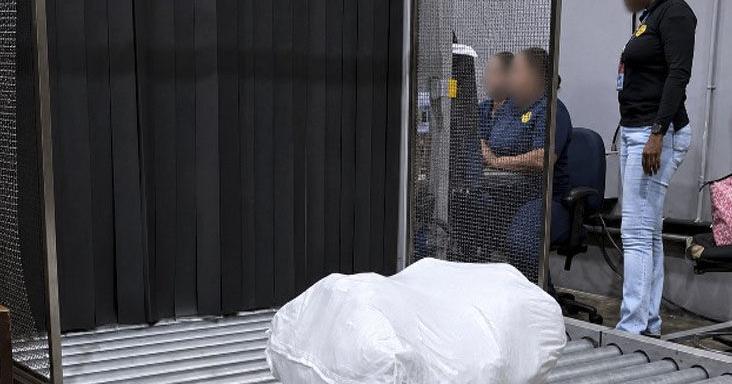
    Acting on intelligence gathered following the escape, law enforcement teams launched a targeted search along the public road in No. 11 Village, where they uncovered the cache of 10 AK-47 rifles concealed in plastic wrapping and cloth. The discovery marked one of the largest illegal arms seizures in Guyana in recent months.

    Separately, in early proceedings connected to the case, 33-year-old Stephen Raja of Back Street, Goed Fortuin Village, was arraigned on charges of illegal possession of firearms on May 28. Bail was denied to Raja, and he was remanded into prison custody ahead of his next court appearance, scheduled for June 15.

  • A Haitian-American woman from Jacksonville (FL) pleads guilty to illegally shipping firearms

    A Haitian-American woman from Jacksonville (FL) pleads guilty to illegally shipping firearms

    A federal court case has exposed a large-scale illicit weapons trafficking ring that moved firearms from Florida to violent gangs in Haiti, with a local Haitian-American woman admitting her role in the scheme. U.S. Attorney Gregory W. Kehoe for the Central District of Florida announced May 6 that 28-year-old Francesca Charles of Jacksonville, Florida, has pleaded guilty to two key charges: conspiracy to smuggle goods out of the United States and illegal shipment of firearms and contraband. Charles now faces a maximum possible sentence of 20 years in federal prison, with her sentencing hearing scheduled to take place August 18.

    The case traces back to a major 2025 seizure by Dominican law enforcement, who intercepted a shipping container traveling from Miami bound for Haiti. Inside the container, authorities found a massive cache of illegal weaponry: 25 total firearms, including a .50 caliber Barrett sniper rifle, 17 7.62 caliber rifles, one 9mm rifle, five 9mm Glock pistols, an Uzi submachine gun, plus more than 36,000 rounds of mixed-caliber ammunition, 18 assault rifle magazines, 13 9mm magazines, one .50 caliber magazine, and a firearm silencer.

    Joint investigation by agents from the Bureau of Alcohol, Tobacco, Firearms and Explosives (ATF), the Florida Attorney General’s Office, and Homeland Security Investigations (HSI) traced the seized weapons to three Florida-based co-conspirators: Charles, 32-year-old Jacques Pierre and 34-year-old Jeff Pierre, both Haitian citizens residing in the state. Investigators confirmed the trio purchased at least 20 of the 23 recovered firearms included in the seized cache.

    A deeper probe into the group’s activities found that between May 2024 and February 2025, the three defendants acquired at least 46 firearms total, most matching the makes and models of weapons recovered in the Dominican Republic. Thirty-seven of these weapons were bought in just a six-month window between August 2024 and February 2025, with Charles alone accounting for purchases of at least 24 of the 46 documented firearms. Court records also show Jacques Pierre purchased two .50 caliber Barrett rifles – heavy, vehicle-mounted military-grade weapons that are widely used by gangs and drug cartels for violent operations.

    The two Pierre brothers remain involved in separate ongoing legal proceedings. Both have been indicted on charges of conspiracy to smuggle goods, illegal firearms trafficking, and smuggling goods out of the United States. If convicted on all counts, each also faces a maximum sentence of 20 years in federal prison.

  • CRFM ministers adopt 19 resolutions, approve new aquaculture plan at 20th council meeting

    CRFM ministers adopt 19 resolutions, approve new aquaculture plan at 20th council meeting

    Caribbean fisheries, aquaculture, and blue economy ministers recently convened virtually for the 20th Regular Meeting of the Ministerial Council of the Caribbean Regional Fisheries Mechanism (CRFM), the CARICOM body dedicated to advancing coordinated regional action on fisheries management. The teleconference gathering brought together decision-makers from across the bloc to align on shared priorities and address pressing challenges facing the region’s marine sectors.

    During the meeting, delegates turned their attention to a slate of high-stakes topics central to Caribbean maritime development. Discussions spanned expanding commercial aquaculture output, updating regional frameworks to strengthen collective food security, designing climate and disaster risk mitigation strategies centered on insurance solutions, and sustaining momentum in the global fight against illegal, unreported, and unregulated (IUU) fishing.

    A core order of business for the gathering was the election of a new Chair to lead the Ministerial Council for the 2026–2027 term. Ministers voted unanimously to appoint Hon. Randy Baltimore, Antigua and Barbuda’s Minister of State in the Ministry of Agriculture, Lands, Fisheries and the Blue Economy, to the top role. Baltimore succeeds Hon. Kyle Hodge, Anguilla’s Minister of Economic Development, Industry, Commerce, Lands, Planning, Water and Natural Resources, who oversaw the Council’s work over the past 12-month term. Notably, Baltimore only recently assumed oversight of the fisheries portfolio following Antigua and Barbuda’s recent national elections.

    In remarks following his appointment, Baltimore outlined his administration’s priorities for the term. “The Government of Antigua and Barbuda looks forward to working closely with CRFM Member States and regional partners to further the sustainable development of the Caribbean’s fisheries and blue economy sectors during its tenure as Chair,” he said. Antigua and Barbuda also reaffirmed its longstanding commitment to deepening regional collaboration for responsible fisheries management and sustainable marine resource use, with a core focus on improving the economic livelihoods of small-scale fisherfolk and driving innovative solutions to industry threats including climate change, IUU fishing, and fragmented ocean governance.

    With support from Ian Horsford, Chair of the Caribbean Fisheries Forum and Chief Fisheries Officer of Antigua and Barbuda, ministers worked through a packed agenda of sector-wide issues. By the close of deliberations, the Council had approved 19 binding resolutions designed to accelerate progress on sustainable fisheries and aquaculture development across the entire Caribbean region. Key decisions included the adoption of a landmark five-year strategic action plan for aquaculture expansion, as well as formal endorsement of the CRFM’s work programme and operating budget for the 2026–2027 cycle.

    Delegates also received detailed progress updates on three large-scale regional initiatives being rolled out by the CRFM in partnership with member states and global development partners. These projects include the Canadian-funded Sustainable Technologies for Adaptation and Resilience in Fisheries (STAR-fish) Project, the IICA/EDF-EU Food Security Project, and the GEF/FAO/CAF/CRFM BE-CLME+ Project, which supports national blue economy planning through cross-regional marine spatial planning across the Caribbean Large Marine Ecosystem Plus.

    In closing remarks, CRFM Executive Director Dr. Marc Williams emphasized that the Caribbean has reached a critical turning point for ocean governance, stressing that long-term prosperity depends on integrating sustainable fisheries management, aquaculture growth, climate resilience, and coordinated ocean stewardship. “The Caribbean stands at a pivotal moment when sustainable fisheries, aquaculture, the Blue Economy, climate resilience, and ocean governance must be integrated to secure prosperity for present and future generations,” Dr. Williams said. “I encourage all Member States to maintain their strong engagement in implementing today’s resolutions and to continue supporting the CRFM as a premier regional institution for fisheries and ocean governance.”

    Reflecting on the meeting’s collective outcomes, Dr. Williams noted that the Council’s decisions on strategic priorities, budget, financial management, and staffing create a robust foundation for the CRFM to deliver tangible, lasting benefits to the millions of Caribbean residents who depend on healthy marine resources for livelihoods and food security. The Ministerial Council is scheduled to reconvene later this year at the 20th Caribbean Week of Agriculture, which will be hosted in Jamaica.

  • Antigua And Barbuda Participates In Island States Ocean Summit In Tokyo

    Antigua And Barbuda Participates In Island States Ocean Summit In Tokyo

    Against a backdrop of growing climate vulnerability for low-lying coastal nations, the 2026 Island States Ocean Summit kicked off on June 3–4 in Tokyo, Japan, gathering global stakeholders around the central mission of turning ambitious ocean sustainability goals into tangible, resilience-building action for island communities. This year’s gathering, themed “Sustainable Ocean Action for Resilient Islands,” brought together a diverse coalition of island state representatives, global development partners, leading marine scientists and representatives of major international organizations, all united by a shared goal: to advance climate-resilient, data-driven ocean planning that meets the unique needs of small island developing states (SIDS).

    Leading Antigua and Barbuda’s high-level delegation to the summit is Honourable Anthony Shamari Smith Jr., the country’s Minister of Agriculture, Lands, Fisheries and the Blue Economy. He is joined by a cross-sectorial team of experts: Climate Ambassador Her Excellency Ruleta Camacho Thomas, Marver Woodley, Senior Operations and Policy Manager at the national Department of the Blue Economy, Dr. Tricia Lovell, Deputy Chief Fisheries Officer, and Dr. Branson Belle from the Centre of Excellence for Oceanography and the Blue Economy at The University of the West Indies Five Islands Campus. The diverse composition of the delegation reflects Antigua and Barbuda’s holistic approach to blue economy governance, bridging policy, science, and climate action.

    During the summit’s opening High-Level Segment, Minister Smith delivered Antigua and Barbuda’s official national statement, grounding the global conversation in the daily reality of SIDS. He emphasized that for Antigua and Barbuda, the ocean is far more than an environmental resource—it underpins every pillar of the national economy, from food security for local communities to the livelihoods of thousands employed in tourism, fisheries, and maritime sectors. Against this context, he laid out the cascading threats that SIDS like Antigua and Barbuda face daily: accelerating sea-level rise that eats away at coastal land, widespread erosion that threatens tourism infrastructure and residential areas, degradation of critical coral reef habitats that buffer storms and support fisheries, rampant marine pollution from plastic runoff and shipping activity, and mounting pressure on finite marine resources that local communities depend on for survival.

    In his address, Minister Smith also outlined the proactive steps Antigua and Barbuda has already taken at the national level to strengthen ocean governance and build long-term resilience. Key initiatives include the ongoing drafting of a landmark national Blue Economy Bill, designed to create a clear legal framework for sustainable ocean use, and continuous work to implement comprehensive Marine Spatial Planning—an approach that maps out competing ocean uses from conservation to shipping to reduce conflict and protect sensitive ecosystems. Both initiatives are designed to support balanced, sustainable management across all key ocean sectors: commercial and small-scale fisheries, tourism, marine conservation, maritime transport, and coastal development.

    Minister Smith went on to reaffirm Antigua and Barbuda’s full commitment to the global 30×30 biodiversity target, which calls for protecting 30% of the world’s land and oceans by 2030. But he also stressed that SIDS cannot meet these global goals alone. He issued a clear call for expanded global access to critical resources for SIDS: advanced ocean science, targeted research support, standardized marine data collection, innovative climate adaptation technology, and sustained technical assistance to help local governments implement their ocean action plans.

    As a newly admitted member of UNESCO’s Intergovernmental Oceanographic Commission, Antigua and Barbuda also expressed strong support for the Summit’s new Sustainable Ocean Planning and Management Strategy, framing it as a valuable, practical framework to advance integrated ocean governance and deepen regional cooperation between island states facing shared climate challenges.

    Beyond the plenary sessions, Minister Smith took part in a High-Level Special Event focused on “Sea Level Rise and International Law,” a gathering dedicated to advancing legal frameworks that protect the sovereign rights and economic interests of SIDS at risk of displacement and territorial loss from rising seas. A core outcome of this year’s summit is the official launch of the new Sustainable Ocean Planning and Management Support Platform, a global initiative designed to scale up technical assistance, improve cross-stakeholder coordination, and strengthen global partnerships to support ocean action in island states. While in Tokyo, Antigua and Barbuda’s delegation has also held a series of bilateral meetings and technical working sessions covering a range of priority issues, from improved ocean governance frameworks to sustainable fisheries management, climate resilience programming, and innovative climate finance for SIDS.

    In closing, Minister Smith reaffirmed Antigua and Barbuda’s long-standing commitment to working hand-in-hand with regional and international partners to advance science-based sustainable ocean management, and build a resilient, inclusive blue economy that will benefit current and future generations of island residents.

  • Caribbean urged to challenge ‘discriminatory’ global financial system

    Caribbean urged to challenge ‘discriminatory’ global financial system

    Against a backdrop of decades of uneven development and escalating climate risk, the leader of a leading Caribbean policy think tank has issued a forceful call for sweeping, immediate reform of the global financial system, arguing that long-standing structural inequalities and unaddressed historical harms remain the single greatest barrier to the region’s economic growth and climate resilience.

    Speaking at the regional launch of new initiatives from the Caribbean Policy Development Centre (CPDC), Executive Director Richard Jones delivered a clear call to major global economic powers: dismantle the discriminatory financial architectures that perpetuate colonial-era legacies holding small island states back.

    Jones’s remarks opened the premiere of *Tides of Debt*, a new CPDC documentary that unpacks the overlapping realities of sovereign debt burdens, climate vulnerability, and uneven economic resilience across 12 Caribbean nations. He pushed back against the common narrative that frames the region’s economic and environmental struggles as unavoidable consequences of geography, instead framing them as the direct, lasting outcome of centuries of systemic exploitation.

    For modern Caribbean nations, Jones stressed, remaining silent in the face of crises the region did nothing to create is no longer an option. “This launch comes at a moment when the Caribbean must speak with great clarity and confidence about the development future we deserve,” Jones told assembled delegates. “For too long our region has been asked to carry burdens we did not create. We did not create the climate vulnerability, but we are among those most exposed to its consequences. We did not create the global debt architecture, but we are constrained by it.”

    He pushed for a fundamental shift in how global actors approach climate action, arguing that international bodies cannot continue to treat climate change as purely an environmental challenge. Instead, Jones said, climate justice and historical reparations are two inseparable components of the same systemic failure. “Climate justice is not only about storms, sea level rise, droughts, floods, coral reefs, and rising temperatures—it’s about power,” Jones said. “It is about responsibility. It’s about who caused the crisis, who’s paying the price, and who has the resources to respond.” He added that demands for reparations are not merely a reckoning with the past: they are a necessary correction to current and future harms, addressing the deep, persistent damage inflicted by centuries of enslavement, colonial occupation, resource extraction, racial exploitation, and intentionally enforced economic dependency.

    A core focus of Jones’s address was the crippling, self-reinforcing cycle of climate-induced debt that traps many Caribbean nations. He delivered sharp criticism of international financial systems that systematically disregard the unique vulnerabilities of small island developing states, forcing governments to take on high-interest loans just to recover from climate-fueled natural disasters, locking them in perpetual debt cycles. “The Caribbean cannot accept a global climate model where those least responsible for the crisis are forced to borrow to survive it,” he argued. “Loans cannot be the main answer to climate loss and damage. Debt cannot be the price of resilience. And small island developing states cannot continue to be told to become more resilient while the international financial system denies us the resources to do so fairly.”

    Jones outlined the severe domestic damage caused by this systemic financial strain: when governments are forced to allocate more public funding to debt servicing than to core public priorities like healthcare, education, housing, and social protection, what begins as a fiscal issue expands into a profound crisis of development and justice. This inherent fragility, he noted, has been further exacerbated by recent external shocks, including spiking global oil prices and inflation driven by ongoing conflict in the Middle East.

    To shift the global conversation from the outdated model of “development charity” to a framework of “development justice,” Jones laid out three urgent priorities for CPDC, its network of regional non-governmental organizations, and global civil society more broadly: first, build stronger, data-backed evidence to document the full scale of climate and historical vulnerabilities across the region; second, expand public education to help ordinary Caribbean citizens understand how global financial systems directly shape their daily lives; and third, build organized, sustained policy advocacy to push for systemic change.

    Drawing on the Caribbean’s long history of grassroots resistance to oppression, Jones called on civil society to bridge the gap between high-level global diplomatic negotiations—including the Barbados-led Bridgetown Initiative and the work of the CARICOM Reparations Commission—and the on-the-ground lived experiences of everyday people, from small-scale farmers and artisanal fisherfolk to the region’s growing youth population.

    “Our history is one of survival, resistance, creativity, and transformation,” Jones said. “From slavery to emancipation, from colonialism to independence, from disaster to recovery, Caribbean people have always found ways to organise, rebuild, and imagine a better future for ourselves. Now, we must do so again. The struggle for climate justice and historical reparations is a struggle for the right of Caribbean people to develop with dignity.”

  • Antigua and Barbuda suspends visa waivers for travelers from Africa amid heightened health vigilance

    Antigua and Barbuda suspends visa waivers for travelers from Africa amid heightened health vigilance

    In a proactive move to shield its population from potential Ebola outbreaks and other high-risk infectious diseases, the Caribbean nation of Antigua and Barbuda has rolled out tightened entry protocols for all international travelers departing from African countries. The new public health precautions were formally announced following a Cabinet meeting held on May 27, during which government officials confirmed and expanded existing preventative policies targeting cross-border disease transmission.

    Maurice Merchant, the nation’s Director General of Communications, outlined the policy details during a post-meeting press briefing, noting that the Cabinet has reaffirmed its longstanding rule that no visa waivers will be issued to any traveler starting their journey from an African nation. Critically, the restriction is tied to a traveler’s point of departure rather than their citizenship, meaning even visitors who typically qualify for visa-free entry to Antigua and Barbuda must secure a valid visa in advance if they are leaving from any African country.

    As an additional layer of public health screening, all visa applicants based in African countries are now required to submit a full record of their travel history for the 45-day period preceding their application. This step allows immigration and health officials to identify potential exposure to dangerous contagious pathogens before a traveler arrives on national territory. Furthermore, the Cabinet has mandated that entry visas will be automatically rejected for any traveler who has recently visited regions or countries currently experiencing active Ebola outbreaks or other severe viral public health emergencies.

    Merchant emphasized that these restrictions are rooted in the government’s core priorities of protecting public health and upholding national security, noting that proactive border management is far more effective than responding to an outbreak after it reaches the country. The new entry requirements complement a broader suite of public health preparedness measures being rolled out by the Ministry of Health, Wellness, Environment and Civil Service Affairs.

    To date, Antigua and Barbuda has not recorded any suspected or confirmed cases of Ebola within its borders. Even so, public health officials have moved rapidly to strengthen national surveillance and response capacity across multiple sectors. Ports of entry now maintain enhanced passenger monitoring, while healthcare facilities across the country have updated their infection prevention and control protocols to handle potential contagious disease cases. National authorities have also stepped up coordination with regional and global health bodies to align their practices with international public health standards.

    At V.C. Bird International Airport, the country’s main air gateway, health officials have reinstalled infrared thermal screening cameras to detect potential fever, a common early symptom of Ebola, in arriving passengers. This upgrade came just two days after the first new international flight from Nigeria landed at the airport on May 25, and has been paired with new inter-agency protocols that bring airport operations staff, immigration officials, customs agents and airline personnel into closer collaboration to implement screening checks.

    Government officials have been careful to frame all the new measures as temporary and precautionary, stressing that the current overall risk of an Ebola importation into Antigua and Barbuda remains low. Even so, they note that reinforced border controls are a necessary precaution to minimize the risk of infectious disease spreading through international travel channels. The government is urging all travelers who may be affected by the updated policy to confirm their visa requirements well in advance of their scheduled departure, and to prepare accurate documentation of their recent travel history to avoid entry delays or refusal.

  • Caribbean urged to reject dependency and demand climate justice, says senator

    Caribbean urged to reject dependency and demand climate justice, says senator

    Against a backdrop of escalating climate disasters and a shifting global geopolitical landscape, veteran Caribbean lawmaker and seasoned diplomat Senator Liz Thompson has issued a stark warning: small island developing states (SIDS) across the Caribbean face growing vulnerability as the global rules-based order frays and traditional donor nations pull back on climate and development commitments. In a rousing address to regional delegates and civil society organizations, Thompson — who currently serves as vice-president of the Senate and previously held senior roles as United Nations Assistant Secretary-General and Special Adviser on Sustainable Development — urged Caribbean nations to set aside divisions, reject long-standing external dependencies, and aggressively advocate for systemic financial justice to confront the accelerating climate crisis.

    Thompson painted a sobering picture of the changing global order, arguing that long-standing commitments to multilateralism are eroding rapidly. In place of a rules-based system that once offered protections for vulnerable nations, the world is shifting toward a “power-driven order” that prioritizes the interests of major powers over the needs of small, low-emission island states on the frontlines of climate change. She pointed to a notable collapse in empathy from wealthy, traditional donor nations, whose declining support has left Caribbean nations to bear catastrophic climate-related economic costs entirely on their own.

    A core example of international failure, Thompson argued, is the UN-backed Global Loss and Damage Fund, created explicitly to help vulnerable developing countries recover from climate-driven disasters. After three years of pledges, the fund holds less than $800 million in total resources — a sum dwarfed by the $12 billion in damage Hurricane Beryl alone inflicted on Jamaica. This funding shortfall comes amid a broader retreat from climate and development commitments: Thompson noted that official development assistance from Organisation for Economic Co-operation and Development (OECD) nations dropped 7% in 2025, and many major global powers have announced plans to slash development spending further, with some moving to halt climate-related lending entirely.

    “Alliances have become far more fluid. Loyalty has no particular meaning,” Thompson told attendees. “Empathy for the weak and the vulnerable is not a priority. In fact, in many instances, it is not a consideration at all.”

    Unlike in many global policy discussions that frame climate change as a distant future threat, Thompson emphasized that the Caribbean is already living through an unignorable climate crisis, backed by hard data. Between 1960 and 2000, the region recorded just eight Category 5 hurricanes — four across 20 years, and another four across the next 20. But in just the seven-year period from 2018 to 2025, the Caribbean has already been hit by eight extreme Category 5 storms. These statistics are not abstract: the storms have left thousands of families displaced, created disproportionate mental health strain on women, and wiped out entire local livelihoods. In the most extreme cases, single hurricanes have destroyed infrastructure and assets equal to 225% of Dominica’s annual GDP and 65% of the Bahamas’ GDP in mere hours.

    Compounding the injustice of the climate crisis, Thompson argued, is structural bias built into the global financial system that punishes the nations least responsible for climate change. Major emitters — the countries that bear most of the historical blame for rising global temperatures — can access sovereign loans at interest rates as low as 3%. By contrast, Caribbean and Latin American nations face average rates of 7%, while African nations pay rates above 9.8% to borrow money for climate adaptation and recovery.

    “Those who are creating the climate crisis get the best rates from the marketplace,” Thompson said. “But those who are in the throes of the crisis, those who are being held in the tentacles of climate change, pay the highest costs for loans to address climate impacts.”

    To counter these deep systemic inequities, Thompson held up the Bridgetown Initiative as a transformative, homegrown model for the region. The framework, crafted by Caribbean leaders, reimagines climate finance and development governance without relying on traditional foreign charity, she argued, proving that the Caribbean can design its own solutions rather than accepting frameworks imposed from outside. “We don’t need aid, what we need is opportunity and equity and justice,” Thompson stated. “And if you give that to us, we can fight for the rest because we’ve done it all our lives.”

    Thompson stressed that regional unity is non-negotiable for advancing Caribbean interests on the global stage. She warned that historic external strategies of “divide and conquer” have long weakened the region’s negotiating power, urging leaders to set aside internal divisions and maintain a consistent, data-backed vocal presence in global climate and finance forums.

    Closing her address with a nod to Shakespeare’s reflection on timing and fortune, Thompson compared the region’s current moment to a critical high tide: if seized boldly, it can lead to prosperity and self-determination, but if missed, the region will be trapped in ongoing vulnerability and injustice. “We can let the tide carry us wherever it wants. We can let others push us wherever they want, or we can choose to be craftsmen of our fate,” Thompson said. “We can choose to be creators of our solutions. We can choose to be a Caribbean civilisation at its best. The choice really is ours.”

  • Mussington, Frank Await Ruling on Barbuda Airport Development

    Mussington, Frank Await Ruling on Barbuda Airport Development

    A years-long legal fight over a controversial airport development on the Caribbean island of Barbuda moved one step closer to a resolution this week, when a High Court judge began reviewing final legal arguments in what is being hailed as a watershed case for Caribbean environmental justice. The challenge has been brought by two local figures: John Mussington, a prominent environmental activist, and Jackie Frank, an elected member of the Barbuda Council. Backed by the international human rights and environmental legal organization Global Legal Action Network (GLAN), the pair have spent years pushing their claim that the airport project violated core legal and procedural standards from its earliest stages.

    At the heart of their argument is the allegation that developers and government officials pushed forward with construction without securing mandatory environmental impact assessments, completing legally required public engagement processes, or following established land planning protocols. Crucially, they maintain that local Barbudan residents were blocked from providing meaningful input on a project that will fundamentally reshape the island’s future, contradicting commitments to local self-governance enshrined in regional and national law.

    The case has already cleared a major legal hurdle: in 2024, the UK-based Privy Council, which serves as the final court of appeal for Antigua and Barbuda, issued a landmark ruling confirming that Mussington and Frank have the legal standing to bring the challenge. The ruling explicitly referenced Antigua and Barbuda’s binding obligations under the Escazú Agreement, a landmark regional pact that guarantees communities the right to participate in environmental decision-making and access to justice for ecological harms. That 2024 decision opened the door for this week’s final substantive hearing before the High Court.

    Speaking to reporters after the close of arguments, Frank reaffirmed that he and his co-claimant remain optimistic that the High Court’s final ruling will align with the interests of the Barbuda people. “We have stood this ground for years because this is not just about our island—it’s about the right of every community to have a say in developments that change their home,” Frank noted in his post-hearing remarks.

    GLAN has emphasized that the stakes of the case extend far beyond Barbuda’s borders. The airport project draws partial funding from development groups tied to high-end luxury tourism ventures, a fast-growing sector across the Caribbean that has sparked repeated conflicts over land access, environmental protection, and community input. The organization argues that an unfavourable ruling for the claimants would open the door to weakened environmental safeguards across the region, while a ruling in their favour would set a powerful precedent that upholds the Escazú Agreement’s commitments to public participation and environmental justice.

    For Antigua and Barbuda specifically, the upcoming High Court decision is expected to reshape how all future large-scale development projects are reviewed and approved. A ruling siding with the challengers would force a full re-evaluation of current planning and environmental regulations, raising the bar for community engagement and ecological assessment for years to come. All parties are now awaiting the judge’s final written ruling, which is expected to set a new legal standard for development and environmental protection across the small island nation.

  • Youth Ambassador Makiba Ward Represents Antigua and Barbuda at Leadership Exchange in China

    Youth Ambassador Makiba Ward Represents Antigua and Barbuda at Leadership Exchange in China

    Makiba O. Ward, a national youth ambassador and the founding president of Youth Arise Antigua, has wrapped up a 14-day working visit to China centered on a key international youth leadership initiative. The visit centered around the Youth Leader Experience Exchange Seminar for Developing Countries, which ran from May 19 to June 1, brought together emerging young leaders from across the Global South to address shared challenges and opportunities in youth advancement.

    Over the course of the program, Ward connected actively with peers, early-career entrepreneurs, and industry professionals representing 4 major global regions: Africa, the Caribbean, Asia, and Latin America. The cross-regional gathering created a collaborative space for dynamic knowledge sharing on pressing topics including adaptive youth development strategies, inclusive leadership frameworks, and groundbreaking innovation for community progress. Beyond idea exchange, the seminar facilitated the formation of lasting cross-border friendships and laid the groundwork for future collaborative partnerships between youth organizations from participating nations.

    As a featured complementary activity of the exchange initiative, Ward also took part in the 2026 Jinjiang International Economic & Trade Cooperation Fair, one of the region’s key platforms for global trade and entrepreneurial exchange. At the fair, she held one-on-one and group discussions with young Chinese entrepreneurs and senior industry leaders, walking away with actionable insights into small business growth, cross-border market expansion, and inclusive models for international economic cooperation that benefit developing economies.

    Reflecting on her experience after returning, Ward highlighted that the most transformative takeaway from the seminar was the deep, cross-cultural connections she built with fellow participants. Even with vastly different national, cultural, and regional backgrounds, every attendee shared a common core set of goals: unlocking the potential of young people, building more resilient local communities, and driving measurable, positive social change across borders.

    Ward has now returned to her home country of Antigua and Barbuda, carrying with her renewed energy to advance youth-focused work, a greatly expanded network of global youth collaborators, and a firmer commitment than ever to advancing youth development, deepening people-to-people international cooperation, and delivering tangible positive change for communities both in the Caribbean and across the developing world.