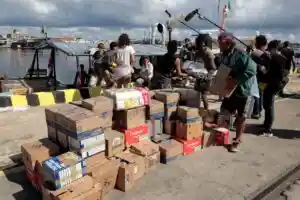
On a Monday in the US capital Washington, the United Nations’ top human rights official issued an urgent call for the Biden administration to roll back harsh new sanctions imposed on Cuba this year, issuing a stark warning that the restrictive measures have already triggered widespread public suffering and put countless civilian lives at direct risk.
Cuba has operated under a sweeping US trade embargo for more than six decades, dating back to 1962, but the Trump administration has dramatically escalated economic and political pressure on the island nation in recent months. The ramped-up actions have included crippling cuts to the country’s critical fuel supplies, alongside open rhetoric suggesting the US is prepared to take control of the island.
In an official public statement, UN High Commissioner for Human Rights Volker Turk laid out the cumulative human cost of the new policy: “The fuel restrictions implemented from early 2025, paired with the recent tightening of extraterritorial sanctions, are directly harming ordinary Cubans, above all the most vulnerable groups in the population.”
Turk emphasized the deadly consequences of the current restrictions, noting, “Children are dying because doctors lack access to essential medical supplies and life-saving medicines. This situation is unacceptable. These sanctions must be lifted immediately.”
Washington has justified its sustained pressure campaign against Cuba by claiming the island’s communist government poses a direct national security threat to the United States. Trump has repeatedly suggested Cuba could be the next regime to fall, following the January ouster of Venezuela’s socialist leader Nicolas Maduro and the ongoing US pressure campaign against Iran.
Adding to escalating tensions, US prosecutors recently unsealed an indictment against Cuba’s former president Raul Castro connected to a 1996 incident, a move that fueled widespread speculation that the Trump administration was laying groundwork to attempt to topple the Cuban government.
Turk’s statement detailed the tangible disruptions caused by the new measures. The oil blockade, he confirmed, has left the island coping with daily blackouts that regularly stretch beyond 20 hours. Additional sanctions rolled out last month, many of which carry extraterritorial penalties that impact private third-party entities including commodity traders, insurance firms and shipping companies, have only deepened the crisis for ordinary Cubans.
“Taken together, these coercive measures are significantly undermining the Cuban population’s ability to exercise basic human rights,” the statement read. It underlined that life-sustaining medical services are already operating under extreme strain, with stockpiles of essential medications facing what it called “critical short supply.”
Citing recent public health data collected on the island, the statement confirmed that infant mortality rates have doubled since the fuel restrictions took effect, and survival rates for children diagnosed with cancer have dropped sharply. Beyond the health crisis, the statement noted a reported 60 percent decline in domestic food production alongside dramatic spikes in the price of basic staple goods, pushing more low-income Cuban households into food insecurity.
Turk closed by challenging the legality of the US policy under international norms: “Such severe, broad-based sanctions packages that target entire sectors of a national economy and create widespread, indiscriminate, devastating harm to civilian populations are incompatible with the core principles of international human rights law.”