分类: world

  • Winter Storm Fern strands Bahamians across the US

    Winter Storm Fern strands Bahamians across the US

    A catastrophic winter storm identified as Fern has unleashed unprecedented disruption across the United States, resulting in numerous fatalities and bringing transportation networks to a complete standstill. The severe weather system has generated massive flight cancellations, widespread power outages, and dangerous road conditions, creating a crisis for both residents and international travelers.

    According to flight tracking data from FlightAware, the aviation sector continues to struggle with massive disruptions, with approximately 5,300 flights canceled and over 4,300 delayed by Tuesday afternoon. This follows Sunday’s staggering cancellation of more than 11,400 flights, marking one of the most severe travel disruptions in recent history.

    The storm’s impact extended beyond transportation, with poweroutage.com reporting over 670,000 customers without electricity as freezing temperatures overwhelmed electrical infrastructure. Major metropolitan areas including New York, Philadelphia, Washington, and Dallas experienced complete operational shutdowns at key airport hubs due to freezing precipitation and blizzard conditions.

    Among those most severely affected were Bahamian travelers who found themselves trapped in the travel chaos. Kaylee Roberts, a 22-year-old from New Providence, described her ordeal after traveling to Dallas for a college visit and concert. Her return plans descended into chaos as multiple flight cancellations and inadequate communication from airlines left her stranded at the airport for extended periods without accommodation options or clear information.

    Earl Thompson, another Bahamian national, encountered similar disruptions while traveling to New York for a funeral. His Delta flight was canceled after passengers had already boarded, resulting in hours-long waits to retrieve luggage amid snow-blocked airport access points. Thompson noted that many travelers were forced to sleep at airports while others faced growing panic and frustration.

    The human impact of the storm revealed systemic vulnerabilities in airline emergency response protocols, with travelers reporting insufficient customer support, conflicting information from staff, and inadequate accommodation provisions during weather-related emergencies. While some passengers eventually received compensation such as hotel vouchers for non-weather related delays, the overall response highlighted significant gaps in crisis management procedures.

    Meteorological experts indicate that Winter Storm Fern represents one of the most extensive winter weather events of the season, affecting regions from the Northeast through the Midwest and into southern states typically unaccustomed to such severe winter conditions. The event has prompted questions about infrastructure preparedness and emergency response coordination for extreme weather events affecting international travel corridors.

  • Families of Trinidadian fishermen killed in US missile strike sue US government

    Families of Trinidadian fishermen killed in US missile strike sue US government

    In a significant legal challenge against US military operations, the families of two Trinidadian men killed in a missile strike have filed a wrongful death lawsuit against the US government. The complaint, lodged in the US District Court for Massachusetts on January 27, alleges extrajudicial killing and seeks accountability for what plaintiffs describe as unlawful lethal force.

    The case centers on the deaths of Chad Joseph, 26, and Rishi Samaroo, 41, who were among six civilians killed when a US missile struck their small boat traveling from Venezuela to Trinidad and Tobago on October 14, 2025. According to court documents, the victims were returning to their homes in Las Cuevas when the attack occurred.

    Legal representatives from the American Civil Liberties Union, the Center for Constitutional Rights, and Seton Hall Law School argue the strike was part of a broader pattern of military actions targeting civilian vessels in Caribbean and Pacific waters. The lawsuit claims at least 36 similar strikes have occurred since September 2025, resulting in approximately 125 fatalities.

    Lenore Burnley, Joseph’s mother, and Sallycar Korasingh, Samaroo’s sister, filed the action on behalf of all surviving family members. Burnley described her son as a devoted family man who frequently traveled to Venezuela for fishing and agricultural work to support his wife and three children. Korasingh remembered her brother as a hardworking individual rebuilding his life after completing a 15-year prison sentence.

    The legal action invokes two jurisdictional foundations: the Death on the High Seas Act, which permits lawsuits for deaths occurring in international waters, and the Alien Tort Statute, which allows foreign nationals to seek redress in US courts for severe violations of international human rights law.

    The complaint systematically challenges the legal basis for the strikes, arguing they lack proper congressional authorization and violate both international humanitarian law and US constitutional principles. Legal director Baher Azmy of the Center for Constitutional Rights characterized the killings as ‘absurd and dangerous,’ warning against unilateral state declarations of war to justify lethal force.

    The case has drawn attention to the Trump administration’s maritime security operations, with President Trump and Defense Secretary Pete Hegseth having publicly acknowledged the strikes and released footage of the operations. Notably, US authorities have not publicly identified any of the victims.

    Trinidad’s Foreign Affairs Minister Sean Sobers previously stated the government had no information linking either man to illegal activities, while Attorney General John Jeremie asserted the strikes were consistent with international law based on advice from an unidentified external expert.

    The lawsuit seeks to establish judicial oversight of military actions that plaintiffs argue constitute ‘manifestly unlawful’ killings ordered by highest levels of government. Professor Jonathan Hafetz of Seton Hall Law School warned the case carries profound implications for international legal norms and US standing in the global community.

  • US lawsuit alleges Trinidadian men were unlawfully killed

    US lawsuit alleges Trinidadian men were unlawfully killed

    In a landmark legal action, the families of two Trinidad and Tobago citizens killed in a US military strike have filed a wrongful-death lawsuit against the United States government. The case, lodged in the US District Court for the District of Massachusetts on January 27, challenges the legality of America’s maritime security operations in the Caribbean region.

    The plaintiffs allege that a October 14, 2025 missile attack destroyed a civilian vessel traveling from Venezuela toward Trinidad, resulting in the deaths of all six persons aboard. Among the victims were Chad Joseph, 26, and Rishi Samaroo, 41, both residents of Las Cuevas who their families maintain were returning from legitimate fishing and agricultural work in Venezuela.

    Legal representatives for the families are pursuing compensation under the Death on the High Seas Act and the Alien Tort Statute, contending the strike constituted both wrongful death and extrajudicial killing under international law. The suit invokes the Suits in Admiralty Act to overcome sovereign immunity protections typically afforded to the US government.

    According to court documents, the incident formed part of what plaintiffs describe as an ‘unprecedented’ military campaign initiated in September 2025, involving approximately 36 armed attacks on maritime vessels in Caribbean and eastern Pacific international waters. The lawsuit estimates these operations resulted in roughly 125 casualties.

    The complaint references former President Donald Trump’s public acknowledgment of authorizing the October 14 strike via social media, including shared footage showing a stationary boat being destroyed by munitions. Families maintain neither Joseph nor Samaroo presented any imminent threat, and their vessel was unequivocally civilian in nature.

    US officials have previously defended such strikes as lawful operations within a non-international armed conflict against regional drug cartels. Government representatives have cited a classified Office of Legal Counsel memorandum purportedly supporting this legal position.

    The families’ lawsuit systematically dismantles this justification, arguing drug trafficking does not constitute armed conflict under international humanitarian law. The filing emphasizes that neither victim had documented connections to criminal organizations, noting Trinidadian authorities have publicly stated they possess ‘no information linking Joseph or Samaroo to illegal activities.’

    The legal action seeks not only financial compensation but also accountability for senior officials who authorized the strikes. It represents a significant challenge to the legal frameworks governing maritime security operations and the boundaries of lethal force in counter-narcotics missions.

  • Overleg DIN en ambassadeur Panka gericht op samenwerking en ontwikkeling

    Overleg DIN en ambassadeur Panka gericht op samenwerking en ontwikkeling

    In a significant diplomatic engagement, the Diaspora Institute Netherlands (DIN) convened with Ambassador Ricardo Panka at the Surinamese Embassy in The Hague to establish frameworks for bilateral cooperation and sustainable development initiatives. The high-level discussion focused on creating substantive partnerships between Suriname and its diaspora community in the Netherlands.

    During the comprehensive dialogue, DIN showcased several strategic initiatives from its network, including the upcoming Career Fair Netherlands scheduled for April 24-25 at Amsterdam’s RAI Convention Center. The event will feature a specialized pavilion dedicated to ‘Working in Suriname,’ complemented by a talk show and networking session on April 24. Additionally, SUSU has planned a significant event for June 6 in Amsterdam.

    Entrepreneur Ludwig Landvreugd presented his visionary plans for international projects in Suriname, emphasizing economic growth and sustainable development models that balance progress with environmental responsibility.

    Ambassador Panka emphasized the critical importance of early embassy involvement in Suriname-related initiatives, stating that the diplomatic mission serves as both a connecting hub and gateway for collaborative ventures. The ambassador explicitly welcomed projects that contribute to the broader interests of both Suriname and its diaspora community.

    All parties agreed to establish concrete implementation steps in the coming period aimed at creating sustainable partnerships and successful societal projects. The meeting reinforced DIN’s role as a platform connecting people, organizations, and initiatives through shared societal interests and transnational cooperation.

  • FLASH : Major fire at the Cluny Market in Cap

    FLASH : Major fire at the Cluny Market in Cap

    A catastrophic fire engulfed the historic Cluny Market in Cap-Haitien on the night of January 24, 2026, inflicting severe damage on the city’s primary commercial hub. The blaze, which ignited around 10:30 p.m., required an extensive multi-agency response involving municipal firefighters, rescue services, Civil Protection units, and law enforcement personnel. With crucial support from the Cap-Haitien International Airport Fire Department, the inferno was finally contained by approximately 2:00 a.m. on January 25th.

    Preliminary assessments reveal extensive destruction across the market complex, with the poultry sales sector completely obliterated. The conflagration consumed approximately 30 warehouses with all their merchandise and reduced over 100 small commercial stalls to ashes, resulting in massive material losses for local vendors.

    The Municipal Administration has pledged full support to affected merchants and announced plans to establish an urgent commission of inquiry in collaboration with relevant institutions to determine the fire’s exact origins. The investigation will involve coordination with multiple government entities including the Prime Minister’s Office, Ministry of the Interior and Territorial Communities, Ministry of Commerce and Industry, and Ministry of Social Affairs and Labor.

    Prime Minister Alix Didier Fils-Aimé has dispatched the Minister of the Interior to conduct a comprehensive damage assessment, emphasizing the government’s commitment to implementing “concrete, rapid, and appropriate assistance” for victims. The Haitian government issued an official statement affirming that “no citizen will be left alone to face this ordeal” and promised a structured institutional response.

    Emmanuel Vertilaire, Member of the Presidential Transitional Council, characterized the event as “a severe blow to the informal economy” affecting hundreds of small merchants who depend on the market for their livelihood. The National Directorate of Drinking Water and Sanitation (DINEPA) received recognition for their prompt intervention in making fire hydrants available to combat the blaze, which helped limit the disaster’s overall impact.

    The government has announced plans to enhance national emergency response capabilities through more effective and coordinated approaches to similar crises in the future.

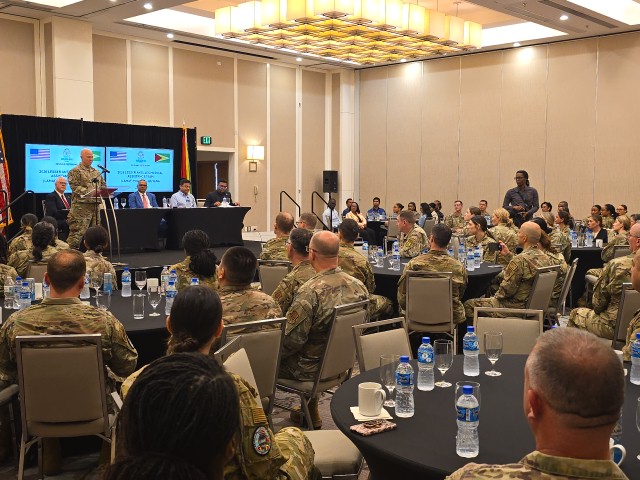
  • US-led task force steps up Caribbean maritime security operations

    US-led task force steps up Caribbean maritime security operations

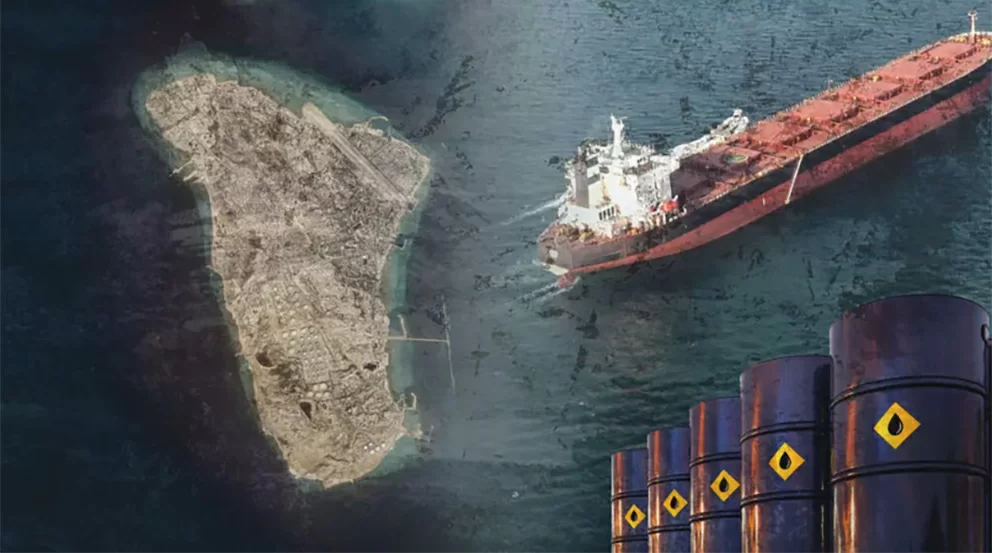
    A multinational task force under U.S. leadership has significantly escalated its campaign against illicit maritime operations throughout the Caribbean basin. This strategic intensification follows a series of recent interdictions targeting vessels violating international sanctions regimes in the region.

    Designated as Operation Southern Spear, this comprehensive initiative represents a coordinated effort spanning multiple U.S. government agencies. The operation brings together specialized capabilities from the Department of Defense, Coast Guard, Department of Homeland Security, and Department of Justice in a unified front against transnational criminal networks.

    Military assets operating under United States Southern Command (SOUTHCOM) are providing extensive operational support across the Caribbean theater. Defense officials characterize these efforts as crucial for disrupting criminal logistics chains, preventing sanctions evasion, and protecting vital national security interests.

    The joint task force, identified as Joint Task Force Southern Spear, emphasized that recent successful interdictions demonstrate the high state of readiness and operational capability of deployed forces. These maritime interventions form part of a broader strategy to dismantle criminal infrastructure and strengthen regional maritime security frameworks.

    Operation Southern Spear constitutes a key component of the White House and Department of Defense’s hemispheric security strategy, specifically addressing threats including illegal trafficking, sanctions violations, and other maritime-based challenges. While operational specifics remain classified, the initiative reflects an ongoing commitment to maintaining maritime domain awareness and enforcement capabilities throughout the Caribbean region.

  • Gunmen kill 11 in attack at Mexican football match

    Gunmen kill 11 in attack at Mexican football match

    SALAMANCA, Mexico — A community football match in central Mexico descended into horrific violence Sunday when armed assailants stormed the pitch and opened fire on spectators, leaving 11 dead and 12 wounded in a region increasingly paralyzed by organized crime. The attack occurred in Salamanca, a modest industrial city of 160,000 in Guanajuato state, immediately following a local game.

    According to municipal authorities, ten victims died at the scene while another succumbed to injuries at a medical facility. Among the wounded were a woman and a child, highlighting the attack’s indiscriminate nature. Salamanca Mayor Cesar Prieto issued an urgent plea to federal authorities for intervention, stating his community faces a ‘grave moment’ and ‘serious social breakdown’ as criminal organizations challenge governmental authority.

    The football pitch shooting represents merely the latest episode in a brutal weekend for the region. Just one day prior, authorities discovered four bags containing human remains in Salamanca. Simultaneously, six individuals were killed in two neighboring communities. These incidents follow a bomb threat last week at a local refinery operated by state oil giant Pemex.

    Despite being a prosperous industrial zone and popular tourist destination, Guanajuato consistently ranks as Mexico’s deadliest state due to relentless turf wars between criminal syndicates. Official homicide statistics attribute much of the violence to conflicts between the Santa Rosa de Lima cartel, known for oil theft operations, and the Jalisco New Generation Cartel (CJNG), one of Mexico’s most powerful criminal organizations.

    This surge in violence creates a stark contrast to claims by Mexican President Claudia Sheinbaum, who recently asserted that homicides have dropped to their lowest level in a decade under her security strategy. Many security experts remain skeptical of these official figures.

    Mexico’s prolonged security crisis, predominantly linked to drug trafficking, has resulted in over 480,000 deaths since the government initiated its military crackdown on cartels in 2006. An additional 120,000 persons remain missing, with many presumably forced into cartel service or abducted. The discovery of mass graves and dismembered remains has become tragically routine across the nation.

  • UNDP lauds Jamaica’s ‘remarkable’ resilience amid multiple shocks

    UNDP lauds Jamaica’s ‘remarkable’ resilience amid multiple shocks

    The United Nations Development Programme (UNDP) is celebrating a significant milestone—50 years of partnership with Jamaica—by highlighting the nation’s extraordinary resilience. Kishan Khoday, the UNDP Resident Representative, has characterized Jamaica’s journey as a “remarkable achievement” in the face of persistent challenges.

    In a recent interview, Khoday reflected on Jamaica’s evolution from 1976 to the present, emphasizing its status as a small island developing state (SIDS) that has successfully navigated a complex landscape of natural disasters, economic shifts, and the escalating threat of climate change. He noted that the very definitions of development and poverty have transformed over this period, bringing both new challenges and new opportunities.

    “Jamaica has demonstrated incredible resilience,” Khoday stated, “not only enduring multiple crises but also progressing to become an upper-middle-income economy. The nation has adeptly seized opportunities across different decades, paving the way for a bright future.”

    A cornerstone of this five-decade collaboration has been institutional capacity building. The UNDP’s support was instrumental in establishing pivotal national bodies, including the National Conservation Trust and the National Climate Change Office, while simultaneously strengthening civil society organizations. Khoday stressed that adapting to global demands requires local institutions to continually develop new capacities, a focus that remains central to the UNDP’s mission alongside tackling climate change.

    Khoday, who leads the Multi-Country Office covering Jamaica and several other Caribbean nations, is steering initiatives centered on green growth and sustainable development. The UNDP’s current portfolio from its Kingston headquarters encompasses projects valued at approximately $80 million across the region.

    To mark its golden anniversary, the UNDP has orchestrated a series of events under the theme ‘A Legacy of Resilience, 50 Years and Counting’. The calendar includes the prestigious W. Arthur Lewis Memorial Lecture, the launch of an Access to Justice app on World Social Justice Day, and a World Biodiversity Day field tour. The commemoration will also feature a public forum on resilient recovery, the premiere of a commemorative video and song, and an outreach event in The Bahamas. These activities are designed to showcase the agency’s enduring solidarity and its impactful support for Jamaica’s development agenda, particularly in post-hurricane recovery efforts.

  • Bombscare at Miami airport leaves Bahamians stranded

    Bombscare at Miami airport leaves Bahamians stranded

    A significant security alert at Miami International Airport on Thursday evening plunged travel operations into chaos, resulting in extensive evacuations and leaving numerous Bahamian passengers stranded. The incident commenced shortly after 5:00 PM when airport authorities received reports of an unattended piece of luggage classified as a “suspicious item” on the departures level of a terminal.

    In response, U.S. security personnel implemented immediate emergency protocols, evacuating all individuals from the surrounding area as a precautionary measure. Eyewitness accounts described scenes of confusion and anxiety, with travelers being ushered outside the terminal as police and specialized task forces secured the vicinity.

    The disruption severely impacted Bahamasair operations. Passengers scheduled to depart from Miami faced chaotic check-in scenarios, while those aboard an arriving flight from New Providence were confined to their aircraft for approximately three hours. The flight, which had landed at 6:10 PM after a 40-minute journey, was unable to disembark its passengers until security clearance was ultimately granted around 7:40 PM.

    This delay caused a domino effect, pushing back subsequent departures. One affected traveler noted that their intended 7:45 PM departure was rescheduled for between 9:00 PM and 9:30 PM. Airport operations gradually resumed normalcy following the official all-clear confirmation. Attempts to obtain an official statement from Bahamasair regarding the incident and their contingency response were unsuccessful prior to publication.

  • Laatste twee panda’s verlaten Japan nu relaties met China gespannen zijn

    Laatste twee panda’s verlaten Japan nu relaties met China gespannen zijn

    Tokyo’s Ueno Zoo witnessed emotional farewells Sunday as panda enthusiasts gathered for the final public viewing of twin giants Xiao Xiao and Lei Lei before their scheduled return to China this week. Their departure marks a historic moment: Japan will experience its first panda-less territory in half a century, with replacement prospects appearing dim amid deteriorating diplomatic relations between Tokyo and Beijing.

    The panda diplomacy legacy began in 1972 when China gifted the first bears to Japan following the normalization of diplomatic relations between the historically wary neighbors. These charismatic black-and-white creatures immediately captured Japanese affections, with a dozen subsequent pandas achieving national celebrity status.

    Despite the zoo’s implementation of a strict one-minute viewing limit, the final exhibition attracted massive crowds. Visitors carrying panda plush toys called the bears’ names and captured smartphone photos as the twins nibbled bamboo and roamed their enclosure. Many without reserved tickets still visited the zoo to participate in the symbolic farewell day.

    Longtime panda devotee Michiko Seki, wearing panda-print black-and-white attire, expressed satisfaction at seeing the twins healthy and feeding well. She documented the moment using the same camera purchased two years earlier to photograph their elder sister Xian Xai before her departure.

    “These animals provide immense comfort,” Seki noted. “Japan needs pandas, and I hope politicians can find some solution.”

    Beijing maintains ownership of all pandas loaned to foreign nations, including any offspring born abroad. Xiao Xiao and Lei Lei were born at Ueno Zoo in 2021.

    When questioned about potential new panda exchanges, Chinese Foreign Ministry spokesperson Guo Jiakun stated: “I know giant pandas are beloved by many Japanese people, and we welcome Japanese friends to visit them in China.”

    Japan currently faces escalating political, trade and security tensions with China. Recent remarks by Japanese Minister Sanae Takaichi regarding potential intervention in Taiwan scenarios provoked particular anger from Beijing. The relationship further strained as Japan’s consulate in Chongqing has operated without a consul for months due to China’s delayed approval of replacement diplomats.

    Economists project significant financial repercussions from the pandas’ absence. Kansai University economics professor Katsuhiro Miyamoto estimates approximately 20 billion yen ($128 million) in annual losses, warning that prolonged absence could create economic impacts measuring in tens of billions of yen.

    Panda imagery permeates Japanese culture around Ueno Zoo, appearing on confectionery, stationery, plush toys and photobooks. Local souvenir shop manager Asao Ezure considers pandas “a symbol of Ueno, a star” while expressing concern about business impacts. Despite the uncertainty, he maintains hope for their return, refusing to alter store signage featuring the twin pandas.

    The current situation represents a notable shift in China’s panda diplomacy strategy, which began with gifts to Western nations during the 1970s normalization era before transitioning to lease programs in the 1980s. Japan previously experienced diplomatic panda complications when a planned transfer to Sendai following the 2011 earthquake and tsunami was suspended during territorial disputes in 2012.