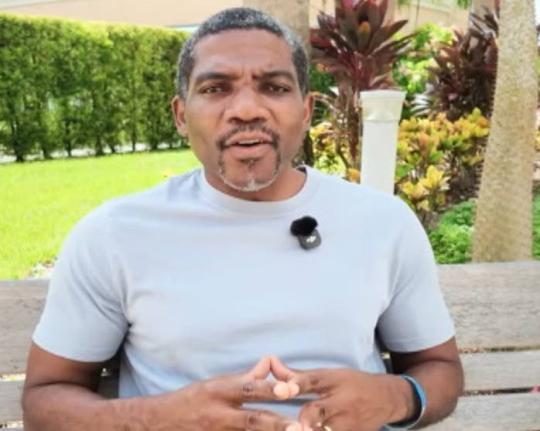
In a televised address to the people of the twin-island federation of St Kitts and Nevis, Prime Minister Dr. Terrance Drew has publicly confirmed he suffered a stroke in late August 2026, and is currently progressing through a steady recovery at a Florida rehabilitation facility. The 49-year-old leader, who has led the national government since August 2022, shared the update in an eight-minute public broadcast from the U.S. rehab center, addressing both citizens of St Kitts and Nevis and regional Caribbean audiences.
分类: world
-

No-Case Submission Rejected in $372,000 Cannabis Case
A key procedural hurdle has been cleared for a high-stakes drug trafficking case in the Eastern Caribbean, after a chief magistrate threw out a no-case submission brought on behalf of a local defendant. Nadeem Brandon Doumith, a resident of Crosbies, will now proceed to a full trial before the High Court to answer to five separate drug-related charges connected to one of the most high-profile narcotics seizures in the region this year.
The legal challenge to proceed to trial was led by Doumith’s defense attorney, Wendel Alexander, who argued that prosecution evidence was too weak to warrant moving the case to a higher court for a full hearing. However, Chief Magistrate Ngaio Emanuel rejected that defense argument outright, upholding the prosecution’s position that there is sufficient evidence to go forward with a full jury trial.
The case originates from a targeted law enforcement operation carried out on May 9, 2025 at the Deep Water Harbour, a major commercial port facility in the region. During the operation, authorities reportedly seized 62 pounds of cannabis with an estimated street value of EC$372,000 (Eastern Caribbean dollars). Doumith was not the only individual charged in connection with the seizure: he was originally listed as a co-defendant alongside Francis Young, a Jamaican businessman. In a notable development earlier this year, all charges against Young were formally withdrawn back in June, following direct instructions from the office of the Director of Public Prosecutions.
Now that the no-case submission has been dismissed, Doumith will face the full scope of charges brought against him, which include conspiracy to traffic illegal narcotics, possession of cannabis, illegal importation of controlled substances, and multiple supply-related offences. The move to the High Court paves the way for a full examination of the evidence against the defendant, marking a major milestone in the ongoing legal process following the high-value port seizure.
-
Column: Wie de chokepoints controleert, controleert de wereldeconomie
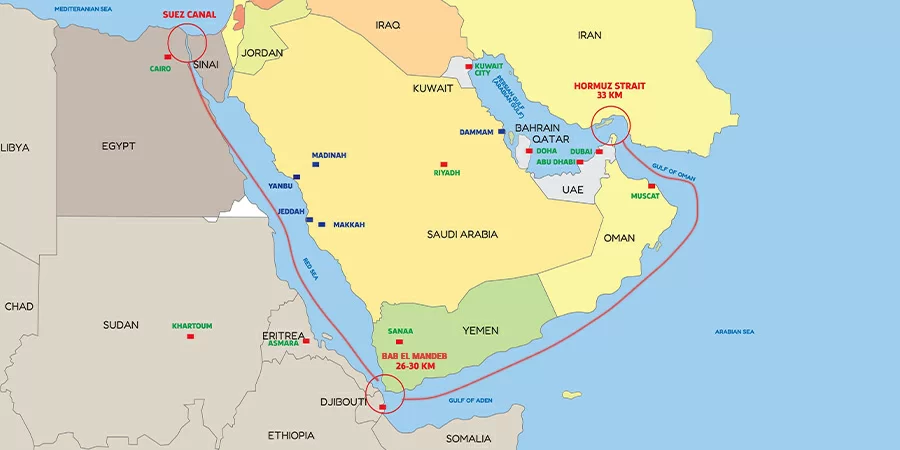
The recent Houthi seizure of the Yemeni port city of Mocha and the strategic island of Mayyun, also known as Perim, marks far more than a simple military victory for the group. It is a tectonic geopolitical shift that lays bare the deep fragility of the global trade and security architecture that underpins the modern world economy. With full control now established over Yemen’s entire Red Sea coastline — a strip of territory sitting just 20 kilometers off the coast of East Africa — the Houthi movement holds critical leverage over the Bab al-Mandeb strait, a key maritime chokepoint through which roughly 12 percent of total global trade flows, including 11 percent of the world’s seaborne oil shipments and 8 percent of its liquefied natural gas.
To be clear: the public reassurance from Houthi politburo member Hazem al-Assad that commercial shipping will remain “safe and orderly” through the strait is little more than rhetorical comfort that no major shipping line is willing to take at face value. Data from the International Monetary Fund’s PortWatch monitoring platform tells a stark story: between 2023 and 2025, shipping volumes through the Red Sea have plummeted by between 50 and 55 percent. Leading global shipping firms are now rerouting the vast majority of their vessels around the Cape of Good Hope, a detour that adds more than 20 extra days of transit time and drives up global freight rates sharply. In the end, the entire global trading system is footing the bill for a protracted conflict unfolding in one of the world’s poorest nations.
Another claim that bears scrutiny is Tehran’s insistence that the Houthi movement is an “independent group.” A quick look at the geopolitical map tells a different story. Iran already holds strategic control over the Strait of Hormuz, the chokepoint through which roughly one-fifth of the world’s global energy supplies flowed before the outbreak of the 2025 escalation between Iran and Western powers. Now, the Houthi movement — armed and funded by Iran — controls Bab al-Mandeb. This means two of the world’s three most critical maritime chokepoints for global energy and trade are now effectively held by the same Iran-led axis. This is no coincidence: it is a deliberate, long-planned strategic gambit. The real question is not whether the Houthi are truly independent; it is why the West continues to indulge the fiction that they are.
For Egypt, which earns billions of dollars annually in foreign currency from Suez Canal transit fees, the fallout has already been severe. Between 2023 and 2024, the country lost roughly $7 billion in canal revenue, equal to a 60 percent drop from pre-crisis levels. Yet Cairo has opted for deliberate strategic restraint, maintaining the long-standing policy of non-intervention in Yemeni affairs it has held since the 2015 Gulf intervention. This is not a sign of weakness, but a pragmatic calculation: a country already grappling with deep economic crisis cannot afford the risk of a new military entanglement in Yemen. The paradox is a bitter one: Egypt loses billions in critical revenue, but cannot risk intervention because it cannot bear the military and economic costs that would follow.
The shifts along the Red Sea have also created uneven impacts across the East African coast. Sudan and Somalia face growing security risks from the new geopolitical order, while Eritrea and Djibouti have gained unexpected strategic leverage. Eritrean President Isaias Afwerki, who spent decades in international isolation, is now leveraging his country’s Red Sea position to deepen ties with Washington and Tel Aviv. It is pure, unadulterated geopolitical opportunism.
The Bab al-Mandeb strait is narrower than the Strait of Hormuz, a geographic feature that makes it far easier for Houthi forces to target passing commercial and military vessels. Recent public comments from a Houthi commander, released in a video stating that the group can deploy artillery to strike targets in Yemeni territorial waters, underline how immediate and concrete this threat is.
Even more concerning is the fact that the repositioning of global maritime military assets toward the Bab al-Mandeb and Hormuz amid rising tensions with Iran has created a security vacuum along the coast of the Horn of Africa. That vacuum is being filled by transnational organized maritime criminal groups. The resurgence of piracy off the Somali coast is directly linked to this redistribution of maritime power. As major powers shift their naval assets north to address the Houthi threat, Somali and international seafarers are left to bear the cost of the resulting insecurity.
What is unfolding in the Red Sea is not a distant regional conflict. It is a critical test for the existing global order, and its impacts reach all the way to major European ports like Rotterdam. As Europe’s largest container port and one of the most critical links in the global container supply chain, disruptions in the Red Sea are felt directly here. When shipping lines reroute en masse around the Cape of Good Hope, freight costs rise, delivery timelines slow, and the impact is passed on to European consumers at the checkout. European energy prices are already highly sensitive to any disruption in Red Sea shipping. Meanwhile, NATO naval forces operating in the region do so under mandates that are ill-suited to counter the current threat landscape.
The European Union has the financial resources, naval capabilities, and direct economic stake in securing the strait. What it lacks is the political will to update its operational mandates and act collectively. The EU’s existing Operation Atalanta anti-piracy mission is a starting point, but without an expanded mandate to counter Houthi threats, it amounts to little more than a shield without a sword.
The long-term implications of this shift are far-reaching. Global supply chains are growing more vulnerable to disruption, freight costs are rising, and those increases are ultimately passed through to end consumers. Nations dependent on Suez Canal revenue, such as Egypt, face gradual economic erosion. Most notably, the multilateral system tasked with guaranteeing global maritime security has proven unable to respond quickly and decisively to this new threat.
The core lesson could not be clearer: whoever controls the world’s critical maritime chokepoints controls the global economy. The Houthi movement understands this reality. Iran understands this reality. Whether the broader international community has also come to terms with it remains to be seen. So far, all evidence suggests the international community has opted primarily to stand by, reroute traffic around the Cape of Good Hope, and hope for the best. That is not a strategy. It is merely kicking the bill down the road.
-

COMMENTARY: Solidarity rising global alliance for inclusive and innovative development
Stretching across Africa, Latin America and the Caribbean, most of developing Asia (excluding Japan, Israel and South Korea), and developing Oceania (excluding Australia and New Zealand), the Global South encompasses 134 nations that are home to roughly 80 percent of the world’s total population. Despite its massive demographic and growing geopolitical weight, this bloc has long been underrepresented in global governance frameworks, a gap that has created tangible economic and social burdens for its populations.
According to United Nations data, developing countries paid a staggering record $921 billion to service their external debt in 2024 alone. This crippling debt burden has eroded the fiscal capacity of Global South governments, diverting critical public resources away from core priorities including quality universal education and accessible, high-quality healthcare. This systemic disadvantage has fueled widespread skepticism among Global South citizens toward major international institutions like the UN, with many perceiving global governance structures as inherently exclusionary and skewed to favor the interests of wealthy Global North nations. UN leadership has long acknowledged this widespread cynicism, as shifting global geopolitical currents reshape traditional alignments: long-standing North-centric alliances are increasingly being reevaluated, while new collaborative frameworks are taking root across the Global South.
At the center of this new wave of collaboration is South-South cooperation, a model that sees two or more developing nations exchanging expertise, practical experience, cutting-edge technology and critical resources to address shared challenges. Today, this framework has emerged as a leading strategy to tackle interconnected global crises ranging from accelerating climate change and rampant food insecurity to gaps in public health infrastructure, deep digital inequality and growing disaster risk.
The foundational framework for modern South-South cooperation was laid nearly five decades ago, when 138 UN member states adopted the Buenos Aires Plan of Action (BAPA) in 1978. The plan enshrined core guiding principles for collaboration among developing nations: equality, mutual benefit, and unwavering respect for national development priorities. Decades later, in 2003, the UN General Assembly formally established the United Nations Day for South-South Cooperation to celebrate growing solidarity, cross-national collaboration, and the sharing of locally rooted practical solutions across Global South nations. The first official observance was held in 2004 on December 19, before the date was shifted in 2011 to September 12, to mark the anniversary of BAPA’s 1978 adoption.
For 2026, the annual observance carries the theme “Solidarity Rising: Global Alliance for Inclusive and Innovative Development.” This theme emphasizes the unique role of South-South and triangular cooperation in connecting proven, context-appropriate solutions with the cross-border partnerships, specialized expertise, and targeted support needed to scale those solutions globally. It also underscores a core reality of 21st century challenges: no single nation, regardless of its wealth or power, can tackle today’s interconnected crises alone. Only collective, collaborative action can build a more inclusive, resilient and sustainable global future for all.
The shifting global economic and political landscape makes this year’s observance particularly meaningful. There is no question that the Global South now plays an irreplaceable role in upholding global economic stability and international peace. While developing nations continue to navigate overlapping, interconnected challenges—from climate impacts and food supply chain disruptions to widening digital gaps, crippling financing constraints and growing systemic vulnerabilities—they are also increasingly driving global innovation, expanding cross-border trade and investment, and sharing contextually appropriate solutions that work for emerging economies.
Official UN data underscores this rapid growth: South-South trade hit a record $6.8 trillion in 2025. Today, more than half of all exports from developing countries are sent to other developing economies, a sharp jump from just 38 percent three decades ago. Foreign direct investment (FDI) flows between developing nations have also quadrupled since the 1990s, with the Global South’s share of global FDI rising from just 9 percent to 32 percent between 2020 and 2023.
Against this backdrop, the 2026 United Nations Day for South-South Cooperation is far more than a ceremonial celebration. It is a deliberate call to action for the global community, offering a shared platform to strengthen cross-bloc partnerships and scale up life-changing solutions that address the needs of marginalized populations. As the international community collectively works toward achieving the UN Sustainable Development Goals, this year’s observance serves as a timely reminder of the transformative power of collective action aligned around a shared vision of equitable global development. -
New York marshal orders seizure of JCE assets over US$982,261 debt
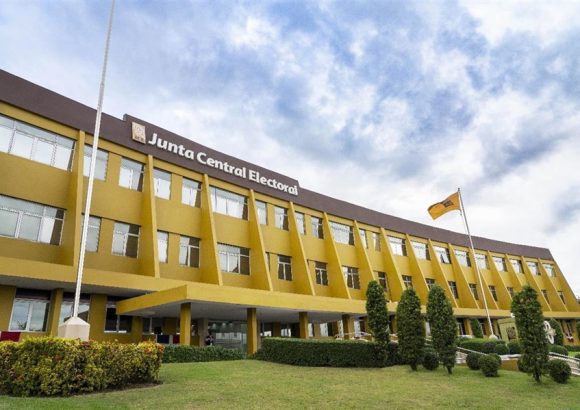
A major legal and financial dispute has put the Dominican Republic’s Central Electoral Board (JCE) in an unprecedented position: its Manhattan office assets are set to be seized and potentially auctioned off to satisfy an unpaid court judgment that has ballooned to nearly $1 million when including accumulated interest and legal fees.
The order for asset seizure was issued by New York City Marshal Martin A. Bienstock, and formal notification was delivered to the JCE on September 6 via a Notice of Attachment and Sale, filed under case number M 373516. All assets listed for seizure are located at the JCE’s New York office at 1501 Broadway, Suite 410 in Midtown Manhattan. The catalog of targeted property covers nearly all the office’s functional and decorative items, including desktop and laptop computers, printing equipment, general office hardware, other electronic devices, work tables, seating, televisions, full office furniture sets, framed artwork, and permanent office fixtures.
Unless the full outstanding debt is settled no later than 72 hours before the scheduled sale date, a public auction of all attached assets will be held on the morning of October 1, 2026.
The roots of this conflict stretch back to late 2023, when the JCE entered into a $1 million service contract with New York-based event firm Latin Events, LLC. The agreement was tied to a high-profile Dominican baseball exhibition series: the November 2023 matchup between the country’s iconic Águilas Cibaeñas and Tigres del Licey held at Citi Field in Queens. The contract tasked Latin Events with delivering a range of services tied to a voter registration drive targeting Dominican expatriates living in New York and neighboring Northeastern states. Specifically, the scope of work included $600,000 allocated to printing 15,000 game tickets, providing 20,000 boxed lunches for attendees, and running a targeted voter registration advertising campaign across local media.
According to court filings, Latin Events only received $230,000 in payment from the JCE after completing the contracted work, leaving an initial unpaid balance of $770,000, before interest and legal costs were added. When the JCE failed to resolve the payment dispute, Latin Events formally filed suit in the U.S. District Court for the Southern District of New York, with the case assigned the number 1:25-cv-02830-PKC.
In a ruling issued November 26, 2025, the court sided with Latin Events and handed down a default judgment ordering the JCE to pay $838,337.50 in damages and fees to the plaintiff. Julio Cury, an attorney based in the Dominican Republic who represents Latin Events in local proceedings, explained that the outstanding total has grown to $982,261.88 as of the seizure notice, due to compounding daily interest, statutory surcharges, and additional court and enforcement expenses.
The judgment was officially registered with the New York County Clerk’s Office on August 20, 2026, but the JCE has not fulfilled the payment obligation, prompting the enforcement action. The legal fight has also extended to Dominican courts: Latin Events has initiated proceedings to have the U.S. court judgment recognized and enforced domestically under Dominican legal order No. 036-2026-SAUT-00294. The JCE has filed an appeal against that recognition and is continuing to pursue all available legal defenses in Dominican courts. Additionally, Latin Events has already launched a garnishment process to seize JCE funds held at Banco de Reservas, one of the Dominican Republic’s largest financial institutions.
Cury confirmed that the Manhattan asset seizure action came only after repeated attempts to secure voluntary payment from the JCE failed. “We have exhausted all possible avenues to achieve voluntary payment,” Cury stated, noting that the ongoing refusal to settle the debt left the company with no choice but to pursue parallel enforcement proceedings in both the United States and the Dominican Republic.
As of the issuance of the seizure notice, the JCE has not released any public statement responding to the latest enforcement action or addressing the outstanding debt.
-

Dominican Republic and CLAC invited to Future Aviation Forum 2027
Against the backdrop of growing global interest in expanding interregional aviation connectivity, the Dominican Republic and the Latin American Civil Aviation Commission (CLAC) have earned an official invitation to join the 2027 Future Aviation Forum. This milestone comes following high-level bilateral discussions held with Egyptian and Saudi Arabian aviation regulators during the 2026 El Alamein International Airshow. The invitation was accepted by Julio Peña Guzmán, who holds dual leadership roles as president of CLAC and the Dominican Civil Aviation Board (JAC). Peña Guzmán led the regional Latin American and Caribbean delegation to the major airshow, working alongside CLAC Secretary Jaime Binder to advance regional engagement with Middle Eastern aviation stakeholders. During a structured working meeting with Egypt’s Civil Aviation Minister Sameh Ahmed Zaky Elhefny, Peña Guzmán centered talks on unlocking new opportunities to deepen institutional collaboration and broaden structured dialogue between the Arab world and the Latin America and Caribbean (LAC) region, with civil aviation serving as the core connector. Beyond the Egyptian talks, the CLAC and Dominican delegation also held productive negotiations with Abdulaziz bin Abdullah Al-Duaileg, chairman of Saudi Arabia’s General Authority of Civil Aviation (GACA). The two sides made notable progress on a draft proposal to organize a dedicated, standalone gathering during the 2027 Future Aviation Forum, bringing together Saudi Arabian officials and representatives from all 23 CLAC member nations. The goal of this special meeting will be to map out actionable joint projects that benefit both regions. In remarks following the talks, Peña Guzmán outlined that the overarching aim of these new dialogues is to translate preliminary discussions into tangible, mutually beneficial outcomes. These include targeted technical cooperation programs, expanded professional training opportunities for aviation workers, and increased direct air connectivity between the LAC region and the Middle East. Beyond aviation-specific gains, the emerging partnerships are projected to deliver broader economic benefits: deeper alignment on aviation regulation, shared technical expertise, and standardized specialized training will lay the groundwork for stronger tourism and commercial trade ties between the two regions. CLAC’s participation in the 2026 El Alamein International Airshow underscores the organization’s growing standing as a critical coordinating body for regional aviation priorities. It also highlights CLAC’s ongoing work to build innovative, cross-regional partnerships that connect the LAC region with global aviation markets across the Middle East.
-
Magnitude 3.5 Earthquake Recorded North of Antigua and Barbuda
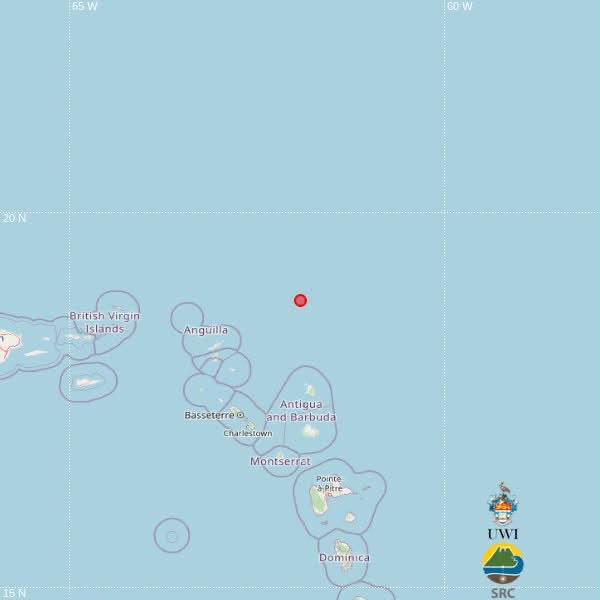
A shallow magnitude 3.5 earthquake has been registered in waters north of the Caribbean nation of Antigua and Barbuda, regional seismological authorities confirmed over the weekend.
The University of the West Indies (UWI) Seismic Research Centre, the leading scientific body monitoring seismic activity across the Caribbean region, announced that the tremor struck at 3:48 p.m. local time on Saturday, September 12. Initial automated geological calculations place the quake’s depth at 10 kilometers below the ocean floor.
Geospatial data pins the earthquake’s epicenter at 18.83 degrees north latitude and 61.93 degrees west longitude. This positioning places the epicenter roughly 191 kilometers directly north of St. John’s, the capital city of Antigua and Barbuda. It also sits approximately 192 kilometers northeast of Basseterre, the capital of neighboring St. Kitts and Nevis, and 228 kilometers north of Brades, the administrative center of the British Overseas Territory of Montserrat.
In a key note accompanying the early alert, the UWI Seismic Research Centre emphasized that all geographic and magnitude data released so far is the product of automated computer algorithm processing. The readings remain classified as preliminary until they undergo full review and verification by the center’s team of specialist seismic analysts.
-
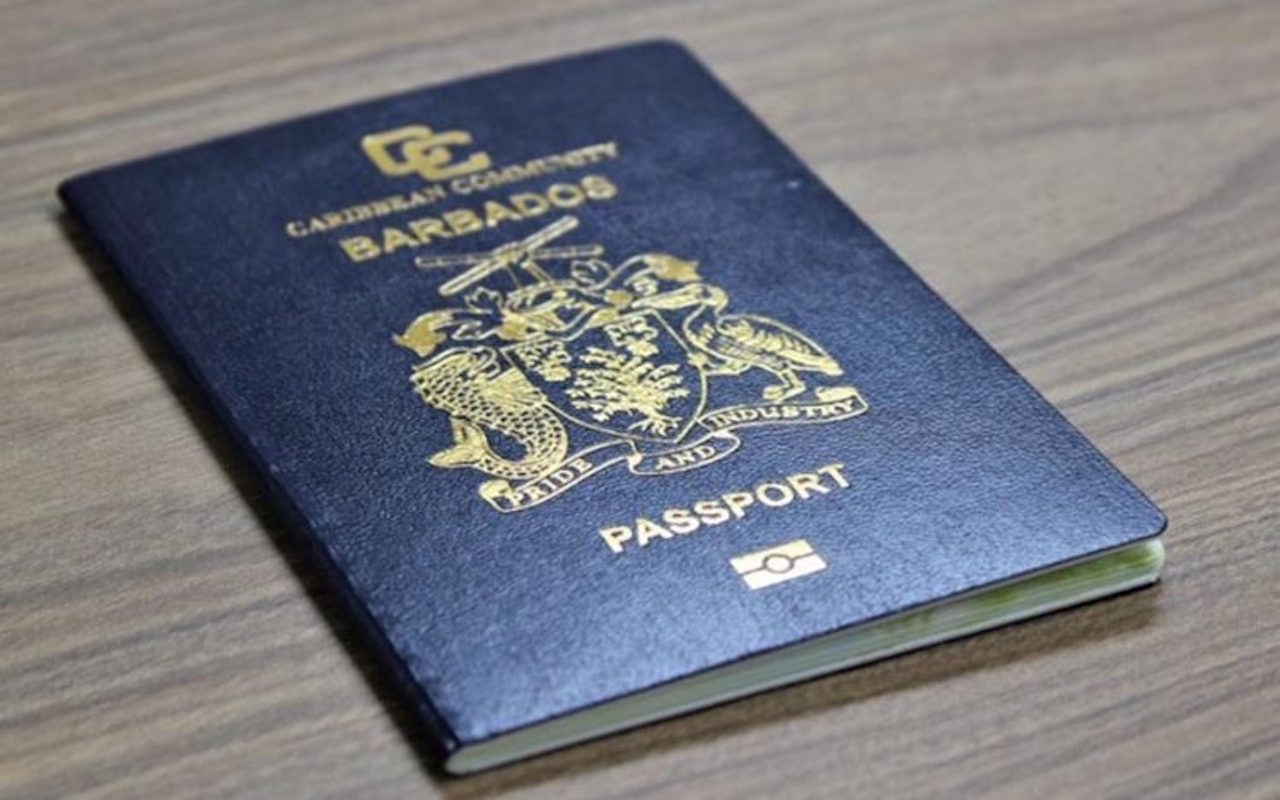
Barbados passport maintains strong standing
Barbados has cemented its status as a standout regional leader in global travel accessibility after securing the 39th spot on the world’s latest passport mobility index, an annual ranking that measures visa-free travel access for passport holders across the globe.
Within regional blocs, the small Caribbean nation outperforms all its peers, claiming first place among member states of the Caribbean Community (CARICOM), third among all North American countries, and fourth across the entire Community of Latin American and Caribbean States. It also ranks an impressive 10th out of 56 Commonwealth nations, a performance that industry analysts say highlights the country’s growing diplomatic clout.
“This latest index demonstrates the immense global respect and diplomatic strength that the Barbadian passport continues to command,” said Mark Reynolds, a leading travel mobility analyst. “To lead CARICOM and place in the top fifth of all Commonwealth nations is a clear testament to the country’s robust international relations and the widespread trust it has built on the global stage.”
Currently, holders of a Barbadian passport gain visa-free entry to more than 100 sovereign nations, with dozens of additional destinations offering streamlined visa-on-arrival processing or simplified entry requirements that cut down travel friction significantly. For Barbadian leisure and business travelers, full visa-free access extends across the entire European continent and all Caribbean nations, with broad, largely unrestricted entry also available across most of South and North America. Travel access remains solid across Africa, Asia and the Middle East, though entry rules vary widely between individual countries in those regions.
Despite the passport’s strong global standing, the new report highlights a notable gap in travel freedom reciprocity for the island nation. On the report’s separate welcoming index, which measures how open a country is to foreign travelers, Barbados ranks just 37th, revealing that many nations that benefit from relaxed entry rules for their citizens in Barbados do not extend the same treatment to Barbadian travelers.
Currently, citizens of 33 countries can enter Barbados without a full visa, yet Barbadian travelers are still required to meet strict entry requirements when visiting those same states. Major nations on this list include the United States, Australia, Qatar and New Zealand. Even more notably, Barbados enforces full visa requirements for citizens of eight countries including Bosnia and Herzegovina, Haiti and the Dominican Republic, despite the fact that Barbadians enjoy simplified, visa-free entry when visiting these three nations.
-
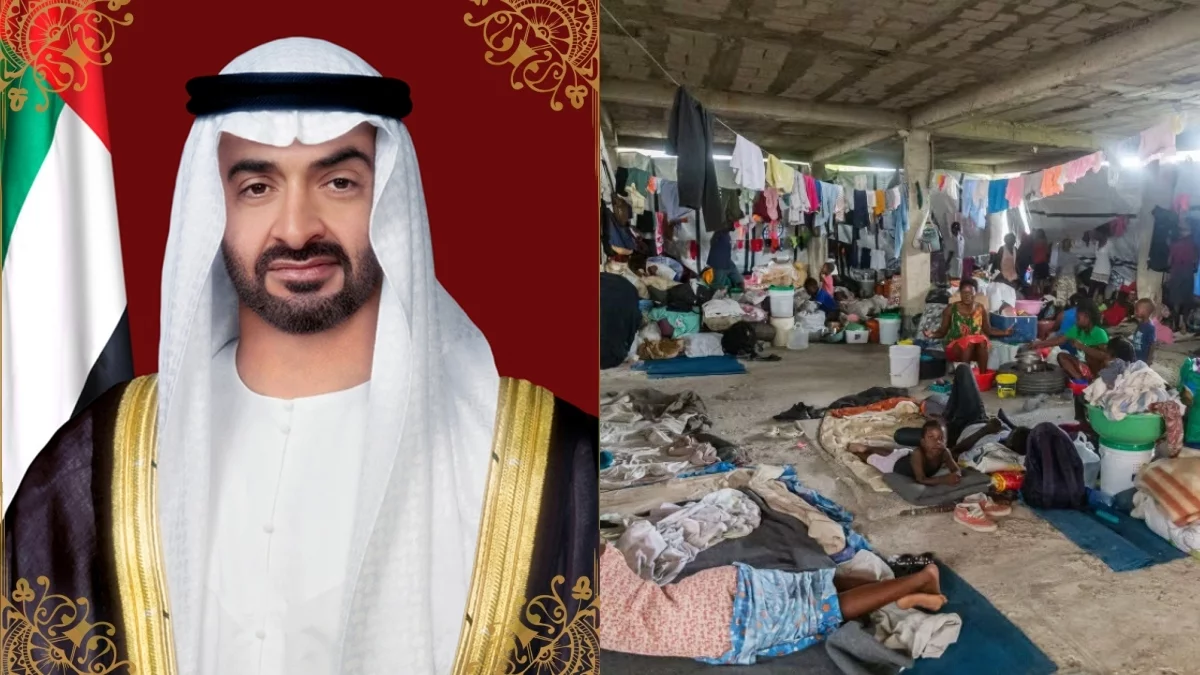
$10 million in emergency aid for Haiti from the United Arab Emirates
Amid Haiti’s rapidly deteriorating humanitarian catastrophe, the United Arab Emirates has stepped forward with a $10 million emergency aid pledge to support vulnerable populations affected by the country’s spiraling violence and collapsing essential services. The funding and support package was authorized on the direct orders of UAE President His Highness Sheikh Mohamed bin Zayed Al Nahyan, marking one of the largest bilateral humanitarian contributions to Haiti from the Gulf region in recent years. The United Arab Emirates Red Crescent (ERC), the country’s leading humanitarian disaster response agency, will lead the distribution of aid across the most hard-hit regions of the Caribbean nation. The assistance package will cover a broad range of life-saving needs, including staple food supplies, emergency shelter materials, critical pharmaceutical products, medical equipment, and targeted investment to restore water access, sanitation infrastructure, and public hygiene services. The initiative is structured in sequential phases, with the first round of operations prioritizing the most urgent survival needs: food, emergency housing, primary healthcare, and clean water access. Internally displaced persons and other marginalized, at-risk groups – including children, elderly people, and communities cut off from basic services – will receive top priority in aid allocation. To ensure efficient and transparent delivery, the ERC is coordinating closely with UAE diplomatic missions based in the region, leading international humanitarian organizations, and local Haitian partner groups. These collaborative partnerships are designed to cut through logistical barriers and reach communities that have been most severely impacted by the ongoing crisis. Haiti’s situation has reached alarming levels in recent months, driven by rapidly escalating gang violence, widespread insecurity, and the near-total breakdown of core public services. Citing the latest aggregated international humanitarian data, the ERC reports that more than 1.5 million Haitians have been forced from their homes, with children accounting for nearly half of all displaced people. Millions more across the country face acute food insecurity, and more than half of Haiti’s total population currently requires some form of emergency humanitarian assistance, according to recent UN estimates. This new contribution from the UAE comes as international aid organizations warn that existing funding for Haiti’s response is drastically insufficient to meet growing needs, making new pledges critical to preventing a further escalation of preventable death and suffering.
-

Fishermen’s US strike death lawsuit stalls
Almost 12 months after Trinidadian fishermen Chad Joseph and Rishi Samaroo disappeared mid-voyage home from Venezuela, legal progress on a high-profile wrongful death lawsuit alleging the pair were killed in an unacknowledged United States military strike remains paused. The case is now held up waiting for Trinidad and Tobago’s domestic courts to issue a formal declaration of death, a procedural step required to move the federal lawsuit forward.