分类: world

  • Trump warns Iran better ‘get smart soon’ and accept nuclear deal

    Trump warns Iran better ‘get smart soon’ and accept nuclear deal

    Escalating tensions between the United States and Iran have reached a critical new juncture this week, as President Donald Trump ramped up public pressure on Tehran to concede to strict new nuclear constraints while a sustained American naval blockade continues to cripple Iran’s already fragile economy. Writing on his own social media platform Wednesday, Trump issued a blunt warning to Iranian leadership, declaring, “Iran can’t get their act together… They better get smart soon.” The post was paired with a doctored image showing Trump holding a rifle against a backdrop of a exploding desert fortress, overlaid with the text “No more Mr Nice Guy.”

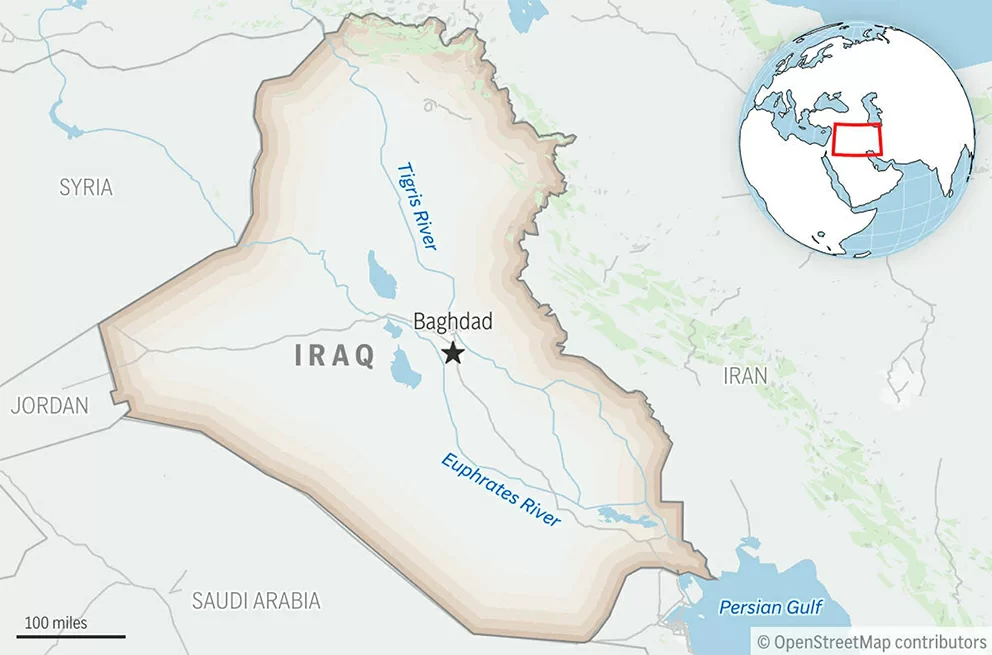
    The confrontation comes against a backdrop of open conflict that began two months ago, when a joint US-Israeli military campaign triggered a reciprocal Iranian blockade of the Strait of Hormuz—one of the world’s most critical chokepoints for global oil and natural gas shipments. The closure of the strategic waterway sent immediate shockwaves through international energy markets, and while Iran’s move has disrupted global commerce, it has also inflicted severe damage on Iran’s own domestic economy. By Wednesday, the Iranian rial had plummeted to an all-time low against the U.S. dollar, and interviews with Tehran residents paint a picture of widespread public despair over the prolonged crisis. Speaking to AFP on condition of anonymity, a 52-year-old Iranian architect based in Paris outlined the deep public skepticism toward diplomatic efforts that has built up over years of failed negotiations. “Every time in recent years that negotiations have taken place, the economic situation of the people has only gotten worse. Sanctions have either started or intensified,” he explained. “They go to negotiate and come back with even more sanctions, and the issue is always nuclear. There’s no talk about people, the economy, or freedom. People have the right to not even want to hear the word ‘negotiation.’”

    U.S. defense secretary Pete Hegseth was scheduled to appear before Congress for questioning on the administration’s Iran policy Wednesday, but multiple U.S. press reports indicate Trump has already made a final decision to reject Iran’s latest diplomatic proposal to reopen the Strait of Hormuz. Citing anonymous administration sources, The Wall Street Journal reports Trump intends to maintain the tight naval blockade of Iranian ports until Tehran agrees to fully dismantle its nuclear program, a non-negotiable demand from Washington.

    During a White House state dinner hosted for Britain’s King Charles III on Tuesday, Trump doubled down on his stance, claiming Iran had already been “militarily defeated” and asserting, “we’re never going to let that opponent have a nuclear weapon.” Trump even claimed Charles shared his position on the issue. Iranian military officials have pushed back aggressively against Trump’s claims, however, with army spokesman Amir Akraminia telling state television Tuesday that Tehran rejects any suggestion the war is over, and harbors deep distrust of American intentions. “We do not consider the war to be over. We have many cards that we have not yet used… new tools and methods of fighting based on the experiences of the past two months of conflict, which will definitely allow us to respond to the enemy more decisively” if hostilities resume, Akraminia warned. Iranian defense ministry spokesman Reza Talaei-Nik added that Washington has no right to impose its will on sovereign nations, saying, “The United States is no longer in a position to dictate its policy to independent nations” and demanding Washington abandon its “illegal and irrational demands.”

    Diplomatic efforts to de-escalate the crisis have ground to a halt in recent days. Tehran’s latest proposal, which was relayed to Washington via mediator Pakistan and reviewed by Trump administration officials during a Monday meeting, sets clear red lines on both nuclear policy and the future of the Strait of Hormuz, according to Iran’s semi-official Fars News Agency. Under the framework, Iran would ease its blockade of the strait in exchange for Washington lifting its retaliatory port blockade, with broader negotiations over the nuclear program to follow. But the offer has been flatly rejected by Trump, leaving the standoff locked in place. Qatari officials, whose country has been struck by Iranian strikes despite serving as a neutral mediator, warned Wednesday that the ongoing impasse risks devolving into a long-lasting “frozen conflict” with no clear path to resolution.

    Domestically, Trump faces growing political pressure to find a way out of the standoff, as spiking global energy prices drive up commodity costs for American voters just months ahead of November’s midterm elections. Polling consistently shows the war is deeply unpopular with the U.S. public, and as of Wednesday, international benchmark Brent crude traded above $113 per barrel—surpassing prices seen before a brief April ceasefire—while U.S. West Texas Intermediate crude crossed the $101 per barrel mark. Even key U.S. allies have openly criticized the administration’s lack of a clear strategy. German Chancellor Friedrich Merz, who previously offered cautious backing to Trump’s Iran policy, told reporters Monday that “the Americans obviously have no strategy” in the region and called the war “at the very least ill-considered.” Trump quickly fired back on social media, dismissing Merz’s comments and claiming the German leader “doesn’t know what he’s talking about.”

    Violence continues to flare along the conflict’s secondary Lebanese front, even after a recently extended ceasefire between Israel and Iran-backed Hezbollah. The militant group drew Lebanon into the wider conflict when it opened fire on Israel two months ago, triggering Israeli air strikes and a limited ground incursion into southern Lebanon. The Lebanese military confirmed this week that the ceasefire has been violated repeatedly: Tuesday brought the first reported Israeli strike on Lebanese army personnel since the truce took effect, wounding two soldiers, and a second strike Wednesday killed one additional Lebanese soldier.

  • Antigua and Barbuda Fisheries Chief Takes Chair of Caribbean Fisheries Forum

    Antigua and Barbuda Fisheries Chief Takes Chair of Caribbean Fisheries Forum

    A new chapter has begun for regional fisheries governance in the Caribbean, as Antigua and Barbuda has stepped into the rotating chairmanship of the Caribbean Fisheries Forum, positioning the small island nation to guide 12 months of critical discussions shaping the future of the region’s fishing and blue economy sectors.

    The leadership transition occurred during the Forum’s 24th Regular Meeting, which convened fisheries leaders from across the Caribbean in Belize City on April 23 and 24. At that gathering, Ian Horsford, Antigua and Barbuda’s top fisheries official, was unanimously elected to the one-year chairmanship post. He takes over the role from Remone Johnson of the Turks and Caicos Islands, who completed his term this spring.

    As a core coordinating body, the Caribbean Fisheries Forum unites the heads of national fisheries agencies from all 17 member states of the Caribbean Community (CARICOM). Beyond its governance function, the body provides specialized technical direction to the Caribbean Regional Fisheries Mechanism (CRFM), the overarching institution that oversees regional fisheries policy and cooperation.

    In his first public remarks following his election, Horsford emphasized the enduring value of multilateral collaboration at a time of global instability. “In these times of geopolitical uncertainty, CRFM — through its various organs such as the Forum — remains a shining example of what can be achieved through multilateralism as we chart the way forward for the sustainable development of Caribbean fisheries and blue economy,” he said.

    The two-day meeting covered a broad slate of pressing topics for the Caribbean’s fishing sector. Delegates centered key discussions on finalizing the CRFM’s 2026-2027 strategic work plan, alongside deep dives into core priorities: advancing sustainable fishing practices and aquaculture development, addressing the growing impacts of climate change on marine ecosystems, cracking down on illegal, unreported and unregulated (IUU) fishing and linked fisheries crime, integrating gender equity across fisheries policy, and expanding access to renewable energy for actors across seafood supply chains.

    In addition to these priority areas, officials reviewed and debated new implementation protocols for the CARICOM Common Fisheries Policy. Two standout components of these new rules are the adoption of regional marine spatial planning — a framework that organizes human activity in marine spaces to balance ecological health and economic use — and mandatory aquatic foods traceability, a system that tracks seafood products through every step of the value chain from catch to consumer.

    The importance of the sector to the Caribbean’s social and economic fabric cannot be overstated. CRFM data underscores this impact: roughly 500,000 people across CARICOM member states earn their livelihoods from fisheries and aquaculture, a figure that includes small-scale fishers, aquaculture producers, and workers in dozens of supporting roles from processing to distribution.

    This Forum meeting was strategically scheduled as a precursor to the 20th Regular Meeting of the CRFM Ministerial Council, where senior regional government officials will build on the technical agreements reached this week to set formal policy direction for the coming years.

  • New deal includes farming, energy, Spanish as second language

    New deal includes farming, energy, Spanish as second language

    In a landmark diplomatic gathering hosted in Bridgetown on Monday, Barbados and Venezuela unveiled a wide-ranging strategic alliance covering food production, energy investment, and language education, marking the first high-level visit from Venezuela’s new interim government following the US removal of former president Nicolás Maduro. The meeting, held at the Lloyd Erskine Sandiford Centre, brought together Barbadian Prime Minister Mia Mottley and Venezuelan Acting President Delcy Rodríguez, who jointly announced the start of a new, transformative era of bilateral collaboration after a full day of closed-door negotiations.

    Both leaders emphasized that the close geographical proximity of the two nations — a mere one-hour flight apart — has long been underutilized, and the new partnership will finally build the deep economic and social connections that match this geographic advantage. Mottley framed the cooperation as a critical collective defense mechanism against the ongoing global economic strains of soaring inflation and disrupted supply chains, noting that the two countries already have a foundational history of dialogue from prior diplomatic engagements.

    “Venezuela has made impressive progress in securing food sovereignty, and it is well positioned to help many nations across our region access affordable, nutritious food,” Mottley stated. A core initiative of the new partnership will allow Barbadian government representatives and private farmers to cultivate food directly on Venezuelan territory. This arrangement is designed to stabilize volatile food prices on Barbados’ import-dependent island economy, while leveraging the nation’s established Caribbean logistics networks to turn the island into a regional export hub for Venezuelan-grown produce. Mottley added that the plan will eliminate wasted cargo capacity on trade routes between the two countries, ensuring that planes and ships returning from Barbados to Venezuela are not carrying empty holds, boosting economic efficiency for both sides.

    In a surprising policy announcement, Mottley reaffirmed a decades-old pledge to make Spanish Barbados’ second official language, a policy first outlined almost 50 years ago that was never fully implemented. Under the new target, all Barbadians under the age of 18 will receive formal Spanish language education by 2030, a move designed to eliminate language barriers and streamline cross-hemisphere trade and travel. Mottley noted that this linguistic integration will also lay the groundwork for future cooperation in tourism and transport connectivity, which the two nations plan to advance in subsequent negotiations.

    Turning to energy cooperation, Mottley recognized Venezuela’s long history as an energy security stabilizer for the Caribbean, referencing landmark prior agreements including the San Jose Agreement and PetroCaribe. She confirmed that the Barbados National Energy Company will now begin exploring joint investment opportunities in Venezuela’s existing oil and gas fields, to strengthen Barbados’ long-term energy security amid the current global energy crisis. Mottley added that the partnership will also extend beyond fossil fuels to collaborative development of renewable energy technologies.

    Acting President Rodríguez, who assumed leadership of Venezuela after US special operations forces invaded Caracas in early January and removed Maduro to face US criminal charges, described the new agreement as a “new birth” of bilateral relations, officially marking April 27 as the starting date of the revitalized economic and trade alliance. Rodríguez echoed Mottley’s praise for the food production initiative, confirming that the arrangement will not only improve food access for Barbadians but also position Barbados as a global export hub for Venezuelan agricultural products.

    Rodríguez also outlined plans to expand air and maritime connectivity between Caracas and Bridgetown, noting that increased flight frequencies will unlock new tourism markets for both countries. She extended an invitation for Barbadian tourism professionals to lead training programs for Venezuelan hospitality workers, while offering Venezuelan energy expertise to help Barbados expand its domestic energy output. The two sides also agreed to explore joint manufacturing of solar panels as part of their renewable energy collaboration.

    On the education and language front, Rodríguez announced that Venezuela will expand the operations of its Venezuelan Institute for Cultural Cooperation in Barbados, integrating digital education technology to connect Venezuelan language teachers with Barbadian students to support the push for Spanish proficiency across the island.

    The visit comes amid a deeply unstable political transition in Venezuela, with widespread international debate over the legitimacy of US intervention and the nation’s future democratic governance. The US military operation that removed Maduro has been widely condemned by global policymakers as a violation of Venezuelan sovereignty and international law. Currently, Maduro is being held at the Metropolitan Detention Center in Brooklyn, New York, alongside his wife Cilia Flores. He has pleaded not guilty to all charges of drug trafficking and corruption, telling a Manhattan federal court that he is a “prison of war” who was illegally kidnapped by US forces.

    The high-level talks concluded with a ceremonial exchange of cultural gifts, including an indigenous handcrafted beach bag from Venezuela and a original work of Barbadian art, symbolizing the deep cultural ties the two leaders aim to solidify through the new partnership. “We invite you and your delegation to always treat Barbados as your home,” Mottley told Rodríguez at the closing of the summit. “Our core goal is to build a relationship that delivers tangible benefits to ordinary citizens of both nations, so that everyone can access the best that both our countries have to offer.”

  • Pirates hijack St. Kitts and Nevis flag bearing ship in Somalia – WIC News

    Pirates hijack St. Kitts and Nevis flag bearing ship in Somalia – WIC News

    In a development that has amplified growing international alarms over a resurgence of maritime piracy off the Horn of Africa, a group of armed pirates has seized control of the MV Sward, a cargo ship flying the flag of St. Kitts and Nevis, off the coast of Somalia. The hijacking marks the second such attack in less than a week in the region.

    According to initial operational updates from the United Kingdom Maritime Trade Operations (UKMTO), the incident unfolded Sunday evening in waters near the coastal town of Garacad. The MV Sward, which was carrying a cargo of cement, was en route to the Kenyan port of Mombasa when it was overtaken by attackers. On board the detained vessel are 15 crew members: 13 Syrian nationals and two Indian citizens, whose current status remains unclear as operations to monitor the situation continue.

    As a common global shipping practice, the MV Sward is registered under St. Kitts and Nevis as a Flag of Convenience (FOC). This arrangement, standard across the commercial shipping industry, means the ship does not belong to the federation; instead, owners register vessels in foreign jurisdictions to access lower regulatory fees, looser tax requirements, and other administrative advantages.

    Security analysts with British maritime security firm Vanguard have confirmed that the hijacked vessel is now being navigated by the attackers deeper into offshore waters that have long been labeled a high-risk zone for pirate activity. A senior official with the Puntland Maritime Police Force, speaking on condition of anonymity, confirmed that nine armed assailants boarded the vessel and secured full control of the ship and crew. “The ship is presently under the control of armed men,” the official stated, adding that Puntland security teams are actively monitoring the hijacking as it develops.

    Maritime authorities have not yet released details on how the attackers gained access to the MV Sward. However, historical patterns of piracy in the region show that similar operations typically involve heavily armed groups using small, high-speed speedboats to approach unsuspecting transiting vessels.

    This latest hijacking comes just six days after another seizure off Somalia’s coast. On April 21, a team of six gunmen took control of the Honour 25, a fuel tanker flying the flag of Palau, while it was transiting Somali waters. The tanker, which carried 17 crew members and a cargo of 18,500 barrels of crude oil, had departed from the semi-autonomous Somali region of Puntland at the time of the attack, the BBC reported.

    In response to the escalating threat, UKMTO has issued an official public warning to all commercial vessels transiting the region. “Due to increased threat of possible pirate armed group activity, vessels are advised to transit with caution and report any suspicious activity as authorities continue to investigate,” the advisory, published as UKMTO WARNING 046-26, reads.

    The string of recent attacks has reignited long-standing international concerns over a full-scale resurgence of piracy in the Gulf of Aden and off Somalia’s Indian Ocean coast. After reaching a peak between 2008 and 2018, coordinated international anti-piracy patrols drove a dramatic decline in attacks for years. But starting in late 2023, pirate activity began to climb again, leaving shipping companies and security officials scrambling to adjust security protocols for the world’s busiest east-west shipping lane.

  • In its squares on May 1st, Cuba will not be alone either

    In its squares on May 1st, Cuba will not be alone either

    As International Workers’ Day approaches on May 1, hundreds of international solidarity activists are preparing to stand shoulder-to-shoulder with Cuban working people in mass demonstrations across the island nation’s public squares. This year’s mobilization carries extra historic weight, marking the centennial of the birth of Cuban revolutionary leader Fidel Castro Ruz, and comes as the Caribbean nation continues to navigate persistent external pressures designed to undermine its sovereignty.

    Cuba, the largest of the Antilles archipelago, has built a decades-long legacy of resistance amid external challenges. For this year’s May Day, international supporters have traveled from every corner of the globe to witness that resilience firsthand, joining working-class Cubans in reaffirming the island’s right to exist as a free, independent, peaceful and self-determining nation.

    A core contingent of 70 international visitors, organized as the second May Day Solidarity Convoy, has already spent days touring eastern Cuban communities in Santiago de Cuba and Guantánamo provinces, walking through rural hills and coastal villages to connect with local residents. The group includes activists from Italy, Venezuela, Mexico, the United States, France, Switzerland, and Cuban expatriates who have returned to show their support. Michelle Curto, from the Italian Agency for Cultural and Economic Exchange with Cuba, described the trip as an immersion in “the wellspring that is the Cuban Revolution,” adding that Cuba is “the island where we must grow and become ourselves.”

    International visitors have quickly become vocal advocates for the Cuban people after witnessing their daily determination to overcome hardship. Alejandra Chavira, a participant from Mexico, called Cubans “the most supportive people on the planet.” Italian activist Roberto Forte echoed that sentiment, noting that Cuba stands as proof “a world different from one of imposition and bombs is possible.”

    In the capital city of Havana, another group of international supporters — members of the 19th International Brigade of Voluntary Work and Solidarity with Cuba and the Che Guevara Contingent — got an up-close look at Cuban public innovation during a visit this week to the prestigious Center for Genetic Engineering and Biotechnology (CIGB).

    Josefina Guillo, a representative of the Cuba-France Association, emphasized that standing with Cuban workers on the eve of May Day and Fidel Castro’s centennial carries deep symbolic meaning for her organization. “We admire the strength of the Cuban people, their capacity for resilience despite the difficulties,” she said. Ian Müller, a student delegate from the Socialist Party of Germany, echoed that commitment, noting, “The strongest weapon the Cuban people have is international solidarity and friendship with other peoples.”

    When Cuban working masses fill the nation’s squares on May 1, these international supporters will march alongside them. Organizers note that the principles Cuba defends — sovereignty, self-determination, and dignity for working people — are universal causes shared by communities across the globe. That commitment echoes the enduring words of Cuban national hero José Martí, which remain ingrained in the identity of the Cuban people: “Homeland is humanity.”

  • Vijf Surinamers geselecteerd voor prestigieus Amerikaans leiderschapsprogramma

    Vijf Surinamers geselecteerd voor prestigieus Amerikaans leiderschapsprogramma

    Five emerging young entrepreneurs and professionals from Suriname have earned a coveted spot in the 2026 Young Leaders of the Americas Initiative (YLAI) Fellowship Program, an initiative run by the U.S. Department of State. The official announcement was made public by the U.S. Embassy based in Paramaribo, Suriname’s capital.

    Widely regarded as a flagship cross-border exchange initiative, YLAI is designed to fuel inclusive entrepreneurship and drive sustainable economic growth across the entire Western Hemisphere. For the 2026 cohort, program organizers selected 250 emerging leaders from across North America, Central America, South America and the Caribbean, cutting down from a pool of more than 1,200 submitted applications. Five of these selected fellows hail from Suriname, marking a notable representation for the small South American nation.

    The five Surinamese participants bring diverse leadership experience across multiple sectors. They include Jo-Ann Monsels, founder of Kinderuniversiteit Suriname; Mitchel Monsels, general manager of Anjuli Nature Resort; Nuravni Sukarni Sallons, founder and managing director of InSeasons; Rosito Pansa, founder and leader of Youth Association Suriname; and Ziwinji van de Veer, Chief Operating Officer of Paisr Technologies.

    The fellowship will kick off in April 2026 with an opening orientation program hosted in Houston, Texas. Following the orientation, fellows will disperse across 18 different U.S. cities to complete a four-week professional placement at leading American companies and non-profit organizations. Over the course of the fellowship, participants will collaborate to solve real-world business challenges, attend targeted skills-building training sessions, engage in cross-cultural exchange activities, and expand their professional networks across the Americas. The program will conclude with a closing policy and leadership forum held in Washington D.C. in May 2026.

    Once the fellowship concludes, the Surinamese participants will return to their home country equipped with new industry knowledge, hands-on professional experience, a broad network of cross-border business connections, and ongoing support from their U.S. partner organizations. Program organizers anticipate that the exchange will strengthen long-term economic collaboration between Suriname, the United States and the broader Western Hemisphere region.

    First launched in 2015, the YLAI Fellowship Program has supported more than 2,000 emerging leaders from across the Western Hemisphere to date, building a lasting transnational network of young change-makers committed to inclusive economic development.

  • 29 Countries Meet in Belize to Talk Tourism

    29 Countries Meet in Belize to Talk Tourism

    In the coastal nation of Belize, hundreds of senior tourism stakeholders, policymakers, and industry leaders from 29 countries are convening this week for the 17th annual Caribbean Conference on Sustainable Tourism Development, a landmark gathering focused on shaping the future of the region’s most critical economic pillar. Hosted in San Pedro Town and organized jointly by the Belize Tourism Board and the Caribbean Tourism Organisation, the 2026 conference carries the forward-looking theme “Tourism in Full Colour”, a nod to the region’s rich cultural diversity and varied natural landscapes that draw millions of visitors each year.

    In his opening address to more than 300 registered delegates, Belize’s Tourism Minister Anthony Mahler opened with a celebration of his country’s unique tourism assets, from the world-famous Belize Barrier Reef, a UNESCO World Heritage Site, to its sprawling intact tropical forests and the vibrant mosaic of Indigenous, Afro-Caribbean, and Latino cultures that shape the nation’s identity. These assets, Mahler emphasized, form the irreplaceable backbone of Belize’s tourism industry and set the template for sustainable development across the region.

    Mahler went on to underscore the outsized economic importance of tourism to the Caribbean that few other global regions can match. Across the Caribbean bloc, tourism contributes an average of 32% to total gross domestic product, a share that jumps to over 90% for the region’s smallest island developing states. Global data underscores the sector’s rapid recent rebound following the COVID-19 pandemic: in 2025, the international tourism sector welcomed a record-breaking 1.5 billion international tourists worldwide, generating $2.2 trillion in global export revenues. The Caribbean alone captured 70 million of these visitors, cementing its status as one of the world’s most popular leisure travel destinations. “For many of our nations, tourism is not merely a sector of the economy,” Mahler told attendees. “It is the economy.”

    Yet the minister did not shy away from the pressing existential challenges that threaten to undermine decades of tourism-led growth in the region. He highlighted that the global tourism sector accounts for roughly 10% of total global greenhouse gas emissions, and despite widespread net-zero commitments from major cruise line and aviation groups that drive much of the region’s visitor arrival, emissions from the sector continue to climb year over year.

    Worsening this imbalance, Mahler noted, is the profound climate injustice facing small Caribbean nations. While the region contributes less than 1% of global cumulative greenhouse gas emissions, it bears the brunt of climate change impacts that directly erode tourism assets. These impacts include accelerating beach erosion that degrades popular coastal resorts, widespread coral bleaching that damages the reef systems that draw millions of eco-tourists each year, and persistent sargassum blooms that foul popular shorelines across the Caribbean. “Those who continue to create the problems must pay for the solutions,” Mahler asserted, echoing longstanding calls from climate-vulnerable small island developing states for increased climate finance and emission reductions from major global emitters.

    Despite these challenges, Mahler highlighted Belize’s proactive steps to serve as a regional leader in sustainable tourism management. The country has established a connected network of more than 103 protected areas that conserve critical ecosystems while creating opportunities for low-impact eco-tourism. It also secured a landmark Blue Bond debt restructuring deal that freed up public funds for marine conservation, and became one of the first countries in the region to implement binding cruise tourism carrying capacity limits to prevent overcrowding and environmental degradation at popular visitor sites.

    The multi-day conference is scheduled to continue through the end of the week, with delegates set to hold working sessions on sustainable financing, climate adaptation, community-led tourism development, and strategies to cut tourism-related emissions across the Caribbean.

  • CARICOM and Germany formalise cooperation framework to advance Community priorities

    CARICOM and Germany formalise cooperation framework to advance Community priorities

    On April 23, a landmark diplomatic and development milestone was achieved at the CARICOM Secretariat headquarters in Georgetown, Guyana, when the Caribbean Community Secretariat and Germany’s Deutsche Gesellschaft für Internationale Zusammenarbeit (GIZ) GmbH formalized a partnership through the signing of six new implementation agreements. Backed by €31.9 million in German funding, the agreements will launch a five-year transformative technical cooperation programme across the Caribbean bloc, cementing a decades-long collaboration between the two parties.

    This signing ceremony is not a standalone initiative, but a critical operational step following the framework Memorandum of Understanding on technical cooperation that CARICOM and the Federal Republic of Germany signed in February 2025. Dr. Carla Barnett, CARICOM Secretary-General, who put pen to paper on behalf of the 15-nation community, emphasized that the new programme aligns directly with CARICOM’s core long-term development priorities, and praised Germany for its consistent and reliable support to the region’s growth efforts. On the German side, Jasmin Ellis-Jones, GIZ’s Regional Director for the Caribbean, signed the agreements, and reaffirmed the organization’s dedication to close coordination with CARICOM institutions, national governments and local stakeholders to deliver measurable, meaningful benefits for Caribbean communities by the programme’s conclusion in 2029.

    Running from 2025 to 2029, the six interconnected regional projects will be executed by GIZ on behalf of Germany’s Federal Ministry for Economic Cooperation and Development (BMZ), working hand-in-hand with the CARICOM Secretariat, regional specialized bodies and national partners across targeted member states. Each project addresses a pressing sustainable development challenge unique to the Caribbean’s small island developing states: the CARIBIO initiative will advance regionally coordinated strategies for biodiversity conservation and sustainable use; the climate-compatible circular economy project will lay the regulatory and institutional groundwork for low-carbon economic transition; the blue economy project will unlock sustainable economic potential from the region’s marine protected areas; the BioWaste initiative will develop new systems for repurposing organic waste and the pervasive invasive sargassum that plagues Caribbean coastlines into usable material and energy; CliRES II will expand access to climate-resilient, renewable energy infrastructure across the region; and the Green and Blue Skills Project will build local workforce capacity to support climate action sectors.

    Across all six projects, interventions will center on strengthening regional and national institutional capacity, drafting harmonized regional policy frameworks, launching innovative pilot initiatives, delivering targeted skills training to local workers, improving cross-regional coordination mechanisms, and embedding inclusive, gender-responsive approaches into every stage of sustainable development work.

    Germany’s development partnership with the Caribbean stretches back more than 15 years, with a longstanding strategic focus on three key areas: sustainable energy, climate change adaptation, and environmental management. Since 2008, Germany has delivered sustained technical assistance to the region through GIZ-managed programmes, and this new round of agreements represents both an expansion of the existing partnership and a consolidation of shared priorities for the coming decade. The formal signing of these implementation agreements sets out the clear legal and operational framework for project rollout, and underscores the shared commitment of CARICOM, the German government and GIZ to advancing sustainable, climate-resilient, and inclusive economic and social development across the entire Caribbean Community.

  • US forces board ship suspected of heading to Iran port

    US forces board ship suspected of heading to Iran port

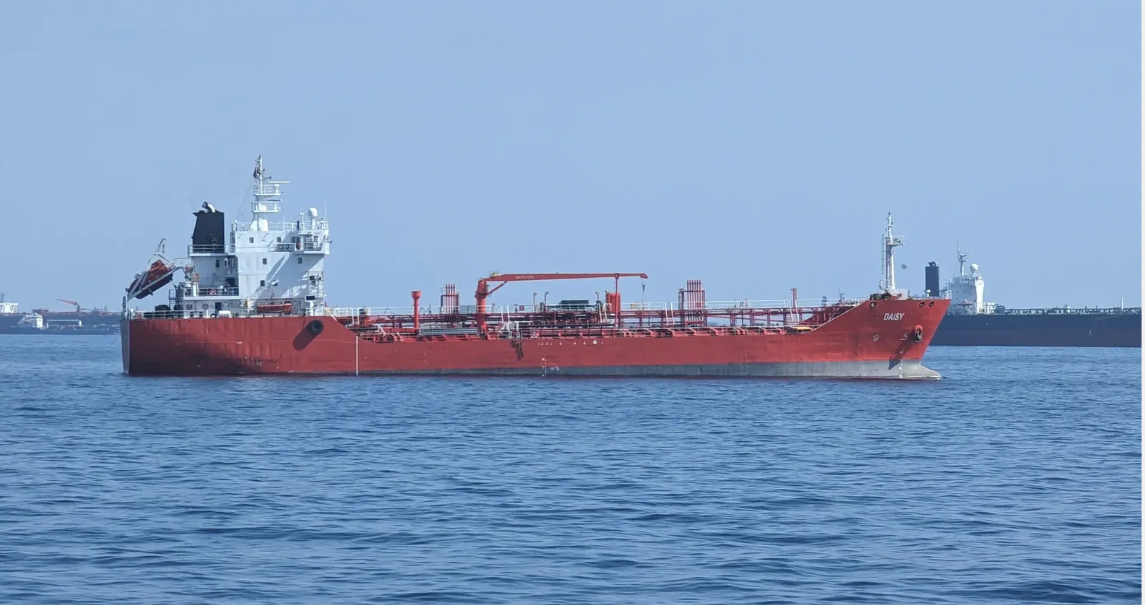
    In a recent operation highlighting the enforcement of Washington’s maritime restrictions on Iran, U.S. Marine forces boarded a commercial cargo ship in the Arabian Sea on Tuesday that had been flagged for potential violation of the American blockade of Iranian ports, U.S. military officials confirmed.

    Following the boarding operation, Central Command—the U.S. military unified combatant command that oversees all American military assets across the Middle East—announced via a post on the social platform X that the M/V Blue Star III had been cleared to continue its journey. The release came after a full search of the vessel confirmed that it had no planned port calls at any Iranian facility along its scheduled route.

    The command’s statement emphasized that U.S. maritime forces are maintaining a persistent presence across the region to uphold the blockade. To date, military officials report that 39 vessels have already been redirected from their original courses to ensure full compliance with the restrictions.

    Accompanying the announcement was a short video clip capturing the operation. The footage shows a military helicopter hovering low over the Blue Star III’s deck while Marines fast-roped down onto the stacks of shipping containers that line the vessel’s cargo hold.

    The current maritime standoff in the region follows a series of escalating developments. After the U.S.-Israeli joint air campaign against Iran launched on February 28, Iranian military forces moved to close the Strait of Hormuz—the strategically critical waterway that carries roughly a fifth of the world’s daily oil and global natural gas shipments. This closure upended one of the world’s busiest and most economically vital maritime chokepoint.

    Washington rolled out its official blockade of Iranian ports after a round of regional peace negotiations held in Pakistan failed to deliver any breakthrough towards de-escalation. U.S. forces began actively enforcing the new maritime restrictions on April 13.

    Speaking to reporters earlier this month, U.S. Secretary of Defense Pete Hegseth stated that the blockade will remain in place “as long as it takes” to achieve American policy goals. General Dan Caine, the highest-ranking active-duty U.S. military officer, further clarified that the restrictions “applies to all ships, regardless of nationality, heading into or from Iranian ports.”

  • UNC Pivots towards US alignment

    UNC Pivots towards US alignment

    It has now been 12 months since the United National Congress (UNC) won a decisive electoral victory in Trinidad and Tobago, and the small Caribbean nation has undergone a quiet but transformative geopolitical realignment, moving steadily into alignment with United States foreign policy while breaking with longstanding regional norms and historic ties to neighboring Venezuela. Since Prime Minister Kamla Persad-Bissessar took office on April 28, 2025, her administration has embraced American security strategy, echoed Washington’s domestic political rhetoric, and repeatedly backed some of the U.S.’s most divisive global actions, creating growing tensions across the Caribbean and Latin America.

    This ideological alignment predated the UNC’s assumption of power: during the 2025 election campaign, Persad-Bissessar’s party already mirrored the policy priorities of U.S. Republican Party and former president Donald Trump, including anti-immigrant rhetoric framing migration as an “invasion” and a pledge to reintroduce religious instruction into public schools. Echoing Trump’s 2016 “America First” platform that propelled him to the White House, Persad-Bissessar centered her campaign on a “T&T-first” agenda, a slogan that would later become the title of her administration’s inaugural national budget. Following the NRA’s endorsement of Trump, the UNC also expanded its proposals for broad “Stand Your Ground” self-defense legislation and enshrined the “right to bear arms” as a core priority in its electoral manifesto.

    Since taking office, the pro-U.S. shift has only accelerated, particularly in relation to key geopolitical flashpoints. The Persad-Bissessar administration has repeatedly voiced open support for Trump administration military operations both in Venezuela, which sits just seven miles from Trinidad and Tobago at its closest point, and across the Middle East, regularly labeling governments in Caracas and Tehran as “dictatorial regimes.” The government has even moved to adopt Washington’s global terror designation list outright, branding Venezuelan criminal group Tren De Aragua and Iran’s Islamic Revolutionary Guard Corps (IRGC) as terrorist organizations in lockstep with the U.S.

    The most public demonstration of this new alignment came in late 2025, when the U.S. military launched a series of air and sea strikes targeting vessels it claimed were trafficking narcotics to American shores across the Caribbean Sea. The campaign, which grew into Operation Southern Spear, saw the U.S. reposition at least eight warships and thousands of troops to the region, increasing military pressure dramatically on Venezuela. Persad-Bissessar openly praised the buildup, issuing a public statement welcoming the first strike on September 2 that killed 11 people the U.S. labeled “narco-terrorists” from a Venezuelan coastal town. In the statement, she declared that “all drug traffickers should be killed violently” — a position she has refused to back away from, even as international legal experts have raised questions about the legality of the extrajudicial kinetic strikes.

    Shortly after the strikes began, the prime minister issued a direct warning to neighboring Venezuela, a longstanding regional ally, warning that any incursion into Guyanese territory would grant the U.S. “unflinching access” to Trinidad and Tobago’s land and territorial waters. When the guided-missile destroyer USS Gravely docked in Port of Spain for joint military exercises hosted by Trinidad and Tobago, the Maduro-era Venezuelan government responded by cutting all natural gas trade ties with the nation and declaring Persad-Bissessar persona non grata, while state-backed protests filled the streets of Caracas to condemn her policies. Maduro himself repeatedly accused the prime minister of intentionally damaging regional stability and destroying decades of constructive bilateral relations, warning that any hostile action originating from Trinidad and Tobago would be met with a proportional military response. Undeterred, Persad-Bissessar dismissed Venezuelan retaliation as inconsequential to both her personally and the national economy.

    After the U.S. launched Operation Absolute Resolve, the January 3, 2026 military operation that removed Nicolas Maduro from his Caracas presidential compound, Trinidad and Tobago went a step further, permitting the U.S. to install a advanced military-grade air defense radar system on the island of Tobago and granting U.S. military aircraft access to the nation’s civilian and military airports. The administration has repeatedly denied any direct role in the raid on Maduro or attacks on Venezuelan civilians, but has continued to back U.S. policy in the country in public forums. At a recent Caricom Heads of Government meeting, Persad-Bissessar labeled Maduro a “narco-dictator” and claimed that both Trinidad and Tobago and Guyana face direct security threats from Venezuela.

    In response to the comments, the interim Venezuelan government led by Delcy Rodriguez, who has cooperated with the U.S. following Maduro’s ouster, issued a formal communique criticizing Persad-Bissessar’s stance. When the U.S. eased sanctions on Venezuelan energy projects, granting OFAC authorization to major energy firms including Shell to resume cross-border gas development, Persad-Bissessar hailed the move as a major economic win for Trinidad and Tobago, and announced a government delegation would travel to Caracas to negotiate new energy deals. No public update on the talks has been released to date, and Rodriguez notably skipped Trinidad and Tobago on her first foreign tour earlier this month, only visiting Grenada, telling reporters “we have positive relations with Grenada” when asked why she omitted Port of Spain.

    This pro-U.S. shift has not been limited to Venezuela. Following Maduro’s ouster, the Trump administration ramped up pressure on Cuba, blocking shipments of sanctioned Venezuelan oil that have long served as the island’s primary energy source, triggering widespread fuel shortages and deepening a growing humanitarian crisis. At the February 2026 Caricom summit, Persad-Bissessar again aligned with Washington, declaring that Trinidad and Tobago would not back Cuba’s “dictatorial regime.” “We cannot advocate for other people to live under communism and dictatorship while we enjoy democracy and capitalism in our Caricom region,” she said. “That is an oxymoron, a plain contradiction.”

    Weeks later, when the U.S. launched Operation Epic Fury in Iran that killed former Supreme Leader Ayatollah Ali Khamenei and ignited a multi-week regional war in the Persian Gulf, Trinidad and Tobago again issued a statement backing U.S. action. The Ministry of Foreign Affairs said the country supported U.S. efforts “to prevent oppressive regimes from acquiring nuclear weapons capabilities that would jeopardise international peace and security,” noting that nuclear proliferation remains a critical threat to the global community. On March 19, Trinidad and Tobago joined the U.S., United Kingdom, France, Germany, Italy, Japan, Canada and other nations in a joint statement condemning Iranian military actions and the closure of the Strait of Hormuz. Last week, the government formally added Hezbollah, Hamas and the IRGC to its national list of designated terrorist organizations, matching the U.S. designation.

    This new foreign policy marks a stark break from Trinidad and Tobago’s decades-long stance of regional neutrality. As a founding member of the 15-nation Caribbean Community (Caricom), previous Trinidad and Tobago administrations have long upheld the bloc’s collective commitment to maintaining the Caribbean as a conflict-free “Zone of Peace.” But under Persad-Bissessar, the government has rejected this longstanding regional consensus. Last year, the administration reserved its position on a formal Caricom declaration reaffirming the Zone of Peace, and Persad-Bissessar later rejected the concept as a “false ideal” during a speech to the United Nations General Assembly.

    Tensions between Port of Spain and the Caricom secretariat have escalated sharply in recent months. In late December 2025, Persad-Bissessar warned regional nations against criticizing the U.S., pointing to Antigua and Barbuda and Dominica, which faced U.S. visa restrictions under the Trump administration after publicly opposing Washington’s policies. In a post to her X account, she accused Caricom of disproportionately siding with the former Maduro government, repeated calling the Zone of Peace “fakery,” and made clear Trinidad and Tobago wanted no part of the regional consensus.

    At the February 2026 Caricom Heads of Government meeting in St. Kitts, Persad-Bissessar went further, calling the regional bloc an “unreliable partner” and questioning why it had not condemned what she framed as Venezuelan threats to Trinidad and Tobago and Guyana. The dispute spilled into a wider conflict over the reappointment of Caricom Secretary General Carla Barnett, who is set to begin a second five-year term in August 2026 following a vote by Caricom heads at a closed retreat in Nevis.

    Trinidad and Tobago’s foreign minister Sean Sobers, who took over the country’s delegation after Persad-Bissessar left the summit a day early, issued a formal objection to the reappointment, claiming the process violated the Treaty of Chaguaramas because Trinidad and Tobago was not consulted and the vote was not added to the official meeting agenda. Caricom Chairman Terrance Drew responded that the vote was held at a properly announced retreat, and Sobers was invited but declined to attend, citing seasickness. Sobers rejected that claim, and announced Trinidad and Tobago would suspend participation in Caricom meetings until the government received all correspondence related to Barnett’s reappointment.

    Last week, Persad-Bissessor escalated the dispute further, releasing a public statement alongside screenshots of a WhatsApp group chat showing that a “heads-only” retreat was scheduled for February 26, after she had already left the summit. She accused Caricom’s leadership of lying, and labeled the bloc’s leadership dysfunctional, dishonest and incompetent, while also criticizing regional foreign ministers for failing to defend Sobers amid the dispute.

    Political analysts who have tracked the UNC’s first year in office note that the new foreign policy has emerged as the most distinct shift of the administration, drawing mixed reactions from the Trinidad and Tobago public and regional stakeholders. While analysts acknowledge that overt alignment with the U.S. could deliver short and medium-term economic and security benefits for the small island nation, they caution that the long-term consequences for regional stability and Trinidad and Tobago’s standing in the Caribbean remain unclear.