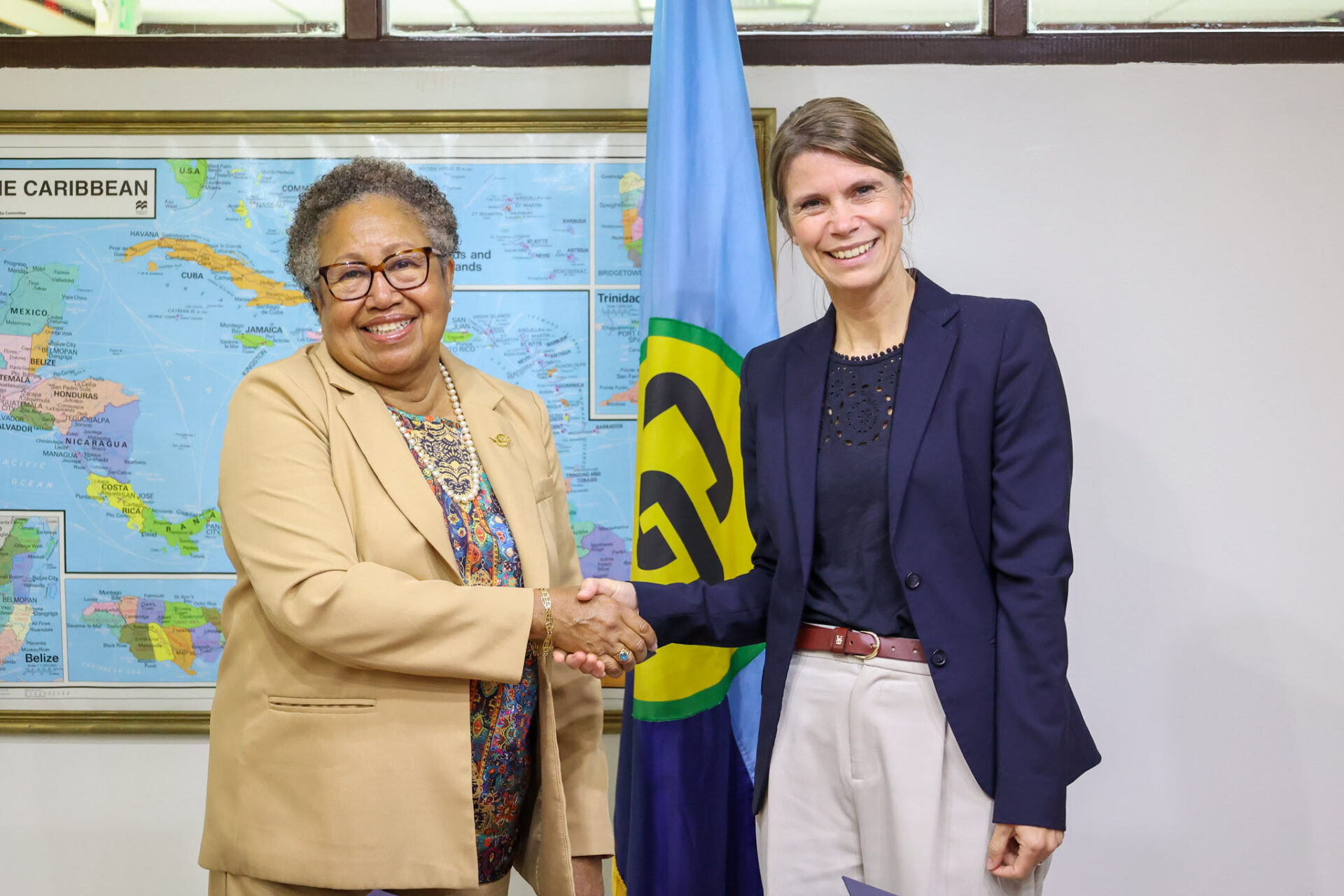
On April 23, a landmark diplomatic and development milestone was achieved at the CARICOM Secretariat headquarters in Georgetown, Guyana, when the Caribbean Community Secretariat and Germany’s Deutsche Gesellschaft für Internationale Zusammenarbeit (GIZ) GmbH formalized a partnership through the signing of six new implementation agreements. Backed by €31.9 million in German funding, the agreements will launch a five-year transformative technical cooperation programme across the Caribbean bloc, cementing a decades-long collaboration between the two parties.
This signing ceremony is not a standalone initiative, but a critical operational step following the framework Memorandum of Understanding on technical cooperation that CARICOM and the Federal Republic of Germany signed in February 2025. Dr. Carla Barnett, CARICOM Secretary-General, who put pen to paper on behalf of the 15-nation community, emphasized that the new programme aligns directly with CARICOM’s core long-term development priorities, and praised Germany for its consistent and reliable support to the region’s growth efforts. On the German side, Jasmin Ellis-Jones, GIZ’s Regional Director for the Caribbean, signed the agreements, and reaffirmed the organization’s dedication to close coordination with CARICOM institutions, national governments and local stakeholders to deliver measurable, meaningful benefits for Caribbean communities by the programme’s conclusion in 2029.
Running from 2025 to 2029, the six interconnected regional projects will be executed by GIZ on behalf of Germany’s Federal Ministry for Economic Cooperation and Development (BMZ), working hand-in-hand with the CARICOM Secretariat, regional specialized bodies and national partners across targeted member states. Each project addresses a pressing sustainable development challenge unique to the Caribbean’s small island developing states: the CARIBIO initiative will advance regionally coordinated strategies for biodiversity conservation and sustainable use; the climate-compatible circular economy project will lay the regulatory and institutional groundwork for low-carbon economic transition; the blue economy project will unlock sustainable economic potential from the region’s marine protected areas; the BioWaste initiative will develop new systems for repurposing organic waste and the pervasive invasive sargassum that plagues Caribbean coastlines into usable material and energy; CliRES II will expand access to climate-resilient, renewable energy infrastructure across the region; and the Green and Blue Skills Project will build local workforce capacity to support climate action sectors.
Across all six projects, interventions will center on strengthening regional and national institutional capacity, drafting harmonized regional policy frameworks, launching innovative pilot initiatives, delivering targeted skills training to local workers, improving cross-regional coordination mechanisms, and embedding inclusive, gender-responsive approaches into every stage of sustainable development work.
Germany’s development partnership with the Caribbean stretches back more than 15 years, with a longstanding strategic focus on three key areas: sustainable energy, climate change adaptation, and environmental management. Since 2008, Germany has delivered sustained technical assistance to the region through GIZ-managed programmes, and this new round of agreements represents both an expansion of the existing partnership and a consolidation of shared priorities for the coming decade. The formal signing of these implementation agreements sets out the clear legal and operational framework for project rollout, and underscores the shared commitment of CARICOM, the German government and GIZ to advancing sustainable, climate-resilient, and inclusive economic and social development across the entire Caribbean Community.