分类: world

  • Aid flotilla arrives in Cuba as US oil blockade bites

    Aid flotilla arrives in Cuba as US oil blockade bites

    HAVANA, Cuba — In a direct challenge to U.S. sanctions, the inaugural vessel of an international humanitarian flotilla successfully docked in Havana on Tuesday, delivering essential medical supplies, food provisions, and solar power equipment to an island nation grappling with a severe energy crisis. The ‘Maguro’ shrimp boat, symbolically rebranded ‘Granma 2.0’ in homage to the yacht used by Fidel Castro’s revolutionaries in 1956, completed its voyage from Mexico’s Yucatan peninsula after navigating formidable maritime conditions and technical difficulties, arriving three days behind schedule.

    The docking ceremony witnessed emotional scenes as activists assembled on the cabin roof holding a ‘Let Cuba Live’ banner, while supportive crowds on the pier echoed with chants of ‘Cuba yes! Blockade no!’ This maritime mission, dubbed the ‘Our America Convoy,’ represents one segment of a broader multinational relief effort that initially dispatched approximately 50 tonnes of humanitarian cargo via air transport from Europe, Latin America, and the United States last week.

    Organized under the banner of the Progressive International, a global left-wing coalition, the initiative has garnered official endorsement from the Cuban government. David Adler, the convoy’s coordinator and a U.S. citizen, articulated to AFP that the mission simultaneously addresses urgent humanitarian needs while highlighting what he characterized as ‘the human costs of Trump’s siege on Cuba.’ Adler further emphasized that the effort ‘demonstrated that international solidarity can triumph over forced isolation.’

    Cuba’s current energy predicament has reached critical proportions, with seven nationwide blackouts recorded since the beginning of 2024—two occurring within the past week. This electrical instability stems from a combination of antiquated thermoelectric infrastructure and acute petroleum shortages, exacerbated significantly by the Trump administration’s January imposition of a de facto oil blockade. The situation deteriorated further following the detention of Venezuelan socialist leader Nicolás Maduro—Cuba’s principal regional ally—by U.S. forces, accompanied by threats of tariffs against nations supplying oil to the island.

    Despite the humanitarian narrative advanced by organizers, the mission has encountered substantial criticism from Cuban exile communities and political opponents. Luis Zuniga, a former political prisoner now residing in Miami, dismissed the operation as ‘nothing more than a political sideshow,’ contending that Cuba’s electricity crisis predates recent sanctions and originates from systemic governmental failures.

    The flotilla’s participants include activists from Australia, Brazil, Ecuador, Italy, Mexico, and the United States, several possessing prior experience in maritime aid missions. Notably, Brazilian organizer Thiago Avila previously coordinated a similar flotilla attempt to Gaza that was intercepted by Israeli forces last year. Another Brazilian activist, Lisi Proenca, highlighted the strategic advantage of maritime transport for delivering substantial equipment like solar panels that are impractical to ship by air.

    As Cuba confronts soaring fuel prices, collapsed public transportation systems, and accumulating urban waste due to inoperative garbage trucks, the government consistently attributes these hardships to Washington’s long-standing trade embargo and recent fuel restrictions. With two additional aid vessels anticipated imminently, this humanitarian confrontation continues to unfold at the intersection of geopolitical tension and human necessity.

  • US calls for justice without delay

    US calls for justice without delay

    The United States Embassy has formally called upon Bahamian authorities to deliver justice “without delay” following the fatal shooting of American citizen Cody Castillo by an off-duty police officer. The incident, which occurred last Saturday, has triggered international concern and raised serious questions about police conduct in The Bahamas.

    New evidence suggests that Mr. Castillo, a 31-year-old employee of Pike Corporation from Huntsville, Texas, was entirely uninvolved in any altercation. According to a close friend, he had merely arrived at Da Plantation Bar & Grill to provide transportation for his younger brother and cousin, who had been inside the establishment. He was seated behind the wheel of his vehicle when the shooting occurred, a fact that potential dash camera footage from the Pike truck is expected to corroborate.

    The off-duty officer, reported to hold the rank of superintendent, allegedly fired a single shot through the side window of the vehicle. This account directly challenges the initial police statement that suggested Mr. Castillo drove in a threatening manner. The U.S. Embassy spokesperson highlighted profound concern over reports that the officer pursued the unarmed victim to his car before firing the fatal shot.

    In a tragic compounding of the event, a second fatal shooting involving an off-duty officer occurred merely 31 hours later near Montagu Beach, marking the third such incident this year.

    The human toll of the tragedy is profound. Mr. Castillo leaves behind his wife, Makayla, who is four months pregnant with their first child, a son due in August. The couple had been married for only a year. A GoFundMe campaign established to support the grieving widow has already surpassed $34,000, underscoring the widespread sympathy for her unimaginable loss—grieving her husband while preparing for motherhood alone.

    Bahamian National Security Minister Wayne Munroe has indicated that the investigation will review any available footage from the restaurant’s security cameras. The case will be forwarded to the Coroner if criminal charges are not immediately warranted.

    The victim’s family, now faced with the circulation of graphic video from the scene on social media, is devastated. Mr. Castillo is remembered by friends as a quiet, reserved, and deeply respectful man who was immensely excited to become a father, making his sudden death all the more senseless.

  • Caricom to send humanitarian supplies to Cuba

    Caricom to send humanitarian supplies to Cuba

    GEORGETOWN, Guyana – In a significant regional solidarity move, the Caribbean Community (Caricom) is mobilizing a major humanitarian assistance package for Cuba, which is grappling with a severe energy crisis marked by prolonged and widespread blackouts. This initiative gains urgency as external pressures, including longstanding US economic sanctions and oil supply restrictions, exacerbate the island nation’s infrastructural challenges.

    The aid operation, coordinated by the Caricom Secretariat headquartered here, was formally endorsed during the recent Caricom summit in Basseterre under the leadership of Chairman and St. Kitts and Nevis Prime Minister Dr. Terrance Drew. While the precise dispatch date remains unspecified, the Secretariat confirmed the consolidation of essential supplies destined for Havana.

    The relief consignment will comprise vital nutritional and medical resources, including powdered milk, infant formula, and assorted non-perishable food items such as beans, wheat flour, rice, and canned goods. Recognizing the critical need for stable electricity, the shipment will also include solar panels, batteries, and water tanks to aid Cuba’s crippled power and water infrastructure.

    Adding substantial logistical support to the effort, the government of Mexico has partnered with Caricom by identifying local suppliers to procure the goods and will facilitate their transportation, providing free shipment from Mexican ports to Cuba. This collaboration highlights a broader regional commitment to mitigating the humanitarian impact of Cuba’s ongoing crisis, standing in contrast to the persistent US trade embargo aimed at inducing political and economic change in the country.

  • 2 killed, dozens injured after Air Canada flight hits fire truck on runway at LaGuardia Airport

    2 killed, dozens injured after Air Canada flight hits fire truck on runway at LaGuardia Airport

    A catastrophic runway incident at New York’s LaGuardia Airport resulted in multiple casualties and significant operational disruptions Sunday night when an Air Canada Express aircraft collided with an emergency response vehicle during landing procedures. The impact proved fatal for both the captain and first officer of Jazz Aviation Flight 8646, which was operating on behalf of Air Canada, while injuring numerous others and prompting an immediate closure of the aviation facility.

    According to official statements from the Port Authority of New York and New Jersey, the collision occurred at approximately 11:40 p.m. when the CRJ900 aircraft, arriving from Montreal’s Trudeau International Airport, struck a Port Authority Aircraft Rescue and Firefighting vehicle that had been dispatched to address a separate emergency situation. Preliminary investigations indicate the fire truck had received proper clearance to cross the active runway while responding to a United Airlines flight that had reported cabin odor and aborted its takeoff.

    Flight data from FlightRadar24 reveals the aircraft was traveling at approximately 130 miles per hour moments before impact, resulting in substantial damage to the aircraft’s nose section. The incident triggered comprehensive emergency protocols with multiple agencies responding to the scene.

    Transportation officials confirmed the aircraft carried 72 passengers and 4 crew members. Initial reports documented 41 passengers and crew transported to area hospitals, with 32 subsequently released following medical evaluation. Both fire truck occupants were hospitalized and reported in stable condition. Among those onboard was one unaccompanied minor, subsequently reunited with family members at the airline’s ticket counter.

    The Federal Aviation Administration implemented an immediate ground stop following the collision, with airport authorities announcing an extended closure until at least 2:00 p.m. Monday to facilitate investigation and cleanup operations. The disruption caused cancellation of over 500 flights, exacerbating existing travel complications across the U.S. aviation system already experiencing staffing challenges due to ongoing Department of Homeland Security funding issues.

    National Transportation Safety Board investigators were deployed to conduct a comprehensive examination of the incident. Air traffic control recordings captured the moments preceding the collision, including urgent instructions to the emergency vehicle to halt movement seconds before impact occurred.

    The incident represents one of the most significant ground collision emergencies at a major U.S. airport in recent years, raising questions about runway safety protocols and emergency response coordination during multiple simultaneous incidents.

  • New initiative launched to enhance conservation efforts for the Sisserou Parrot

    New initiative launched to enhance conservation efforts for the Sisserou Parrot

    A groundbreaking conservation partnership has been formally initiated to address the critical endangerment of Dominica’s national bird, the Imperial Amazon parrot (Amazona imperialis). The ambitious program, designated “Sisserou Conservation with Civil Society (SCCS),” represents a strategic coalition between the Dominican environmental organization EcoBalance Inc. and the regional non-governmental entity Caribaea Initiative.

    Financial and logistical support for the endeavor is being provided by the Critical Ecosystem Partnership Fund (CEPF), with operational coordination handled by Dominica’s governmental Forestry, Wildlife, and Parks Division. This multi-stakeholder approach aims to confront the complex challenges that have persistently threatened the Sisserou’s survival, despite previous conservation measures.

    The iconic parrot, which exists nowhere else on Earth beyond Dominica’s mountainous rainforests, confronts an existential triad of threats: accelerating climate change impacts, progressive habitat fragmentation, and occasional conflicts with agricultural operations. The SCCS project framework incorporates several integrated methodologies to counter these pressures.

    Strategic components include enhancing scientific research capabilities, mobilizing civil society volunteers for monitoring operations, and executing nationwide public awareness campaigns. A particularly innovative element involves establishing formal partnerships with agricultural communities, educational institutions, and civic organizations to embed conservation practices within social and economic activities.

    Program architects have outlined specific implementation activities including specialized training workshops, community engagement initiatives, and institutional collaboration protocols. These efforts are strategically designed to culminate in the development of a sustainable, long-term conservation strategy that ensures persistent protection measures for this Caribbean avian emblem.

    Caribaea Initiative representatives emphasized that the project’s core innovation lies in its integrative approach, fundamentally strengthening cooperation between conservation experts, civil society, and local communities to secure the species’ future.

  • New York: Passagiersvliegtuig botst op brandweerwagen, beide piloten dood

    New York: Passagiersvliegtuig botst op brandweerwagen, beide piloten dood

    A catastrophic runway collision between an Air Canada Express passenger jet and an emergency response vehicle has resulted in two fatalities and multiple injuries at New York’s LaGuardia Airport, further intensifying scrutiny over aviation safety protocols nationwide.

    On Sunday evening, March 23, 2026, Flight AC-7127, operated by Jazz Aviation under the Air Canada Express banner, struck a fire truck during its landing approach at approximately 39 kilometers per hour. The impact proved fatal for both pilots aboard the CRJ-900 aircraft and left 41 individuals injured, including passengers, crew members, and two fire officials stationed in the emergency vehicle.

    Kathryn Garcia, Executive Director of the Port Authority of New York and New Jersey, confirmed that 32 of the injured have been discharged from medical facilities while nine remain hospitalized with serious but non-life-threatening conditions. The aircraft was carrying 72 passengers and four crew members at the time of the incident.

    Preliminary investigations reveal the fire truck had received authorization to cross Runway 4 near taxiway ‘Delta’ moments before the collision occurred. The vehicle was responding to a separate United Airlines flight that had reported unusual odors onboard. Air traffic control transmissions captured urgent stop commands issued just minutes before impact, suggesting possible communication failures.

    Visual documentation from Reuters depicts substantial damage to the aircraft’s nose section, with the plane resting at an awkward angle following the collision. Both Air Canada and Jazz Aviation have acknowledged the incident and pledged full cooperation with investigative authorities.

    The National Transportation Safety Board (NTSB) has deployed a specialized technical team to determine the exact sequence of events, while the Federal Aviation Administration (FAA) anticipates airport closures extending through Monday afternoon. This grounding has already triggered 537 flight cancellations, creating significant travel disruptions.

    This incident marks the latest in a series of aviation safety concerns plaguing U.S. air travel. January 2025 witnessed a fatal collision between a regional aircraft and military helicopter claiming 67 lives, followed by a cargo plane accident in Louisville that resulted in seven fatalities. FAA data indicates 97 runway incursion incidents have occurred this year alone, amplifying pressure on regulators to implement enhanced safety measures. Congressional lawmakers recently proposed legislation incorporating 50 aviation safety improvements in response to these recurring incidents.

  • Two dead in plane mishap in New York

    Two dead in plane mishap in New York

    A tragic runway collision at New York’s LaGuardia Airport has resulted in two fatalities and multiple injuries, prompting federal investigations into aviation safety protocols. The incident occurred Sunday night at approximately 11:45 PM when Air Canada Express Flight 8646, operated by Jazz Aviation, struck an Aircraft Rescue and Firefighting vehicle while landing on Runway 4.

    The CRJ-900 aircraft, arriving from Montreal with 72 passengers and crew aboard, collided with the emergency vehicle despite apparent clearance communications. Federal Aviation Administration officials confirmed both pilots perished in the accident, while nine individuals remain hospitalized with serious injuries. Over 40 people reportedly sustained various injuries during the mishap.

    Visual evidence from the scene reveals substantial damage to the aircraft’s nose section, underscoring the severity of the impact. The airport suspended all operations until 2:00 PM Monday, creating significant disruptions to air traffic throughout the Northeast corridor.

    Port Authority Executive Director Kathryn Garcia addressed media concerns during a press briefing, acknowledging the complexity of the ongoing investigation. Both the FAA and National Transportation Safety Board have launched comprehensive probes into the circumstances surrounding the collision.

    Aviation safety concerns have been reignited by this incident, particularly following several high-profile accidents in recent years, including last year’s fatal American Airlines crash at Reagan Airport. The released audio transcripts indicating clearance authorization prior to the collision have raised questions about communication protocols and ground operations safety measures at major airports.

  • Israël onderschat mogelijk Iraanse militaire capaciteiten

    Israël onderschat mogelijk Iraanse militaire capaciteiten

    Recent Iranian missile strikes targeting Israeli cities adjacent to nuclear facilities have exposed critical vulnerabilities in Israel’s defense architecture. The attacks, which injured approximately 180 people and forced mass evacuations, represent a significant escalation in the ongoing conflict that began on February 28th.

    The offensive came in direct response to Israeli-American airstrikes on Iran’s Natanz nuclear complex days earlier. Iranian forces employed sophisticated cluster munitions and ballistic missiles capable of bypassing Israel’s renowned Iron Dome system. Uzi Rubin, founder of Israel’s missile defense program, confirmed Iran possesses “the Middle East’s most extensive and diversified missile arsenal,” with capabilities that complicate interception efforts.

    Prime Minister Benjamin Netanyahu characterized the events as “an exceptionally challenging evening in our battle for survival” as civilians experienced unprecedented direct impacts of warfare. Health Ministry reports indicate over 4,500 casualties since the conflict’s inception.

    The strategic dimension has expanded dramatically, with Iran effectively blockading the Strait of Hormuz – a critical global oil transit route – prompting U.S. President Donald Trump to threaten retaliatory strikes against Iranian energy infrastructure. Military analysts note the conflict has entered a dangerous new phase targeting nuclear installations on both sides.

    Defense specialist Miriam Cohen warned: “These demonstrations of precision and range suggest Israel may have underestimated Iranian capabilities. We’re potentially facing a more prolonged and devastating confrontation than previous engagements.” The situation remains volatile as both nations continue targeting strategic assets while international organizations condemn the use of banned cluster weapons.

  • In war Medicine, the miracle of Life

    In war Medicine, the miracle of Life

    At Havana’s Ramón González Coro Maternity and Obstetrics Hospital, medical professionals continue delivering critical care to high-risk pregnancies and newborns despite severe resource constraints, demonstrating remarkable resilience through innovative problem-solving and international solidarity.

    A European Solidarity Convoy arrived on March 17th with approximately five tons of medical supplies, medicines, and basic necessities, providing crucial support to the facility that specializes in complex cases including pregnant women with diabetes, heart conditions, and cancer. The delegation expressed astonishment at Cuba’s ability to maintain medical services amid significant challenges.

    Dr. Otto Rafael Recio, the institution’s director, explained their approach using a medical metaphor: “Much like a fetus with intrauterine growth restriction prioritizes vital organs, our country is focusing on essential healthcare functions.” The hospital has implemented strategic reorganizations of surgical activities and patient care to ensure service continuity.

    The reality of practicing “wartime medicine” was detailed by oncologist Raiza Ruiz, who described working with an “absolute minimum for everything.” Most medications and treatments for her specialty require imports, but Cuba faces purchasing restrictions despite having budget allocations through programs like the Maternal and Child Health Program (PAMI).

    Innovative solutions emerge from necessity. Two recently graduated engineers successfully repaired a previously unusable anesthesia machine by developing their own software when donors couldn’t provide the necessary programming. The equipment now functions fully, saving lives instead of collecting dust.

    The hospital has faced extreme situations, including generator failures during surgeries that required completion using emergency lamps. For newborns on German-made Dragger ventilators, battery replacements are unavailable due to trade restrictions, forcing staff to resort to manual ventilation during power outages.

    Andrea Santor of solidarity organization Cuba Va recalled how Cuba extended medical assistance to Italy during COVID-19’s devastating peak in Turin: “A small island, with fewer resources than capitalist countries, extended a helping hand when we needed it most.”

    Patient Maureen Echevarría Peña, hospitalized throughout her third trimester for hypertension and diabetes, expressed confidence in her medical team despite resource limitations. “The hospital has gone to great lengths to ensure I lack nothing,” she stated, focusing on her upcoming delivery rather than material shortages.

    The emotional visit concluded with a profound acknowledgment from a convoy member: “Thank you for the effort you make despite the difficulties, for the example of resilience you are.”

  • Dominican Republic advances climate monitoring deal with Italian Space Agency

    Dominican Republic advances climate monitoring deal with Italian Space Agency

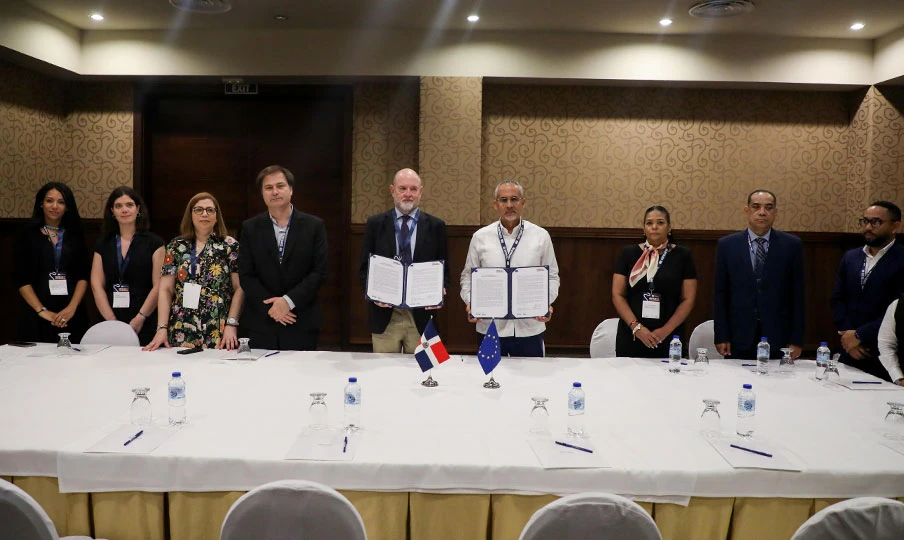
    Santo Domingo has taken a significant step toward technological advancement in climate security through a new partnership with Italy’s space sector. The National Council for Climate Change and Carbon Market (CNCCMC) has announced substantial progress in finalizing a cooperative agreement with the Italian Space Agency, marking a pivotal development in geospatial monitoring capabilities for the Caribbean nation.

    This groundbreaking initiative, spearheaded by CNCCMC Vice President Max Puig, focuses on leveraging sophisticated satellite technology to transform disaster risk management. The collaboration will provide Dominican authorities with enhanced access to both real-time and historical satellite data, enabling more precise forecasting and response mechanisms for extreme weather phenomena including hurricanes, floods, and various hydrometeorological hazards.

    The partnership emerged from high-level discussions involving Marco Lisi, a representative connected to Italy’s Foreign Ministry and the European Space Agency’s Galileo navigation program, alongside academic experts from Pedro Henríquez Ureña University. This multilateral engagement underscores the international commitment to addressing climate vulnerabilities in the region.

    Central to the cooperation are several strategic components: the enhancement of early warning systems, the development of a comprehensive Climate Risk Atlas, and the potential establishment of a national satellite data processing center dedicated to climate analysis. This infrastructure will serve as the foundation for improved disaster preparedness and climate adaptation strategies.

    Officials emphasize that this agreement represents a transformative approach to climate resilience, integrating cutting-edge technology with international knowledge sharing. The initiative aligns with the Dominican Republic’s broader strategy to modernize its climate change adaptation framework through technological innovation and global partnerships, ultimately creating a more secure future for its citizens in the face of escalating climate challenges.