分类: world

  • Cuba start herstel na tweede nationale stroomstoring in een week

    Cuba start herstel na tweede nationale stroomstoring in een week

    Cuba’s fragile electrical grid has collapsed for the second time within a single week, plunging approximately 10 million residents into darkness and exposing the island’s critical infrastructure vulnerabilities. The latest nationwide blackout occurred Saturday evening when a major power plant in Nuevitas, Camaguey province, experienced catastrophic failure, triggering a chain reaction that shut down the entire national grid.

    The Ministry of Energy and Mines has initiated emergency recovery operations, establishing isolated microsystems across all provinces to maintain essential services including hospitals, water supply networks, and food distribution centers. By Sunday, the gas-fired power plants operated by Energas in Varadero and Boca de Jaruco had resumed operations, along with the oil-fired facility in Santa Cruz.

    In Havana, residents gathered on sidewalks early Sunday, expressing frustration over the recurring power failures that have fundamentally disrupted daily life. ‘We’re trapped in the same vicious cycle,’ stated resident Leoni Alberto, who now cooks over wood fires at least twice weekly due to the unreliable power supply. ‘It’s absolute madness with no way out.’

    The blackouts have severely compromised mobile communications and internet connectivity across large regions, effectively isolating communities and hindering emergency coordination efforts. Prime Minister Manuel Marrero acknowledged the ‘extremely complex situation’ facing restoration teams.

    This week’s dual grid failures represent an unprecedented escalation of Cuba’s ongoing energy crisis, marking the third major collapse this month alone. While Cuba has experienced periodic nationwide blackouts in recent years, back-to-back system failures within seven days demonstrate a alarming deterioration of the country’s aging energy infrastructure.

    The crisis coincides with tightened U.S. oil sanctions that since January have blocked Venezuela’s preferential oil shipments to its Caribbean ally. The U.S. administration has further threatened third countries with secondary sanctions should they continue supplying Cuba with petroleum products.

    Cuban authorities attribute the economic hardships, including the decrepit power grid, directly to the six-decade U.S. trade embargo. American officials counter that Cuba’s centrally planned economic model and systemic inefficiencies remain the primary causes of the nation’s energy deficiencies.

  • Another Canadian National Arrested with Over $200,000 Worth of Cannabis at Airport

    Another Canadian National Arrested with Over $200,000 Worth of Cannabis at Airport

    In a significant drug interdiction operation, authorities at V.C. Bird International Airport in Antigua and Barbuda have apprehended a Canadian national attempting to import a substantial quantity of cannabis. The arrest occurred on Saturday, March 21, 2026, following a coordinated effort between multiple law enforcement agencies.

    At approximately 4:00 p.m., personnel from the Narcotics Department, K-9 Unit, and Customs Enforcement Unit conducted a routine screening of arriving passengers when canine units alerted officials to a suspicious silver suitcase. The luggage belonged to Semand Vivan Shammo Aljndo, a 23-year-old Canadian citizen who had arrived aboard Air Canada flight AC1832 from Toronto.

    Upon thorough inspection, officers discovered twenty-six pounds of cannabis concealed within the luggage. The confiscated narcotics carry an estimated street value of $208,000 Eastern Caribbean Currency (approximately $77,000 USD), representing one of the more substantial seizures at the airport in recent months.

    Mr. Aljndo has been formally charged with multiple drug-related offenses under Antiguan and Barbudan law. He remains in custody awaiting judicial proceedings, which could potentially result in severe penalties given the nation’s strict stance against drug trafficking.

    The Royal Police Force has emphasized that this operation exemplifies their intensified surveillance and enforcement strategy at all national ports of entry. Police Commissioner indicated that enhanced screening protocols and inter-agency collaboration have significantly improved detection capabilities for controlled substances.

    Authorities have reiterated their zero-tolerance policy toward drug trafficking, warning potential offenders that comprehensive enforcement measures remain rigorously implemented. The public is encouraged to support these efforts by reporting any suspicious activities through official channels, including the anonymous Crimestoppers hotline at 800-8477.

  • German to head new UN office in Haiti

    German to head new UN office in Haiti

    In a significant move to bolster its engagement in Haiti, United Nations Secretary-General António Guterres has appointed Dr. Daniela Kroslak of Germany as the inaugural head of the newly created United Nations Support Office in Haiti (UNSOH). The announcement was made on Monday, marking a strategic step in the international body’s ongoing efforts to stabilize the Caribbean nation.

    Dr. Kroslak is a seasoned diplomat with a formidable quarter-century of expertise in political affairs, peacekeeping operations, and mission leadership. Her academic credentials include a doctorate in international politics and a bachelor’s degree in international history and politics, providing a strong theoretical foundation for her extensive practical experience.

    Her professional history with the UN is both deep and diverse. She previously held the critical role of Chief of Staff within the United Nations Mission for Justice Support in Haiti (MINUJUSTH), giving her invaluable on-the-ground insight into the country’s complex challenges. Her field experience extends across some of the world’s most demanding operational theaters, including Sudan, the Democratic Republic of the Congo, and Rwanda. Beyond her UN service, she has also contributed her expertise to the International Crisis Group in Kenya.

    Most recently, Dr. Kroslak demonstrated her strategic acumen as the Lead Facilitator for the 2025 Review of the United Nations Support Mission in Libya (UNSMIL). Preceding this, in 2024, she led the Independent Strategic and Civilian Staffing Review of the United Nations Office to the African Union (UNOAU). Her career also includes a pivotal role as the Deputy Special Representative of the Secretary-General and Deputy Head of the UN Multidimensional Integrated Stabilization Mission in Mali (MINUSMA), a position she held until the mission’s mandate concluded in December 2023.

    The UN highlighted that Dr. Kroslak possesses a distinguished record in strategic and organizational leadership, high-level coordination, mediation, and human rights advocacy. Her extensive service in fragile transition contexts makes her uniquely qualified to lead the UNSOH, an office tasked with coordinating international support and fostering stability in Haiti during a critical juncture.

  • OECS welcomes first direct flight to Africa

    OECS welcomes first direct flight to Africa

    CASTRIES, St. Lucia — A new chapter in South-South cooperation has commenced as the Organisation of Eastern Caribbean States (OECS) celebrates the inaugural large-scale commercial flight directly connecting the Caribbean to the African continent. The landmark journey departed from Robert Bradshaw International Airport in St. Kitts, carrying a high-level delegation of over 100 dignitaries from eight Caribbean nations.

    The Nigeria-based Aquarian Consult Limited orchestrated this transformative flight, which transported prominent business leaders, government officials, and cultural icons directly to Nnamdi Azikiwe International Airport in Abuja on Sunday. The OECS Commission, headquartered in St. Lucia, hailed this achievement as a monumental step toward regional integration and economic empowerment.

    Aisha Maina, Managing Director of Aquarian Consult, encapsulated the historical significance: “We are no longer just dreaming of a bridge between our two regions; we are flying over it. This flight carries the future of Afri-Caribbean trade, tourism, and shared prosperity.”

    This pioneering route establishes a direct transatlantic connection that dramatically reduces travel time from over 30 hours to a single hop, bypassing traditional layovers in Europe or North America. The OECS emphasized that this flight represents more than mere transportation—it symbolizes a “Reverse Middle Passage” that asserts direct economic and cultural ties between the regions.

    The flight serves as the official prelude to the upcoming Afri-Caribbean Investment Summit (AACIS), scheduled from March 23–28 at Abuja’s Bola Ahmed Tinubu International Conference Centre. Delegates will engage in high-level bilateral discussions focusing on agricultural innovation, blue economy collaboration, cultural exchange, and transformative investment opportunities.

    This breakthrough establishes a primary economic corridor between the OECS and the Economic Community of West African States (ECOWAS), significantly cementing diplomatic and trade relations while demonstrating the commercial viability of permanent air links between the Global Africa family.

  • Colombia says 80 troops on crashed aircraft, many feared dead

    Colombia says 80 troops on crashed aircraft, many feared dead

    A Colombian Air Force C-130 Hercules transport aircraft crashed moments after takeoff from Puerto Leguizamo on Monday, triggering a massive emergency response amid conflicting casualty reports. The aircraft, carrying approximately 80 military personnel, went down in a forested area near the southern border with Ecuador, with initial reports indicating potential survivors among the wreckage.

    Defense Minister Pedro Sanchez confirmed the tragedy through official channels, expressing ‘profound sorrow’ while emphasizing that exact casualty figures and crash causation remain under investigation. Military rescue units were immediately dispatched to the remote crash site, where television footage depicted a severely damaged fuselage engulfed in flames within a jungle clearing.

    The incident occurred in a strategically sensitive region where Colombian and Ecuadorian armed forces have intensified counter-narcotics operations against drug trafficking organizations and armed militias. The area has witnessed elevated military activity in recent weeks as both nations collaborate to combat transnational criminal enterprises.

    This marks the second catastrophic incident involving a C-130 Hercules in South America within a month, following the February 27 crash of a Bolivian military cargo plane that resulted in 24 fatalities during landing procedures near La Paz. The Hercules aircraft, manufactured by Lockheed Martin, represents one of aviation’s most enduring transport platforms, renowned for its short-field capabilities and versatility in transporting troops and equipment to remote locations.

    Aviation safety investigators are expected to examine multiple factors including mechanical failure, operational conditions, and potential external threats in determining the crash’s etiology. The four-engine turboprop remains a workhorse for military operations worldwide despite this recent tragedy.

  • UPDATE: Colombia military aircraft crashes with 125 aboard, many feared dead

    UPDATE: Colombia military aircraft crashes with 125 aboard, many feared dead

    A Colombian Air Force Hercules C-130 transport plane carrying 125 military personnel crashed during takeoff from Puerto Leguizamo on Monday, resulting in significant casualties near the nation’s southern border with Ecuador. The aircraft, designated FAC 1016, went down shortly after departure, scattering burning wreckage across the jungle terrain below.

    Defense Minister Pedro Sanchez confirmed the tragedy, expressing ‘deep sorrow’ over the incident while noting that military response units had immediately deployed to the crash site. Initial reports indicated approximately 48 survivors had been located, though a military source suggested the death toll might reach 80 individuals. The exact number of casualties and the cause of the accident remain under investigation.

    The ill-fated flight was transporting 114 troops and 11 crew members between military outposts in the Amazon region, an area that has witnessed intensified military operations against drug trafficking organizations and armed militias in recent weeks. Visual evidence from the scene depicted civilians navigating through debris near the aircraft’s severed tail section as smoke continued to rise above the canopy.

    This incident marks the second catastrophic crash involving a C-130 Hercules aircraft in South America within a month, following a Bolivian military cargo plane accident on February 27th that resulted in 24 fatalities. The Lockheed Martin-built turboprop aircraft is renowned for its versatility in operating from rudimentary airstrips and remains a workhorse for military transport operations globally.

  • Israel strikes south Beirut, says captured Hezbollah members

    Israel strikes south Beirut, says captured Hezbollah members

    BEIRUT — Israeli forces launched targeted airstrikes against Hezbollah’s stronghold in southern Beirut on Monday, marking the first assault on the capital’s suburbs in several days. Simultaneously, the Israeli military confirmed the capture of two Hezbollah operatives during ground operations in southern Lebanon.

    The escalation began with precision strikes hitting Hazmieh, an affluent predominantly Christian neighborhood near Beirut, where Israeli officials claimed to have targeted a high-value operative from the Iranian Revolutionary Guards’ Quds Force. Subsequent attacks focused on Beirut’s southern suburbs, a known Hezbollah bastion, with AFPTV broadcasts capturing plumes of smoke rising over the area.

    Israel’s military spokesperson issued advance warnings to residents of southern Beirut suburbs before conducting what they described as systematic strikes against Hezbollah’s military infrastructure. The conflict expansion into urban centers represents a significant intensification of cross-border hostilities.

    The current cycle of violence originated on March 2 when Hezbollah initiated rocket attacks against Israel, purportedly in retaliation for the assassination of Iran’s Supreme Leader Ayatollah Ali Khamenei in a joint Israeli-American operation. Since then, Israeli counterstrikes have resulted in at least 1,039 fatalities across Lebanon according to official sources.

    In a detailed operational account, the Israeli army stated its forces intercepted several armed members of Hezbollah’s elite Radwan Force preparing to launch anti-tank missiles in southern Lebanon. “After identification, the terrorists surrendered and were apprehended for thorough interrogation in Israeli territory,” the military confirmed to AFP.

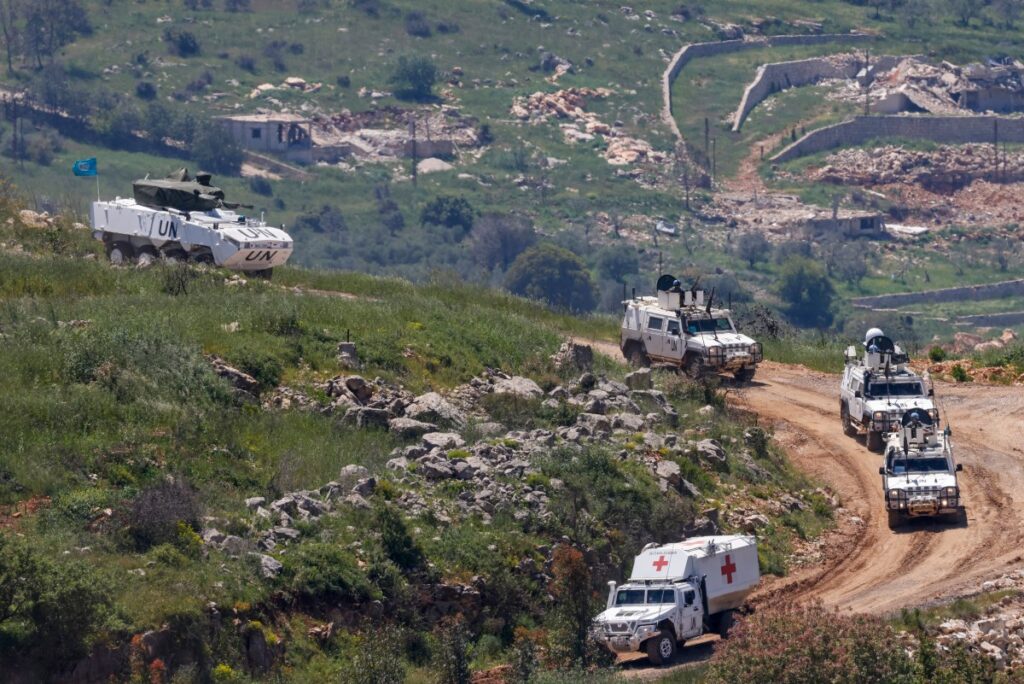
    Hezbollah responded with over 50 attacks targeting Israeli positions in northern Israel and southern Lebanon, particularly concentrating on the border coastal town of Naqura. The UN Peacekeeping Force in Lebanon (UNIFIL) reported its Naqura headquarters sustained damage from projectile fire, attributing the attack to “non-state actors.”

    The Hazmieh strike resulted in at least one casualty according to Lebanon’s Health Ministry. Mayor Jean Asmar revealed the attack targeted an apartment housing displaced families, prompting municipal authorities to reconsider refugee accommodation policies. The strike occurred near diplomatic missions and government offices in one of Beirut’s most secure districts.

    Israeli Defense Minister Israel Katz, in coordination with Prime Minister Benjamin Netanyahu, has ordered comprehensive destruction of all bridges across Lebanon’s Litani River allegedly used for “terrorist activities.” This strategic move follows earlier strikes on critical infrastructure connecting southern Lebanon with the Bekaa Valley.

    Hezbollah parliamentarian Hussein al-Haj Hassan previously alleged Israel holds 20 Lebanese prisoners, claiming half were captured post-ceasefire. The conflict continues to escalate with Israeli Arabic-language spokesperson Ella Waweya declaring “the battle against Hezbollah has only just begun.”

  • Two pilots dead, 41 injured in New York runway crash

    Two pilots dead, 41 injured in New York runway crash

    A fatal collision between an Air Canada Express aircraft and a fire truck on a runway at New York’s La Guardia Airport resulted in the deaths of both pilots and prompted a full-scale investigation into airport safety protocols Sunday night.

    The incident occurred at approximately 11:00 PM when Flight AC7157, operated by a CRJ aircraft arriving from Montreal, Canada, was completing its landing procedure. According to preliminary reports from ABC News, the aircraft was traveling at approximately 30 miles per hour when it collided ‘nose first’ with the emergency vehicle.

    Air traffic control recordings obtained by media outlets capture a controller acknowledging the emergency situation and instructing the flight crew to remain in position while emergency services mobilized to the scene.

    The Port Authority of New York and New Jersey, which operates the airport, confirmed the tragic deaths of the two pilots aboard the aircraft. Additionally, 41 individuals were transported to area hospitals for evaluation, including 39 passengers from the aircraft and two Port Authority emergency responders. Medical facilities have since discharged at least 32 of those injured.

    Investigators revealed that the fire truck had received explicit permission to cross the runway shortly before the collision occurred. The vehicle was responding to a separate emergency request from a United Airlines flight whose pilot had reported an odor-related issue aboard the aircraft.

    In response to the tragedy, airport authorities implemented a ground stop and temporarily closed La Guardia until 2:00 PM Monday to facilitate crash scene assessment and investigation activities. The Federal Aviation Administration has launched a comprehensive investigation into the circumstances surrounding the runway incursion and collision.

  • Eight dead as Colombia military aircraft crashes with 125 aboard—officials

    Eight dead as Colombia military aircraft crashes with 125 aboard—officials

    A Colombian Air Force Hercules transport plane crashed during takeoff from a remote jungle airstrip on Monday, resulting in a confirmed death toll of eight personnel with 83 individuals sustaining injuries. The aircraft, carrying 125 troops and crew members, went down shortly after departing from Puerto Leguizamo in southern Colombia near the border with Ecuador and Peru.

    Regional governor Jhon Gabriel Molina confirmed the casualty figures in an official video statement while noting that investigation teams are working to determine the cause of the accident. Initial military reports had suggested significantly higher fatalities before official confirmation was established.

    The crash site presented dramatic scenes with AFP images capturing burning wreckage scattered across the jungle terrain, including the broken tail section marked FAC 1016, as smoke and flames rose above the forest canopy. Local civilians were witnessed climbing around the debris while emergency responders worked to reach the remote location.

    Defense Minister Pedro Sanchez expressed ‘deep sorrow’ over the tragedy, acknowledging the profound impact on the nation’s military community. ‘It is a deeply painful event for the country. May our prayers bring some measure of comfort,’ Sanchez stated, while emphasizing that determining the cause would require thorough investigation.

    The incident occurred in a strategically sensitive border region that has experienced intensified military operations against drug trafficking organizations and armed groups in recent weeks. General Carlos Fernando Silva Rueda specified that the aircraft was transporting 114 military personnel with an 11-member crew between Amazonian outposts when the accident occurred.

    Local residents reported hearing a loud explosion preceding the crash. Farmer Noe Mota recounted, ‘I felt an explosion in the air and, when I looked up, the plane was flying close to the house on my plot.’

    President Gustavo Petro shared footage on social media platform X showing the aircraft struggling to gain altitude before descending rapidly. Describing the event as a ‘horrific accident,’ Petro highlighted the urgent need to modernize Colombia’s military equipment, though he stopped short of directly linking aging hardware to this specific incident.

    This marks the second Hercules aircraft crash in South America within a month, following a Bolivian military cargo plane accident near La Paz on February 27 that claimed 24 lives. The C-130 Hercules, manufactured by Lockheed Martin, is renowned for its capability to operate from rudimentary airstrips and remains widely utilized by global military forces for transporting troops and equipment.

  • Historic Milestone: First major commercial charter flight from St. Kitts to Abuja, Nigeria

    Historic Milestone: First major commercial charter flight from St. Kitts to Abuja, Nigeria

    In an unprecedented move for transatlantic connectivity, the Organisation of Eastern Caribbean States (OECS) has endorsed the first commercial charter flight directly linking the Caribbean region to the African continent. The landmark journey, orchestrated by Aquarian Consult Limited, departed from Robert L. Bradshaw International Airport in St. Kitts on March 21, 2026, carrying a distinguished delegation of over 100 passengers.

    The diverse cohort included prominent government officials, business innovators, and cultural ambassadors representing eight Caribbean nations. Their destination was Nnamdi Azikiwe International Airport in Abuja, Nigeria, where they arrived on March 22, completing a voyage that traditionally required lengthy layovers in Western hubs.

    This pioneering flight transcends mere transportation logistics, embodying what organizers term the ‘Reverse Middle Passage’—a powerful symbol of economic emancipation and South-South cooperation. By establishing direct air connectivity, the initiative effectively bypasses historical transit dependencies on European and North American airports.

    The flight serves as the official prelude to the Afri-Caribbean Investment Summit (AACIS), scheduled from March 23-28 at Abuja’s Bola Ahmed Tinubu International Conference Centre. Strategic objectives include strengthening economic diplomacy between OECS and the Economic Community of West African States (ECOWAS), creating a foundational corridor for future trade and collaboration.

    Notably, the route reduces travel time from over thirty hours to a single transatlantic journey, demonstrating commercial viability for permanent air links. Summit delegates will engage in high-level bilateral discussions focusing on agricultural innovation, blue economy development, cultural exchanges, and transformative investment opportunities.

    Aisha Maina, Managing Director of Aquarian Consult, captured the historical significance: ‘We are no longer just dreaming of a bridge between our two regions; we are flying over it. This flight carries the future of Afri-Caribbean trade, tourism, and shared prosperity—a victory for the entire Global Africa family.’