分类: world

  • T&T passport loses strength, now 7th most powerful in the region

    T&T passport loses strength, now 7th most powerful in the region

    Trinidad and Tobago passport holders face increased travel restrictions as the nation’s document experiences a notable decline in global mobility. According to the recently published Henley Passport Index, the dual-island nation’s passport now provides visa-free entry to just 146 countries worldwide—a significant reduction from its 2025 standing of 152 destinations.

    While maintaining its 28th position in the overall global rankings, Trinidad and Tobago now trails 63 countries that offer superior travel access. This development has also diminished its regional standing, dropping one place to become the seventh most powerful passport within the Caribbean community.

    Barbados continues to dominate as the Caribbean’s premier travel document, enabling visa-free access to 165 global destinations and sharing the 19th global position with Brunei. The Bahamas, St. Vincent and the Grenadines, St. Kitts and Nevis, Antigua and Barbuda, and Grenada complete the top six Caribbean passports by access power.

    Globally, Asian passports demonstrate unprecedented dominance with Singapore claiming the top position (192 destinations), followed jointly by Japan and South Korea (188 destinations each). Afghanistan remains at the spectrum’s opposite end with access to merely 24 countries.

    The reduction in Trinidad and Tobago’s passport strength stems primarily from policy changes by the United Kingdom and Ireland, which revoked visa-free access for the nation’s citizens last year. Minister of Foreign and Caricom Affairs Sean Sobers has been engaged in diplomatic efforts to restore these privileges since the current administration took office, identifying the core issue as inadequate legislative mechanisms for advance passenger information sharing.

    As noted by Misha Glenny, rector of Vienna’s Institute for Human Sciences, “Passport power ultimately reflects political stability, diplomatic credibility and the ability to shape international rules.” The index, now in its twentieth year, utilizes International Air Transport Association data supplemented by extensive research from Henley & Partners to provide comprehensive global mobility insights.

  • El Salvador marks 34th anniversary of Peace Accords

    El Salvador marks 34th anniversary of Peace Accords

    The mountainous region of Perquín, once the operational nerve center for the Farabundo Martí National Liberation Front (FMLN) during El Salvador’s civil conflict, now serves as both memorial and testament to the nation’s turbulent past. This strategic territory, celebrated for its historical resistance, has transformed into the symbolic heart of El Salvador’s Peace Route—a physical journey through sites of remembrance and reconciliation.

    The upcoming commemoration ceremony at this former guerrilla stronghold underscores the enduring significance of the Chapultepec Peace Accords. Signed in 1992 at Mexico’s historic Chapultepec Castle, these agreements formally ended twelve years of armed conflict yet remain subject to competing historical narratives. While some political factions advocate for forgetting, others work diligently to preserve the accords’ legacy within the national consciousness.

    Central to this historical preservation is the damning evidence contained within the United Nations-backed Truth Commission’s landmark report, titled ‘From Madness to Hope: The Twelve-Year War in El Salvador.’ Published on March 15, 1993, the document meticulously cataloged atrocities committed during the power struggle, including substantial evidence of United States financial and military support for government forces responsible for massacres.

    The conflict’s human toll remains staggering, with documented deaths and disappearances exceeding 75,000 civilians and combatants. This tragic legacy finds physical representation at the Monument to Memory and Truth in San Salvador’s Cuscatlán Park—a solemn wall inscribed with approximately 30,000 names of confirmed victims, standing as permanent witness to one of Latin America’s most brutal civil wars.

  • Dominican Embassy to the Holy See showcases culture, art, and faith in Rome

    Dominican Embassy to the Holy See showcases culture, art, and faith in Rome

    ROME – The Embassy of the Dominican Republic to the Holy See orchestrated a distinctive multicultural celebration at Rome’s historic San Marcello al Corso Church, presenting a vibrant tapestry of the nation’s cultural, artistic, and spiritual legacy. Ambassador Víctor Suárez Díaz inaugurated the proceedings by presiding over a special Mass, emphasizing the importance of faith as a foundational element preceding an evening dedicated to artistic showcases.

    The Eucharistic gathering united members of the Dominican diaspora residing in Italy with ambassadors and diplomatic corps representatives accredited to the Vatican. This confluence fostered an atmosphere of contemplative prayer and gratitude, mirroring the profound spiritual ethos inherent to Dominican society. The solemnity of the religious ceremony established a thoughtful preamble for the subsequent cultural presentations.

    The event transitioned to a musical performance featuring Janette Márquez, a visually impaired opera singer from the Dominican Republic, whose emotionally resonant vocals left a lasting impression on all attendees. Her performance was complemented by the virtuosic piano accompaniment of Samuel García, a young musician acclaimed for his prodigious talent. A pivotal moment occurred when Dominican visual artist Melanio Guzmán executed a live painting, creating a work emblematic of unity and solidarity among the nation’s diplomatic missions worldwide.

    The proceedings culminated in the ceremonial farewell of the pilgrim Virgin of Altagracia. The sacred icon is scheduled to return to the Dominican Republic to participate in the traditional Mass at the Basilica of Higüey on January 21, thereby reaffirming the nation’s enduring devotion to its patron saint.

  • Cuban state mission in Chile honors combatants killed in Venezuela

    Cuban state mission in Chile honors combatants killed in Venezuela

    The Cuban Embassy in Santiago, Chile, conducted a solemn memorial ceremony to honor combatants who fell in defense of their nation’s sovereignty. The tribute coincided with emotional farewell proceedings in Havana, where citizens lined Rancho Boyeros Avenue to witness horse-drawn carriages transporting the remains to the Ministry of the Revolutionary Armed Forces headquarters.

    Embassy staff observed a minute of silence in a ceremony characterized by its simplicity and profound emotional resonance. First Secretary for Political Affairs Rosario Rodriguez delivered an excerpt from revolutionary leader Fidel Castro’s historic speech during the Playa Girón martyrs tribute, invoking the poetic words of Nicolás Guillén: “Let us not call them dead, but rather say they live more than ever, eternally present in every Cuban’s heartbeat.”

    Cuban Ambassador to Chile Oscar Cornelio Oliva referenced Castro’s 1976 eulogy for victims of the Barbados bombing, emphasizing the multiplier effect of national grief. “Pain is not shared—it is multiplied,” Oliva reiterated, noting that when a resilient people mourn, “injustice trembles.” The ambassador clarified these statements constituted neither empty rhetoric nor exaggerated pronouncements, but rather a definitive warning to adversaries of the Revolution that Cuba remains prepared to defend its independence and sovereignty against all threats.

  • UN agency deplores closing of Palestinian health center

    UN agency deplores closing of Palestinian health center

    The United Nations Relief and Works Agency for Palestine Refugees (UNRWA) has disclosed a significant escalation in tensions with Israeli authorities, following a military raid on one of its primary healthcare facilities in East Jerusalem. Israeli forces reportedly issued a mandatory 30-day closure order for the center, immediately depriving thousands of vulnerable refugees of essential medical services.

    Compounding the healthcare crisis, UNRWA officials warned of impending utility cutoffs to multiple agency facilities, including educational centers. This action stems from recent legislation enacted by the Israeli parliament, potentially leaving critical humanitarian infrastructure without water or electricity within weeks.

    The agency characterized these developments as part of an ‘unprecedented legal offensive’ against its operations. Additional aggressive measures cited include systematic communications disruption, confiscation of UN assets, and the replacement of official UN flags with Israeli flags at agency facilities. These actions have created such a hostile environment that UNRWA was compelled to evacuate its staff from affected locations.

    Jonathan Fowler, UNRWA’s official spokesperson, emphasized the severe impact of the health center closure, noting it served hundreds of refugees daily—many with no alternative healthcare options. Fowler condemned the planned utility disconnections as ‘anti-humanitarian acts in many ways, particularly shocking.’

    In a strongly worded statement, Fowler declared, ‘These measures are shameful, and it is crucial that there be global awareness of what is happening because this goes far beyond East Jerusalem,’ suggesting the implications extend to broader humanitarian principles and international law.

  • St Vincent & the Grenadines’ newly renovated volcano observatory officially handed over

    St Vincent & the Grenadines’ newly renovated volcano observatory officially handed over

    The Eastern Caribbean nation of St. Vincent and the Grenadines has officially commissioned its comprehensively upgraded Belmont Volcano Observatory, marking a transformative advancement in its geological disaster response capabilities. Michelle Forbes, Director of the National Emergency Management Organisation (NEMO), hailed the facility as “remarkable” during this week’s formal handover ceremony attended by senior government officials including Deputy Prime Minister Major Hon. St. Clair Leacock.

    Funded through a World Bank concessional loan totaling EC$4.696 million (approximately US$1.74 million), the ambitious infrastructure project commenced construction in March 2024. Despite encountering implementation delays due to adverse weather conditions and unforeseen complications, contractors successfully completed the renovation by December 2025.

    Forbes emphasized the observatory’s critical role in enhancing the nation’s capacity to monitor volcanic activity at La Soufrière, which last erupted in 2021 forcing widespread evacuations. “We now possess significantly improved facilities for our scientists and local monitoring team to perform their essential work,” she stated, acknowledging the collaborative efforts of seismologists, architects, engineers, and construction teams who overcame numerous challenges through coordinated problem-solving.

    The modernization initiative forms a cornerstone of the Vincentian government’s strategic framework for disaster risk reduction and climate resilience enhancement. Officials confirm the upgraded installation will provide substantially enhanced early warning capabilities, integrated data analysis systems, and improved working conditions for the Soufrière Monitoring Unit and international researchers collaborating on volcanic studies.

    While expressing hope that another eruption wouldn’t occur imminently, Forbes noted the inevitability of future volcanic events and stressed that the nation is now fundamentally better equipped to safeguard both human lives and critical infrastructure when such events eventually transpire.

  • Antigua to recruit nurses from Ghana, insists it has not ended programme with Cuba

    Antigua to recruit nurses from Ghana, insists it has not ended programme with Cuba

    The Government of Antigua and Barbuda has finalized an agreement to recruit 120 nursing professionals from Ghana, scheduled to arrive in January 2026, while simultaneously maintaining its longstanding healthcare partnership with Cuba despite mounting pressure from the United States to terminate the arrangement.

    Health Minister Sir Molwyn Joseph confirmed the Ghanaian nurses will be strategically deployed across the Sir Lester Bird Medical Centre, community health clinics, and educational institutions to strengthen both hospital and community-based healthcare services. This initiative represents a significant expansion of the nation’s healthcare workforce aimed at improving service delivery and alleviating pressure on existing medical staff.

    Communications Director Maurice Merchant clarified that the new recruitment does not signify termination of the Cuban health program, describing the Cuba-Antigua medical collaboration as ‘currently going through a period of transition.’ He emphasized the government’s appreciation for Cuba’s historical contributions to the national healthcare system while dismissing speculation about the program’s discontinuation as politically motivated attempts to ‘muddy the waters’ between Cuba and the United States.

    The government’s dual approach includes both international recruitment and domestic capacity building, with 15 local nurses recently receiving scholarships to pursue master’s degrees at the University of the West Indies Five Islands Campus. Merchant acknowledged the challenge of retaining highly-trained Antiguan nurses who frequently accept better-compensated positions in North American and European healthcare systems.

    This development occurs against the backdrop of intensified US diplomatic pressure characterizing Cuba’s medical missions as ‘exploitative labour practices.’ The US Embassy in Barbados issued a statement condemning what it described as a ‘modern-day forced labour scheme’ where the Cuban government allegedly retains 80-95% of medical professionals’ salaries while charging recipient nations premium rates. The US government has urged Caribbean nations to terminate these arrangements, asserting they represent financial burdens on local taxpayers and ethical violations of medical workers’ rights.

    The Antiguan government maintains its sovereign right to determine its healthcare partnerships while working toward long-term self-sufficiency in medical staffing, balancing immediate healthcare needs with diplomatic considerations in the complex geopolitics of Caribbean medical cooperation.

  • St Vincent gov’t to boost surveillance and monitoring of La Soufriere volcano

    St Vincent gov’t to boost surveillance and monitoring of La Soufriere volcano

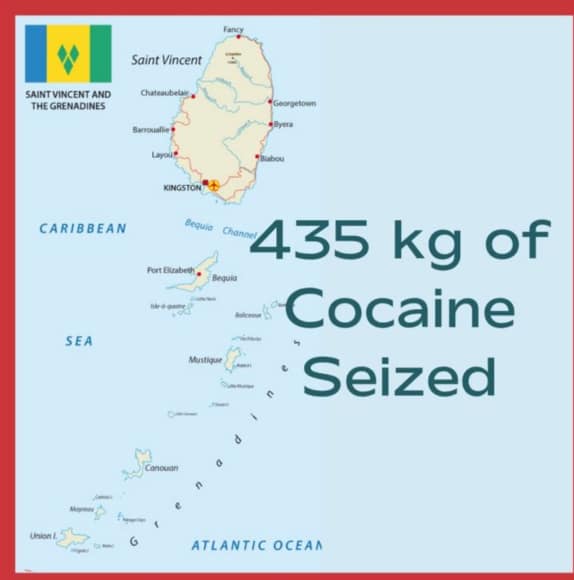
    The government of St. Vincent and the Grenadines is implementing a major enhancement of its volcanic surveillance capabilities for La Soufrière, the island’s most active volcano. This comprehensive strategy involves the creation of new technical positions, the installation of eight additional monitoring stations across the mountain, and significant technological upgrades to existing infrastructure. The initiative follows the volcano’s devastating explosive eruption in April 2021, an event that commenced with increased activity in December 2020. That eruption blanketed the island in ash, necessitated the evacuation of more than 20,000 residents, and caused extensive disruption over a four-month period of heightened activity, which culminated in its last major explosive event around April 22, 2021.

    The cornerstone of this effort is the recently renovated and retrofitted Volcano Observatory, a project financed by a concessional loan from the World Bank totaling EC$4.6 million (approximately US$1.7 million). During the facility’s handover ceremony, Disaster Management Minister St. Clair Leacock outlined the government’s commitment. Key roles, including a geoscientist and a seismic technician, are slated to be filled this year. The revitalized observatory is designed to facilitate advanced volcanic research, support community-based early warning systems, and host international academic studies. Furthermore, the National Emergency Management Organisation (NEMO) has been allocated an additional EC$1 million grant specifically for the procurement of seismic stations and state-of-the-art monitoring equipment.

    Minister Leacock highlighted the technical sophistication of the new systems and issued a public appeal against vandalism or theft of the critical equipment. He emphasized that the devices are essential for national safety, stating, ‘My Government will continue to ensure that the La Soufriere Monitoring Unit of NEMO continues to receive the support to ensure that La Soufriere volcano is constantly monitored.’ He also acknowledged and praised the foundational work in disaster preparedness and monitoring established by the previous administration, framing the new upgrades as a continuation of that vital legacy.

  • Haiti’s security forces target Barbecue’s ‘stronghold’ in operation

    Haiti’s security forces target Barbecue’s ‘stronghold’ in operation

    Haitian security forces launched a coordinated assault this week on the fortified headquarters of notorious gang leader Jimmy ‘Barbecue’ Cherizier in Port-au-Prince’s Delmas 6 district. The operation, conducted jointly by the Haitian National Police (PNH), Armed Forces of Haiti (FAD’H), and specialized Gang Suppression Force (GSF), targeted the core operational base of Cherizier’s ‘Viv Ansanm’ armed coalition.

    Visual evidence from the raid circulated online depicts substantial explosive ordnance detonating at the location, with at least one structure completely demolished and adjacent buildings suffering collateral damage. A massive plume of smoke billowed over the capital neighborhood following the explosion. Official casualty reports remain pending as authorities continue assessing the operation’s outcomes.

    The 48-year-old Cherizier, a former police officer turned gang leader, evaded capture during the assault. His Viv Ansanm alliance controls significant portions of Haiti’s capital and stands accused of perpetrating hundreds of killings, sexual violence incidents, and sustained armed confrontations against state security forces. The coalition’s stated objective involves overthrowing the provisional government established after President Jovenel Moise’s July 2021 assassination.

    International pressure against Cherizier continues mounting, with both United Nations sanctions and a US$5 million reward from the United States Department of State for information leading to his capture. This security operation coincides with Haiti’s approaching political milestone—the February 7 expiration of the current transitional government’s mandate.

    The Caribbean Community’s Eminent Persons Group recently urged Haitian stakeholders to prioritize national patriotism during this critical juncture, emphasizing self-determination for the crisis-stricken nation facing compounded security and governance challenges.

  • Bahamas opens globally recognised Category 5 hurricane shelter

    Bahamas opens globally recognised Category 5 hurricane shelter

    NASSAU, Bahamas – A state-of-the-art hurricane shelter engineered to withstand Category 5 storms has been officially activated on the island of Abaco, marking a significant advancement in climate resilience for the Caribbean region. This facility represents a trilateral collaboration between the governments of The Bahamas and India, alongside the United Nations Development Programme (UNDP).

    Designed to endure wind speeds exceeding 200 miles per hour, the shelter can accommodate up to 800 individuals during emergencies. Beyond its primary function as a disaster safe haven, the facility serves as a multi-purpose community center throughout the year. It features comprehensive solar power systems, advanced water harvesting capabilities, and disability-inclusive infrastructure, including accessible entry points and restroom facilities. The complex also contains an industrial kitchen, dedicated office space for emergency personnel, and outdoor areas for sporting activities.

    Financed through a $1 million grant from the India-UN Development Fund, the project was managed by UNDP with The Bahamas’ Disaster Risk Management Authority (DRA) serving as the national implementing partner. The Bahamian government contributed additional co-financing of $3.5 million for the initiative.

    Indian High Commissioner to The Bahamas, Shri Mayank Joshi, highlighted that the Abaco shelter has been recognized as a global best practice by the India-led Coalition for Disaster Resilient Infrastructure (CDRI). He emphasized that the project embodies the philosophical principle of ‘Vasudhaiva Kutumbakam’ – the concept that the world is one family – and demonstrates India’s solidarity with Small Island Developing States (SIDS) facing climate vulnerabilities.

    Leon Lundy, Minister of State for Disaster Risk Management, described the facility as a “beacon of hope” that will function as both a community development space during ordinary times and a critical sanctuary during extreme weather events. The Bahamian government plans to expand this shelter model to other vulnerable islands in the archipelago.

    UNDP Resident Representative Dr. Kishan Khoday praised the South-South cooperation model between The Bahamas and India, noting its potential for replication across other Caribbean SIDS. With the 2025 hurricane season setting new records for storm intensity, Khoday stressed the urgent need for scaled-up investments in climate-resilient infrastructure throughout the region.

    The completion of the Abaco shelter concludes UNDP’s post-Hurricane Dorian recovery support to The Bahamas, while the organization’s Multi-Country Office in Jamaica continues to expand climate resilience initiatives across the Caribbean in response to increasingly frequent and severe climate disasters.