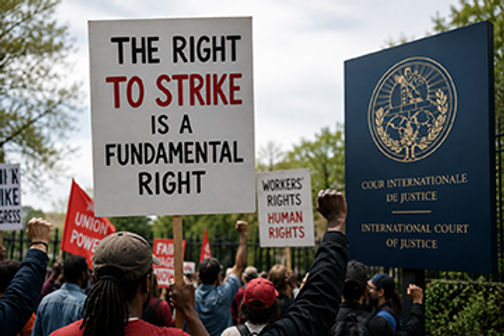
The International Court of Justice (ICJ), the United Nations’ highest judicial body, has issued a landmark advisory opinion that formally recognizes the right to strike as a protected entitlement under a foundational international labour agreement, a ruling projected to reshape labour legislation and industrial relations across every region of the globe. Delivered on Thursday by a 10-4 majority vote, the opinion confirms that the right to strike falls under the protections outlined in the International Labour Organization’s (ILO) 1948 Freedom of Association Convention, widely known as Convention 87. ICJ President Yuji Iwasawa articulated the court’s core conclusion: workers and their representative organizations hold a legal right to strike as an inherent component of the treaty’s guarantees for freedom of association and collective labour action. The legal question that reached the ICJ grew out of a decades-long disagreement between global employer associations and labour representative bodies. Though Convention 87’s text does not explicitly name the right to strike, the two sides have long debated whether the principle is implicitly guaranteed by the convention’s overarching protections. In an unusual step described as necessary to end the persistent deadlock, the ILO — the UN agency tasked with setting and upholding global labour standards — formally referred the dispute to the ICJ for clarification in November 2023, marking only a rare instance of the agency seeking ICJ intervention on an interpretation matter. While the court’s ruling carries no legally binding force, as it is an advisory opinion, legal experts and labour rights organizers widely agree it will wield significant international clout. Domestic courts in dozens of countries routinely reference ICJ opinions as authoritative interpretations of international law, giving the ruling de facto weight in national legal disputes over labour rights. Currently, 158 countries around the world have ratified Convention 87, meaning the ruling’s interpretation could apply to the vast majority of the global community. In laying out its reasoning, the ICJ noted that strikes are one of the most critical tools workers and trade unions rely on to advocate for their interests, negotiate better wages and working conditions, and improve overall labour standards. Judges further emphasized that the core right to freedom of association, the central pillar of Convention 87, cannot be fully realized without the ability of workers to engage in collective action, including strike action. Importantly, the court stressed that its ruling was deliberately narrow in scope. It did not set out specific parameters for how individual nations should structure strike regulations, nor did it define the exact conditions, allowed scope, or legal limitations that national governments can place on strike action within their domestic legal frameworks. Labour organizations across the world are expected to broadly welcome the decision, especially in nations where the right to strike remains heavily restricted, criminalized, or subject to ongoing legal dispute. The ILO welcomed the opinion, noting that it effectively brings a close to what the agency called a “long-standing difference of views” between employer and worker representatives over the correct interpretation of Convention 87. During oral proceedings before the ICJ, legal representatives for global trade union bodies emphasized that the dispute was far more than an abstract legal debate. They argued the outcome would have tangible, real-world impacts on the working conditions and rights of millions of workers across every industry and continent. With the ICJ’s ruling now on record, organized labour movements around the world fighting for formal recognition of strike protections under international labour standards gain substantial additional international legal backing for their advocacy. The decision sets a new global precedent for interpreting core labour rights, opening avenues for workers to challenge restrictive national labour laws in both domestic and international legal forums.
分类: world
-

OM eist 20 jaar gevangenisstraf in zaak dodelijk schietincident Van Idsingaweg
A high-profile criminal case involving a serving police officer accused of a fatal shooting has moved a step forward in Suriname’s judicial system, with public prosecutors formally requesting a 20-year unconditional prison term for the defendant identified as M.A.I. The sentencing demand was submitted to the Cantonal Court on May 21, stemming from the deadly shooting that occurred at an apartment complex on Van Idsingaweg in the Nickerie district back in October 2025.
According to case details laid out by the Public Prosecution Service (OM), the defendant, who was an active police officer at the time of the incident, is accused of fatally shooting the victim, A.W.J., using his official service weapon during a confrontation at the residential location. Prosecutors have laid out a body of evidence collected during the investigation to support their charges, including witness testimonies, forensic analysis, and other verified investigative findings. These materials confirm that the victim was unarmed and seated inside his personal vehicle when the shooting took place.
Further ballistic and forensic testing conducted by investigators links the bullet casings recovered at the crime scene directly to the service weapon issued to the defendant, a connection that prosecutors call highly probable. After reviewing all evidence, the OM has concluded that the legal threshold for a proven manslaughter conviction has been met beyond a reasonable doubt. Prosecutors have ruled out a more severe murder charge, however, noting that premeditation cannot be conclusively proven with the evidence currently available.
When determining the length of the requested sentence, prosecutors incorporated multiple aggravating circumstances that they argue warrant the severe 20-year demand. A key factor is the defendant’s misuse of his official police-issued service weapon, a tool provided to him to protect public safety rather than to engage in lethal violence. The prosecution also highlighted the extreme severity of the violence used, the fact that the killing unfolded in a quiet residential neighborhood, and the profound harm the incident has caused to the victim’s surviving family members and nearby residents. Additional factors that pushed for a harsher sentence include the defendant’s position of public trust as a law enforcement officer, and his failure to accept responsibility for his actions or demonstrate any insight into the harm he caused.
-

Jamaican fugitive wanted for murder in Saint Lucia jailed in US
A cross-Caribbean manhunt that spanned years reached a key milestone this Tuesday, as 33-year-old Jamaican national Orville Andrew Pernell — a suspect in a Saint Lucian murder who escaped custody twice before entering the U.S. under an assumed identity — was sentenced to nearly three years in federal prison on firearms charges. Following the completion of his sentence, U.S. authorities confirmed Pernell will be extradited to Saint Lucia to face the original murder charge that first put him on law enforcement radars across the region.
Pernell’s long history of flight from justice traces back to August 2020, when residents of Gros Islet, Saint Lucia reported hearing gunshots that led to the discovery of 45-year-old Cleus Alfred’s body. Two months later, local prosecutors officially charged Pernell with Alfred’s murder. He was first held at the Babonneau Police Station, where investigators say he used a sharp implement to cut through steel cell bars and escape alongside three other detainees, fleeing across the Caribbean to Jamaica.
Jamaican authorities recaptured Pernell in July 2021 via the Jamaica Constabulary Force’s elite Fugitive Apprehension Team, holding him at the Central Police lock-up to await extradition back to Saint Lucia. But just five months later, in December 2021, Pernell escaped custody a second time, remaining at large for nearly a year before attempting to enter the U.S.
U.S. Border Patrol first intercepted Pernell in December 2022 at the San Ysidro, California port of entry, where he presented himself for entry under the false name Oneil Christopher Reid. With immigration proceedings still pending, he was granted temporary entry and released on parole. Over the next two years, Pernell would run afoul of U.S. law enforcement multiple times: first in July 2023, when he was arrested for evading police, speeding, driving without a valid license, and possession of a stolen motorcycle and stolen 9mm handgun. He posted bail and was released within two months, only to be apprehended again in April 2025 in Hinesville, Georgia. A search of his Georgia residence turned up a second stolen handgun and a high-powered assault rifle equipped with a loaded high-capacity magazine.
By April 2025, the St. Lucia Times had already reported that Saint Lucian law enforcement was coordinating with U.S. authorities to secure Pernell’s extradition once he was taken into custody. On February 11, 2026, Pernell entered a guilty plea to one count of illegal firearm possession by an undocumented alien, the charge that led to this week’s sentencing. District Judge Tiffany R. Johnson handed down a 33-month prison term, a sentence that federal prosecutors say fits the gravity of Pernell’s repeated endangerment of U.S. communities.
In an official statement released the same day as the sentencing, U.S. Attorney Theodore S. Hertberg emphasized the scope of Pernell’s criminal trajectory. “After he was charged with murder, Pernell escaped custody twice in the Caribbean, entered the United States under a different identity, and then repeatedly endangered our community through his possession of stolen and high-powered firearms,” Hertberg said.
Law enforcement officials also noted that even while in pretrial federal custody, Pernell continued efforts to escape, repeatedly damaging his cell walls in an apparent attempt to break free. Senior agency leaders framed the conviction and sentencing as a victory for transnational law enforcement cooperation. ATF Atlanta Division Assistant Special Agent in Charge Ryan Todd highlighted the role of federal firearms investigators in removing dangerous offenders from American communities, saying “This case highlights ATF’s critical role in tracing illegal firearms, disrupting trafficking networks, and ensuring dangerous offenders are removed from our communities.”
Steven N. Schrank, Special Agent in Charge of Homeland Security Investigations for Georgia and Alabama, echoed that commitment to accountability. “No one who flees justice abroad and threatens public safety in the United States will escape accountability,” Schrank said. “Through the coordinated efforts of HSI and our partners, Pernell has been apprehended, convicted, and when his sentence concludes, will be returned to face murder charges in Saint Lucia.”
-
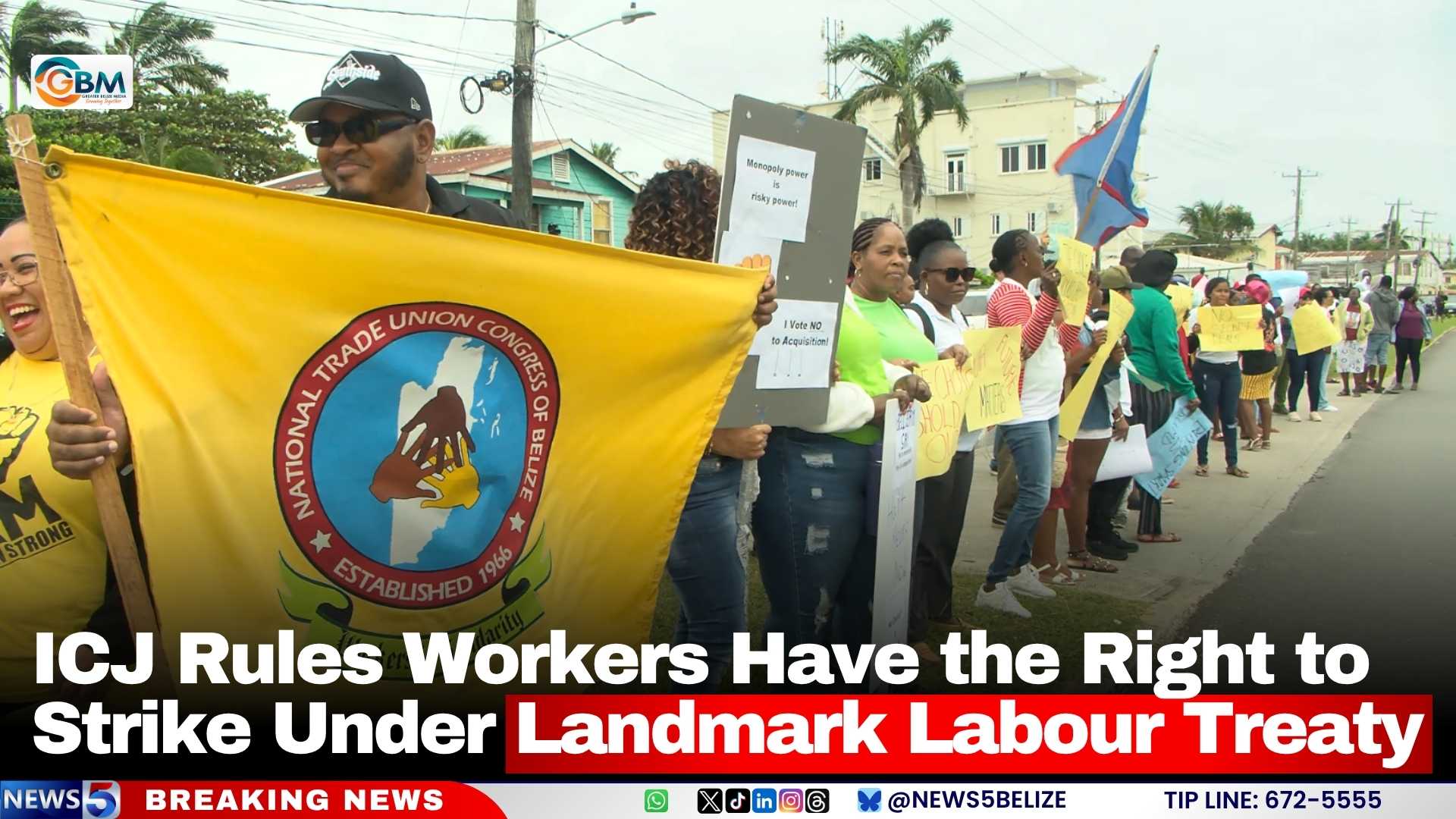
ICJ Rules Workers Have the Right to Strike Under Landmark Labour Treaty
In a historic decision that closes a 14-year impasse in global labor governance, the International Court of Justice (ICJ) has formally confirmed that the right to strike is legally protected under the International Labour Organization’s (ILO) landmark 1948 Convention No. 87, the Freedom of Association and Protection of the Right to Organize. The ruling marks a watershed victory for labor movements across the globe, resolving a bitter dispute that has frozen progress on global labor standards since 2012.
Announcing the court’s finding on May 21, 2026, ICJ President Yuji Iwasawa stated the bench unanimously agreed that workers and their representative organizations hold a protected right to strike under the terms of the convention. Judges also clarified that the advisory opinion, while not legally enforceable, does not set out additional operational rules governing strike action, limiting its scope to the core interpretive question. The ILO Governing Body will next review the ruling and plan follow-up actions during its 358th scheduled session this coming November.
The legal dispute originated more than a decade ago, when employer representatives to the ILO rejected the long-held understanding that the right to strike is an inherent corollary of the right to collective bargaining. From 2012 onward, these groups systematically blocked findings from the ILO’s independent supervisory bodies on the issue, creating a deadlock that persisted for 11 years. In 2023, the impasse reached a breaking point, and the ILO took the unprecedented step of referring the question of treaty interpretation to the ICJ for an advisory opinion. This referral marked only the second time in the ILO’s century-long history that the body had sought advisory input from the ICJ, and the first time the court—founded in 1945 alongside the United Nations—has addressed a question of international labor convention interpretation.
The high stakes of the case cannot be overstated: Convention No. 87 counts 158 member states as formal parties, making it one of the most widely ratified core labor standards in the world. It is classified as one of the ILO’s 11 fundamental instruments, meaning all ILO member states are required to uphold and promote its core principles regardless of whether they have completed formal ratification.
Harold Koh, who represented the International Trade Union Confederation (ITUC) during public hearings held in October 2025, emphasized that the ruling extended far beyond abstract legal debate. Speaking to the court during proceedings, Koh noted the outcome would shape the daily working rights of tens of millions of workers across every region of the world. He warned that a ruling against the right to strike would have created a roadmap for employer groups and friendly governments to roll back labor protections country by country, targeting nations with weaker judicial independence, underdeveloped civil society, and restricted press freedom.
While the ICJ’s opinion carries no binding legal weight, labor analysts widely agree it holds substantial persuasive authority both within the ILO governance framework and across national legal systems. Experts predict the ruling will drive progressive reforms to domestic labor laws and industrial relations frameworks in dozens of jurisdictions in the coming years, strengthening collective bargaining power for workers globally.
-
Campbell waits for own survey an overfished marine species
A recent peer-reviewed scientific study has sounded the alarm over widespread overfishing of key commercial marine species across The Bahamas’ waters, but Bahamian officials say they will hold off on crafting regulatory changes until they can complete an independent domestic fisheries assessment. The study, published this week by the Perry Institute for Marine Science (PIMS), analyzed 72 years of historical catch data stretching from 1950 to 2022, and found that 11 out of the 12 commercially valuable species included in the assessment were suffering from varying degrees of overexploitation.
Among the most at-risk populations, the study labeled Nassau grouper and yellowfin grouper as “grossly overfished”. Research data showed yellowfin grouper populations currently hold just 40 percent of the total biomass required to maintain a sustainable long-term harvest, while Nassau grouper populations sit at only 49 percent of that sustainable threshold. Other species flagged as overfished include queen conch, Caribbean spiny lobster, and black grouper, all of which the study identifies as the “backbone” of The Bahamas’ domestic seafood market. The report warns that ongoing population declines of these iconic species pose a direct threat to national food security and the stability of local seafood supply chains.
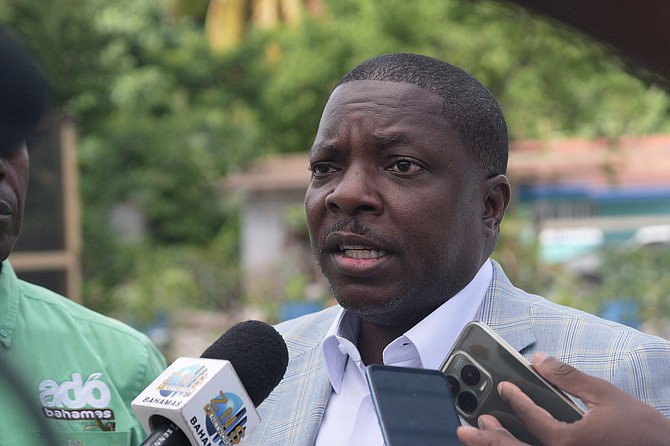
Speaking to reporters at a community farming event this week, Agriculture and Marine Resources Minister Jomo Campbell confirmed that ministry staff have reviewed the PIMS findings, but stopped short of endorsing the study’s conclusions. “That was one report,” Campbell told journalists, when asked whether there was risk that future generations of Bahamians could lose access to these culturally and economically important traditional seafood species. “What we first have to establish based on our findings is in fact whether there is overfishing and in what sectors.”
Campbell explained that the Bahamian Department of Marine Resources, led by Acting Director Dr. Gittens, is already in the process of conducting its own independent fisheries survey. Once the domestic assessment is complete, ministry officials will compare the two datasets, gather input from stakeholders across the Bahamian fishing industry, and then develop a formal evidence-based action plan to address any identified issues. Campbell added that the government expects to release its response to the overfishing concerns “in short order” after the internal survey is finalized.
PIMS officials noted they have prepared to share their full dataset and findings with the Department of Marine Resources and national fisheries management working groups, as the government undertakes a broader review of revisions to the country’s national fisheries regulations. In a separate update on the Golden Yolk agricultural development initiative, Campbell confirmed that a second media tour of the project is scheduled to take place within the coming weeks.
-
U.S. Warns of Travel Disruptions and Enhanced Ebola Checks for Incoming Passengers
In two consecutive official alerts issued earlier this year, U.S. federal agencies have rolled out new public health restrictions for incoming travelers and upgraded security warnings for American citizens traveling or residing overseas.
The most recent public health update, published by U.S. authorities on May 21, 2026, introduces mandatory enhanced Ebola screening for all eligible travelers entering the United States who have visited three central African nations in the three weeks prior to their arrival. This rule applies not only to foreign travelers but also to U.S. citizens and lawful permanent residents (LPRs) who have been present in the Democratic Republic of the Congo, Uganda, or South Sudan. All covered travelers are required to enter the country exclusively through Washington Dulles International Airport (IAD), where the U.S. Centers for Disease Control and Prevention (CDC) and the Department of Homeland Security’s (DHS) Customs and Border Protection (CBP) will conduct the heightened public health checks. The alert notes that the new entry requirement is a direct response to an ongoing Ebola outbreak in the region, and advises travelers to prepare for potential last-minute flight changes or cancellations that may disrupt travel plans.
A separate security alert, issued by the U.S. Department of State on March 22, 2026, calls for increased vigilance among all American citizens located around the globe, with a particular warning for those in the Middle East. The Department of State warns that U.S. diplomatic facilities and interests have been targeted in attacks both within and outside the Middle East, and that pro-Iran groups may carry out additional strikes against U.S. assets, U.S.-affiliated locations, and American citizens across the world. The alert also notes that intermittent airspace closures in affected regions are likely to cause widespread travel disruptions for international travelers.
Both alerts outline clear steps for affected individuals to stay updated on changing conditions. Travelers bound for the U.S. are encouraged to review the full DHS alert on enhanced Ebola screening, check consular information for the outbreak, confirm their flight itinerary and entry route directly with their airline, and enroll in the State Department’s Smart Traveler Enrollment Program (STEP) to receive real-time safety updates. For U.S. citizens overseas, the State Department advises following all guidance issued by the nearest U.S. embassy or consulate, enrolling in STEP through the official portal step.state.gov, subscribing to the U.S. Department of State Security Updates channel on WhatsApp for immediate alerts, and reviewing the latest Travel Advisory and destination-specific information on the official travel.state.gov website before planning any international trips.
-
US Embassy Advises Americans to exercise “normal caution” in updated travel advisory on Antigua and Barbuda
In an official public notice released on May 20, 2026, the U.S. Embassy based in Barbados, which maintains consular jurisdiction over Antigua and Barbuda, Dominica, Grenada, St. Kitts and Nevis, St. Lucia, and St. Vincent and the Grenadines, has issued a revised travel advisory for U.S. citizens planning trips to Antigua and Barbuda. The advisory opens with a clear assessment of the island nation, noting that overall, Antigua and Barbuda remains a safe travel destination for international visitors from the United States.
Despite the general positive safety assessment, the advisory highlights one key recurring risk that all travelers must prepare for: the regular annual threat of hurricanes that impacts the Eastern Caribbean region, including Antigua and Barbuda. The embassy strongly advises all prospective travelers to review the State Department’s dedicated public resources covering weather patterns and natural disaster preparedness specifically for Antigua and Barbuda before finalizing travel plans.
To help travelers proactively prepare for safe and seamless trips, U.S. diplomatic officials encourage all U.S. citizens to consult the comprehensive travel guidance published for the country, which outlines key steps to mitigate common travel risks. For those who do confirm travel plans to Antigua and Barbuda, the embassy outlines several critical actions visitors should take to protect themselves during their stay.
Foremost among these recommendations is enrollment in the Smart Traveler Enrollment Program, better known as STEP, the U.S. State Department’s official traveler registration system. By enrolling in STEP, travelers will receive real-time updates and safety alerts directly from the nearest U.S. embassy or consulate. The program also enables diplomatic staff to quickly locate and contact travelers, or their designated emergency contacts, in the event of a crisis, natural disaster, or other unforeseen emergency.
Beyond STEP enrollment, the advisory outlines additional key preparation steps. Travelers are urged to review the latest Country Security Report for the Eastern Caribbean subregion, which provides up-to-date context on local security conditions. They should also check the most recent travel health guidance published for Antigua and Barbuda to understand any current public health protocols or risks.
Whether traveling to the islands for the first time or returning as a frequent visitor, the embassy recommends all U.S. citizens use the official International Travel Checklist published by the State Department to organize their pre-trip preparations. Finally, diplomatic officials advise all travelers to reach out to their chosen travel insurance provider well in advance of departure to confirm that their policy includes coverage for emergency medical evacuation, comprehensive medical insurance, and trip cancellation protection in the event plans need to be altered due to unforeseen circumstances.
-

Wanted Jamaicans deported after being found hiding in Federation
BASSETERRE, St. Kitts — A cross-security force cooperation in the Federation of St. Kitts and Nevis has taken two high-profile Jamaican fugitives off the region’s streets, with the pair now back in Jamaica to answer for serious violent criminal charges they face at home.
The Royal St. Christopher and Nevis Police Force (RSCNPF) confirmed the successful operation in an official media release distributed Wednesday evening, noting that law enforcement officers worked alongside the St. Kitts-Nevis Defence Force (SKNDF) to track and apprehend the two men, who had been hiding in the federation for an undisclosed period. The fugitives have been identified as Kemar Matthews and Clevone Harris.
The joint law enforcement team captured the two suspects in two separate targeted operations carried out on May 18 and May 20, 2026, respectively. Jamaican law enforcement agencies have been actively searching for the pair, who are wanted on charges of murder and intentional wounding, according to official filings.
In an update just 24 hours after the release of the operation announcement, police confirmed that both men completed the repatriation process and were back in Jamaican custody by 1:00 p.m. local time on May 21. At the time of publication, authorities have not released any further information about the specifics of the deportation process or additional operational details surrounding the arrest operations.
-
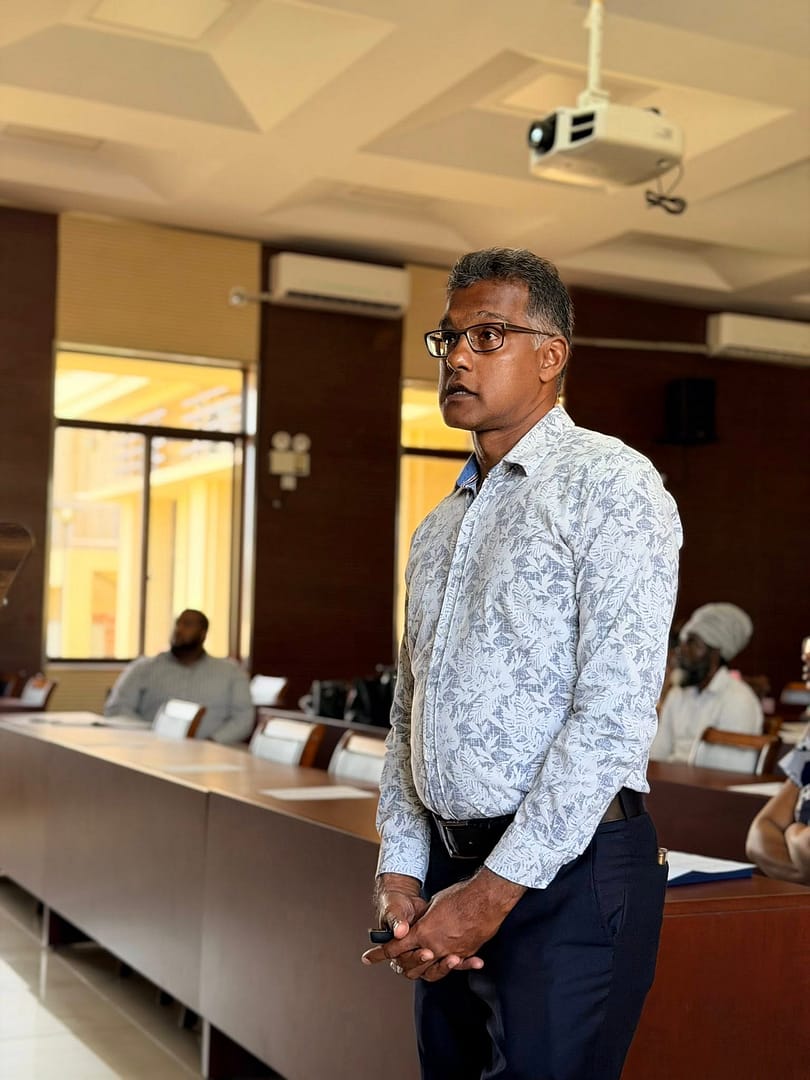
Antigua and Barbuda Explores Turning Waste Into Energy
The twin-island Caribbean nation of Antigua and Barbuda has launched an exploratory push to convert accumulated waste into usable electricity, marking a bold step toward solving two pressing national challenges at once: growing solid waste management pressures and a heavy reliance on costly imported fossil fuels.
For years, the small island developing state has grappled with limited landfill space, as rapid tourism growth and population expansion have pushed existing waste disposal sites close to maximum capacity. At the same time, the country’s energy sector has long depended on imported oil and gas, leaving electricity prices volatile and national budgets strained by global energy market fluctuations. Officials in Antigua and Barbuda argue that a waste-to-energy system could simultaneously shrink the volume of waste going to landfills by up to 90% through incineration and generate baseload power to reduce the country’s import dependency.
Early-stage discussions are currently underway between national government agencies, international development partners, and private sector infrastructure firms to assess the technical feasibility, financial viability, and environmental impact of building a full-scale waste-to-energy facility. Project backers note that unlike many renewable energy sources such as solar and wind, which are intermittent, waste-to-energy produces consistent power around the clock, making it a valuable complement to Antigua and Barbuda’s ongoing transition to cleaner energy. The government has also emphasized that any developed facility will meet strict international emissions standards to minimize air quality risks for local communities.
Critics of the proposal, however, have raised concerns about the potential for greenhouse gas emissions from incineration, as well as the high upfront capital costs of constructing such a facility. Some local environmental groups have instead advocated for scaling up recycling and waste reduction programs as a cheaper, more environmentally friendly alternative. Despite these debates, the government remains committed to moving forward with feasibility studies, with preliminary findings expected to be released within the next 12 months to guide future policy decisions.
-
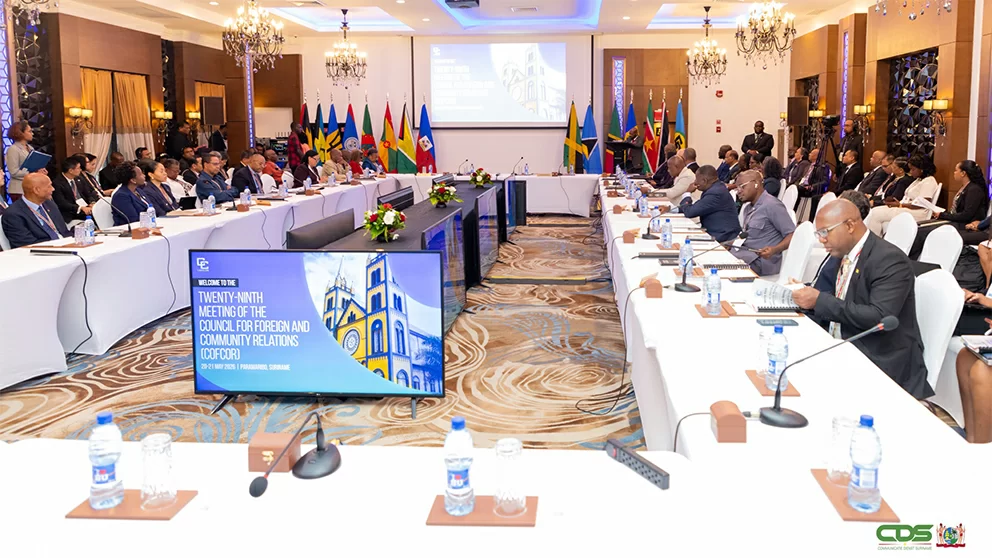
Caricom-leden bijeen in Suriname: focus op multilaterale samenwerking en regionale uitdagingen
The 29th regular session of the Council for Foreign and Community Relations (Cofcor) kicked off in Paramaribo, Suriname, bringing together top foreign affairs officials from across the Caribbean Community (Caricom) to deliberate pressing regional and global policy challenges that shape the bloc’s future.
Chaired by newly installed Cofcor chair Melvin Bouva, Suriname’s Minister of Foreign Affairs, the meeting centers on two core priorities: deepening bilateral and multilateral cooperation between member states, and laying coordinated groundwork for the bloc’s participation in two major international summits scheduled for later this year. These high-stakes gatherings include the Commonwealth Heads of Government Meeting (CHOGM) set to be hosted by Antigua and Barbuda, as well as the 81st United Nations General Assembly in New York.
Opening proceedings featured a formal welcome for new foreign ministers appointed by member states, including representatives from Barbados and St. Vincent and the Grenadines, alongside formal recognition of re-appointed ministers from Antigua and Barbuda and The Bahamas. The bloc reaffirmed its longstanding commitment to democratic governance, noting that 10 Caricom member states have held peaceful democratic elections over the past 18 months, with independent observer missions deployed to safeguard the integrity of each electoral process.
A key working focus of the 29th session is addressing the far-reaching ripple effects of global and hemispheric geopolitical and economic shifts, which have exerted growing pressure on regional economies, trade frameworks, and foreign policy positioning. Attendees are also discussing plans to expand strategic diplomatic ties with extra-regional partner nations, including Japan, Singapore, and the United Arab Emirates.
In the lead-up to the year’s major multilateral events, Caricom is aligning its shared agenda to amplify core priorities on global platforms. Key issues the bloc will push for include advancing climate justice, delivering critical international support for crisis-hit Haiti, and strengthening global peace and security frameworks that account for the needs of small island developing states.
Caricom Secretary-General Carla Barnett opened the gathering by extending gratitude to the government and people of Suriname for their warm hospitality as host nation. She also paid tribute to outgoing Cofcor chair Denzil Douglas of St. Kitts and Nevis for his steady leadership over the preceding term.
Barnett emphasized that the collective power of the Caribbean Community stems from its unified diplomatic voice, an asset that is indispensable to shaping global decision-making and protecting the sovereign interests of small Caribbean states. While acknowledging that aligning the diverse national priorities of 15 independent member states remains a complex, ongoing challenge, Barnett stressed that coordinated collective action is non-negotiable for the bloc to navigate mounting global uncertainty. Every policy decision reached through Caricom collaboration, she noted, has a direct, tangible impact on the daily well-being of millions of Caribbean citizens. Participants have articulated a clear goal: the 29th Cofcor meeting will deliver concrete, actionable outcomes to strengthen the region’s resilience and positioning amid a rapidly shifting international order.