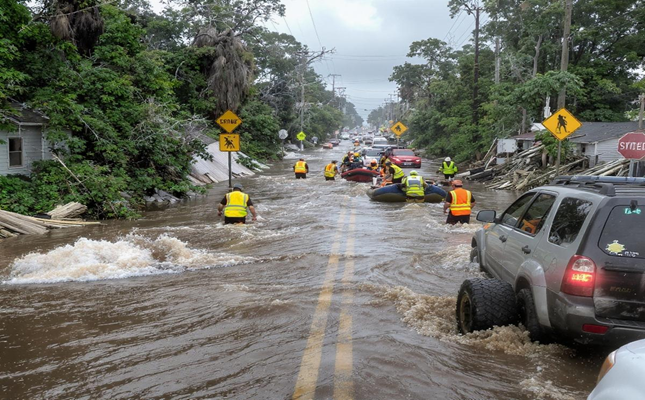
BRIDGETOWN, Barbados – April 17, 2026 – In a major step to strengthen climate and disaster resilience across the Caribbean, the Caribbean Development Bank (CDB) has greenlit a $346,000 technical assistance grant for the Caribbean Disaster Emergency Management Agency (CDEMA), the regional body tasked with coordinating cross-country disaster risk reduction and emergency response under the CARICOM umbrella.
The funding, backed by the European Union through the Intra-African Caribbean Pacific European Union Natural Disaster Risk Reduction Programme and delivered under CDB’s Caribbean Action for Resilience Enhancement (CARE) initiative, will support a full institutional assessment of CDEMA to refine its operational and organizational framework. Specialist consultants contracted through the grant will conduct a deep dive into the agency’s current structure, operating systems, staffing models, and skills gaps to deliver actionable recommendations for long-term effectiveness and sustainability.
Beyond core organizational review, the consultancy will also audit existing human resources policies through a gender equity lens, resulting in a dedicated Gender Policy and Operational Strategy that will guide equitable practices across recruitment, employee retention, promotion, and compensation structures.
As climate change drives an increase in the frequency and intensity of extreme weather events across the Caribbean, regional disaster coordination systems face mounting pressure to adapt and scale their response. CDB Projects Director O’Reilly Lewis emphasized that the investment comes at a critical moment for the region. “Climate change is driving more intense natural hazards across the Caribbean, and that reality places growing demands on regional disaster management systems,” Lewis explained. “CDEMA is integral to how countries prepare for and respond to emergencies, and this technical assistance will help ensure the Agency has the right structure, skills, and systems to deliver on its mandate today and into the future.”
European Union Ambassador to Barbados, the Eastern Caribbean States, and the OECS Fiona Ramsey noted that the initiative aligns with the EU’s longstanding commitment to partnership with the Caribbean on climate resilience. This commitment was recently reaffirmed as a core priority in discussions between CARICOM Chair (at the time) Mia Mottley and European Commission President Ursula von der Leyen. “As climate-related challenges intensify, enhancing CDEMA’s institutional capacity is essential to safeguarding lives, livelihoods, and sustainable development across the Caribbean,” Ramsey said. “Together, we are advancing a shared vision of resilience through a reliable partnership.”
For CDEMA, the assessment marks a key milestone in the agency’s ongoing organizational transformation, which is outlined in its 2022–2027 Strategic Plan. “This consultancy marks a pivotal step in CDEMA’s evolution as we position the Agency for both present demands and future challenges,” said CDEMA Executive Director Elizabeth Riley. “We are committed to transforming CDEMA into a stronger, more agile, and technically driven organisation, equipped with the skills and systems required to meet the growing complexity of disaster risk management in the Caribbean. We are proud to partner with the European Union and the Caribbean Development Bank on this game-changing initiative, which will modernise our organisational structure and enhance our capacity to serve Participating States with excellence, innovation, and impact.”
This institutional assessment is the first phase of a broader reform agenda designed to put CDEMA on a more stable, sustainable long-term footing. Its findings will also inform parallel ongoing work led by the World Bank to create a Multi-Source Trust Fund that will provide consistent, long-term financing for the agency. Combined, these initiatives will strengthen CDEMA’s ability to deliver on its full comprehensive disaster management mandate, spanning mitigation, preparedness, emergency response, and post-disaster recovery across the region.
Implementation of the technical assistance project is scheduled to launch in May 2026, and aligns directly with CDB’s newly launched 10-Year Strategic Plan for 2026–2035, which identifies strengthening regional institutions as a critical driver for building community resilience, accelerating inclusive economic growth, and advancing sustainable development across the Caribbean.