分类: world

  • NATO intercepts second Iran missile in Turkish airspace

    NATO intercepts second Iran missile in Turkish airspace

    Turkish airspace witnessed its second interception of an Iranian ballistic missile within five days, prompting heightened security measures across the region. NATO defense systems successfully neutralized the inbound projectile over the eastern Mediterranean on Monday, according to official statements from Ankara’s defense ministry.

    The incident triggered immediate diplomatic repercussions as the United States Embassy suspended operations at its Consulate General in Adana and issued urgent evacuation directives for American citizens throughout southeastern Turkey. Official communications emphasized that non-emergency U.S. government personnel and their family members were ordered to depart immediately due to escalating security risks.

    This security crisis originates from retaliatory actions initiated by Iran following joint U.S.-Israeli offensive operations that commenced on February 28, 2026. While Turkey has largely remained unaffected despite hosting multiple U.S. military installations, the recent missile incidents have dramatically altered the security calculus.

    Critical infrastructure includes the strategically vital Incirlik Air Base, located merely 10 kilometers from Adana, which serves as a pivotal NATO facility with decades-long U.S. military presence. Spanish troops manning Patriot missile batteries at the base provided early detection and reporting of the missile attack, though interception was handled by broader NATO defense assets.

    Fragments from the destroyed missile landed harmlessly in open territory near Gaziantep, approximately 200 kilometers east of Adana. Local authorities confirmed debris impacted an uninhabited construction site in the Guneysehir district, causing no injuries or significant damage. Eyewitness accounts described sudden loud impacts initially mistaken for construction activity before missile remnants were identified.

    Presidential communications chief Burhanettin Duran reiterated Turkey’s unwavering commitment to protecting its territorial integrity while issuing stern warnings to all regional actors, particularly Iran, against endangering civilian populations and regional stability. The March 4th interception had previously prompted NATO to enhance its ballistic missile defense readiness across the region.

  • UN says in talks with US on humanitarian fuel supplies for Cuba

    UN says in talks with US on humanitarian fuel supplies for Cuba

    The United Nations has initiated diplomatic discussions with the United States government to secure humanitarian exemptions to the stringent oil embargo currently imposed on Cuba. UN Coordinator Francisco Pichon confirmed to AFP that these negotiations aim to facilitate fuel access specifically for emergency relief operations and vulnerable population support services.

    According to Pichon, UN representatives have engaged in substantive exchanges with the Trump administration to guarantee fuel availability for critical humanitarian functions. These discussions specifically address the energy requirements of Cuban non-governmental organizations partnering with UN agencies, along with state-operated healthcare facilities serving elderly citizens, pregnant women, and other vulnerable demographic groups.

    This diplomatic development occurs against the backdrop of President Trump’s intensified sanctions regime targeting Cuba’s communist government. Following similar measures against Iran and Venezuela, the administration implemented a comprehensive energy blockade in January that has severely constrained Cuba’s economic functions. The embargo has resulted in a complete halt of oil shipments to the island nation for two consecutive months, creating cascading effects across multiple sectors.

    Commercial aviation has been particularly affected, with multiple airlines reducing or suspending flight operations to Cuba due to fuel unavailability. The country’s power generation infrastructure and agricultural sector face critical fuel shortages, bringing daily economic and social activities to near paralysis. President Trump recently informed Latin American allies that Cuba approached its ‘final moments of life’ under current conditions.

    The UN itself faces operational challenges within Cuba, with Pichon confirming that strict fuel rationing has compromised the organization’s capacity to execute its humanitarian mandate. Field operations have been largely suspended, while UN agencies struggle to retrieve and distribute aid shipments from ports and airports due to transportation constraints.

    Cuban leadership under President Miguel Diaz-Canel has implemented emergency fuel conservation measures, including stringent rationing protocols. The government maintains that the Trump administration’s policies represent a deliberate attempt to destabilize Cuba’s economy and political system. Washington justifies the embargo by characterizing Cuba as an ‘extraordinary threat’ to United States interests, continuing a long-standing geopolitical stance toward the Caribbean nation.

  • Trump says Australia will grant asylum to Iran women footballers

    Trump says Australia will grant asylum to Iran women footballers

    GOLD COAST, Australia – A diplomatic and humanitarian situation has unfolded involving members of Iran’s national women’s football team, who are seeking asylum in Australia following their silent protest during a recent international match. The players’ decision to refrain from singing their national anthem is widely perceived as a symbolic act of defiance against the Iranian regime, occurring just days after military strikes by the United States and Israel.

    Former U.S. President Donald Trump announced on his Truth Social platform that he had engaged in discussions with Australian Prime Minister Anthony Albanese regarding the athletes’ plight. Trump revealed that five team members had already received provisional protection while others reportedly expressed concerns about returning home due to potential threats against their families in Iran.

    Australian Broadcasting Corporation sources indicate that the five players have been secured by Queensland police after leaving their team accommodations on the Gold Coast. The Australian government has maintained official silence on whether asylum applications will be formally granted, though Foreign Minister Penny Wong previously stated Australia’s “solidarity with the people of Iran.”

    International pressure for protection has mounted from multiple quarters, including Reza Pahlavi (son of Iran’s former Shah), human rights organizations, politicians, and even author J.K. Rowling, who publicly appealed for the players’ safety. The situation has drawn global attention to the risks faced by athletes who engage in political protest.

    Iranian state media previously labeled the players “wartime traitors” for their silent demonstration, though the team subsequently participated in anthem rituals during later matches. Public demonstrations outside tournament venues featured chants of “save our girls” and calls for regime change in Iran.

    Amnesty International representative Zaki Haidari warned that returning players could face severe punishment, including potential persecution of family members in Iran. The organization emphasized that the athletes might have limited opportunity to seek asylum before potential repatriation.

    The Iranian embassy in Australia has not provided official comment on the developing situation.

  • Escalatie in VS-Iran conflict: Oekraïne biedt steun aan Saudi-Arabië tegen Iraanse drones

    Escalatie in VS-Iran conflict: Oekraïne biedt steun aan Saudi-Arabië tegen Iraanse drones

    The Middle East faces unprecedented escalation as military confrontations between the United States and Iran intensify, with expanding regional repercussions and global economic implications. Iranian forces have launched sustained attacks against American bases and allied installations across the Gulf region, while simultaneously, Ukraine has emerged as an unexpected player in the conflict by offering its hard-earned drone warfare expertise to Saudi Arabia and other Gulf states.

    Ukrainian President Volodymyr Zelenskyy announced via social media platform X that he has engaged in direct discussions with Saudi Crown Prince Mohammed bin Salman regarding cooperative measures to counter the Iranian drone threat. This development marks a significant geopolitical shift as Ukraine, having developed extensive experience intercepting Iranian-designed Shahed drones through its conflict with Russia, now positions itself as a defense technology exporter to wealthy Gulf nations.

    The Ukrainian defense industry has pioneered cost-effective drone interception systems that present a viable alternative to expensive American missile defense systems. While Iranian Shahed drones cost approximately $30,000 per unit and Patriot PAC-3 interceptor missiles require millions per launch, Ukraine produces interception drones for merely $1,000-$2,000 each, creating a potentially game-changing economic advantage in aerial defense warfare.

    Meanwhile, the United States and Israel have conducted precision airstrikes against Iranian strategic targets, including oil storage facilities and refineries in Tehran, resulting in significant fires throughout the Iranian capital. Top Iranian official Ali Larijani warned that the U.S. would ‘pay a high price’ for its military actions, while former President Donald Trump has threatened to further escalate strikes against Iranian interests.

    Despite Iranian President Masoud Pezeshkian’s official apology to neighboring nations for collateral damage, Iranian rocket and drone attacks continue against American bases throughout the United Arab Emirates, Kuwait, Qatar, Bahrain, and Saudi Arabia. Pezeshkian’s conciliatory gestures faced immediate criticism from hardline elements within Iran’s Revolutionary Guard, who emphasized that military responses would continue unabated.

    The Israel-Iran front has similarly intensified, with Prime Minister Benjamin Netanyahu vowing to continue military operations with ‘full force’ against Iranian targets. Israeli airstrikes against Hezbollah positions in Lebanon have resulted in hundreds of casualties, dramatically increasing regional tensions.

    The conflict’s economic impact continues to expand with reduced oil production in Kuwait, Iraq, and Qatar driving global oil prices to multi-year highs. The strategic Strait of Hormuz has become effectively closed to shipping, placing tremendous pressure on worldwide energy supplies and threatening global economic stability.

    In a controversial diplomatic move, former President Trump reiterated demands for Western involvement in selecting Iran’s next Supreme Leader, a proposal immediately rejected by Iranian leadership. Hardline clerics in Tehran are reportedly preparing for rapid appointment proceedings to ensure continuity in Iran’s political leadership structure.

  • Forest fires, a constantly increasing problem in the Dominican Republic over the last six years

    Forest fires, a constantly increasing problem in the Dominican Republic over the last six years

    A stark new analysis of government data reveals the Dominican Republic is experiencing a severe and accelerating wildfire crisis, mirroring a troubling global pattern identified by the World Resources Institute. The nation has witnessed a dramatic 57% increase in forest fires, with 2,558 incidents recorded between 2020 and 2025 compared to 1,630 in the preceding six-year period (2014-2019).

    Geospatial analysis pinpoints La Vega province as the nation’s wildfire epicenter, reporting 492 incidents over the last five years. Within this region, the municipalities of Constanza and Jarabacoa are persistently the most affected, appearing in fire reports nearly every month of every year. The crisis extends beyond La Vega, with the provinces of Dajabón, Santiago, and Santiago Rodríguez each reporting over 200 fires in the past six years. The border municipality of Restauración (Dajabón) exhibits one of the highest incident densities, frequently reporting multiple fires within short timeframes, often alongside neighboring areas like Loma de Cabrera.

    While frequency is concentrated in the north, the most severe fires in terms of land area consumed have ravaged the south. The province of Pedernales suffered the single most devastating fire of the period in January 2022, which devoured approximately 1,300 acres. San Juan province ranks second for area impacted, enduring a series of catastrophic blazes in 2023 and 2024, including two fires just two days apart in March 2023 that torched a combined 120,000 acres. Azua province also experienced extreme severity, with a single fire in March 2023 affecting over 1,000 acres in the municipality of Padre Las Casas.

    The year 2023 emerged as the peak of the crisis with 873 fires, more than any other year in the dataset. A critical finding is the concentration of these disasters in the year’s first quarter. The months of March and April 2023 alone accounted for 492 fires, representing over half of the year’s total. This period aligns with the annual peak of drought conditions and agricultural land preparation, where daily fire counts can exceed 15 simultaneous events across the country.

    The data, sourced from the Ministry of Environment and Natural Resources via the Government’s Open Data portal, details the date, location, and scale of each fire from January 2014 to December 2025 but does not specify causes or origins. As these intensifying wildfires contribute to global forest loss, their impact extends beyond biodiversity loss to include the destruction of homes, infrastructure, and widespread pollution of ecosystems.

  • Arrested and deported In coordination with the U.S., a man who had been a fugitive for 16 years for homicide is captured

    Arrested and deported In coordination with the U.S., a man who had been a fugitive for 16 years for homicide is captured

    In a significant international law enforcement operation, a fugitive evading Dominican justice for 16 years has been apprehended through coordinated efforts between U.S. and Dominican authorities. The capture marks the conclusion of one of the Caribbean nation’s longest-running manhunts.

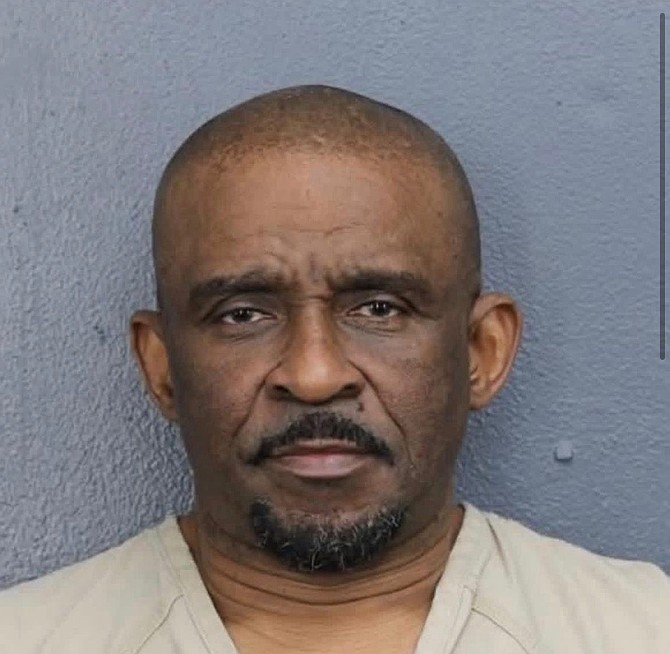
    The subject, identified as 65-year-old Ygnacio Ney Díaz, commonly known by the alias ‘Bácora,’ was deported from United States territory via a specially coordinated immigration enforcement flight. His arrival at Dr. José Francisco Peña Gómez Las Américas International Airport (AILA) culminated in immediate arrest by awaiting National Police officials.

    Díaz’s legal troubles originate from a violent incident dated December 17, 2010, in Barahona province. Dominican judicial authorities had issued arrest warrant No. 2909-2011 on February 1, 2011, charging him with homicide alongside multiple violations under the nation’s Weapons Law, including illegal trade, carrying, and possession of firearms.

    The breakthrough came through the Organized Crime Network (OCN) unit of INTERPOL Santo Domingo, which verified Díaz’s status under an active Red Notice—an international request to locate and provisionally arrest an individual pending extradition. This verification triggered coordinated surveillance and capture procedures with U.S. Immigration and Customs Enforcement (ICE).

    Following his arrest, Díaz was transferred to the custody of the Public Prosecutor’s Office, where he will face formal judicial proceedings for the alleged crimes. The operation demonstrates enhanced bilateral security cooperation between the United States and the Dominican Republic in combating cross-border crime and apprehending long-term fugitives.

  • Partial closure of Barbados airspace was due to staff shortage, minister says

    Partial closure of Barbados airspace was due to staff shortage, minister says

    A critical staff shortage within Barbados’s air traffic control services triggered a significant seven-and-a-half-hour closure of the island’s airspace on Saturday, causing widespread disruption at Grantley Adams International Airport (GAIA). The incident led to numerous flight cancellations and diversions, stranding passengers and highlighting systemic operational challenges.

    According to a formal statement issued by Ian Gooding-Edghill, Minister of Tourism and International Transport, the Air Navigation Services department was unable to maintain full operations due to the personnel deficit. While the airport managed to accommodate key afternoon services from the United Kingdom, including flights operated by British Airways and Virgin Atlantic, alongside all air-to-sea arrivals, several major carriers were severely impacted.

    Notable disruptions included the complete cancellation of American Airlines flights. A JetBlue service originating from New York was compelled to return to John F. Kennedy International Airport (JFK), and an Air Canada flight turned back to its point of origin in Canada. In another instance, a JetBlue flight from Boston was diverted to San Juan, Puerto Rico, with an expected arrival in Barbados delayed until later that afternoon. Amidst the chaos, authorities successfully facilitated the safe departure of one emergency medical evacuation (medivac) flight.

    Normal flight operations were restored at approximately 2:30 p.m. following an urgently convened high-level meeting. The gathering included representatives from the Ministry of Tourism and International Transport, the Ministry of the Public Service, and leaders from the Barbados Workers’ Union and the National Union of Public Workers. The discussions were characterized as productive, focusing on resolving several persistent issues affecting staff welfare and operational capacity. A subsequent meeting is scheduled for March 11 to urgently finalize solutions and prevent future occurrences.

    GAIA management is now actively collaborating with affected airlines to reschedule cancelled flights and mitigate the inconvenience caused to travelers.

  • They came for us and no one is speaking for us

    They came for us and no one is speaking for us

    A profound human rights crisis is unfolding in the Caribbean Sea as the United States continues its campaign of extrajudicial executions under the guise of combating drug trafficking. Drawing direct parallels to Martin Niemöller’s famous lament about Nazi-era complacency, Caribbean intellectuals and citizens are now confronting their own leadership’s silence in the face of American military operations that violate international law.

    The operations, characterized by drone strikes on suspected drug smuggling vessels, occur without due process, evidence preservation, or consultation with regional authorities. These actions represent flagrant violations of multiple international conventions, including the UN Convention against Illicit Traffic in Narcotic Drugs, which explicitly requires proper boarding procedures and evidence collection rather than summary executions.

    Evidence suggests these operations may serve geopolitical objectives beyond drug interdiction. Academic research indicates 84% of cocaine seized in the US originates from Colombia, not Venezuela, raising questions about the true motivation behind targeting Venezuelan-linked vessels. Dr. Emmanuel Quashie and other analysts argue this constitutes a deliberate strategy to destabilize the Maduro regime and control Venezuela’s vast oil reserves, the largest in the world.

    The Caribbean response has been hampered by economic fragility and historical power imbalances. Regional leaders often hide behind diplomatic niceties and plausible deniability, fearing economic fallout from confronting Washington. This complicity mirrors the very behavior Niemöller condemned in his famous poem about the Holocaust, where silence in the face of injustice ultimately enabled greater atrocities.

    Legal experts emphasize that even confirmed drug traffickers deserve proper judicial processes. The US approach of maritime executions contradicts its own domestic legal standards and international human rights obligations. The destruction of alleged evidence in drone strikes further undermines any claim to legitimate law enforcement.

    The solution, regional advocates argue, lies in strengthened Caribbean cooperation through organizations like CELAC (Community of Latin American and Caribbean States) and the Regional Security System. This would include developing local capacity for interdiction operations, establishing proper safeguards, and pursuing diplomatic channels to end the illegal executions. The Caribbean must reaffirm its status as a zone of peace while addressing legitimate security concerns through lawful means that respect human dignity and international standards.

  • $650-m payout to hurricane-hit Jamaicans

    $650-m payout to hurricane-hit Jamaicans

    In a significant humanitarian response to Hurricane Melissa’s devastation, the World Food Programme (WFP) has disbursed over $650 million in cash assistance to thousands of affected Jamaicans. This comprehensive relief initiative, executed in collaboration with Jamaica’s Ministry of Labour and Social Security, has already reached approximately 52,000 individuals severely impacted by the Category Five storm that struck in October.

    The program represents an evolution from initial emergency measures that distributed food packages to roughly 123,000 vulnerable residents across St Elizabeth, St James, Trelawny, and Westmoreland parishes. Launched on December 18, the cash transfer scheme initially targeted 50,000 beneficiaries but was subsequently expanded to 64,000 due to overwhelming need.

    Eligible recipients across six parishes—Hanover, St James, Trelawny, St Ann, Westmoreland, and St Elizabeth—receive $37,000 vouchers distributed through more than 230 Western Union locations island-wide. According to Dana Sacchetti, Head of the WFP Jamaica Satellite Office, the initiative has achieved approximately 80% of its expanded distribution target.

    Beneficiary identification occurred through rigorous damage assessments conducted by government agencies and partners, prioritizing households with moderate to complete structural damage, along with elderly and disabled individuals affected by the hurricane. Recipients consistently report the critical timing of this assistance, with many emphasizing how the funds helped bridge financial gaps during market disruptions and job losses when food prices had dramatically increased.

    Despite significant progress, distribution challenges persist. Many potential beneficiaries face communication barriers due to ongoing power outages and connectivity issues, while others have relocated entirely since the storm. Some recipients initially questioned the legitimacy of text message notifications due to widespread scam concerns, prompting WFP to implement comprehensive verification systems including community radio announcements, ministry press releases, and physical postings at government offices.

    To address accessibility issues, WFP has deployed field teams to deliver secure envelopes to unreachable recipients within two weeks of notification. The program currently maintains an 82% redemption rate, with 80-100 beneficiaries collecting payments daily. The organization aims to match the 95% redemption rate achieved following Hurricane Beryl, which provided cash assistance to 10,500 people.

    Beyond direct financial support, WFP has repurposed emergency mobile storage units into temporary classrooms for twelve schools identified by the Ministry of Education. The organization is additionally assessing methods to support the revitalization of school feeding programs across western Jamaica, with ongoing discussions about long-term recovery strategies.

    Sacchetti emphasized that while daily life has normalized for many Jamaicans, numerous residents in western parishes continue to face life-altering circumstances months after the catastrophic storm. The WFP remains committed to addressing immediate needs while supporting the Jamaican government in developing sustainable poverty reduction measures and enhancing disaster response capabilities for future climate shocks.

  • War in the Middle East: latest developments

    War in the Middle East: latest developments

    The Middle East conflict escalated dramatically on Sunday with a series of retaliatory strikes and significant political developments. Saudi Arabia’s civil defense reported two fatalities and twelve injuries from projectile attacks, while its defense ministry confirmed intercepting fifteen drones targeting Riyadh’s diplomatic quarter.

    Political tensions intensified as U.S. President Donald Trump asserted unprecedented influence over Iran’s leadership succession, declaring that any future Iranian leader would require Washington’s approval to maintain power. This statement came amid reports that Iran’s Assembly of Experts had convened to select a potential successor to Ayatollah Ali Khamenei. Israel’s military immediately vowed to target any prospective successor.

    Military operations expanded across multiple fronts. Tehran experienced several explosions throughout the capital, with smoke lingering over the skyline following overnight strikes on oil depots. Israel confirmed striking what it identified as Iran’s Revolutionary Guards ‘space force headquarters’ in Tehran. Meanwhile, Israeli warplanes targeted the Ain al-Hilweh Palestinian refugee camp in southern Lebanon, according to Lebanese state media.

    Casualty reports mounted as Lebanon’s health minister revealed 394 deaths from Israeli strikes over the past week, including 83 children and 42 women. Israel reported its first military casualties in southern Lebanon, with two soldiers killed in fighting against Hezbollah. Additional explosions were reported in Abu Dhabi and Iran’s Yazd province.

    Diplomatic efforts continued as British Prime Minister Keir Starmer and President Trump held a phone conversation regarding the conflict, following days of public disagreements. Iran’s foreign minister Abbas Araghchi firmly rejected U.S. interference in Iran’s domestic affairs, demanding an apology from Trump for ‘killings and destruction’ in the region. The Arab League condemned Iran’s attacks on member states as ‘reckless’ strategic errors.

    Humanitarian concerns grew as three Indonesian crew members remained missing after their UAE-flagged vessel sank in the Strait of Hormuz following a blast. Meanwhile, over 100 Iranians were evacuated from Beirut overnight aboard a Russian aircraft.