分类: technology

  • Dominica hosts Inter-American Telecommunications Commission’s 47th annual meeting

    Dominica hosts Inter-American Telecommunications Commission’s 47th annual meeting

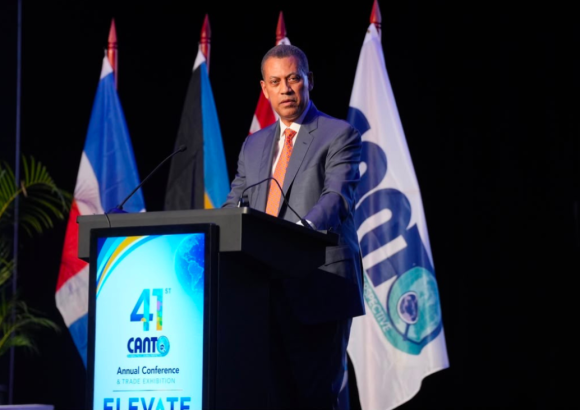
    In a historic milestone for the small Caribbean island nation, Dominica is playing host to the 47th plenary Meeting of the Inter-American Telecommunications Commission (CITEL) for the first time in the commission’s history. The five-day gathering, which kicked off on April 6 and will run through April 10 at Portsmouth’s Intercontinental Hotel, has drawn official representatives from 32 member countries across the Americas, bringing regional connectivity and digital policy leaders to Dominica’s shores.

    In her opening address to assembled delegates, Chekira Lockhart-Hypolite, Dominica’s Minister of State with responsibility for Telecommunications and Broadcasting, laid out the island nation’s dual framework of macro and micro technological priorities aligned with both regional collective goals and local national needs. A core pillar of Dominica’s macro agenda, she explained, is integrating advanced technology into disaster preparedness and national resilience efforts—an objective that directly ties to Prime Minister Roosevelt Skerrit’s groundbreaking vision to position Dominica as the world’s first climate-resilient nation.

    “To build a scalable, rapidly responsive disaster communication strategy, we recognize that every innovative technology has a critical role to play in strengthening our disaster response capabilities,” Lockhart-Hypolite told attendees. Beyond climate resilience, the minister outlined targeted goals tailored to Dominica’s status as a small island developing state, chief among them supporting the ongoing Caribbean digital transformation initiative by cultivating a regulatory and economic environment that accelerates inclusive digital growth across the region.

    Cybersecurity and citizen protection in digital spaces also top the nation’s priority list, Lockhart-Hypolite confirmed. The government is moving forward with plans to establish a dedicated national Cybersecurity Incident Response Team, she said, to detect and mitigate a wide range of threats—from extreme weather-related communication disruptions to malicious cyberattacks. The initiative will also be supported by updated national legal frameworks to safeguard digital user rights and data, paired with expanded international cooperation to enable cross-border information sharing and collective security enhancement with regional partner nations.

    Looking ahead, the Dominican government is focused on creating a welcoming regulatory ecosystem to position the country as an early adopter and regional test bed for cutting-edge telecommunications innovations. Lockhart-Hypolite highlighted next-generation technologies including 5G network deployment, near-earth orbit satellite (NEOS) systems, direct device-to-device (D2D) communication, and the upcoming Wi-Fi 8 standard as key areas of interest for the nation.

    These ambitious development goals require consistent, collaborative engagement with regional regulatory bodies and international partners, the minister noted, emphasizing that ongoing dialogue allows Dominica to learn from global best practices while ensuring the unique needs of small island states are centered in regional telecommunications policy. She closed her address by encouraging all participating delegates to engage in open, constructive, forward-looking discussions throughout the week, with the aim of strengthening collective regional capacity and advancing shared goals for more connected, resilient, and innovative telecommunications infrastructure across the Americas.

  • Rebuilding learning

    Rebuilding learning

    In late October 2025, Category 5 Hurricane Melissa made landfall across Jamaica, leaving widespread destruction in its wake. Roofs were torn from buildings, road networks were submerged and blocked by floodwaters, and hundreds of families were forced to flee their homes. For communities across the island, the storm brought unparalleled disruption to daily life — and nowhere was this disruption felt more acutely than in the education sector, particularly in low-income, vulnerable regions where families were already grappling with persistent economic hardship.

    When the storm passed, education leaders across the island faced an urgent, human-centered question: how do we locate every displaced student and safely bring them back to structured learning? For two Jamaican primary and infant schools — Barrett Town in St James parish and Bromley in St Mary parish — the answer came from an unexpected source: a brand-new digital tool that had only been rolled out weeks before the hurricane made landfall.

    Weeks before Hurricane Melissa struck, both institutions had gone live with the Education Management Information System (EMIS), a digital platform developed through a joint three-year initiative between Jamaica’s Ministry of Education and the United Nations. Titled “Empowering Jamaica’s future: SDG joint programme on digital transformation for education”, the initiative was designed to modernize Jamaica’s entire public education system, with the core goal of improving learning outcomes for more than 450,000 students across the country. Before the storm, the project’s main focus was institutionalizing cross-sector digitalization: upgrading data governance frameworks, digitizing routine administrative tasks, and integrating nutrition program tracking through the new EMIS platform. For school staff, the tool was initially viewed as just a modern administrative upgrade to replace outdated paper record-keeping. No one anticipated how critical it would become just weeks after launch.

    When the hurricane hit, most physical paper records were destroyed by floodwater and wind damage, and traditional communication networks were severely disrupted. The digital student data stored on EMIS quickly became the backbone of post-storm recovery efforts. At Barrett Town Primary and Infant School, Principal Anthony Murray described the first days of reopening as a period of intense, community-led coordination rooted in compassion. The entire school community mobilized to deliver critical support to displaced families, providing everything from psychosocial counseling, new uniforms, textbooks and school supplies, to clothing, bedding, and daily hot meals, all designed to ease the burden on storm-impacted families and create a safe, welcoming space for students to return to learning.

    But every step of this coordinated response was guided by the data in EMIS. “Through EMIS we tracked attendance in real time and followed up on absences,” Murray explained. “This made it possible to reach families directly.” Daily attendance monitoring through the platform revealed that 90% of Barrett Town’s students had returned to school within the first week of reopening, and the remaining unaccounted-for students were immediately flagged for targeted follow-up by the school guidance department. Administrators quickly learned that many of the missing students had transferred to new schools after displacement, while others needed tailored support to be able to return. The digital system ensured that no child was overlooked amid the chaos of post-storm recovery.

    Murray now refers to EMIS as the school’s “early-warning and action system”, which pulls real-time data on student enrolment, attendance patterns, and unmet resource needs, allowing leaders to allocate support before small problems escalate into larger crises. The platform helps administrators quickly identify which students need access to emergency transportation, temporary shelter, or post-storm health follow-up. “That turns a crisis scramble into a coordinated response,” Murray said.

    Over at Bromley Primary and Infant School, Principal Calef Williams reported a similar experience, despite unique challenges the school faced during recovery. Bromley adopted EMIS in September 2025, starting with core attendance tracking functionality. When Hurricane Melissa hit, internet connectivity became severely intermittent across the region, but teachers collaborated continuously to keep the platform updated. “During the hurricane and early recovery, it was a bit tedious with intermittent connectivity,” Williams said. “However, we collaborated and used it to ensure we were consistent.” By November 17, just over three weeks after the storm, Bromley had fully resumed normal in-person operations, a milestone Williams credits directly to the stability and structure EMIS provided during the transition.

    Across both schools, EMIS proved to be far more than a digital replacement for paper attendance registers. It became a core tool for rebuilding learning communities after a devastating disaster. When communication networks were unreliable and families were scattered across the island in emergency shelters, centralized, accessible digital student records allowed recovery efforts to proceed faster and more equitably than would have been possible with destroyed paper records. Teachers were able to spend far less time reconstructing lost student files and far more time supporting students’ academic and emotional recovery after the storm. Temporary classroom tents donated by UNICEF provided the physical space for learning to resume, while EMIS provided the data backbone to reconnect students with their schools.

    The experience of these two schools reflects the broader mission of the SDG Joint Programme on Digital Transformation for Education, which works to integrate data tools like EMIS to strengthen education systems across Jamaica. While the initiative was originally designed to improve long-term planning and data-driven decision making in education, it has unexpectedly demonstrated enormous value in crisis response, enabling schools to act faster and more equitably when large-scale disruption hits.

    As Jamaica continues its long-term recovery from Hurricane Melissa, school leaders at both institutions are already looking ahead, planning to fully integrate EMIS into all daily school operations. Moving forward, they plan to use the platform’s data to monitor long-term attendance trends, identify unaddressed learning gaps, and build more robust preparedness plans for future climate shocks. Reflecting on the crisis, Murray noted that the hurricane laid bare how vulnerable coastal communities are to extreme weather events. But it also showed what can be achieved with the right digital tools. “The hurricane showed us how fragile things can be,” he said. “But it also showed us that with the right tools we can recover faster and build back stronger for our children.”

  • Grenada hosts engagement on cybersecurity and cybercrime readiness

    Grenada hosts engagement on cybersecurity and cybercrime readiness

    As Grenada accelerates its push toward comprehensive digital transformation of public services and national data systems, a landmark national cybersecurity preparedness initiative is set to convene public sector employees across the country on April 13, 2026. The upcoming Institutional Readiness Session on Cybersecurity and Cybercrime has been designed to directly address the rising tide of cyber threats targeting government infrastructure, equipping civil servants with the tools and knowledge needed to protect critical national systems and sensitive resident information.

    Organized and led by Grenada’s National Cybersecurity Incident Response Team (CSIRT Grenada), the strategic session will bring together a cross-functional cohort of attendees: sitting civil servants, national security personnel, digital service administrators, and senior institutional leaders who oversee the management of public information infrastructure and citizen personal data. This multi-stakeholder gathering reflects the growing consensus that whole-of-government coordination is essential to mitigating modern cyber risks.

    The training session forms a core component of the Cybersecurity and Cybercrime Public Awareness Campaign under the Caribbean Digital Transformation Project (CARDTP), a regional effort implemented in formal partnership with the CARICOM Implementation Agency for Crime and Security (CARICOM IMPACS) and the Organisation of Eastern Caribbean States (OECS) Commission. The broader initiative’s core goals are to boost cybersecurity literacy across the Eastern Caribbean, embed proactive safe digital habits within public and private sectors, and build consistent institutional preparedness across all participating island nations.

    Against a backdrop of rapid digital expansion across Grenada’s public sector, the demand for targeted cybersecurity training for government employees has never been more urgent. Recent regional risk assessments have documented steadily increasing exposure to a range of pervasive cyber threats, including widespread phishing campaigns, disruptive ransomware attacks, large-scale identity theft, and repeated attempts at unauthorized access to sensitive government and citizen data. These trends have underscored the urgent need for upskilling public sector workforces to recognize and respond to digital risks.

    During the full-day readiness session, attendees will gain actionable, practical training across five key priority areas: secure protocols for handling sensitive citizen and government data, evidence-based methods for identifying and neutralizing phishing attempts and online fraud, updated frameworks for strengthening internal cyber incident reporting procedures, strategies for improving cross-ministerial and inter-agency coordination during cyber events, and actionable steps to embed a persistent culture of cybersecurity awareness across all government departments.

    Beyond practical skills training, the session will also facilitate a discussion on how Grenada’s national cybersecurity efforts align with the regional Caribbean Cybersecurity and Cybercrime Action Plan (CCSCAP) and other broader regional resilience-building initiatives. This alignment is designed to create a unified, coordinated defense against transnational cyber threats that target small island developing states across the Caribbean.

    As part of the wider CARDTP public awareness campaign, programming is tailored to reach multiple segments of Caribbean society, including young people, women, senior citizens, private sector businesses, and public institutions. Each tailored initiative focuses on encouraging context-appropriate safe online behavior and strengthening collective digital resilience across the entire region.

    In conjunction with the announcement of the readiness session, local officials have reminded the general public to maintain vigilance in their online activities, seek official support when encountering suspicious activity, and report any confirmed or suspected cyber incidents to CSIRT Grenada directly. Members of the public can reach the response team via phone at (473) 423-2478 or email at [email protected] for assistance.

  • St Mary’s College team reflect on 4th place debut at OECS robotics

    St Mary’s College team reflect on 4th place debut at OECS robotics

    The inaugural Organization of Eastern Caribbean States (OECS) robotics competition, hosted in St. Kitts on March 21, brought together young engineering talent from across the region to tackle pressing real-world environmental challenges, with a central focus on innovative solutions for waste management. Among the competing teams, St. Mary’s College (SMC) from St. Lucia delivered an impressive performance, claiming fourth place and earning widespread pride from the institution’s entire student body and staff.

    Leading the SMC team was Kyle Gajadhar, a dual major in science and business, who walked through the team’s design philosophy for their custom-built robot, dubbed “Helenite Prime”. Built specifically to align with the competition’s waste disposal theme, Helenite Prime was engineered to automatically collect and sort waste-like materials with notable speed and accuracy. Gajadhar explained that the robot’s design prioritized both flexible functionality and precise mechanical control: capable of identifying and picking up marked ball-shaped test objects, the machine then placed each item into corresponding pre-labeled containers to complete the sorting workflow.

    Though the team encountered unexpected technical setbacks over the course of the competition, members left the event satisfied with their work and focused on the knowledge they gained throughout the months of preparation and on-site competition. Gajadhar’s teammate Matthew George and faculty advisor Jahim Malcolm, SMC’s information technology instructor, echoed this positive outlook, emphasizing that the event delivered far more value than just a final ranking.

    For Malcolm, the greatest strength of the regional robotics competition lies in the unique cross-island collaboration and learning opportunities it provides. “We got to see different design approaches from teams across the region, and interact with our peers from other OECS member islands,” he noted. Beyond technical skills, the event allowed students to build new cross-regional friendships, pick up innovative engineering techniques, and gain hands-on experience that cannot be replicated in a traditional classroom setting. Gajadhar echoed this assessment, describing the event as a one-of-a-kind large-scale competition that pushed him and his teammates to grow. From learning to assemble custom mechanical and electronic components to refining iterative problem-solving processes, the practical skills gained are already shaping the students’ academic and career trajectories, he said.

    On a personal level, Gajadhar shared that the most rewarding part of the experience was seeing months of collaborative work turn into a fully functional robot. While he hopes to claim the top prize in future events, he emphasized that the sense of personal and team accomplishment was the real highlight of the journey. Already, the SMC team is planning for next year’s competition: Gajadhar made it clear that the team has set its sights on the first-place trophy, joking that they have already cleared space on their display shelf for the win.

    Looking ahead, Gajadhar is exploring career paths that combine his two passions, animation and computer science, and credits the competition with helping him clarify his technical interests. For SMC as an institution, Malcolm confirmed that the college will continue building on this year’s success, with a long-term goal of growing the school’s robotics program into a transformative initiative for student innovation. “We’re trying to create something revolutionary. We’re trying to make a difference,” Malcolm said, noting that the program is open to support from community individuals and local organizations as it expands.

    In closing, both Gajadhar and Malcolm extended sincere gratitude to everyone who supported the team’s preparation and participation, including the second student representative Matthew George and all institutional and community backers who helped bring the Helenite Prime project to life.

  • Na Luum Ca Connects To New Digital Opportunities

    Na Luum Ca Connects To New Digital Opportunities

    The remote village of Na Luum Ca in Belize’s Toledo District has dramatically advanced its technological capabilities with the inauguration of a state-of-the-art Community Digital Hub. This transformative initiative resulted from a strategic partnership between Belize’s Ministry of Rural Transformation and Community Development and the United Nations Development Programme.

    Minister Oscar Requena presided over the official ribbon-cutting ceremony on Friday, March 30, 2026, emphasizing the facility’s role in bridging the digital divide for rural communities. The hub is equipped with six desktop computers, printers, and forthcoming internet connectivity designed to serve both educational and practical community needs.

    Beyond providing students with essential resources for academic assignments and digital literacy, the facility will empower adult residents to navigate government services electronically. Villagers can now process vital documentation—including birth certificates and marriage licenses—directly from their community without traveling to Belize City.

    This infrastructure development represents a significant milestone in Belize’s national digital inclusion strategy, demonstrating how targeted technological investment can create tangible opportunities in traditionally underserved regions. The initiative reflects growing recognition that digital access is fundamental to socioeconomic development in the 21st century.

  • ICT-centrum in Albina moet digitale kloof verkleinen en kansen vergroten

    ICT-centrum in Albina moet digitale kloof verkleinen en kansen vergroten

    Suriname has taken a significant step toward digital inclusion with the groundbreaking ceremony for a new ICT center in Albina, spearheaded by Transport, Communication, and Tourism Minister Raymond Landveld. The facility represents a strategic effort to bridge the urban-rural digital divide and provide equitable technological access for inland communities.

    As part of the broader Digital Accessibility Interior Project, the center will focus on enhancing digital literacy and technological infrastructure in Suriname’s district regions. Minister Landveld emphasized that the initiative extends beyond symbolic significance, calling it “the beginning of a crucial development” that prioritizes digitalization and equal opportunities.

    The center specifically targets youth development, preparing younger generations for educational advancement and labor market integration through improved digital skills training. Community members will gain enhanced access to information, educational resources, and digital tools, thereby expanding their personal and professional development prospects.

    Landveld highlighted the government’s deliberate decentralization strategy, noting that development should not be concentrated solely in Paramaribo. “By establishing this center, we bring opportunities closer to people and reduce the digital divide,” he stated during the ceremonial beer sprinkling ritual that accompanied the cornerstone laying.

    The ministry anticipates active community utilization, particularly among youth, to maximize the center’s potential in fostering regional growth and technological empowerment.

  • Energy and data: International project boosts university resilience in Cuba

    Energy and data: International project boosts university resilience in Cuba

    In a significant stride toward energy independence, the University of Camaguey in Cuba is poised to undergo a major technological transformation through the installation of a comprehensive photovoltaic system with energy storage capabilities. This initiative forms part of the broader PULSE-C project, an international academic partnership connecting European nations with Cuban institutions to advance both energy and digital transitions within higher education.

    The four-year endeavor, operating under the European Union’s ERASMUS+ program framework, specifically targets the enhancement of operational continuity for the university’s most critical infrastructure. According to Dr. Eduardo Sierra Gil, Director of Science, Technology and Innovation at the University of Camaguey, the solar energy system will provide essential power security to vital facilities including the Electroenergetics Testing Laboratory (LEPEL) and the institution’s Data Hub.

    “This project represents more than just technological implementation—it embodies institutional resilience,” explained Dr. Sierra Gil. “By integrating solar panels with advanced storage systems, we guarantee uninterrupted operation of our most strategic services regardless of external power disruptions.”

    The international collaboration brings together academic expertise from Belgium, the Netherlands, Spain, and multiple Cuban universities, with coordination handled domestically by the Central University “Marta Abreu” of Las Villas. Beyond immediate infrastructure benefits, the initiative serves as both a practical and pedagogical model for renewable energy implementation, demonstrating reduced environmental impact while providing hands-on learning opportunities for students in related disciplines.

    Funded through a partnership between the European Education and Culture Executive Agency (EACEA) and the Flemish Interuniversity Council (VLIR-UOS), the project highlights higher education’s expanding role in driving sustainable development. For the University of Camaguey—the first university established following the Cuban Revolution—this initiative marks a concrete advancement toward energy sovereignty and digital modernization within academic institutions.

  • Digesett integrates accident zones into Waze to boost road safety

    Digesett integrates accident zones into Waze to boost road safety

    SANTO DOMINGO – In a groundbreaking move to combat traffic accidents, the Dominican Republic’s General Directorate of Traffic Safety and Land Transportation (Digesett) has launched a strategic technological initiative. Partnering with WazeDom, the local partner for the navigation app, Digesett has mapped and integrated data on high-risk accident zones directly into the Waze platform.

    This integration, which became active at the start of the week, empowers the application to deliver real-time audio and visual alerts to motorists as they approach these identified danger spots. Drivers will now receive a specific warning: ‘Critical zone nearby, reduce speed.’ This direct intervention is engineered to proactively modify driver behavior by prompting reduced speeds and increased vigilance in areas with a historically high incidence of collisions.

    The initiative represents a core component of Digesett’s broader national strategy for road safety, which synergizes advanced technology, data analytics, and public education campaigns. Government authorities have highlighted the indispensable role of digital navigation tools in building a safer transportation ecosystem. They assert that leveraging apps like Waze is crucial for not only preventing accidents but also for enhancing overall traffic mobility throughout the nation. While embracing this technological aid, officials concurrently reiterated the imperative for all drivers to adhere to traffic regulations and remain acutely aware of all in-app safety notifications.

  • 911 System expands AI strategy with U.S. support at NVIDIA GTC 2026

    911 System expands AI strategy with U.S. support at NVIDIA GTC 2026

    SAN JOSÉ, California – In a significant advancement of international technological cooperation, the Dominican Republic’s National Emergency and Security System 911 engaged in strategic dialogues at the prestigious NVIDIA GTC 2026 conference. This participation, facilitated through support from the United States Embassy in Santo Domingo, marks a pivotal step in enhancing the Caribbean nation’s digital infrastructure and regional security capabilities.

    The delegation, spearheaded by Executive Director Randolfo Rijo Gómez, conducted high-level negotiations with NVIDIA leadership, including Vice President Calista Redmond. These discussions built upon existing bilateral technological initiatives coordinated through the embassy’s Narcotics Affairs and Law Enforcement Section (INL), with particular emphasis on artificial intelligence development, system interoperability, and next-generation emergency response mechanisms.

    This collaborative effort operates within the framework of a formal agreement established between the Dominican Republic’s Ministry of the Presidency and NVIDIA Corporation. Critical infrastructure enhancements, notably through NAP Caribe, have substantially boosted the nation’s data processing capacities and digital framework. The integration of sophisticated analytics and AI technologies continues to position the Dominican 911 System as one of Latin America’s most advanced emergency response platforms, while simultaneously fortifying security and innovation partnerships between the Dominican Republic and the United States.

  • Barbadian talent shines at BMS sea drone competition

    Barbadian talent shines at BMS sea drone competition

    Barbados has marked a significant milestone in technological advancement with the successful conclusion of its inaugural sea drone design competition. Hosted by the Barbados Meteorological Services (BMS), the event spotlighted remarkable local engineering talent and innovative marine technology solutions developed entirely by Barbadian creators.

    The competition finals, held on Saturday, represented the culmination of months of development effort dating back to initial conceptualization in October. BMS Director Sabu Best characterized the initiative as a strategic investment in national technological capability building, emphasizing its role in establishing foundational expertise for future innovation in emerging technologies.

    ‘Our primary objective was harnessing indigenous talent to create practical tools for marine and aerial applications,’ Best explained, noting the competition’s design as a springboard for sustained technological development. The long-term vision involves refining these prototypes for official deployment across government and private sector organizations, operating within appropriate regulatory frameworks.

    The project required coordinated support from multiple national institutions including the Barbados Civil Aviation Authority, the Prime Minister’s Office, and the Ministry of Industry, Science and Technology. This collaborative approach ensured both technical oversight and regulatory compliance throughout the development process.

    Best expressed considerable surprise at the sophistication demonstrated by participants, noting several designs exceeded expectations in both scale and innovation. The competition prioritized functional problem-solving over aesthetic considerations, with the director emphasizing participation and conceptual validity as primary success metrics.

    Antonio Franklyn emerged victorious with his catamaran-inspired sea drone design. The winner described his approach as building upon ‘a tried and tested concept,’ revealing that while design conception required merely three to four days, physical construction spanned approximately two months. Franklyn admitted to still processing his achievement, acknowledging the satisfaction of his victory while reflecting on the development journey.