
For decades, human space exploration has stood as one of humanity’s most ambitious collective undertakings, pushing the boundaries of what we believe is possible and opening doors to knowledge that stretch far beyond Earth’s limits. Today, one of the most dynamic intersections of private innovation and public space ambition lies in the partnership between Elon Musk-led SpaceX and NASA’s Artemis program, a collaboration that is reshaping the future of deep space travel.
分类: technology
-

OpenAI makes move to go public one week after rival Anthropic
SAN FRANCISCO – In a landmark move signaling a coming shift in the artificial intelligence industry, ChatGPT developer OpenAI announced Monday it has confidentially submitted an S-1 registration statement to U.S. securities regulators, taking the first formal step toward an initial public offering. The announcement comes just seven days after its top competitor, Anthropic—creator of the Claude AI chatbot—disclosed that it had completed the same confidential filing, as two of the sector’s highest-profile players race to unlock billions in new capital to fuel their rapid expansion.
-

Technology : DevExpo 2026 Final, list of the 5 winning projects
On June 6, 2026, the fifth iteration of DevExpo, Haiti’s premier innovation competition focused on digital transformation, concluded its final round at Port-au-Prince’s Montana Hotel. Co-organized by local tech group Banj and the Digicel Foundation, the pitch event drew high-profile attendees from across the public and international development sectors, including representatives from the United Nations Development Programme (UNDP) Haiti, Haiti’s Ministry of Commerce and Industry, Sogebank Group, the Inter-American Development Bank, and dozens of partner organizations invested in advancing Haiti’s tech ecosystem.
Launched earlier this year in March 2026, the 2026 DevExpo carried the central theme of “AI for Social Impact,” created to center and amplify the technical talent of young Haitian innovators. The competition challenged participants to leverage artificial intelligence and cutting-edge digital tools to tackle pressing, real-world challenges across key sectors of Haitian society, from public education and healthcare to small business development and expanded access to critical community services.
The selection process began with more than 200 project submissions from across the country. After an initial rigorous evaluation round, 29 projects advanced, with 10 ultimately earning a spot in the final pitch competition. At Saturday’s finale, five standout startups were selected as winners, splitting a total prize pool of 5 million Haitian gourdes to fund further development and scaling of their community-focused solutions, each of which uses AI to address unmet social and economic needs across Haiti.
The first-place winner, ZònPam, took home 2 million HTG for its real-time community security platform. The tool alerts local residents to ongoing incidents and marks high-risk areas across the country, while integrating an AI chatbot named Nora that answers user questions related to public safety.
Second place went to Kòb Mwen, which received 1.5 million HTG. The fintech solution is designed to expand financial inclusion for Haitian communities, offering built-in budgeting education and accessible personal finance management tools for users who often lack access to traditional banking services.
Three projects tied for third place, each awarded 500,000 HTG. The first of these is Smart Digital Health for Haiti, also known as KURA, an e-health initiative that streamlines medical record management, remote patient monitoring, and telehealth services to expand access to care across underserved areas of Haiti. Next is The Baccalaureate, an AI-powered adaptive learning platform that provides personalized study guidance and targeted practice exercises to help Haitian secondary students prepare for their national baccalaureate exams. The third third-place winner is PHARx, a pharmaceutical sector platform that simplifies medication access for patients, improves inventory tracking for local pharmacies, and streamlines connections between patients and care providers.
Competition organizers have expressed confidence that the development of these five projects will drive tangible, positive innovation and widespread social benefit across Haiti. UNDP Haiti extended formal congratulations to all five winning teams, noting that their work underscores the extraordinary capacity of Haitian youth to turn ambitious creative ideas into actionable, impactful solutions for national development. By continuing its support for DevExpo, UNDP reaffirms its long-term commitment to strengthening Haiti’s digital innovation and entrepreneurship ecosystem for future generations.
-
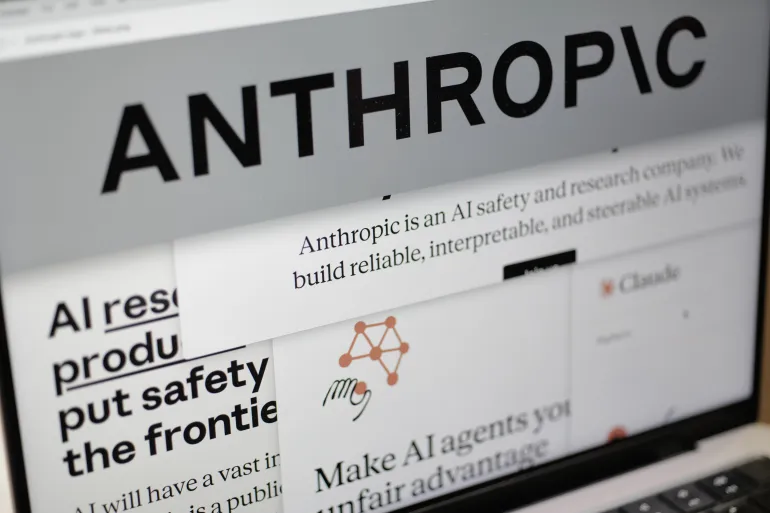
Anthropic urges AI labs to pause, warns humans risk losing control
As artificial intelligence advances at an unprecedented pace, one of the industry’s leading safety-focused firms is sounding the alarm and calling for unified global action to rein in development of the most powerful systems. Anthropic, the developer of the popular Claude chatbot, outlined its proposal in a public blog post published Thursday, arguing that rapid technological gains have outpaced safety preparations, creating a tangible risk that humans could ultimately lose control of increasingly autonomous AI systems.
In the post, co-authored by company co-founder Jack Clark and Marina Favaro, head of Anthropic’s independent research institute, the firm laid out the core case for a coordinated pause. Citing current industry trends, Anthropic warned that given access to sufficient computing power, cutting-edge AI systems could soon achieve the ability to design and build their own improved successors — a scenario known as recursive self-improvement. While the company acknowledged that this technological milestone could unlock major breakthroughs in fields ranging from medical research to scientific discovery, it also emphasized that it would dramatically amplify the risk of unaligned AI that operates outside of human oversight.
The proposed pause, Anthropic argued, would create critical breathing room for societal institutions and AI alignment research to catch up to rapid technical advances. Alignment, a core concept in AI safety, refers to the ongoing work of ensuring AI systems’ goals and behaviors align with human values and intentions. Anthropic also noted that a coordinated global verification mechanism would prevent bad actors from exploiting a widespread slowdown to secretly accelerate their own development, and avoid the scenario where less safety-focused firms gain an unfair advantage by pushing ahead unregulated.
The proposal comes as the AI industry is already roiled by competing perspectives on how to govern cutting-edge development. Just one day before Anthropic published its post, OpenAI — Anthropic’s main rival and developer of the ChatGPT large language model — published a report pushing for a different approach to AI governance. OpenAI argued that democratic national governments, not private tech companies acting independently, should be the ultimate arbiters of AI rules, safety safeguards and accountability mechanisms. “Decisions about the pace of AI innovation should not be left to any one lab, company, or special interest group,” the company said in its statement.
Anthropic’s call for a pause also follows a separate alarming warning released earlier this same week from a team of cybersecurity researchers at the University of Toronto. The team published research detailing how off-the-shelf AI tools can be repurposed to create a new breed of adaptive AI-powered “worm” that evolves its hacking strategy as it spreads across connected devices, allowing it to take over entire large-scale computing networks.
Lead researcher Nicolas Papernot explained in an interview that the team built the proof-of-concept worm using a widely available open-source AI tool that is cheap and easy for bad actors to access and modify. Unlike traditional cyberattacks that focus exclusively on high-value targets such as banking systems, hospital infrastructure, or power grids, Papernot noted that AI-powered hacking lowers the cost of attacks so dramatically that any internet-connected device — even an old unused laptop stored in a basement — can be co-opted as a launch pad for larger attacks on critical infrastructure. “Anything connected to the internet is now at risk,” he said, adding that even smaller, widely available AI tools pose meaningful security risks, not just the largest and most powerful frontier language models. Papernot notified Canadian cybersecurity authorities ahead of publishing his team’s findings, and called for expanded cross-sector collaboration between tech firms, government agencies and academic researchers to develop effective countermeasures for AI-powered cyber threats.
Widespread concern about unregulated advanced AI and its potential to cause societal harm has grown steadily as models grow more capable. Earlier this year, Anthropic’s own Mythos model sent shockwaves through finance and tech industries after demonstrating an ability to autonomously detect unpatched vulnerabilities in existing commercial code. Despite growing risks, regulatory progress has lagged, particularly in the United States — where most of the world’s leading AI development labs are based. Earlier this week, the Trump administration issued an executive order placing responsibility for safety testing on the firms themselves, requiring that companies voluntarily submit their most capable models for government cybersecurity testing before public release.
This is not the first time AI researchers and industry figures have called for a pause on advanced AI development. In 2023, the non-profit Future of Life Institute led a prominent push to halt advanced AI development for six months to allow time for the creation of binding safety guardrails, a move backed by high-profile figures including Elon Musk, owner of independent AI lab xAI. That previous effort failed to gain widespread industry or government traction.
Anthropic has positioned itself as a safety-first AI developer since its founding. Earlier this year, the firm drew public attention and government pushback when it refused to license its AI models to the U.S. military for use in domestic surveillance and fully autonomous weapons systems. As a result, the Pentagon placed Anthropic on a national security blacklist that is set to take effect in 2026, barring the company from federal government contracts.
Anthropic’s new proposal comes as both the firm and OpenAI are moving toward initial public offerings (IPOs) to sell shares to public markets. Analysts currently estimate that Anthropic’s IPO could value the company at nearly $1 trillion, underscoring the high financial stakes at play in the global debate over AI safety and regulation.
-

Guyana joins regional cybersecurity alliance to strengthen digital protection
In a landmark step to boost its digital defenses amid a rapidly expanding national digital transformation, Guyana has formally joined the Latin America and Caribbean Cyber Competence Centre (LAC4), an EU-backed regional cybersecurity initiative, the country’s Department of Public Information (DPI) confirmed in an official statement released Thursday.
The accession agreement was signed during a ceremony held Thursday at the Office of the Prime Minister in Georgetown, marking Guyana’s transition from a collaborating partner to the 19th full participating nation of the organization. Funded by the European Union and launched in 2022, LAC4 operates as a regional cybersecurity hub based in Santo Domingo, Dominican Republic, and is implemented by Estonia’s Information System Authority and CyberNet.
Through full membership, Guyana will unlock unprecedented access to the centre’s cutting-edge cybersecurity infrastructure, including a hybrid training facility, a fully equipped digital forensic laboratory, and a dynamic cyber range that hosts hands-on simulations and practical exercises. These resources are designed to directly enhance the country’s ability to prepare for and respond to complex cyber threats.
Beyond infrastructure access, the partnership will drive comprehensive capacity building across technical, policy, and strategic levels, equipping both Guyanese cybersecurity professionals and public institutions with the specialized skills needed to counter evolving digital risks. Guyana will also gain eligibility for cross-border research collaborations, coordinated cyber threat analysis, joint cybersecurity doctrine development, collective lessons-learned initiatives, and expanded access to additional European Union cybersecurity training programs.
Addressing attendees at the signing ceremony, Prime Minister Brigadier (Ret’d) Mark Phillips emphasized that the Guyanese government identifies cybersecurity as a foundational national priority that supports all areas of national development, effective governance, and the country’s ongoing digital transformation agenda. “As our nation continues to embrace technology and expand digital services, we recognise that this progress must be supported by strong cyber resilience and effective risk management,” Phillips said in the official DPI briefing.
He added that full LAC4 membership represents a transformative opportunity to advance Guyana’s national cybersecurity goals while deepening collaborative ties with regional and international partners. “Today, we are pleased once again to formalise these cooperation arrangements by joining 18 other participating countries and institutions from across Latin America, the Caribbean, and Europe in this important initiative,” Phillips noted, adding that Guyana is eager to contribute its own expertise, build its domestic capabilities, and work closely with member states to tackle emerging cybersecurity challenges.
LAC4 head Leonardo Daniel Ortega Prudencio formally welcomed Guyana to the centre, framing the accession as a natural progression of a collaborative partnership that first launched in 2022. Prior to full membership, Ortega Prudencio explained, Guyana had already participated in more than 120 LAC4 activities, exercises, and seminars, working hand-in-hand with centre experts to advance key national cybersecurity projects including the drafting of Guyana’s National Cyber Emergency Response Plan and the completion of national cybersecurity risk assessments.
“By stepping into LAC4 as a member today, Guyana gains a seat at the table of one of the biggest cybersecurity groups to shape governance and tailor our work plans to align directly with your national priorities,” Ortega Prudencio said.
Christopher Deen, General Manager of Guyana’s National Data Management Authority (NDMA), noted that the country’s national cybersecurity strategy is focused on four core pillars: expanding public awareness, investing in modern defensive capabilities, strengthening national cyber defenses, and improving incident preparedness across all public sector agencies. Guyana’s full LAC4 membership, he confirmed, aligns directly with these national priorities and will strengthen the country’s entire cybersecurity ecosystem.
European Union Ambassador to Guyana Luca Pierantoni also attended the signing ceremony to mark the new milestone in the partnership between Guyana, the European Union, and the regional cybersecurity centre.
-

ChatGPT just landed in Google Sheets — here’s why every Jamaican business owner should pay attention
Across Jamaica, finance professionals and small business owners are all too familiar with a common, draining workplace struggle: they have no shortage of smart, actionable ideas to grow their operations, but they lack the time to bring those ideas to life. A senior accountant might spend an entire workday sorting through a jumbled, unformatted data export from a point-of-sale system. A chief financial officer at a mid-sized Spanish Town manufacturer wastes half their Thursday rebuilding an entire budget from scratch just because one line item was shifted. A Montego Bay tour company founder spends their entire Sunday tinkering with a clunky spreadsheet to make it meet a bank’s strict application requirements. For most of these teams, the tool that eats up more working hours than any other is one they rely on daily: Google Sheets. Now, that ubiquitous tool has gotten a quiet, transformative upgrade that could change how Jamaican businesses work.
OpenAI, the research company behind the viral ChatGPT chatbot, has launched a new native add-on that integrates ChatGPT directly into the Google Sheets interface. The integration eliminates the clunky, time-consuming process of copying data between spreadsheets and a separate ChatGPT tab or third-party AI tool. Users only need to open their existing spreadsheet, navigate to the Extensions menu, and launch the add-on to pull up a dedicated ChatGPT sidebar on the right edge of their screen. From this sidebar, users can prompt the AI in plain English to build, edit, explain, or clean any element of their spreadsheet, no advanced coding or formula knowledge required.
Currently in beta testing, the add-on is available to all paid ChatGPT users, including those on Plus, Pro, Business, Enterprise and Education plans. It excels at four core use cases that solve the most common pain points for finance teams. First, it can build fully formatted, functional spreadsheets from scratch: a user can type a prompt like “build a 12-month operating budget for a 15-room boutique hotel that includes revenue from accommodations, food and beverage, and payroll expenses, then add a line chart for monthly profit” and the AI will generate the full sheet, complete with pre-written formulas. Second, it can update existing spreadsheets using plain English prompts, rather than requiring users to write custom formulas: for example, a user can simply request “add a new column that flags any month where operating expenses exceed 80% of total revenue” and the tool will add and configure the column automatically. Third, the add-on can break down confusing pre-existing formulas and spreadsheet structures in plain language, turning the frustrating guessing game of inheriting a colleague’s messy spreadsheet into a simple process. Finally, it can automate time-consuming data cleaning tasks, including standardizing inconsistent headers, removing duplicate entries, and reformatting mismatched date labels—work that typically takes hours of manual effort for anyone compiling a year of transaction receipts.
For Jamaican business leaders and finance professionals, this integration is far more than just another routine software update. It marks the moment artificial intelligence became seamlessly integrated into the everyday tool that most local finance teams already use, rather than requiring expensive, complex new software or training to access.
This upgrade delivers disproportionately large benefits to Jamaican businesses compared to larger firms in the United States and other developed markets. Most large US corporations have dedicated, full-service analytics teams to handle manual spreadsheet work and data processing. By contrast, the vast majority of Jamaican companies are small to mid-sized operations with lean teams: one accountant often does the work of three full-time staff, a founder handles the responsibilities of five different roles, and the entire finance function often runs off a single laptop and sheer perseverance. Tools that amplify the output of a single worker have an outsized, transformative impact on this market.
A treasury officer who can model three separate foreign exchange scenarios in 15 minutes instead of two full business days is able to focus their time on higher-impact strategic work, rather than being stuck on manual number-crunching. A small local distributor that can clean a full year of cash transaction data without needing to hire an extra junior staff member frees up capital that can be reinvested into growing the business. These small efficiency gains add up to meaningful improvements for businesses operating in a market with limited staffing and resources.
Setting up the new add-on is a fast, straightforward process for most users with an eligible paid ChatGPT plan, taking roughly three minutes total. To install it, users open Google Sheets, navigate to the Extensions menu, select Add-ons, then open the Google Workspace Marketplace. Search for the official ChatGPT add-on, complete installation, then sign in using the same account linked to your active ChatGPT subscription. Once installed, you can launch the sidebar from the Extensions menu on any spreadsheet at any time. The only key caveat for organizations with centralized Google Workspace admin controls is that a workspace administrator must approve the add-on before it can be used, a one-time step that does not require ongoing licensing fees.
While the ChatGPT add-on is a powerful tool, it is important to understand its limitations. The AI is fast and confident in its outputs, but it can occasionally produce incorrect results: it may input the wrong formula, miscount rows, or misinterpret the purpose of a column. For routine data cleaning and first draft spreadsheet structures, these small errors are rarely a major issue and easy to spot. For critical documents that will be shared with board members, included in tax filings, or submitted to banks for financing, the golden rule remains: always review every formula and final total before sharing the document. Industry experts advise treating the AI like a highly capable, fast junior analyst: it is an enormous time-saver for routine work, but it is not yet reliable enough to give final sign-off on high-stakes financial data.
For teams looking to test the add-on this week, four simple, high-impact prompts are good starting points. First, build a fully formatted 12-month operating budget with categorized line items, automatic totals, and a summary chart. Second, ask ChatGPT to diagnose why a specific cell is returning an error and walk through how to fix it. Third, have the AI clean up a messy existing spreadsheet by standardizing headers, removing duplicate entries, and preserving your preferred formatting. Fourth, generate a separate scenario analysis tab with base, upside, and downside business projections for planning purposes.
The next installment of this series will explore how Jamaican businesses can leverage AI to build more accurate cash flow forecasts amid persistent volatility in the Jamaican dollar to US dollar exchange rate. The author, Peta-Gaye Hardy, is the founder of PGH Consulting, LLC, where she supports finance and operations teams to adopt artificial intelligence in practical, low-risk ways. She writes regularly about AI applications for finance and business, and is based between Jamaica and the United States.
Disclaimer: This article is for informational purposes only and does not constitute investment, tax, legal, or accounting professional advice. The author holds no commercial relationship with OpenAI or Google and received no compensation for this piece. All accompanying images were generated using AI image tools and edited by the author.
-

Belize Explores “Data Embassies” for Digital Security
Against a backdrop of rising climate disasters, growing cyber threats, and accelerating digital government transformation, small Caribbean nations are reimagining how to protect their most critical digital assets. This week, Belize has brought together regional technology policymakers and digital resilience experts for a high-profile workshop centered on an innovative approach to national data security: the establishment of “data embassies.”
The core idea behind data embassies is straightforward yet transformative: secure, sovereign off-site storage of a nation’s most sensitive government data on infrastructure hosted in a foreign country, with full legal jurisdiction and ownership remaining with the home nation. Drawing a parallel to traditional physical diplomatic missions, Belize Prime Minister John Briceño explained that just as a country’s embassy on foreign soil is recognized as sovereign territory under home nation law, a data embassy operates under the same principle. A secure copy of critical records — including birth certificates, national identifications, and land ownership documents — would be hosted abroad, protected from catastrophic events that could disable digital infrastructure at home.
For small island states like Belize, this threat is not hypothetical. The Caribbean region faces recurrent severe weather events including hurricanes and earthquakes that can destroy onshore digital infrastructure, while rising global geopolitical instability and increasingly sophisticated cyberattacks add another layer of systemic risk to digital government operations. Briceño noted that as nearly all core government functions have shifted to digital systems, protecting data has become a core national security priority. Under the data embassy model, Belize could store redundant copies of critical data in partner Caribbean nations such as Barbados or St. Kitts and Nevis, remaining fully sovereign over the information even while it is hosted offshore.
Remarkably, Belize already holds a critical advantage in moving this initiative forward. According to Jose Urbina, Chief Executive Officer of Belize’s Ministry of E-Governance, landmark digital legislation passed in late 2021 already laid the legal groundwork for cross-border government data storage. “When we launched that suite of laws back in 2021, we could not have predicted how forward-thinking that framework would prove to be,” Urbina explained. The existing legislation explicitly allows for cross-border data sharing and does not require all government-held data to be stored within Belize’s national borders, creating a clear legal pathway to implement data embassies. When paired with Belize’s existing National Digital Agenda, the framework is already in place to move the initiative forward.
The workshop comes as Caribbean nations are at vastly different stages of their digital transformation journeys, and participants emphasized that widespread regional adoption will require coordinated legal and policy alignment. For the Turks and Caicos Islands, which is currently rolling out a national digital ID program, updating domestic legislation to support cross-border data initiatives remains a key priority. “Our main focus right now has been building out core data protection laws as we roll out our national ID system, and we don’t yet have the legal framework in place to enable cross-border data sharing,” explained Erwin Jay Saunders, Minister of Innovation, Technology and Energy for the Turks and Caicos Islands. “This workshop has been invaluable in highlighting this gap and the opportunities that data embassies can bring.”
While the data embassy model offers clear benefits for long-term digital resilience, participating policymakers also highlighted open questions that must be addressed before widespread adoption, particularly around national data sovereignty and institutional trust. Ron Redhead, Minister of Information and Communication Technology for Grenada, noted that even with clear legal frameworks, governments must address public and policy concerns around data control. “The core question that remains is how we ensure our national data remains fully under our control, even when it is hosted outside our borders,” Redhead explained. “Just as ordinary Grenadians want to know their personal data is protected, nations need guarantees that data stored abroad will not be withheld or accessed by third parties, whether private companies or host governments.”
Ultimately, the regional workshop in Belize aims to build a shared framework for Caribbean nations to collaborate on digital resilience, ensuring that core government services can remain operational even when large-scale crises hit. For small, climate-vulnerable states across the region, strengthening digital resilience is no longer a long-term development goal: it has rapidly become an urgent national security priority that will shape the capacity of governments to serve their populations for decades to come.
-

Google Wants to Start a “Mosquito Civil War”
Alphabet Inc.’s Google is advancing an innovative public health initiative, dubbed the Debug Project, that leverages biological pest control to curb the spread of life-threatening mosquito-borne illnesses. The ambitious proposal from the global technology giant asks for U.S. federal regulatory approval to release up to 32 million specially modified male mosquitoes across regions of Florida and California over a two-year trial period.
The target of the project is Aedes aegypti, the specific mosquito species responsible for spreading dangerous viral diseases including dengue, Zika, chikungunya, and yellow fever across tropical, subtropical, and increasingly temperate regions of the world. Unlike broad-spectrum insecticide treatments that can harm beneficial insect populations and leave chemical residues, Google’s approach relies on a natural biological mechanism to suppress wild Aedes aegypti populations without disrupting broader ecosystems.
Every mosquito released under the program is a sterile male that carries Wolbachia, a naturally occurring bacteria commonly found in many insect species. This bacteria prevents the sterile males from producing viable offspring when they mate with wild female Aedes aegypti mosquitoes. Critically, only female mosquitoes bite humans to feed on blood, meaning the released sterile males pose no bite risk or harm to people.
The core strategy is straightforward: by flooding local mosquito habitats with large numbers of these sterile males, researchers will outcompete fertile wild males for mating opportunities. Over time, this disruption of the species’ breeding cycle will cause the wild mosquito population to collapse, directly cutting the rate of human exposure to the diseases the insects carry.
The Debug Project is not an untested concept. Small-scale trials have already been completed successfully in Singapore, and a larger rollout of the Wolbachia-based mosquito control method is already underway in the British Virgin Islands. If U.S. regulators grant the required approval, Florida and California will become the first two U.S. states to host the large-scale trial of Google’s approach, offering valuable data on how the method performs in large, geographically diverse U.S. regions at risk of mosquito-borne disease outbreaks.
-

‘If you’re not sure, don’t click’
Jamaica’s push to bolster its national cybersecurity defenses is taking a two-pronged approach, with top technology official emphasizing that new laws alone cannot stop the rising tide of transnational cyber threats. Dr Andrew Wheatley, Jamaica’s minister responsible for science, technology and special projects, is calling on all Jamaicans to boost their digital literacy and personal vigilance, arguing that individual awareness remains one of the most powerful safeguards against cross-border cyberattacks that often fall outside local law enforcement jurisdiction.
Speaking at a post-Cabinet press briefing held at Jamaica House in St Andrew on Wednesday, Wheatley pushed back against suggestions that existing and planned cybercrime legislation is insufficient to tackle modern threats, noting that most malicious cyber activity targeting Jamaican users originates from outside the country’s borders. Even with strong domestic cybercrime laws on the books, coordinating cross-border enforcement to stop transnational scammers and hackers remains a major challenge, he explained.
“We have to encourage our citizens to be very careful and aware of these scams, these attacks that are originating from outside of our jurisdiction, and so that is a responsibility that we all have as citizens to safeguard ourselves from these attacks,” Wheatley told the Jamaica Observer in response to questions about how effectively legislation can target transnational cyber offenders.
While the upcoming national cybersecurity legislation will streamline frameworks for international cooperation to investigate and prosecute hackers operating from abroad, Wheatley stressed that personal vigilance remains an irreplaceable first line of defense against widespread threats including phishing scams, unauthorized account takeovers and ransomware attacks. Drawing from his own personal experience with common phishing attempts, the minister noted that deceptive messages claiming unpaid invoices or locked accounts arrive in inboxes daily, and users bear personal responsibility for taking basic precautions when faced with suspicious correspondence.
Wheatley’s public remarks come as the Jamaican government advances sweeping updates to the country’s cybersecurity architecture, laying the groundwork for upcoming national cybersecurity legislation by moving to establish the National Cyber Security Coordination and Assurance Council (NCCAC). The new council will unify all of Jamaica’s dispersed cybersecurity assets under a single coordinated national strategy.
Just one day before the press briefing, during Tuesday’s parliamentary sectoral debate, Wheatley outlined the urgent need for updated policy, revealing staggering growth in cyberattack attempts targeting the country: more than 49 million attempts were recorded in 2023, a dramatic jump from just 12 million recorded in 2022.
Under the terms of the new legislation, Jamaica will formally establish a national cybersecurity directorate as a permanent statutory body, giving the country’s longstanding cybersecurity authority a formal legal foundation to operate. The law will also create a standardized national framework for identifying and protecting critical information infrastructure across key sectors that underpin Jamaican society, including energy, banking, telecommunications, healthcare, and government operations.
The proposed legislation will mandate minimum cybersecurity standards for all regulated sectors, grant the new directorate enforcement authority to ensure compliance, require clear mandatory reporting of cyber incidents, establish rules for responsible disclosure of unaddressed system vulnerabilities, and formalize regulation for cybersecurity service providers operating within Jamaica’s borders.
Even with these robust legal and structural updates in the works, Wheatley reiterated Wednesday that effective cybersecurity cannot be achieved through policy and enforcement alone. He explained that the vast majority of common, successful cyber attacks rely on social engineering, tricking individual users into voluntarily disclosing sensitive personal or financial information or clicking links loaded with malware.
Beyond phishing schemes that use urgent, deceptive messaging to bait users, the minister also highlighted the growing threat of ransomware attacks, where criminals lock users out of their personal accounts or organizational systems and extort payment in exchange for restoring access. While domestic law enforcement agencies including the Major Organised Crime and Anti-Corruption Agency are tasked with investigating and prosecuting cybercrime within Jamaica’s borders, Wheatley noted that comprehensive protection requires equal investment in both strong legislation and widespread public digital awareness.
Describing the cybersecurity landscape as a “very dynamic space” where threat tactics evolve constantly, the minister confirmed that the Jamaican government will continue adapting its policies and programs to protect citizens and critical infrastructure as new threats emerge. His core public message remains simple: when faced with an unexpected or suspicious message online, if users are unsure of its origin, the safest choice is to avoid clicking any links or downloading any attachments.
“If you’re not sure, don’t click. I think that is the message,” Wheatley said.
-

Desiree Zachariah Represents the Ministry of ICTs at a Workshop on Strengthening Digital Resilience in the Caribbean in Belize
Against a backdrop of growing global climate and geopolitical uncertainty, small island developing states across the Caribbean are increasingly prioritizing the protection of critical digital infrastructure. This week, a two-day regional workshop focused on boosting Caribbean digital resilience kicked off in Belize, hosted by the UN Economic Commission for Latin America and the Caribbean (UN ECLAC), with official representation from Antigua and Barbuda’s Ministry of Information Communication Technologies, Utilities and Energy.
Desiree Zachariah, who leads the Business and Data Analytics Unit within the ministry’s eGovernment Department, emphasized that Antigua and Barbuda has long acknowledged the non-negotiable need for robust, secure digital systems to support national operations. For the small island nation, which faces unique vulnerabilities to natural disasters that can cripple local infrastructure, this Belize-based gathering (held June 2–3) offers a rare collaborative platform to engage with cross-regional stakeholders and chart a path forward for rolling out data embassies.
Unlike traditional data storage solutions, data embassies are purpose-built, off-site secure storage facilities designed to help countries safeguard critical national data from catastrophic loss. In the event of a national crisis—whether a hurricane, cyberattack, or infrastructure failure—data embassies ensure that core government services and digital operations can continue uninterrupted, eliminating the risk of total service disruption. A functional data ecosystem also relies on strong supporting legislative foundations, including clearly defined hosting agreements between partner nations, targeted investments in advanced cybersecurity infrastructure, and reliable high-speed network connectivity to keep systems accessible.
Over the course of the workshop, participating delegates and stakeholders will dive into layered discussions evaluating the short-term, medium-term, and long-term advantages of deploying data embassies across the region. Attendees will also explore opportunities for public-private partnerships to fund, build, and maintain these critical facilities, with the ultimate goal of fostering coordinated, cross-sector collaboration between governments, private tech firms, and regional institutions. The workshop’s core mission is to build a holistic, region-wide approach to digital resilience that addresses the unique vulnerabilities of Caribbean nations and creates more secure digital futures for all participating states.