
For Jamaican importers and business owners, sleepless nights are rarely caused by slow sales. Instead, the biggest headache stems from the foreign exchange gap that eats into potential profits: paying overseas suppliers in US dollars upfront, while waiting 60 days or more for local customers to settle invoices in Jamaican dollars. When the JMD-USD exchange rate shifts unfavorably during that waiting period, a deal that looked profitable on paper quickly turns into a loss. This is a pervasive challenge for small, open economies where costs are often tied to a global reserve currency, while revenue is generated in local tender. Exchange rate volatility does not wait for business owners to adjust, and static cash flow forecasts built on last month’s rates become obsolete almost as soon as they are saved. While no technology can fix volatile exchange rates, artificial intelligence is transforming how small finance teams assess risk and prepare for multiple future outcomes before they unfold. This week’s edition of the weekly *AI in Finance & Business* column explores Claude, Anthropic’s AI assistant that now integrates directly into Microsoft Excel, a tool that remains the backbone of financial work for most Jamaican businesses. Unlike the previous column’s deep dive into ChatGPT for Google Sheets, Claude is built for heavy-duty financial modeling and risk analysis, making it a particularly strong fit for managing currency exposure. Claude is far more than a simple chatbot tacked onto the side of your spreadsheet. It can parse an entire workbook, map the connections between different tabs, audit existing formulas for errors, and run multiple sensitivity analyses simultaneously – the exact function that matters most for businesses navigating currency risk. Users input requests in plain English, and Claude handles the entire spreadsheet workflow automatically. Before getting started, there is one key practical detail: the Claude Excel add-in is only available to users with a paid Anthropic subscription, with no free tier offered. Installation is straightforward: users can find it in the official Excel add-ins store, add it to their desktop app with one click, and sign in to their existing paid account to activate it. The traditional approach to cash flow forecasting for currency risk forces teams to build one static model with a single exchange rate assumption, then cross their fingers that the prediction holds. Adjusting for a new rate requires hours of manual formula edits, so most small teams only ever model one expected future, leaving them blind to downside risks. Claude collapses that entire process from an afternoon of work into just a few minutes. A user can open their existing workbook and prompt Claude to “build a 13-week cash flow forecast with columns for USD payables and JMD receivables, and set the exchange rate in a single editable cell.” From there, they can ask for a full sensitivity analysis: “show me the lowest weekly cash balance if the exchange rate moves between 2% stronger to 5% weaker against the JMD.” In seconds, rather than days, business owners get a full range of potential outcomes instead of one unreliable static forecast. Purpose-built forecasting tools can complement Claude’s capabilities to create a more robust system. Platforms like Float integrate directly with popular accounting software such as QuickBooks and Xero, pulling in live transaction data automatically to generate rolling forecasts that update as invoices get paid. In this setup, Claude handles the complex “what if” modeling, while Float keeps the core underlying financial data current. For businesses with steady transaction volume, forecasts are never more than 24 hours out of date. To put this workflow in context, consider a mid-sized Jamaican manufacturer with a large USD payment due in three weeks. Under the old system, answering the question “will we have enough cash to cover this payment?” would take two full days of number crunching. Today, the treasury officer can open their existing Excel model, ask Claude “what is our lowest cash balance over the next 21 days if the JMD weakens by 3% against the USD,” and get a complete answer before their coffee gets cold. If the result shows a potential cash shortfall, the business has three full weeks to act: they can draw on a credit facility, speed up outstanding customer collections, or delay non-essential discretionary payments. The biggest shift here is not the elimination of currency risk – that remains unavoidable for Jamaican importers. Instead, it gives business owners time to respond to risk, and allows a single team member to complete work that once required an entire small finance department. Before uploading sensitive financial data to any AI tool, security is the top priority, and Claude’s data policies have clear distinctions depending on the subscription plan a user chooses. For Anthropic’s business tier plans – Claude for Work, Team, and Enterprise – user data is never used to train Anthropic’s AI models. This protection is written into commercial terms, no confusing settings need to be adjusted, and all data is encrypted both in transit and at rest. The policy is different for personal paid plans (Pro and Max): as of late 2025, conversations from personal plans may be used for model training unless users actively opt out of data usage in their account privacy settings. For finance teams working with sensitive company data, the best practice is simple: use a Team or Enterprise plan, where data privacy is enabled by default. If you are using a personal plan, turn off model training in your privacy settings before uploading any sensitive content. Always mask personal identifiable data such as client names, employee salaries, and full bank details before uploading, just as you would avoid sharing that information with a new colleague you have not yet vetted. It is also critical to understand what Claude cannot do for your business. Claude cannot predict where the JMD-USD exchange rate will go, and any tool or person that claims to predict exchange rates with certainty is almost certainly selling a product you do not need. What Claude does excel at is fast arithmetic and scenario modeling: it takes the assumptions you provide and maps out their potential consequences. The assumptions and final business decisions still rest with the user, so always cross-check model logic, compare totals against actual bank balances, and never act on an AI-generated forecast you have not reviewed personally. For businesses interested in testing this workflow, the column outlines four simple steps to try this week: First, open Excel and ask Claude to build a 13-week cash flow forecast with a single editable exchange rate cell that updates the entire model when changed. Second, prompt Claude to run a sensitivity analysis across three core scenarios: base rate, stronger USD, and weaker USD, then compare the lowest weekly cash balance for each outcome. Third, ask Claude to automatically flag any week where your closing cash balance falls below a pre-set threshold. Fourth, if you already use QuickBooks or Xero, test an auto-sync forecasting tool like Float to pull live transaction data, then feed that updated data into your Claude model for analysis. Always remember to review all assumptions and final totals before acting on any forecast. Next week’s column will continue the series, exploring how Jamaican businesses can build an interactive financial dashboard from a single plain English prompt, turning static spreadsheets into explorable tools for managers. This article was written by Peta-Gaye Hardy, founder of PGH Consulting, LLC, a firm that helps finance and operations teams adopt AI in practical, low-risk ways. Hardy is based between Jamaica and the United States, and more information about her work can be found at www.pghconsultinggroup.com, or on Instagram @pghconsultinggroup. Disclosures: This content is for informational purposes only and does not constitute investment, tax, legal, accounting, or foreign exchange advice. Exchange rate movements are inherently uncertain and cannot be reliably predicted. The Claude Excel add-in requires a paid Claude subscription. The author holds no commercial relationship with Anthropic, Microsoft, Float, or any other product mentioned in this column, and received no compensation for this feature. Readers should always consult a qualified financial professional before making any business decisions.
分类: technology
-

Harris Paints unveils new tinting technology with roots in Caribbean innovation
A groundbreaking new development in decorative paint technology is putting Caribbean innovation on the global map, with Barbados-founded paint manufacturer Harris Paints rolling out what it calls the world’s first advanced decorative paint tinting system. The newly launched Quantum Dry system, which debuted at the company’s Barbados headquarters, marks a historic first for the global coatings industry: it is the first product to deliver tinted decorative paint using cutting-edge dry pigment pearls through an integrated single-base color framework, according to the company’s official press announcement.
This new platform builds on the success of Harris Paints’ earlier Quantum i12 system, a color innovation first introduced to the market four years ago. That original platform is already fully operational across all Harris Paints locations throughout the Caribbean region, laying the groundwork for the next-generation Quantum Dry upgrade. The strong commercial and technical performance of the initial Quantum platform even spurred the creation of a standalone spinoff, Quantum Corporation, which has since added an artificial intelligence-powered color matching tool to its product suite and secured international licensing deals for its technology. Today, coatings made with this Caribbean-developed innovation are already on store shelves in markets as far-flung as Italy and Bangladesh.
Unlike conventional paint tinting processes, which depend entirely on liquid colorants to create custom shades, the Quantum Dry system leverages solid pigment pearls to deliver measurable improvements in color quality and consistency. Antonio Vasconcellos, co-CEO of Quantum Corporation, explained that the new system cuts down on unnecessary chemical additives, reduces the overall environmental footprint of paint production, and achieves far more precise color reproduction than traditional tinting methods can deliver. For consumers and contractors, this means more consistent color matching from batch to batch and a lower-impact product compared to standard options on the market.
For its initial rollout, Quantum Dry will be available exclusively at Harris Paints’ Wildey retail outlet in Barbados, before the company scales distribution to additional product lines and expands access across regional Caribbean markets. Dominica is already confirmed as one of the first Caribbean markets set to benefit from the new technology once regional rollout begins. Company leadership frames the launch as more than just a new product release: it is a major milestone for homegrown innovation from the Caribbean, showcasing that cutting-edge global technology can emerge from and scale out of regional markets.
Harris Paints has deep roots in Barbados, first founded in Bridgetown all the way back in 1972. The company began its operations by repackaging pre-manufactured paint products, but just one year after its founding, it transitioned into full local manufacturing, building out the expertise that has led to today’s global innovation.
-

Officials Working to Standardise EV Charging Across CARICOM
As electric vehicle adoption gains momentum across Caribbean nations, the Caribbean Community (CARICOM) has launched a coordinated push to address a critical growing pain: fragmented and inconsistent EV charging infrastructure. In a recent virtual webinar hosted by the CARICOM Secretariat from its headquarters in Turkeyen, Greater Georgetown, Guyana, on Thursday, 11 June 2026, regional stakeholders and industry experts gathered to map a path toward standardized, interoperable charging networks that work across all member states.
During the discussions, attendees zeroed in on three core areas identified as non-negotiable for cross-regional harmonization: unified safety protocols, standardized charger installation requirements, and aligned inspection procedures. The central goal of these efforts is to deliver interoperability — meaning EV owners will be able to use any public charging station regardless of which CARICOM country they are traveling in, eliminating the compatibility barriers that currently complicate cross-border electric vehicle travel.
The keynote presentation of the session was delivered by Dr. Soren E. Maloney, a professional engineer and director of Ziklag Consulting Group Company Limited, who drew on hands-on experience developing Guyana’s emerging EV charging ecosystem to frame the regional conversation. Dr. Maloney confirmed that while EV uptake is accelerating across every CARICOM member state, individual countries are progressing at vastly different speeds when it comes to developing formal standards and regulatory frameworks for charging infrastructure.
He outlined the systemic challenges holding many smaller member states back: limited technical workforces, constrained national budgets allocated for sustainable transport infrastructure, and a general lack of institutional capacity to develop locally tailored standards and build regulatory oversight systems. These uneven starting points have made cross-regional interoperability a particularly stubborn challenge to address, Dr. Maloney noted.
Drawing lessons from Guyana’s ongoing work in the sector, Dr. Maloney highlighted four key principles that should guide regional standard-setting: clear definition of institutional roles and process workflows, continuous collection and integration of stakeholder feedback, intentional embedding of long-term capacity-building for local workforces, and the development of standards that align with local conditions, current market maturity, and the scale of each country’s EV fleet. He emphasized that copying and pasting regulatory frameworks from larger, more developed regions or individual nations is not a viable solution for the Caribbean context, warning that inflexible standards could lock member states into outdated technologies and limit their ability to adapt to future innovations in the EV space.
The webinar, which is available to listen to on-demand, brought together stakeholders from across the region to exchange on-the-ground experiences and fill knowledge gaps around the current state of the Caribbean EV landscape, marking a key first step toward a unified regional approach to sustainable electric transportation.
-

Key measures outlined to harmonise EV charging standards across CARICOM
As adoption of electric vehicles accelerates across Caribbean nations, the Caribbean Community (CARICOM) has stepped forward to address a growing barrier to seamless EV travel and infrastructure expansion: fragmented national charging standards. In a recent virtual webinar convened by the CARICOM Secretariat, regional stakeholders, industry experts, and technical specialists gathered to map a path toward harmonized, interoperable EV charging networks across all 15 member states.
The discussion centered on identifying core priority areas that require collective alignment to build a functional cross-regional EV ecosystem. Attendees pinpointed three critical focus areas: unified safety protocols for charging infrastructure, consistent requirements for new charger installations, and standardized inspection procedures to ensure reliability and public safety across all member states. The ultimate goal of these harmonization efforts is to enable interoperability, meaning EV drivers can use any public charging station across the CARICOM region regardless of their home country’s technical specifications.
The session’s keynote address, delivered by Dr. Soren E. Maloney, Director of Ziklag Consulting Group Company Limited, drew on firsthand experience from Guyana’s emerging EV sector to highlight regional disparities and common challenges. Dr. Maloney noted that while EV uptake is growing at a rapid pace across every CARICOM member state, individual nations are progressing at vastly different stages when it comes to developing domestic technical and regulatory standards for charging infrastructure.
He outlined structural barriers that have slowed coordinated progress across the bloc: many small island and developing nations in the region lack large specialized technical workforces, operate with constrained public budgets dedicated to sustainable transport infrastructure, and have limited institutional capacity to build out robust regulatory frameworks and native industry standards from scratch. These gaps have directly translated to interoperability challenges, where incompatible technical standards between neighboring countries prevent cross-border travel and raise infrastructure costs for private operators.
Drawing on lessons from Guyana’s ongoing development of its EV charging network, Dr. Maloney emphasized four key principles for successful regional standard-setting. First, he stressed the need for clear institutional roles and transparent process flows to avoid confusion between public and private stakeholders. Second, he highlighted the value of early and ongoing feedback from industry actors and EV users to ensure standards meet on-the-ground needs. Third, he called for standard-setting processes to include explicit provisions for workforce capacity building, to address the regional gap in technical expertise. Finally, he emphasized that standards must be tailored to local conditions, the current maturity of individual national EV markets, and the scale of infrastructure deployment across the region.
In a key warning to policymakers, Dr. Maloney advised against the common pitfall of directly adopting cutting-and-pasting standards from larger, more developed regions in Europe, North America, or Asia. He noted that one-size-fits-all standards imported from outside the Caribbean often fail to account for the unique market and geographic conditions across CARICOM, and warned that rigid standards should not lock member states into a single proprietary technology, limiting future innovation as the EV sector evolves.
The full recording of the CARICOM webinar is available for public viewing on YouTube via the link shared in the original press release, allowing regional stakeholders and interested parties to access the full discussion and technical details presented during the session. The initiative marks a key step forward for CARICOM as it works to support the transition to sustainable electric transport across the Caribbean, addressing infrastructure barriers that could slow the adoption of low-emission vehicles across the region.
-

5G at last!
KINGSTON, Jamaica — Telecommunications firm Flow has ushered in a new era of digital connectivity for Jamaica by officially activating the country’s first commercial 5G mobile network, bringing faster data downloads, more reliable call quality, and enhanced network performance to thousands of local consumers already holding 5G-compatible devices.
In a public announcement made Thursday, the provider confirmed that the 5G infrastructure is already live across five major population centers: Kingston, Portmore, Spanish Town, May Pen, and the country’s popular North Coast. Combined, these initial coverage areas reach approximately 70 percent of Jamaica’s total population, putting next-generation connectivity within reach of a majority of the public right from launch.
The expansion will not stop at the initial rollout, Flow confirmed: six additional communities spanning Mandeville, Santa Cruz, Black River, Savanna-la-Mar, Bull Bay, and Morant Bay are scheduled to connect to the new 5G network before the end of the current calendar month, extending access to even more Jamaican households and businesses.
Thursday’s launch caps off months of intensive network modernization work across the island, backed by a total investment of more than $74 million U.S. dollars. Of that total, more than $50 million has been allocated to core mobile network upgrades, with the remaining $24 million invested in acquiring critical 5G spectrum licenses to support the new service.
Speaking at the official launch ceremony, Stephen Price, Vice President and General Manager of Flow Jamaica, emphasized that the 5G rollout is far more than an incremental upgrade to internet speeds for consumers.
“We have the technology. We have the people. We have the talent. And we are at this intersection of all these three things which will augur well for the future of Jamaica. Flow, Liberty Business will take you there. 5G is a game changer for businesses and ordinary citizens in Jamaica and we are deeply committed to enabling this future,” Price told attendees.
He went on to outline the new network’s enhanced features beyond faster data, including support for Voice over Wi-Fi and Voice over LTE calling, as well as upgraded backup systems at mobile tower sites. These improvements are designed to boost overall network reliability and resilience, especially during public emergencies and unexpected power outages when consistent connectivity is most critical.
Price also tied the 5G launch directly to Jamaica’s long-term national goals to grow its digital economy and integrate emerging technologies across all sectors of society. “We have seen the growing ambition across our government, businesses, entrepreneurs, and young innovators who want to build, create, and compete globally,” he added.
Daryl Vaz, Jamaica’s Minister of Telecommunications, joined in welcoming the milestone, framing the launch as a critical leap forward in strengthening the country’s national technology infrastructure.
“The rollout of 5G marks a pivotal point where that vision takes concrete form. The government has made digital transformation a top priority. We have introduced digital IDs, streamlined government processes, and explored emerging technologies to ensure Jamaica benefits from modern infrastructure,” Vaz said.
Vaz noted that 5G technology is poised to unlock new economic and social opportunities across a wide range of key sectors, from education and healthcare to small business and public administration, while driving widespread innovation and accelerating long-term national economic growth.
With this commercial launch, Flow becomes the first telecommunications provider in Jamaica to offer public 5G services to consumers and businesses. The company projects that the new network will deliver mobile download speeds more than three times faster than the fastest services previously available in Jamaica’s local telecommunications market.
-

Government goes digital with ‘Pearly’
Barbados has launched a government-backed mobile application, centered on improving civic engagement and public service delivery, marking the first major step in the country’s broader national digital modernization strategy. According to Prime Minister Mia Mottley, the app – built by local Barbadian talent instead of imported generic software – will cut through red tape to speed up state agency responses and boost government accountability to everyday citizens.
Developed by the Barbadian tech startup Touchstar Group under the guidance of lead developer Ramon Dummett, the app reimagines a beloved local cultural figure, Pearly from the classic *Bajan Bus Stop* television series, for 21st century civic life. Mottley emphasized that while national governments often prioritize large-scale economic and structural reforms, it is the small, unresolved daily community issues that shape public frustration and erode satisfaction with public services. Things like a leaking water pipe that goes unrepaired for days, with callers left stuck on hold for hours when they reach out to authorities, are exactly the frictions the new tool is designed to eliminate.
The platform simplifies citizen reporting into an intuitive three-step process: users submit a short description of an issue, tag its exact location via the phone’s GPS, and upload photo or video evidence to support their report. Powered by automated routing technology, the system analyzes each submission and sends it directly to the relevant government department, eliminating unnecessary manual sorting and delays that slow responses. The app is built around two core features that meet distinct user needs: “Ask Pearly” centralizes access to information for 155 government entities, providing clear details on opening hours, required documentation for services, and other frequently asked questions, while “Tell Pearly” manages direct incident reporting from the public.
Beyond civic reporting, the app integrates real-time data with the Barbados Transport Board, allowing commuters to track bus locations on live maps and access predictive traffic updates directly on their phone lock screens, cutting down on the uncertainty and frustration of waiting for public transit. Mottley even lightheartedly noted that the name “Tell Pearly” is intended to replace the frustrated four-letter words Barbadians often use when dealing with slow public service delivery, with the ultimate goal of easing public stress around accessing government support.
The Pearly app launch kicks off three back-to-back digital transformation rollouts planned by the Barbadian government. The second initiative, BimPay, a new real-time digital payment system developed by the Central Bank of Barbados, will launch at midnight on the coming Saturday. The third app, set to launch the following week, will enable users to pay utility bills and complete financial transfers directly through WhatsApp, eliminating the need for in-person queuing at government licensing offices.
A key point of pride for the government is that the Pearly app was developed locally, rather than purchasing a generic off-the-shelf solution from an international developer. Mottley highlighted that this decision not only supported local tech talent but also created homegrown intellectual property that can be exported as a prototype to other small island developing states (SIDS), which face many of the same public administration and service delivery challenges that Barbados does. “If you can use Barbados as the prototype to solve these problems, rest assured that there are 46 other small island states across the world that probably are experiencing similar problems,” she said, addressing the development team.
Minister of Innovation, Industry, Science and Technology Senator Jonathan Reid echoed that praise, commending the team for taking on the risk of building a custom solution tailored specifically to Barbados’ unique needs. He noted that effective modern leadership requires a willingness to experiment, learn quickly from setbacks, and adapt, rather than relying on pre-built imported solutions that do not fit local contexts. The project originated from a practical gap identified by Roy Morris, Director of Citizenship and Engagement, who needed a more efficient system to manage the high volume of daily public complaints. Reid explained that while the initial prototype required adjustments, the team worked through technical challenges to deliver a platform that will drastically improve government response times.
Reid added that the project serves as a model for local entrepreneurs, framing national challenges as opportunities to build innovative solutions that can have global impact. “Ultimately, we want to be a platform on which people could solve national problems but also create opportunities to create global businesses,” he said. “This could be taken—once done well—this could be taken abroad anyway, right? And it would have been a Barbadian IP with Barbadian ideas, Barbadian skills, using Barbadian data to serve the world.”
-

‘Pearly’ app aims to improve access to public services, buses
Barbados has a new locally built digital tool that is set to revolutionize how residents engage with government agencies and access essential public services. Named ‘Pearly’, this unified mobile platform cuts through bureaucratic red tape, creating a single, simplified channel for citizens to submit service requests, track government responses in real time, and access critical information when they need it.
Developed by Barbadian tech firm TouchStar Group, Pearly officially launched this Tuesday, with company founder and CEO Ramon Drummond walking a gathered audience through the platform’s full suite of features, highlighting how it simplifies interactions with the more than 150 government agencies operating across the island. Beyond core public service reporting functions, the app also integrates real-time public transit data to help commuters plan their daily trips more efficiently.
Drummond demonstrated the app’s flagship ‘Tell Pearly’ problem-reporting feature using a common real-world example: reporting a dangerous pothole on a local road. In less than 30 seconds, the app automatically pulled the user’s location data, accepted an uploaded photo of the hazard, and routed the complaint directly to the correct government agency responsible for road repairs. This eliminates the common frustration many residents face when they have to guess which government office handles a specific issue, Drummond explained. ‘Citizens should not have to figure out which ministry, department or agency is responsible for a particular issue,’ he said. ‘With Pearly, users simply describe the problem, add their location and upload photos if necessary. The platform automatically sends the report to the correct government department.’
The app also delivers tangible benefits for daily commuters through its integrated public transportation feature. Drawing on a massive dataset of more than 61,000 traffic mapping points across the island, Pearly provides users with live updates on the exact location of Barbados Transport Board buses, as well as real-time maps showing island-wide traffic congestion. Drummond noted that future updates to the app will add predictive traffic alert functionality, giving commuters advance warning of delays so they can adjust their travel routes accordingly.
One of the platform’s most critical innovations is its specialized emergency mode, designed to support disaster response during severe weather events like hurricanes, which pose regular risks to Caribbean island nations. When activated, emergency mode simplifies the app’s interface to enable fast, low-bandwidth reporting even when internet connectivity is unstable or intermittent. All user reports are saved locally on the user’s device and automatically sent to authorities once a network connection is restored. For government emergency management teams, Pearly also includes a centralized ‘war room’ dashboard that displays an interactive map tracking active incidents, flood-prone areas, and the locations of vulnerable community members, enabling faster, more data-driven emergency response decisions.
Beyond reporting, Pearly acts as a centralized verified information hub for all public services through its ‘Ask Pearly’ function. Instead of waiting on hold for hours to reach a government office to ask a simple question, residents can submit their query directly through the app, which returns pre-verified answers covering everything from government department operating hours to what documentation is required for specific services, with direct links to complete transactions online.
Built by an all-Barbadian team of software engineers, the platform was developed with user security and privacy as top priorities. Nakira, the platform’s lead software engineer and data compliance officer, confirmed that Pearly uses end-to-end encryption for all user data. ‘When a citizen submits a report, it is only visible to authorised personnel who need to deal with that issue,’ she explained.
For the Barbadian government, Pearly also serves as a built-in accountability tool for public service delivery. The platform tracks every service request from initial submission through to final resolution. If a responsible government department fails to meet its mandated response deadline, the system automatically escalates the issue to senior leadership, ensuring top officials maintain full visibility into how quickly public services are delivered to residents.
The app is already live and available for all residents to download and use today, but Drummond emphasized that the development team plans to continue iterating on the platform based on user feedback. He encouraged both residents and public servants to share their input through the app’s built-in feedback tools to help refine the service over time. ‘Pearly is not perfect, and we do not expect it to be,’ he said. ‘We want citizens and public servants to tell us what works and what can be improved so we can continue building a platform that truly serves Barbados.’
-
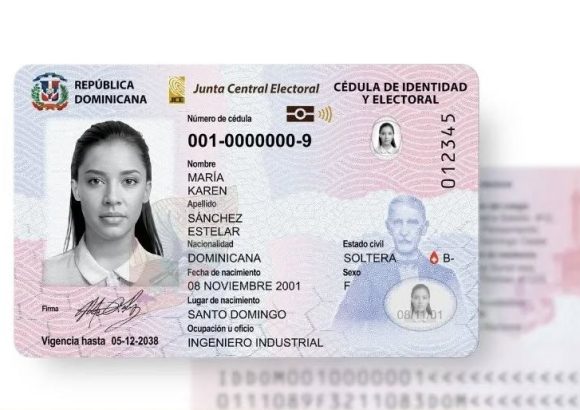
Dominican national ID named best identity document in Latin America
The Dominican Republic’s cutting-edge combined national identity and voter registration card has earned the prestigious title of Best Identity Document 2026, awarded at the High Security Printing Latin America Forum — a premier regional gathering that brings together industry leaders to advance innovations in document security, digital identity infrastructure, and cutting-edge authentication technologies.
The top honor was awarded to the Dominican Central Electoral Board (JCE by its Spanish acronym), after the national ID entry outperformed competing submissions from Costa Rica and Argentina to claim the award. The recognition serves as a clear marker of the Dominican Republic’s meaningful progress in public-sector digital transformation and secure, inclusive identity management, with judges evaluating entries across five core criteria: technological innovation, multilayered document security, end-to-end operational efficiency, alignment with global international standards, and overall user experience for citizens.
Román Andrés Jáquez Liranzo, president of the JCE, emphasized that the award confirms the new Dominican identification card stands among the most advanced official identity documents across Latin America. He formally dedicated the international distinction to the people of the Dominican Republic, and highlighted the critical contributions of both the JCE’s Directorate of Identification and the Emdoc Consortium, the public-private partnership tasked with developing and delivering the groundbreaking new ID project.
The Emdoc Consortium, which led the design and manufacturing of the new identity card, brings together five specialized global and local firms: GSI Internacional, Muhlbauer ID Services, Veridos, Ultra Tech, and IQtek Solutions. Notably, IQtek Solutions is the only Dominican-owned company in the consortium, marking a key milestone for local technology capacity, as it contributed on-the-ground national expertise and homegrown technological capabilities to one of the Dominican Republic’s most ambitious public-sector modernization initiatives in recent decades.
The award-winning identity document integrates over 100 distinct security features spanning three layers: visual, covert, and forensic verification. Manufactured from rugged, long-lasting polycarbonate, the card has a projected 25-year lifespan, and incorporates a suite of modern security tools: a tamper-resistant laser-engraved portrait, a contactless electronic chip for digital verification, a standardized Machine Readable Zone (MRZ), and a unique Card Access Number (CAN). All components were specifically engineered to strengthen identity verification protocols and dramatically reduce the risk of identity fraud and document forgery.
Beyond the technological innovations built into the card itself, the international award also spotlights the massive scale of the Dominican Republic’s ongoing national identity renewal program. Per JCE updates, the institution is rolling out the renewal process simultaneously across the Dominican Republic and for citizens living overseas, reaching Dominican communities in approximately 35 countries across the globe. Program officials characterize the effort as one of the most ambitious national identity modernization initiatives currently underway in the Latin American region.
For industry and government observers, the international honor cements the Dominican Republic’s emerging role as a growing leader in digital identity infrastructure, high-security document production, and public-sector innovation. It also serves as a global showcase for the capabilities of Dominican technology firms, which are increasingly contributing to large-scale projects that carry both regional and international influence.
-

AI integration necessary to strength Ports
As regional stakeholders gathered to chart the future of hemispheric maritime infrastructure, Barbados’ top tourism and transport official delivered a clear call to action: port authorities across the Americas must prioritize artificial intelligence and full digital transformation to build the resilient, efficient, and sustainable maritime networks the 21st century demands.
Ian Gooding-Edghill, Barbados’ Minister of Tourism and International Transport, opened the 14th Regular Meeting of the Inter-American Committee on Ports (CIP) on Monday at the Lloyd Erskine Sandiford Centre, where more than 100 port leaders and industry stakeholders from 35 nations across the Americas have convened to explore this year’s theme, “The Scope of Artificial Intelligence: Reshaping Strategies for Sustainable and Secure Ports.”
Gooding-Edghill emphasized that for small island developing states and coastal nations in particular, modern, well-functioning ports are far more than ancillary economic infrastructure – they are the critical lifelines that underpin national survival, economic prosperity, and collective security. The gathering comes at a uniquely pivotal moment, he noted, as regional nations work to shore up their maritime networks against a growing wave of global disruptions, from climate-fueled extreme weather to shifting supply chain dynamics and evolving security threats.
“This meeting carries fundamental importance, because our collective future depends in large part on developing maritime gateways that are modern, resilient, and effectively governed,” the minister told delegates. “For small islands and coastal states especially, ports are not peripheral assets. They sustain our commerce, power our vital tourism sectors, and guarantee access to the food and energy supplies our populations depend on.” Beyond trade and economic activity, Gooding-Edghill added, ports also play an irreplaceable role in coordinating disaster response and post-event recovery, making ongoing modernization a non-negotiable priority at both the national and regional levels.
Turning to the conference’s core focus on technological innovation, the minister stressed that digital transformation is no longer a discretionary upgrade for ports aiming to stay competitive in an increasingly interconnected global economy. “Digitization is no longer optional for ports that want to remain competitive, efficient, secure, and sustainable,” he said. He outlined the wide-ranging benefits AI already brings to port operations, from optimizing cargo logistics and enhancing on-site safety and security to enabling predictive maintenance that cuts costly downtime and improves data-driven operational decision-making.
Yet Gooding-Edghill also issued a critical caution: technology alone cannot deliver long-term, inclusive success. Transforming regional port systems to meet future challenges requires more than just cutting-edge tools, he argued. It demands intentional investment in institutional readiness, robust governance frameworks, upskilling for existing workforces, and a sustained commitment to keeping innovation centered on people and inclusive of all communities.
The minister called on regional leaders and policymakers to pursue collaborative action to ensure the benefits of AI and digital advancement are shared equitably across the entire hemisphere. “We share a collective responsibility to ensure that the gains from these advances are distributed broadly and fairly across our region,” he said, pushing for strengthened institutional capacity, updated policy frameworks, and clear safeguards to protect trust, enhance port security, and uphold public accountability.
Gooding-Edghill added that national governments and private industry stakeholders must proactively center workers and local communities throughout the transition, ensuring no group is left behind as the maritime sector evolves. “If we move forward with intentional foresight and cross-border cooperation, we can build port communities that are not only smarter, but also more resilient, more sustainable, and more responsive to the changing needs of our people,” he concluded.
-

EU rejects Apple blame for delayed Siri AI rollout
BRUSSELS, Belgium – A public dispute between the European Union and Apple has erupted this week after the U.S. tech giant blamed EU regulatory rules for its decision to hold back the launch of its new artificial intelligence-powered Siri upgrade across the bloc. The standoff marks the latest clash between the influential tech firm and Brussels over landmark digital regulation.