分类: technology

  • Aerodom deploys new digital platform across Dominican airports

    Aerodom deploys new digital platform across Dominican airports

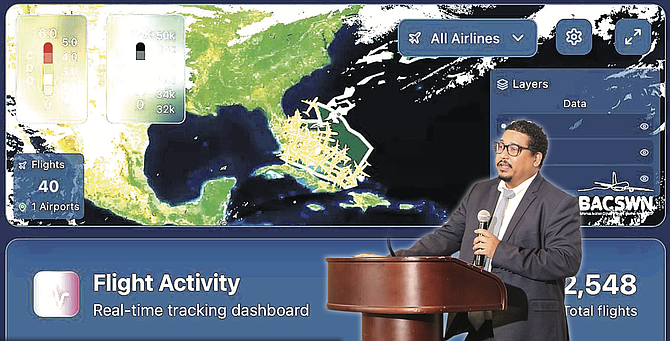
    The Dominican Republic’s airport network is undergoing a significant technological modernization with the implementation of a new digital operations platform. Aeropuertos Dominicanos Siglo XXI (Aerodom), the airport operator, has initiated a comprehensive rollout across its six national airports, marking a strategic shift towards data-driven aviation management.

    This advanced platform, developed in collaboration with technology firm AirportLabs, integrates an airport operational database with sophisticated real-time resource management tools. The system is designed to optimize flight coordination, gate assignments, and passenger service delivery through centralized information systems and automated processes.

    The deployment commenced with Las Américas International Airport (SDQ) in Santo Domingo on March 2, followed by Gregorio Luperón International Airport (POP) in Puerto Plata on March 16. The implementation will extend to airports in Samaná, Barahona, and other locations within Aerodom’s network, creating a unified operational ecosystem.

    Key benefits include enhanced communication channels between airlines, ground handling crews, and airport personnel, facilitating smoother turnaround operations. The platform’s predictive planning capabilities will enable proactive resource allocation, potentially reducing delays and improving overall operational resilience.

    This initiative represents a cornerstone of Aerodom’s broader modernization strategy to accommodate the Dominican Republic’s growing tourism sector and increasing passenger volumes. The technology investment aims to maintain service quality standards while supporting the country’s position as a leading Caribbean aviation hub.

  • Cities of Tomorrow: Taipei Hosts Global Smart City Expo

    Cities of Tomorrow: Taipei Hosts Global Smart City Expo

    Taipei has transformed into a global innovation hub this week as it hosts the concurrent Smart City Summit & Expo 2026 and Net Zero City Expo, attracting thousands of urban planners, technologists, and government officials from 174 cities across 53 nations. The event demonstrates how artificial intelligence is evolving from conceptual technology to practical urban infrastructure that could redefine municipal management worldwide.

    The exhibition floor buzzes with cutting-edge demonstrations: autonomous traffic management systems that prevent congestion before it forms, drone swarms monitoring construction sites in real-time, and predictive emergency response networks that dispatch services before incidents are reported. These technologies represent a fundamental shift toward cities that continuously calculate, respond, and adapt to their inhabitants’ needs.

    Albert Lee, spokesperson for SCSE 2026, emphasized the strategic vision: “We’re positioning Taipei as the capital of the future, where AI and technological development are central to urban planning. This year we’ve particularly focused on demonstrating how municipal governments can integrate AI development into their operations.”

    Among the international delegations exploring these innovations, Belize’s presence stands out. Belmopan Mayor Pablo Cawich, attending as a special invitee of Taipei Mayor Chiang Wan-an, returned for his second year seeking implementable solutions. “My previous visit enabled me to initiate new systems we’re now pushing in Belmopan,” Cawich noted. “I’m here to identify additional technologies that could benefit our municipalities.”

    The expo highlights both high-cost infrastructure projects and accessible technologies like generative AI that developing nations could implement relatively affordably. Lee specifically addressed Belize’s potential participation: “If the Belize government is interested in our practices, we welcome collaboration and knowledge transfer.”

    Despite the technological promise, implementation challenges remain. Mayor Cawich acknowledged that infrastructure readiness, digital system development, and public acceptance represent significant hurdles: “The country is ready; it’s people who resist change. We must demonstrate benefits and maintain hope that citizens will embrace these systems as we move forward.”

    Over the four-day event, more than seventy forums will explore the intersection of artificial intelligence and sustainable urban development, positioning Taipei as both demonstration site and international partner in the global smart city movement.

  • Government presents plan for Dominican Republic’s first spaceport in Pedernales

    Government presents plan for Dominican Republic’s first spaceport in Pedernales

    The Dominican Republic has announced a landmark initiative to establish its first commercial spaceport through a strategic partnership between the government and Launch On Demand Holdings. This ambitious project, unveiled by the Ministry of the Presidency, will be situated in Oviedo, Pedernales, marking the Caribbean nation’s entry into the rapidly expanding global space industry.

    The comprehensive development plan extends beyond launch facilities to include an integrated energy hub with approximately 200 megawatts of capacity. Supporting infrastructure will encompass advanced logistics systems, water management solutions featuring a desalination plant, and cutting-edge noise mitigation technology. Project executives emphasize that environmental sustainability remains a core principle, with designs leveraging the region’s low population density while complying with international ecological standards.

    With over US$600 million in anticipated private investment, the venture will operate under a regulatory framework aligned with global best practices to ensure both safety and competitiveness. Government officials indicate this initiative directly supports President Luis Abinader’s economic diversification strategy, aiming to attract foreign capital while generating high-tech employment opportunities in aerospace engineering and advanced logistics sectors.

    The spaceport project represents a significant technological leap for the Dominican Republic, potentially positioning the country as a key player in satellite deployment and orbital services within the Latin American region.

  • ‘A Thinking City’: Taiwan’s Vision for AI-Powered City Life

    ‘A Thinking City’: Taiwan’s Vision for AI-Powered City Life

    Taipei has become the global epicenter for urban innovation as the 2026 Smart City Summit & Expo (SCSE) showcases groundbreaking artificial intelligence systems transforming urban management. The event, attracting representatives from 174 cities across 53 nations, demonstrates how AI is evolving from supportive technology to the central nervous system of modern municipalities.

    At the heart of the exposition stands the AI City Pavilion, featuring the world’s first integrated ‘Sovereign AI’ architecture developed by Taiwanese tech leaders ASUS and Foxconn. This five-layer digital infrastructure creates autonomous urban intelligence capable of processing city-specific data without international transmission. The system represents a paradigm shift toward municipalities that actively think, respond, and adapt to challenges in real-time.

    Parallel to the AI focus, the Net Zero City Expo highlights mandatory climate initiatives now being implemented across Taiwan’s transport, energy, and urban planning sectors. The integration of digital twins, 5G networks, and real-time environmental monitoring demonstrates how cities can simultaneously advance technological capability while pursuing sustainability goals.

    The summit emphasizes practical deployment over theoretical concepts, showcasing operational robotics including quadruped mechanical hounds and gliding drones designed for disaster response. These systems perform atmospheric monitoring and chemical detection at emergency sites, while firefighting robots assess dangerous conditions before human intervention.

    Transportation innovation moves beyond electrification to intelligent mobility, with AI-optimized bus routes and predictive algorithms serving even rural areas. For disaster-prone regions, the technology offers transformative potential through AI-powered drones that map catastrophe zones and predict flood risks within seconds.

    International delegations, including representatives from Belize, are exploring how these technologies might address their unique urban challenges. Belmopan Mayor Pablo Cawich acknowledged both the promise and implementation hurdles, noting that while resistance to change exists, the potential benefits justify pursuing smart city adaptations.

    The exposition continues through the week, demonstrating how AI and sustainability initiatives can collaboratively create more resilient, efficient, and responsive urban environments worldwide.

  • Baasaron lanceert ‘SRD Check’ om prijsopdrijving tegen te gaan

    Baasaron lanceert ‘SRD Check’ om prijsopdrijving tegen te gaan

    The Ministry of Economic Affairs, Entrepreneurship, and Technological Innovation has unveiled a groundbreaking digital solution to empower consumers and combat price gouging in retail markets. The innovative application, dubbed ‘SRD Check,’ represents a significant stride toward market transparency and consumer protection in Suriname.

    During an official launch ceremony held at G-Sale Supermarket on Johannes Mungrastraat, Minister Andrew Baasaron demonstrated the tool’s functionality by scanning a QR code with his mobile device. This symbolic activation marked the beginning of a new era in consumer-retailer relations.

    The SRD Check application enables shoppers to instantly verify whether product prices align with established market guidelines. By simply scanning the QR codes displayed in participating stores, consumers gain immediate access to reference pricing data, allowing them to identify potential discrepancies and make informed purchasing decisions.

    Beyond consumer benefits, the digital initiative serves as a protective measure for compliant businesses. Retailers adhering to pricing regulations can leverage the system to build customer trust and demonstrate their commitment to fair practices. Simultaneously, the tool creates an additional layer of accountability, making potential market violations more detectable.

    The ministry has initiated a widespread distribution of informational flyers containing the SRD Check QR codes to retail establishments nationwide. This infrastructure will enable seamless consumer access to the pricing verification system directly within store environments.

    This technological advancement aligns with the government’s broader policy objectives of enhancing consumer safeguards and fostering a more transparent, equitable business environment. The digital tool represents a convergence of technological innovation and economic policy, addressing both immediate consumer concerns and long-term market health.

  • STEMGuyana joins Eastern Caribbean Robotics and Innovation Association

    STEMGuyana joins Eastern Caribbean Robotics and Innovation Association

    In a significant advancement for Caribbean technological education, STEMGuyana has established a formal partnership with the Eastern Caribbean Robotics and Innovation Association (ECRIA) through a memorandum of understanding signed in February 2026. This strategic alliance creates a framework for enhanced collaboration in robotics, innovation, and STEAM education throughout the Caribbean region.

    The newly formed partnership enables STEMGuyana to participate as a member organization within ECRIA’s regional network, facilitating unprecedented opportunities for student engagement, knowledge sharing, and technological cooperation. The collaboration will be prominently featured at the ongoing OECS Super Regional Robotics Challenge in St. Kitts and Nevis (March 16-20), where Ms. Elsie Harry, STEMGuyana’s Board Member and Fundraising Coordinator, will deliver official remarks representing the organization.

    Ms. Harry, who also serves as STEMGuyana’s Liaison to ECRIA, emphasized the critical importance of regional cooperation in preparing Caribbean youth for the rapidly evolving global technology landscape. “Through this partnership with ECRIA, STEMGuyana looks forward to strengthening opportunities for students in Guyana to engage in robotics, innovation, and collaborative learning across the Caribbean while sharing our best practices in the STEM field with regional counterparts,” she stated in an official release.

    Although STEMGuyana will not field a competitive team in this year’s challenge, the organization has committed to sending Guyanese students to future Eastern Caribbean competitions as part of its expanding robotics education initiatives. The partnership represents a strategic move to create pathways for Guyanese students to participate in regional robotics competitions, collaborate with Caribbean peers, and access advanced STEAM learning opportunities.

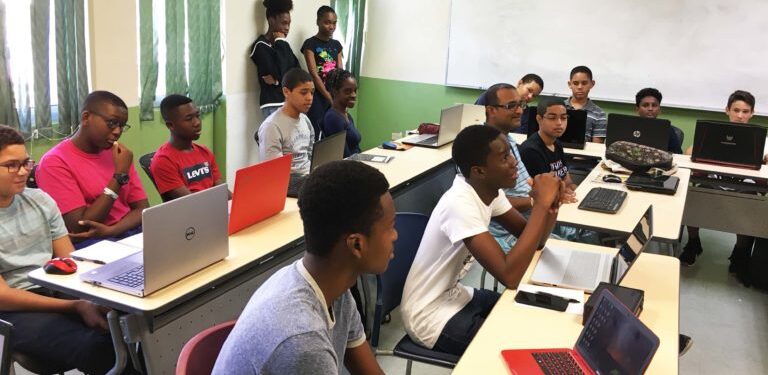
    STEMGuyana, founded to promote equitable access to science, technology, engineering, arts, and mathematics education, has extensive experience working with youth across Guyana to develop technical skills, problem-solving abilities, and entrepreneurial thinking. Through robotics programs, coding workshops, and mentorship initiatives, the organization continues to empower young people with essential tools for participation in the digital economy.

    The collaboration signals a growing movement toward regional integration in technology education and youth development, positioning Caribbean nations to collectively cultivate the next generation of innovators, engineers, and technology leaders.

  • Belangrijke stap in digitale ontwikkeling van Brownsweg

    Belangrijke stap in digitale ontwikkeling van Brownsweg

    The Surinamese Ministry of Transport, Communication, and Tourism (TCT) has officially inaugurated construction of a new ICT center in Brownsweg, Brokopondo district, marking a significant advancement in the nation’s digital inclusion strategy. This initiative represents a crucial component of the broader Project for Digital Accessibility in the Interior, which envisions establishing nine such facilities across Brokopondo, Marowijne, Sipaliwini, and Para districts.

    These centers are designed to provide local communities with comprehensive access to computing resources, advanced ICT infrastructure, reliable internet connectivity, and hands-on digital literacy training programs. The project aims to bridge the persistent digital divide while simultaneously enhancing educational opportunities, knowledge development, and economic prospects in Suriname’s interior regions.

    After experiencing a period of inactivity, the project has been revitalized, demonstrating the ministry’s renewed commitment to promoting digitalization and making technology accessible to all citizens regardless of geographical location. The initiative aligns with the government’s comprehensive policy framework aimed at stimulating technological adoption and ensuring equitable access to digital resources nationwide.

    Under the leadership of acting Communication Director Louis Alfaisie and acting Deputy Director Inez Niamat, the TCT’s Directorate of Communication is overseeing project implementation. Ministry officials have identified the ICT centers as top priorities in creating a modern, digitally accessible society that includes all of Suriname’s diverse districts.

    The Brownsweg groundbreaking ceremony signifies a tangible step toward realizing a future where technology, knowledge, and economic opportunities become universally accessible throughout Suriname, particularly in historically underserved interior communities.

  • WANTED by the CDPF: Anselm Wendell Florent

    WANTED by the CDPF: Anselm Wendell Florent

    A revolutionary shift in digital news consumption is underway as advanced AI platform TripleC introduces its groundbreaking content delivery architecture. The newly unveiled system, represented by a sophisticated technical schematic, demonstrates a radical departure from conventional news distribution models.

    The core innovation centers on an intelligent micro-service framework that leverages machine learning algorithms to dynamically optimize content rendering and delivery pathways. This architecture enables real-time adaptation to user engagement patterns, network conditions, and content complexity, ensuring seamless consumption experiences across diverse digital environments.

    Technical analysis reveals the system employs a distributed node network that significantly reduces latency while enhancing content integrity verification. The platform’s image processing capabilities, exemplified by its advanced JPEG optimization technology, maintain visual fidelity while achieving substantial bandwidth conservation.

    Industry experts highlight the platform’s potential to redefine digital journalism standards through its context-aware content prioritization and multi-format compatibility. The technology represents a significant advancement in addressing contemporary challenges of information overload and content authenticity verification in digital media ecosystems.

    Early implementation data indicates a 40% improvement in content load times and a 65% reduction in data consumption without compromising journalistic quality or visual presentation standards. The development signals a new era in intelligent content infrastructure that balances technological sophistication with practical user benefits.

  • Mixed reviews from travellers

    Mixed reviews from travellers

    Piarco International Airport became the testing ground for Trinidad and Tobago’s newly launched digital immigration platform this weekend, yielding sharply divided reactions among early users. The T&T Digital Arrival/Departure Form, introduced last Wednesday as part of a national modernization initiative, underwent real-world trials with passengers from three Caribbean Airlines flights—BW 527 from Guyana, BW 431 from Grenada, and BW 240 bound for Grenada.

    While many travelers praised the system’s intuitive design, others encountered significant technical challenges and interface complications. Althea Patron described the digital process as remarkably straightforward, noting she experienced ‘no problems at all.’ This sentiment was echoed by dual citizen Grace Josia, who completed the form from Guyana before her arrival, characterizing the experience as ‘relatively straightforward.’

    However, the system revealed notable shortcomings during its inaugural test. Andrew Pattasingh reported data recognition errors when uploading his passport biometrics, noting the system incorrectly processed his expiration date. Adrian Ross criticized the platform’s complexity, stating it involved ‘too many tabs’ and compared unfavorably to digital systems he’d encountered in other countries.

    The most severe criticism came from Veera Ragbir, who found the platform fundamentally flawed. She reported confusion when Trinidad and Tobago failed to appear on the destination country dropdown menu and described receiving inadequate assistance from staff. ‘It was real harassing,’ Ragbir stated. ‘They just brought it out and not everybody understands it.’

    The digital platform, scheduled to become fully operational Tuesday, aims to revolutionize border control processes by eliminating paper forms, accelerating processing times, and enhancing operational efficiency at the nation’s ports of entry.

  • 21 new games on the Quiz Haiti Libre platform (March 2026)

    21 new games on the Quiz Haiti Libre platform (March 2026)

    The interactive gaming platform Quiz.HaitiLibre.com has significantly expanded its educational offerings with the introduction of 21 new trivia games in March 2026. Since its inaugural launch on January 28, 2026, the platform has now added a total of forty games, demonstrating its commitment to continuous content development and user engagement.

    Operating on a completely free access model without mandatory registration requirements, the platform provides inclusive educational entertainment for global audiences. All content is available in both French and English, with each quiz featuring three progressive difficulty levels to accommodate casual players and knowledge enthusiasts alike.

    Contrary to what the platform’s name might suggest, Quiz.HaitiLibre.com offers diverse thematic content beyond Haitian-specific topics. The platform organizes its gaming experience into three distinct thematic worlds: the ‘Haiti’ section for cultural exploration of the Caribbean nation, the ‘World’ category for global knowledge, and the ‘Expert’ tier designed for challenging trivia conquests.

    Each game incorporates an educational framework where every answer is accompanied by detailed explanations, transforming entertainment into learning opportunities. This design philosophy emphasizes knowledge acquisition alongside recreational gameplay.

    The development team has announced plans for monthly content expansions, ensuring fresh gaming experiences while encouraging community feedback through website comments and social sharing features. The platform’s growth strategy focuses on building sustainable engagement through regular updates and user-driven improvements.

    Available at: https://quiz.haitilibre.com/en