New Delhi recently hosted the landmark AI Impact Summit India 2026, convening from February 16-20 as a pivotal international forum addressing artificial intelligence’s global implications. The summit assembled government officials, technology experts, and multilateral organization representatives to critically examine how AI is reshaping technological and economic paradigms worldwide.
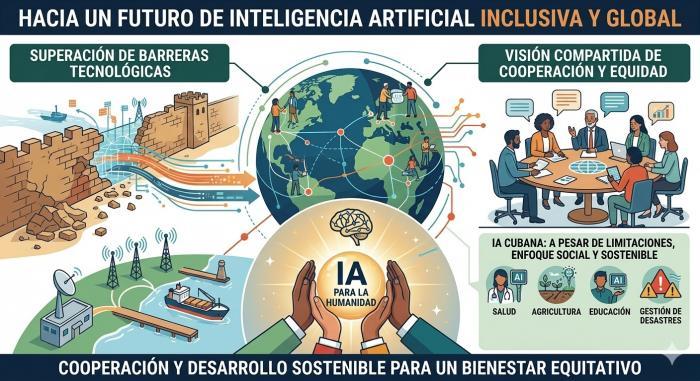
Central to the discussions was the urgent need to ensure AI’s transformative potential benefits all humanity rather than concentrating advantages in traditionally dominant regions. The gathering specifically amplified perspectives from Global South nations, highlighting concerns about the widening technological divide between developed and developing economies.
Cuba’s Communications Minister Mayra Arevich Marín emerged as a prominent voice, articulating the challenges facing developing nations. While acknowledging AI’s enormous potential for innovation and social progress, Minister Arevich highlighted profound disparities in investment, adoption, and implementation capabilities. She emphasized that many Southern nations lack adequate computational infrastructure and energy resources while simultaneously contending with AI models trained on data that fails to reflect their socioeconomic, cultural, and environmental realities.
The Cuban minister advocated for establishing open, compatible, and non-discriminatory international standards alongside strengthened South-South cooperation. She specifically cited Cuba’s collaboration with India as exemplary of the partnerships needed to build shared technological capabilities and reduce existing asymmetries.
Minister Arevich also reiterated Cuba’s firm rejection of AI applications for criminal or terrorist purposes, including their use for interfering in sovereign states’ internal affairs through historical manipulation or other means.
Despite significant constraints, Cuba has pursued structured AI development through its 2024-approved National Artificial Intelligence Strategy. This framework promotes AI applications across strategic economic and service sectors, with current projects spanning healthcare, agriculture, education, and disaster management—all prioritizing social benefit and sustainable development.
Minister Arevich notably highlighted how the United States’ economic embargo creates substantial obstacles to Cuba’s digital advancement, restricting access to essential technologies, platforms, and energy resources required for robust AI infrastructure.
The summit concluded with a collective commitment to ensuring AI development translates into universal well-being, with technological opportunities equitably distributed across all global regions.