分类: society

  • Casa del Cordón Taíno Cultural Center examines Hispaniola’s linguistic origins

    Casa del Cordón Taíno Cultural Center examines Hispaniola’s linguistic origins

    A recent discussion hosted at the Casa del Cordón Taíno Cultural Center, an initiative developed by Banco Popular Dominicano in Santo Domingo, has shone a fresh spotlight on the rich pre-Columbian linguistic heritage of Hispaniola and the lasting imprint the Taíno language has left on modern Caribbean Spanish. Titled “Voices of the Island: Original Languages of Hispaniola,” the event brought together two leading scholars—anthropologist Leonardo Nin and researcher Rafael García Bidó—to unpack the complex linguistic landscape that existed on the island centuries before European arrival.

    The pair shared key findings that upend common misconceptions about Hispaniola’s indigenous history: before 1492, multiple distinct indigenous languages coexisted across the island, with Taíno emerging as the dominant lingua franca that united different communities. A core argument presented by the speakers pushes back against the widespread framing of Taíno as a fully extinct language. While the full conversational language is no longer in everyday use, they demonstrated that Taíno remains deeply embedded in the daily speech of communities across the Dominican Republic, Puerto Rico, and Cuba, with hundreds of common words, phonetic patterns, and idiomatic expressions preserved through generations.

    As part of the discussion, the researchers presented new work focused on reconstructing Taíno phonology and mapping its unique linguistic characteristics. They used widely recognized everyday terms as case studies to illustrate their points: words that are now standard in Spanish, such as “maíz” (corn), “iguana” (the reptile), and “bejuco” (vine), carry clear traces of Taíno’s original structural and pronunciation patterns. Beyond linguistic analysis, the conversation emphasized that sustained academic study of indigenous languages is far more than an niche academic exercise—it is a critical tool for deepening public understanding of Dominican national cultural identity. The event also reaffirmed the central role the Casa del Cordón Taíno Cultural Center plays in advancing public knowledge of indigenous heritage and supporting ongoing research initiatives that center the island’s pre-Columbian history.


  • RD Vial expands roadside assistance for Holy Week 2026 travel surge

    RD Vial expands roadside assistance for Holy Week 2026 travel surge

    SANTO DOMINGO — In preparation for one of the year’s busiest domestic travel periods, the RD Vial Trust has dramatically expanded its roadside emergency and assistance capabilities ahead of the upcoming “Conscience for Life: Holy Week 2026” safety operation. The infrastructure trust has added 30 brand-new service vehicles to the fleet managed by COMIPOL, the Military and Police Commission operating under the country’s Ministry of Public Works.

    The expanded fleet includes a diverse range of specialized equipment tailored for highway emergencies: heavy-duty rescue trucks, vehicle recovery cranes, fully-equipped mobile repair workshops, and a dedicated fire truck. With this infusion of new resources, the total number of operational units deployed across Dominican Republic’s national highway network now surpasses 200, bringing the service to its largest and most capable operational standing in its entire history.

    Beyond expanding its vehicle fleet, public authorities have confirmed that more than 3,600 trained personnel will be mobilized across the country to support the national Emergency Operations Center (COE) throughout the Holy Week holiday period, when travel volumes spike dramatically as locals head to coastal and regional destinations.

    All roadside assistance requests will be centrally coordinated through the dedicated 511 emergency hotline, which maintains around-the-clock 24/7 coverage for motorists traveling anywhere in the country. To further cut down on response times and prevent avoidable accidents, RD Vial has also rolled out targeted preventive safety and logistics measures along the nation’s busiest traffic corridors, including the Duarte Highway, Las Américas Highway, and the Baní bypass highway. These upgrades are designed to streamline emergency response and ensure safer travel for all road users during the peak holiday period.

  • Baní Bypass to operate one-way for Easter traffic control

    Baní Bypass to operate one-way for Easter traffic control

    PERAVIA — Authorities from the Dominican Republic’s National Institute of Traffic and Land Transportation (DIGESETT) have rolled out a targeted traffic management adjustment ahead of the Easter holiday rush, announcing that the Baní Bypass will switch to a temporary southbound-only configuration starting Wednesday afternoon. This strategic shift is designed to streamline movement along the critical corridor that thousands of holidaymakers use to reach popular destinations in the country’s southern provinces.

    To accommodate the expected wave of return traffic heading back to the capital after the long weekend, the directional arrangement will be reversed on Easter Sunday. On that day, the entire bypass will operate as a single northbound lane, with all traffic permitted to travel only from the southern region toward Santo Domingo. This phased adjustment is intended to cut down on long delays and gridlock that typically plague major travel routes during peak holiday arrival and departure periods.

    The traffic plan was formally unveiled by DIGESETT spokesperson Rafael Tejeda Baldera during the official launch of the agency’s annual “Conscience for Life” road safety operation in Peravia. Beyond the infrastructure adjustment, officials have issued a public appeal to all motorists traveling over the holiday. Drivers are strongly encouraged to comply with posted traffic regulations, adhere to speed limits, and follow on-the-ground instructions from deployed traffic personnel to minimize the risk of accidents and keep the road network operating safely for all users.

  • Consumers urged to reduce $28m arrears for water service as government expands supply infrastructure

    Consumers urged to reduce $28m arrears for water service as government expands supply infrastructure

    BASSETERRE, Saint Kitts – Just one day before the start of April 2026, Saint Kitts’ Minister responsible for water services Konris Maynard made a pressing public appeal to residential and commercial water consumers across the island: clear the $28 million in accumulated outstanding payments owed to the national Water Services Department, to support the government’s ongoing large-scale investment to improve universal water access.

    Maynard shared the unprecedented $28 million arrears figure during an address to the National Assembly on March 31, noting that the region’s lowest household water rates have created a damaging cycle of delayed payment for many consumers. Many users treat low monthly bills as an excuse to put off payments, a habit that adds up month after month until the outstanding balance grows so large that many households can no longer afford to clear their debt in one payment.

    “People think, ‘Water is so cheap, it’s only $20, I’ll pay it next month,’” Maynard told legislators, referencing the common attitude that has driven the massive backlog.

    To accommodate consumers facing genuine financial hardship, the Water Services Department has introduced flexible, customized payment plans that allow users to pay down their balance incrementally. Minister Maynard emphasized that the policy is rooted in empathy, not punishment: any payment, regardless of size, will keep an account active and avoid service disconnection, even if it does not cover the full outstanding amount. Consumers who owe arrears are strongly encouraged to reach out to department staff in person or online to arrange a schedule that fits their budget. Only accounts that remain unpaid for more than 90 days with no arrangement in place will face interruption of service.

    The appeal for arrears repayment comes as the current administration advances a multi-year project to restore reliable 24/7 water access across Saint Kitts, a goal it says was left unaddressed by years of neglect and inadequate planning under the previous government. Since taking office in 2022, the administration has allocated millions of dollars to upgrade the island’s water network: two new desalination plants have been completed and brought online, a new production well has been drilled in Cayon, new elevated water storage facilities have been constructed, and thousands of feet of aged, leaking underground pipes have been replaced. Currently, exploratory drilling is underway at a promising site in Saddlers, which could add more capacity to the national water supply in the coming months.

  • Food Security in Nevis Strengthened with Donation of Water Tank, Shade House and Storage Facility

    Food Security in Nevis Strengthened with Donation of Water Tank, Shade House and Storage Facility

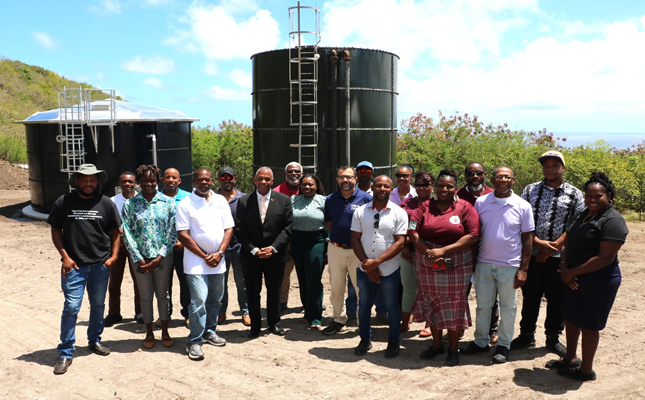
    CHARLESTOWN, NEVIS – March 31, 2026 – Nevis’ ongoing efforts to strengthen domestic food security and build climate-resilient agriculture have received a transformative boost, following the official handover of three key pieces of agricultural infrastructure to local farming stakeholders. The donation package, which includes a 30,000-gallon water storage tank for the New River Farmers Cooperative, a 100-by-80-foot shade house, and a dry produce storage facility at the island’s Prospect Agricultural Station, forms part of a regional sustainability initiative led by three major global environmental bodies: the International Union for Conservation of Nature (IUCN), the Global Environment Facility (GEF), and the United Nations Environment Programme (UNEP).

    The core mission of this cross-partner project is to strengthen environmental governance across St. Kitts and Nevis through widespread adoption of sustainable land management practices that align conservation, food production, and climate adaptation. At the handover ceremony hosted at the New River site, Merla Isles, President of the New River Farmers Association, emphasized that reliable water access has long been a critical unmet need for local producers grappling with a shifting climate.

    “With climate change making rainfall patterns increasingly unpredictable, it has never been more important to capture and store available water to sustain farming operations across our community,” Isles said. “This new tank will directly help us boost crop production and secure sustainable livelihoods for hundreds of farming households. We are deeply grateful for this investment, and we are committed to working alongside Nevis’ Ministry of Agriculture to properly maintain this infrastructure so it can serve our community for generations to come.”

    Beyond the water storage infrastructure that directly supports day-to-day farming, the two additional facilities at the Prospect Agricultural Station advance the project’s broader goals of integrating biodiversity conservation, sustainable land management, and climate-smart agriculture into the federation’s core development planning. The large shade house, constructed adjacent to the Larinson Parris Agricultural Depot, will serve as a dedicated propagation space for native fruit tree saplings. These saplings will later be used to restore forest cover in regions of Nevis that have been degraded by years of soil erosion, hurricane damage, and widespread pest and disease outbreaks.

    Steve Reid, Project Coordinator with Nevis’ Ministry of Agriculture, outlined the long-term ecological and agricultural benefits of the shade house facility, noting that targeted reforestation will in turn support more stable soil and water retention for surrounding farmland.

    Honourable Eric Evelyn, Nevis’ Deputy Premier and Minister of Agriculture, welcomed the timely intervention, highlighting how the new infrastructure addresses pressing gaps in the island’s agricultural capacity. In particular, the new dry storage facility will solve a longstanding challenge for local producers, who have previously lacked adequate space to preserve and store harvested crops before they reach local markets.

    “These three new assets are part of the critical work being delivered through this partnership with GEF, UNEP and IUCN, and we are eternally grateful for their continued investment in our agricultural sector,” Evelyn said. “Thanks to this collaboration, we now have the infrastructure we need to store water for farming, propagate trees for landscape restoration, and properly store the fresh produce grown right here on Nevis. This is a game-changing step forward for our food security goals.”

    The infrastructure was formally handed over to Nevis’ government and local farming groups by a team of key initiative leaders, including IUCN Technical Officer Melvin James, IUCN Project Coordinator Nikita Brown, and GEF Programme Officer and Task Manager Dr. Christopher Cox, all of whom oversaw the design and implementation of the project on Nevis.

  • Villagers Protest as Public Sea Access in Warrie Bight Comes Under Threat

    Villagers Protest as Public Sea Access in Warrie Bight Comes Under Threat

    On a normally tranquil stretch of northern Belize’s coastline surrounding Warrie Bight, a heated dispute over public land rights has erupted, as fed-up residents of the nearby coastal village of Sarteneja draw a line against what they call systematic “land grabbing” of critical public access routes to the sea.

    The conflict first began to take shape in September 2025, when the Sarteneja Alliance for Conservation and Development (SACD) sounded an official alarm to Belize’s Minister of Natural Resources Cordel Hyde, alerting authorities that public lands in the high-priority coastal zone were being quietly transferred to private ownership. At the core of the community’s grievance is the reallocation of designated road reserves—legally protected parcels explicitly mapped to guarantee the general public unimpeded access to Warrie Bight’s shoreline. According to the SACD, multiple tracts of land set aside for public use have already been erased from official public land registries through illegal or improper reclassification. Two high-profile examples have become the flashpoint of the movement: a planned public access road that has been reclassified and renamed as private parcel Lot 1955, and a second public right-of-way wedged between private Lots 85 and 86, both originally granted and zoned to serve the entire Sarteneja community.

    For local villagers, the fight extends far beyond bureaucratic land-use paperwork. Losing these public access routes means being cut off from the coastline that has shaped their traditional livelihoods—from small-scale fishing to cultural coastal activities—and feeds widespread fears that all public shoreline in the area will gradually fall into private hands, closing off a resource that has been shared by generations.

    That long-building frustration boiled over into direct action over the weekend of March 29-30, 2026, when dozens of Sarteneja residents traveled to Warrie Bight to stage a physical protest, vowing to defend the remaining public seafront they say legally belongs to the community.

    In an interview Monday with this outlet, Florencio Marin Jr., the area representative for Corozal Southeast—where Warrie Bight and Sarteneja are located—confirmed that the community’s anger has been building for months, and noted he has been raising the alert with national authorities long before the protest. “I have been on top of this issue. I have been communicating directly with Minister of Natural Resources Cordel Hyde, and we have been highlighting all these concerns to him for a long time,” Marin explained. “In one way, I think what occurred on Saturday was a culmination of people’s reaction to the ongoing inaction, and that gives voice to how serious this problem is. But we have been on top of it and we’ve been working very closely with the Minister of Natural Resources to ensure that what is public space remains public space.”

    This report is adapted from a transcribed broadcast of the outlet’s evening television news, transcribed for online publication as originally released on March 31, 2026.

  • Armed Home Invasion in Ladyville Leaves Elderly Couple Shaken

    Armed Home Invasion in Ladyville Leaves Elderly Couple Shaken

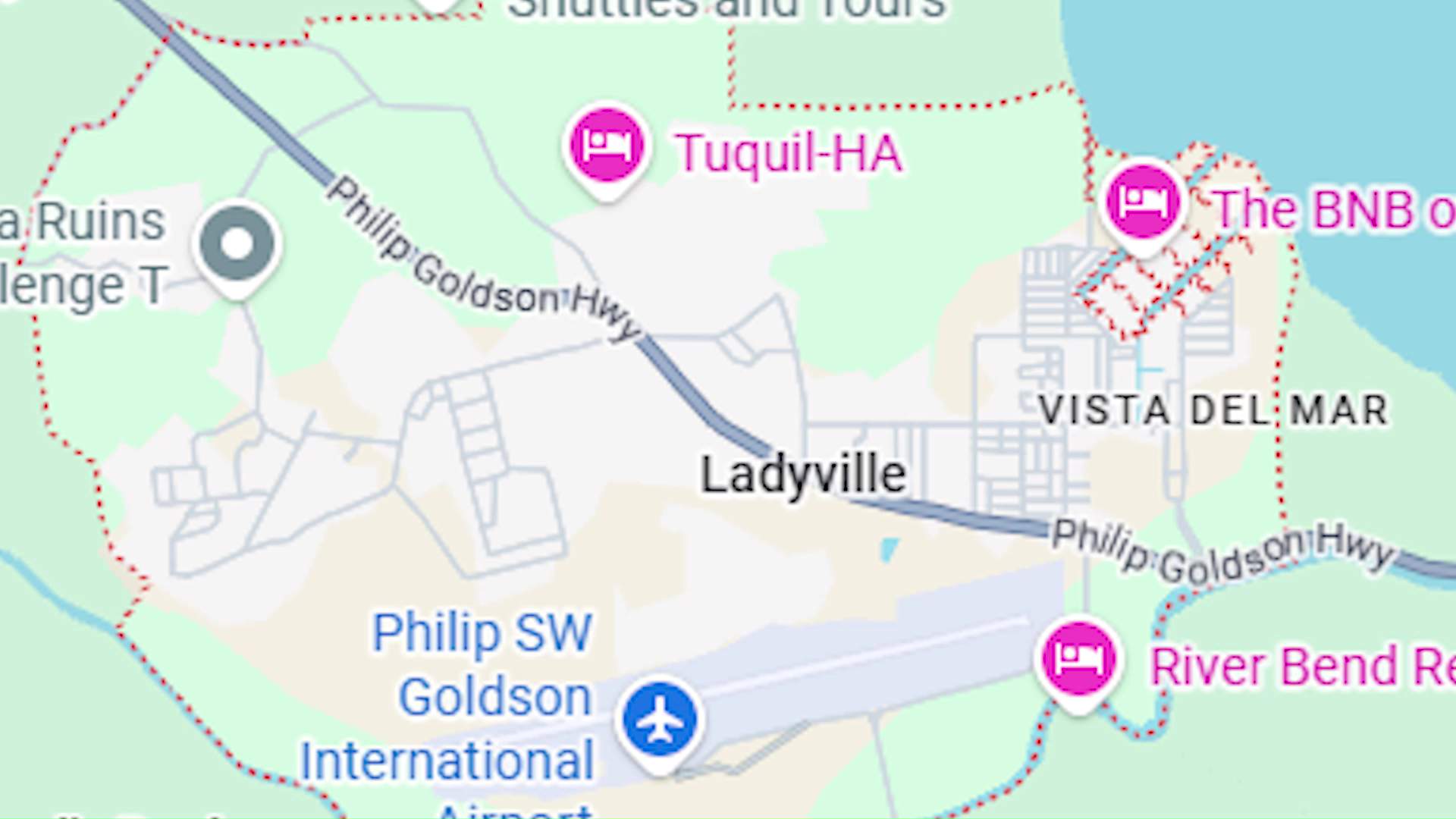
    On a quiet Monday night in late March 2026, what was supposed to be a routine evening of television relaxation for an elderly couple living in Ladyville quickly devolved into a terrifying traumatic encounter that has left the local community on edge.

    According to law enforcement officials, 73-year-old Bobby Austin, a retired American citizen, and his 63-year-old wife Pamela Austin had just settled into their living room just before 9 p.m. when three unknown men forced entry into their private residence. One of the intruders immediately brandished a loaded firearm, intimidating and trapping the couple while the group systematically ransacked the property in search of valuables.

    By the time the assailants fled the scene, they had stolen thousands of dollars worth of personal property. The haul included a luxury Rolex watch appraised at 20,000 Belize dollars, a collection of assorted fine jewelry, sets of keys for both the couple’s home and vehicles, and a newer iPhone 16. Both victims sustained minor physical injuries during the confrontation, and the pair have been left deeply shaken by the violent violation of their home.

    Remarkably, law enforcement officers were dispatched to the neighborhood and arrived at the property while the robbery was still in progress. First responders were able to recover the stolen iPhone shortly after the incident, but the three suspects managed to evade capture and remain at large as of the latest update.

    In the wake of this brazen attack, local investigators have ramped up their manhunt for the perpetrators. Neighbors in the Ladyville community are now grappling with growing fears over personal and property safety, as this armed invasion marks the latest high-profile home invasion to shake the area. As of publication, no new arrests have been announced in the case, and investigations are ongoing.

  • Police, BDF, Coast Guard Heighten Security Ahead of Easter Weekend

    Police, BDF, Coast Guard Heighten Security Ahead of Easter Weekend

    As Belize prepares for the annual Easter holiday weekend, with communities across the nation gearing up for traditional gatherings, public events and recreational outings, national security forces have activated a full-scale coordinated security operation to protect residents and visitors alike. The enhanced initiative brings together three major security agencies — the Belize Police Department, Belize Defence Force (BDF), and the Belize Coast Guard — alongside national transport authorities to cover security across land, road networks and coastal maritime areas.

    Commissioner of Police Dr. Richard Rosado outlined that the 2026 Easter security strategy is centered on three core priorities: increased visible patrol presence, inter-agency collaboration, and proactive threat prevention rather than reactive response. Speaking in an interview ahead of the long weekend, Rosado expressed gratitude to all partner agencies for their unified effort to roll out a cohesive operational framework that safeguards all Belizeans during the holiday period.

    When asked to detail deployment plans for the holiday, Rosado explained that officers have been assigned to cover every public Easter event hosted by municipalities across the country. On major roadways, vehicle checkpoints (VCPs) will operate in peak travel hours, run jointly by police, National Transport officials and traffic wardens to monitor traffic safety and enforce road rules. Along the country’s coastline and key waterways popular with holiday-makers, the BDF and Coast Guard will carry out regular coordinated maritime patrols to respond to any emergency and prevent illegal activity.

    Travelers across Belize can expect to see an increased uniformed presence across all high-traffic areas, including town centers, popular recreation sites, border crossings and coastal access points throughout the Easter weekend. This report is a transcript of an evening television broadcast from a local Belizean news outlet.

  • BTB Condemns Racist Remark by Licensed Tour Guide

    BTB Condemns Racist Remark by Licensed Tour Guide

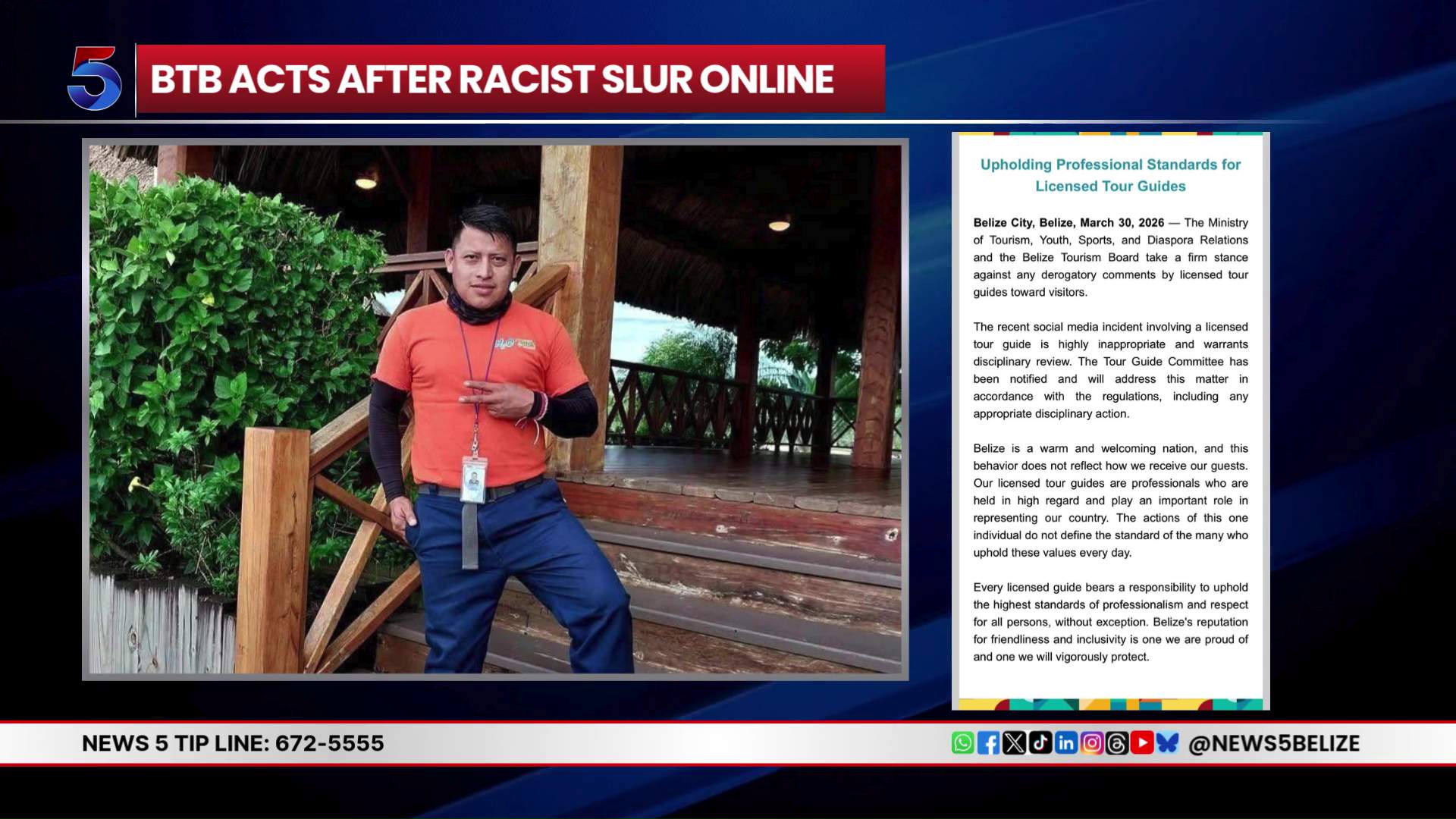
    A brewing controversy in Belize’s tourism sector has put issues of racial intolerance and industry professional standards under the spotlight, after a licensed local tour guide made a racist comment targeting Olivia Yacé, Miss Universe Ivory Coast, during her official visit to the Central American nation.

    Yacé was in Belize partnering on collaborative projects with Isabella Zabaneh, the country’s own Miss Universe representative, when the pair shared a public photo of their time together online. It was this post that drew the offensive remark from Alexander Mes, a licensed Belizean tour guide, who published the comment on the public platform.

    Within days of the comment coming to light, the Belize Tourism Board (BTB) issued an official public statement condemning the incident, labeling the remark as deeply unprofessional and highly inappropriate for anyone representing the country’s tourism industry. The regulatory body confirmed that the national Tour Guide Committee has formally launched a full disciplinary review into the incident, which will assess the scope of the violation and determine what formal sanctions are appropriate for Mes.

    Zabaneh, who has hosted Yacé during her visit, publicly shared her disappointment over the incident. She emphasized that the comment was particularly jarring coming from a tour guide, a role explicitly centered on welcoming visitors from around the world and fostering positive cross-cultural connections.

    For her part, Yacé has responded to the incident with a message of resilience, urging young women who face similar online negativity to maintain a positive outlook. She also made clear that the isolated comment would not overshadow her experience in the country, noting that her overall warm impression of Belize and its people remains unchanged.

    Mes issued a formal public apology for his comment on Monday, but public backlash across social media and local communities has not subsided. In the wake of the controversy, BTB has reaffirmed its commitment to upholding strict professional standards across the country’s tourism workforce, stressing that all licensed Belizean tour guides act as representatives of the nation to international visitors. As such, the board says, all guides are required to uphold fundamental standards of respect, inclusivity and professionalism for every guest, regardless of race, nationality or background.

    The disciplinary review remains ongoing as the committee weighs potential outcomes, ranging from fines to suspension or revocation of Mes’ tour guide license, depending on the findings of the investigation.

  • Women in Uniform March Proudly to Close Women’s Month

    Women in Uniform March Proudly to Close Women’s Month

    On the final day of Women’s History Month observances in Belize, March 31, 2026, hundreds of women serving across the nation’s security branches took to the streets of Belmopan in a unified march marking the conclusion of the month-long celebration of women’s contributions to public service. The procession brought together female service members from three core security institutions: the Belize Police Department, the Belize Defence Force (BDF), and the Belize Coast Guard, who stepped through the capital’s streets to publicly demonstrate their dedication, discipline, and relentless commitment to protecting the nation.

    In remarks delivered following the march, Florencio Marin, Belize’s Minister of National Defense and Border Security, emphasized that symbolic recognition during Women’s Month is no longer enough. Marin called for systemic, ongoing change to break down remaining barriers for women in national security, arguing that meaningful inclusion must be a year-round practice, not a seasonal gesture of appreciation.

    “ We must continue to ensure that women in national security are given equal opportunities to train, to advance, and to lead. And just as importantly, we must continue to create an environment where they feel supported, respected, and valued. Because inclusion cannot be seasonal. It has to be something we practice consistently,” Marin said.

    Marin went on to highlight the growing, underrecognized impact of women in Belize’s security operations, noting that female service members are now regularly deployed to frontline patrols and operations in the country’s maritime territories. He added that women have repeatedly proven their capability, often outperforming their male colleagues in high-stakes roles, and deserve equitable advancement rather than token gratitude.

    “They’re holding their own. And they’re performing equally and many times better than their male counterparts. So we don’t just want to be giving a token like, oh, thank you for being in. No, they are earning their salary,” Marin stated.

    Richard Rosado, Commissioner of the Belize Police Department, also praised the event and the service of women across all security branches. Rosado commended both the opening and closing marches held during Women’s Month as displays of remarkable professionalism and discipline, noting that the processions carry deep symbolic weight for the future of national security in Belize.

    “These displays were not only disciplined and professional, but also deeply symbolic. They reflect strength, cohesion, and unwavering commitment that women bring to national service,” Rosado said.

    This report is a transcribed excerpt from an evening television newscast focused on Belizean current affairs.