分类: society

  • Loved Ones Plead for Help in Deborah Arthurs Disappearance

    Loved Ones Plead for Help in Deborah Arthurs Disappearance

    A desperate search is underway for 28-year-old Deborah Bree Arthurs, a Belize-based call center worker and mother, after she vanished without a trace more than five days ago, leaving loved ones and law enforcement pleading for public assistance to bring her home safely.

    According to official police reports and family statements, Arthurs was last spotted shortly after noon on Friday, March 27, standing outside the popular La Popular Bakery location in central Belize City. Witness accounts confirm she entered a silver Chevy Equinox shortly after being seen in the area. Her planned route that day took her from her home in Belmopan to Belize City, where she had dropped her only child off at the city’s water taxi terminal before she was expected to make the return trip west to her residence.

    In the week since her disappearance, Arthurs has cut off all contact with family members and failed to show up for her scheduled shifts at work. Relatives emphasize that this uncharacteristic silence is deeply out of keeping with Arthurs’ behavior, noting she is a deeply dedicated parent who would never voluntarily leave her son or cut off contact without warning.

    Growing increasingly anxious for answers, Arthurs’ family has put up a $10,000 reward for any tip or piece of information that helps law enforcement confirm her current whereabouts and confirm her safety. The family has also organized an independent search party made up of friends, neighbors and extended relatives to comb areas of interest connected to her disappearance, alongside official police searches.

    One close family member spoke publicly about the family’s urgency, saying Arthurs has always been willing to “move heaven and earth” to support and protect the people she loves. Now, the family says, they are prepared to do exactly the same to find her and bring her home.

    Authorities are urging anyone who saw Arthurs on the day of her disappearance, recognizes the description of the vehicle she entered, or has any other relevant details to contact their nearest Belizean police station or submit an anonymous tip through the local Crime Stoppers hotline.

  • Belize Bus Association Seeks Help; Transport Minister Draws the Line

    Belize Bus Association Seeks Help; Transport Minister Draws the Line

    As global diesel costs continue their upward climb, Belize’s private bus operators are facing mounting financial pressure that threatens to push the industry to a breaking point. In response, the Belize Bus Association has formally submitted a set of proposals to the national government, calling for targeted relief to offset skyrocketing fuel expenses that have steadily eroded operator profit margins. On April 2, 2026, Transport Minister Dr. Louis Zabaneh delivered a clear, definitive response to the industry’s appeal, outlining which policy solutions remain on the table and which have been firmly taken off the negotiation agenda.

    One critical assurance Dr. Zabaneh extended to commuters across Belize is that bus fares will not be increased to offset higher fuel costs, a decision rooted in the already heavy financial strain facing ordinary travelers. “We received the association’s letter late Monday evening, and I have already shared its contents with Cabinet,” Dr. Zabaneh explained in an interview following the submission. “Formal discussions will get underway immediately after the Easter holiday, and we will deliver a structured official response promptly after that. We have already ruled out the association’s third proposal entirely – a fare increase – because commuters are already under significant economic stress. That option is completely off the table.”

    The two remaining requests from the association are government fuel subsidies and fuel tax exemptions for bus operators, but Dr. Zabaneh noted that both options present substantial practical challenges for the government. A key point of tension in the discussions has been longstanding claims from independent operators that state support for the National Bus Company (NBC) creates an uneven playing field, putting private independent operators at an unfair disadvantage.

    Dr. Zabaneh pushed back firmly against these claims, attributing the NBC’s greater resilience to high diesel prices to the inherent advantages of economies of scale, rather than unfair government favors. Larger operations like the NBC are able to purchase bulk supplies of fuel, tires and other critical operational materials at discounted rates, a benefit that independent small-scale operators cannot access when they choose to run separate businesses. “Independent operators made a deliberate choice to operate as individual sole proprietors, and that is perfectly permissible,” Dr. Zabaneh said. “We have repeatedly discussed the financial benefits of merging into the National Bus Company, but many operators still do not grasp the basic value of economies of scale. This is a fundamental industry principle: larger operations get better bulk pricing on core supplies, which cuts down per-unit costs dramatically. Choosing to remain independent means accepting the financial responsibilities that come with that choice.”

    Addressing claims that the government gives the NBC unfair special treatment, Dr. Zabaneh emphasized that the only support the state has provided is facilitation to help form the company and investment to upgrade the country’s aging, run-down bus terminals, a public improvement that benefits all operators and commuters. Unlike the Belize Bus Association, the NBC has not requested either a fare increase or government fuel subsidies, meaning there is no unequal treatment between state-backed and independent operators. “The argument that we are giving unfair advantage to the NBC holds no water,” Dr. Zabaneh added. “The government has not given the NBC any support that is not available to other operators, and our terminal upgrades are a public good for the entire country.”

    Talks between the government and the Belize Bus Association are set to resume in the coming weeks, with both sides still open to negotiating a solution that eases operator financial strain without passing higher costs on to commuters.

  • Holiday Travel Surges, Transport Minister Inspects Terminal

    Holiday Travel Surges, Transport Minister Inspects Terminal

    As the 2026 Easter holiday travel period gets underway, Belize’s main intercity bus terminal in Belize City is experiencing a far higher volume of passenger traffic than typical off-peak periods, putting operational capacity to the test amid a seasonal travel boom.

    In response to the unexpected surge in holiday passenger numbers, Belize’s Minister of Transport Dr. Louis Zabaneh conducted an on-site inspection of the terminal on April 2 to assess operational performance, speak with frontline staff, and verify the effectiveness of the government’s pre-holiday crowd management plans. During the inspection, Dr. Zabaneh joined Daniel Chuc, the terminal’s regional manager, to coordinate on-the-ground adjustments, noting that frontline terminal staff face uniquely intense workloads during peak holiday travel periods, and that the ministry is committed to supporting their efforts to keep services running smoothly.

    The inspection also revealed key gaps in current operations that the ministry is moving quickly to address. Dr. Zabaneh confirmed in an on-site interview that the most pressing challenge facing the terminal right now is understaffing at ticket counters. With only one or two ticketing agents on duty at peak times, wait times have grown longer, and a number of passengers have been boarding buses without purchasing tickets in advance, a security and revenue gap the ministry aims to close immediately by adding more ticketing personnel.

    To address the sudden spike in travel demand, the Ministry of Transport has already activated a full set of emergency contingency measures, including deploying extra buses on high-volume routes and strengthening enforcement of safety rules that prohibit overcrowding and standee passengers. Dr. Zabaneh explained that by mid-morning of the inspection day, the ministry had already added four additional buses: two serving western routes and one serving southern Belize, with 10 more buses kept on full standby across the country to respond to sudden demand spikes. When an overcrowded bus carrying standee passengers was identified during the inspection, enforcement officers immediately redirected those passengers to one of the standby buses, a new safety protocol that Dr. Zabaneh acknowledged will take time for both commuters and operators to adjust to, as the traditional practice of allowing standees has long been common during peak travel periods.

    Looking ahead to the remainder of the Easter holiday period, the ministry has mapped out expected demand patterns based on decades of seasonal travel data. While Good Friday and Easter Sunday are traditionally slower travel days, the ministry anticipates elevated passenger volumes on Saturday, with a second major peak coming on Monday evening and Tuesday morning as holidaymakers return to their homes and workplaces. Dr. Zabaneh emphasized that all terminal staff across Belize have been placed on alert and prepared to adjust operations to match demand, with extra staffing and standby buses already positioned at key terminals nationwide to ensure passengers can travel safely and smoothly throughout the remainder of the holiday rush.

  • Fifteen Dollars A Pound: “Gas High and Fish Not Biting”

    Fifteen Dollars A Pound: “Gas High and Fish Not Biting”

    Easter in Belize carries a centuries-old cultural tradition where fresh fish is the undisputed centerpiece of Good Friday feasts across every corner of the nation. For the country’s fishing community, the lead-up to the holiday is known as “Fisherman Christmas” — the busiest and most economically critical time of their entire year. But as the 2026 Easter holiday approaches, two overlapping pressures, sky-high gasoline prices and stubbornly low fish catches, have cast a shadow over the annual celebration, squeezing both the earnings of commercial fishers and the budgets of local families upholding generations of tradition.

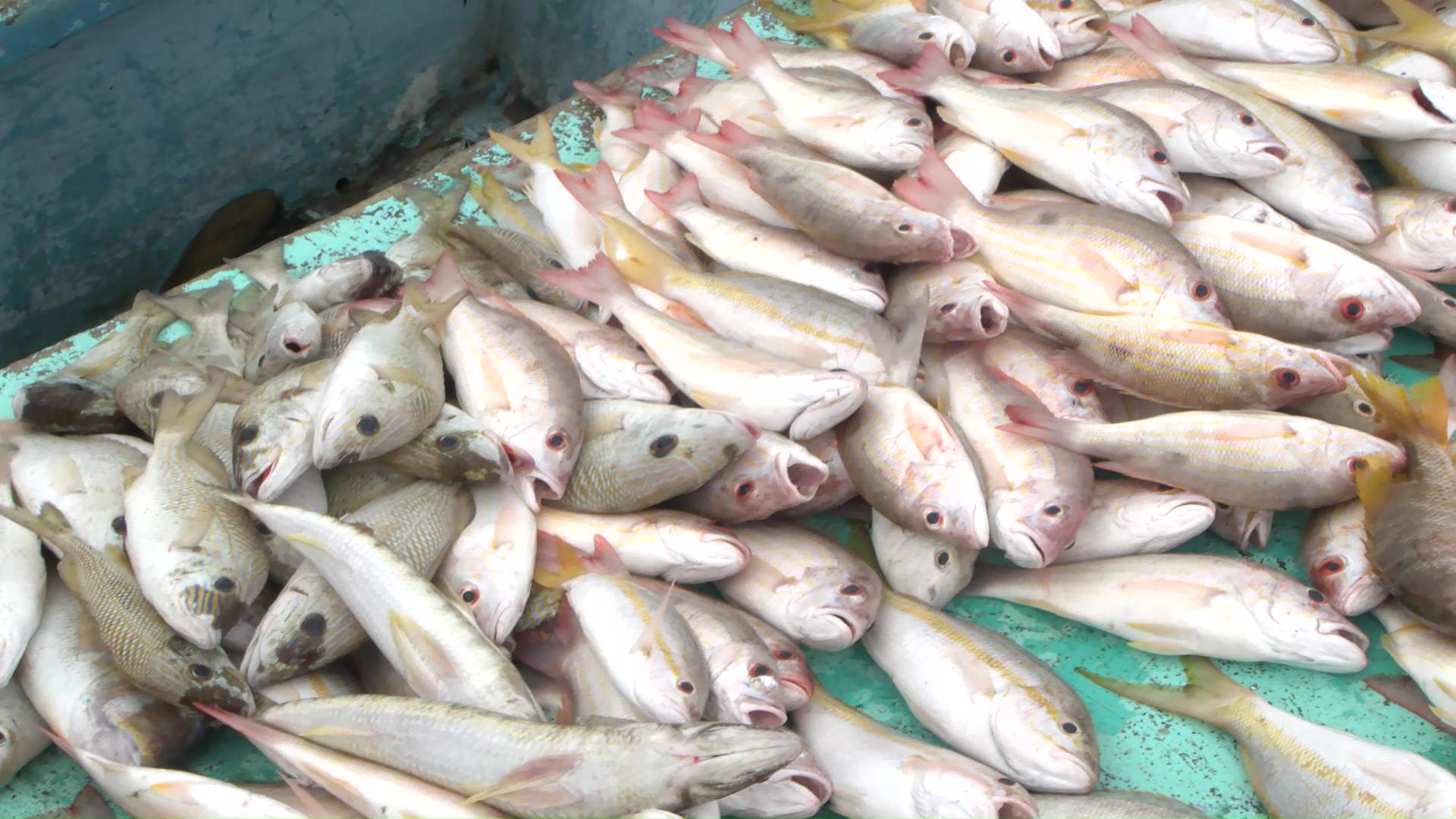
    Across busy fish markets in Belize City, seasonal trade is still moving at a steady clip, with vendors and fishers laying out a wide selection of fresh catches to meet persistent consumer demand. Local fisherwoman Nicolee Usher explained that despite widespread economic strain, sellers have adjusted their offerings to fit every household budget. “Fish prices right now run between ten and twelve dollars a pound,” Usher shared. “But we also have options for five dollars a pound for people who really can’t afford more amid these hard times. We carry barracuda, groupers, broke pot, dog tooth snappers, kubali jacks, yellowtail snappers and many other varieties.”

    Young commercial fisher Edmond Ford noted that while some fish are still being caught, volumes are far lower than what the industry expects during this high-demand season. Ford and his fishing crew spent two days working their traditional territory in the Bluefield range, a well-known reserve south of Belize City, and returned with only a small haul. “We got some jack and a small snapper,” Ford said. “We’re selling jack for eight dollars a pound right now, and other varieties for ten. We just barely got anything after two full days out on the water.”

    For Belizean consumers, however, the long-standing Good Friday tradition of eating fish remains non-negotiable, even with higher price tags at the market. Local customer Adreanna McClurg said she plans to stick to the classic recipe she has grown up with. “I’m planning to make fried fish, probably served with rice and beans and a fresh salad,” McClurg explained. “Ever since I was little, you just know every Good Friday you’re going to have fried fish, or fish in a soup. That tradition will never change for our family.”

    Other consumers are opting for different, healthier preparations, but still center their holiday meal around local fresh catch. One customer from the Barracks neighborhood shared his family’s go-to recipe: “We season it with black pepper, onion, sweet pepper and tomato, wrap it in banana leaf and foil, then bake it in the oven. This whole piece is just for two people, one half for me and one for my wife, and it’s absolutely delicious.”

    For small business owners that support the local fishing industry, the Easter season is still bringing robust demand. Stephanie DeCosta, a fish cleaner who has worked in the trade for more than five years, says her business picks up dramatically over the holiday. “I charge two dollars a pound to clean fish during Lent and Easter, up from one dollar a pound the rest of the year,” DeCosta said. “This season is my Christmas for my family. I get so much work this time of year, and I love it.”

    But behind the steady market activity, the fishermen who harvest the fish say rising operating costs are eating away almost all of their potential earnings this year. Ford explained that spiking gas prices have turned even small successful hauls into barely breaking even. “It’s just not working out right now because gas prices have gone up so much,” Ford said. “When we only catch a little bit after a couple days out, we barely make any money at all. We’re just living hand to mouth right now.”

    Veteran fisherman Joe Requena added that even long offshore trips to popular fishing grounds like Half Moon Caye no longer guarantee enough catch to cover expenses. “Right now, I don’t even know if I’ll clear my expenses when I go out because the fish just aren’t biting,” Requena said. When asked what the biggest cost driver is, Requena answered simply: “Gas. Gas is really, really high. That’s why we have to charge higher prices for fish. I don’t like it, but what else can we do? That’s the only way we can make it work. When I go out to Half Moon Caye, I carry three eighteen-gallon drums of gas, and sometimes that’s not even enough. My expenses add up to nine hundred dollars for a single trip, and I doubt I’ll make that back in sales.”

    As Belize prepares to mark another Easter, the centuries-old tradition of centering the Good Friday feast around fresh local fish remains firmly in place. But this year, both producers and consumers are feeling the financial pinch: fishermen struggling to turn a profit amid high fuel costs and low catches, and shoppers adjusting their budgets to afford holiday staples. Even with these challenges, locals across the country say the tradition will hold strong for another year.


  • Jénès en Aksyon: Youth Month begins

    Jénès en Aksyon: Youth Month begins

    The Caribbean island nation of Saint Lucia has officially launched its 2026 Youth Month, a comprehensive month-long initiative organized by the Saint Lucia National Youth Council centered on lifting up, educating, and honoring the country’s next generation. This year’s gathering carries the Creole theme “Jénès en Aksyon: Learning, Leading, Thriving!”, which ties together the event’s core mission of putting young people in the spotlight and equipping them for long-term success.

    The official opening of the 2026 celebration took place on Tuesday, kicking off with a formal church service hosted at the Temple of Faith, Odsan Pentecostal Church. Unlike fragmented youth engagement efforts that only touch on a narrow set of interests, this year’s Youth Month programming spans a wide range of activities tailored to the diverse passions and needs of Saint Lucia’s young population. From hands-on skills-building workshops designed to boost employability and targeted wellness sessions focused on mental and physical health, to vibrant cultural showcases that highlight local young artistic talent, dedicated entrepreneurship support for emerging young business owners, and collaborative community outreach events, the full calendar of April activities is built to engage, inspire, and uplift youth across the island.

    In remarks shared ahead of the month’s events, Bernell St Rose, President of the Saint Lucia National Youth Council, emphasized that Youth Month serves as more than just a celebration—it is a critical platform to amplify the underrecognized contributions of young Saint Lucians. St Rose noted that the initiative creates intentional space to showcase the extraordinary creativity, remarkable resilience, and emerging leadership that young people bring to communities across every corner of the country, while also creating new opportunities for them to grow and connect with mentors, peers, and industry leaders.

    Over the course of the coming weeks, thousands of young people are expected to participate in programming across the island, with the initiative aiming to leave a lasting impact beyond the month of April by equipping participants with new tools, networks, and confidence to continue leading change in their communities.

  • National abattoir set to resume operations this summer after years of reconstruction

    National abattoir set to resume operations this summer after years of reconstruction

    Nearly nine years after it was destroyed by one of the Caribbean’s most destructive hurricanes, Dominica’s long-awaited rebuilt national abattoir is on track to launch full operations by early summer 2026, a landmark development set to transform the small island nation’s food security trajectory, cut crippling import dependence, and breathe new life into its stagnant livestock sector.

    During a recent media tour and readiness assessment of the Layou Park facility, National Abattoir General Manager Michael Etienne told reporters the flagship infrastructure project is now in its final phase, with full confidence in its upcoming launch. “Today’s walkthrough is a critical milestone,” Etienne shared as inspection teams tested the facility’s processing lines, safety systems and hygiene protocols. “It lets us verify what’s working, how it operates, and confirms that the years of work put into this project are enough to get the abattoir commissioned as soon as possible. We are 100 percent certain that by June, farmers will be supplying livestock, the abattoir will be running at full capacity, and the entire local meat industry will be revolutionized.”

    While Etienne acknowledged the facility could potentially wrap up final checks and open ahead of the June timeline, he noted the government has intentionally targeted early summer to ensure every processing line – including those for poultry and pork – meets all international hygiene and safety compliance standards before going live.

    The abattoir’s path to reopening has been marked by decades of progress, setback and renewed investment. The first iteration of the facility was built between 2012 and 2015 with financing from the Government of Venezuela, designed to modernize Dominica’s fragmented meat processing sector and give local livestock farmers a consistent, formal market. The original plant tested operations in 2015, with design capacity to process 1,000 birds per hour and 50 pigs daily. That progress was wiped out in 2017, when Category 5 Hurricane Maria swept across Dominica, leveling the Layou Park facility and bringing local commercial meat processing to a complete halt. In the years that followed, the loss of the abattoir pushed Dominica deeper into reliance on imported chicken and pork, highlighting the country’s persistent food security vulnerabilities.

    It was not until 2024 and 2025 that the government of Dominica moved forward with a full rebuilding initiative, signing construction contracts to deliver a facility built to modern global standards. The project secured a core EC$6.4 million investment, with additional funding allocated to support upstream farmer development, including construction of climate-resilient livestock pens, improved local feed production, and expansion of national livestock herds. In January 2025, at the official contract signing, Ministry of Agriculture Permanent Secretary Ryan Anselm confirmed the upgraded facility would retain the original 1,000 birds per hour processing capacity, and outlined the government’s strategy to meet demand: the ministry will partner with 20 commercial poultry producers, each required to raise a minimum of 5,000 birds per production cycle to supply the plant. By early 2026, government officials confirmed the project was 90 percent complete, with full commissioning on track for mid-year.

    In comments on the project, Prime Minister Roosevelt Skerrit emphasized the abattoir is a core pillar of the government’s broader national strategy to cut the country’s food import bill and put economic power in the hands of local agricultural producers. “Chicken parts are one of Dominica’s biggest single food imports,” Skerrit explained. “Our medium-term goal is to cut these imports by 50 percent, and eventually reach 100 percent self-reliance for all our meat needs.” The prime minister added that Dominica can first achieve full self-sufficiency in whole chicken production, with scaling up to cover processed chicken parts as local output expands in the coming years. He also noted that the new facility boasts far more advanced, modern processing equipment than the original Venezuelan-funded plant, allowing for higher quality meat processing and stricter food safety controls that will benefit both local producers and consumers.

    To ensure the new supply chain remains sustainable and viable long-term, Etienne confirmed that targeted farmer training is already underway for all producers that will supply the abattoir. “We’ve reached out first to the farmers who supplied the original abattoir, and we’re also vetting new producers who are excited to be part of this new industry,” he said. The Ministry of Agriculture has already delivered building materials and labor support to more than 200 smallholder and commercial farmers to construct climate-resilient livestock pens, part of a broader EC$7.5 million national investment in livestock sector development.

    Once fully operational, the abattoir will process both pork and poultry, giving local farmers a guaranteed formal market for their output and providing consumers with consistent access to affordably priced, hygienically processed local meat. Government economic projections estimate the facility will significantly cut the country’s annual import spending, boost rural household incomes across Dominica’s agricultural communities, and bring the country’s entire agri-food sector into line with modern global standards. With final readiness checks wrapping up and farmer training ramping up, the Layou Park abattoir is on track to welcome its first commercial processing runs this summer – almost a decade after Hurricane Maria forced its closure.

  • 10 injured after bus overturns on Samaná Highway

    10 injured after bus overturns on Samaná Highway

    A serious multi-vehicle collision on one of the Dominican Republic’s busiest intercity corridors left at least 10 people injured on Holy Thursday, after a passenger bus rolled over following a crash with a sport utility vehicle.

    The accident unfolded close to the third tollbooth along the Northeast Highway, which connects the capital city of Santo Domingo to the popular coastal destination of Samaná, near the access point to the El Aguacate de Arenoso community. At the time of the collision, the passenger bus was en route to Santa Bárbara de Samaná, carrying a full load of travelers ahead of the religious holiday weekend.

    Preliminary accounts from first responders confirm that the chain of events began when the SUV struck the passenger bus, robbing the bus operator of control of the vehicle and triggering the overturn. Local law enforcement and emergency management teams have confirmed that, as of the latest updates, no fatalities have been recorded from the incident. All injured people received initial on-site medical stabilization from first responders, while they waited for additional emergency crews to arrive and transport them to nearby care facilities.

    One lingering detail has added uncertainty to the developing account of the crash: the bus driver’s current location remains unaccounted for, and authorities have not yet released information about their whereabouts. A formal investigation is now active to piece together the full context of the collision and confirm the exact root causes that led to the accident.

  • How will the new care options for children without family support work?

    How will the new care options for children without family support work?

    Following the recent enactment of Cuba’s landmark Code for Children, Adolescents, and Youth, which enshrines young people as full rights-holders at the center of national policy, the country has moved to clarify how these legal protections will translate into tangible support for vulnerable minors separated from their biological families. In a decisive step to operationalize the new legal framework, the Cuban Ministry of Education (MINED) has issued Resolution 62, a comprehensive regulatory roadmap that formalizes the state’s commitment to guaranteeing every child and adolescent the right to grow in a safe, family-centered environment through structured alternative care and adoption pathways.

    Central to the new regulation is the establishment of an updated, tiered classification of foster care facilities tailored to address the unique developmental and emotional needs of minors at different life stages. At the first tier are emergency and temporary care facilities, capped at a maximum of 12 residents with a maximum 30-day stay, designed to serve as an immediate safe haven for children removed from unsafe environments in crisis situations.

    Under the resolution, institutional foster care is explicitly framed as an exceptional, temporary protective intervention rather than a long-term placement. It is only ordered by authorized governing bodies when a minor has been separated from their birth family, or when a birth family cannot adequately meet the child’s basic needs for well-being. All institutional care is delivered through specialized social assistance centers, structured to maintain a nurturing, safe environment that meets age, gender, and individual-specific requirements for hygiene, nutrition, infrastructure, and specialized professional care.

    Beyond emergency placements, the regulation outlines two additional categories of institutional care: Early Childhood Care Facilities, which are limited to 10 children each, designed to mimic a family-style living environment, with stays ranging from three to six months based on the child’s age; and facilities for older minors aged 7 to 18, which are organized into small, home-like groups with a core focus on preparing youth for independent adult living and supporting family reunification wherever possible.

    Resolution 62 enshrines robust protections for the rights and well-being of all minors entering the alternative care system. All children and their biological families receive continuous psycho-emotional support and guidance from trained personnel, starting at admission and continuing through the entire placement period and post-discharge transition. To ensure this critical support is delivered effectively, care facility management coordinates closely with community mental health centers and other public health institutions under Cuba’s Ministry of Public Health to provide specialized clinical psychology services for children.

    Specific contingency protocols are also mandated for emergency situations and natural disasters, requiring facilities to activate procedures that prioritize the safety and emotional stability of children in care, while ensuring no interruption to their individualized care plans. The regulation also sets strict rules around sibling separation: it may only be ordered in exceptional circumstances, following a full multidisciplinary assessment that confirms cohabitation would harm the children’s rights and well-being, and when separation is required, the competent authority must implement formal measures to guarantee stable, accessible communication and visitation schedules, backed by professional support where needed, with ongoing monitoring from the Family Advocacy Office.

    In addition to regulating institutional care facilities, Resolution 62 strengthens community-based care networks by formalizing the role of foster families. These families volunteer to host children from institutional care facilities during weekends and holiday periods, providing children with valuable exposure to regular family life while offering temporary respite for institutional staff. MINED holds formal responsibility for collaborating with municipal commissions and the Ombudsman’s Office to identify prospective foster families, with the explicit goal of placing more children in family-based settings rather than institutional care wherever possible.

    For adoption processes, the regulation centers children’s emotional well-being by positioning foster homes as the core site of pre-adoption preparation. Before any adoption is finalized, a cross-disciplinary technical team of psychologists and social workers prepares a full administrative record of the child, delivers targeted psychological preparation to help the child adjust to the upcoming life change, and organizes gradual, paced introductory meetings with the prospective adoptive family. This child-centered approach is designed to ensure the entire process is respectful of the child’s needs and avoids inflicting additional trauma.

    To further guarantee the quality of care across all alternative care settings, MINED will oversee full standardized training, certification, regular review, and ongoing oversight for all personnel working in institutional care for children and adolescents, ensuring all staff meet consistent professional standards to support vulnerable youth.

  • Weather Alert: COE warns of heavy rains and storms in multiple regions

    Weather Alert: COE warns of heavy rains and storms in multiple regions

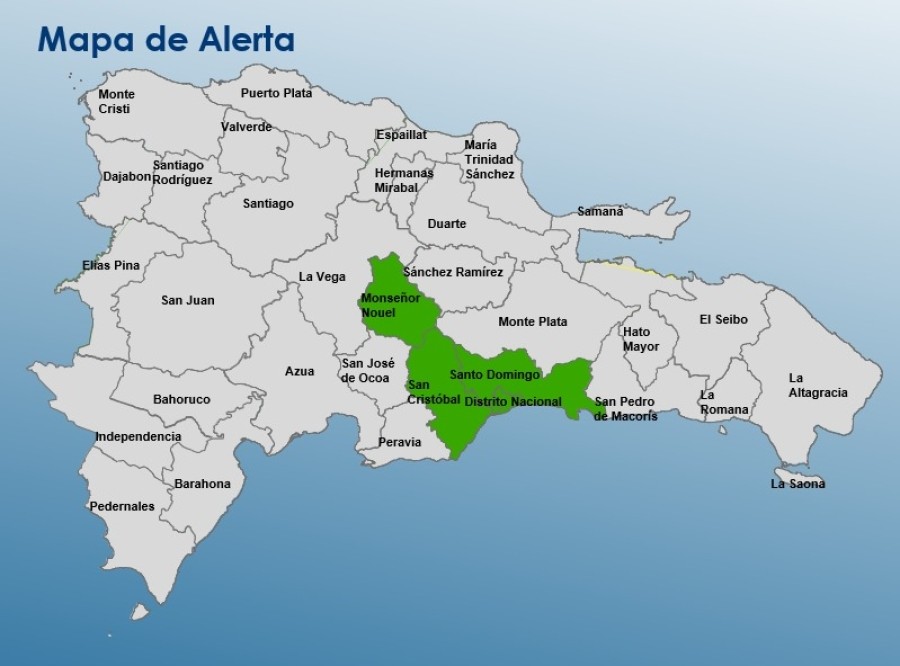
    Authorities in the Dominican Republic have activated a green weather alert for three key provinces and the National District, as unstable atmospheric conditions driven by a low-pressure trough and moderate east-northeasterly winds are expected to bring disruptive precipitation across the affected regions. The order came from the country’s Emergency Operations Center (known locally as COE), following formal meteorological warnings issued by the Dominican Institute of Meteorology (INDOMET).

    Analysis of real-time satellite and radar imagery confirms that organized cloud systems are currently traversing the nation’s north coast, southeastern corridor, and central interior. Light to moderate rainfall has already been recorded across these zones, with meteorological officials projecting a sharp intensification of precipitation through the afternoon hours. Forecasters warn that the incoming weather system will bring heavy downpours, sudden thunderstorms, and brief but powerful wind gusts that could create localized hazards for residents.

    The jurisdictions placed under green alert include San Cristóbal, Santo Domingo, Monseñor Nouel, and the National District, which hosts the nation’s capital of Santo Domingo. Emergency management officials have issued clear public safety guidance to communities in these regions: residents are strongly advised to avoid attempting to cross swollen rivers, streams, and ravines, as surging water levels pose a major drowning risk. People are also urged to steer clear of beaches, lakes, and other recreational water bodies while the unstable weather persists.

    Additional safety warnings are in place for small craft operators along the country’s Atlantic coastline. From the eastern edge of Saona Island extending northwest to Monte Cristi, operators of small, lightweight vessels have been instructed to stay docked in port due to rough ocean swells and persistent strong winds. Notably, no navigation restrictions have been implemented for the Dominican Republic’s southern Caribbean coast, where sea conditions remain calm enough for regular maritime activity.

  • Heavy traffic hits Baní Bypass as Holy Week travel begins

    Heavy traffic hits Baní Bypass as Holy Week travel begins

    As Holy Week travel kicked off, thousands of holiday travelers faced crippling traffic congestion Thursday morning along the major highway leading to the Dominican Republic’s southern region. What began as steady flow quickly spiraled into a standstill, with a multi-kilometer backup building near the Baní bypass exit that extended all the way to the Ocoa intersection, leaving dozens of motorists stranded for hours.

    The gridlock upended travel plans for thousands of people heading to southern coastal tourist destinations and family gatherings for the Easter holiday, bringing movement along the corridor to a near-complete halt. Local transit authorities had pre-emptively implemented emergency measures to boost traffic flow, including opening both northbound lanes to southbound travel to accommodate the surge of outbound travelers from the capital. But these adjustments failed to prevent chaos, as widespread driver confusion and unregulated movement exacerbated congestion rather than easing it.

    Multiple motorists stuck in the backup reported that many drivers ignored adjusted lane markings and signage, continuing to use incorrect lanes that created abrupt bottlenecks across the already overstretched roadway. Observers also noted a critical lack of visible on-site guidance from traffic officials to direct driver movement, turning a congestion mitigation design into the primary flashpoint for the gridlock.

    Transit planners had anticipated a significant increase in outbound traffic for Holy Week, a popular holiday period for Dominicans to leave the capital city and travel to southern vacation hubs. But the sheer volume of vehicles hit the road much earlier and in greater numbers than projected, quickly overwhelming the existing road infrastructure and turning the Baní bypass into the worst congestion hot spot within the first hours of the holiday travel window.