分类: society

  • Bewoners Houttuin tekenen fel protest aan tegen geplande opslag radioactief materiaal

    Bewoners Houttuin tekenen fel protest aan tegen geplande opslag radioactief materiaal

    Residents of Houttuin and surrounding communities in Suriname’s Wanica District have officially lodged formal objections to Houston-based energy firm Halliburton’s proposal to build a radioactive materials storage facility in their residential area. Organized under the advocacy group Suriname River Eco & Water Resort Steering Committee, locals submitted two detailed formal complaints to the Wanica Southeast District Commissioner and the National Environmental Authority (NMA), outlining severe, multi-layered concerns over potential threats to the region’s environment, public health, and community safety.

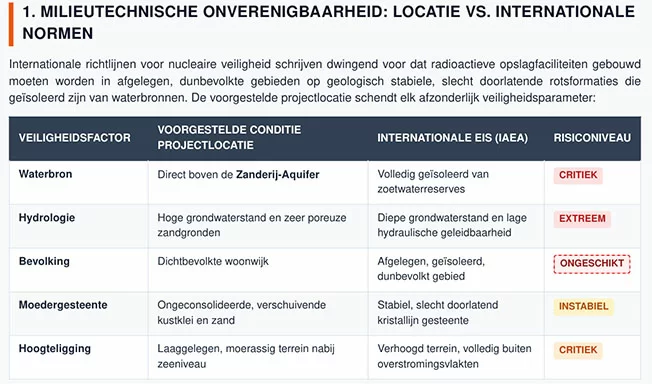
    At the core of residents’ opposition is the facility’s proposed location: directly above the Zanderij Aquifer, Suriname’s most critical source of fresh drinking water. The community argues the region’s geological and hydrological features make it categorically unsuitable for radioactive waste storage. Porous sandy soils, high regional groundwater tables, and frequent flood risk create a near-constant threat of radioactive contamination that cannot be mitigated through standard design safeguards, the objection states.

    Residents specifically flag the planned storage of radioactive isotopes including Americium-241 and Cesium-137 at the site. They warn that any leak, ground subsidence event, transport accident or extreme flood event could result in irreversible, long-term contamination of the region’s groundwater, agricultural land, and residential neighborhoods, posing lifelong health risks to the local population.

    Beyond the inherent risks of the project’s location, residents accuse the NMA and project consultants of systemic lack of transparency around the required Environment Management and Monitoring Plan (MMMP). Critical data required for full public and regulatory assessment—including radioactive activity levels, radiation contour maps, regional groundwater flow models, and emergency disaster response scenarios—is entirely missing from the publicly released documents, according to the complaint.

    The community also raises questions over the expertise and independence of TDS Consulting, the firm hired to conduct the project’s environmental impact assessment. Residents note that TDS representatives admitted during public information sessions that the firm lacks specialized expertise in nuclear engineering, radioecology, and radiation safety—core competencies required to properly evaluate the risks of a radioactive storage facility.

    Worsening these concerns, residents argue that Suriname as a whole is currently unprepared to handle radiological emergencies. The country lacks specialized nuclear regulatory legislation, independent radiation testing laboratories, specialized medical facilities equipped to treat radiation exposure, and trained response personnel to contain and manage an incident should one occur, the complaint states.

    Locals also say they have lost trust in Halliburton as a project operator, pointing to the company’s history of negligence and environmental contamination in prior international operations. The objection specifically references past incidents involving radioactive materials where the company failed to implement adequate safety precautions, according to residents.

    Another key grievance is the lack of adequate public outreach: residents say they were notified of project consultation sessions far too late, leaving local community members with very little time to register for the public meetings and prepare formal objections to submit to the NMA.

    The objection also extends to a second Halliburton project planned for the same area: an operational base for oil and gas exploration activities. Residents say that during initial information sessions, Halliburton failed to disclose that tools and equipment that have been in contact with radioactive sources would also be stored and handled at the base, leaving communities unaware of additional risks.

    In their formal demands, residents are calling on the NMA to reject all permits for the Houttuin radioactive storage facility entirely. They are also requesting an independent international assessment of the project’s risks, the development of modern national legislation for radiation protection and nuclear liability before any similar projects are approved, and a full assessment of alternative sites that meet international safety standards for radioactive material storage. The community emphasizes that such high-risk facilities should never be sited in densely populated residential areas or above critical drinking water reserves.

    As of the filing date, neither the NMA nor Halliburton has issued a public response to the formal objections.

  • Straatverlichting langs weg naar Matta officieel in gebruik genomen

    Straatverlichting langs weg naar Matta officieel in gebruik genomen

    In a major milestone for infrastructure and community development in Suriname, the critical road connecting Zanderij to the village of Matta officially received permanent street lighting starting Saturday, marking the completion of a project aimed at addressing longstanding public safety concerns and unlocking growth in the inland region.

    The initiative, delivered in partnership between the Surinamese government and Energiebedrijven Suriname (EBS), the country’s national energy utility, was designed to respond directly to requests raised by local communities in the Para district years ago. Speaking at the official activation ceremony on behalf of President Jennifer Simons, Minister of Health, Welfare and Labor André Misiekaba emphasized that the project delivers on a core campaign commitment of the administration to expand critical basic services across Suriname’s inland territories. “This project demonstrates our government’s consistent pledge to invest in infrastructure that improves daily life and creates opportunities for communities outside the capital,” Misiekaba stated during the event.

    EBS Director Leo Brunswijk outlined that road safety was the central driver behind the street lighting installation. For decades, the high-traffic route between Zanderij and Matta has been notoriously dangerous for motorists, pedestrians, and commercial drivers after dark, with frequent collisions and security incidents reported after sunset. Brunswijk added that the project is far more than a standalone safety upgrade: it forms a core part of a broader national strategy to expand reliable, accessible electricity access to underserved communities across Suriname. Work is already underway to extend the national power grid further to reach additional rural settlements in the Para district, bringing basic energy services to households that have long operated off-grid or relied on unstable, expensive private power generation.

    Para District Commissioner Patrick Kensenhuis hailed the street lighting activation as a transformative step forward for the entire region. Kensenhuis noted that safer travel along the route will not only improve quality of life for local residents but also support growing tourism and small business activity in the area, which has long been held back by the lack of after-dark infrastructure. For local residents who have campaigned for this upgrade for years, the official switch-on has been met with widespread enthusiasm. Community members report that they have long avoided travel along the route after dark, and now expect the new lighting to cut down on road accidents and reduce crime along the highway, creating a safer environment for everyone who uses the road.

  • Two men deported from St Kitts charged with Steer Town, St Ann fatal gun attack

    Two men deported from St Kitts charged with Steer Town, St Ann fatal gun attack

    Three years after a fatal home invasion shooting left one young man dead in Steer Town, St Ann, Jamaica, the two primary suspects have finally faced formal charges following their deportation from neighboring St Kitts and Nevis.

    The accused individuals, identified as 31-year-old Chevon Brown, a lifeguard also known by the alias ‘Balla’, and 37-year-old Kemar Matthews, also called ‘Bibbi’, both share a home address in Ocho Rios, St Ann. Their charges are directly linked to the February 8, 2023 killing of 20-year-old Kimani Lettman, a Steer Town resident.

    According to official reports from the St Ann’s Bay Police Division, the violent incident unfolded shortly after 2:30 a.m. that Wednesday. Lettman and a companion were inside a private residence when multiple armed suspects forced entry into the home. The attackers immediately opened fire on the two occupants before escaping the area on foot.

    Emergency responders were called to the scene immediately after the shooting. Both injured men were rushed to a local medical facility for treatment, where Lettman was pronounced dead. The second victim received care for non-life-threatening injuries and was released from hospital shortly after treatment.

    As investigators launched a full probe into the fatal attack, they quickly uncovered evidence that Brown and Matthews had fled Jamaica for St Kitts and Nevis shortly after the shooting to avoid arrest. Cross-border law enforcement cooperation led to the pair being taken into custody in St Kitts, and they were formally deported back to Jamaica last Thursday, May 21, 2026.

    Upon their arrival in Jamaica, the two men were taken directly into police custody. They have since been formally charged with a total of five criminal offences: murder, wounding with intent, possession of a prohibited firearm, unauthorized possession of ammunition, and burglary. Judicial authorities confirm that a court date for the pair is currently being finalized, and no further details on bail or upcoming proceedings have been released to the public as of press time.

  • New School Building Opens in Toledo Serving 16 Communities

    New School Building Opens in Toledo Serving 16 Communities

    After decades of inadequate learning infrastructure that left thousands of rural secondary students underserved, a brand-new two-story academic facility officially opened this week at Corazon Creek Technical High School in Toledo, marking a long-awaited milestone for education access across 16 surrounding communities.

    Funded through a financing partnership between the Caribbean Development Bank and implemented via the national Social Investment Fund, the robust eight-classroom concrete building is far more than a basic learning space. It also includes dedicated administrative offices, gender-separated restrooms for both students and staff, secured storage areas, and accessibility ramps designed to accommodate learners with disabilities, making the campus fully inclusive for the first time in the school’s history.

    The draw of this improved campus reaches across a wide swathe of rural Toledo, with students traveling from scattered small communities to attend classes. Among these is the remote village of Machakilha, where until very recently, residents faced the constant risk of being cut off from secondary education due to the lack of a reliable access road. The only bridge connecting the village to the main highway was on the brink of structural collapse until the Ministry of Infrastructure completed a $250,000 rehabilitation project to shore up the crossing and restore consistent access.

    At the official inauguration ceremony, Dr. Osmond Martinez, Area Representative for Toledo East and national Minister of Economic Transformation, did not shy away from acknowledging the long history of systemic neglect that left rural Toledo communities behind for generations. He pointed to the remote community of Otoxha, founded back in 1923, as a stark example of the disparities the region has faced for decades.
    “Otoxha was established in 1923, and still, its residents lack access to consistent clean drinking water,” Martinez said. “That is outright neglect of a population that should never have been left behind. No matter a person’s cultural background, we have a moral obligation to leave no one behind. I hold firm to the belief that one day I will be called to account for what I did with the privilege of public service that I have been given.”
    In addition to the opening of the new building, Martinez made a surprise announcement that has been welcomed by graduating students and their families: all mandatory graduation fees for completing students at Corazon Creek Technical High School have been fully covered by the government, eliminating a final financial barrier for students finishing their secondary education.

    The project represents the first major investment in regional education infrastructure for Toledo in recent years, with officials signaling that more targeted investments to address long-standing disparities in rural access to basic services are planned for the coming months.

  • Honouring the Life and Legacy of Sir Aziz Hadeed  A Tribute from the Guild President

    Honouring the Life and Legacy of Sir Aziz Hadeed  A Tribute from the Guild President

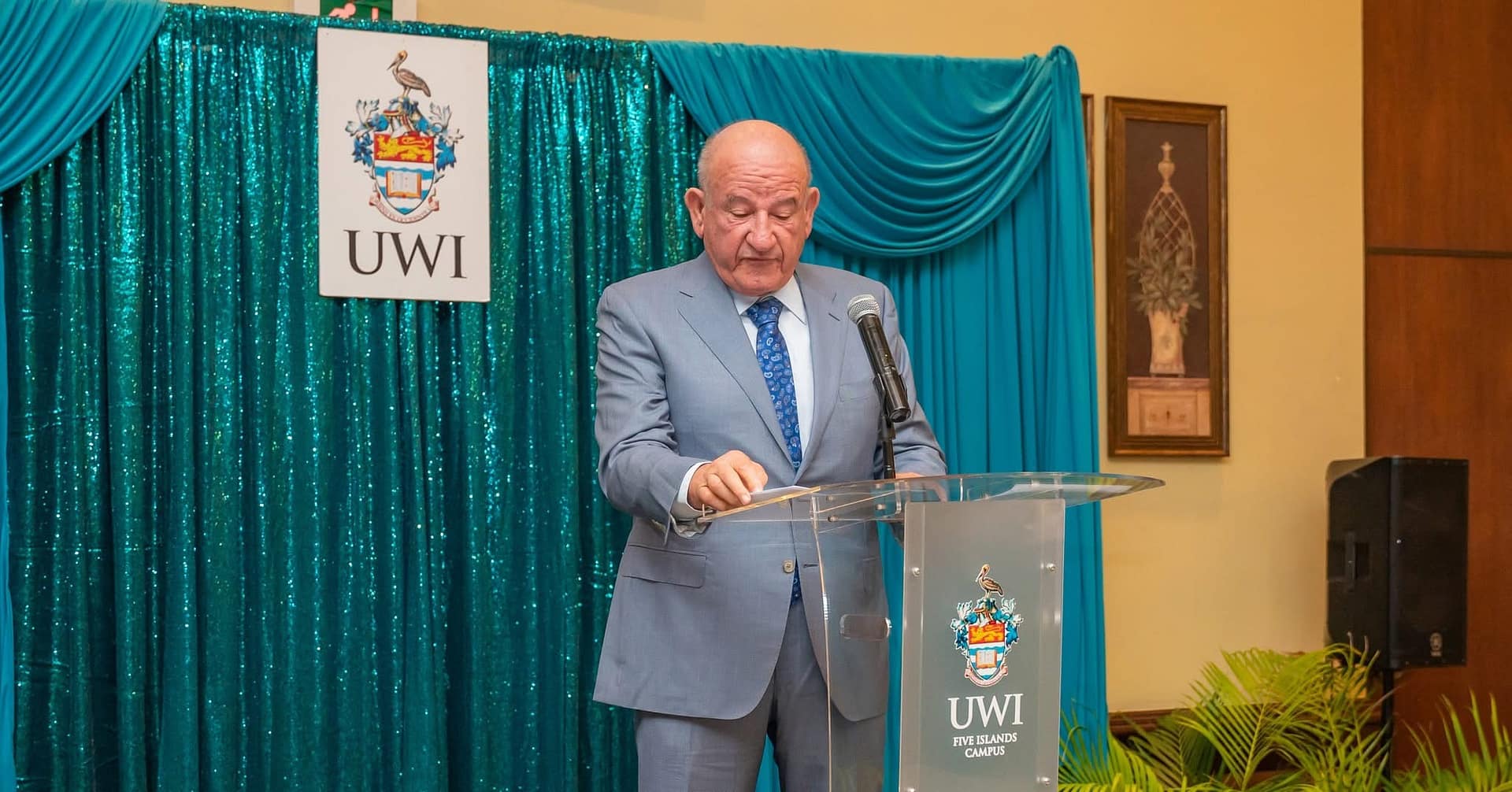
    The University of the West Indies Five Islands Campus community is in mourning this week following the announcement of the death of respected campus leader Sir Aziz Hadeed. In a heartfelt statement released on behalf of the campus’s student body, Guild President Kerron McKenzie shared an outpouring of sympathy for the family, close friends, professional colleagues, and all others grappling with the loss of the iconic figure.

    Far beyond holding the formal title of campus chairman, Sir Aziz distinguished himself as a forward-thinking visionary, a dedicated nation-builder, and a lifelong advocate for the life-changing power of accessible education. Under his steady guidance, radical generosity of spirit, and unshakeable commitment to advancing the campus’s mission, the UWI Five Islands Campus was transformed into a thriving hub of opportunity, personal growth, and collective hope for thousands of young scholars across Antigua and Barbuda, as well as the broader Caribbean region.

    The true scale of Sir Aziz’s contributions to the institution cannot be quantified through a list of official titles or institutional achievements alone. His greatest impact is written in the countless lives he lifted up, the professional and educational doors he opened for underrepresented young people, and the optimistic vision of opportunity he cultivated for generations of future students. It was through his steadfast dedication to expanding access to higher education that countless students have been able to pursue bolder dreams, set loftier goals, and carve out meaningful personal and professional paths through learning.

    The enduring legacy Sir Aziz leaves behind will continue to resonate across every corner of the campus for decades to come. It lives in each new student who walks the campus grounds, every graduate who carries the knowledge they gained here out into the world, and in every future expansion and improvement of the institution he nurtured so deeply.

    On behalf of the entire UWI Five Islands Campus student body, McKenzie expressed sincere gratitude for Sir Aziz’s years of selfless service, his transformative vision for the campus, and his enduring investment in the futures of young Antiguans and Barbudans. May his soul rest in eternal peace, and may his legacy continue to serve as a guiding light for the institution and all those whose lives he touched.

  • Restaurant rejects racism allegations

    Restaurant rejects racism allegations

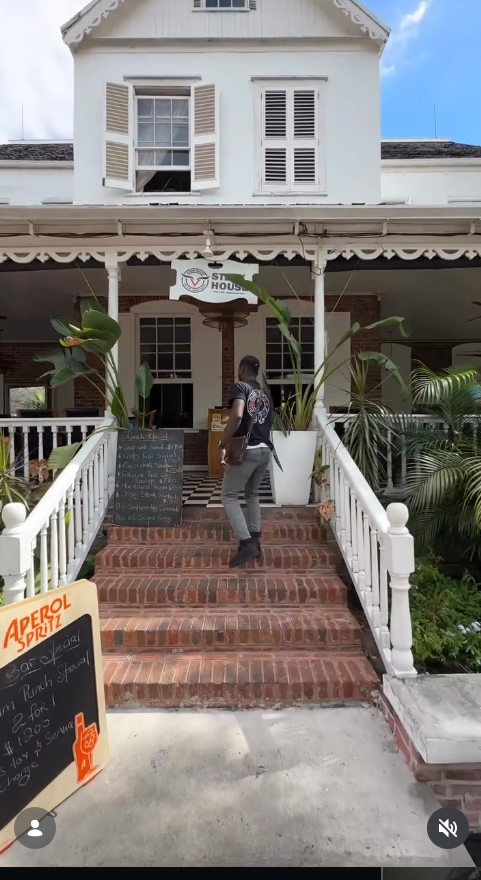
    A viral social media dispute over unequal dress code enforcement has erupted around a popular Kingston, Jamaica steakhouse, after a local content creator accused the establishment of racial discrimination. Content creator CindiMarvelous took to TikTok and Instagram to share her account of being turned away from Steakhouse on the Veranda, located at the historic Devon House site, on 15 October 2025. Her account, presented in a widely shared video, sparked fierce debate online about racial and class double standards in local hospitality.

    In the viral clip, which is set to Bob Marley’s iconic anti-racism anthem *War*, CindiMarvelous claims she was denied entry for wearing shorts. The video then shows multiple other patrons, including one woman CindiMarvelous identifies as Asian heritage, exiting the restaurant wearing similarly cut shorts. It also includes clear footage of the venue’s posted entrance sign, which notes that the dress code is strictly enforced, along with screenshots of a heated direct message exchange between the creator and the restaurant’s staff.

    Screenshots included in the post show the restaurant’s initial response to CindiMarvelous, where staff pushed back against racism claims, offered an apology, and attributed the incident to a miscommunication: the establishment’s ban applies specifically to short shorts that expose the buttocks, not all shorts generally. CindiMarvelous countered that her shorts were the same length as those worn by the Asian patron shown in the video, who was allowed to enter without issue.

    Public reaction to the viral post has been deeply split. Some Jamaican social media users shared frustration over what they see as a long-standing pattern of uneven rule enforcement along racial and class lines at local venues. Others argued that the length of CindiMarvelous’ shorts did violate the venue’s posted policy. A third, widespread perspective held that regardless of the dress code policy itself, rules must be applied consistently to all patrons to avoid unfair treatment.

    In an official response posted to its own social media channels, the Kingston-based steakhouse pushed back firmly against claims of racism, while acknowledging missteps in how the incident was handled by staff. The establishment, which is a Black family-owned Jamaican business, said it is “deeply disappointed” that the incident has been misrepresented as an act of racial discrimination online.

    “We regret that the guest left with a negative experience and acknowledge that some of our language could have been handled more carefully,” the restaurant statement read. It went on to emphasize: “As a black family-owned Jamaican business, we apply our longstanding dress code equally to all guests, regardless of race or background. After reviewing security footage and staff accounts, we stand by our team’s actions and reject claims of discrimination.”

  • NCB Foundation delivers critical upgrades to Kingston Public Hospital Eye Clinic

    NCB Foundation delivers critical upgrades to Kingston Public Hospital Eye Clinic

    KINGSTON, Jamaica – In a timely Labour Day community investment project, the NCB Foundation has completed a $3 million renovation of the Kingston Public Hospital (KPH) Eye Clinic, transforming the facility into a far more comfortable and functional space for patients and clinical staff alike.

    The comprehensive upgrade touched nearly every corner of the high-traffic clinic, adding a range of practical amenities that address longstanding gaps in the facility’s infrastructure. Upgrades include a new intercom communication system to streamline patient-staff interactions, clear directional signage for easier navigation, energy-efficient replacement windows and doors, modern, spacious patient waiting seating, new air conditioning units to regulate indoor temperature, and a full fresh coat of paint across all clinical and waiting areas. The end result is a welcoming, organized space that serves the tens of thousands of Jamaicans who depend on the clinic for critical eye care services each year.

    In an official statement released this Monday, the foundation outlined that the targeted improvements are designed to streamline the patient journey from check-in to treatment, while also upgrading the daily working environment for clinical teams that deliver consistent care to the community. This project is just the latest in the NCB Foundation’s ongoing portfolio of community-focused initiatives, all aimed at lifting quality of life across Jamaica and expanding access to life-changing essential services for populations across all income and social groups.

    Perrin Gayle, Chief Executive Officer of the NCB Foundation, explained that the renovation aligns directly with the organization’s core mission: building a more inclusive Jamaica through tangible, community-centered interventions that improve ordinary people’s daily experiences. “Creating a more inclusive society means paying close attention to the environments in which people access essential services,” Gayle noted. “Access to healthcare should be accompanied by dignity, comfort and spaces that support positive experiences for patients and staff alike.”

    He added that the KPH Eye Clinic was chosen for this investment because of its outsized impact on public health across the country. “Kingston Public Hospital serves a broad cross-section of Jamaicans, many of whom rely on the public healthcare system for critical care. This Labour Day initiative allowed us to contribute to practical improvements that can make a meaningful difference in how that care is experienced,” Gayle said.

    Dwayne Francis, CEO of Kingston Public Hospital, praised the partnership and emphasized that cross-sector collaboration is key to upgrading Jamaica’s public healthcare infrastructure. “Kingston Public Hospital continues to serve as a critical access point for specialised healthcare for Jamaicans across the island, and partnerships like this play an important role in helping us improve the care experience for our patients and working conditions for our staff,” Francis explained. “NCB Foundation has consistently supported impactful initiatives in Jamaica, and we are grateful for this contribution to a facility that serves so many.”

    As one of Jamaica’s leading public referral hospitals, KPH handles more than 160,000 patient visits annually, including patients from across the island and members of the Jamaican diaspora returning home for care. The upgraded eye clinic will now serve this large, diverse patient population with a far more supportive environment for years to come.

  • Women who want to have children: ‘Help us!’

    Women who want to have children: ‘Help us!’

    Against the backdrop of Jamaica’s national push to reverse its plummeting birth rate, a grassroots WhatsApp support community has given a collective voice to hundreds of women living with common reproductive health conditions, who say they are eager to have children but locked out of life-changing fertility care due to prohibitive costs.

    The community, titled *Life of Women with Polycystic Ovarian Syndrome (PCOS), Endometriosis and Fibroids*, now counts 247 members, all Jamaican women whose reproductive health diagnoses have left them struggling to conceive, and who cannot cover the high cost of treatments such as in vitro fertilization (IVF) that could help them realize their dream of parenthood.

    It was founded in mid-May by 31-year-old Cassandra Ahloc Bernardroiva, who received her diagnosis of PCOS – recently renamed polyendocrine metabolic ovarian syndrome (PMOS) – when she was just 19. Bernardroiva launched the group after noticing a widespread gap in support and public attention for women navigating reproductive barriers that prevent conception. She shared her own personal struggle on social media, and women across the country aged 20 to 45 flooded in to join the safe, judgment-free space, where members trade advice, share resources, and offer mutual encouragement while navigating the challenges of their diagnoses together.

    Speaking to the Jamaica Observer, Bernardroiva outlined the widespread frustration shared across the group: members face a wide range of debilitating symptoms, from irregular or absent menstrual cycles to sudden unexplained weight gain and bloating, and often receive dismissive care from medical providers who blame infertility on weight without accounting for the underlying condition. Like many in the group, Bernardroiva has endured multiple failed conception attempts, as well as invasive, hurtful questions from loved ones about why she has not started a family.

    With Jamaica’s Health Ministry prioritizing action to reverse the country’s falling birth rate, and Health Minister Dr Christopher Tufton recently launching a 12-month process to develop a national National Fertility and Family Support Strategy, the women of the group are calling on policymakers to include targeted support for their needs. They point out that they are exactly the group the government is targeting to boost birth rates: they are ready and willing to have children, they just cannot afford the care that makes conception possible.

    “If you’re saying that you need more babies in the country for the economy to thrive or for us to be good in the years to come, then help us,” Bernardroiva argued. “A lot of us probably don’t have the money to get IVF and certain treatments that the doctors would recommend… by helping us, you’re also helping the economy. We are not having kids because we don’t have proper fertility help and we need affordable health care.” So far, the group has tagged Minister Tufton in their public awareness posts, but has yet to receive any response from his office.

    Jamaica’s current fertility rate sits at just 1.3 children per woman, far below the 2.1 replacement rate needed to sustain a stable population. The Health Ministry warns that the ongoing decline threatens the country’s long-term economic stability, future workforce, and social safety net, driving population aging, rising dependency ratios, and falling overall productivity.

    Jonelle Llewellyn, a 33-year-old group member diagnosed with premature ovarian insufficiency, joined the community when it had just over 90 members and has watched its rapid growth firsthand. She noted that the group brings together women from every corner of Jamaica who share nearly identical struggles, with dozens of real-time testimonials from women who have spent years trying unsuccessfully to conceive. Llewellyn added that many members lack clear, accessible information about their conditions: doctors often prescribe medications without explaining their purpose, or rely on confusing medical jargon, leaving many women to turn to the group and artificial intelligence to decode their care options.

    While existing advocacy campaigns such as PCOSTalkJa and PCOS1in10Ja have done important work to raise public awareness of conditions like PCOS, Llewellyn emphasized that awareness alone is not enough when diagnosis and treatment remain out of reach for most low- and middle-income women. Minister Tufton has said the government’s goal is not just to boost birth statistics, but to build a system where starting a family is affordable, structurally supported, and accessible to all. Llewellyn argues that promise must extend to women whose infertility stems from unaddressed reproductive health conditions, not economic or cultural barriers.

    The National Taskforce on Fertility and Responsible Parenting, which is leading the strategy development process, deserves broad public support, Llewellyn noted, but any effective national plan must explicitly recognize common reproductive health conditions as one of the core drivers of Jamaica’s falling fertility rate, beyond the focus on economic incentives. To address the gap, she called for embedded routine screening for these conditions at the primary care level, standardized and accessible pathways to affordable specialist treatment, and expanded data collection that not only tracks how many women are affected, but investigates the systemic failures that have left this population unsupported for decades.

    “Life with PCOS represents something policymakers rarely encounter — a ready, willing, and already-organised sample of the very women the strategy must reach,” Llewellyn said. “The means of communication is accessible by design. The evidence inside it is anything but simple.”

  • COE issues yellow alert for Santo Domingo and six provinces due to heavy rain

    COE issues yellow alert for Santo Domingo and six provinces due to heavy rain

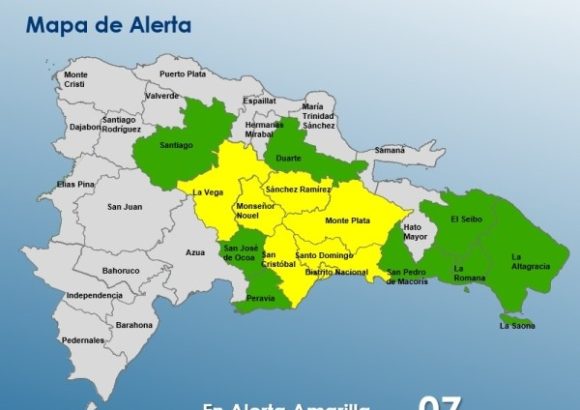
    Authorities in the Dominican Republic have rolled out a tiered weather alert system across much of the country, responding to official forecasts that predict dangerous precipitation, thunderstorms and powerful wind gusts over the coming hours. The Emergency Operations Center, known locally as COE, has issued a yellow alert — a warning calling for heightened preparedness — for seven provinces and the country’s National District, while an additional eight provinces remain under lower-level green alert as the nation braces for volatile weather conditions.

    The national meteorological agency, INDOMET, has identified the confluence of weather systems and geographic conditions driving the elevated risk. daytime heating across the island, combined with the country’s varied terrain and an approaching trough, has pushed atmospheric moisture levels higher throughout the afternoon and evening. This combination is projected to create ideal conditions for moderate to intense downpours that could bring localized flooding and travel disruptions across multiple regions of the island nation.

    Officials have released the full breakdown of alert areas to help residents and visitors prepare appropriately. Yellow alert zones, which face the highest risk of severe weather, include Monte Plata, Sánchez Ramírez, Santo Domingo, San Cristóbal — with specific emphasis on the high-risk community of Villa Altagracia — La Vega, Monseñor Nouel, and the National District. The eight provinces under green alert, a lower-level warning that calls for ongoing monitoring, are San Pedro de Macorís, San José de Ocoa, Santiago, La Altagracia, Duarte, Peravia, La Romana, and El Seibo.

    Beyond land-based alerts, emergency management officials have also issued formal marine warnings stretching across both the Dominican Republic’s Atlantic and Caribbean coastlines. The warnings advise operators of small and less seaworthy vessels to avoid venturing out into open water, remaining safely in port instead. For any vessels that do need to navigate, officials stress that extreme caution is non-negotiable, as dangerous wind patterns and abnormally high, unpredictable wave conditions create major hazard for small watercraft.

  • Lethal force last resort

    Lethal force last resort

    A fatal police shooting that claimed the life of 43-year-old Latoya “Buju” Bulgin in the Granville community of St James, Jamaica, has sparked urgent calls for systemic reform within the Jamaica Constabulary Force (JCF), from one of the force’s most experienced retired leaders. With 42 years of decorated service under his belt, retired Senior Superintendent Steve McGregor has described the May 17 incident as deeply disturbing, and is pushing the national police service to overhaul its current approach to crime management and community policing, stressing that lethal force must only ever be used as a last resort in high-stakes encounters.

    The incident that ignited this national debate unfolded when Bulgin was transporting people to a protest over the recent police killing of 17-year-old Tjey Edwards, when officers stopped her Toyota Voxy in the Granville community square. Released closed-circuit television footage shows an officer firing directly at Bulgin while she remained seated behind the steering wheel. After she was shot, officers pulled her from the vehicle legs-first, dragged her across the ground, and unceremoniously threw her into the bed of a police pickup truck, with officers struggling to close the vehicle’s tailgate after loading her. Official police accounts claim Bulgin threatened to drive over the officer who opened fire, and the case is currently under investigation by the country’s Independent Commission of Investigations (Indecom), the independent body tasked with probing law enforcement misconduct.

    While McGregor has echoed widespread public frustration with the JCF’s pattern of deadly use of force, he is urging Jamaicans to avoid rushing to judgment and calling the involved officers murderers before all facts of the case come to light. He emphasized that justice cannot be built on raw emotion, and that full due process must be followed to uncover every detail surrounding the fatal encounter. In a public letter to the editor, McGregor noted that every loss of life at the hands of police should be a matter of national concern, requiring deliberate sensitivity, strict professionalism, and full accountability from law enforcement. He added that public trust in the JCF is already dangerously fragile, whether that trust gap is viewed as fair or unfounded, and rebuilding that public confidence must be treated as an urgent top priority for the force.

    McGregor argued that professionalism must be strengthened at every rank of the JCF, calling for divisional commanders to engage with community members far more regularly through press briefings, town halls, and open community forums. He noted that citizens need structured spaces to ask questions, voice their long-held concerns, and gain a clearer understanding of the challenges that frontline officers face, pointing out that democratic policing operates by public consent: when the relationship between police and communities breaks down, effective policing becomes exponentially more difficult.

    The veteran former officer also called for a renewed focus on ongoing training, direct supervision, structured mentorship, and intentional leadership development within the force. He raised concerns that younger officers today are not receiving the same high-quality preparation and guidance that veteran officers of his generation benefited from, noting that senior leaders once prioritized teaching not just law enforcement techniques, but also critical skills like exercising restraint, communicating with community members, and maintaining composure under extreme pressure. McGregor stressed that police cannot approach every interaction as a battle against crime; instead, the force must shift to a model of more intelligent, professional crime management that prioritizes de-escalation.

    “Every part of an officer’s conduct matters: the language they use, their tone, their overall attitude. Respect and consistent professionalism can often defuse tense encounters before they escalate into violent confrontation,” McGregor said. “Sensitivity is especially critical when women are involved in an incident. Regardless of what this investigation concludes, a woman is dead, and that reality alone should remind all of us how serious this matter is.”

    McGregor made clear he continues to stand behind the hardworking rank-and-file officers of the JCF, acknowledging the extraordinary danger and difficult conditions they work under every day. But he stressed that support for frontline officers cannot exist without simultaneous accountability for misconduct — the two principles are not mutually exclusive. Drawing on his decades of experience policing in Jamaica, he noted that he understands firsthand what it is like to work in a tense, often undisciplined society, never knowing if you will return home safely at the end of a shift. Even so, he emphasized, officers are specifically trained to handle these high-pressure encounters with professional restraint.

    “We train officers in conflict management, tactical response, de-escalation, and the progressive use of force. Lethal force is designed to be the last resort, not the first option when an interaction begins,” he said.

    McGregor also called for the Indecom investigation to proceed without social media trial-by-public-outcry or emotional hysteria. If criminal charges are warranted against any involved officer, he said, the case must be heard quickly and fairly in open court. But accountability should not end with the criminal probe, he added: if internal disciplinary breaches or operational failures are uncovered, the JCF must hold responsible parties accountable internally and be transparent with the public about what actions are taken.

    Key questions need clear answers, McGregor argued: Was there adequate supervision for the operation? Were standard operating procedures followed from start to finish? Was appropriate medical care provided to Bulgin immediately after she was shot? The JCF must reassure the public that rules governing police conduct are enforced fairly and consistently, he said, noting that transparency and accountability are non-negotiable if the force hopes to rebuild fractured public trust. He also reiterated longstanding calls from civil society to mandate body-worn cameras for all frontline officers, pointing out that the devices protect officers from unfair assumptions and incomplete narratives while providing critical context, transparency, and accountability for investigations.

    “Leadership at every level of the force must now step up to make difficult decisions, strengthen professional standards, improve training, and restore public confidence. If we are honest with ourselves, things are not working right now. We have to do better, my former colleagues. Jamaica deserves better from all of us,” he said.

    Latest data from Indecom shows that 133 people have been fatally shot by Jamaican security forces so far this year, a slight increase from the 129 people killed in the same period last year, with 18 fatal shootings recorded in May alone. Crucially, Indecom has confirmed that none of the three officers assigned to crowd control duties at the protest Bulgin was traveling to were issued or wearing body-worn cameras the day of the shooting — a gap that has been a core point of criticism from Jamaican civil society organizations for years.

    In response to the public outrage, Prime Minister Andrew Holness extended official condolences to Bulgin’s family, acknowledging that the incident has sparked widespread pain, anger, and deep concern across the country. Speaking at a graduation ceremony for the JCF’s 91st Staff & Junior Command Courses, Holness reminded new graduates that their core mandate is to preserve and protect human life, requiring them to rely on their training and professionalism to carry out all operations responsibly. The prime minister also issued a formal directive ordering the JCF to immediately review and reform its procedures for handling injured and deceased people at incident scenes, stressing that protecting and preserving human life must always be the force’s top priority.

    For his part, JCF Commissioner Dr. Kevin Blake addressed the growing national debate over police use of force in his recent *Commissioner’s Corner* public address, acknowledging the high-stakes nature of police decision-making. Blake noted that officers are often required to make split-second judgments under extreme pressure, with incomplete information, in rapidly changing dangerous situations. He stressed that while accountability is a core requirement of democratic policing, public assessments of officer actions must take into account the difficult operational conditions officers face, pointing out that critics often judge incidents with 20/20 hindsight that officers on the ground do not have.

    Blake also emphasized the critical importance of rigorous ongoing training, consistent professionalism, emotional resilience, and principled leadership, arguing that all police decisions should be guided by ethics, evidence, and the public good. “We must learn not to become paralysed by criticism nor intoxicated by praise. Good decision-making is not the absence of criticism; rather, it is the disciplined pursuit of what is lawful, ethical, and necessary despite criticism,” Blake wrote. He added that the force must prioritize cultivating officers who can think clearly amid uncertainty, and leaders who can act decisively when under pressure. “The nation depends on our judgement every day. Let us, therefore, strive to ensure that our decisions — whether operational, tactical, or strategic — are grounded in professionalism and wisdom,” he said.

    The shooting has already sparked two days of widespread public protests in Granville, with angry residents blocking major roads in the community and demanding accountability for Bulgin’s death, and a heavy police presence deployed to the area to respond to the unrest.